A guide to the best Melbourne art galleries and museums

hero media
Add these 19 art galleries and museums to your Melbourne itinerary to get a sense of the city’s intimate and endearing relationship with the arts.

Melbourne has long been anchored with a proud artistic flair. One that’s inseparable from the city’s identity and ongoing evolution as one of the world’s most creative cities.

From Southbank to Footscray, Melbourne Museum to NGV International, Melbourne’s art galleries and museums are generously scattered throughout the city. Better yet, most of them are open to the general public for free, with special exhibitions usually ticketed.

Below, you’ll find a list of 19 of the best art galleries in Melbourne. As well as several important museums that serve as constant sources of inspiration, whether it’s for a rainy day or an all-encompassing art crawl. As you’ll see, Melbourne’s art scene is thorough and fiercely open-minded, taking in everything from photography and contemporary art, to fine art, sculpture work, film, video games and more.

1. NGV International, Southbank

As the state’s most recognised art institution, the National Gallery of Victoria (NGV) International  is always going to be the first place mentioned in any discussion on the best art galleries in Melbourne. A permanent collection of over 75,000 works spread across two sites, NGV International on St Kilda Rd and the Ian Potter Centre: NGV Australia nearby at Federation Square, is completely free to view, while frequent special exhibitions are ticketed.
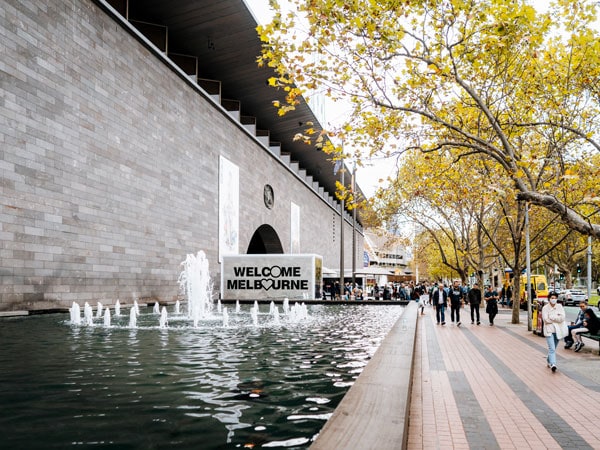
a welcome to Melbourne signage at the exterior of NGV International
Kick off your Melbourne adventure with a visit to NGV International. (Image: Visit Victoria)

The gallery, which was first opened in 1861, has a reputation for hosting some of the world’s biggest exhibitions, so it’s always worth checking to see what’s on when you’re in town. Past highlights include exhibitions dedicated to Dior, Alexander McQueen, Andy Warhol, John Wolseley and Louise Zhang.
visitors admiring artworks inside NGV International, Melbourne
This art institution hosts some of the world’s biggest exhibitions. (Image: Visit Victoria)

Cost: Entry to the gallery is free but some special exhibitions may be ticketed.

Address: 180 St Kilda Rd, Melbourne

2. Australian Centre for the Moving Image (ACMI)

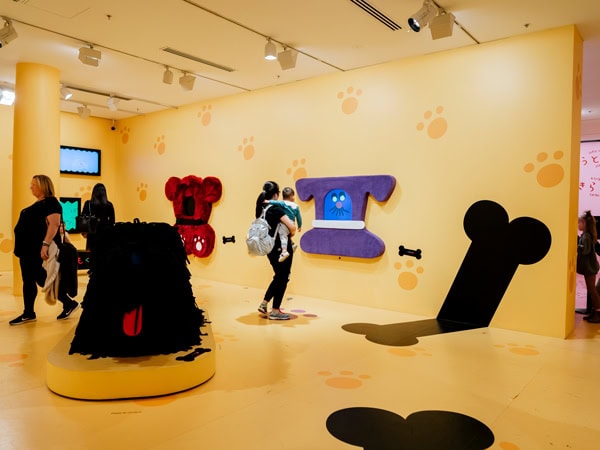
From David Bowie to Yayoi Kasuma, ACMI  is big and bright with many rotating exhibitions. The public art gallery is dedicated to the screen, encompassing everything from video games to music.
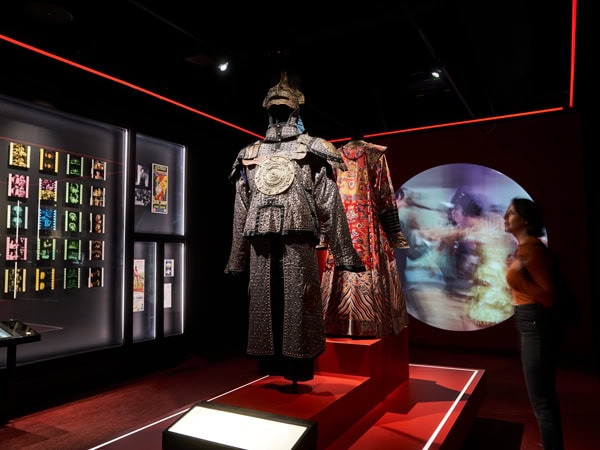
costumes from The Last Emperor film on display at Australian Centre for the Moving Image (ACMI)
Costumes from The Last Emperor film are displayed at ACMI.

You’ll find exhibitions that focus on one subject at ACMI, but you’re just as likely to find broad, overarching exhibitions dedicated to fascinating ideas and forward-thinking mediums. This is in addition to a permanent collection of over 250,000 objects illustrating video games, TV and film dating back to 1946.
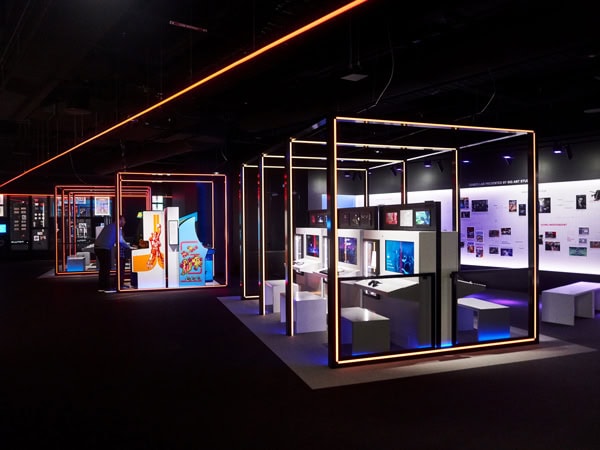
a dimly lit exhibition inside Australian Centre for the Moving Image (ACMI)
Find everything from video games to music. (Image: Visit Victoria)

Cost: Entry is free but select events will be ticketed.

Address: Federation Square, Flinders St, Melbourne

3. Australian Centre For Contemporary Art, Southbank

ACCA  is where you go when your scope of contemporary art needs a swift expansion. This not-for-profit gallery is one of the most recognised in Australia with a reputation for experimentation.

Local and international artists are showcased across big, shapely spaces, geared towards making an impact and leading cultural conversations.

Show-stopping exhibitions are designed to explore bold ideas and works, alongside programs of talks, lectures, performances, screenings and other events to help push the ongoing development of the arts in Australia.

Cost: Gallery entry is always free but Monday is closed for appointment-only visits. Special events will be ticketed.

Address: 111 Sturt St, Southbank

4. Melbourne Museum

Melbourne Museum  rests on a more traditional structure, presenting history, culture, science and nature with fascinating exhibitions for all ages in the heart of Carlton Gardens.

Immaculate dinosaur fossils, a replica of a living rainforest, and a Children’s Gallery make Melbourne Museum one of the most multifaceted in the country.

It’ll only cost you $15 for an adult ticket, so it’s worth spending a few hours wandering through the museum’s eight galleries to get a thorough education on the land and its history.

Cost: Free entry for members, children and concession; Adults $15; Seniors $10

Address: 11 Nicholson St, Carlton VIC 3053

5. Bunjilaka Aboriginal Cultural Centre

Located at Melbourne Museum, the Bunjilaka Aboriginal Cultural Centre  provides exhibitions with incredible depth and power around First Peoples and their stories.
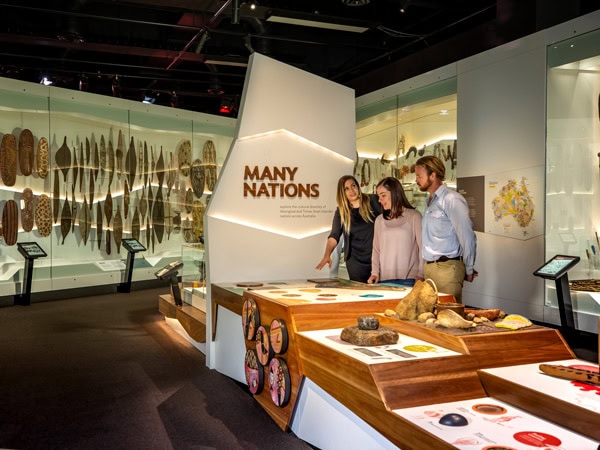
guests visiting Bunjilaka Aboriginal Cultural Centre
Browse through incredible exhibitions of Koorie artists. (Image: Visit Victoria)

The space hosts just three exhibitions a year dedicated to Koorie artists. There’s also a performance stage for cultural events and an art gallery highlighting Aboriginal and Torres Strait Islander artists throughout the year.
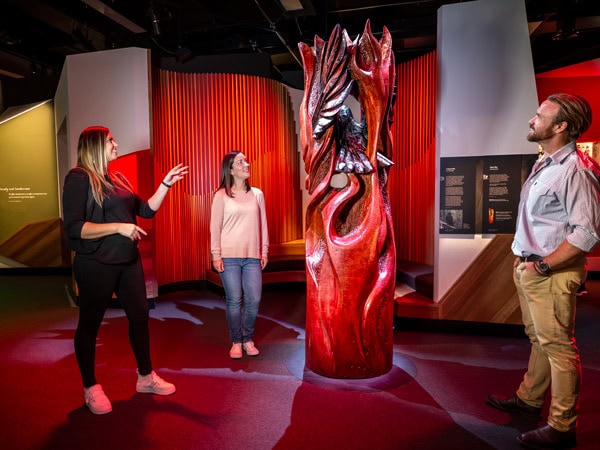
people admiring an Indigenous art at Bunjilaka Aboriginal Cultural Centre
First Peoples art takes centre stage at Bunjilaka Aboriginal Cultural Centre. (Image: Visit Victoria)

Cost: Free entry for members, children and concession; Adults $15; Seniors $10.

Address: 11 Nicholson St, Carlton

6. The Ian Potter Centre: NGV Australia, CBD

While NGV International looks at the bigger picture, The Ian Potter Centre: NGV Australia  in Federation Square is dedicated to Australia.
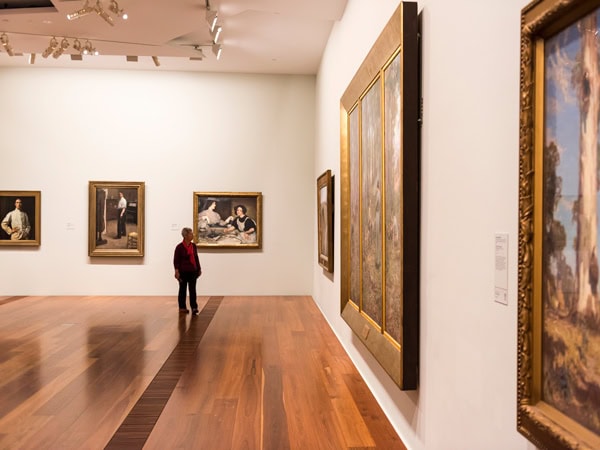
a man looking at artworks on the wall inside The Ian Potter Centre: NGV Australia, CBD
Explore a diverse range of artworks, from the Colonial era to contemporary art (Image: Visit Victoria)

An extensive collection of Australian artwork tells our story from the Colonial period through to contemporary art in a way that provides great insight into the issues that have built our country from then to now.
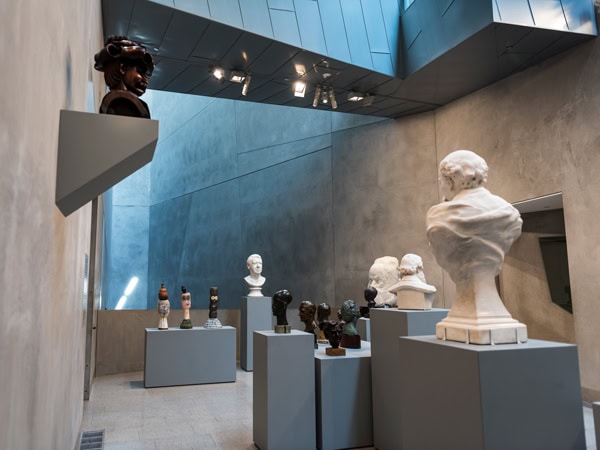
sculptures on display at The Ian Potter Centre: NGV Australia, Melbourne
Gain insight into the history and stories of Australian art. (Image: Visit Victoria)

The highlight is the rich collection of works and regular exhibitions from First Nations artists, occupying a sizable space across a total of 25,000 works from indigenous and non-indigenous artists.
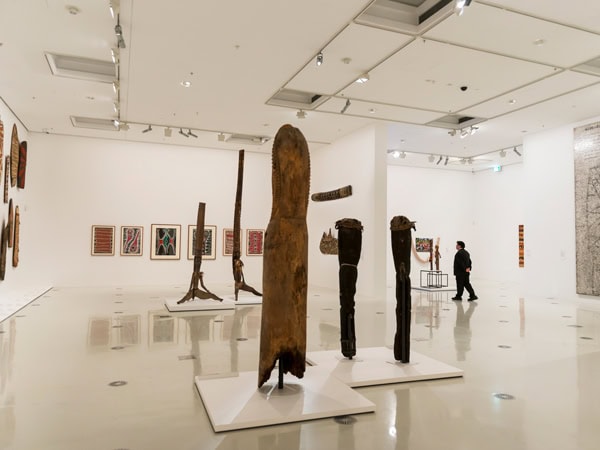
Indigenous art on display at The Ian Potter Centre: NGV Australia, Melbourne
The Ian Potter Centre showcases First Nations artwork. (Image: Visit Victoria)

Cost: Entry to the gallery is free although some special exhibitions may be ticketed.

Address: Federation Square, Flinders St &, Russell St, Melbourne

7. Heide Museum of Modern Art

Made up of three buildings set around beautiful gardens and a popular sculpture park, Heide Museum of Modern Art  is one of Australia’s most important hubs for the arts.
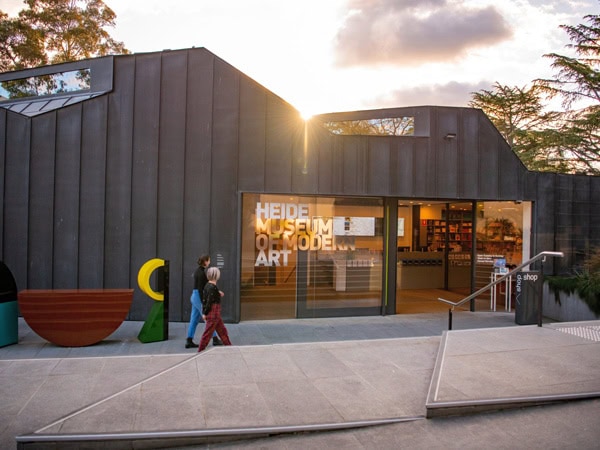
the exterior of the Heide Museum of Modern Art
Heide Museum of Modern Art is just a short drive from the CBD. (Image: Visit Victoria)

The former farm property of locals John and Sunday Reed has been transformed into this massive art complex just 30 minutes outside of Melbourne CBD, dedicated mostly to the modernist period in Australia.
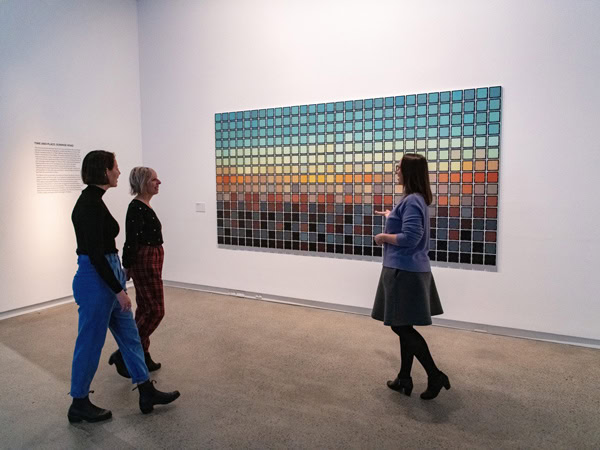
guests admiring an artwork on the wall at the Heide Museum of Modern Art
Be in awe of the unique display of works. (Image: Visit Victoria)

Throughout their lifetime, the Reeds assembled a massive collection of pieces from The Heide Circle, a notable art collective. And it’s this extensive network that has resulted in a unique display of works from across history, anchored by an incredible range of sculptures by local artists.
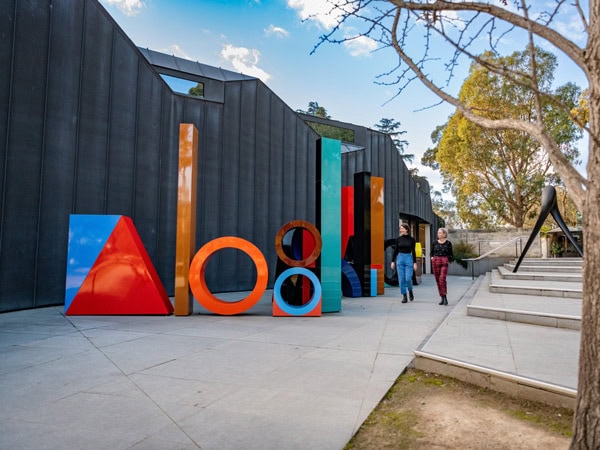
colourful sculptures outside the Heide Museum of Modern Art
The popular sculpture park. (Image: Visit Victoria)

Cost: The gardens and sculpture park are always free. Entry to the gallery is ticketed: Adult $25; Concession $20; Seniors $20 on Tuesdays; free for members, children under 16, and Manningham residents.

Address: 7 Templestowe Rd, Bulleen

8. Footscray Community Arts Centre, Footscray

The Footscray Community Arts Centre  (FCAC) was established in 1974. Multiculturalism flows throughout the building, taking an open approach to art with a preference for Melbourne’s western suburbs.
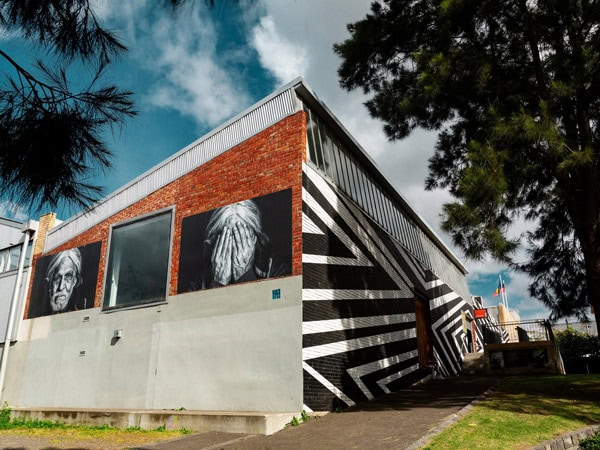
a mural painted on the outside walls of FCAC, Melbourne
Multiculturalism flows throughout the building. (Image: Gianna Rizzo)

A constant stream of performances and workshops draws many people out to Footscray just for this space. There are also art workshops for people with disabilities.
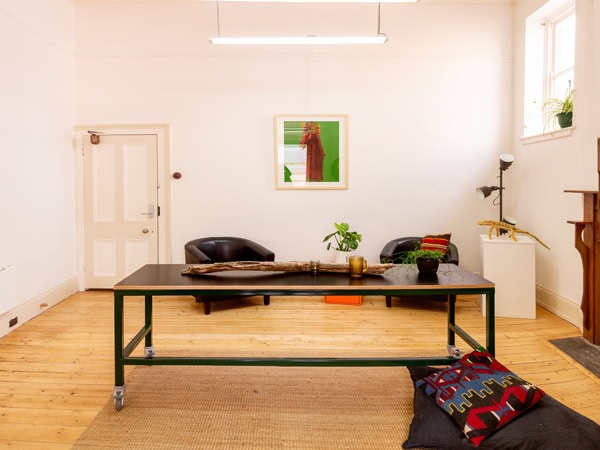
artworks on display at FCAC, Melbourne
FCAC is hosting a series of workshops and exhibitions. (Image: Gianna Rizzo)

With diversity at its core, the regular program of special exhibitions takes a similarly wide-ranging approach so you’ll often find everything from photography to light works. No manner of expression is off the table.
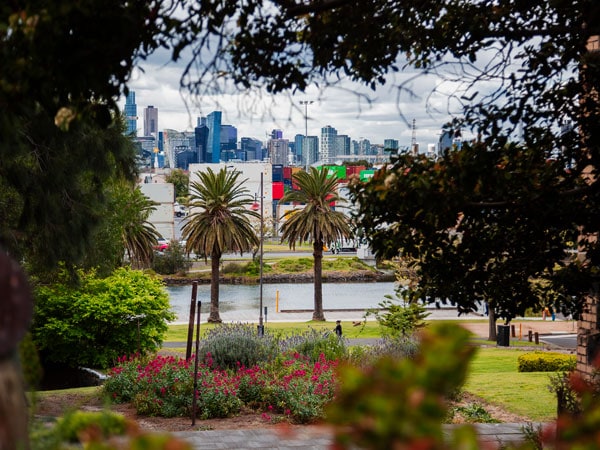
a garden surrounding FCAC, Melbourne
The art complex is surrounded by beautiful gardens. (Image: Gianna Rizzo)

Cost: Entry to the gallery is free.

Address: 45 Moreland St, Footscray

9. Linden New Art, St Kilda

Located in St Kilda, Linden New Art  is a gallery designed to hero works from unestablished Australian artists. The space is best known for its annual Postcard Show, which prefers tiny wall-hung pieces from Australian artists across every medium, from watercolour and textiles to ceramics and glass.
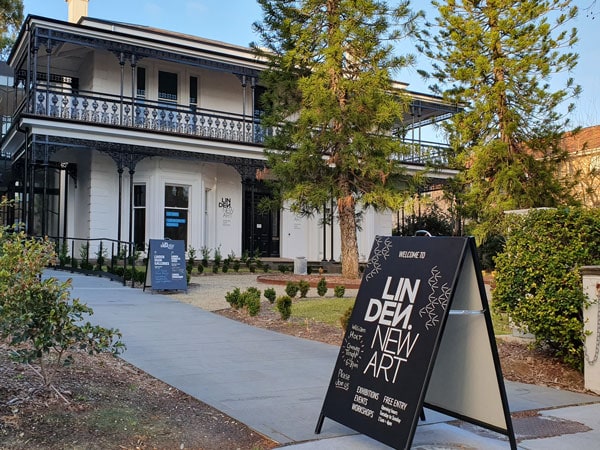
the exterior of Linden New Art, St Kilda
Step into Linden New Art for the annual Postcard Show. (Image: Mathieu Vendeville)

With the gallery specialising in pint-sized works, you’ll find many locals heading along to the not-for-profit to grab several pieces and cobble them together for their collage back home.
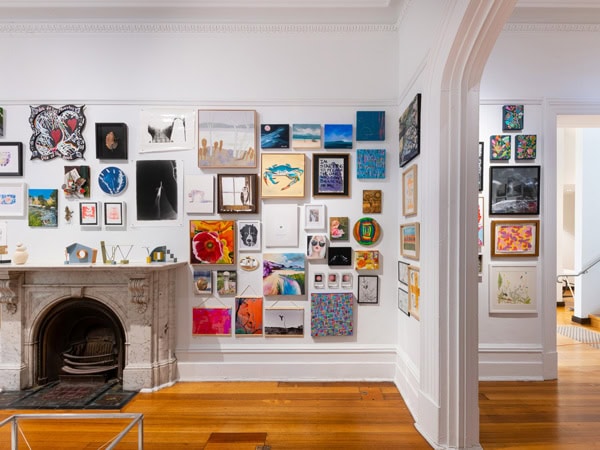
a collage-like wall art at Linden New Art, St Kilda
Unestablished Australian artists can hang their art like a collage. (Image: Simon Strong)

Cost: Entry to the gallery and annual Postcard Show are free for the public.

Address: Bunurong Boon Wurrung Country, 26 Acland St, St Kilda

Melbourne Art Rooms , or MARS, is one of the more recognisable galleries in Melbourne, founded in 2004 by Andy Dinan.
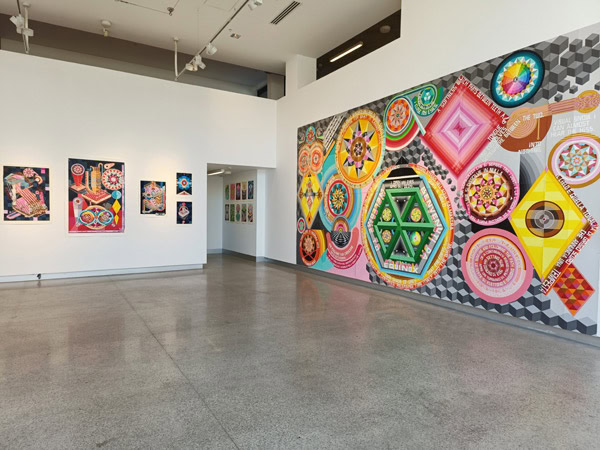
colourful artworks on the walls at MARS Gallery, Windsor
Marvel at the two-dimensional works of Tricky Walsh.

Originally in Port Melbourne, the art gallery has since moved to a purpose-built space in Windsor, expanding its collection to support further and build the careers of Australia’s emerging contemporary artists.

While the collection is free to view for the public, you’ll find that most people here would be serious buyers looking to score their next treasure.
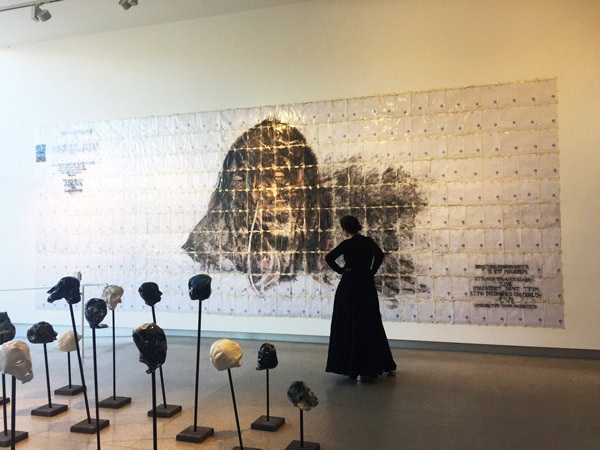
an art exhibition dedicated to Bernhard Sachs, MARS Gallery, Windsor
MARS also pays homage to the remarkable legacy of late artist and mentor, Bernhard Sachs.

Cost: Entry to the gallery is free but there may be ticketed special events.

Address: 7 James St, Windsor

Founded by Anna Schwartz in 1986 before moving to Flinders Lane in 1993, this eponymous gallery  is considered one of the city’s foremost cultural institutions and the quintessential Melbourne art gallery.

The long history Schwartz has within the local art community has given her unparalleled access to established and emerging artists. As such, her collection is curated with high standards, representing over thirty different artists.

Cost: Entry to the gallery is free.

Address: 185 Flinders Ln, Melbourne

12. Buxton Contemporary, Southbank

Local property developer and collector Michael Buxton has built up a trove of pieces so impressive and varied that his eponymous Buxton Contemporary  is now part of the University of Melbourne’s Victorian College of Arts.
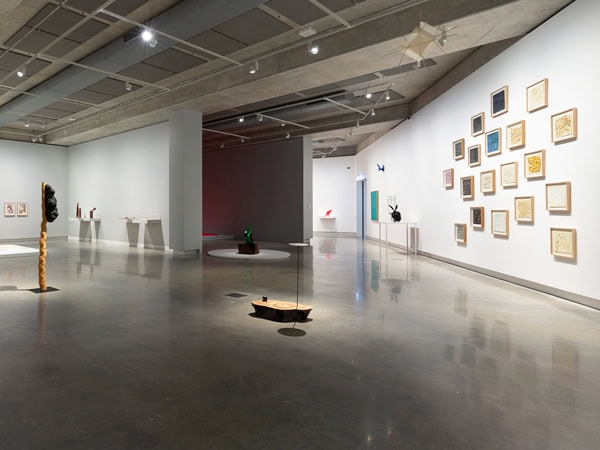
an art display inside Buxton Contemporary, Southbank
Buxton Contemporary has long been a hidden treasure trove of impressive art collections. (Image: Christian Capurro)

You’ll find Buxton Contemporary on the corner opposite the NGV, championing mostly Australiasian artists and favouring moving images and video works. Video is so central to how Buxton Contemporary operates that the space hosts the largest outdoor screen in Australia.

Special exhibitions are only open Wednesday through Sunday and entry is completely free.
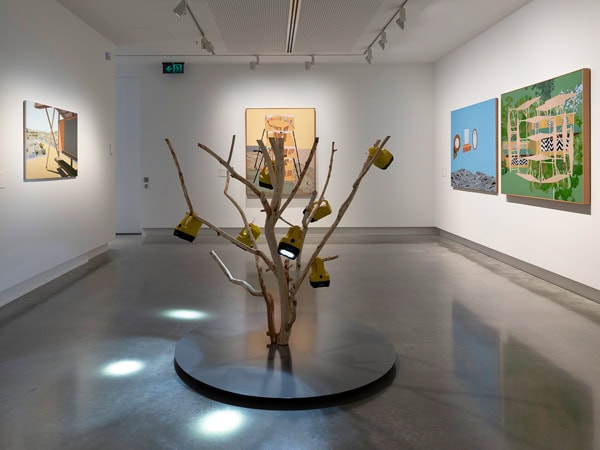
an art exhibition at Buxton Contemporary, Southbank
Don’t miss out on the special exhibitions. (Image: Christian Capurro)

Cost: Entry to the gallery and most special exhibitions is free.

Address: Corner Southbank Boulevard &, Dodds St, Southbank

13. Centre For Contemporary Photography, Fitzroy

Art lovers with a specific interest in photography should head to Fitzroy, where they’ll find the Centre For Contemporary Photography .
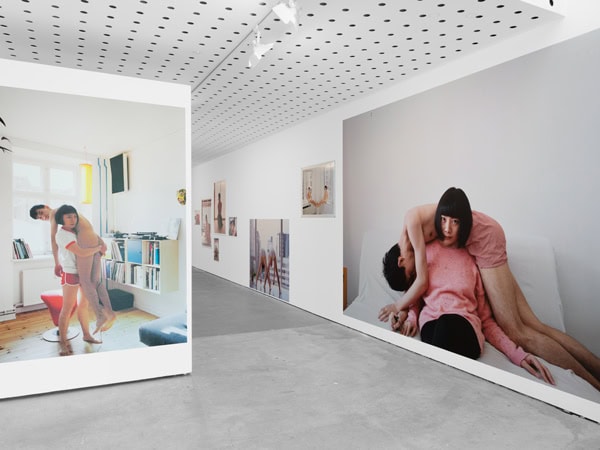
human portraits on display at the Centre For Contemporary Photography, Fitzroy
The gallery features contemporary human portraits. (Image: Kelvin Lau & Hannah NIkkelsen)

The not-for-profit institution has been around since the mid-80s and acts as an important resource centre for anyone looking to get into photography.

The collection is free to view and is mostly made up of works from emerging and established photographers across a wide range of practices.
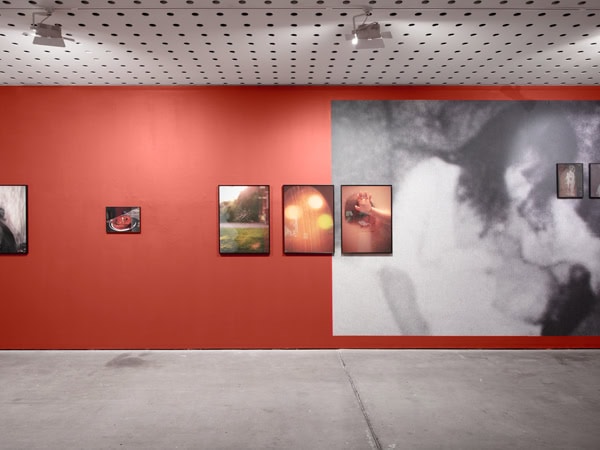
a photography collection at the Centre For Contemporary Photography, Fitzroy
It boasts an extensive photography collection. (Image: Kelvin Lau & Hannah NIkkelsen)

Cost: Entry to the gallery is free but education workshops are $5-$10 for students.

Address: 404 George St, Fitzroy

14. Gertrude Contemporary, Preston

You’ll now find Gertrude Contemporary  in Preston but the project began its life in Fitzroy in 1983, established as a series of artist studios. There is also a satellite exhibition space called Gertrude Glasshouse, which can be found on Glasshouse Road in Collingwood.

The art complex is popular amongst Melbourne’s core art crowd, referenced mostly for its conceptual artworks and tireless support of the arts community through constant studio residencies.

Highlights: A frequently rotating collection of works across all types of mediums.

Cost: Entry to the gallery and most special exhibitions is free.

Address: 21-31 High St, Preston

15. The Blender Studios, West Melbourne 

The Blender Studios  is less of a year-round gallery that’s open to the public and more of an artist hub with space for residences and exhibitions.
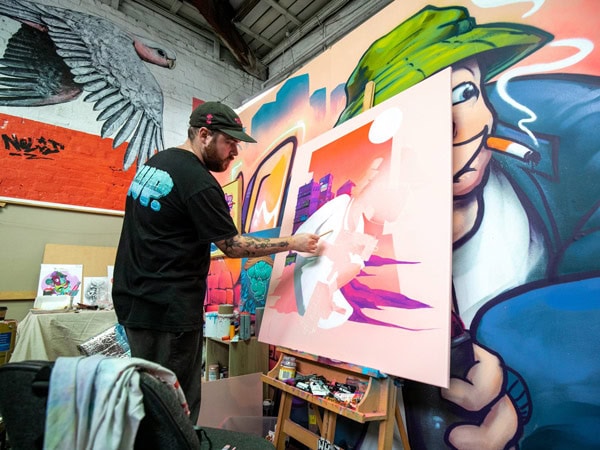
an artist painting at The Blender Studios, West Melbourne
This artist hub provides a welcoming space for art enthusiasts. (Image: Visit Victoria)

As opposed to more commercial galleries, this space is purposed for more accessible mediums, such as a wide variety of street art. As such, you can head along here to buy works from Blenders artists as well as join a street art tour of West Melbourne.
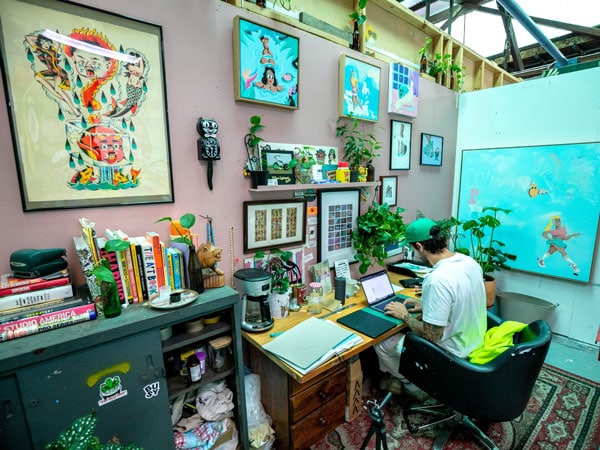
an artist busy working inside The Blender Studios, West Melbourne
These artworks are the product of hard work. (Image: Visit Victoria)

Cost: Entry to the gallery is free although most workshops will be ticketed.

Address: 33-35 Dudley St, West Melbourne

16. Koorie Heritage Trust, CBD

Dedicated to Koorie culture and First Nations art, the Koorie Heritage Trust  is one of Melbourne’s most important art complexes with three dedicated gallery spaces.

the entrance to Koorie Heritage Trust, Melbourne
Koorie Heritage Trust offers insights into First Nations art. (Image: Visit Victoria)

Works displayed here have been collected since the early 1980s, presenting a broad scope for those who want to admire Indigenous art and culture.

two women admiring artworks at Koorie Heritage Trust, Melbourne
Admire Indigenous art inside the art complex. (Image: Visit Victoria)

Most popular is the centre’s walking tours which explore the heart of Melbourne with an Indigenous guide, offering insights into the rich and complex history of the world’s oldest continuous living culture.

visitors exploring inside Koorie Heritage Trust, Melbourne
Take your time to peruse the three dedicated gallery spaces. (Image: Visit Victoria)

Cost: Entry to the gallery is free although some exhibitions may be ticketed.

Address: The Yarra Building, Federation Square, Flinders St &, Swanston St, Melbourne

Run by artists, the Honey Bones Gallery  in Brunswick is known for group shows that often showcase up to 50 artists at a time, as well as popular communal art parties.
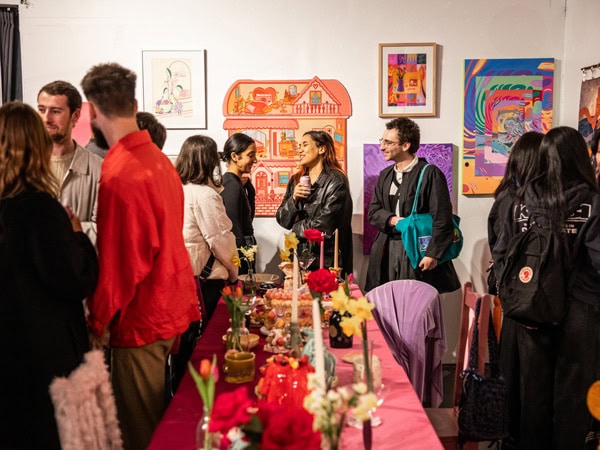
a crowd-filled art space at Honey Bones Gallery, Brunswick
The gallery supports community creatives with a roster of exhibitions. (Image: Jack Gruber)

The gallery has a prescient reputation for digging deep into the community and championing artists before they become much bigger names. This is why collectors hold Honey Bones Gallery in such high regard.
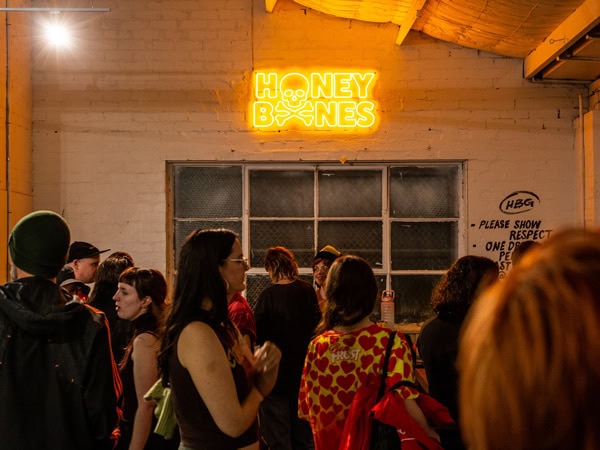
people chatting inside Honey Bones Gallery with a neon-lit signage on the wall, Brunswick
The Honey Bones Gallery champions local artists. (Image: Jack Gruber)

Cost: Entry to exhibitions is generally free to the public.

Address:46 Trafford St, Brunswick

18. Museum of Australian Photography (MAPh), Wheelers Hill

This Harry Seidler-designed building, hidden in Wheelers Hill, is a bastion of the visual arts. Everything MAPh  does in the local community is in complete support of Australian artists.

Australian photographers take centre stage at MUPh throughout the year, fostering a comprehensive permanent collection of over 1,500 works tracking the history of visual storytelling in Australia.

With around 20 exhibitions per year, the Museum of Australian Photography is one of Melbourne’s busiest and most active incubators. There’s also a constant stream of innovative programs and talks, much like Fitzroy’s Centre For Contemporary Photography.
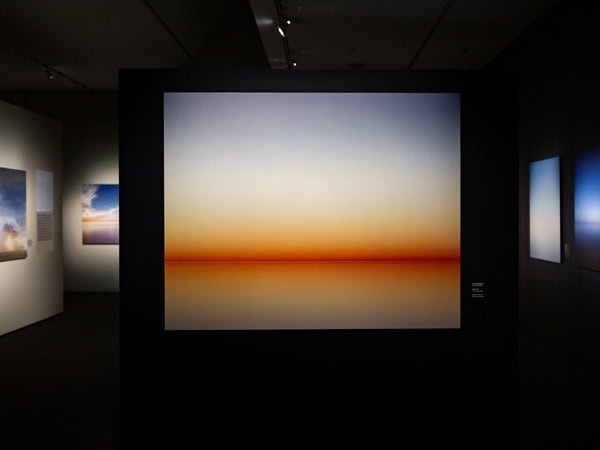
a dimly lit art installation at the Museum of Australian Photography (MAPh), Wheelers Hill
MAPh serves as a stronghold for the visual arts.

Cost: Entry to the gallery is free to the public but workshops and talks may be ticketed.

Address: 860 Ferntree Gully Rd, Wheelers Hill

RMIT Gallery  is another ode to visual storytelling with exhibitions that change frequently, blending art and research from the global University of Technology and Design.
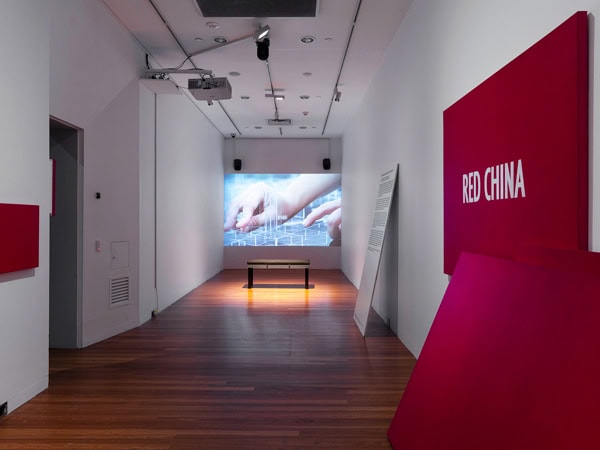
a look inside RMIT Gallery, Melbourne
Find art that inspires conversation and contemplation. (Image: Christian Capurro)

Exhibitions generally tackle big, cerebral questions like healing and connection, while also leaning heavily on RMIT’s extensive network in the worlds of arts and academia.
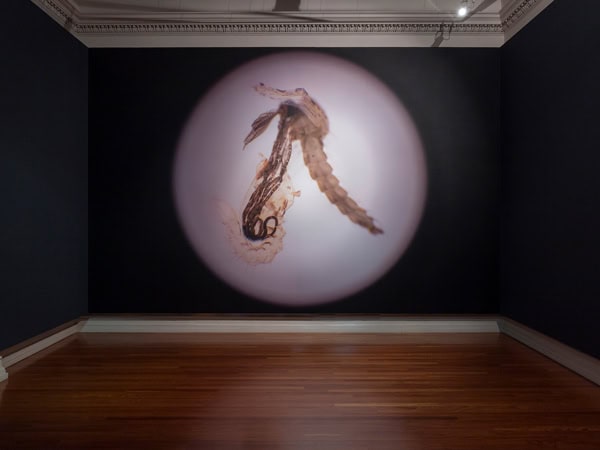
an art display at RMIT Gallery, Melbourne
The collections blend art and research. (Image: Christian Capurro)

The throughline of cultural stories and provocative works is aimed mostly at the student population but anyone can enter this free public gallery.
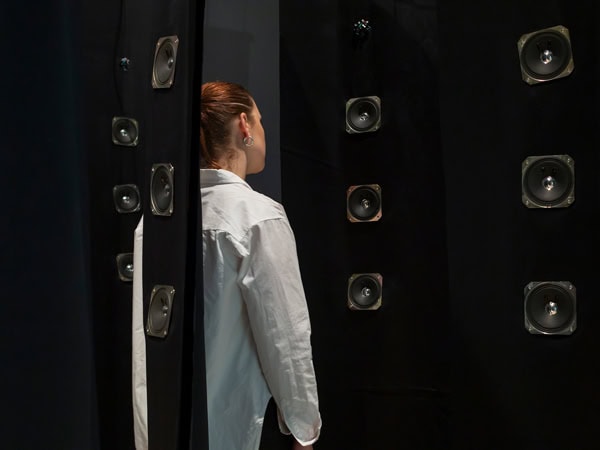
a woman viewing an exhibition of Indonesian Australian artist, Tintin Wulia at RMIT Gallery, Melbourne
The gallery features the works of Indonesian Australian artist, Tintin Wulia. (Image: Christian Capurro)

Cost: Entry to the gallery is free.

Address: 344 Swanston St, Melbourne

Discover our must-read guide to Melbourne’s neighbourhoods.

Chris Singh
Chris Singh is an arts, travel and food journalist with 17 years of experience in digital media and 4 years of experience in SEO writing. He is the former travel editor of premium men's lifestyle title Boss Hunting and currently balances his role as Deputy Editor-At-Large of the AU review with freelance travel writing gigs at Australian Traveller, Luxury Escapes, Cruise & Travel and Sydney Travel Guide. Chris holds a Bachelor of Arts & Sciences (Sociology and Psychology) from the University of Sydney and once worked as a line dancer for steakhouse chain Lone Star (no, seriously). He's always got his finger on the pulse for good live music and delicious new restaurants, has a particular love of historic hotels and is starting to see the restorative value of the ever-present wellness industry. Although he is a born-and-bred Sydneysider, his favourite Australian cities are Hobart and Adelaide. Internationally, he can never get enough of big cities like Tokyo, New York and Chicago. If you're looking for him, he's either at a concert, on a plane or behind a laptop.
See all articles
hero media

Inside Geelong’s glow-up from factory town to creative capital

Abandoned mills and forgotten paper plants are finding second lives – and helping redefine a city long underestimated. 

Just 15 years ago, Federal Mills was a very different place. Once among the most significant industrial sites in Victoria, the historic woollen mill was one of a dozen that operated in Geelong at the industry’s peak in the mid-20th century, helping the city earn its title as ‘wool centre of the world’. But by the 1960s global competition and the rise of synthetic fabrics led to the slow decline of the industry, and Federal Mills finally shuttered its doors in 2001. Within a few years, the abandoned North Geelong grounds had become makeshift pastoral land, with cows and goats grazing among the overgrown grass between the empty red-brick warehouses. It was a forgotten pocket of the city, all but two klicks from the bustle of the CBD.  

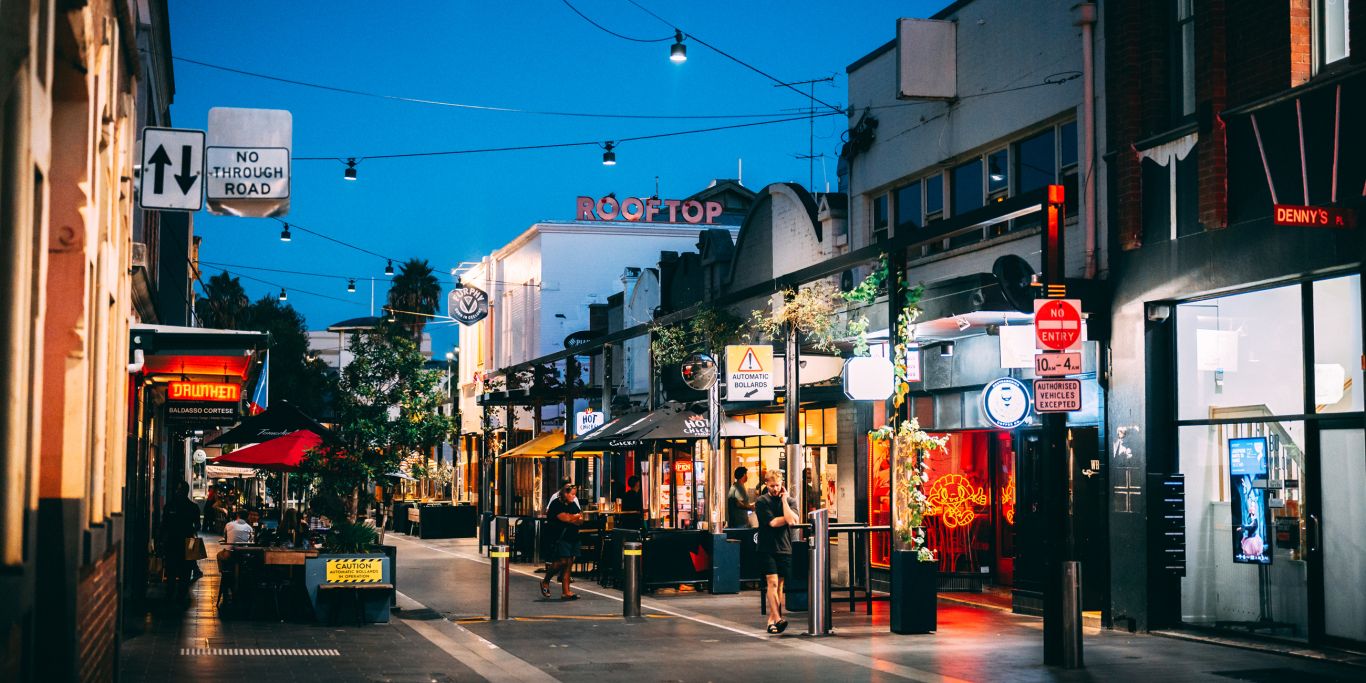
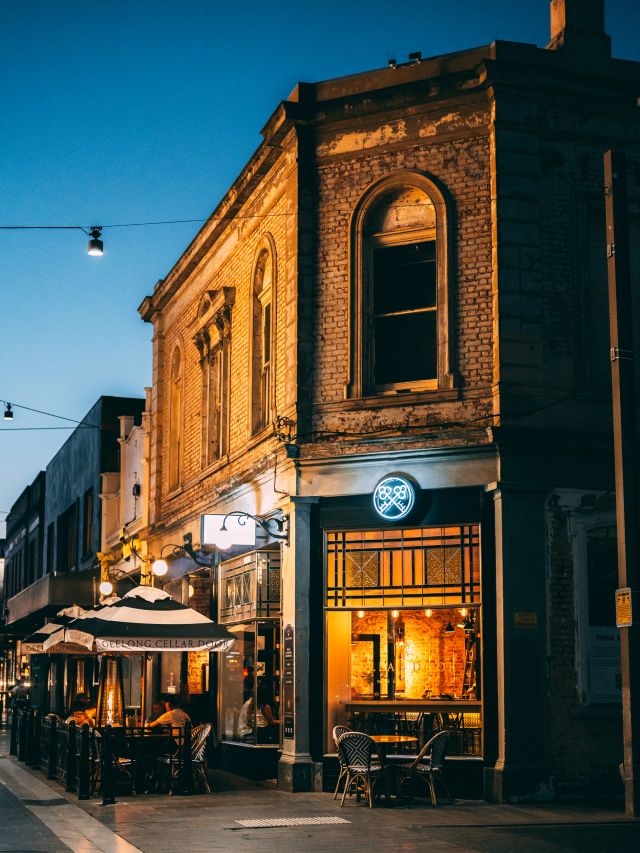
Geelong cellar door wine bar
Geelong has shed its industrial identity to become an innovative urban hub with reimagined heritage spaces. (Image: Ash Hughes)

Federal Mills: from forgotten factory to creative precinct 

Today, the century-old complex stands reborn. The distinctive sawtooth-roof buildings have been sensitively restored. An old silo is splashed with a bright floral mural, landscapers have transformed the grounds, and the precinct is once again alive with activity. More than 1000 people work across 50-plus businesses here. It’s so busy, in fact, that on a sunny Thursday morning in the thick of winter, it’s hard to find a car park. The high ceilings, open-plan design, and large multi-paned windows – revolutionary features for factories of their time – have again become a drawcard.  

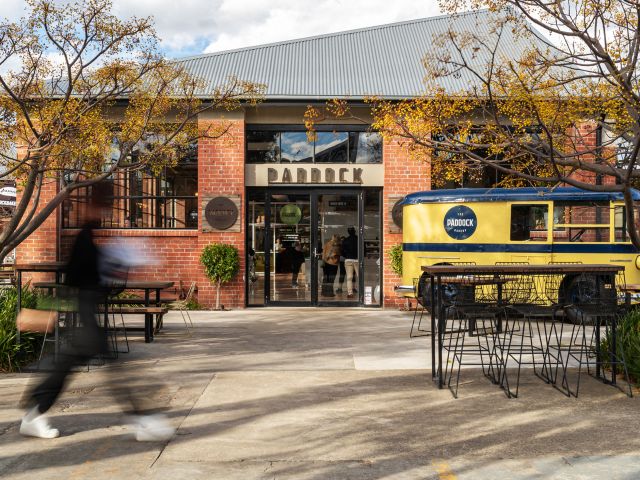
Paddock Bakery andPatisserie
Paddock Bakery and Patisserie is housed within the historic wool factory. (Image: Gallant Lee)

At Paddock , one of the precinct’s newer tenants, weaving looms and dye vats have been replaced by a wood-fired brick oven and heavy-duty mixers. Open since April 2024, the bakery looks right at home here; the building’s industrial shell is softened by ivy climbing its steel frames, and sunlight streams through the tall windows. Outside, among the white cedar trees, families at picnic benches linger over dippy eggs and bagels, while white-collar workers pass in and out, single-origin coffee and crème brûlée doughnuts in hand. 

Geelong: Australia’s only UNESCO City of Design 

Paddock Bakery
Paddock Bakery can be found at Federal Mills. (Image: Gallant Lee)

“A lot of people are now seeing the merit of investing in Geelong,” says Paul Traynor, the head of Hamilton Hospitality Group, which redeveloped Federal Mills. A city once shunned as Sleepy Hollow, and spurned for its industrial, working-class roots and ‘rust belt’ image, Geelong has long since reclaimed its ‘Pivot City’ title, having reinvented itself as an affordable, lifestyle-driven satellite city, and a post-COVID migration hotspot.  

And the numbers stand testament to the change. In March 2025, and for the first time in its history, Greater Geelong became Australia’s most popular regional town for internal migration, overtaking Queensland’s Sunshine Coast. Current forecasts suggest Geelong will continue to outpace many other Australian cities and towns, with jobs growing at double the rate of the population.

Tourism is booming, too. The 2023-24 financial year was Geelong and The Bellarine region’s busiest on record, with 6.4 million visitors making it one of the fastest-growing destinations in the country. It’s not hard to see why: beyond the city’s prime positioning at the doorstep of the Great Ocean Road, Geelong’s tenacity and cultural ambition stands out.  

As Australia’s only UNESCO City of Design, Geelong is swiftly shaking off its industrial past to become a model for urban renewal, innovation, sustainability and creative communities. The signs are everywhere, from the revitalisation of the city’s waterfront, and the landmark design of the Geelong Library and Heritage Centre and Geelong Arts Centre, to the growing network of local designers, architects and artists, and the burgeoning roster of festivals and events. That’s not even mentioning the adaptive reuse of storied old industrial buildings – from Federal Mills, to Little Creatures’ brewery ‘village’ housed within a 1920s textile mill – or the city’s flourishing food and wine scene.  

The rise of a food and wine destination  

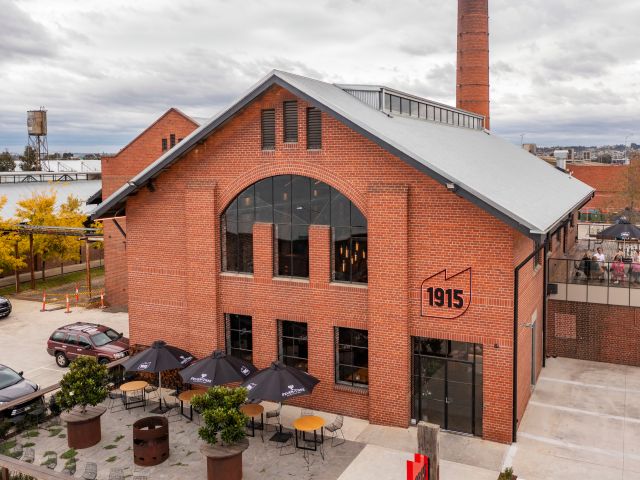
boiler house
Restaurant 1915 is housed within a restored former boiler house. (Image: Harry Pope/Two Palms)

Traynor credits now-closed local restaurant Igni, which opened in 2016, as the turning point for Geelong’s hospo industry. “[Aaron Turner, Igni’s chef-patron] was probably the first guy, with all due respect, to raise the bar food-wise for Geelong,” he says. “People now treat it really seriously, and there’s clearly a market for it.” While Igni is gone, Turner now helms a string of other notable Geelong venues, including The Hot Chicken Project and Tacos y Liquor, all within the buzzy, street art-speckled laneways of the CBD’s Little Malop Street Precinct. Many others have also popped up in Igni’s wake, including Federal Mills’ own restaurant, 1915 Housed within the cavernous boiler house, 1915’s interior is dramatic: soaring, vaulted ceilings with timber beams, exposed brick, a huge arched window. The share plates echo the space’s bold character, playing with contrast and texture, with dishes such as a compressed watermelon tataki, the sweet, juicy squares tempered by salty strands of fried leeks, and charred, smoky snow peas dusted with saganaki on a nutty bed of romesco. 

Woolstore
The Woolstore is a new restaurant and bar housed within a century-old warehouse. (Image: Amy Carlon)

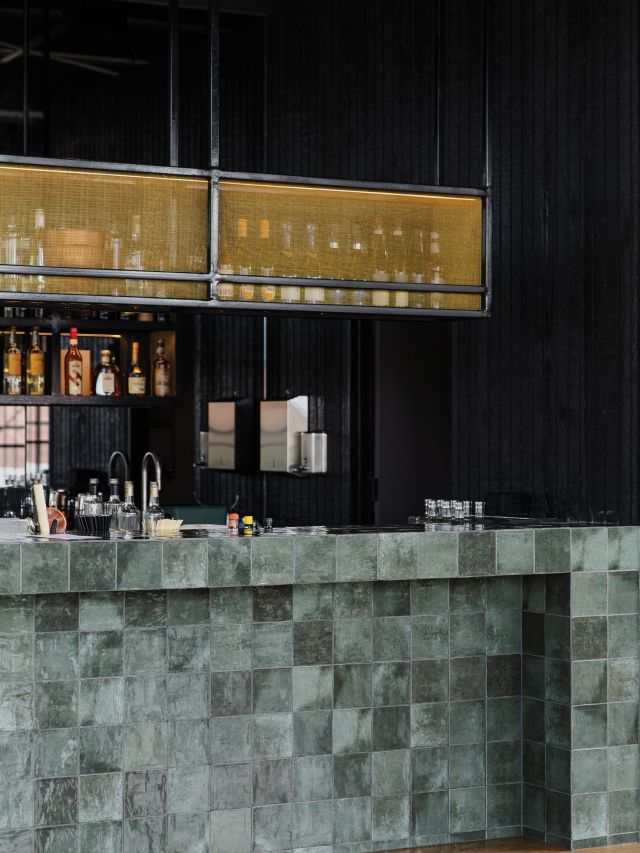
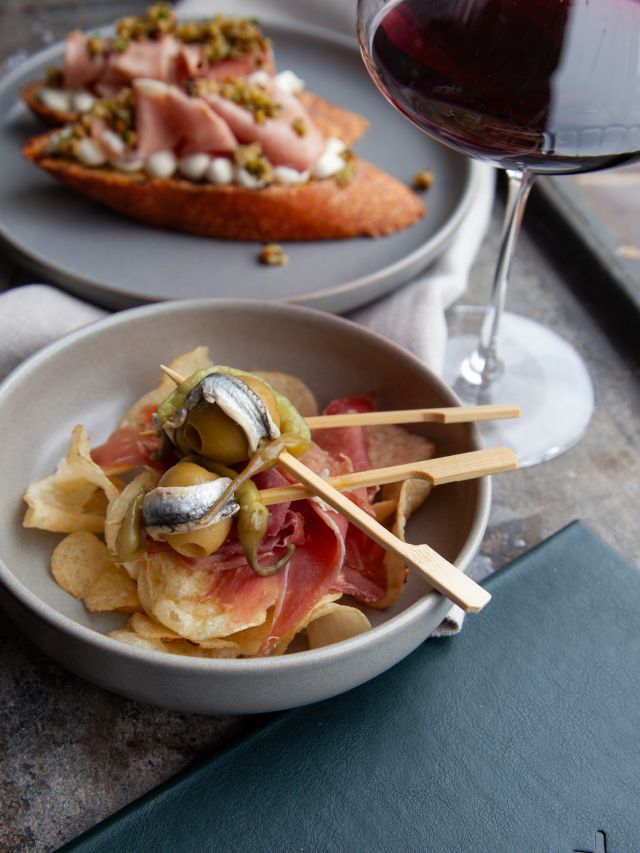
 The Woolstore , one of The Hamilton Group’s most recent hospo projects, opened in February. It occupies a century-old riverside warehouse and exudes a more sultry, fine dining ambience. Much like Federal Mills, the blueprint was to preserve the original brickwork, tallowwood flooring and nods to the building’s former life. That same careful consideration extends to the well-versed, affable waitstaff as well as the kitchen. Head chef Eli Grubb is turning out an eclectic mix of ambitious and indulgent mod Oz dishes that deliver: strikingly tender skewers of chicken tsukune, infused with hints of smoke from the parrilla grill, and glazed with a moreish, sweet gochujang ‘jam’; nduja arancini fragrant with hints of aniseed and the earthy lick of sunny saffron aioli; and golden squares of potato pavé, adorned with tiny turrets of crème fraîche, crisp-fried saltbush leaves, and Avruga caviar, to name but a few stand-out dishes.  

Woolstore menu
Woolstore’s menu is designed for sharing.

Breathing new life into historic spaces  

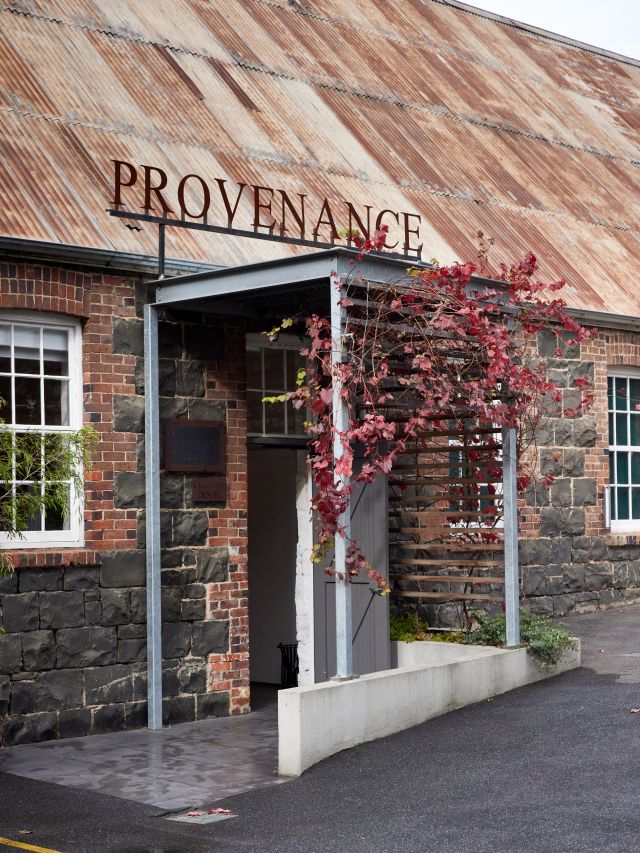
On the city’s fringe, hidden down a winding side road with little fanfare, lies a long-dormant site that’s being gently revived. Built from locally quarried bluestone and brick, and dating back to the 1870s, the complex of original tin-roofed mill buildings is lush with greenery and backs onto the Barwon River and Buckley Falls; the audible rush of water provides a soothing soundtrack. Fyansford Paper Mill is one of few complexes of its time to survive intact. It feels steeped in history and spellbindingly rustic.  

“We were looking for an old industrial place that had some charm and romance to it,” explains Sam Vogel, the owner, director and winemaker at Provenance Wines which moved here in 2018. When he first viewed the building with his former co-owner, it was in such a state of disrepair that the tradie tenant occupying the space had built a shed within it to escape the leaking roof and freezing winter temperatures. “To say it was run down would be an understatement,” he notes. “There was ivy growing through the place; the windows were all smashed. It was a classic Grand Designs project.” 

Provenance Wines
Provenance Wines moved to Fyansford Paper Mill in 2018. (Image: Cameron Murray Photography)

The team has since invested more than a million dollars into their new home. Where paper processing machinery once sat, wine barrels are now stacked. Vaulted cathedral ceilings are strung with festoon lights, and hidden in plain sight lies a shadowy mural by local street artist de rigueur Rone – one of only three permanent works by the artist.

While the award-winning, cool-climate pinot noir, riesling and chardonnay naturally remain a key draw at Provenance, the winery’s restaurant is a destination in itself. Impressed already by whipsmart service, I devour one of the most cleverly curated and faultlessly executed degustations I’ve had in some time. It’s all prepared in a kitchen that is proudly zero-waste, and committed to providing seasonal, ethical and locally sourced meat and produce under head chef Nate McIver. Think free-range venison served rare with a syrupy red wine jus and a half-moon of neon-orange kosho, shokupan with a deeply savoury duck fat jus (a modern Japanese take on bread and drippings), and a golden potato cake adorned with a colourful confetti of dehydrated nasturtiums and tomato powder, and planted atop a sea urchin emulsion.  

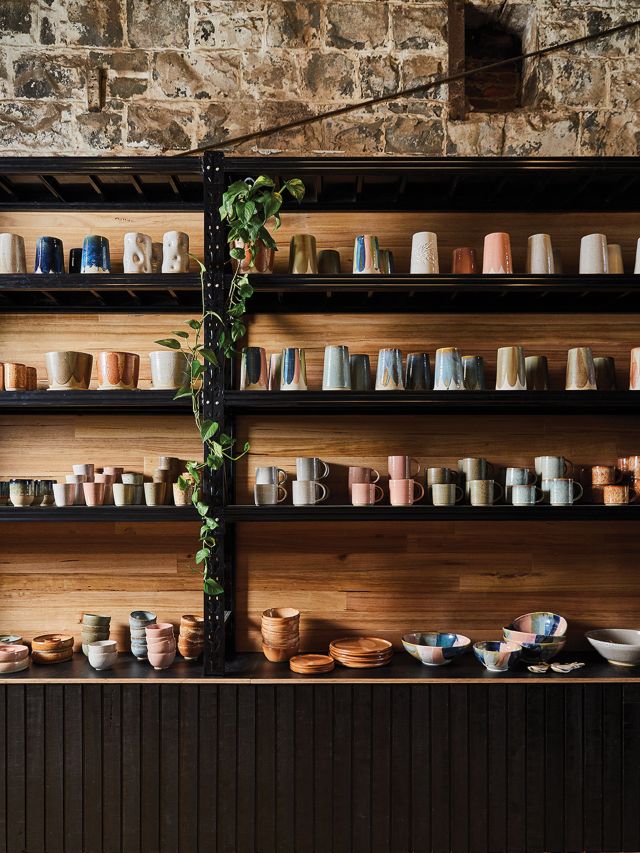
handcrafted pieces
Bell’s handcrafted functional pieces on display.

The complex is home to a coterie of independent businesses, including a gallery, a jeweller, and its latest tenant, ceramicist Elizabeth Bell, drawn here by the building’s “soul”. “There’s so much potential for these buildings to have new life breathed into them,” says Bell, whose studio is housed within the old pump room. “Even people in Geelong don’t know we’re here,” she says. “It’s definitely a destination, but I like that. It has a really calming atmosphere.”  

A Melbourne transplant, Bell now feels at home in Geelong, which offers something Melbourne didn’t. “If this business was in Melbourne I don’t think it would’ve been as successful,” she notes. “It’s very collaborative in Geelong, and I don’t think you get that as much in Melbourne; you’re a bit more in it for yourself. Here it’s about community over competition.”  

Elizabeth Bell
Ceramicist Elizabeth Bell has a store in Fyansford Paper Mill.