All aboard the new Indian Pacific itinerary: longer, slower, better

hero media
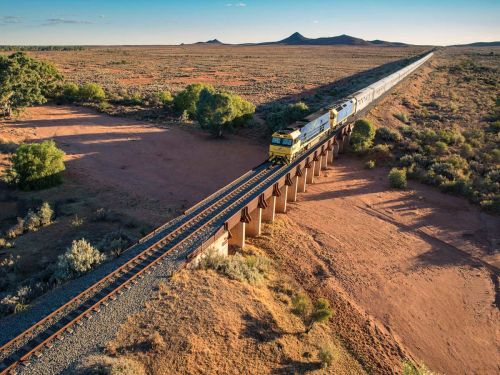
To label the Indian Pacific one of the grandest journeys in Australia is to under-value the experience. This is one of the greatest journeys in the world, with very few, if any, peers.  

It is one of only a few truly transcontinental journeys in the world and the only one that is easily completed from one carriage in less than a week.  

What started life as a pragmatic passenger train 50-plus years ago is now unquestionably a journey of epic experiences And more remarkably still, it continues to improve.  
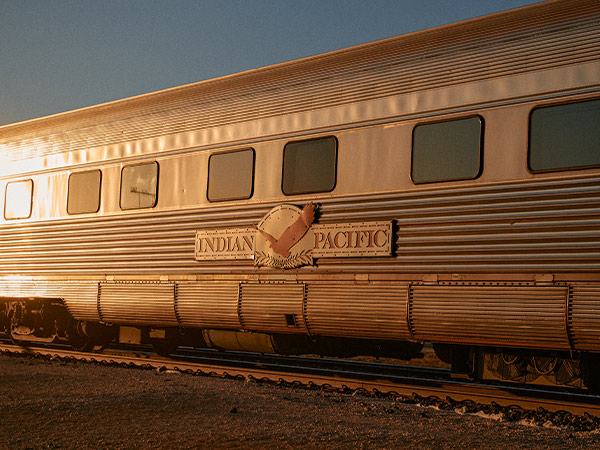
Indian Pacific train
The Indian Pacific journey is brimming with old-world charm. (Image: Journey Beyond)

Launching in 2025, the new Perth to Sydney journey is now four nights (Sydney to Perth remains three nights) with a host of unforgettable experiences: bonfire and nightcap in the middle of the Nullarbor, a full morning in Broken Hill and Blue Mountains and the combination of two Aussie icons, The Indian Pacific and Seppeltsfield to host a memorable evening in the Barossa Valley 

Seppeltsfield dinner, Barossa Valley, SA 
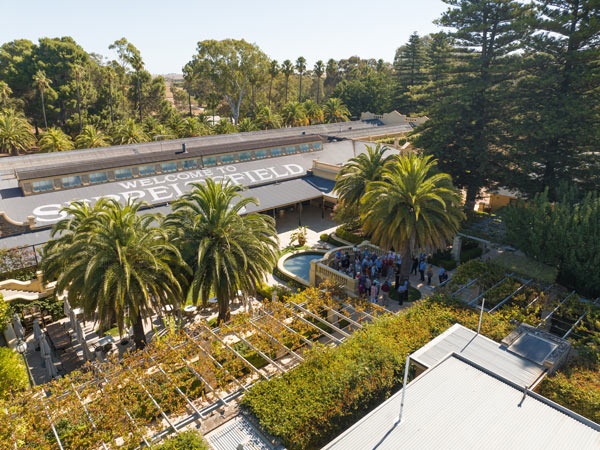
Indian Pacific Seppeltsfield Signature Dinner Drone Barossa Valley
The exclusive Seppeltsfield dinner is the signature moment. (Image: Journey Beyond)

The signature moment from this new and improved four-day itinerary is the exclusive dinner at Seppeltsfield in the Barossa on the third evening.  

Having traversed half the country, 24 hours of which is the mesmerising Nullarbor plain, we pass through the wheatfields of South Australia to arrive at the suitably named Long Plain.  

Seventy-five kilometres north of Adelaide in the heart of the Yorke Peninsula’s wheat country, an endless carpet of golden stubble stretches out before me; the remnant of the lush fields of wheat left by the industrial headers who slashed off the valuable seed heads last January.

The 25 carriages of the Indian Pacific slow to walking pace before the unexpected jolt required to finally exhaust the inertia of a train that stretches further than the eye can easily see, brings us to a standstill. We amble the eight carriages from our Gold Class Premium lounge car to a suitable disembarking spot for the one-hour (60-kilometre) coach drive to Seppeltsfield.
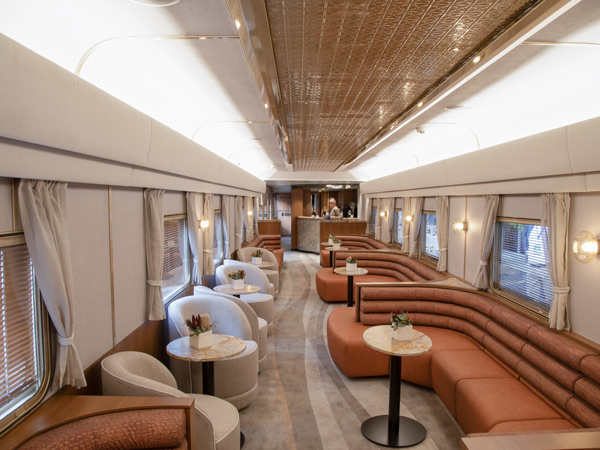
JBR Accommodation Gold Premium Lounge
The Gold Class Premium lounge car is the perfect meeting spot. (Image: Journey Beyond)

We toast our good fortune on the manicured lawns and private gardens of the historic winery estate with bubbles and gourmet popcorn as the sun sets, flanked by several of the 2000-plus iconic Seppeltsfield palm trees that line the property. 

Seppeltsfield’s Executive Chef Owen Andrews is flipping the racks of beef eye fillet over the charcoal as we enter the Barrell Room – a cavernous, corrugated iron shed. Strings of lights are stretched over six long tables surrounded by barrels and a dance floor; it feels like a feasting hall for Vikings. 

In about two hours, the guests will form a Congo line almost as long as the Indian Pacific itself, encouraged by the band that has belted out all the hits to get the crowd on the dance floor
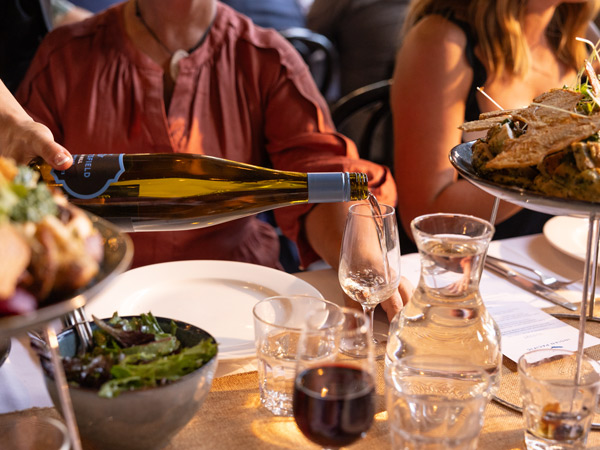
Indian Pacific Seppeltsfield Signature Dinner Barossa Valley SA
The Seppeltsfield fest is world-class. (Image: Journey Beyond)

But first, we feast. Platters of eye fillet and pesto chicken breast are joined by roast potatoes, honey carrots and a green salad. Iconic Barossa shiraz and Eden Valley shiraz are in plentiful supply, and of course, the port barrel preserved cheese platter to finish is accompanied by the equally renowned Para Grand Tawny.  

A closely guarded bottle of 1925 Vintage Para Tawny sits on one of the bars. For a charge, guests can sip the rare antique nectar. 

Before the dance kicks off in earnest, Seppeltsfield’s Master Cooper Andrew Young fires up a flamethrower to demonstrate the art of turning a wine barrel into a whiskey barrel.  

The drive back to the Indian Pacific in Adelaide starts with much shiraz, riesling and port-induced merriment and mirth that peters into the rhythmic bass of snoozing. 

Broken Hill, NSW
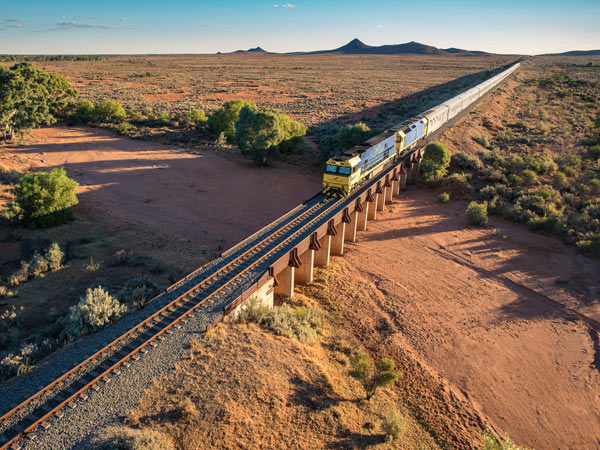
Indian Pacific drone shot in Broken Hill NSW
Arrive in Broken Hill by morning. (Image: Journey Beyond)

The morning after the extravagant meal at Seppeltsfield, we arrive in the mining town that gave birth to the “Big Australia", BHP, Broken Hill.  

Today, the town and I celebrate its more recent fame as the setting for iconic scenes from The Adventures of Priscilla, Queen of the Desert.

In a flurry of pastel pink, silver and turquois sequins Shelita Buffet (I am embarrassed to admit as I write this I have just got the pun, She’ll Eat A Buffet) exits her parked 4×4 ute, pauses dutifully at the zebra crossing before striding across in her white high heeled ankle boots to greet waiting Indian Pacific guests at Broken Hill station on a crystal-clear Monday morning…

It is an entrance befitting the queen of the city. She is built to play front row for the NRL and is all sass and fun as she leads our merry band on a walking tour of the city, mixing the industrial history of the town with a more contemporary context.  
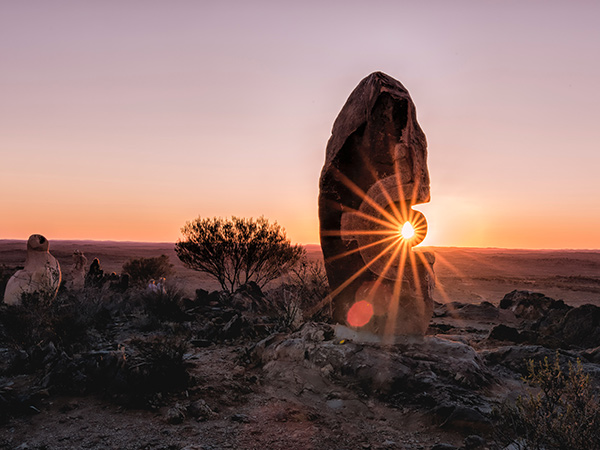
 Indian Pacific trip
The Broken Hill stop is a cultural experience like no other.

“The Royal Theatre is now the only nightclub in town; sticky floors and smells of disappointment." She quips on one of the early stops before stating the establishment was the largest theatre outside Sydney for a long time and has hosted some of Australia’s most celebrated rockers, Cold Chisel being the most recognised. 

Discussing the many movies that have been filmed in Broken Hill, Shelita is full of pithy commentary. “Wake in Fright is about a man who is stuck in Broken Hill drinking every day and can’t escape… it is the story of my life".  

Not entirely true. I find out later at the Tipsy Camel from Shelita’s mother, who is serving up drinks and light refreshments in between songs, trivia, bingo and games as part of Shelita’s show, that she returned from a life as a chef in Adelaide to build her show in her hometown of Broken Hill. Her builder brother not only helps with the renovations to the former brewery but also helps Shelita into her figure-hugging costumes between songs.  

Kalgoorlie, WA 
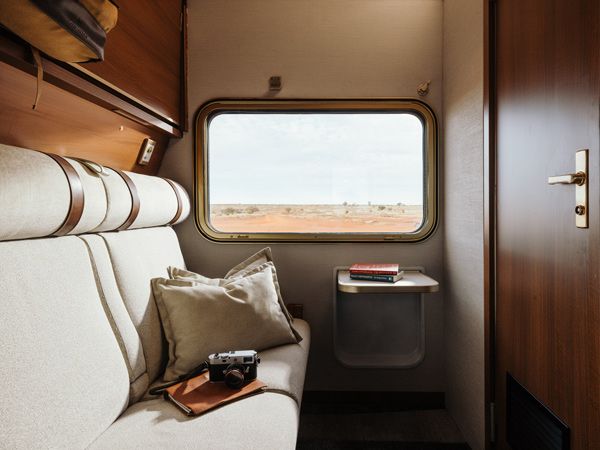
Rail Gold Premium Cabin Day
Wake up to views of the desert. (Image: Journey Beyond)

The new Indian Pacific itinerary now connects two of Australia’s greatest outback mining towns in one journey, Broken Hill and Kalgoorlie. On the first morning after leaving Perth, I opt for the Hannan’s North Tourist Mine experience. 

Grabbing a fine dirty chai from the lounge before disembarking, we are greeted at Hannan’s by Jason Dimer. He delivers a poignant Welcome to Country at the small onsite theatrette before revealing how his Irish grandfather and First Nations grandmother’s relationship brought two tribes together at the beginning of the 20th Century.
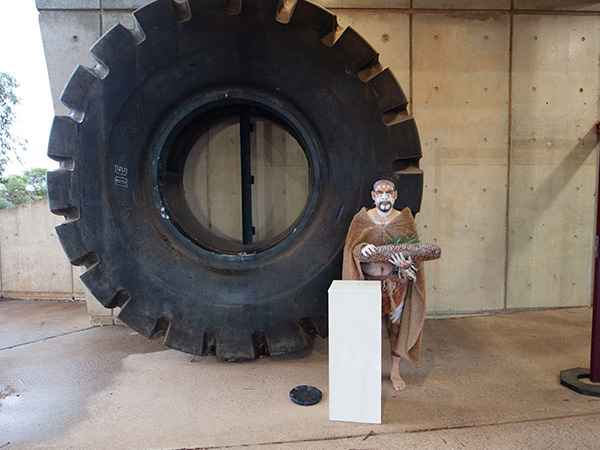
Jason Dimer
Jason Dimer shares his unique perspective on Kalgoorlie’s history and culture. (Image: Quentin Long)

We leave the small theatre and head to the two-up shed where local historian Danny Sheehan entertains with the numerous stories of two-up shenanigans in Kalgoorlie.  

Back onboard, brunch is a welcome sight. In anticipation of the three-course meal, I decided the breakfast BLT with hollandaise sauce may be a little lighter than the gammon steak, but I immediately have food envy when I spy the two dishes on a table next to me.
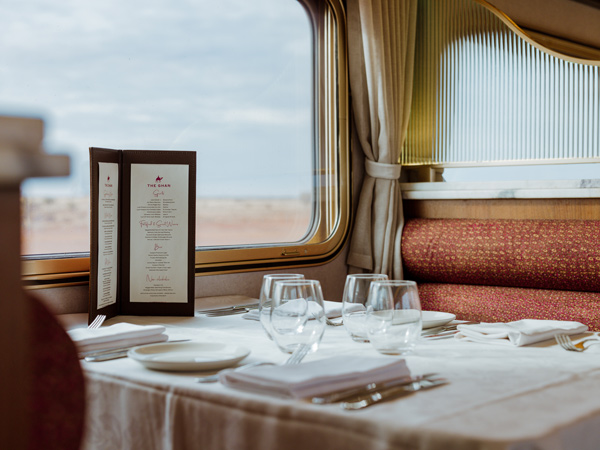
Indian Pacific Rail Gold Premium Dining
Dine onboard the Indian Pacific. (Image: Journey Beyond)

Aysha, our waitress, takes matters into her own hands for dessert. She delivers both the natural yoghurt parfait as I ordered and a second plate of blueberry, apple and pear toast “just because it is so good". Three-course brunch is now three and a half courses of superb dishes.  

Meanwhile, the Nullarbor creeps into view as the Great Western Woodland recedes from sight.  

Cook, Nullarbor, SA
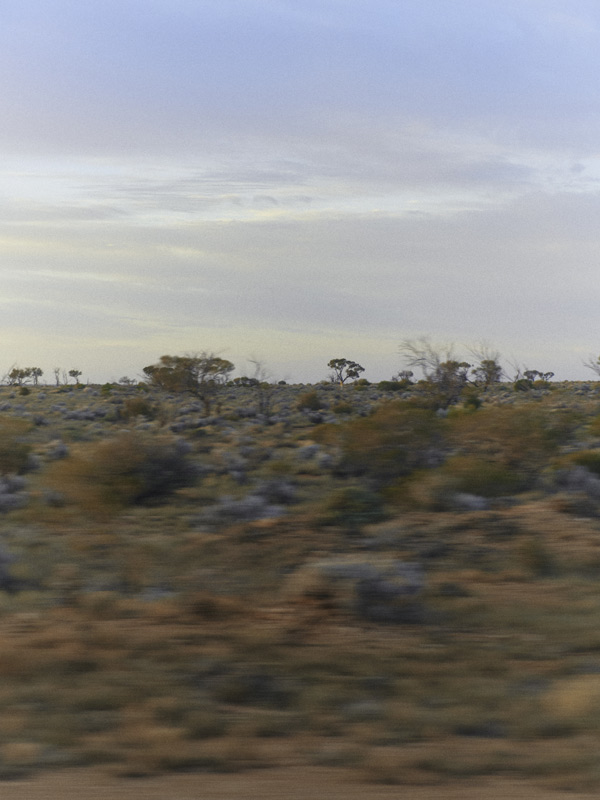
Indian Pacific On Train View Nullarbor
Spend hours admiring the view of the Nullarbor. (Image: Journey Beyond)

The feature-filled Nullarbor is today’s backdrop. Endless red sand, shrubs and the occasional flitting bird interrupt the seemingly lifeless landscape. We laze in the lounge car reading books and chatting with fellow travellers, or retire to our Gold Class Premium cabin to read, watch the Nullarbor like an endlessly flickering fire and nod off. No reception is a welcome enforced disconnect.  

I rouse myself for afternoon tea and trivia with an onboard musician before lazing and lolling to be roused again for dinner. This unavoidable, disconnected, slow pace is liberating.
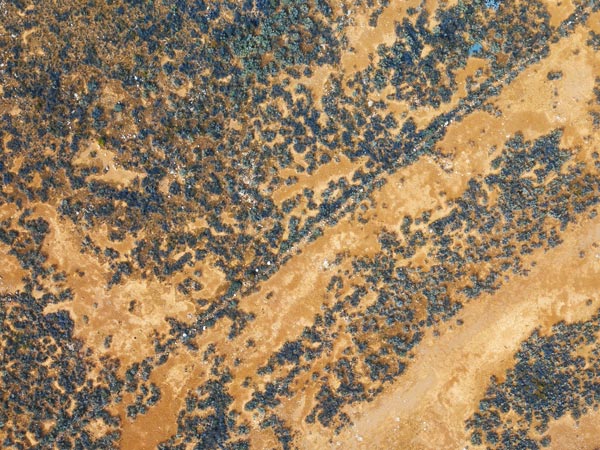
Indian Pacific Experience Cook SA
Spend the evening in ghost town, Cook. (Image: Journey Beyond)

After dinner, the highlight of the day and the new journey is a stop at Cook in the middle of the Nullarbor for a bonfire, nightcap and stargazing.  

This is big sky country, the quintessential Australian outback vastness that overwhelms most Westerners’ preconception of the possibilities of landscapes.  

And, here in the middle of the night, I get to look up, around and beyond into the solar system, with a glass of port and a chocolate almond or three. 

Blue Mountains, NSW 
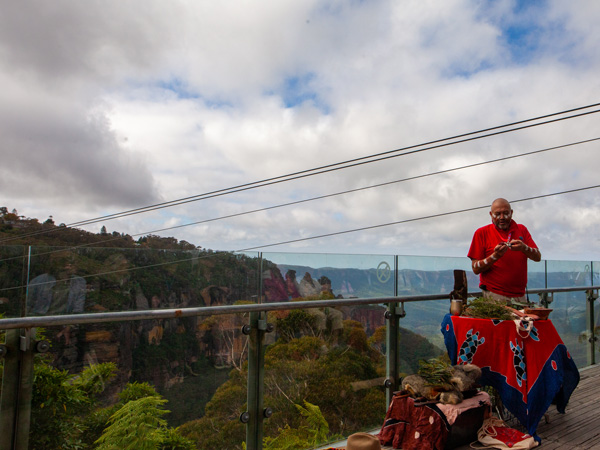
Uncle David King tour in the Blue Mountains off train experience Indian Pacific
Uncle David King’s mother is part of the Stolen Generation. (Image: Quentin Long)

The Blue Mountains excursion on the fifth and final morning is proof of the original thinking used to create this new, more immersive off-train experience-led itinerary.  

After passengers disembark for morning and lunch in the mountains, the train itself continues to Sydney Central Station. We will make the final two-hour journey to Sydney on a chartered passenger regional train.  

Uncle David King leads our cultural tour of the Scenic World rainforest. He speaks in the forthright, passionate manner of an experienced elder who has connected thousands of interested visitors to the ancient culture and contemporary experiences of Aboriginal Australia.  
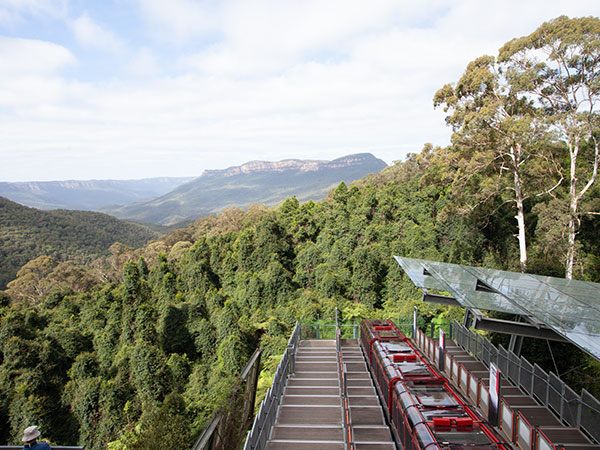
The world's steepest railway
The world’s steepest railway. (Image: Quentin Long)

His mother, part of the Stolen Generation, only started sharing her culture and experience with her children in 1996, waiting until “she felt culturally safe"; when she felt it would not be a burden to her children and accepted by a more accepting modern Australian community. Uncle David shares this uncomfortable narrative with such obvious pride and humour, focusing on the positive that he is now custodian of such knowledge, devoid of judgement that his acquisition of the knowledge was challenging.  

His positivity and humour make the simple 90-minute tour a delight. Sitting on the verandah, Uncle David passes around a weighty nulla and equally dangerous boomerang designed not to return but break the legs of mammals.  

Descending the world’s steepest railway, we stroll the easy boardwalks among the rainforest as Uncle David’s commentary ranges from modern to ancient. “That is the toilet paper tree, but not big enough for me."  

Indian Pacific Perth to Sydney is more than a journey of a lifetime
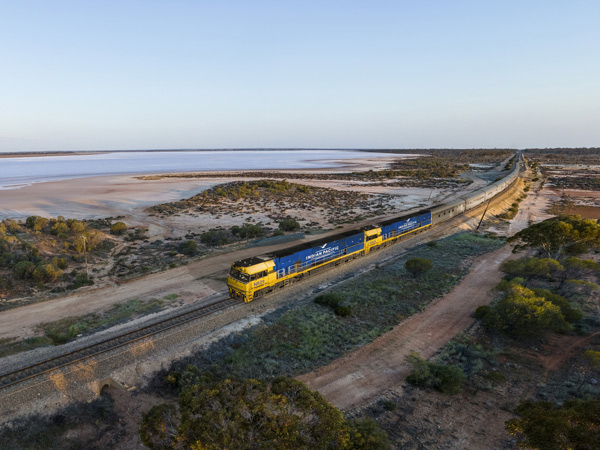
Indian Pacific drone shot in Lake Julia, WA
The Indian Pacific is a transcontinental journey that demands a place on every traveller’s bucket list. (Image: Journey Beyond)

The facts of the Indian Pacific are undeniable: a transcontinental journey accompanied by outstanding food and wine and superb service. In four nights of relative comfort and luxury on the Indian Pacific, you gain an intimate understanding. 

But more than that, the Indian Pacific is a journey across the formative landscapes that have shaped the people, from First Nations to industrial and agricultural pioneers.  

Indian Pacific Perth to Sydney new itinerary 

The new four-night, five-day itinerary is as follows: 

Day 1 

Board Perth at 4pm and depart at 6pm. Dinner onboard. 

Day 2

Arrive in Kalgoorlie at 6am for off-train experiences.  

Brunch back onboard at 10.30am.

Afternoon tea and trivia. 

Dinner onboard. 

Arrive at Cook for bonfire, stargazing and nightcap. 

Day 3 

Breakfast and lunch onboard, crossing the Nullarbor. 

Arrive at Long Plain and board the coaches for a one-hour drive to Seppeltsfield. 

Depart Seppeltsfield at 10pm and reboard the train in Adelaide. 

Day 4 

Breakfast onboard, arrive at Broken Hill. 

12.30pm depart Broken Hill.

Lunch and dinner onboard (prime emu spotting).

Day 5 

Breakfast onboard, disembark for Blue Mountains experiences at 9am.

Lunch at Echo Point.  

Join a chartered commuter train for the journey into Sydney. 

Quentin Long
Quentin Long is the Co-Founder and Managing Director of Australian Traveller Media. Quentin is a sought-after travel media commentator. He is Australia’s most trusted source for travel news and insights, having held weekly radio segments across the country since 2006, and regularly appearing on Channel 9’s Today and A Current Affair programs from 2010. Don't ask him his favourite travel experience as that's like asking him to choose a favourite child. However he does say that Garma Festival is the one travel experience that changed him the most.
See all articles
hero media

Taking the route less travelled along the Great Ocean Road

The Great Ocean Road has captured the hearts of Australians with its astounding scenery since 1932, but going off-course can enrich your experience with untouched nature, foodie delights and charming towns. 

It’s a chilly 16 degrees. My husband pulls on a steamer and jogs – as all seasoned surfers do – into the water. We’re at Bells Beach , the legendary break on Victoria’s Surf Coast that’s home to the Rip Curl Pro, the world’s longest-running event in competitive surfing. Each year, over the Easter long weekend, up to 40,000 people descend on the region for the event. Today, though, we have the beach almost to ourselves, and the less-than-favourable temperature doesn’t deter my husband from surfing this famous break.  

Bells Beach
Bells Beach is known for its epic surf break and is at the start of the Great Ocean Road. (Image: Tourism Australia)

Torquay to Anglesea and Aireys Inlet 

Split Point Lighthouse
The red dome of Split Point Lighthouse in Aireys Inlet. (Image: Tourism Australia)

The nearby surf town of Torquay marks the starting point for the Great Ocean Road . Unfolding our map, which we have marked out with a highlighted route for our children to follow, we set off for lesser-known Anglesea, a chilled-out town 20 minutes south of here. Its wide, sandy beach is a gentler swimming option for our young family. Groms can learn to surf here with Go Ride a Wave, which also runs stand-up paddle boarding on the Anglesea River.  

Split point lookout
The lighthouse overlooks the Shipwreck Coast. (Image: Tourism Australia)

After a couple of nights in Anglesea, we hit the road again, first stopping at Aireys Inlet. Here we stretch our legs at Split Point Lighthouse, which was made famous by the 1990s television series Round the Twist, before driving under the Memorial Arch that welcomes us, officially, to the Great Ocean Road.  

This 243-kilometre coastal road was built by returned First World War servicemen and serves as a permanent memorial to those who fought and died during the war. Carved into rock using hand tools and horse-drawn carts, it was a huge engineering feat and provided much-needed access to isolated coastal communities. 

Lorne to Birregurra 

Lorne is a delightful beachside stop for lunch and browsing boutique stores. It’s also the gateway to Great Otway National Park , which comprises a varied landscape of old-growth forests, cool-temperate rainforests, heathy woodlands and rugged coast. With the highest rainfall in Victoria, the region is home to many waterfalls – 10 of which are within 10 kilometres of Lorne.  

Turning slightly off the main drag, we wind along a gum-shaded road to Erskine Falls. Here, our son leads the way through the hyper-green rainforest and down 200-plus stairs to the cascade that drops 30 metres into a lush fern gully. We hop over large boulders to get closer to the falls, enjoying the entire place to ourselves; it’s worth the return climb.  

From Sheoak Falls Picnic Area, there are walking trails to Henderson Falls, Phantom Falls, Won Wondah Falls and Kalimna Falls, some of which follow an old timber tramway from forest-logging days, which only came to an end in 2008.  

Erskine Falls
Erskine Falls is one of many falls within a day trip of Lorne. (Image: Visit Victoria)

You can follow your appetite north to the town of Birregurra, which is part of the Otway Harvest Trail that connects farm gates, markets, wineries, breweries and distilleries. It’s home to three-hatted modern Australian restaurant Brae , helmed by celebrated chef Dan Hunter, set among native gardens and an organic farm, and Otways Distillery, which produces small-batch spirits using local produce and botanicals.  

Brae restaurant
Brae is a three-hatted restaurant in Birregurra. (Image: Tourism Australia)

Apollo Bay to The Otways 

Back on track, the cliff-hugging stretch between Lorne and Apollo Bay is breathtaking. At Teddys Lookout, we overlook the winding road ahead and St George River spilling into the ocean. We spend languid days in Apollo Bay, a buzzy seaside town that boasts a three-kilometre-long, crescent-shaped beach with a backdrop of rolling green hills. One evening, as the sun sets, we take the steep 10-minute walk to Marriners Lookout, which affords panoramic views of the ocean, hinterland and town.  

A 15-minute drive along the road, Maits Rest is a lush rainforest gully that has been protected since the early 20th century. Wandering along the 800-metre boardwalk, we inspect the delicate moss-covered forest floor and the gnarled roots of 300-year-old myrtle beech trees, then crane our necks to see their canopies, some 50 metres above us. It’s therapy in nature.  

Cape Otway to the Twelve Apostles 

Twelve Apostles
One of the famous Twelve Apostles, limestone sea stacks that rise from the Southern Ocean. (Image: Ben Savage)

The southernmost tip of Cape Otway is a delightful detour, home to the 1848-built Cape Otway Lightstation, the oldest surviving lighthouse on mainland Australia. We climb the narrow winding staircase to the gallery deck, explore the keepers’ quarters and telegraph station, and enjoy a coffee and some ‘famous’ scones at the charming onsite cafe.    

It’s a pinch-me moment to finally see the Twelve Apostles in person. This unmistakable cluster of limestone stacks rising abruptly from the sea were never 12, however. When coined this in the 1890s as a marketing ploy, there were only nine; today, only seven remain after two collapsed in 2005 and 2009. We admire these Aussie icons from the viewing platform, in awe of Mother Nature’s ever-evolving artwork.  

The Grotto
The Grotto is another natural attraction within Port Campbell National Park. (Image: Carmen Zammit)

Edging the wild Southern Ocean, this part of the coast – dubbed Shipwreck Coast – is made up of many sea-carved natural wonders including London Bridge, The Grotto and Gibson Steps. After exploring the lookout trails of Loch Ard Gorge/Poombeeyt Kontapool – its English name taken from the site of the 1878 shipwreck – we nestle into the sandy beach encircled by towering sandstone cliffs, as our children splash about on the water’s edge, and soak it all in.  

Port Campbell to Timboon 

Timboon Fine Ice Cream
Timboon Fine Ice Cream is part of a regional foodie trail. (Image: C McConville)

Just north of Port Campbell National Park, the region of Timboon is part of the 12 Apostles Food Artisans Trail, filled with purveyors of delicious foodstuffs such as Timboon Fine Ice Cream , Timboon Railway Shed Distillery and Apostle Whey Cheese. As an antidote to the indulgence, the 20-kilometre Poorpa Yanyeen Meerreeng Trail is a self-guided ride or walk between Port Campbell and Timboon through tall forests, over historic bridges and past sparkling lakes and farmland with grazing cattle.  

Warrnambool to Port Fairy 

Warrnambool building
A 19th-century building in Warrnambool. (Image: Peter Foster)

In Warrnambool, a town rich in maritime history, we take the four-kilometre Thunder Point Walk that traces the coast. The kids squeal when an echidna shuffles out from beneath the wooden boardwalk, and we stop to admire a seal lazing on a rock at the port.  

Further along, the streets of quaint fishing village Port Fairy are lined with 19th-century cottages, old stone churches and Norfolk pines. Follow the historic walking trail to see some of the 60-plus National Trust buildings. Port Fairy is also home to Port Fairy Folk Festival (6-9 March), one of the country’s longest-running music and cultural festivals. You could time your road trip with the event for a fittingly celebratory end to any journey.  

The Great Ocean Road can easily be done in three days, but we’ve spent a week on the road. The highlighted line on our now creased and well-worn map doesn’t follow the famous route precisely. It has sprouted branches in many directions, leading us to untouched rainforest and charming rural towns filled with culinary delights, and where we experienced some of our most memorable moments on the Great Ocean Road.    

A traveller’s checklist 

Staying there

Oak & Anchor
The Oak & Anchor in Port Fairy.

The Monty is a highly anticipated, newly refurbished motel with a chic Palm Springs-inspired aesthetic set across the road from the Anglesea River. Basalt Winery in Port Fairy grows cool-climate wines such as pinot noir and Riesling in rich volcanic soil. Stay among the vines in its tiny home, complete with a kitchen, lounge area and outdoor firepit. 

The Oak & Anchor Hotel has been a Port Fairy institution since 1857. Cosy up by the bar in winter or bask in the sunshine of the Lawn Bar in summer. The rooms are beautifully boutique with considered details, such as luxe baths for sinking into post-road trip. 

Eating there

The Coast in Anglesea is a modern Australian restaurant focused on local ingredients. Grand Pacific Hotel has been a local landmark in Lorne since 1879 and recently underwent a restoration. It serves a mix of traditional pub and Italian fare alongside ocean views.  

Graze is a cosy 40-seat dining room in Apollo Bay with a modern Australian menu complemented by regional wines. Apollo Bay Distillery offers tasting flights, a gin blending masterclass and serves woodfired pizzas.