How to travel the Australian Outback

hero media
How far do you have to travel into Australia’s outback, before you’re actually heading back in? Peter Robinson ventures passed Broken Hill through Uluru and Alice Springs to the Kimberley and back to find out exactly where the Great Australian Outback begins . . . .

There’s been a 4WD sitting in my driveway for the past 20 years. Not fulltime, you understand; it gets driven often, being the only vehicle I own.


And, yep, it gets driven around town a fair bit, which means I get my fair share of grief from doubting do-gooders who view any large-base vehicle in a metro setting as the ultimate in environmental terrorism.


But the fact is, I’ve chalked up tens of thousands of kilometres in the outback. And that’s where a big, capable 4WD comes into its own.


In 1813, when Gregory Blaxland struck out eastward from Sydney to forge a track through the Blue Mountains, it was a great adventure into the unknown.


Not that he probably thought that at the time, given the hardship involved. It must have been much the same for any of the other pioneering Europeans who made first forays east to west, south to north, edge to baking centre – the likes of Charles Sturt, John McDouall Stuart, Burke and Wills.


“It’s not actually delineated on any map, although many books refer to the outback nonchalantly as if the reader knows just where it is."


Now, in air-conditioned luxury, we can take a smooth, black ribbon towards the vast interior of Australia and find places where Google Earth and GPS units give way to good old-fashioned map reading. But first, it’s a huge country out there, and most of it’s outback – so let’s have a look at exactly where you’re going.


It’s not actually delineated on any map, although many books refer to the outback nonchalantly as if the reader knows just where it is. International tourists have heard of it and come to visit only to find a week in a hire car doesn’t cut it.


“…draw an imaginary line 200km inland starting from Adelaide, all the way around the east coast to Cairns, and call anything north and west of that line The Outback."


It’s been defined by various authoritarian tomes as “remote, sparsely inhabited back country", and “remote inland districts or back country of Australia." But these are no help at all.


Neither is the old saying that the outback consists of “anything out the back o’ Bourke." Beyond the Black Stump? Perhaps. But no two people can agree on which stump near what town is the real deal.


As a rough guide, here’s what AT reckons: draw an imaginary line 200km inland starting from Adelaide, all the way around the east coast to Cairns, and call anything north and west of that line The Outback.


Apart from a few larger towns, that’s a pretty good stretch of country to call outback (with apologies to Perth and Darwin) and there’s hardly anyone there (more apologies to Perth and Darwin and anyone stuck in-between).


For a final word on the matter, we asked long-time AT supporter and former Deputy PM the Honourable Tim Fischer to give us his first impressions of exactly where the outback might be.


“…once you’ve exhausted two tanks of fuel you’re in back country, where the population is sparse and mobile phone coverage is even worse. You’ll be allocated a batch of flies, which will enjoy your company and your food."


“Everything 50km or more north of the Sydney to Perth Transcontinental Railway Line," he asserts, “that’s also 100km or more west of the Newell Highway and 100km west of the NSW and Queensland east Pacific Coast. Alternatively, excluding all of Victoria and Tasmania, the ‘Great Outback’ is, by rule of thumb, everything north of a line from Sydney to Spalding, Port Lincoln to Esperance via the coastline of the Bight, and thence to Perth, but more than 100km inland from the Queensland east coast, 200km inland from the NSW east coast, and Cervantes on the northwest coast of WA. And I prefer that first one." Glad we got that settled.


On the practical side, once you’ve exhausted two tanks of fuel you’re in back country, where the population is sparse and mobile phone coverage is even worse.


You’ll be allocated a batch of flies, which will enjoy your company and your food. Locusts will hitch a free ride in your radiator, and corrugations will rattle your fillings loose.


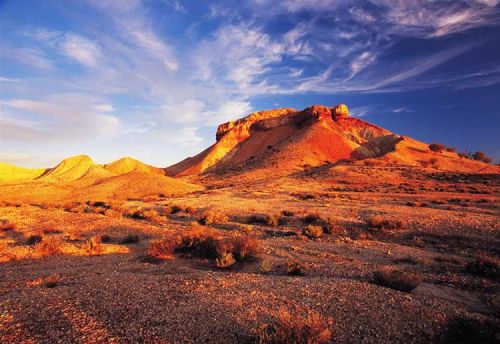
Stand just about anywhere in the outback, wave away the flies and look down at your feet. Discard any notions that this is the “dead" heart of Australia; though it’s a harsh environment amid the spinifex and saltbush, a surprisingly dynamic and resilient microcosm of life survives.
A downpour in the outback can produce – literally overnight – an ephemeral carpet of colourful wildflowers midst stone and red sand. In the same timeframe, it also produces impassable roads.


And, if Cooper Creek floods into Lake Eyre, another miracle occurs: vast saltpans become an inland sea teeming with myriad aquatic and bird life until the cycle begins all over again. With luck you might get a once-in-a-lifetime sight – a waterfall on Uluru, or snow on St Mary’s peak in the Flinders Ranges. Or simply a cold beer in a remote country pub.

Need tips, more detail or itinerary ideas tailored to you? Ask AT.

AI Prompt

Want to see more stories from Australian Traveller in your Google search results?

  1. Click here to set Australian Traveller as a preferred source.
  2. Tick the box next to "Australian Traveller". That's it.
Australian Traveller

Australian Traveller

View profile and articles
hero media

Discovering East Arnhem: Australia’s most unique and rewarding corner

    Joanne Millares Joanne Millares

    Hard to reach and harder to forget, East Arnhem offers something rare in modern travel: the chance to slow down and experience Country on its own terms.

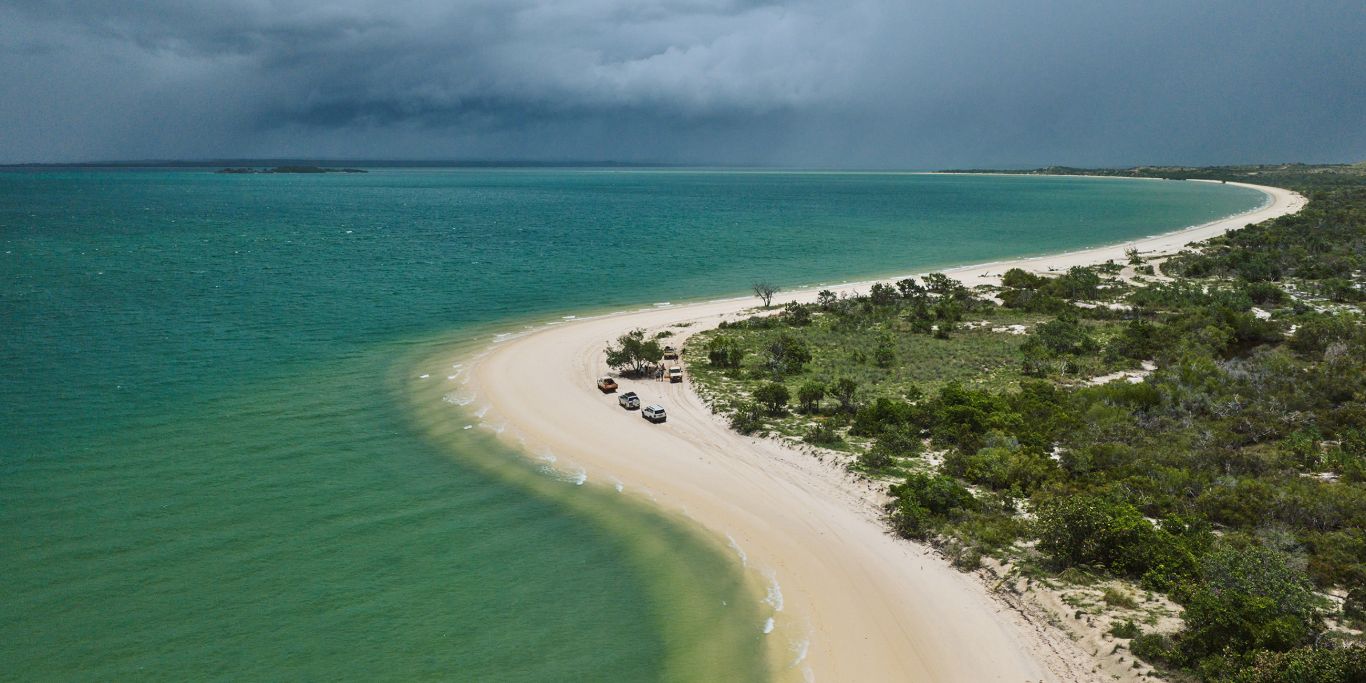
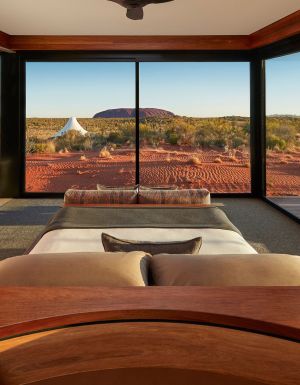
    The sky feels bigger in East Arnhem. It stretches wide and uninterrupted above rouged earth, stringybark woodland and beaches so empty they seem to belong to another era. The coastline curves for kilometres without a footprint and the horizon runs on forever.

    For comedian Lou Wall, the scale of the place was the first thing that hit them.

    “The sheer openness,” they say. “The sky feels infinite and the land stretches out endlessly. It’s pretty breathtaking visually.”

    But the physical landscape is only part of the story. The real reward isn’t only the scenery but the shift in perspective the journey brings. Visitors stop trying to tick off the destination and a real engagement takes over.

    “It made me never want to travel again,” Wall jokes. “In that I never wanted to leave East Arnhem.”

    Getting there

    Aerial shot of East Arnhem’s coastline as cars trace the curve of the shore.
    Sail along the remote coastline on an expedition cruise.

    Reaching East Arnhem is part of the adventure. Travellers typically fly into Gove Airport near Nhulunbuy via Darwin or Cairns, or arrive by expedition cruise along the remote coastline. Others make the journey overland along rutted dirt roads that cut through East Arnhem’s small pockets of monsoon forest.

    However you arrive, there’s a distinct feeling of crossing into somewhere different. Permits are required to visit the region, reflecting the fact that this is Yolŋu land where communities and traditional owners maintain deep cultural connections to Country.

    The extra planning becomes part of the experience. By the time visitors arrive, they understand they’re entering a place not just of respect, but also patience and curiosity.

    At one with nature

    East Arnhem’s  landscapes leave a strong imprint. For Wall, one place in particular still lingers in their memory: Ngalarrkpuy, also known as Lonely Beach, near Bawaka Homeland.

    “I genuinely felt like I was living inside an Instagram filter,” they say. “One of the most stunning feats of nature I’ve ever seen. The water was so clear I swear I could see even the fish smiling.”

    Across the region, natural experiences unfold at a slower pace. Fishing, beachcombing and island hopping reveal the rhythm of the coastline. The tides shape daily life and the vastness of the landscape makes even simple moments feel downright cinematic.

    For visitors with limited time, Wall says the Bawaka Homeland experience is unmissable.

    “I just left and I’m already planning when I can get back there.”

    The sense of remoteness is part of the appeal. In a country where many beaches are crowded and well-trodden, East Arnhem’s coastline still feels wonderfully wild.

    Immersing in local culture

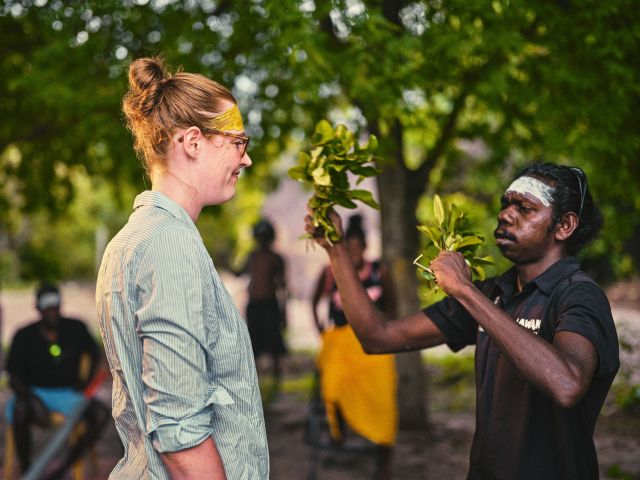
    A visitor spends a meaningful moment alongside Yolŋu guides, gaining insight into their deep cultural knowledge and connection to the land.
    Experience authentic moments with the locals.

    Culture is woven through every experience in East Arnhem. Visitors have the opportunity to spend time on Country with Yolŋu guides and knowledge holders who share stories and traditions that have been passed down for generations.

    For Wall, one of the most powerful moments came during a conversation with a Yolŋu elder.

    “I got to meet a traditional elder, Mayalil, in Nhulunbuy,” they say. “Listening to her talk about her home made the land feel alive in ways I couldn’t have imagined.”

    The region is also home to internationally recognised Aboriginal art centres where artists shape works deeply connected to land and family knowledge.

    Music carries the same cultural energy. East Arnhem has produced globally recognised artists such as King Stingray and Baker Boy, blending Yolŋu language, storytelling and contemporary sound.

    Wall experienced this musical spirit first-hand.

    “A jam session around the fire was it for me,” they say. “Letting the deep joy and history of their music wash over me…  and meeting a few of the King Stingray musicians was unreal.”

    These moments of human connection often become the most memorable part of a visit.

    Spotting local wildlife

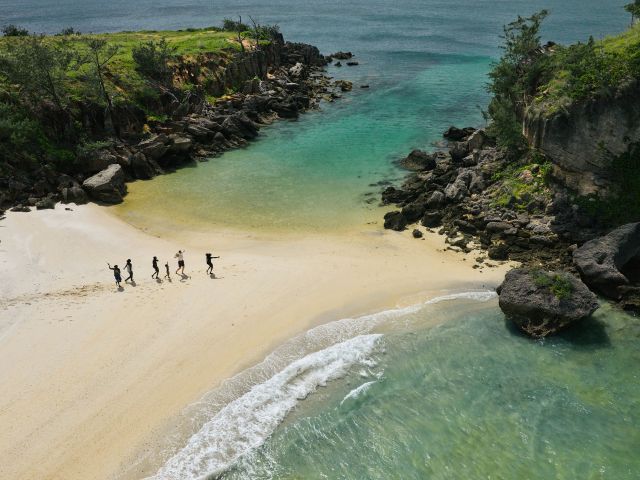
    An aerial view of the beach shows tiny figures lined up across the white sand, moving as if in a rhythmic dance.
    Step into a world where nature reigns.

    The wildlife of East Arnhem adds another layer to the experience. The region is home to an extraordinary range of animals, from waterbirds and turtles to dugongs, dolphins and the formidable saltwater crocodile.

    Wall admits they didn’t actually spot a croc during their visit.

    “Devastatingly, I didn’t see one,” they laugh. “But with all the stories from the locals I definitely gained a healthy respect for caution.”

    Some of the most memorable wildlife encounters can be surprisingly small., At Banubanu Beach Retreat on Bremer Island, Wall remembers walking along the beach one morning and watching it come alive.

    “As you walk through the sand you see hundreds of crabs scurrying into their holes as you pass by,” they say. “Such a small thing, but it was completely magical.”

    Moments like this reveal the quieter rhythms of East Arnhem, where even the smallest creatures seem to play a part in the landscape.

    Visitors who make the journey soon learn the most important travel tip of all.

    “Go in open-minded with a sense of curiosity,” Wall says. “Be prepared to ditch your plans. The land and the locals will guide you on an adventure no spreadsheets could ever compete with.”

    And most importantly, they add, don’t rush.

    “The land and people deserve your time and attention. You’ll be all the better for slowing down.”

    For more information on visiting East Arnhem, head to eastarnhem.com.au.