5 things you can only see or do in East Arnhem Land

hero media
East Arnhem Land is a stunning wilderness bound together by pockets of rich Yolngu culture, well worth a journey, if only to see thriving indigenous communities in action.


Here are five things you’ll want to know before the big journey, writes Steve Madgwick.

1. Think your family is complicated? The Yolngu kinship system…
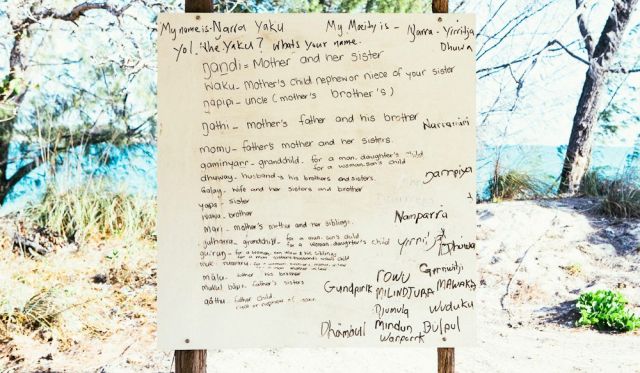
Yolngu kinship system moity, Arnhem Land, Northern Territory
Think your family is complicated – the Yolgnu kinship system, the people of East Arnhem Land (photo: Elisse Hassey).

In the intricate Yolngu kinship system, each person is one of two classes known as a moiety – Dhuwa or Yirritja. The designation is regardless of clan and derives from the father’s side. Traditionally, everyone must marry outside their own moiety.

Next in the ID tree, everyone also has ‘clan’ and ‘skin’ names, which can make for intensely complex relationships (for an outsider to understand) between siblings. In some instances, certain brothers and sisters are not allowed to speak to each other directly.

The overall objective is for the two moieties to exist in harmony, like ‘Yothu Yindi’, mother and child. Confused? So are we.

Unless you live within this culture it could take years to grasp the nuances of this complex system.


Need tips, more detail or itinerary ideas tailored to you? Ask AT.

AI Prompt

2. Bawaka: the most beautiful beach in Australia?
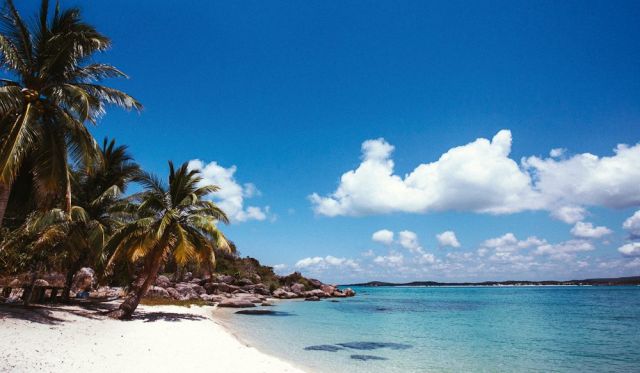
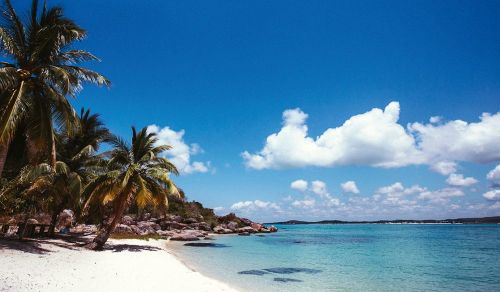
Bawaka east Arnhem Land
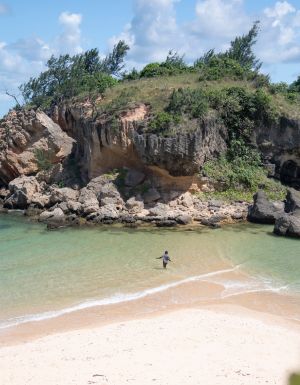
Most beautiful beach in Australia… Don’t even think about swimming, though, at Bawaka, East Arnhem Land (photo: Elise Hassey).

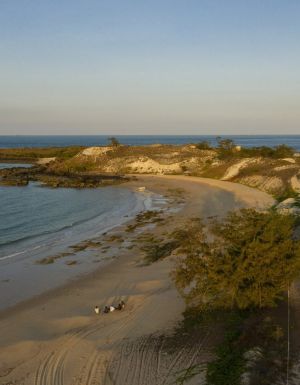
East Arnhem Land has seriously raw natural beauty, but Bawaka, home to the Burarrawanga family, stands tall even in such auspicious company. A couple of very sandy hours’ drive south from Nhulunbuy brings you to the small settlement on palm-tree-strewn, pearl-white beaches.

Bawaka also hosts a variety of cross-cultural activities such as the two-day Gay’wu Women’s Program. You may also want to keep an eye out for resident coconut-loving crocodile ‘Nike’ at this eastern Port Bradshaw homeland.

The reptile was reportedly named in honour of Cathy Freeman’s Olympic heroics and can be seen sunbathing on the sand here.

3. A very different constitution

Buku-Larrnggay Mulka may be the best indigenous art centre in the country, thanks to its powerful variety of Yolngu bark paintings, weavings and jewellery. It also houses modern artefacts critical to Yolngu law and spirituality, headed by the Yirrkala Church Panels.

The two four-metre-tall painted boards (one for each moiety, with all clans represented) are akin to a constitution.

Weekly travel news, experiences
insider tips, offers, and more.

4. Garma: the must-go festival
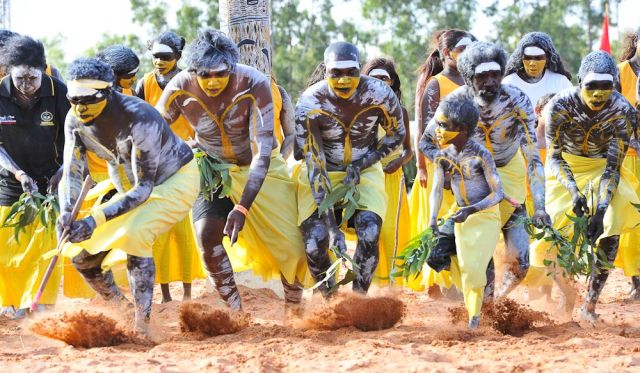
Garma Festival Dancing, Arnhem Land, Northern Territory
Immersing yourself in Indigenous culture in Arnhem Land with Lirrwi Tourism (photo: Wayne Quilliam).

Everything about modern Yolngu culture is embodied in the annual Garma Festival, held in August (reasonably easy to get to by Arnhem Land standards, if you fly into Nhulunbuy).

It’s arguably Australia’s most important indigenous festival with ceremonies, celebrations and debates.

5. The ethics of dining on dugongs and turtle eggs
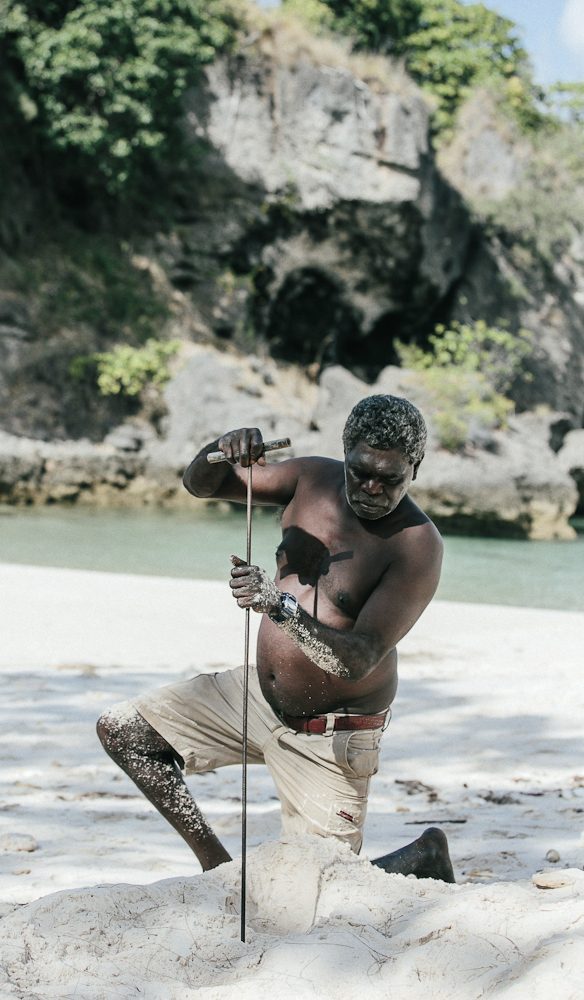
Digging for turtle eggs East Arnhem Land
Hard-won right: Waka Mununggurr digging for turtle eggs, East Arnhem Land (photo: Elise Hassey).

Inevitably you will be faced with difficult decisions in East Arnhem Land about eating animals not usually found on your plate.

Hunting and eating turtles and dugongs, for example, is integral to Yolngu culture, a controversial and hard-fought for right.

Waka Mununggurr was protecting his own part of Blue Mud Bay long before Anglo-Australian law allowed him to do so. “I used to chase a lot of Vietnamese, Filipino and Cambodians around those bays. I used to tell them not to be there."

A legal fight then began against commercial fishermen, which ended up in a five-year court battle. This effectively gave the Yolngu sea rights to the area.

Want to see more stories from Australian Traveller in your Google search results?

  1. Click here to set Australian Traveller as a preferred source.
  2. Tick the box next to "Australian Traveller". That's it.
hero media

8 reasons why the low season is the best time to explore the Northern Territory

Credit: Tourism and Events NT

September to April in the Northern Territory rewards those who seek adventure.

Sure, the Northern Territory shines during the high season, but did you know it transforms into lush magnificence in the summer low season? From September to April, hundreds of waterfalls roar into action, vegetation flourishes and natural pools swell, all thanks to spectacular storms. This is when some of the country’s best arts and cultural events hit the calendar, too.

Travelling at this time of year means you’ll also be rewarded with off-peak travel pricing on accommodation, tours and experiences, and can even enjoy many of the top sites all to yourself.

1. Kings Canyon is transformed

Kings Canyon Rim Walk Garden Of Eden in the rain
Kings Canyon transforms in the low season. (Image: Kassia Byrnes)

Kings Canyon’s towering sandstone domes and crevasses are a sight to behold year-round, but during the low season you can witness a rare phenomenon. This ancient outback wonder’s arid landscape bursts to life when it rains, temporarily transforming it with waterfalls that thunder down the cliffs. At the base of the canyon is the verdant Garden of Eden and its permanent watering hole.

2. John Hayes Rockhole is a natural wonder

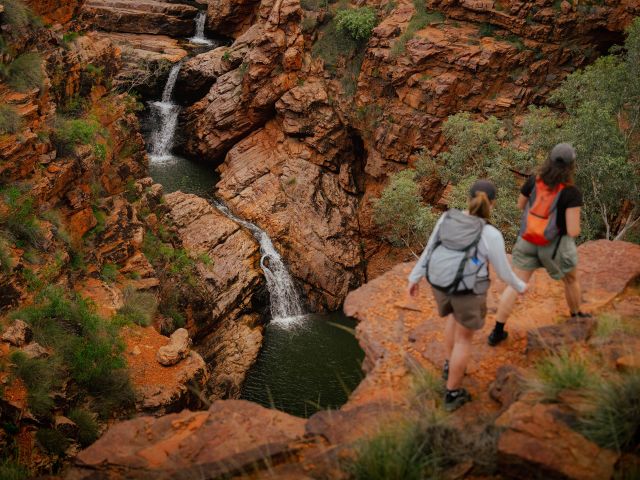
Two women hiking to John Hayes Rockhole, one of the unforgettable experiences during the best time to explore the NT.
Hike to a desert oasis. (Credit: Tourism and Events NT)

Hidden in the Trephina Gorge Nature Park in the East MacDonnell Ranges, John Hayes Rockhole is an oasis waiting to be discovered. Visit the narrow canyon during the high season, and you may see only a sandy creekbed, but after rain in the low season the pool is full of cool water. It’s accessible via a 4WD-only track off the Ross Highway, or you can set out early and join the nine-kilometre Trephina Ridgetop Walk. The reward for undertaking the hike is worth every step, and there’s a dedicated, tent-only campground for those who’d like to soak up the serenity overnight.

3. The Red Centre Light Trail shines bright

A woman admiring The Light Towers, one of the must-see attractions during the best time to explore the NT.
Watch the Outback light up after sunset. (Credit: Tourism and Events NT)

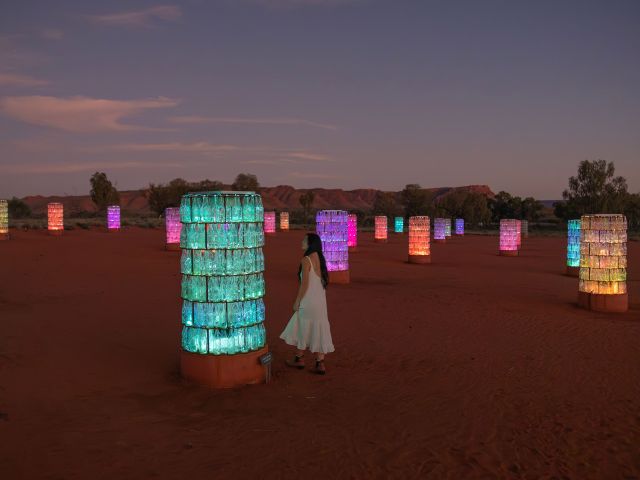
The Red Centre’s rich cultural heritage and lack of light pollution make it the ideal setting for immersive light shows, and you can experience the most iconic ones on an epic six-day road trip in April. Witness the Parrtjima cultural festival in Mparntwe (Alice Springs) before heading to Kings Canyon for Bruce Munro’s Light-Towers, where 69 glowing towers shine to a celestial soundscape. At Uluṟu, Munro’s Field of Light blankets the red soil with glowing frosted-glass stems, and the Wintijiri Wiru drone show lights up the sky in front of the sacred cultural site. Along the way you’ll witness the changing landscapes of the desert from the West MacDonnell Ranges to the Valley of the Winds.

4. The Parrtjima festival lights up the Red Centre

Festival lights illuminating the Northern Territory, showing why the best time to explore the NT is during festival season.
Witness the magic of Parrtjima. (Credit: Tourism and Events NT)

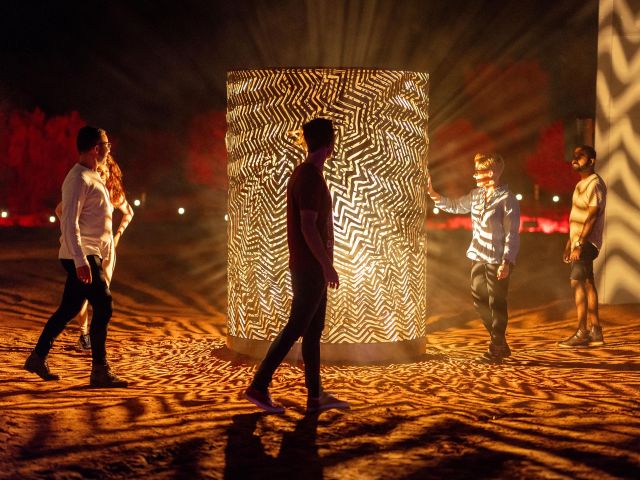
For 10 days every April, the Red Centre turns into a dazzling display of colour for the Parrtjima festival. Held at Alice Springs Desert Park, the unmissable celebration shines a spotlight on the world’s oldest living culture using modern technology. Artworks by local Aboriginal artists are transformed into large-scale illuminated installations with accompanying soundscapes, offering a unique opportunity to see the spectacular sunburnt landscapes, night skies and 300-million-year-old West MacDonnell Ranges in a new light. The jam-packed line-up of art and cultural events also includes workshops, markets, short films, talks and live music.

5. Cruising along Nitmiluk Gorge is breathtaking

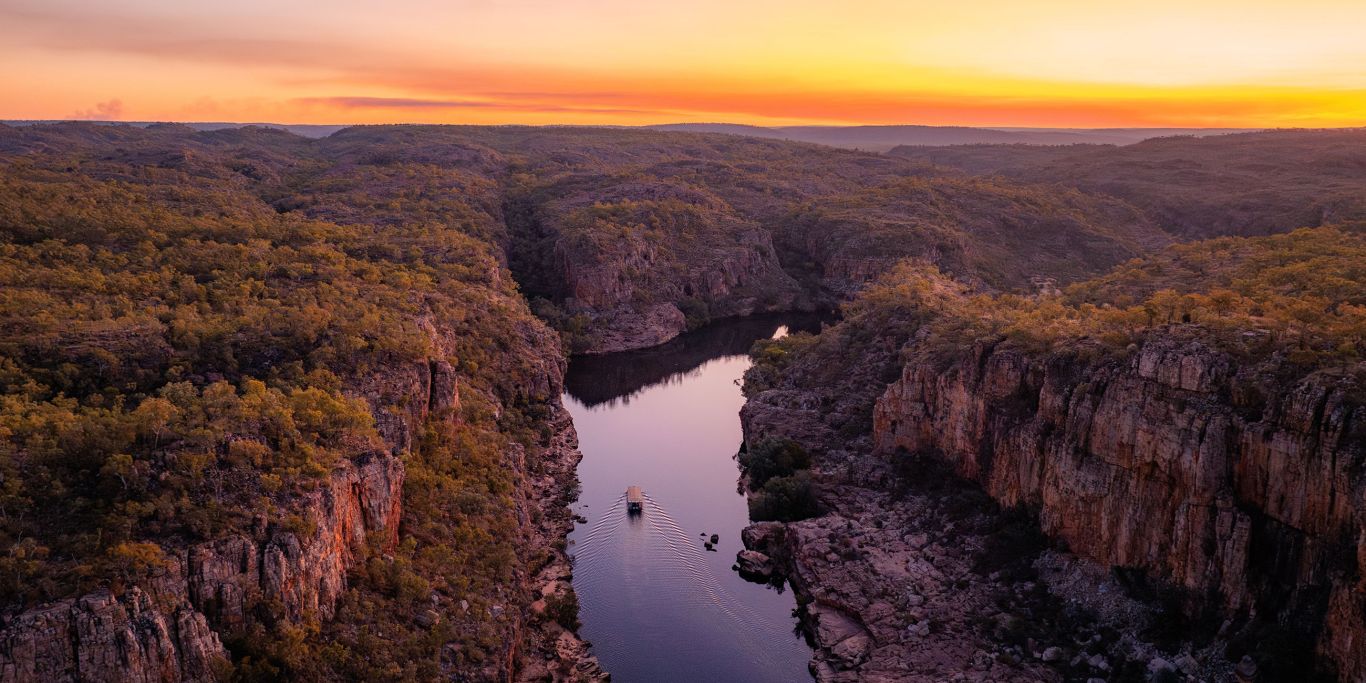
Aerial view of Nitmiluk Gorge, showcasing its dramatic cliffs and waterways.
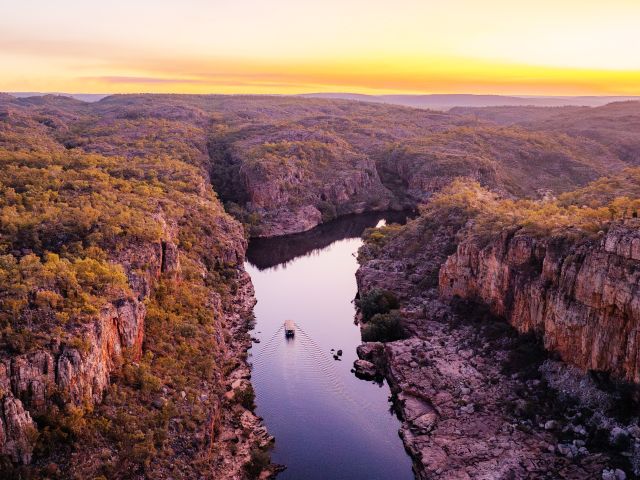
Sail between towering sandstone cliffs. (Credit: Tourism and Events NT/Nic Morley)

Drifting down the emerald waters of Nitmiluk (Katherine) Gorge between towering red sandstone cliffs carved over millions of years, all while waterfalls stream down around you, is an experience like none other. Nitmiluk Katherine’s two-hour NitNit Dreaming Two Gorge Tour sails through gorges past ancient rock art while a local guide imparts knowledge about the Jawoyn culture and significance of the landscape.

6. You can explore local culture on the Tiwi Islands

A quick boat ride from Darwin lies the peculiarly pink shores of Melville Island, Tiwi Islands. Populated by the hilariously cheeky Indigenous Tiwis, stepping onto the Islands is like stepping back in time. Sweeping rusty dirt roads meander through the eucalypt forest and are interspersed only by small communities and freshwater springs.
Immerse yourself in Tiwi culture. (Credit: Tourism and Events NT/Elise Cook)

Take an 80-kilometre ferry ride from Darwin to arrive at the Tiwi Islands, an archipelago of 11 picturesque islands and a haven for art lovers and anglers. On the Tiwi By Design walking tour you’ll be guided to the Tiwi Design Art Centre, one of Australia’s oldest art centres, to observe local artists in action and join a screen printing workshop.

If you’re more partial to sinking a line, book a stay at Tiwi Island Retreat in April. It’s one of the best months to fish for barramundi, and their world-class fishing adventures are your best chance at reeling in a prized catch.

7. Scenic flights over Kakadu’s waterfalls are jaw-dropping

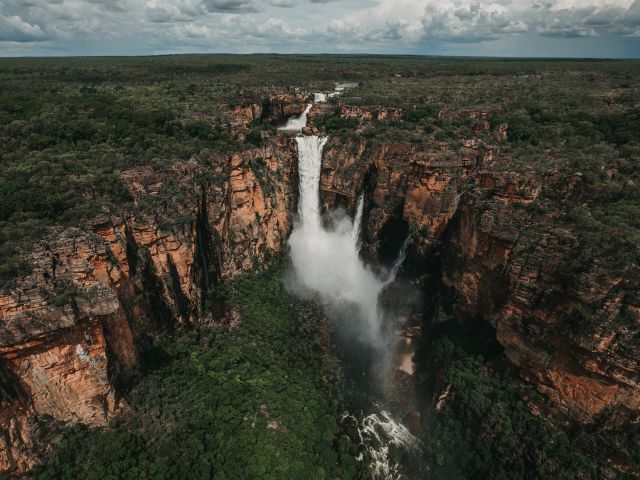
Jim Jim Falls from above during a wet season helicopter tour. Covering nearly 20,000 square kilometres, Kakadu National Park is teeming with wildlife, home to important Aboriginal rock art sites, and takes in diverse and exotic landscape.
Soar above Jim Jim Falls. (Credit: Tourism and Events NT/Jarrad Seng)

Seeing Kakadu National Park’s gushing waterfalls and dramatic escarpments from above offers a dose of unparalleled beauty – and it’s all best witnessed in the low season.

Taking flight from Darwin, Kakadu Air Services offers an unforgettable experience, with doorless helicopters revealing unobstructed views of the 1.8-billion-year-old landscape. Soar above the untouched savannah that turns into a tropical green paradise, marvel at the thunderous Jim Jim Falls and Twin Falls, and whiz through ancient sandstone canyons. If you’re lucky, the scenery will look all the more dramatic with rolling tropical storm clouds in the distance.

8. Litchfield National Park is an amazing place to cool off

Litchfield National Park
Dive into natural swimming holes. (Image: Tourism NT/Joshua Griffen)

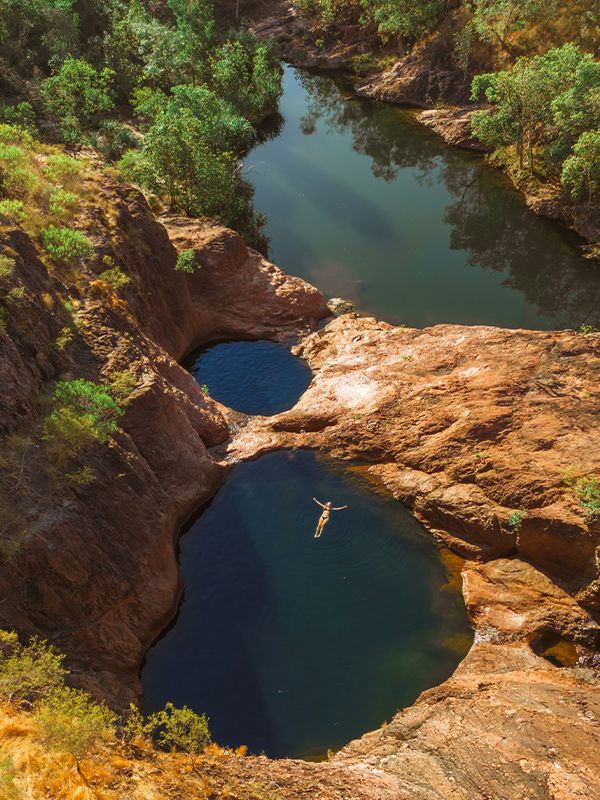
Litchfield National Park is peppered with stunning natural swimming pools for you to beat the heat in. Take a refreshing dip in pristine, crocodile-free spots such as Buley Rockhole, a series of spring-fed cascading pools, and the nearby Florence Falls, which is enveloped by monsoon rainforest and features a crystal-clear plunge pool fed by a 15-metre-high waterfall. Be sure to check the Northern Territory Parks & Reserves website for closures before you go.

Start planning your low season adventure of a lifetime at northernterritory.com.

5 things you can only see or do in East Arnhem Land