Australia is full of wonders, from icons to the lesser known. Here, we’ve curated two wonders from our 100 list that the ACT gets to call its very own.
This article is part of our 100 Australian Wonders series. Throughout the series, we explore our nation’s wonders across culture, nature, food, islands and many more. We hope it inspires your own exploration of Australia’s many wonders.
1. National Arboretum
Travelling with: Christine Aldred
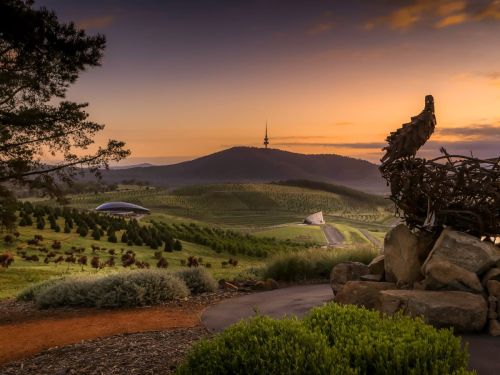
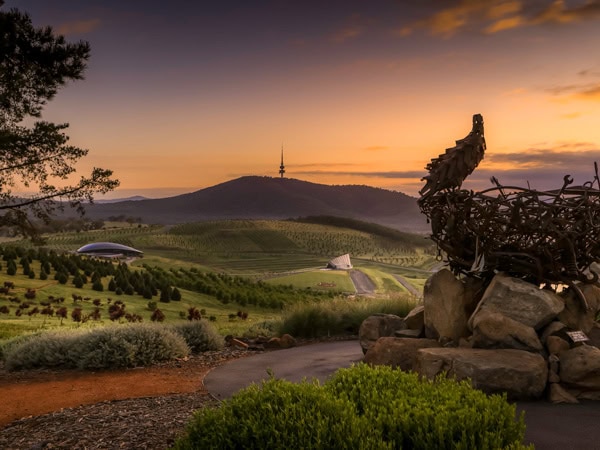
Dotted across hills, the National Arboretum in Canberra is a living national treasure. Rising from grounds razed during the devastating 2003 firestorm, the arboretum is a stunning patchwork of greens, reds and golds.
Home to 94 pockets of rare and endangered forests, it’s more than just beautiful trees. It’s a place where visitors can wander gardens, join walks, admire bonsai, gather for meals and concerts, or cycle the tracks while children play in the acorn playground and fly kites.
With sweeping views over the city and mountains, it’s the go-to spot for catching a sunset, sunrise or hot air balloons floating by at dawn.
Walk, cycle or picnic in the expansive grounds of the National Arboretum in Canberra. (Image: Visit Canberra)
2. Parliament House
Travelling with: Christine Aldred
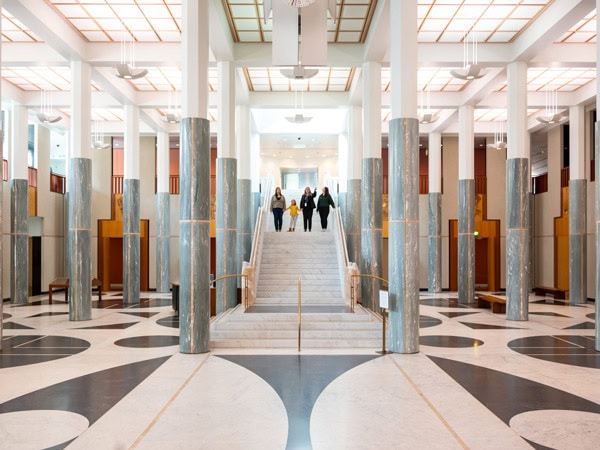
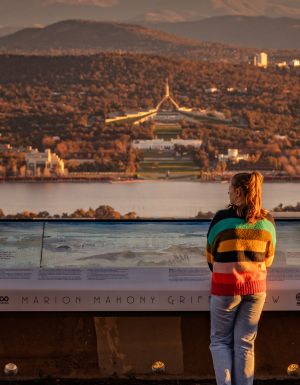
Canberra’s Parliament House is a result of an international design competition, opening its bronze-handled doors in 1988. The building that serves as our national parliament is a remarkable architectural feat and full of surprises.
Visit Parliament House on Capital Hill, Canberra. (Image: Tourism Australia)
Its centre is built within Capital Hill itself and covered with grass, designed so that people can stand above their elected representatives. With more than 4500 rooms, nine hectares of native gardens, a 22-kilometre labyrinth of corridors and even its own furniture restoration services and post office, Parliament House operates as a virtual city.
Daily or specialist tours provide intriguing insights by exploring the building, its extensive art collection and Indigenous perspectives.
Tuck your napkin firmly in place and get ready to dive into Bendigo’s history.
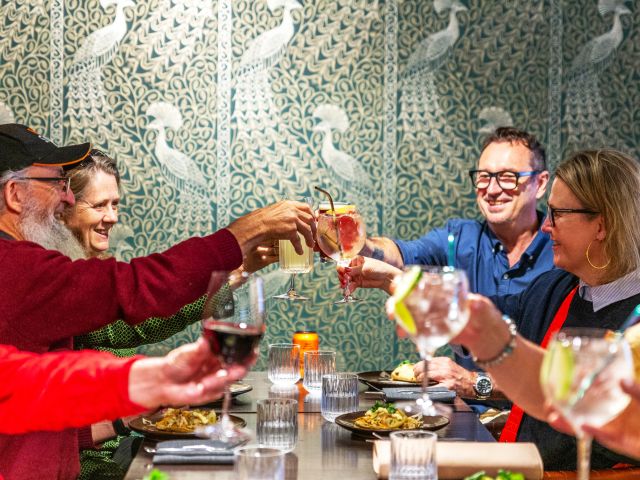
It’s an internationally recognised fact that Bendigo food experiences prove this region knows how to wine and dine. After all, its shiraz-laden landscape was named Australia’s first UNESCO Creative City and Region of Gastronomy. But what visitors lured in by this shiny label might not know is how deeply its culinary scene sits within the gold-rush town’s colourful past.
Whether you’re eating in a grand colonial bank or nibbling through a gold miner’s garden, grab a big plate. In Bendigo, every meal is served with a huge helping of heritage.
Take a food tour
Join a Foodie Walking Tour to local highlights like Ms Batterhams.
Start in the capable hands of Bendigo Guided Tours. Named as the 2025 Victorian Best New Tourism Business, they run two 12-person options. A Taste of Bendigo – Foodie Walking Tour will see you tasting seasonal dishes and sipping wine, craft beer and cocktails made with regional spirits over two-and-a-half hours, with stops at Ms Batterhams, Wine Bank on View, The Dispensary and Bendigo Brewing.
You can up the ante a notch or two with the Four Hats of Bendigo – a night of fine-dine hopping with the experts across Terrae, Le Foyer, Alium Dining and The Woodhouse.
Book a table
Dine at Terrae.
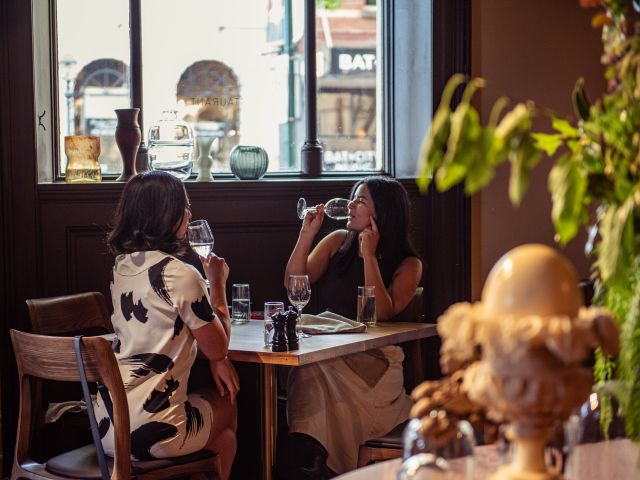
Alternatively, see Bendigo’s stars under your own steam. There’s Terrae, where produce from the owners’ own farm kitchen garden and orchard is plated up inside what was once a bank, while cocktails are poured in the underground bar below. For something special, book a private table in old bank vault. Rather less wholesome? The bullet hole in the window – a throwback to Victoria’s wild gold rush era.
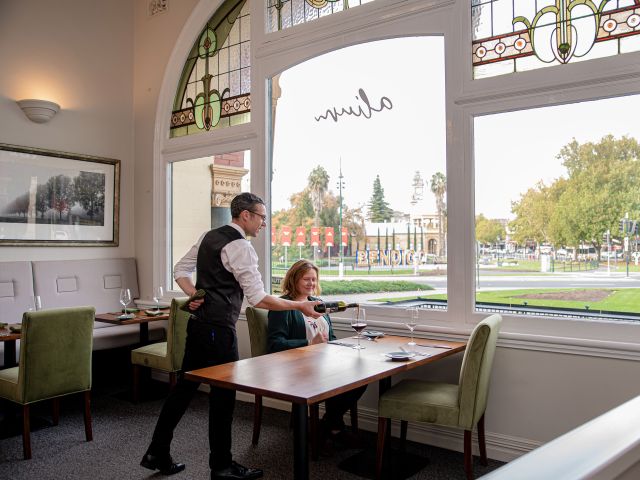
Another former bank-turned-eatery, Alium Dining, goes full art nouveau inside a 1908 building overlooking the Alexandra Fountain in the heart of Bendigo. Here, Alium’s Asian-meets-European flavours run all the way from duck leg croquettes with mandarin marmalade to raw trevally with coconut and nước chấm, to pork milanese with anchovy and stout mustard.
Beneath an old school hall at Mackenzie Quarters, Ms Batterhams serves southern European-inspired dishes inside a 19th-century basement bar and restaurant. Beyond its sourdough crumpets (smeared with taramasalata, paprika and parsley oil, if you must know) is the origin of the restaurant’s name: Winifred Batterham, the owners’ mother’s former kindergarten teacher. Honour her properly with a ‘Winifred’ cocktail.
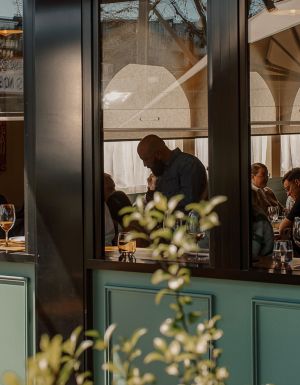
Alium Dining offers a unique setting inside a 1908 building.
Carnivores, get ready to bang your sharpest knives on the table. Bendigo’s only dedicated steakhouse, The Woodhouse, specialises in Wagyu sourced from surrounding farms. They’ve got beef every which way – from tartare topped with Giaveri Oscietra caviar and wagyu toast to porterhouse dry-aged and grilled over redgum.
Your next bank stop on the food circuit is Bunja Thai. Housed inside the former Colonial Bank, it’s all Victorian-era Australian grandeur, from the enormous arched ceilings to the detailing overhead. Thai Singha and local craft beer jostle for attention – but both are perfect quenchers when you’re sharing barramundi baked in banana leaf beneath all that old-world opulence.
If your trip through Australia isn’t complete without a country pub stop, make it The Bridgewater Hotel on the Loddon River. Renovated since its 1942 beginnings, but the establishment still retains its Art Deco charm. It’s the kind of place where steak burgers come stacked with bacon, egg, cheese and dripping beetroot relish, and are best handled in the riverside beer garden.
Pour a glass
Find over 180 local wines at Heathcote Wine Hub.
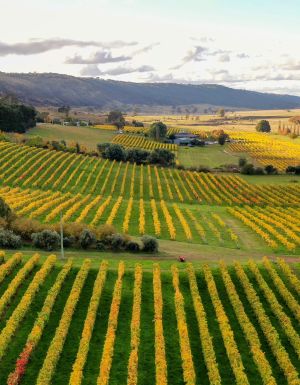
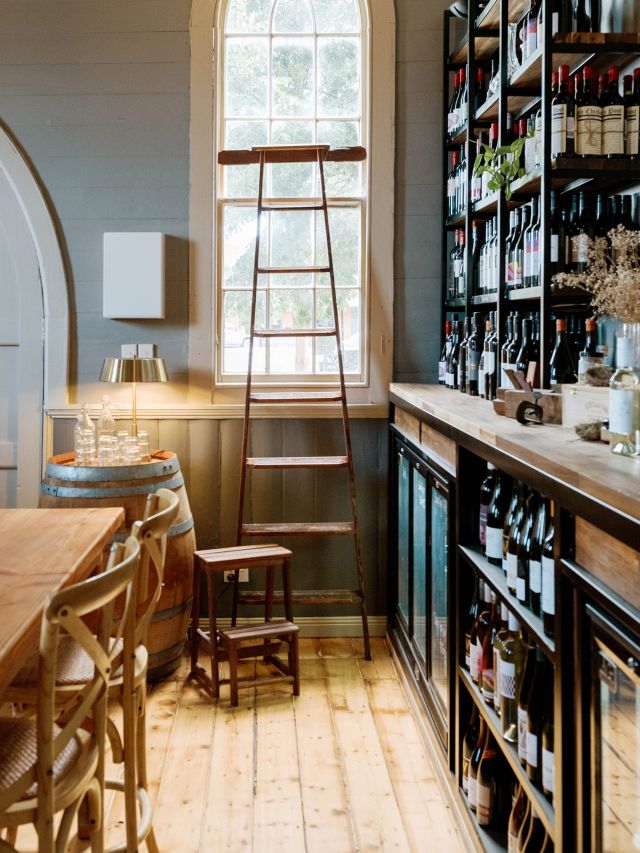
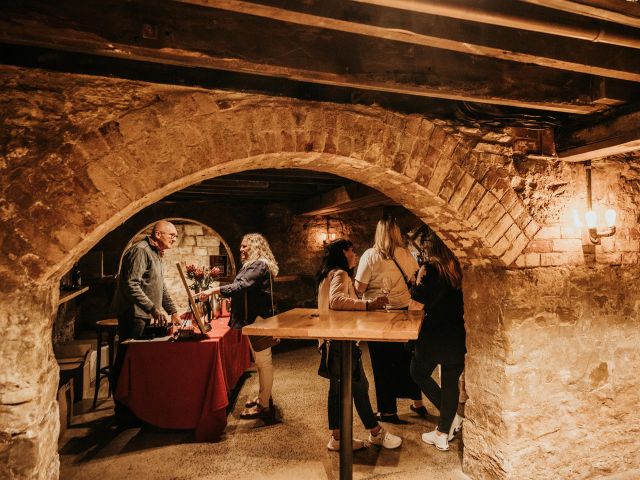
Your plate’s been stacked. Now it’s the glass’s turn – ideally with the famously bold shiraz and cab sav grown here. Early settlers in Bendigo and Heathcote were onto something when they first planted vines in the area’s mineral-rich soil, and their legacy still pours strong across more than 60 cellar doors today. Start big at the Heathcote Wine Hub, where more than 180 wines from nearby vineyards sit beneath the rafters of a restored former wooden church, with 16 available to taste by the glass.
Heathcote Winery might have become one of the area’s first commercial wineries in the seventies, but its story started way before its courtyard tastings. Back in 1854, it operated as a miners’ produce store during the gold-rush years. Other cellar doors aren’t immune to reinvention under the wine wave either. At Munari Wines in Heathcote, charcuterie boards are presented in their newly renovated cellar, originally the stables of the former sheep station.
Discover local events
Time your trip for the Heritage and Hidden Spaces Wine Walk
Time your trip right and watch the parks, gardens and buildings fill with food and drink. Fans of the malt: mark 29 August 2026 for Bendigo On The Hop, when craft breweries take over venues throughout the CBD. Brews make way for history at the Heritage and Hidden Spaces Wine Walk (17 October 2026), where bottles are opened inside some of the city’s most interesting buildings – including rarely opened spaces. In November, the Regional Gin Gala raises spirits in Mackenzie Quarters with a boozy celebration of its homegrown distilleries, including Noble Bootleggers, Envy Distilling and In Good Spirits. Explore wine, food and live music at Heathcote on Show (6 – 8 June 2026).
Take it all in
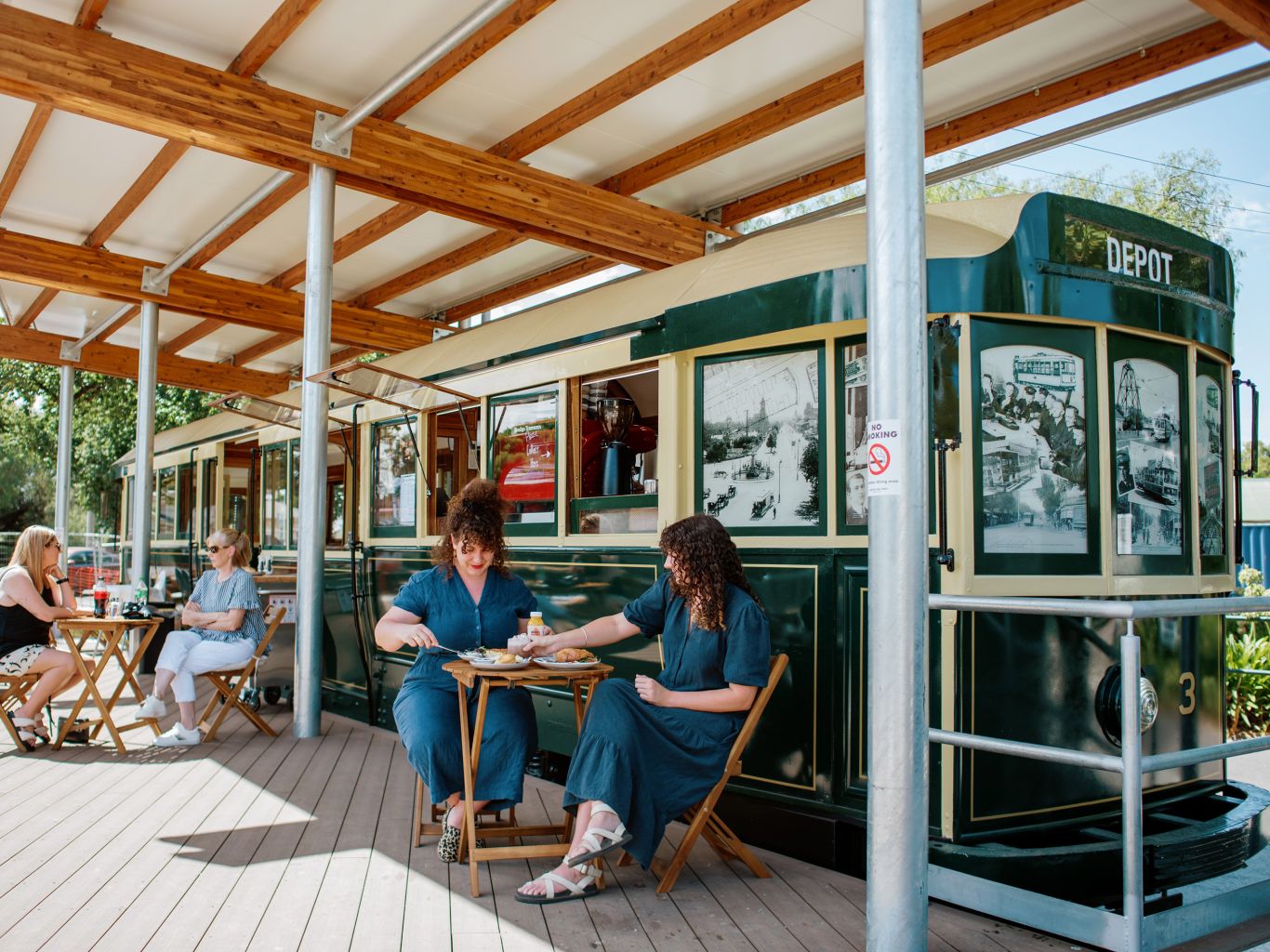
Tram meets tasty at Bendigo Tram Cafe.
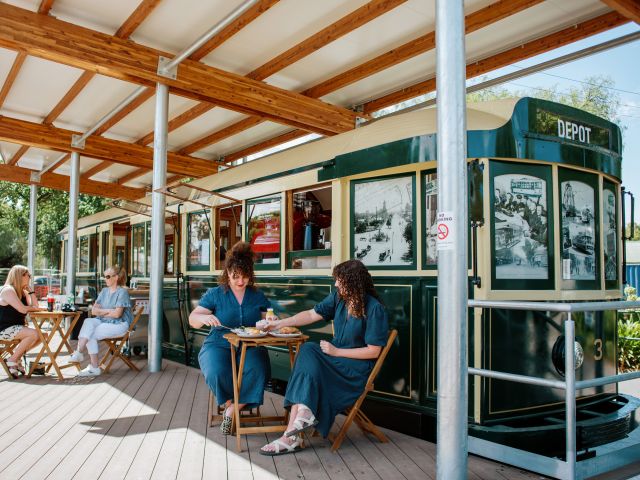
Takeaway means something different in Bendigo. At Australia’s oldest operating Tram Depot, the Tram Cafe sits aboard an out-of-service 1916 N-Class Tram that serves tea and scones. Once you’ve polished off the last crumb, you can even pop into the driver’s cab and try the controls yourself.
Peppergreen Farm continues Bendigo’s long connection to Chinese market gardens, first established here by immigrants in the 1850s. Today, the not-for-profit farm invites visitors to pick up organic produce, alongside jars of honey harvested from its own hives.
Indulge in retail therapy
Elevate your at-home dining experience after a trip to Bendigo Pottery.
If there’s still room in your bag among the clanking jars and bottles, stop by Uniquely Bendigo inside the Old Post Office. Sharing space with the Bendigo Visitor Centre, it’s a one-stop shop for favourites like Bendigo Brittle, Bridgeward Grove and Tea Associates.
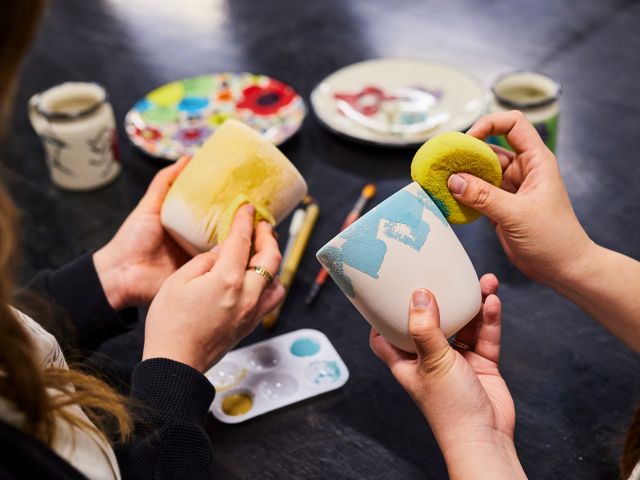
If you’d rather leave your fingerprints on your Bendigo souvenir, there’s a place for that too. At Bendigo Pottery, visitors can try their hand at shaping clay while taking part in another tradition of evolving old spaces – creating works of art within Australia’s oldest working pottery.