Where to see Australia’s unique wildlife

hero media
Australia boasts a weird and wonderful menagerie of creatures on land, sea and air.

Kangaroo

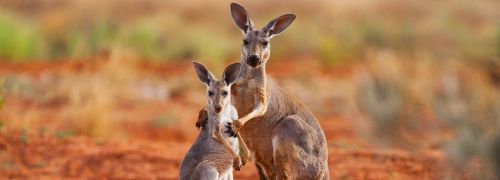
One half of the national coat of arms (the other is the emu), the kangaroo is one of the country’s most celebrated animals. There are four different species of kangaroo: The Red; Antilopine; Eastern Grey; and Western Grey. The Red holds the distinction of being the world’s largest marsupial; some males stand as tall as six feet and weigh in at 200 pounds.

Fast fact: There are more kangaroos than humans in Australia (roughly 50 million versus 25.7 million), with an estimated 15.8 million red kangaroos alone.

Where to see them: You’ll find kangaroos all over Australia. They’re social creatures, so chances are if you see one there are more close by. They rest during the heat of the day, so the best time to catch sight of them is at dawn and dusk.
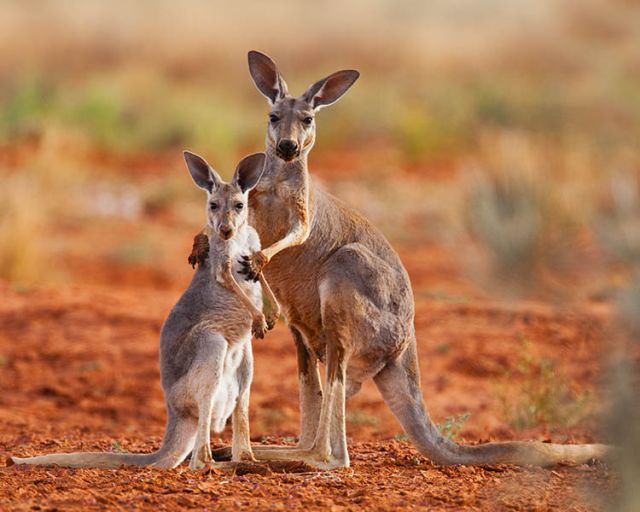
Kangaroo with its joey
The kangaroo is one of Australia’s most celebrated animals.

Koala

When it comes to the Aussie animal most visitors want to tick off their list, chances are it’s the koala. This impossibly cute tree-dwelling marsupial mammal survives on a diet exclusively made up of eucalyptus leaves. The trees are also their home, with koalas spending up to 19 hours a day sleeping in them before waking up to feed at night, making them largely nocturnal. While koalas have a pouch like kangaroos, they are more closely related to the wombat.

Fast fact: While they look all chubby and cuddly, koalas have seriously sharp claws and when threatened can run as fast as a rabbit.

Where to see them: Due to the fact that they spend most of their time up trees, koalas can be elusive to spot in the wild. Keep an eye out for them along the Great Ocean Road and on Raymond Island in Victoria, and around Port Stephens and Port Macquarie in New South Wales.
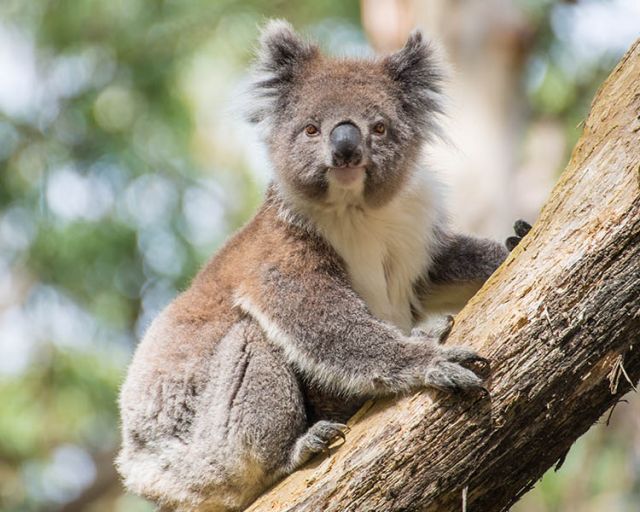
A Koala holding onto a branch
Koalas survive on a diet exclusively made up of eucalyptus leaves.

Wombat

These chubby creatures live in burrows and emerge at night to feast on a diet of grasses, bark and roots. Consisting of three species – the Common Wombat, the Northern Hairy-Nosed Wombat and the Southern Hairy-Nosed Wombat – wombats are an evolutionary wonder: they have a pouch like other marsupials but it faces backwards so that it doesn’t fill with dirt when they are digging. And its rump consists mostly of cartilage so that when it retreats headfirst into its hole it is almost impossible for predators to get a grip on.

Fast fact: Wombats’ poop is shaped like a cube. The theory is that as they mark their territory by defecating, the shape stops it from rolling away.

Where to see them: Wombats thrive in cool, damp environments, so you have a good chance of spotting them in places like Cradle Mountain-Lake St Clair National Park and Maria Island in Tasmania, Wilsons Promontory National Park in Victoria, and the Southern Highlands, less than two hours from Sydney.
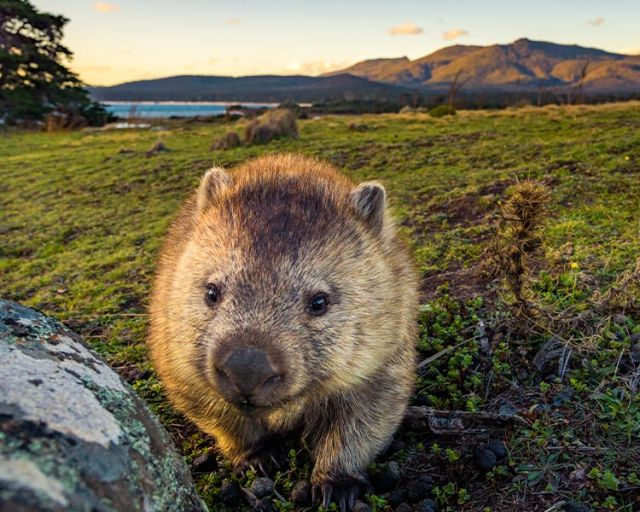
Wombat looking at the camera
Wombats live in burrows and emerge at night to feast on a diet of grasses, bark and roots.

Possum

When you are out and about at night in Australia, whether in the heart of Sydney or in the wilds of Freycinet National Park in Tasmania, chances are you will catch a glimpse of either a Common Brushtail Possum or a Common Ringtail Possum, the most prolific of Australia’s 23 species of possums.

With their soft fur and sweet faces, possums are one of the easiest marsupials to spot as they are quite adventurous in the pursuit of food. And if you can’t see them, you’re sure to hear them; researchers have identified at least 18 different sounds made by possums including screeching, hissing and grunting.

Fast fact: Both brushtail and ringtail possums have prehensile tails, which they use as a type of hand to cling to trees and carry things.

Where to see them: Brushtail and ringtail possums are found all over the country and are easy to spot when feeding at night – just look up.
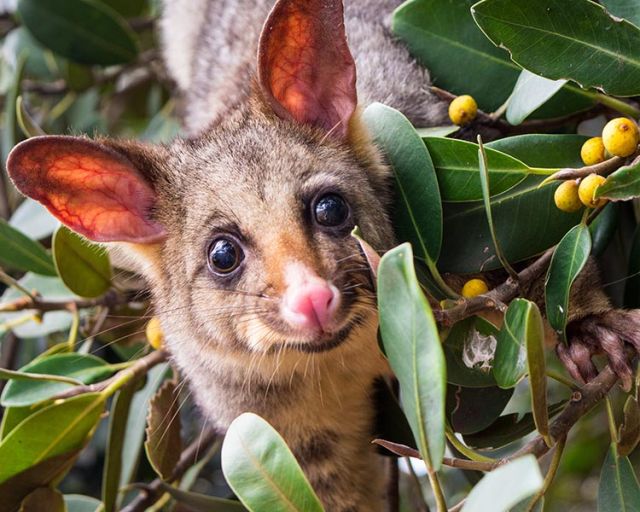
Possum looking into the camera
Possums are one of the easiest marsupials to spot.

Wallaby

A marsupial cousin of the kangaroo, wallabies are widely found across the country. Smaller than kangaroos, there are some 30 species of wallaby in Australia including the Rock Wallaby, Swamp Wallaby and the Tammar Wallaby, all of which hop to get around, tend to be more active at dawn and dusk, and carry their young in a pouch. Unlike kangaroos, however, wallabies are solitary creatures.

Fast fact: If a wallaby becomes pregnant while she still has a joey (baby) in her pouch, she can pause the gestation of the new embryo until its sibling has vacated the space.

Where to see them: Wallabies are widespread and plentiful, which means you are in with a good chance of seeing these delightful little creatures in any of Australia’s abundant National Parks.
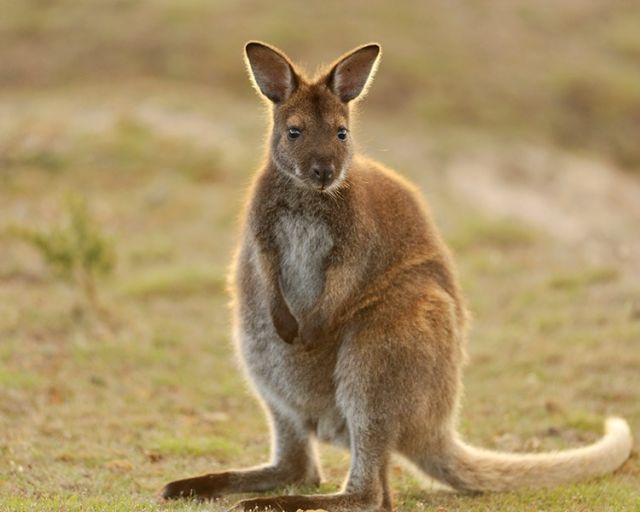
Wallaby
Wallabies are marsupial cousins of the kangaroo.

Kookaburra

Australia is home to abundant birdlife, but none is more genuinely wondrous than the kookaburra. Also known as the Laughing Kookaburra, this Kingfisher is famous for its loud and clear call that sounds like a hearty belly laugh but is actually a method to warn other birds off its territory.

Fast fact: Kookaburras are believed to pair for life, so when you see one bird its mate will most likely be nearby.

Where to see them: Found predominantly on the East Coast, you will usually hear them before you see them.
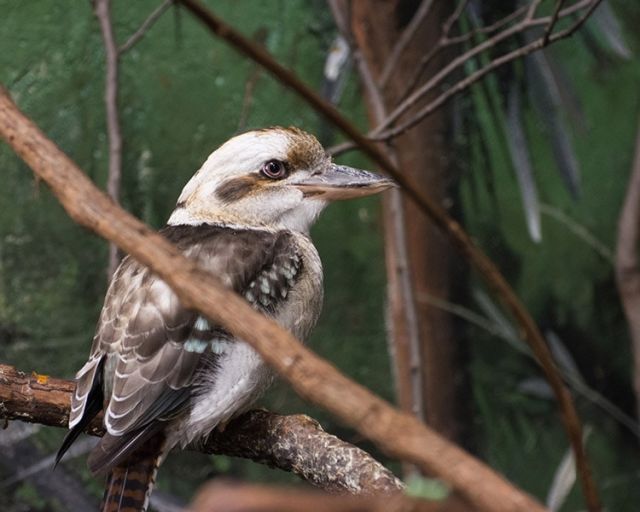
Kooraburra
Kookaburras are famous for their loud and clear call that sounds.

Tasmanian Devil

Found exclusively on the island state from which it gets its name, this carnivorous marsupial is actually a lot like its Looney Tunes cartoon persona, a snarling, irascible whirlwind of teeth and attitude. With a vocabulary of growls, grunts and snarls, they are vociferous (and slightly vicious) when threatened or protecting their food.

Fast fact: Further cementing its reputation, the Tasmanian Devil has the most powerful bite of any animal in the world based on its size.

Where to see them: As the devil is nocturnal, it is difficult to see in the wild; instead visit the Tasmanian Devil Conservation Park in Taranna, an easy drive from Hobart, Bonorong Wildlife Sanctuary, north of Hobart, or Devils @ Cradle Wildlife Park near Cradle Mountain National Park.
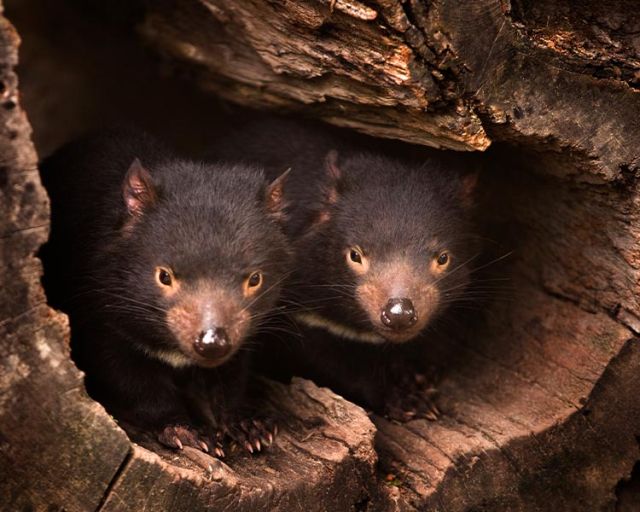
Two Tasmanian Devils
Tasmanian Devils are found exclusively on the island state from which it gets its name.

Also watch out for…

Echidna

This little egg-laying mammal is covered in sharp spikes and eats a diet largely made up of ants, hence its alternative name, the spiny anteater. They thrive in all manner of habitats, too.
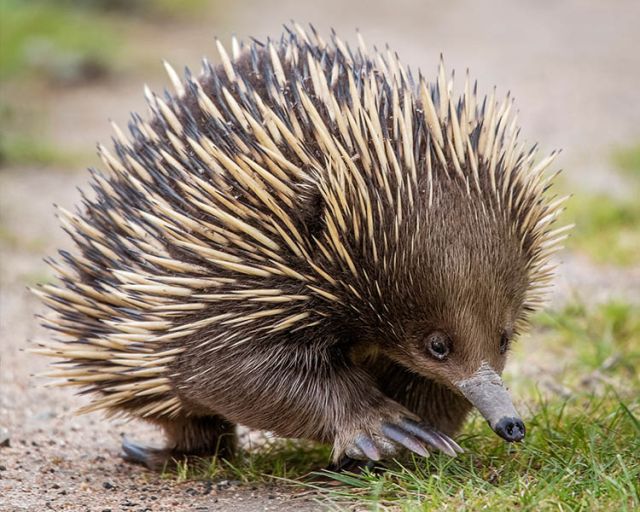
Echidna
The echidna eats a diet largely made up of ants.

Emu

The other half of the coat of arms, this flightless bird is the second biggest in the world after the ostrich; they can grow up to 6.5 feet tall. You’ll find them across mainland Australia.
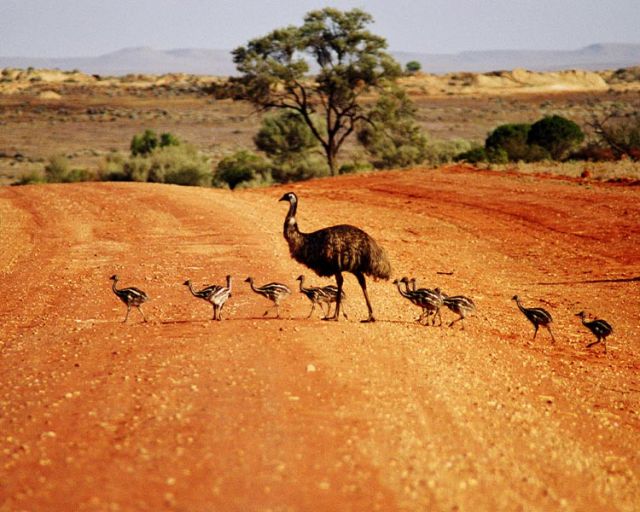
Emus crossing the road
Emus are the second biggest birds in the world after the ostrich.

Platypus

One of only two egg-laying mammals in the world (the other is the echidna), the platypus has a ducklike bill, webbed feet, is covered in fur and sleeps 14 hours a day on average.
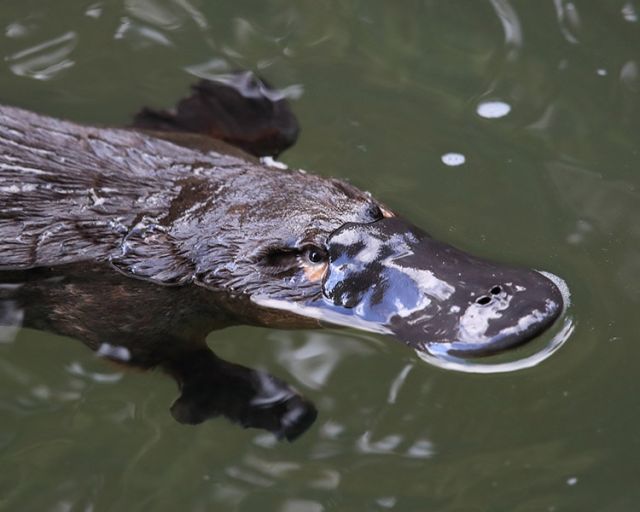
Platypus
One of only two egg-laying mammals in the world.

Dingo

Australia’s native wild dog, dingoes are found throughout the mainland states, including in the Northern Territory, and are known for their characteristic howl.
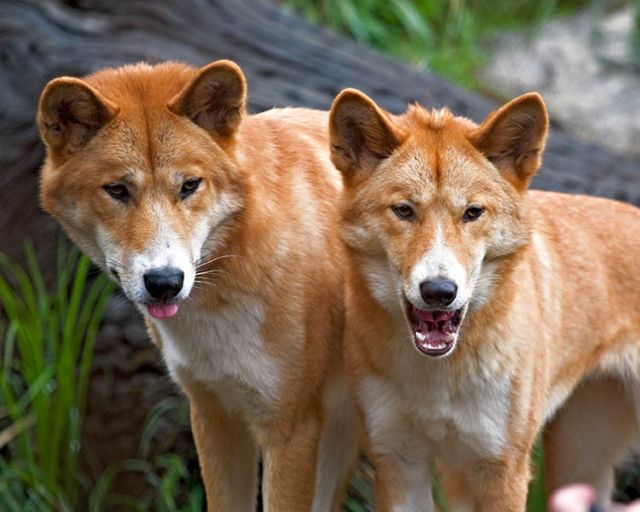
Two dingos
Dingoes are found throughout the mainland states.

Sulphur-crested Cockatoo

You’ll hear these cheeky native birds screeching loudly during the summer months as they dart from tree to tree or hang upside down from electricity wires.
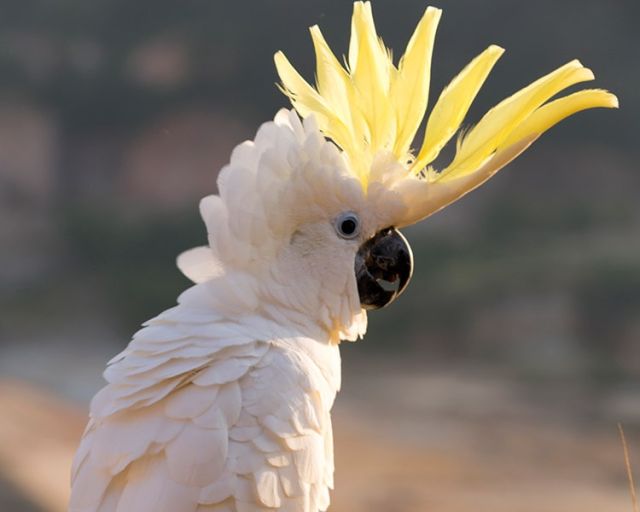
A white Sulphur Crested Cockatoo
Keep your eyes peeled for a Sulphur Crested Cockatoo.

Quokka

Native to Rottnest Island in Western Australia, the cuddly quokka is quite possibly Australia’s happiest marsupial, whose delightful grin has featured in many a cute selfie and social media post.
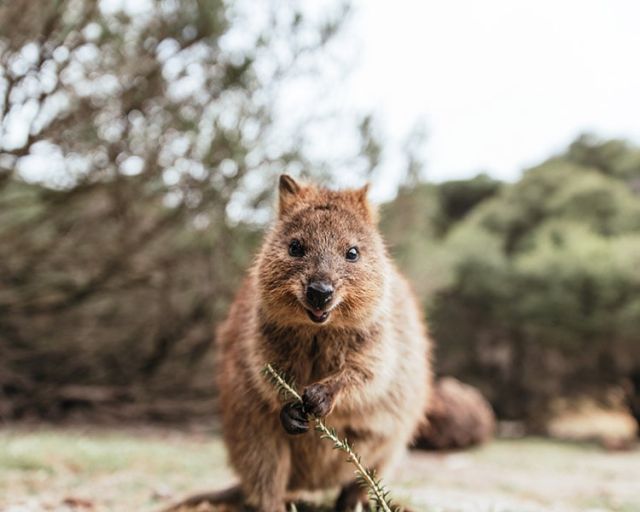
Quokka smiling at the camera
The cuddly quokka is quite possibly Australia’s happiest marsupial.
hero media

What it’s really like to stay on the world’s largest sand island

Exploring the world’s largest sand island starts with the perfect K’gari homebase.

The morning light is still soft, but it’s already a perfect sunny day. We left our K’gari homebase at Kingfisher Bay Resort  with our guide, Peter Meyer, at 9 am to make the most of our time to explore all that the world’s largest sand island holds. The size of K’gari is hard to grasp until you arrive here. This is no sandbar. Stretching 120 kilometres, unique lakes, mangrove systems, rainforest, 75 Miles of beach, historic shipwrecks, small townships and even one of Queensland’s best bakeries are all hidden within its bounds.

But first, one of the island’s most iconic sights: the pure silica sand and crystal clear waters of Lake McKenzie.

Laying eyes on it for the first time, I’m finally able to confirm that the photos don’t lie. The sand is pure white, without the merest hint of yellow. The water fades from a light halo of aqua around the edges to a deeper, royal blue, the deeper it gets (not that it’s particularly deep, six metres at most). The surface remains surprisingly undisturbed, like a mirror.

Arriving with our guide before 10 am means that no one else is around when we get here. Which means we have the pleasure of breaking the smooth surface with our own ripples as we enter. As a self-confessed wimp with chilly water temperatures, my fears are quickly assuaged. Even in the morning, the water stays around 23 degrees – perfect for lazing about all day. But we have more sights to see.

Exploring K’gari

ariel of in lake mckenzie on k'gari fraser island
Relax in the warm waters of Lake McKenzie. (Image: Ayeisha Sheldon)

This was the Personalised 4WD tour offered by Kingfisher Bay Resort, and my absolute top pick of experiences. Over the course of the day, we had the freedom to create our own bespoke itinerary (plus a provided picnic lunch along the way), with an expert guide who had plenty of stories and local expertise to give context to what we were looking at. From the history of the SS Maheno shipwreck, which survived the First World War only to be washed ashore by a cyclone in 1935, to a detailed description of how an island made of sand could sustain such diverse flora.

If it’s your first time to K’gari, the Beauty Spots Tour is another great option. Departing daily from Kingfisher Bay Resort (you’ll start to notice a trend, as many of the tours do start and end here), an air-conditioned, 4WD bus takes guests to the island’s most iconic locations, including the best places to swim, like Lake McKenzie and Eli Creek. The latter offers a gentle current, perfect for riding with a blow-up tyre out towards the ocean.

The next day, for a look at a completely different side of K’gari, I joined one of Kingfisher Bay Resort’s Immersive Ranger-guided tours to kayak through the mangroves of Dundonga Creek. This long, snake-like stretch of creek winds its way inland from the ocean outlet we entered by, at times too narrow for three kayaks to be side-by-side. Small insects buzz from leaf to leaf, while birds call overhead. Occasional bubbles indicate we’ve passed some fish that call this place home.

kayak tour through the mangroves at k'gari island
Learn about the island’s mangroves from your Ranger. (Image: Reuben Nutt/ TEQ)

If kayaking isn’t for you – or if, like me, you simply want more – other ranger-led experiences include nature walks and a dedicated Junior Eco Ranger Program for kids ages five to 12 (these run every weekend, and daily over the peak December holidays). Just ask for a timetable of upcoming tours when you check in.

While during whale season, Hervey Bay Whale Watch & Charters operates tours from the hotel’s jetty to get up close to the famous Humpback Highway of Hervey Bay, from 7 November to 31 May, attention turns to the Aqua Oasis Cruise . Departing from the resort every Tuesday, Thursday, Saturday and Sunday for resort guests, adventure along the island’s remote western coast, pointing out wildlife like dolphins, turtles, flying fish and eagles along the way.

The cruise drops anchor so guests can jump into the water using the boat’s equipment – from SUP boards to inflatable slides and jumping platforms. Then refuel with a provided lunch, of course.

Unwind at sunset

two people drinking cocktails at sunset bar, kingfisher bay resort
Unwind at the Sunset Bar. (Image: Sean Scott)

As much as days on K’gari can be filled with adventure, to me, the afternoons and evenings there are for unwinding. Sunsets on K’gari are absolutely unbelievable, with Kingfisher Bay on the west side being the best spot to catch the colours.

The Sunset Bar , located at the start of the resort’s jetty and overlooking the beach, is the ultimate location for sundowners. Let chill beats wash over you as you sip on cool wines, beers and cocktails in a relaxed, friendly vibe. Personally, a cheese board was also absolutely called for. As the sun sinks, the sand, sea and horizon turn a vibrant shade of orange, with the jetty casting a dramatic shadow across the water.

When the show is over, head back to the hotel for dinner at the Asian-fusion Dune restaurant, or the pub-style Sand + Wood. But if your appetite is still whetted for more lights and colours, the evening isn’t over yet.

Settle into the Illumina stage for Return to Sky, an immersive light and sound show leading viewers on a captivating journey through K’gari’s stories and landscapes.

Indulge and disconnect

woman setting up massage room at kingfisher bay resort Island Day Spa
Find bliss at Island Day Spa. (Image: Jessica Miocevich)

Of course, there is a type of traveller who knows that balance is important, day or night. While Kingfisher Bay Resort offers more than one pool for guests to spend all day lounging by (they’ll even serve you food and drinks while you do it), you’ll find me at the Island Day Spa.

The masseuses could match the magic hands of any big city spa, and I felt the warm welcome as I walked into the light, breezy reception. Choose from a range of botanical facials, beauty treatments and soothing massages using traditional techniques (obviously, I couldn’t go past a relaxing massage). All products used contain organic, native botanical ingredients with nutrient-rich plant extracts to soothe skin and mind. To really indulge, try out one of the packages, couples treatment or even a pre-wedding day offering.

Getting there

kingfisher bay resort 4wd tour driving passed ss maheno on k'gari island
The world of K’gari awaits. (Image: Jessica Miocevich)

Getting to K’gari is shockingly easy. Find daily flights into Hervey Bay from Brisbane, Melbourne and Sydney. Kingfisher Bay Resort offers a shuttle bus between the airport, their headquarters in Hervey Bay and the ferry to take you to K’gari.