Tropical Cyclone Alfred is tracking towards the Queensland and northern NSW coast, bringing strong winds, heavy surf and potential flooding. Authorities have issued warnings for affected areas, with flight disruptions, park closures and evacuation alerts in place. Here’s the latest on what’s happening.
View this post on Instagram
A post shared by The Conversation Australia + NZ (@theconversation.aunz)
Qantas suspends flights ahead of Cyclone Alfred
Qantas and Jetstar have announced flight suspensions as Tropical Cyclone Alfred approaches.
- Gold Coast Airport is closed until at least 1pm on Friday.
- Qantas and Jetstar flights to/from Ballina (Byron) are currently suspended.
- Qantas flights to/from Coffs Harbour are currently suspended.
- Flights to Lord Howe Island are grounded.
- Qantas will suspend flights in Brisbane from mid-afternoon today. Jetstar flights will be suspended from midday local time today.
- At this stage, flights to and from Sunshine Coast and Hervey Bay continue as scheduled.
- Customers with flights booked to or from, Brisbane, Bundaberg, Coffs Harbour, Gold Coast, Hervey Bay, Lord Howe Island and Sunshine Coast (Maroochydore) between 4 and 9 March 2025 can opt for a travel credit or a fee-free date change (up to 14 days from the original travel date, subject to availability).
Discovery Parks closures in Byron Bay, Ballina, and Casino
Discovery Parks has announced the temporary closure of its parks in Byron Bay, Ballina, and Casino due to safety concerns.
- High winds may lead to falling trees and flying debris.
- Guests with bookings will be contacted regarding their stays.
- Residents onsite are advised to seek alternative accommodation.
- Visit the SES NSW website for evacuation centre information.
Greyhound Australia cancels SEQ services
- Affected routes: Brisbane <> Hervey Bay (including the Sunshine Coast), Brisbane <> Toowoomba, Brisbane <> Byron Bay (including the Gold Coast).
- Cancellations effective from 1pm today until Sunday 9 March.
- Other services remain operational, including routes to northern Queensland, western Queensland and Sydney.
- Further cancellations may occur depending on the cyclone’s impact.
- Passengers can reschedule for free or request a travel credit via Greyhound’s Customer Service team.
Need tips, more detail or itinerary ideas tailored to you? Ask AT.
AI Prompt
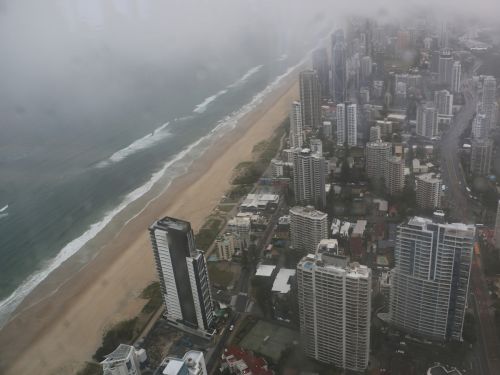
Community response on the Gold Coast
Kristie Lau-Adams describes the scene on the Gold Coast:
- Saturday morning is now when the cyclone is expected to hit land.
- People are supporting each other, sharing supplies and offering updates on storm-related obstructions.
- The sun is still peeking through at times, but the rain is pretty consistent now – strong bursts mixed with steady sprays. It feels very unpredictable, and like it could all change at any minute!
- Gold Coast’s sandbagging stations reopened from 11am today until 5pm as people continue to prepare – though time is running out as these gusts have gained force. Both stations are DIY, so you’ve got to bring your own shovel and bags.
- Carrara Sports Precinct Parking, via Alabaster Drive, Carrara
- Tugun Village Community Centre, 414 Coolangatta Road, Tugun
- Heavy winds have picked up. A sunny morning saw many people go to check the surf under clear skies, but they have since retreated indoors for safety.
Byron Shire: Storm surge but little rain so far
Lara Picone reports from Byron Shire:
- Beaches have disappeared due to the storm surge.
- Intermittent sunshine, with little rain so far.
- Now expected to make landfall tomorrow morning. The delayed landfall means it will miss coinciding with high tide, reducing the immediate risk of flooding.
- Many areas have ‘prepare to evacuate’ orders in place.
Sunshine Coast sees blue skies but winds picking up
Celeste Mitchell reports from the Sunshine Coast:
- Clear skies and strong surf conditions this morning, but winds have started to increase.
- The cyclone is expected to make landfall on Friday afternoon.
- Schools and daycares are closed, and residents are urged to stay indoors.
Stay updated
- Track real-time updates on the Gold Coast Disaster Dashboard.
- Follow local SES and government warnings.
- Prepare for potential evacuation orders if you are in at-risk areas.
This is a rolling update – check back for more information as the situation develops.
Want to see more stories from Australian Traveller in your Google search results?
- Click here to set Australian Traveller as a preferred source.
- Tick the box next to "Australian Traveller". That's it.