Australians are placed to just catch this rare celestial event.
The blood moon, or total lunar eclipse, has captivated humans for millennia. The ancient Mesopotamians believed it meant demons were attacking the moon. The Chinese understood it to be a dragon biting it. Even today, new-age astrologers have their own myriad interpretations surrounding eclipses (a great love about to enter your life? An unexpected revelation?).
The Blood Moon is a rare celestial event that occurs roughly every 1.5 years, but its timing varies. For instance, there hasn’t been a total blood moon since late 2022. But the stars have aligned (so to speak), and we are in for a celestial treat in 2025 with not just one, but two blood moons set to occur. And the first took place on Friday, 14 March. Here’s what to know.
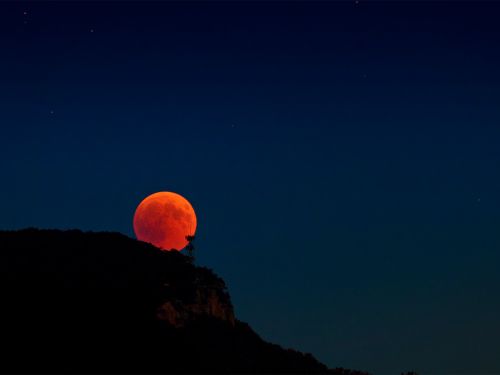
The blood moon is a rare celestial event that happens on average once every 18 months. (Image: Flickr/PiConsti)
What is a ‘blood moon’?
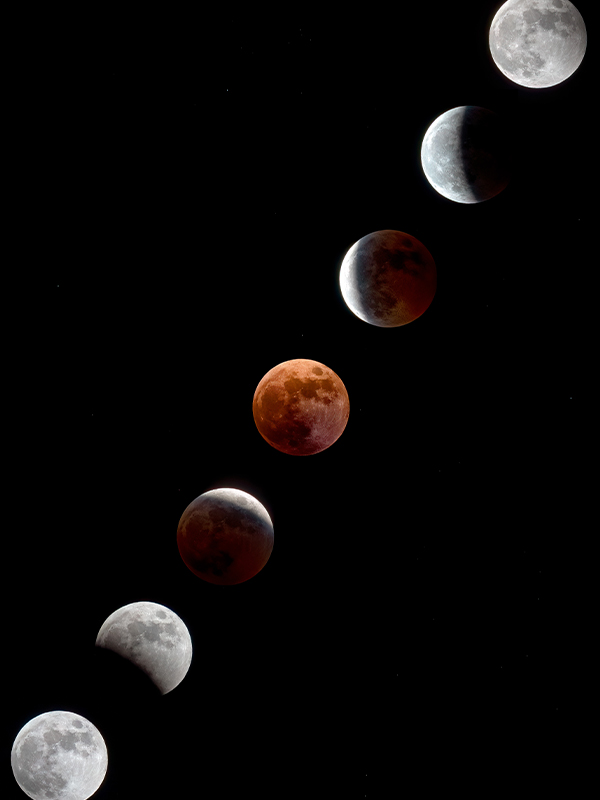
A lunar eclipse occurs under very specific conditions, when the Sun, Earth and Moon are in close alignment and when the Moon is in full phase. This happens, on average, about three times per year. But a blood moon is a special kind of lunar eclipse that happens when the alignment on the Sun, Moon and Earth is exact, occurring on average every 1.5 years.
A blood moon happens under special conditions, when the Earth, Sun and Moon are perfectly aligned. (Image: Getty/PhilVisualHK)
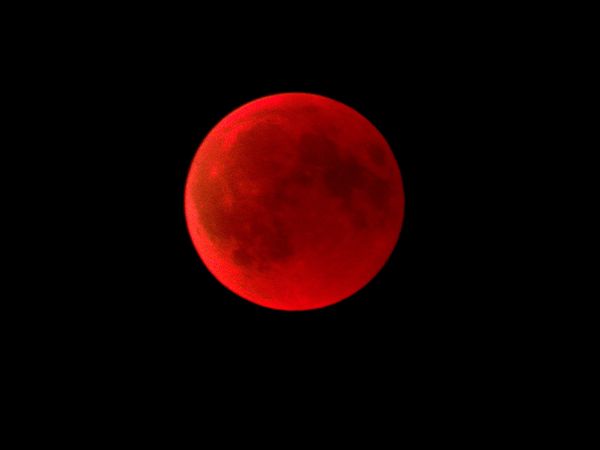
The Earth blocks the sun, meaning that the light can only pass through the Earth’s atmosphere causing it to scatter, with longer-wavelength red and orange to refracting onto the moon and giving it a stunning red tint.
When to see it
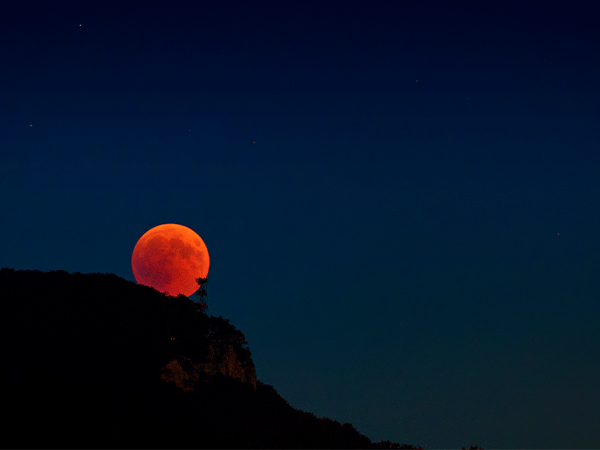
Parts of Australia will be able to see a partial blood moon, but will get a better view of the next event later in the year. (Image: Wikimedia Commons)
The further east you are in Australia, the more of the eclipse you’ll see. Australia is right at the edge of the eclipse’s path, so unfortunately it will only be partially visible, and Western Australians will miss out completely. (If you’re in WA though, don’t fear – you’ll be perfectly placed to see the next blood moon, set to take place on September 7, 2025).
Australians in the east can start observing the eclipse from the time the moon rises, as it will already be in progress. Here’s when to set your alarm for:
If your city isn’t on this list, just head out whenever the moon starts to rise.
The eclipse will last between 10 and 42 minutes, depending on where you are. Aussies further east will experience the eclipse for longer. Happy moongazing!
Want to see more stories from Australian Traveller in your Google search results?
Tick the box next to "Australian Traveller". That's it.
Elizabeth Whitehead is a writer obsessed with all things culture; doesn't matter if it's pop culture or cultures of the world. She graduated with a degree in History from the University of Sydney (after dropping out from Maths). Her bylines span AFAR, Lonely Planet, ELLE, Harper's BAZAAR and Refinery 29. Her work for Australian Traveller was shortlisted for single article of the year at the Mumbrella Publishing Awards 2024. She is very lucky in thrifting, very unlucky in UNO.
Under wide-open outback skies, discover a fossicking gem that’s managed to slip under the radar.
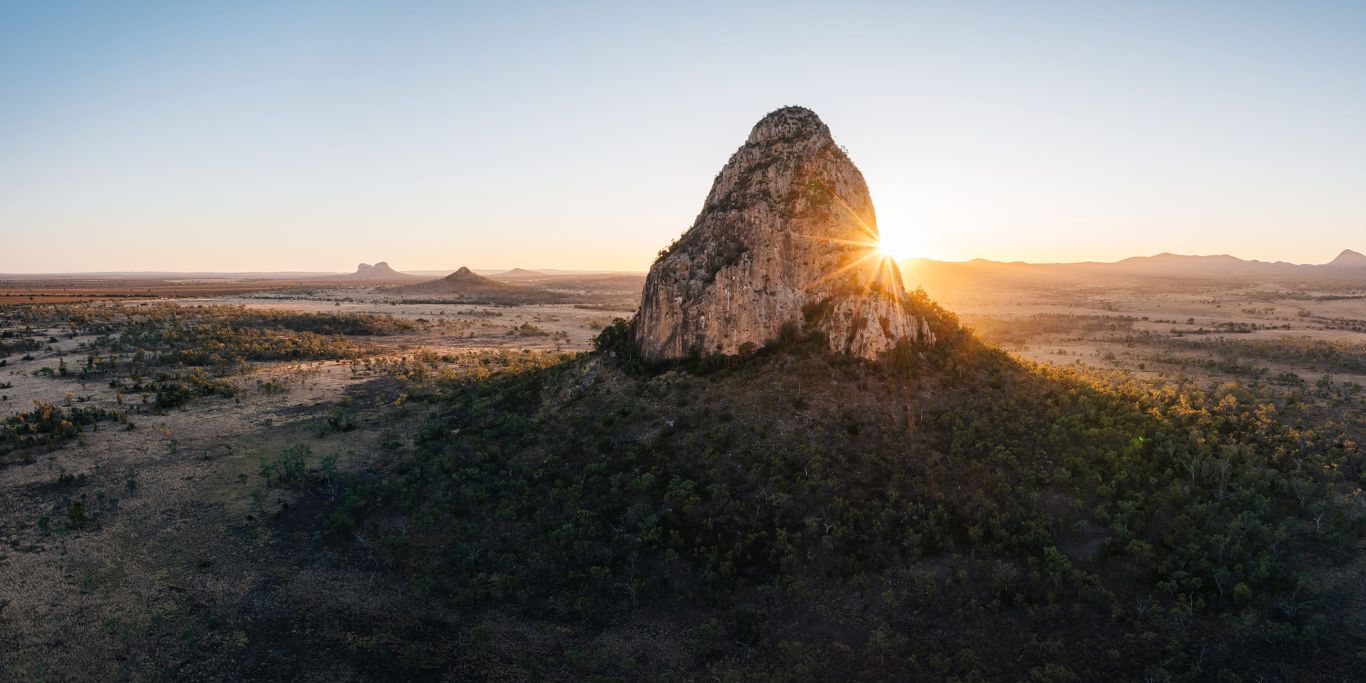
While the name Clermont may feel new to even the most intrepid traveller, its gilded history stretches back centuries. You’ll find it just off the highway, humming quietly under the hazy veil of Queensland’s outback sun. It’s here, hemmed in by mountains and perched atop soil heavy with the earth’s treasures, that one of Australia’s most accessible outback adventures awaits.
Thanks to deposits of gold, copper and gemstones – souvenirs left by exploding supernovas and the heave of tectonic plates – Clermont became a centre point of Queensland’s Gold Rush. And now? Australia’s fossicking capital is yours to discover.
Getting there
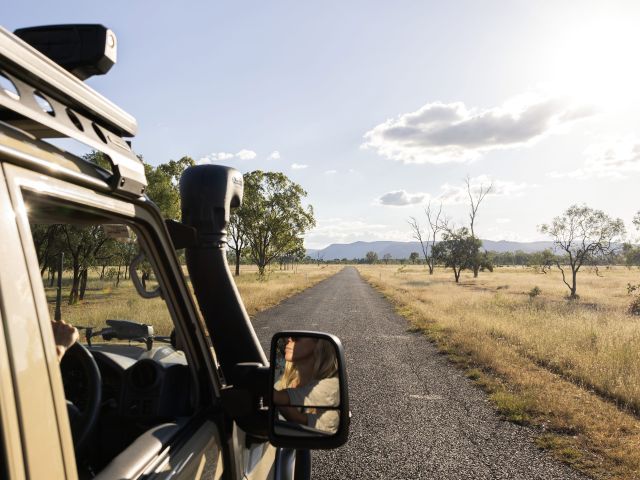
Take a drive through Queensland’s Mackay Isaac region. (Image: Sean Scott/ TEQ)
You’ll find Clermont in Queensland’s Mackay Isaac region. To get here, it’s an easy three-hour drive over sealed roads from Mackay. Or, if you’re heading from the Sapphire Fields of Emerald, the drive will carve out just over an hour from your day.
Whether you’re road-tripping through outback Queensland or just tracing your way through all that Australia has to offer, Clermont is remote but easily accessible.
Best accommodation in Clermont
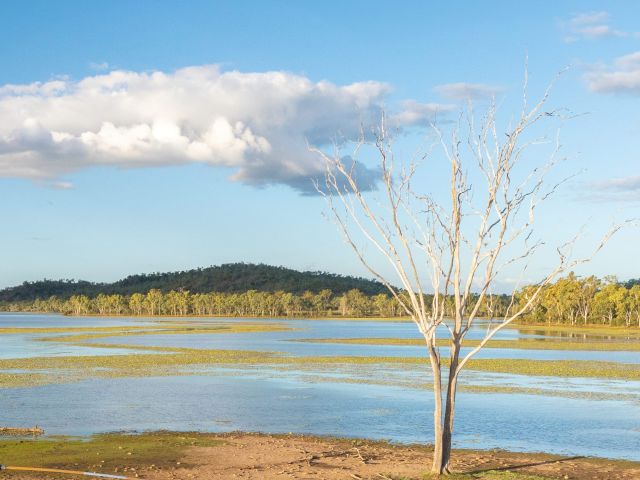
Camp by Theresa Creek Dam. (Image: Riptide Creative/ TEQ)
All accommodation comes with a generous helping of country hospitality here. The choice is yours between modern hotels, parking up the camper or pitching a tent.
Theresa Creek Dam lies just outside town. Begin each day with crisp country air and bright outback sunrises. Spend the night under the sparkling country stars and your days out on the dam fishing or kayaking. Even if you aren’t camping, be sure to save space in your itinerary for an afternoon on the red dirt shore.
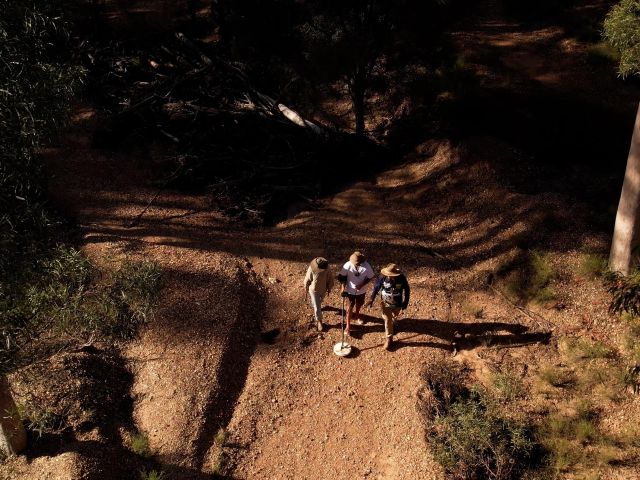
One does not visit Clermont without trying their hand at fossicking. There are strict rules when it comes to fossicking, so stick to areas dedicated for general permission and make sure you obtain your license beforehand. Try your luck at McMasters, Four Mile, Town Desert, McDonald Flat and Flat Diggings. To increase your odds, sign on for a tour with the expert team at Golden Prospecting. They’ll give you access to exclusive plots and expert advice along the way.
Once you’ve tried your luck on the gold fields, head to the Clermont Township and Historical Museum. Each exhibit works like an archaeologist’s brush to dust away the layers of Clermont’s history. Like the steam engine that painstakingly relocated the entire town inch by inch to higher ground after it was decimated by flooding in 1916. See the tools that helped build the Blair Athol mine, historic fire engines, shearing sheds and all sorts of relics that make up Clermont’s story.
The historic Copperfield Chimney offers a change of pace. Legend has it that fossickers found a solid wall of copper here, over three metres high, kick-starting Queensland’s first-ever copper mine.
See Clermont from above with Bush Heli Services. (Image: Riptide Creative/ TEQ)
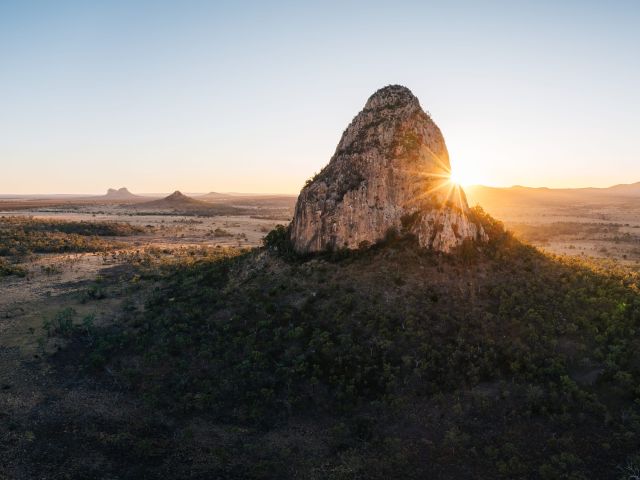
For hiking, nearby Dysart is the best place to access Peak Range National Park. Here, mountainous horizons stretch across the outback as if plucked from another world. Set off for a scenic drive along the Peak Downs Highway for access to countless geological wonders. Like the slanting rockface of Wolfang Peak. Summit it, and you’ll find yourself looking out across a scene surely conjured up by Banjo Paterson. Dry scrub dancing in the warm breeze, grazing cattle, eucalypts and the gentle creak of windmills. Don’t miss visiting Gemini Peaks, either, for one of the park’s best vistas, and a blanket of wild flowers after rain.
Then, take to the skies with a scenic helicopter tour with Bush Heli-Services. Shift your perspective and cruise above all the sights from your trip. Spots like Lords Table Mountain and Campbell’s Peak are best viewed from the skies.
Before you head home, be sure to explore the neighbouring townships. Spend a lazy afternoon in the shade of Nebo Hotel’s wrap-around verandahs. The hotel’s 1900s dance hall has since been replaced with one of the area’s biggest rodeo arenas, so consider timing your trip to line up with a boot scootin’ rodeo. Or, stop by a ghost town. Mount Britton was once a thriving town during the 1880s Gold Rush. It’s been totally abandoned and now lies untouched, a perfect relic of the Gold Rush.
Best restaurants and cafes in Clermont
Stop into the Commercial Hotel Clermont.
Days spent fossicking, bushwalking and cramming on history call for excellent coffee and hearty country meals. Luckily, Clermont delivers in spades.
Lotta Lattes Cafe is beloved by locals for a reason. Start your days here for the best caffeine fix in town and an impeccable brunch menu.
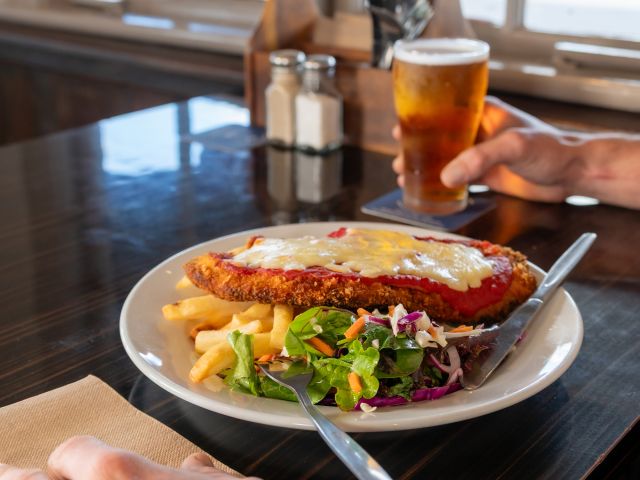
For a real country meal, an icy cold beer and that famed country hospitality, head straight to the town’s iconic hotel: the Commercial Hotel (known endearingly to locals as ‘The Commie’). It’s been a staple in Clermont since 1877. The hotel even survived the flood of 1916 when it was sawn in two and moved to higher ground.
Naturally, time spent in the outback must include calling into the local bakery. For delicious pies and a tantalising array of sweet treats, make Bluemac Bakehouse your go-to while in town.