Australia’s answer to Japan’s onsens is hiding in NSW

hero media

By Eleni Harakidas

If you’ve ever soaked in the soothing waters of an onsen in Japan and are longing for a taste of it now, we’ve found just the thing.

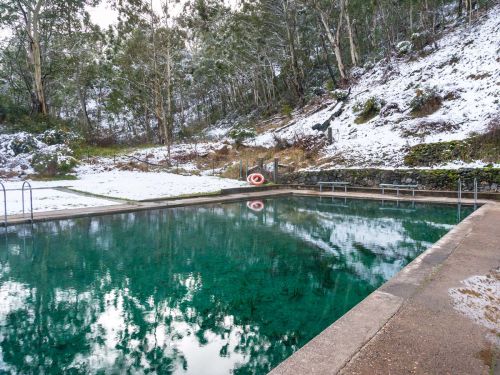
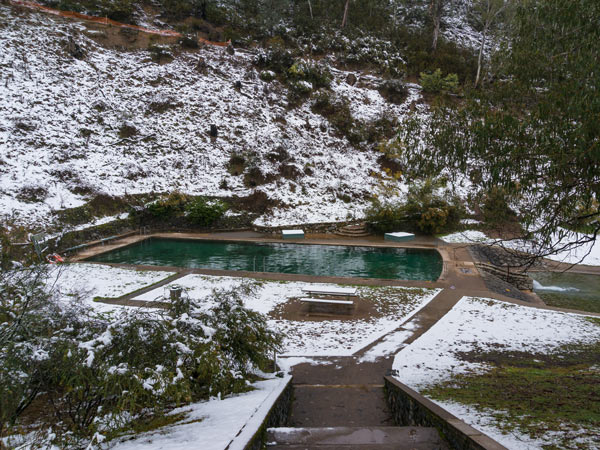
Picture this: you’re soaking in an outdoor thermal pool – the water is a balmy 27 degrees Celsius – steam rises slowly, and a blanket of snow covers the valley and surrounding mountain peaks. It’s not Japan. You’re in Australia’s highest mountain range, floating in Yarrangobilly thermal pool , hidden within Kosciuszko National Park.

A natural thermal pool, fed by a spring around one kilometre below the surface, sounds like a dream. It might feel like one too, as the pools are often accompanied by platypuses and water dragons. Reaching 2.5 metres deep and 20 metres long, the Yarrangobilly thermal pool offers a unique experience and one that will be hard to forget.

Yarrangobilly thermal pool
Outdoor swimming pool with winter landscape and snow. Yarrangobilly hot spring pool, Australia
In winter, the steaming waters and snow-blanketed surroundings will transport you to Japan. (Image: Getty Images/Katharina13)

In the summer, this pool might be a cool escape from the heat, but in winter, the steaming waters and snow-blanketed surroundings will instantly transport you to Japan . It’s no secret Australians are obsessed with the island country (nearly 1 million of us visited Japan in 2024), but we especially love their onsen culture, the ancient practice of bathing in natural hot springs, without clothes and often experienced during a stay at a ryokan (a Japanese inn). Just be sure to keep your clothes on at Yarrangobilly. But you absolutely can bask in the pool’s heated waters as you’re transported to an unexpected winter wonderland. With a picnic area, change rooms, and bathrooms that are easily accessible, this pool is easily one of Australia’s most under-the-radar winter experiences.

Depending on the time of day, Yarrangobilly’s local animals can put on quite a display. Nearby to the pool lies the Yarrangobilly River, where you might spot lyrebirds, superb blue wrens, crimson rosellas, and king parrots bouncing between trees. Closer to the ground, waddling wombats and lazing water dragons can be seen throughout the park. If you didn’t catch a look at a platypus by the thermal pools, you might get one (only during sunrise or sunset hours!) surfacing the river to briefly say hello. Better yet, if you look closely, you might spot tiny critters—the endangered smoky mouse—who are rare sights, but impossibly cute and worth spotting.

What are the Yarrangobilly Caves?
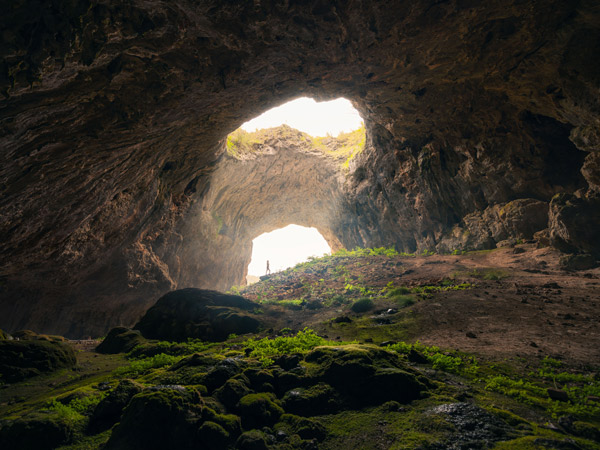
Yarrangobilly Caves North Glory Cave, Snowy Mountains
There are six caves at Yarrangobilly, too. (Image: Destination NSW)

The thermal pool isn’t the only reason to visit. There are six breathtaking caves to explore, too! Yarrangobilly Caves are exquisitely decorated with natural stalagmites, stalactites and cave corals. These 440-million-year-old caves are strikingly unique and open to visitors year-round.

The largest in its region, the South Glory Cave, lets you soak in its grandeur at your own pace, with self-guided tours available to the general public. Fancy an official tour? Visit the Jersey and Jillabenan Caves for a 90-minute walk-through, where your personal, expert tour guide will unravel the history and secrets of this natural phenomenon. Ancient formations, intimidating overhead crystals and alluring limestone structures await inside these prehistoric wonders.

How do you get there?
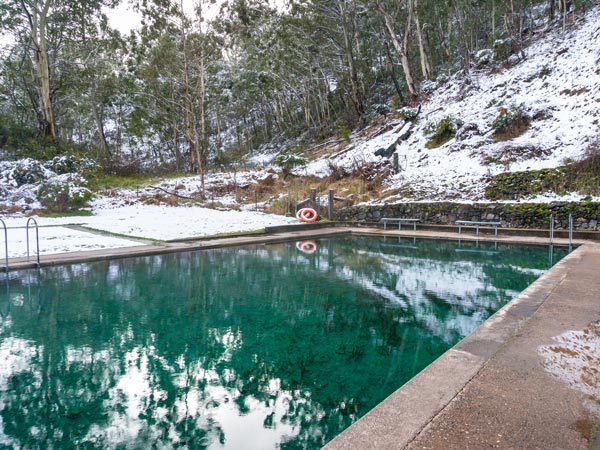
Hot spring pool with crystal clear water and snow covered ground nearby. Yarrangobilly thermal pool, Australia
Bask in Yarrangobilly thermal pool’s heated waters. (Image: Getty Images/Katharina13)

The Yarrangobilly Caves and thermal pool can be reached from a few points in New South Wales, but these are the recommended routes.

From Cooma, travel south for around seven kilometres until you reach the Snowy Mountains Highway. Continue for approximately 110 kilometres and turn left into the Yarrangobilly Caves Entrance Road.

From the Hume Highway (outside of Canberra/Ngambri), take the Tumut exit and follow the Gocup Road to Tumut. There, you can find the Snowy Mountains Highway and continue on for 110 kilometres to find the Yarrangobilly Caves Entrance Road to the left.

How much does entry cost?
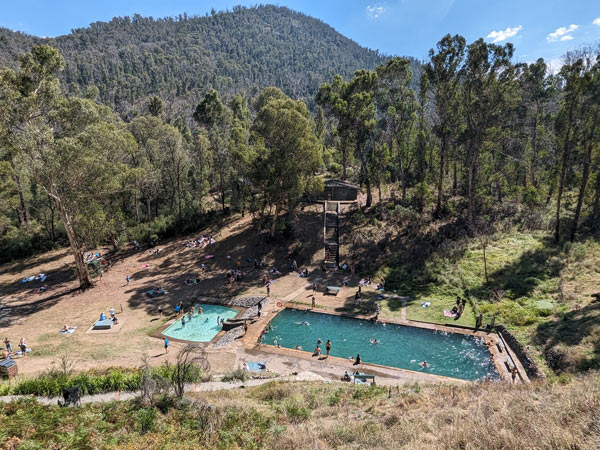
Thermal pools at Yarrangobilly Caves
In the summer, this pool is a cool escape from the heat. (Image: Jpatokal)

If you plan on spending the day (of which I highly recommend), the Yarrangobilly Caves entry is $4 per vehicle, with an additional $22 per adult and $18 per concession.

True to its name–derived from the Indigenous term yarangu-bili, meaning “flowing stream"–Yarrangobilly offers a range of flowing waters. Whether that’s underground, in the water, or along scenic trails, these waters bring true meaning to Yarrangobilly. Whether you’re exploring the atmospheric caves, spotting curious wildlife, or soaking in the dreamy onsen-like thermal pool, Yarrangobilly’s natural wonders are definitely worth the trip. Be prepared to add this to your brag list, because the Yarrongobilly experience doesn’t get any better than that.

hero media

7 great day trips from your Coffs Coast homebase

Make this dazzling stretch of beaches and natural wonders your home base for a grand adventure

Whether you’re setting out solo, bringing a mate, or packing in the whole family, no road trip along Australia’s East Coast is complete without at least a few days spent exploring the Coffs Coast. A stunning stretch of NSW coastline nestled between ancient high-elevation rainforests and magnificent, undiscovered beaches, Coffs offers amazing biodiversity, stunning natural beauty, and heaps of local charm, without the crowds. Pull up in Coffs Harbour , your perfect home base for these unforgettable day-trips.

1. Southern Beaches

The Coffs region boasts 30 of Australia’s most beautiful, unspoiled beaches, directly abutting a dramatic tableau of mountains and rainforests. Drive South of Coffs Harbour to find up-and-coming surf destinations where it’s still possible to catch an empty wave. First up is the picturesque Sawtell village . Wander the famous fig-tree-lined main street packed with laid-back places to eat and drink. Enjoy panoramic views and seasonal whale sightings at Bonville Headland on the Southern end of the beach.

Nearby Bongil Bongil National Park boasts seven kilometres of empty beach, along with hiking and cycling trails through beachfront rainforests – keep an eye out for koalas living in the trees. Boambee Beach and Boambee Creek Reserve are great for families, with shallow waters perfect for kayaking and SUPing, plus an off-leash dog beach.

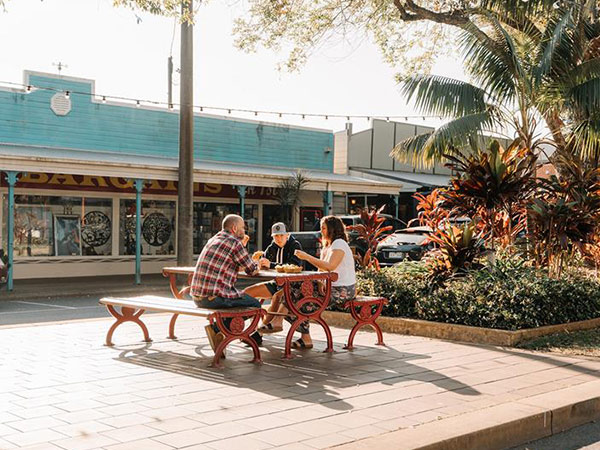
family eating lunch in sawtell
Experience small-town charm in Sawtell.

2. Orara Valley Tourist Trail

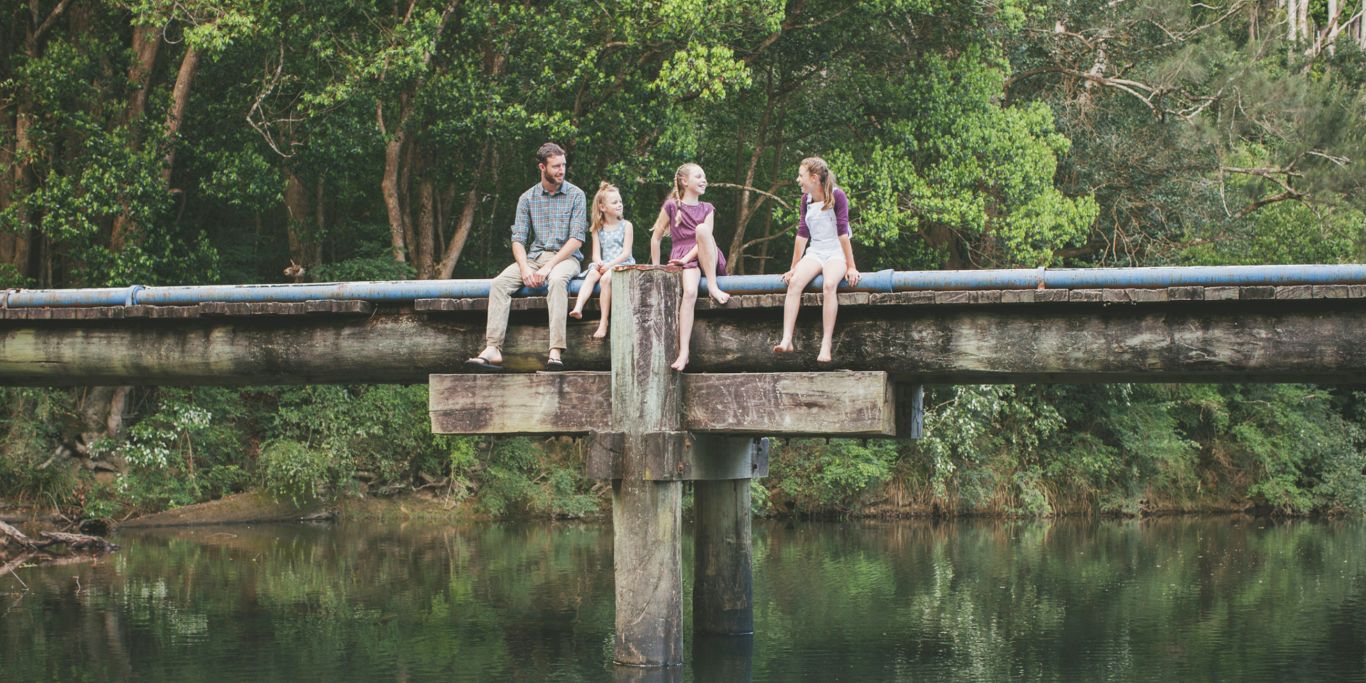
The Orara Valley Tourist Trail has it all: hinterland bushwalks, birdwatching, horse riding, pristine swimming holes and rolling green pastures dotted with dairy farms and historic villages. And it’s only 15 minutes west of Coffs Harbour.

Sample produce at a roadside stall, stop into Coramba Hotel for a quintessential country pub lunch, or try the Idle in Cafe in Nana Glen for coffee and scones. Then spend the afternoon kayaking the Orara River or mountain biking on Mt Coramba. If you’re feeling adventurous, follow the 4WD touring route along the Orara Escarpment in Bindarri National Park , a rugged landscape with dazzling views that winds through untouched eucalypt rainforests and waterfalls.

A family sitting by the Orara Valley Tourist Trail.
Explore the green heart of Coffs.

3. Dorrigo National Park

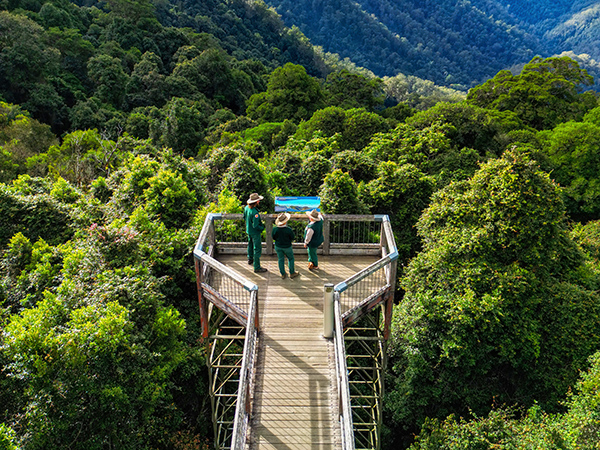
Enjoy a classic day trip from Coffs to forest bathe in some of the oldest subtropical rainforests in the world at Dorrigo National Park, part of the World Heritage-listed Gondwana Rainforests. These million-year-old ecosystems promise rare bird sightings, towering strangler figs, and epic walking tracks and picnic spots. Try the 6.6 km Wonga Walk to experience dreamy Crystal Shower Falls (where you can walk behind the falls) and the Skywalk Lookout, which offers spectacular views of the valley and coast. Then stop in Dorrigo town for a homey lunch. It’s worth noting that a section of the road between Ulong and Dorrigo – which dates to the 1880s – is unsealed, adding to the area’s end-of-the-earth allure but making travel difficult in adverse weather conditions. Alternatively, head to Dorrigo via the delightful township of Bellingen .

Three people standing at the SkyWalk lookout.
Wander the Skywalk.

4. Northern Beaches

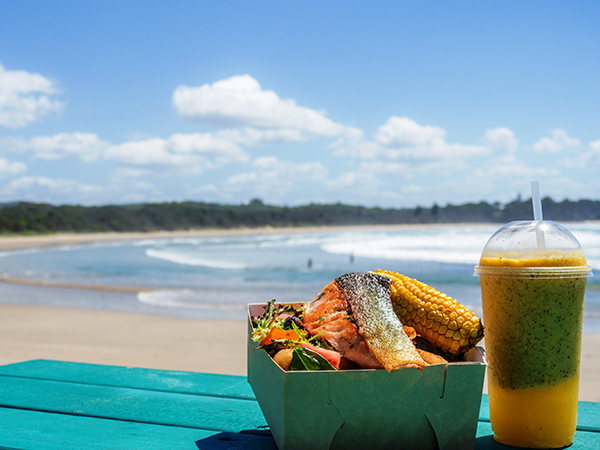
For another tranquil expanse of sun, sand and surf breaks, head north to Woolgoolga (Tourism Australia’s Best Mainland Beach for 2025. Taste the coffee and local-produce breakfast at one of several cafes, then spot whales during their migration season along the Woolgoolga Whale Trail to the headland. Emerald Beach offers clear blue waters and another headland walk, perfect for taking in views of South Solitary Island, a dramatically rocky-cliffed island with a historic lighthouse. Red Rock, some 40km north of Coffs and named for its striking coastal rock formations, boasts a gorgeous estuary reserve that’s perfect for languorous days spent picnicking, swimming, fishing, and connecting with the relaxed local pace.

Freshly caught seafood by the beach, with sparkling ocean views.
Enjoy fresh seafood overlooking Woolgoolga Beach.

5. Jetty precinct

You could easily spend a whole day exploring the Jetty precinct – from its foreshores to the marina to Muttonbird Island. Start with fresh fish and chips from local institution Coffs Harbour Fisherman’s Co-op , before browsing the popular Harbourside Markets held every Sunday on the foreshores.

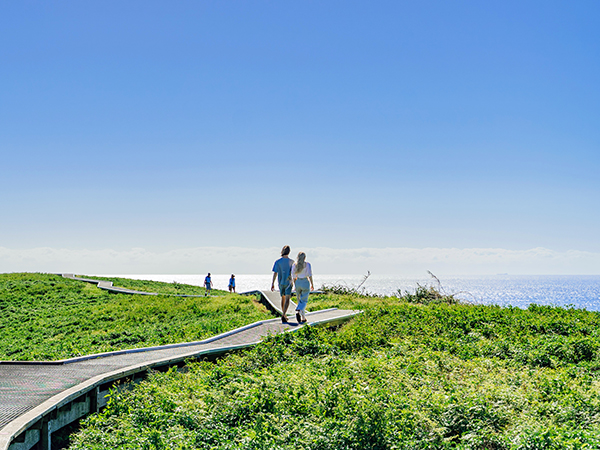
Take a scenic walk along the breakwall to Muttonbird Island , a cultural and ecological treasure with panoramic views and rich Gumbaynggirr heritage. The Giidany Miirlarl Education Space shares the island’s ancient stories, or join a guided moonlight tour to see the seasonal return of the muttonbirds.

Back at the Jetty Strip, find a buzzing mix of cafes, bars and restaurants with cuisines from around the world, open from morning until late. Don’t miss The Jetty Pavilion , a favourite for its unique menu blending modern Australian cuisine with vibrant world flavours.

walk to muttonbird island from coffs harbour
Walk the path where land meets sea and sky.

6. Grafton

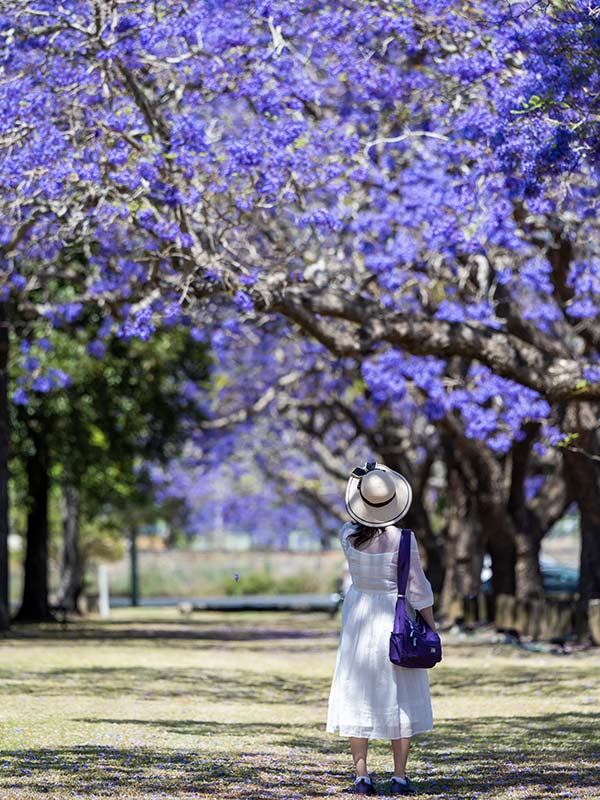
Head inland from mid-October to early November to catch Grafton’s jacaranda season, when the town’s streets and parks are covered in purple. Even better, time your trip between 24 October and 2 November to attend the famous Jacaranda Festival, with special food items, performances and more. At any time of year, follow the self-guided Grafton Heritage Trail to discover the town’s historic buildings, landmarks and stories. Or get the blood pumping with a trip along the longest mapped white-water trail in Australia – the Clarence Canoe and Kayak Trail. Book a tour with Exodus Adventures .

woman walking through jacaranda trees in grafton
Time your Grafton trip to see the jacarandas in full bloom. (Image: @myclarencevalley)

7. Nambucca

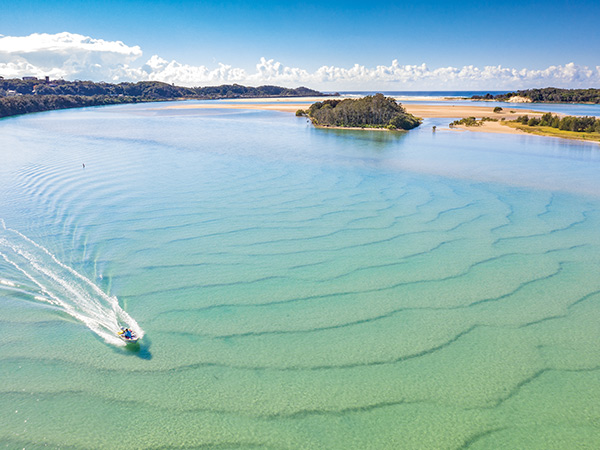
Just south of Coffs Harbour sits Nambucca, the ideal town for a relaxed, coastal day trip. Hire a canoe, kayak or boat to explore over 80 kilometres of waterways stretching from the hinterland to the ocean. For those who prefer to stay on dry land (or double up their adventure for the day), stretch your legs along the V-Wall – a scenic coastal walk along the Nambucca River – dotted with boulders painted by the community, sharing messages, art and local stories. Stop along the way to buy Sydney rock oysters direct from local farmers, or try your own hand at fishing. Before heading back to Coffs, refuel on fresh seafood and wood-fired pizzas at Matilda’s in Nambucca .

a boat zooming through Nambucca Heads
Explore Nambucca’s waterways. (Image: Seen Australia)

Visit coffscoast.com and download the Coffs Coast Explorer App for more daytrips and trails.