hero media

Australia’s answer to Japan’s onsens is hiding in NSW

Credit: Getty Images/Katharina13

By Eleni Harakidas

If you’ve ever soaked in the soothing waters of an onsen in Japan and are longing for a taste of it now, we’ve found just the thing.

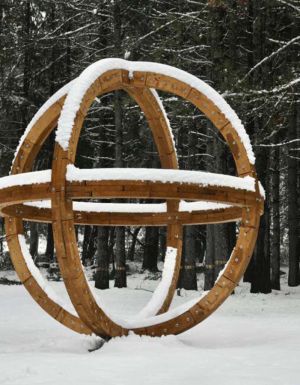
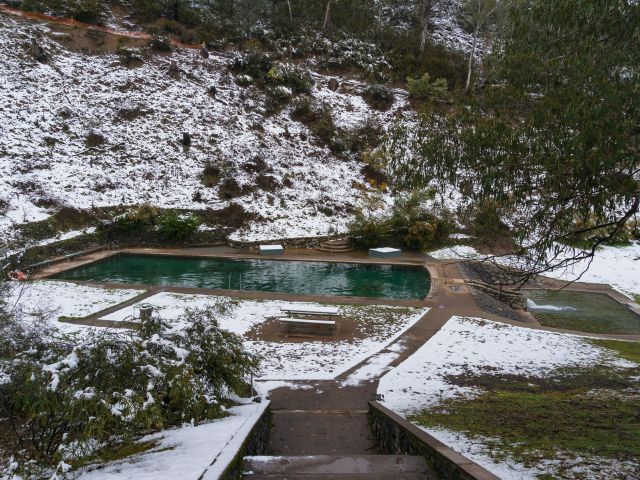
Picture this: you’re soaking in an outdoor thermal pool – the water is a balmy 27 degrees Celsius – steam rises slowly, and a blanket of snow covers the valley and surrounding mountain peaks. It’s not Japan. You’re in Australia’s highest mountain range, floating in Yarrangobilly thermal pool , hidden within Kosciuszko National Park.

A natural thermal pool, fed by a spring around one kilometre below the surface, sounds like a dream. It might feel like one too, as the pools are often accompanied by platypuses and water dragons. Reaching 2.5 metres deep and 20 metres long, the Yarrangobilly thermal pool offers a unique experience and one that will be hard to forget.

Yarrangobilly thermal pool
Yarrangobilly pool
In winter, the steaming waters and snow-blanketed surroundings will transport you to Japan. (Image: Getty Images/Katharina13)

In the summer, this pool might be a cool escape from the heat, but in winter, the steaming waters and snow-blanketed surroundings will instantly transport you to Japan . It’s no secret Australians are obsessed with the island country (nearly 1 million of us visited Japan in 2024), but we especially love their onsen culture, the ancient practice of bathing in natural hot springs, without clothes and often experienced during a stay at a ryokan (a Japanese inn). Just be sure to keep your clothes on at Yarrangobilly. But you absolutely can bask in the pool’s heated waters as you’re transported to an unexpected winter wonderland. With a picnic area, change rooms, and bathrooms that are easily accessible, this pool is easily one of Australia’s most under-the-radar winter experiences.

Depending on the time of day, Yarrangobilly’s local animals can put on quite a display. Nearby to the pool lies the Yarrangobilly River, where you might spot lyrebirds, superb blue wrens, crimson rosellas, and king parrots bouncing between trees. Closer to the ground, waddling wombats and lazing water dragons can be seen throughout the park. If you didn’t catch a look at a platypus by the thermal pools, you might get one (only during sunrise or sunset hours!) surfacing the river to briefly say hello. Better yet, if you look closely, you might spot tiny critters—the endangered smoky mouse—who are rare sights, but impossibly cute and worth spotting.

What are the Yarrangobilly Caves?
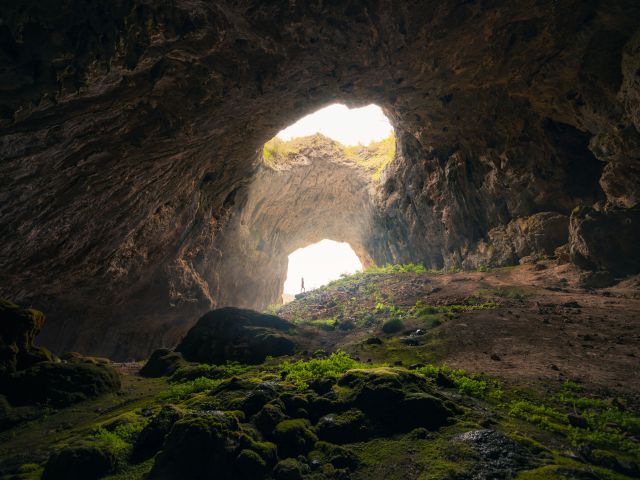
Yarrangobilly caves
There are six caves at Yarrangobilly, too. (Image: Destination NSW)

The thermal pool isn’t the only reason to visit. There are six breathtaking caves to explore, too! Yarrangobilly Caves are exquisitely decorated with natural stalagmites, stalactites and cave corals. These 440-million-year-old caves are strikingly unique and open to visitors year-round.

The largest in its region, the South Glory Cave, lets you soak in its grandeur at your own pace, with self-guided tours available to the general public. Fancy an official tour? Visit the Jersey and Jillabenan Caves for a 90-minute walk-through, where your personal, expert tour guide will unravel the history and secrets of this natural phenomenon. Ancient formations, intimidating overhead crystals and alluring limestone structures await inside these prehistoric wonders.

Need tips, more detail or itinerary ideas tailored to you? Ask AT.

AI Prompt

How do you get there?
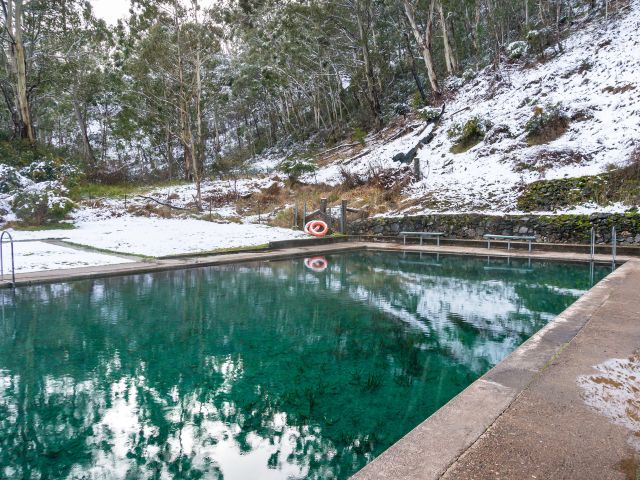
Yarrangobilly thermal pool
Bask in Yarrangobilly thermal pool’s heated waters. (Image: Getty Images/Katharina13)

The Yarrangobilly Caves and thermal pool can be reached from a few points in New South Wales, but these are the recommended routes.

From Cooma, travel south for around seven kilometres until you reach the Snowy Mountains Highway. Continue for approximately 110 kilometres and turn left into the Yarrangobilly Caves Entrance Road.

From the Hume Highway (outside of Canberra/Ngambri), take the Tumut exit and follow the Gocup Road to Tumut. There, you can find the Snowy Mountains Highway and continue on for 110 kilometres to find the Yarrangobilly Caves Entrance Road to the left.

How much does entry cost?
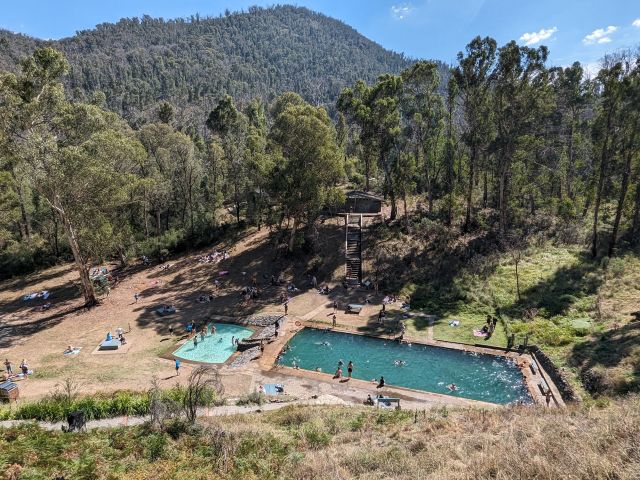
Yarrangobilly pool
In the summer, this pool is a cool escape from the heat. (Image: Jpatokal)

If you plan on spending the day (of which I highly recommend), the Yarrangobilly Caves entry is $4 per vehicle, with an additional $22 per adult and $18 per concession.

True to its name–derived from the Indigenous term yarangu-bili, meaning “flowing stream"–Yarrangobilly offers a range of flowing waters. Whether that’s underground, in the water, or along scenic trails, these waters bring true meaning to Yarrangobilly. Whether you’re exploring the atmospheric caves, spotting curious wildlife, or soaking in the dreamy onsen-like thermal pool, Yarrangobilly’s natural wonders are definitely worth the trip. Be prepared to add this to your brag list, because the Yarrongobilly experience doesn’t get any better than that.

Australian Traveller

Australian Traveller

View profile and articles


hero media

8 ways to discover a new side of Port Stephens

    Kate Bettes Kate Bettes
    Aussies might think they know what Port Stephens is all about – but it’s time to take another look.

    You might’ve driven through this NSW coast town. Maybe even stopped for fish and chips or a quick dip. But spend a long weekend in the new Port Stephens , and you’ll seriously regret not doing it sooner. We’re talking treks across beaches, reef dives and up-close time with rescued koalas.

    All in all? It only takes a day before you see Port Stephens in a whole new light, and not much longer until it’s locked in as your favourite family destination.

    1. Stockton Sand Dunes

    Port Stephens incredible Stockton Sand Dunes are the largest moving sand mass in the Southern Hemisphere. They shift like an endless magic trick across the Worimi Conservation Lands , a 4200-hectare coastal co-managed by the Traditional Owners.

    Tear over them in a 4WD. Rev through valleys soft as melting ice cream on a quad. Carve down 30-metre slopes on a sandboard. However you choose to cross them, you’re guaranteed a seriously wild ride.

    Four rugged 4WDs kick up trails of golden dust as they charge across the sweeping desert landscape.
    Chase thrills across shifting sands. (Image: Destination NSW)

    2. Scale Tomaree Head Summit Walk

    A short climb through bushland opens up to the coastal drama of Tomaree Head . Spot Zenith, Wreck and Box Beaches. See the Fingal Island lighthouse and offshore rookeries where Australia’s rarest seabird, the Gould’s petrel, nests.

    History buffs can’t miss the WWII gun emplacements. And if you’re hiking between May and November, bring binoculars. Travelling whales might just be breaching below.

    Friends enjoying a scenic walk along the Tomaree Head Summit Walk in Tomaree National Park, Port Stephens.
    Climb Tomaree Head for jaw-dropping coastal views. (Image: Destination NSW)

    3. Watch out for whales

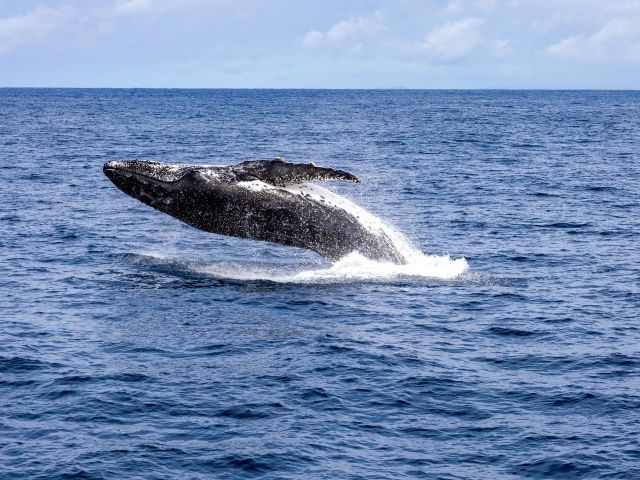
    You’ve seen the spouts of migrating humpbacks and southern right whales from shore. Set sail from Nelson Bay to see them up close. Cruise straight into the action, with tail-slaps, barrel rolls and all.

    And they’ve got competition from the local show-offs. Port Stephens bottlenose dolphins leap and play. Some tours even spot pudgy fur seals, spending lazy days soaking up the sun on Cabbage Tree Island.

    A whale’s tail on the sea’s surface.
    Watch for ocean tails. (Image: Destination NSW)

    4. Port Stephens Koala Sanctuary

    Pop into the Port Stephens Koala Sanctuary  to learn about the rescued koalas who climb, nap, snack and heal in this natural patch of bushland. Wander the immersive Sanctuary Story Walk to discover more about their habits, then head to the SKYwalk – a treetop platform constructed for spotting these eucalyptus-loving locals. Peek into the hospital’s viewing window, where sick or injured koalas may be resting in their recovery enclosures.

    Not enough time around these adorable marsupials? Stay overnight in silk-lined glamping tents.

    Koala sleeping in a tree at Port Stephens Koala Sanctuary, One Mile
    See koalas in their natural habitat. (Image: Destination NSW)

    5. Diving Port Stephens

    Port Stephens has some of NSW’s best dive spots. At Fly Point, float through sponge gardens and coral castles thick with nudibranchs (AKA sea slugs). Halifax Park has blue gropers and crimson-banded wrasse, while Shoal Bay’s seagrass meadows hide pipefish, cuttlefish and octopus.

    Accessible only by boat, Broughton Island is home to a vast array of marine (and bird) life. Snorkel with blue devilfish and stingrays at sites like The Looking Glass and North Rock. More experienced divers can head out with one of the many PADI-certified operators.

    At nearby Cabbage Tree Island, expect to see shaggy-faced wobbegongs cruising along.

    A couple suited up and ready to dive into adventure.
    Suit up and dive into Port Stephens’ vibrant marine life. (Image: Destination NSW)

    6. Irukandji Shark and Ray Encounters

    Not quite ready to dive in? Irukandji Shark and Ray Encounters is the perfect way to spot local marine life without getting too deep. But there’s no obnoxious glass tank tapping here. Instead, this interactive aquarium allows guests to wade into natural-style lagoons that mimic the real thing.

    Gently pat Port Jackson and bamboo sharks, hand-feed rays, and feel their sandpapery skin with your fingertips. It is all under expert guidance. If you want to go deeper, pop on a wetsuit and swim alongside tawny nurse sharks, white-tipped reef sharks and zebra sharks in the lagoon.

    Family enjoying an animal feeding experience at Irukandji Shark and Ray Encounters, Anna Bay.
    Meet the ocean’s friendliest faces at Irukandji. (Image: Destination NSW)

    7. Fish the estuaries

    Fishing fanatics will fall for Port Stephens hook, line and sinker. Here, one of the largest estuary systems in the whole state sees tidal rivers and mangrove ecosystems. Waterfronts are thick with oysters, and residential fish that might include anything from bream, whiting and flathead, to blue swimmer crabs, kingfish and longtail tuna.

    If you prefer to choose your own adventure and fish offshore, you can hire a boat from one of the marinas and set your own course.

    three men fishing on a boat in port stephens
    Join a tour or chart your own fishing trip. (Image: Destination NSW)

    8. Taste new Port Stephens flavours

    With plenty of activity to fill your days, refuelling on delectable cuisine becomes equally important. And Port Stephens answers the call.

    Pop into Holbert’s Oyster Farm for fresh-farmed Port Stephens rock oysters and Pacific oysters, Australian king and tiger prawns, as well as a variety of tasty sauces to try them with.

    Take a group to Atmos for an authentic Greek experience over large shared dishes and Greek-inspired cocktails. Or feast on sea-to-plate, modern Australian dishes at the pet-friendly Restaurant 2317.

    A plate of fresh oysters.
    Slurp your way through the region’s best oysters. (Image: Destination NSW)

    Start planning your Port Stephens getaway at portstephens.org.au .