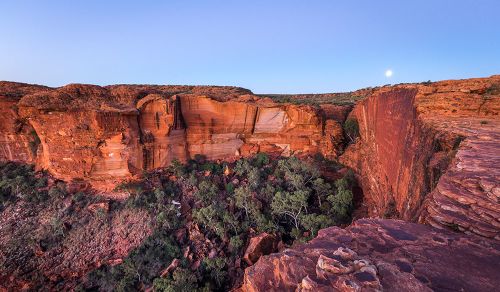
Australia’s Grand Canyon: Kings Canyon, NT

hero media
Anita Kelman camps out under the stars at Kings Creek Station and hikes Kings Canyon’s rim.

Gazing down from a plane high above Central Australia, all appears orange-bronze and desert flat. But once on the ground, the landscape evolves to become vividly varied. Many gather at Uluru and her neighbour Kata Tjuta. However my journey is to another geological gem of the Northern Territory. Situated approximately 350 kilometres south-west of Alice Springs is Watarrka National Park , home to Kings Canyon.

Arriving just before dusk by 4WD, our outback campsite at Kings Creek Station is dusty and swarming with busy Herculean ants. Unperturbed, the manager directs the group towards a fenced section in the opposition direction. With late November evening temperatures mild at 18 °C, we linger around the camp fire before laying our swags out to rest beneath the scattered ghost gum trees.
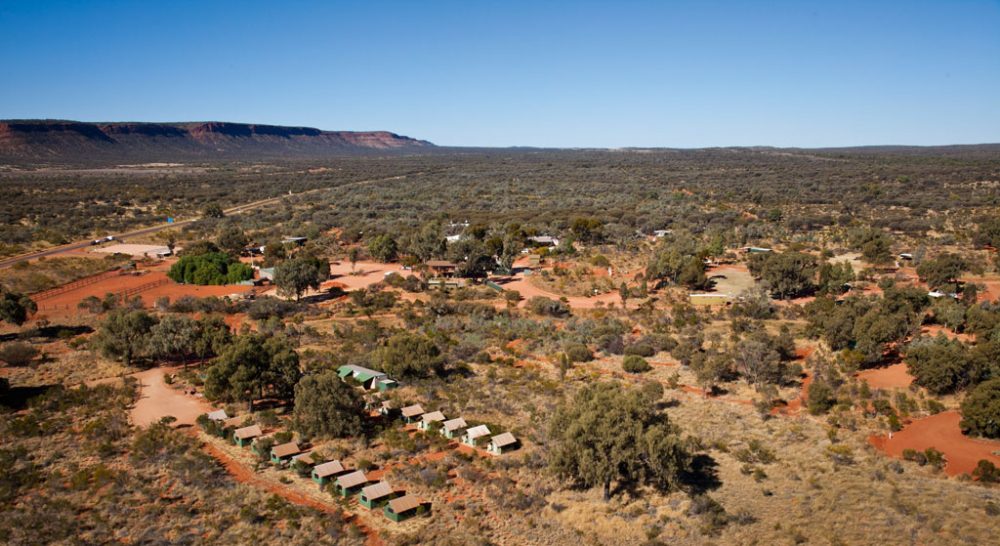
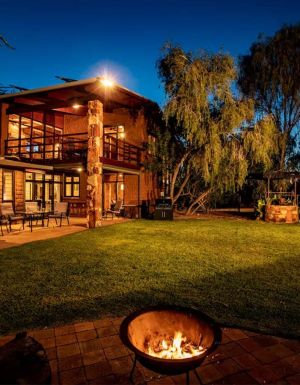
Kings Creek Station Property

Sleeping outdoors exposed to nature is a humbling and ethereal experience. The night sky opens and stars slowly begin to emerge, growing brighter until the entire expanse is filled with silvery celestial bodies dancing amongst the darkness. I pause to ponder the vastness of the galaxies high above and smallness of humanity before drifting into peaceful slumber.
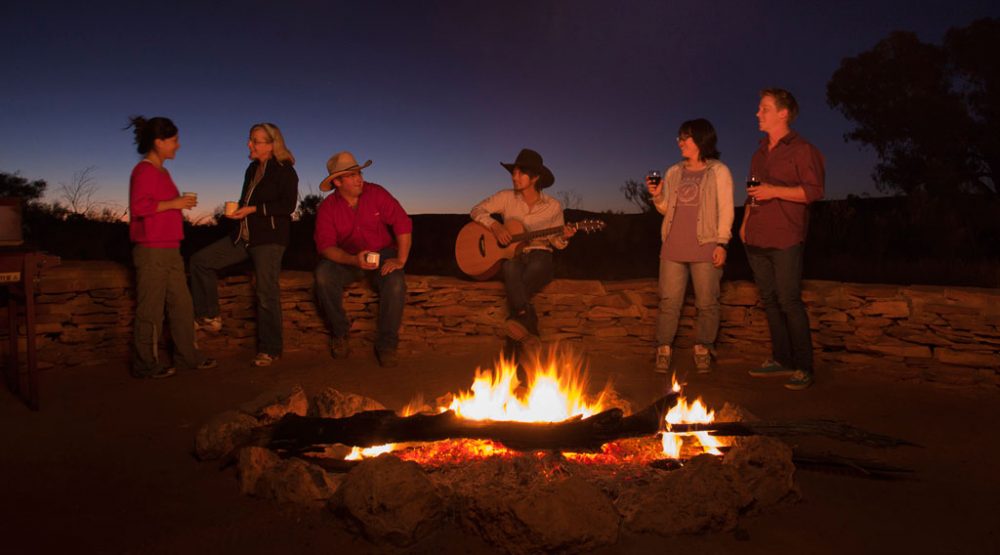
Kings Creek Station evening entertainment
Campfire at Kings Creek Station

Rising early to avoid the heat, Kings Canyon awaits. Our challenge is the Canyon Rim Walk, a six kilometre hike touted for its hidden treasures in the form of a sandstone domed lost city, a contoured rock amphitheatre and a swimming hole in the mythically titled Garden of Eden.

The initial ascent up uneven steps to the crest of the canyon ridge prompts the heart to pump quicker. Forced deep breaths fill the lungs with crisp air while a gentle easterly breeze cools the sweating brow. My recently filled water bottle is quickly drained to half.

Following the path, I traverse along rocky terrain through corridors hedged by petrified formations. The sediment and ancient fossils have intertwined forming distinctive wavy layers. The plateau provides an opportunity for admiring the spectacular landscape far below.

Careful not to stray too close to the edge, I eagerly look out over the valley. The views are certainly impressive and one must pause to envision the ancestors of old taking shelter in the small caves and overhangs. Tawny trees congregate along the basin floor, their roots sucking nutrients from the mineral-rich soil and shallow mountain streams.
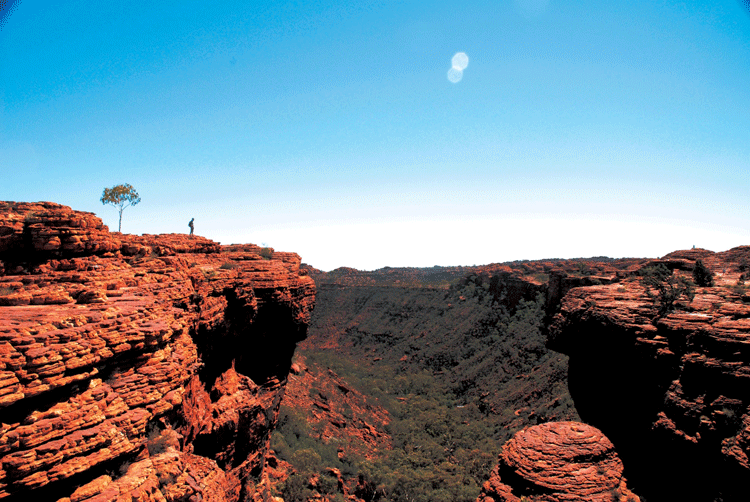
The view from the top of Kings Canyon Rim Walk
The view from the top of the Kings Canyon Rim Walk

Prostrating upon the heated rock ledge, I absorb the sun’s energy. A curious bee, perhaps attracted by my pale skin, lands and in fright releases its sting into my exposed belly. I feel sad not only for the throbbing pain beneath my flesh but for inadvertently causing the demise of this small creature of the canyon.

Time is up and the group maneuvers back onto the main trail. The canyon slopes gently down past more rocky structures towards the car-park and an awaiting picnic.

Before my Central Australian holiday I had never heard of Wattarrka National Park. But having visited and experienced the magic of Kings Canyon, it is now my favourite location in the Australian outback.

Kings Creek Station and Kings Canyon details

Walking the Rim in Kings Canyon

The breathtaking sandstone chasm plunging 270m is one of Australia’s most dramatically beautiful places – a slash of deep green in a red landscape. Hidden deep in Watarrka National Park three hours north of Uluru, Kings Canyon offers two trails: the Creek Walk and the Canyon Walk.

“Vertigo with orange walls. It’s a bit of a hike to the top – so start at dawn – but no-one whinges about the rewards. Take a dip in the springs on your way back down." says travel writer, John Borthwick

The 1.5km Creek Walk is quite flat, up the centre of the canyon to a lookout point. The Canyon Walk, however, is for the committed walker only, as the first 300-400m are straight up a steep incline at the canyon edge. It’s hugely rewarding, though, with delights all the way round, including the Garden of Eden valley and the Lost City’s weathered rocks.

Did you know? The original custodians of the park are the Luritja people, and they’re still represented among the three Aboriginal groups that live in the park. The name Watarrka comes from the Luritja name for Umbrella Bush.

How to get there: Kings Canyon is located in the Watarrka National Park, 323km southwest of Alice Springs. There are several stopovers on the way to the Canyon, including Jim’s Place on the Stuart Highway, as well as Erldunda and Mt Ebenezer.

Best time to go: Anytime, but beware that it is very hot during the summer months.

Further information: Watarrka National Park ,

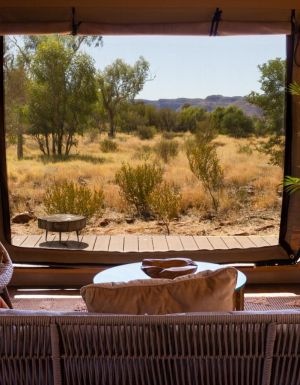
Kings Creek Station Accommodation

Where is it?  Luritja Road, just outside the Watarrka National Park. From Uluru it is 300km; from Alice Springs it is 300km on dirt roads or 450km on sealed roads. Access by 2WD or 4WD (check conditions) or by light aircraft, airstrip on property. Open: year-round.

What makes it so special? Covering 1800 square kilometres, Kings Creek Station was established in 1982 as a cattle and camel property by Ian Conway and his wife Lyn. You can visit the Stockcamp to watch live camel and horse handling, eat damper and drink billy tea, go on camel rides and quad-bike safaris to explore the red sand dunes, mulga scrub and golden fields of spinifex. There are also scenic helicopter flights over Kings Canyon and the West MacDonnell Ranges. For an extra fee they’ll set you up at a remote camp for a romantic dinner and night under the stars in swags.

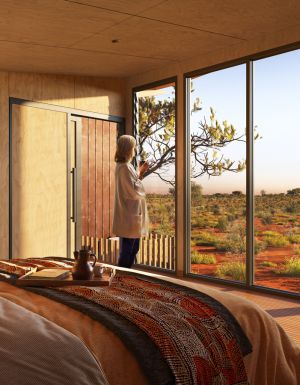
Accommodation options: Unpowered and powered campsites as well as safari-style canvas-sided cabins with power and shared facilities .

Further information: (08) 8956 7474; www.kingscreekstation.com.au

For more information on Kings Canyon & things to do in the NT, visit the official Northern Territory website at northernterritory.com

hero media

8 Red Centre locations to explore after seeing the new movie, Kangaroo

Spend a few days visiting the real-life Central Australian locations that inspired the new film everyone is talking about, and discover why Alice Springs is such an important part of Australian culture.

In the credits of the new Australian film Kangaroo , the first name under ‘cast’ should read ‘The Northern Territory ’. Not only is Alice Springs (and the surrounding landscape) integral to the movie itself, but the spiritual heart of Australia and its local Indigenous owners also inform the look and feel of every frame, explains Producer Trisha Morton-Thomas of Brindle Films, who also plays Charlie’s grandmother Gwennie.

“By setting Kangaroo in Alice Springs (Mparntwe), the film embraces how visible Aboriginal people are here, and the living Aboriginal culture that is woven through this community,” she explains.

still from kangarro film
See Kangaroo, then visit the real-life filming locations.

And while shooting in such a sacred part of the Northern Territory required extra planning, it was something the cast and crew were highly invested in.

“There are incredibly significant sacred sites and places of deep cultural stories in the area, that at times are very gender-specific, which we’ve kept out of the production,” she explains. “Even if overhead drone footage captures a sacred site that isn’t meant to be seen by other people outside of that clan, we’ve made sure to omit it from the film.”

If Kangaroo piqued your interest in a Central Australian holiday, we don’t blame you. Read on to discover eight places featured in the movie that you can visit in real life – and get planning. Don’t forget to pack sunscreen and a hat.

1. Alice Springs/ Mparntwe

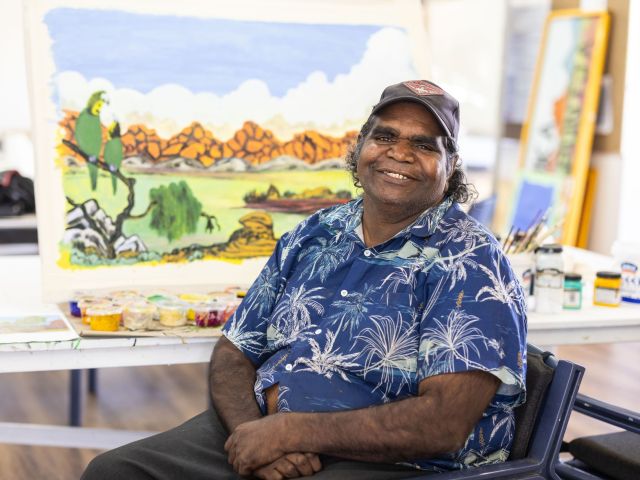
artist at Many Hands Art Centre
Visit the galleries of Alice Springs, like Many Hands Art Centre. (Image: Tourism NT/ Helen Orr/ Many Hands Art Centre)

The red and dusty streets of the film’s fictional town of Silvergum were filmed on the outskirts of Alice Springs. And, while the art gallery featured in the film is fictional, Alice Springs is a hub of creativity. See the work of local artists at the Araluen Art Centre , Yubu Napa Art Gallery , Iltja Ntjarra (Many Hands) Art Centre and the famous Tjanpi Desert Weavers .

2. The Kangaroo Sanctuary & Kangaroo Rescue Centre

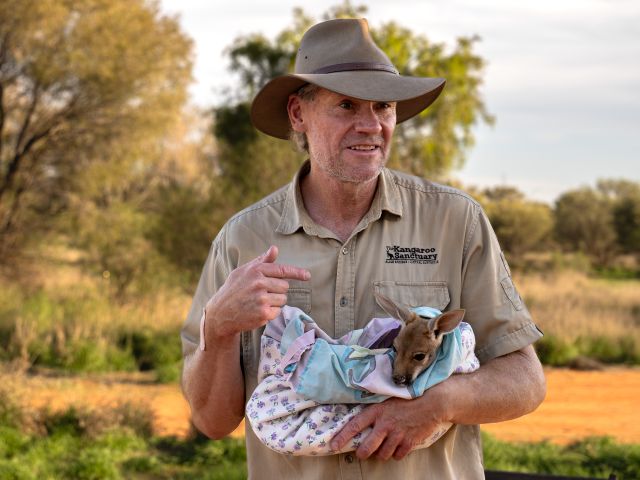
The Kangaroo Sanctuary Alice Springs, the inspiration for the Kangaroo move
Visit the movie’s inspiration at Kangaroo Sanctuary. (Image: Tourism NT/ Kangaroo Sanctuary)

Kangaroo was inspired by the journey of Chris ‘Brolga’ Barns, who founded the now world-renowned Kangaroo Sanctuary based in Alice Springs. For lead actor, Aussie Ryan Corr, the animals were central to the movie, alongside the landscapes.

“The animals in this story were a real calling point for me,” he explains. “What this story tries to tell us about the connection between humans and animals is beautiful.”

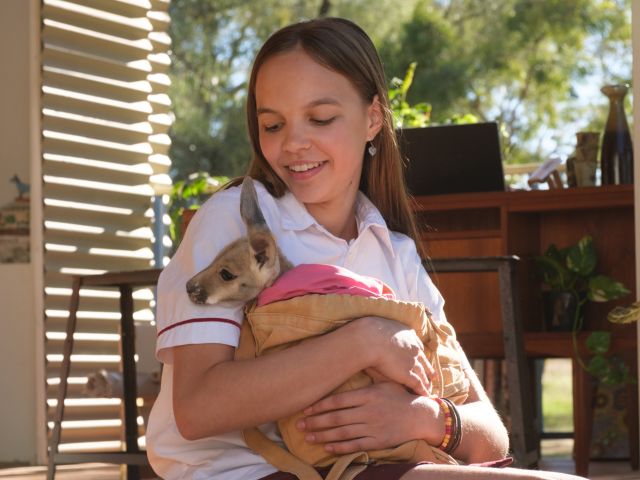
To gain a real insight into the fauna and flora of the Red Centre, you can visit the Kangaroo Sanctuary on a sunset tour, where you might even get the chance to hold a baby kangaroo.

3. Ormiston Gorge

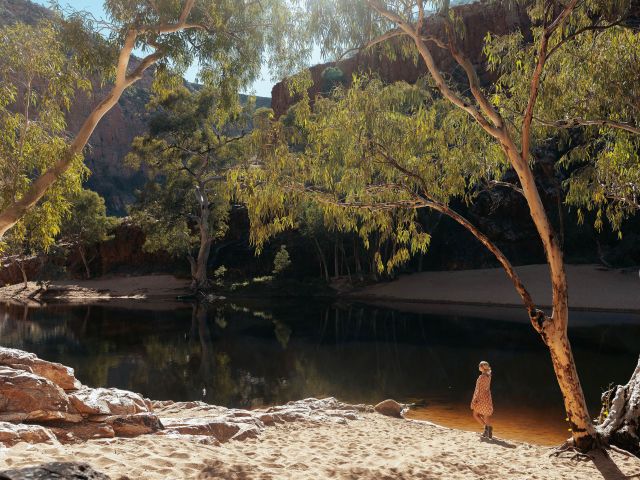
woman walking along the edge of Ormiston Gorge near alice springs
Take a dip in Ormiston Gorge. (Image: Tourism NT/ @domandjesso)

The film captures the raw beauty of the West MacDonnell Ranges, known in the Arrernte language as Tjoritja. This national park is rich in Indigenous culture and stark geological wonders.

Only a 15-minute drive from Alice Springs, Tjoritja offers visitors the chance to camp, hike and swim among ancient landscapes (most attractions are less than a three-hour drive away).

Ormiston Gorge , a cooling oasis in among the red desert sands, is one of the most popular destinations, no doubt because of the permanent swimming hole and towering red cliffs. From here, visitors can also embark on the beautiful Ormiston Pound Walk and the shorter – more accessible – Ghost Gum Walk. Bring your bathers – it’s safe for swimming.

4. Standley Chasm

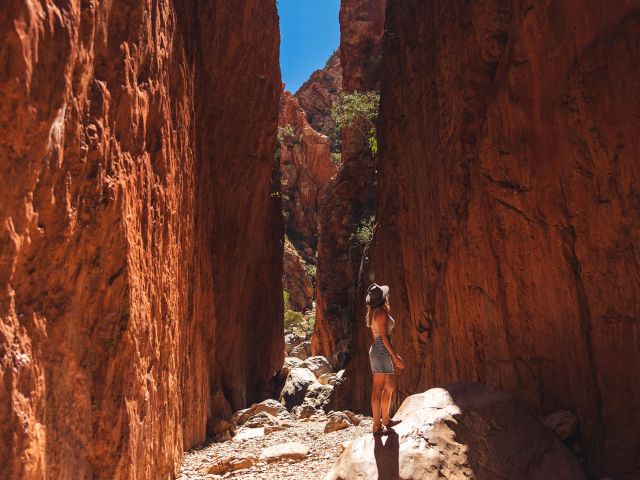
woman walking through Standley Chasm near alice springs
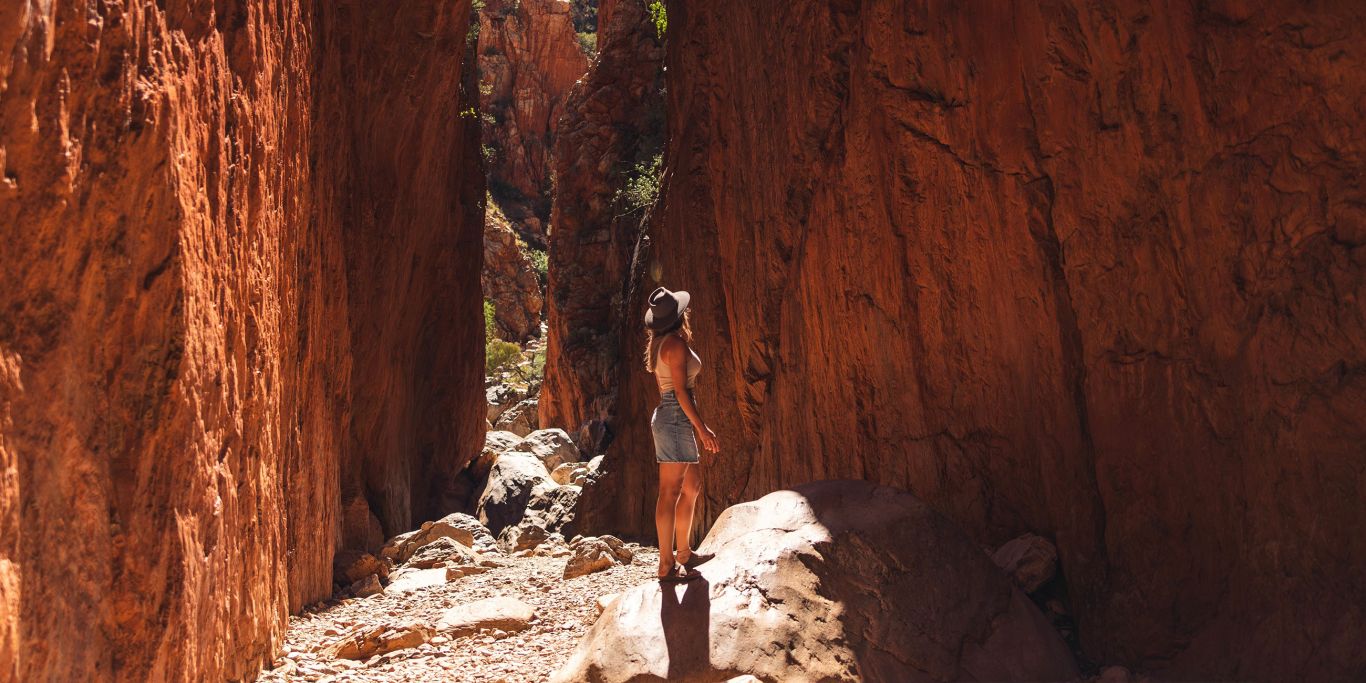
Wander through Standley Chasm. (Image: Tourism NT)

The 1.2-kilometre walk to nearby Standley Chasm will be a highlight for any visitor as the imposing 40 metre-high chasm walls project strength and ancient wisdom.

Visit at midday to experience the path illumined by the midday sun. Not only will you fill your camera roll with vibrant red images of the gorge and its intoxicating shadows, but you can also camp nearby in a powered or unpowered site so you can watch the brilliance of the desert stars fill the night sky after dusk.

5. Simpsons Gap

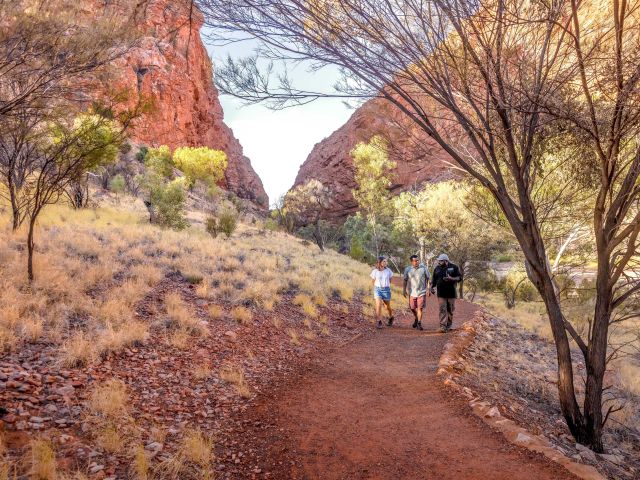
three people walking on path through simpsons gap near alice springs
Walk the trails of Simpson’s Gap. (Image: Tourism NT/ Helen Orr)

Closer to Alice Springs, the photogenic Simpsons Gap is the perfect place to spot the endangered Black-footed Rock wallaby near the permanent watering hole. While swimming isn’t permitted, soaking up the sun and views certainly is.

Explore the area’s numerous walking trails, appreciate the soaring cliffs on either side of the ‘gap’ and pick out the shooting locations of Kangaroo in the area.

6. Ellery Creek Big Hole

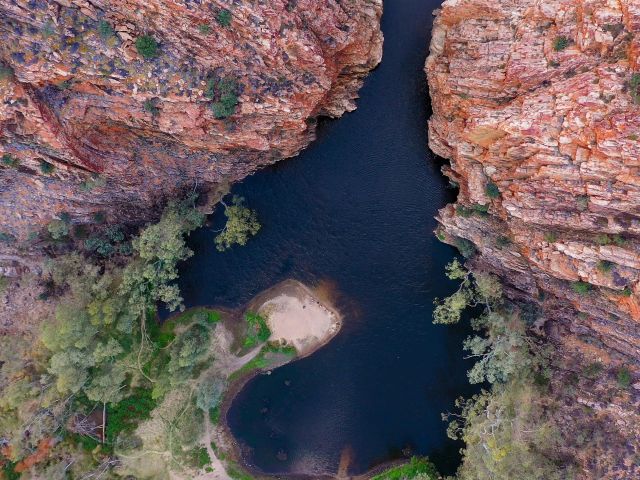
aerial of Ellery Creek Big Hole near alice springs
Dive into Ellery Creek Big Hole. (Image: Tourism NT/ Tourism Australia)

When it comes to classic Northern Territory landscapes, you can’t go past Ellery Creek Big Hole/ Udepata : tall gum trees sidling up to a refreshing watering hole (fed by the West MacDonnell Ranges and surrounded by rugged red cliffs.

Swim in the cooling waters, hike the cliff tops, watch for birds and even stargaze as you camp here overnight. It’s locations like this that attracted the film’s director Kate Woods to the project.

“It humbles you to be in this environment: it’s so beautiful, so old and so vast,” she explains. “I was thrilled to get a chance to … shoot such a beautiful story in the incredible landscape of the Northern Territory.”

7. Larapinta Drive

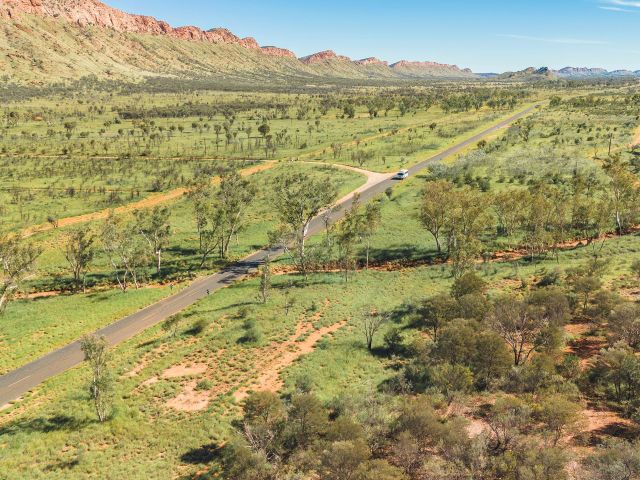
aerial of Larapinta Drive into alice springs
Drive along Larapinta Drive. (Image: Tourism NT)

There is no better way to get a feel for how the characters arrived at the fictional Central Australian town of Silvergum than to travel along the iconic state road, Larapinta Drive.

Connecting Alice Springs to the mighty King’s Canyon in the west, via the historic community of Hermannsburg, this road takes in the West MacDonnell National Park, Alice Springs Desert Park and artist Albert Namatjira’s house, among other attractions. Take your time, bring a camera and prepare for numerous stops along the way.

8. Todd River

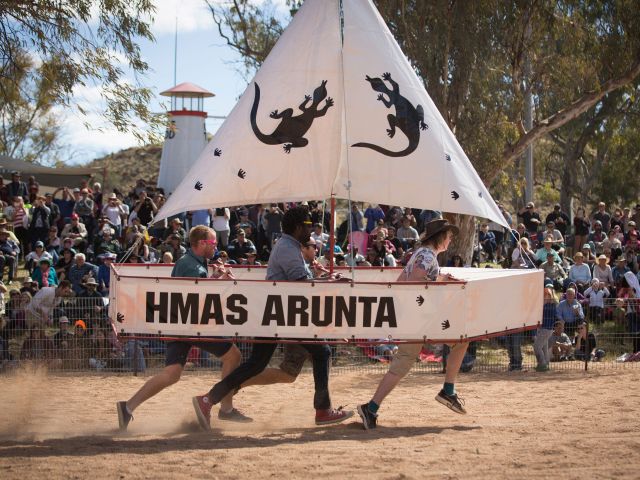
competitors in Henley on Todd Regatta, alice springs
Join in the fun of the quirky Henley on Todd Regatta. (Image: Tourism NT/ TImparja Creative)

Meandering through Alice Springs like a lazy Western Brown snake, the Todd River is a central part of Alice Springs culture. Known as an ‘intermittent river’, the Todd can go from a dry dusty riverbed to a flowing waterscape in less than 15 minutes after heavy rainfall.

When it’s dry, the famous Henley on Todd Regatta fills the sandy riverbed with handmade ‘boats’ carried by sailors. This is the world’s only dry river boating event, and it’s referenced in the ‘Silvergum Boat Race’ in the movie. Inspired by the real-life event, the characters built quirky “Flintstones-style boats” and competed in teams.

See Kangaroo in cinemas now, and start planning your NT getaway at northernterritory.com.