Australia’s Grand Canyon: Kings Canyon, NT

hero media
Anita Kelman camps out under the stars at Kings Creek Station and hikes Kings Canyon’s rim.

Gazing down from a plane high above Central Australia, all appears orange-bronze and desert flat. But once on the ground, the landscape evolves to become vividly varied. Many gather at Uluru and her neighbour Kata Tjuta. However my journey is to another geological gem of the Northern Territory. Situated approximately 350 kilometres south-west of Alice Springs is Watarrka National Park , home to Kings Canyon.

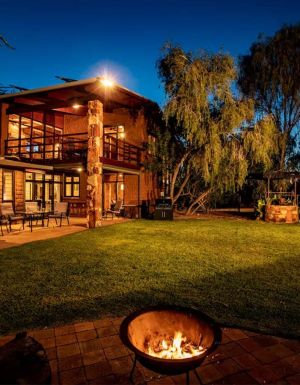
Arriving just before dusk by 4WD, our outback campsite at Kings Creek Station is dusty and swarming with busy Herculean ants. Unperturbed, the manager directs the group towards a fenced section in the opposition direction. With late November evening temperatures mild at 18 °C, we linger around the camp fire before laying our swags out to rest beneath the scattered ghost gum trees.
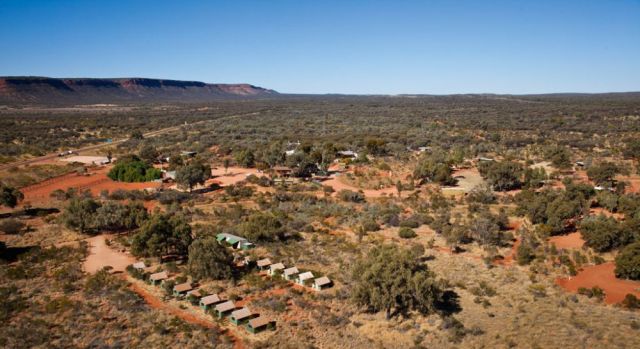
Kings Creek Station Property

Sleeping outdoors exposed to nature is a humbling and ethereal experience. The night sky opens and stars slowly begin to emerge, growing brighter until the entire expanse is filled with silvery celestial bodies dancing amongst the darkness. I pause to ponder the vastness of the galaxies high above and smallness of humanity before drifting into peaceful slumber.
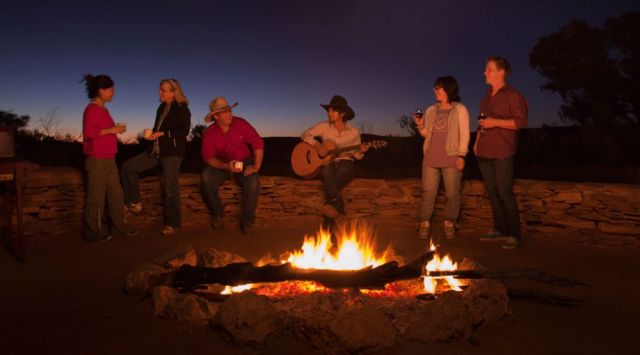
Kings Creek Station evening entertainment
Campfire at Kings Creek Station

Rising early to avoid the heat, Kings Canyon awaits. Our challenge is the Canyon Rim Walk, a six kilometre hike touted for its hidden treasures in the form of a sandstone domed lost city, a contoured rock amphitheatre and a swimming hole in the mythically titled Garden of Eden.

The initial ascent up uneven steps to the crest of the canyon ridge prompts the heart to pump quicker. Forced deep breaths fill the lungs with crisp air while a gentle easterly breeze cools the sweating brow. My recently filled water bottle is quickly drained to half.

Following the path, I traverse along rocky terrain through corridors hedged by petrified formations. The sediment and ancient fossils have intertwined forming distinctive wavy layers. The plateau provides an opportunity for admiring the spectacular landscape far below.

Careful not to stray too close to the edge, I eagerly look out over the valley. The views are certainly impressive and one must pause to envision the ancestors of old taking shelter in the small caves and overhangs. Tawny trees congregate along the basin floor, their roots sucking nutrients from the mineral-rich soil and shallow mountain streams.
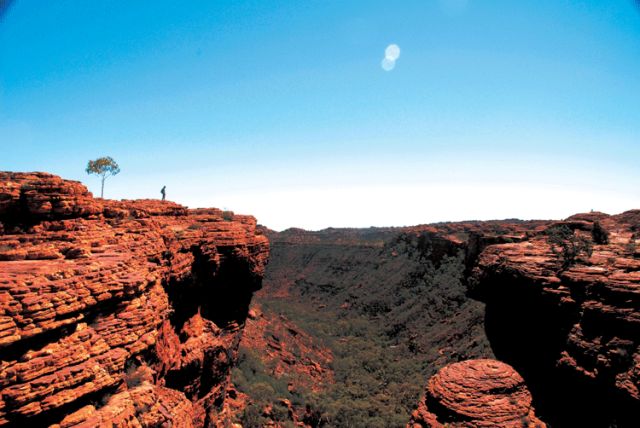
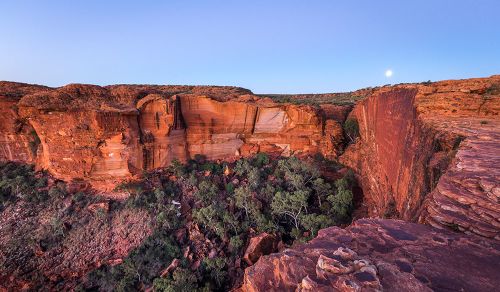
The view from the top of Kings Canyon Rim Walk
The view from the top of the Kings Canyon Rim Walk

Prostrating upon the heated rock ledge, I absorb the sun’s energy. A curious bee, perhaps attracted by my pale skin, lands and in fright releases its sting into my exposed belly. I feel sad not only for the throbbing pain beneath my flesh but for inadvertently causing the demise of this small creature of the canyon.

Time is up and the group maneuvers back onto the main trail. The canyon slopes gently down past more rocky structures towards the car-park and an awaiting picnic.

Before my Central Australian holiday I had never heard of Wattarrka National Park. But having visited and experienced the magic of Kings Canyon, it is now my favourite location in the Australian outback.

Kings Creek Station and Kings Canyon details

Walking the Rim in Kings Canyon

The breathtaking sandstone chasm plunging 270m is one of Australia’s most dramatically beautiful places – a slash of deep green in a red landscape. Hidden deep in Watarrka National Park three hours north of Uluru, Kings Canyon offers two trails: the Creek Walk and the Canyon Walk.

“Vertigo with orange walls. It’s a bit of a hike to the top – so start at dawn – but no-one whinges about the rewards. Take a dip in the springs on your way back down." says travel writer, John Borthwick

The 1.5km Creek Walk is quite flat, up the centre of the canyon to a lookout point. The Canyon Walk, however, is for the committed walker only, as the first 300-400m are straight up a steep incline at the canyon edge. It’s hugely rewarding, though, with delights all the way round, including the Garden of Eden valley and the Lost City’s weathered rocks.

Did you know? The original custodians of the park are the Luritja people, and they’re still represented among the three Aboriginal groups that live in the park. The name Watarrka comes from the Luritja name for Umbrella Bush.

How to get there: Kings Canyon is located in the Watarrka National Park, 323km southwest of Alice Springs. There are several stopovers on the way to the Canyon, including Jim’s Place on the Stuart Highway, as well as Erldunda and Mt Ebenezer.

Best time to go: Anytime, but beware that it is very hot during the summer months.

Further information: Watarrka National Park ,

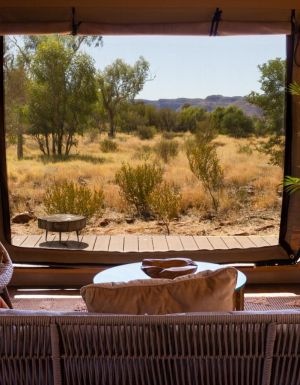
Kings Creek Station Accommodation

Where is it?  Luritja Road, just outside the Watarrka National Park. From Uluru it is 300km; from Alice Springs it is 300km on dirt roads or 450km on sealed roads. Access by 2WD or 4WD (check conditions) or by light aircraft, airstrip on property. Open: year-round.

What makes it so special? Covering 1800 square kilometres, Kings Creek Station was established in 1982 as a cattle and camel property by Ian Conway and his wife Lyn. You can visit the Stockcamp to watch live camel and horse handling, eat damper and drink billy tea, go on camel rides and quad-bike safaris to explore the red sand dunes, mulga scrub and golden fields of spinifex. There are also scenic helicopter flights over Kings Canyon and the West MacDonnell Ranges. For an extra fee they’ll set you up at a remote camp for a romantic dinner and night under the stars in swags.

Accommodation options: Unpowered and powered campsites as well as safari-style canvas-sided cabins with power and shared facilities .

Further information: (08) 8956 7474; www.kingscreekstation.com.au

For more information on Kings Canyon & things to do in the NT, visit the official Northern Territory website at northernterritory.com

hero media

Red earth, light shows and ancient culture: discover the ultimate NT road trip

(Credit: Tourism & Events NT/ Ben Savage)

    Kassia ByrnesBy Kassia Byrnes
    The Northern Territory is made for road trips, and this one hits all the highlights.

    Craggy mountain ranges, inviting waterholes, ochre soil: the landscape of the Northern Territory is asking to be explored by road and foot. There are many iconic road trips to choose from here, but none so all-encompassing than the roughly 3000 kilometres of sealed road that make up Explorer’s Way.

    Spend 14 days (or more, to really make the most of it) driving this route from Adelaide, hitting the NT near the small settlement of Kulgera before later finishing in Darwin. Along the way, you’ll find nearly all the territory’s most iconic sights.

    Discover some of the top highlights that make Explorer’s Way one of Australia’s most incredible road trips.

    1. Alice Springs

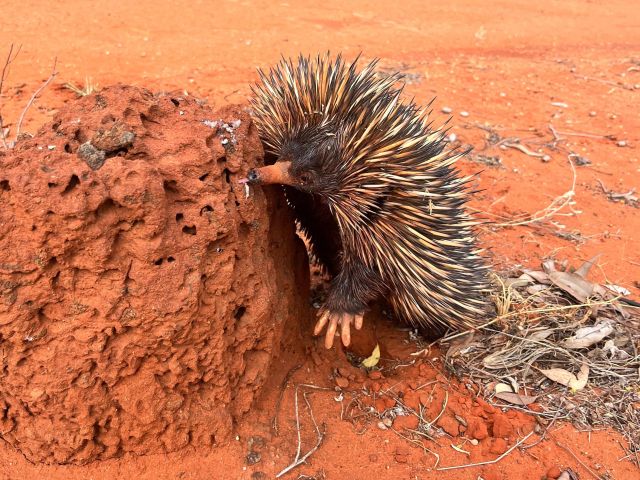
    echidna at Alice Springs Desert Park
    See the locals at Alice Springs Desert Park. (Credit: Tourism & Events NT)

    Recently hitting the big screen again with the story of The Kanagroo Sanctuary , there’s a lot to surprise you in Alice Springs.

    Three distinct desert habitats – desert rivers, sand country and woodland – are recreated over 1300 hectares at Alice Springs Desert Park . Time your visit for a presentation or a free bird show.

    Later, turn your attention to the skies above, taking a dive into local astronomy at Earth Sanctuary . You’ll find a range of experiences, from a 90-minute toe-dip into the stars through to an overnight adventure.

    Alice Springs packs a surprising punch with its tasty dining options, including pub grub and unique brews at Alice Springs Brewing Co , tapas and pizza at Epilogue Lounge and tasty cafe fare at the quirky Page 27 .

    2. Tjoritja/West MacDonnell National Park

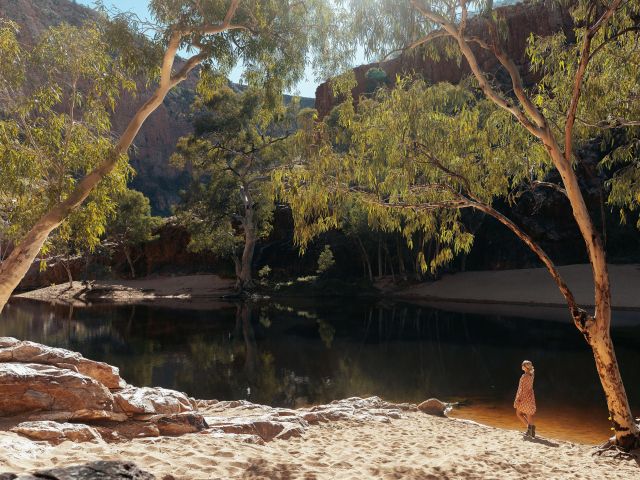
    woman standing at Ormiston Gorge
    Dive into Ormiston Gorge. (Credit: Tourism & Events NT/ Dom and Jesso)

    Beginning 15 minutes from Alice Springs and stretching across 161 kilometres, Tjoritja/West MacDonnell National Park is packed with striking ancient landscapes and inviting water holes.

    Visit Standley Chasm – traditionally known as Angkerle Atwatye, meaning ‘Gap of Water’ – to take in its bold red and orange hues, and to observe the diverse bird species, lizards and wallabies that call it home.

    Cool off in one of several picturesque natural swimming holes, like Ellery Creek Big Hole and Ormiston Gorge.

    3. Uluru & Kata Tjuta

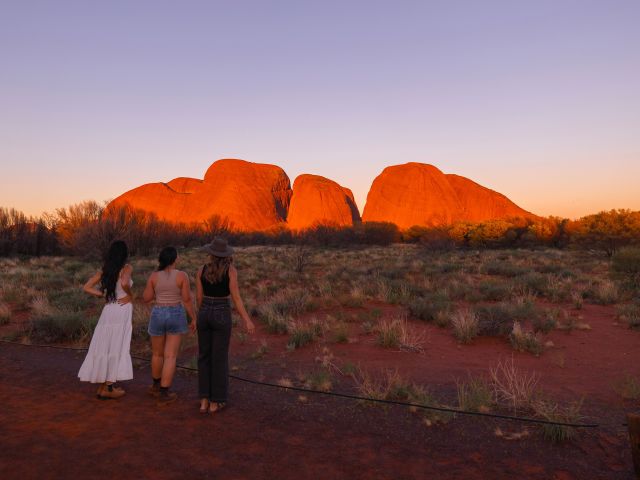
    three women looking at Kata Tjuta at sunset
    Explore Kata Tjuta. (Credit: Tourism & Events NT)

    Visiting the Cultural Heart of Australia is something everybody should experience. There are so many side trips in the Red Centre you could easily spend a week here, but to get the most out of a short time, park the car then get out on foot.

    Take the 10-kilometre Base Walk around the entirety of Uluru or join a free, ranger-guided Mala Walk along part of the base, learning about Tjukurpa (creation stories) and geology as you go.

    For a change of pace, wait until nightfall and wander through the iconic Field of Light display by celebrated artist Bruce Munro, or see the Wintjiri Wiru lightshow that shares the ancient Mala story using drones, lasers and projections.

    4. Tennant Creek

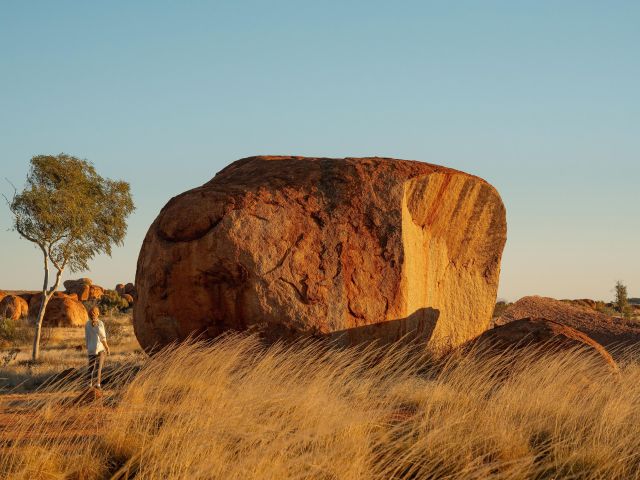
    pson looking at Karlu Karlu (Devils Marbles) northern territory
    See the ancient granite boulders of Karlu Karlu (Devils Marbles). (Credit: Tourism & Events NT/ Dom And Jesso)

    Tennant Creek was Australia’s third-largest gold mining town in the 1930s, and visitors can discover that history at Battery Hill Mining Centre – and even try their own hand at gold fossicking.

    For a completely different side of history, pop into Nyinkka Nyunyu Art & Culture Centre , which preserves and shares Warumungu culture through art, performance, a museum and more.

    Just outside town, find the ancient granite boulders of Karlu Karlu (Devils Marbles). A site integral to important stories held by the Warumungu, Kaytetye, Warlpiri and Alyawarra peoples, the boulders appear to almost have dropped out of the sky and seemingly continue to defy gravity.

    5. Mataranka

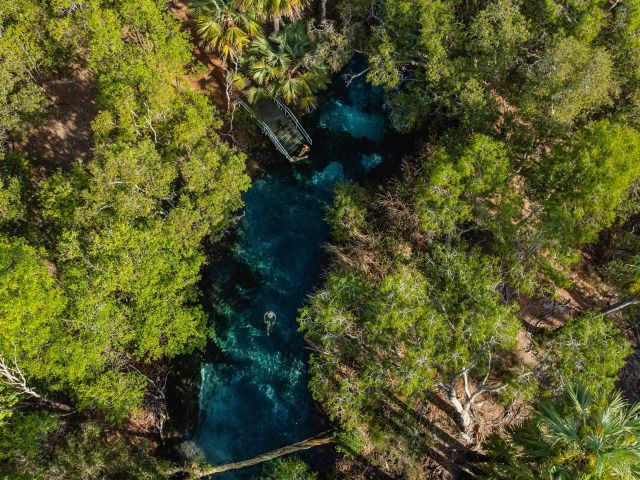
    aerial of people swimming in bitter springs northern territory
    Dive into Bitter Springs. (Credit: Tourism & Events NT/ Ben Savage)

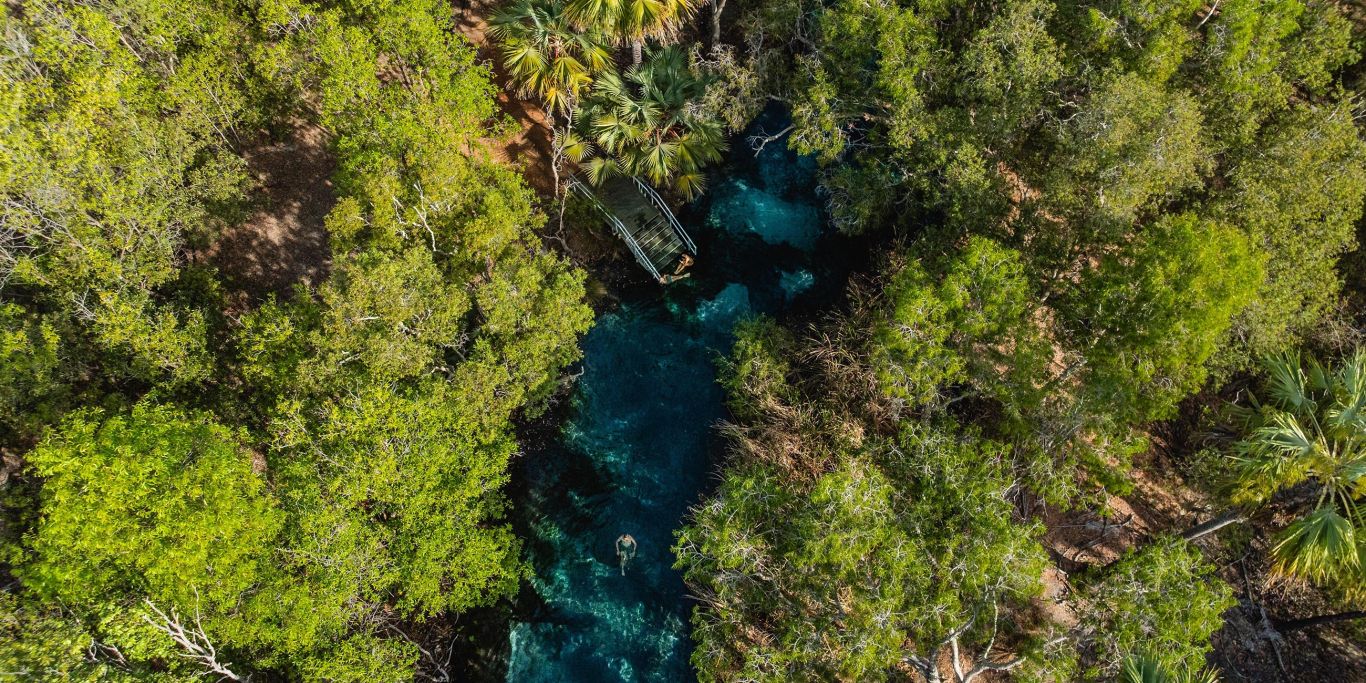
    A town made famous by the novel We of the Never Never by Jeannie Gunn (and a movie of the same name), Mataranka is also known for its sandy-bottomed thermal pool, Bitter Springs , within Elsey National Park. Follow a 500-metre loop track around these spring-fed pools that stay a toasty 34°C year-round, before choosing your favourite spot to dive into. Enjoy the local birdlife while you relax.

    Elsewhere in the park, find historical sites, several scenic walks and Roper River, which is perfect for boating and fishing.

    6. Nitmiluk National Park

    Nabilil Dreaming Sunset Dinner Cruise
    Join a sunset cruise with Nabilil Dreaming. (Credit: Tourism & Events NT/ Lachlan Gardiner)

    Nitmiluk National Park is sandstone country, with 13 stunning gorges and plenty of waterfalls waiting to be explored.

    One of the most beautiful spots can be found along the 62-kilometre Jatbula Trail, a five-to-six day bushwalk that follows an ancient Jawoyn songline from Nitmiluk Gorge to Leliyn (Edith Falls). Numbers are restricted and book out quickly, so be sure to plan well ahead. Not up for the hike? Drive right up to the falls and enjoy a dip without the challenge.

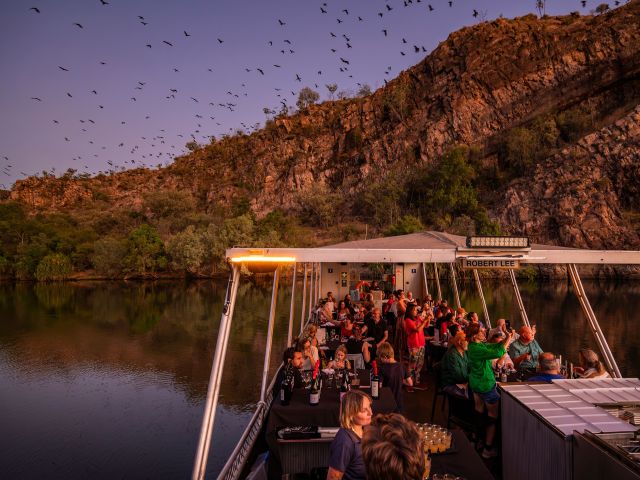
    Elsewhere, explore Nitmiluk (Katherine) Gorge. Paddle a kayak through the river running through the canyon, or save your energy on a Nabilil Dreaming Sunset Dinner Cruise , discovering the stories and ways of the Jawoyn people while enjoying a candlelit dinner as the cliffs around you shift colour and glow with the changing daylight.

    Continue your cultural journey at local art centres like Godinymayin Yijard Rivers Art & Culture Centre or Mimi Aboriginal Art & Craft .

    7. Litchfield National Park

    cathedral termite mounds in Litchfield national park
    Be awed by giant cathedral termite mounds. (Credit: Tourism & Events NT/ As We Wander)

    Just over an hour’s drive from Darwin lies the beautiful Litchfield National Park. It’s famous for stunning waterfalls and swimming holes, including Buley Rockhole, Wangi Falls, Florence Falls and Tjaynera Falls.

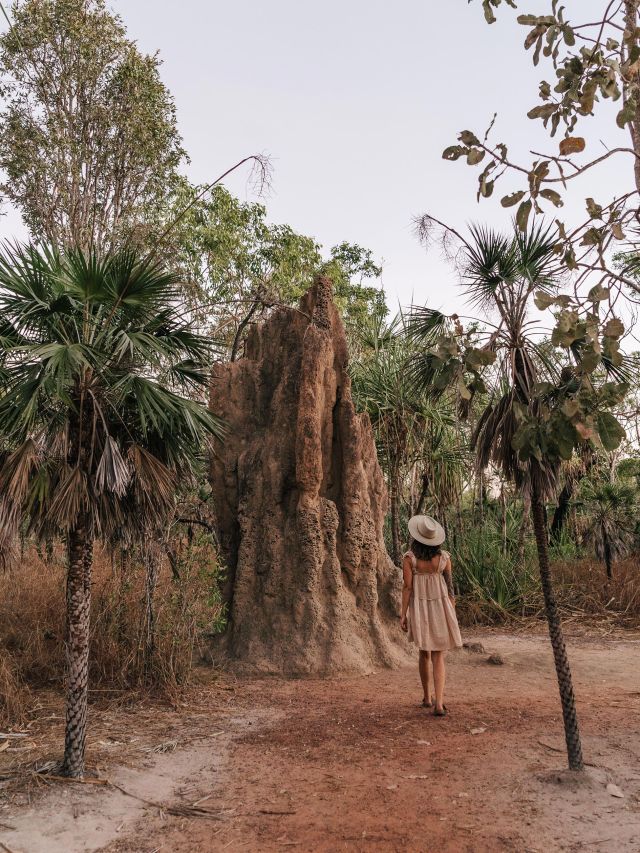
    Here you’ll also find hundreds of giant – and magnetic – cathedral termite mounds that are truly a sight to see. Ageing up to 100 years old, you won’t find mounds like these outside the northern parts of Australia. Stroll along the accessible boardwalk to see them up close.

    8. Darwin

    darwin street art
    Darwin art is streets ahead. (Credit: Tourism & Events NT/ Mark Fitzpatrick)

    This list wouldn’t be complete without the territory’s capital city: Darwin. Situate yourself upon arrival with a stroll through the main streets, admiring the many art murals by local, interstate and international artists. They’re all remnants of the annual Darwin Street Art Festival , one of Australia’s longest running street art festivals.

    Stop to recharge along Darwin’s Waterfront Precinct , an area of delectable restaurants, public swimming pools and free events. And, of course, it would be wrong to leave the city without enjoying a bowl of laksa at Mindil Beach Sunset Market as the sun goes down.

    Learn more and start planning your Explorer’s Way road trip at northernterritory.com/drive.