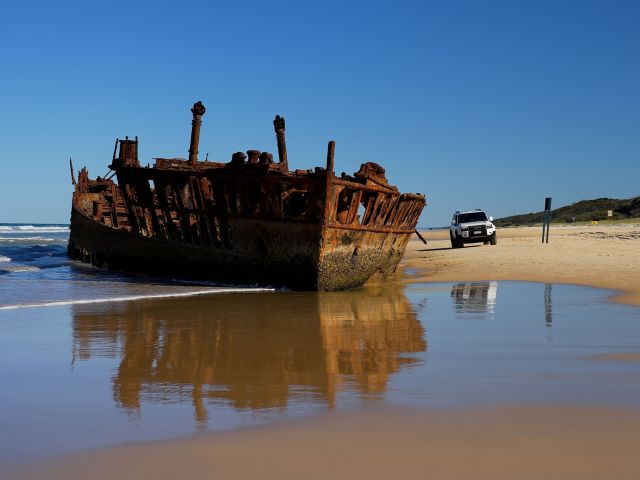

Discover why UNESCO defined K’gari as a place of exceptional natural beauty.
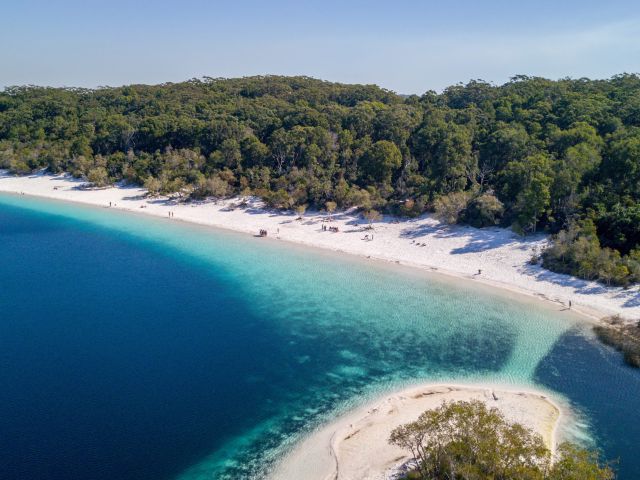
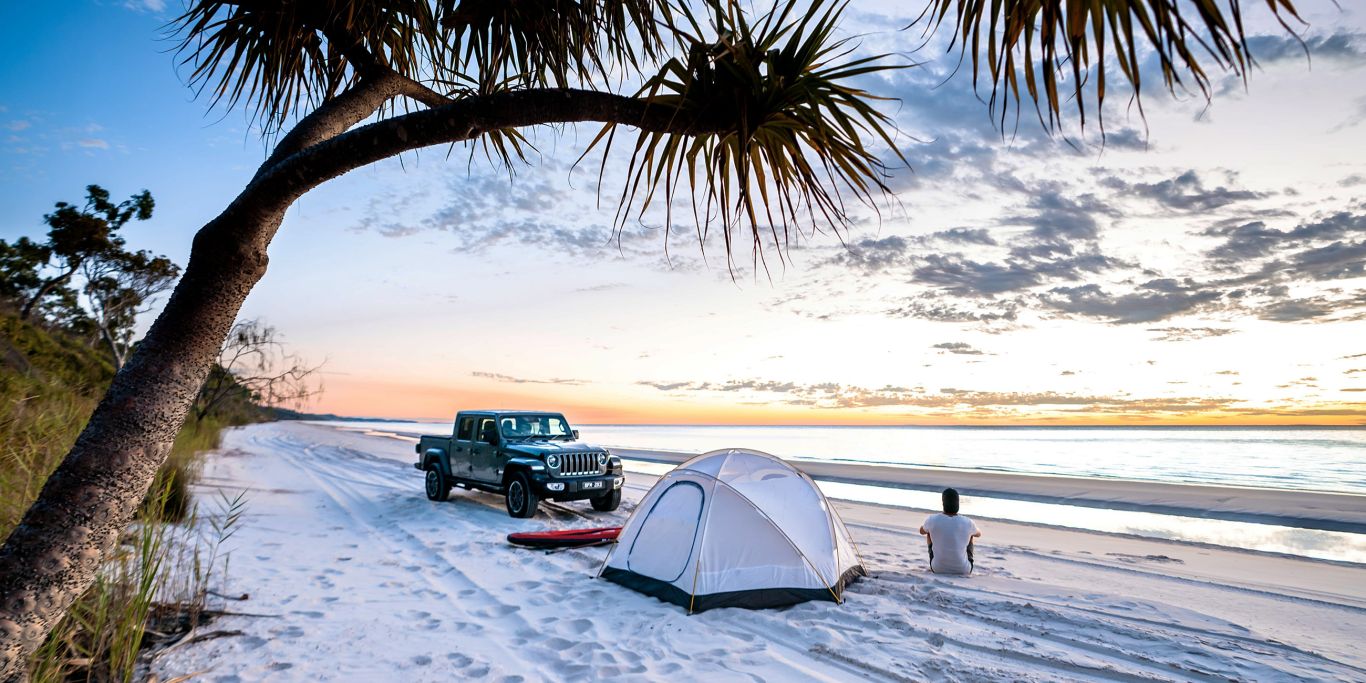
K’gari is home to expansive beaches, roaming dingoes, cliffs of coloured sand and astonishing turquoise waters. Spanning 166,000 hectares in size, it also offers a range of terrains and views that other places just can’t compete with. The best way to experience them? Pitch a tent and camp, of course. K’gari camping is like nowhere else.
Thankfully, K’gari is packed with plenty of formal and informal campsites to choose from. Here, we answer all your most pressing questions on everything from permits, packing lists and tips for avoiding those pesky dingoes in our guide to camping on K’gari.
Before you arrive at K’gari
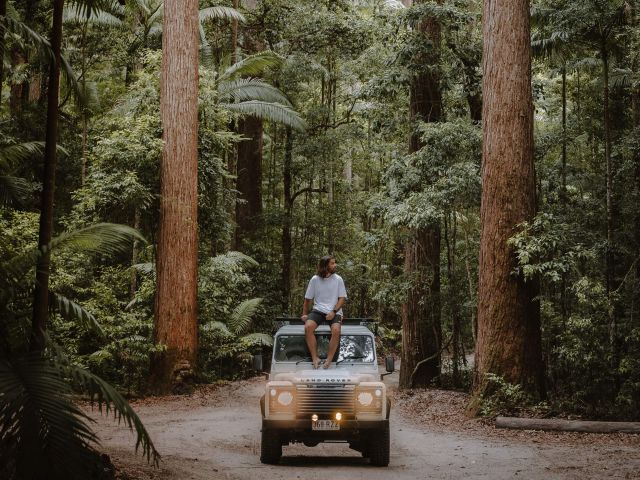
Before you embark on one of the most rewarding outdoor adventures you can have in Queensland, you’re going to need to prepare.
Weather conditions on K’gari can vary greatly throughout the year and can have a significant impact on factors such as how you get there, track closures, dingo safety tips and where you can set up camp. To stay up to date on all this information, do your research beforehand.
K’gari is only accessible via 4WD, which means you will need your own or a rental 4WD if you intend to camp. If you’re a novice or would like time to get more comfortable behind the wheel, you can fine-tune your skills by booking a lesson with the Australian Offroad Academy on the island behind the Kingfisher Bay Resort (although some of the unavoidable tracks really are high-level driving, so you want to be quite competent).
Fuel is available for purchase on K’gari at Kingfisher Bay Resort, Eurong Beach, Happy Valley, Cathedral on Fraser and Orchid Beach.
Permits
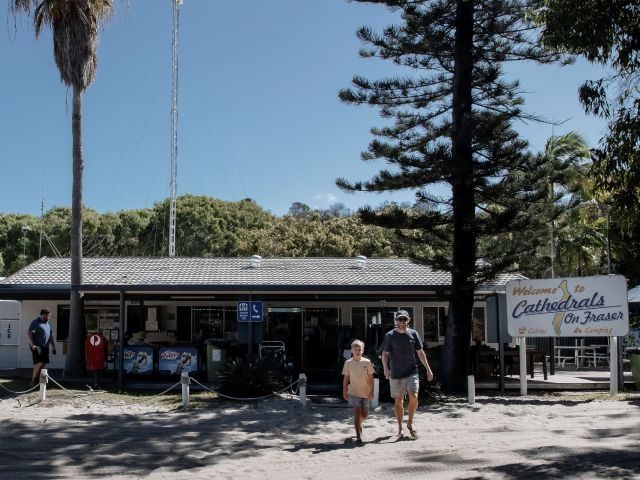
A vehicle access permit and a camping permit both need to be organised before your arrival on the island.
Vehicle permits on K’gari
A vehicle access permit must be clearly displayed on your bonnet for inspection by authorised officers. Permits can be obtained online in advance via the Queensland National Parks Booking Service . They cost about $57.40 for one month or less, or up to $481.80 for longer stints on the island (depending on the campground). Head here for more information on vehicle access permits .
Camping permits on K’gari
Planning on setting up camp in one of the Queensland Parks and Wildlife Service areas? You’ll need camping permits for that too. Purchase your camping permit at their website before heading off to the island – and we strongly recommend booking your K’gari campsite six months in advance to beat the crowds also wanting to enjoy a spot of beach camping in the peak season.
What to pack
Aside from the obvious camping essentials, several important items are commonly left behind when it comes time to pack for a camping trip. To ensure your trip goes as smoothly as possible, double-check that you have the below.
First off, pack a first aid kit. You never know when you’ll need one. Secondly, insect repellent certainly comes in handy on those humid island nights. Also bring a fuel stove, rubbish bags, extra camping pegs/ropes and lockable food containers.
How to get to K’gari
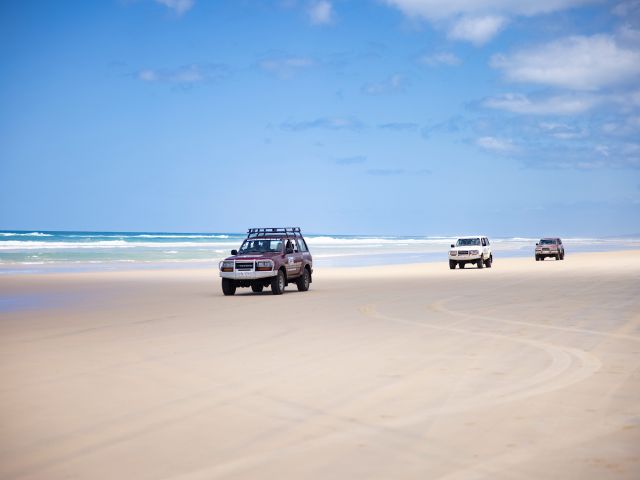
You (and your 4WD) can grab a barge or ferry from either Hervey Bay or Rainbow Beach.
From Hervey Bay in River Heads: The SeaLink ferry departs several times a day. Take the 30-minute journey to Wanggoolba Creek or the 50-minute journey to Kingfisher Bay.
From Rainbow Beach: the Manta Ray Barge leaves regularly from Inskip Point, with the last barge to Fraser leaving at 5pm. The trip to Hook Point takes just 10 minutes.
For high-flyers: Air Fraser Island ’s fleet of light aircraft departs from the Sunshine Coast and Hervey Bay airports.
If you’re going to be fully focused on driving around with your 4WD once you arrive on the island, best to check out this detailed map of the island’s camping sites . Another solid reason to check out this K’gari map in advance? The often weak mobile signal on the island.
Choosing a camping site on K’gari
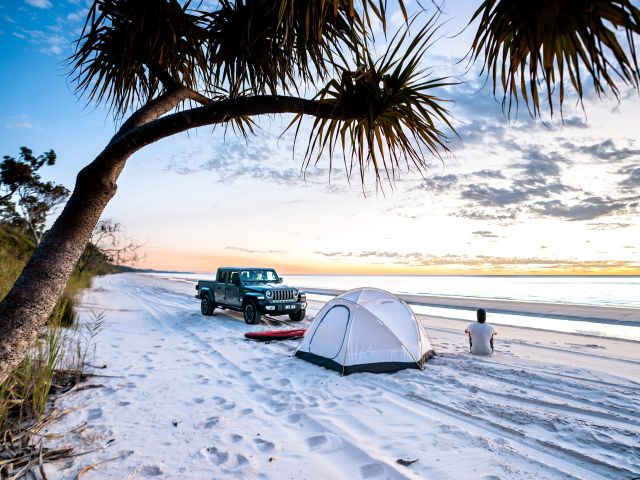
There are lots of camping areas to choose from on K’gari, each as blissfully picturesque as the next. Which one you pick will depend on what you’re looking for from your adventure. Do you want to be close to amenities? Do a spot of beach camping? Sleep in total solitude? Wake up to world-class sunrises? Go fishing all day? There is the perfect camping ground for you here on K’gari.
Beach camping zones
The cheap camping options on K’gari provide very little in the way of luxury, but much in the way of natural beauty. Some of the more formal camping sites deliver basic facilities, including tap water and toilets. And most have barbecues and communal washing-up facilities for use.
On K’gari there are 45 camping areas overall to choose from, including nine beach camping zones that you can pick from on the Eastern Beach .
- Beach camping zone 1 (Dilli Village to Eurong)
- Beach camping zone 2 (Eurong to Poyungan Rocks)
- Beach camping zone 3 (Poyungan Rocks to Happy Valley)
- Beach camping zone 4 (Happy Valley to Eli Creek)
- Beach camping zone 5 (Eli Creek to The Pinnacles)
- Beach camping zone 6 (The Pinnacles to Dundubara)
- Beach camping zone 7 (Dundubara to Tukkee wurroo (Indian Head))
- Beach camping zone 8 (Waddy Point to Ngkala Rocks)
- Beach camping zone 9 (Browns Rocks to Sandy Cape)
You’ll need to be confident behind the wheel of a 4WD (and have a high clearance vehicle) to get to these beachside camping sites. And take note: if you’re worried about dingoes or camping with young children, you may be better off with another option that offers dingo-deterrent fences.
But our overall favourites on the island? Central Station , Dundubara and Waddy Point are your best options for camping on K’gari. All campgrounds have a 9pm noise curfew and generators are not permitted.
Remote campgrounds
There are 10 remote camping sites on K’gari, most without amenities. Here you can bypass the crowds and truly immerse yourself in what the island has to offer.
The Sandy Cape at the tip of the island is a great place to start. Otherwise, sites on the north-western side of the island – between Moon Point in the south and Wathumba Spit in the north – are your best options for remote camping.
There are more informal camping areas behind the foredunes on the eastern beach (check out our notes on the various camping zones there, above). Set-up is only permitted within signposted zones and at least 50 metres away from water.
Family campgrounds
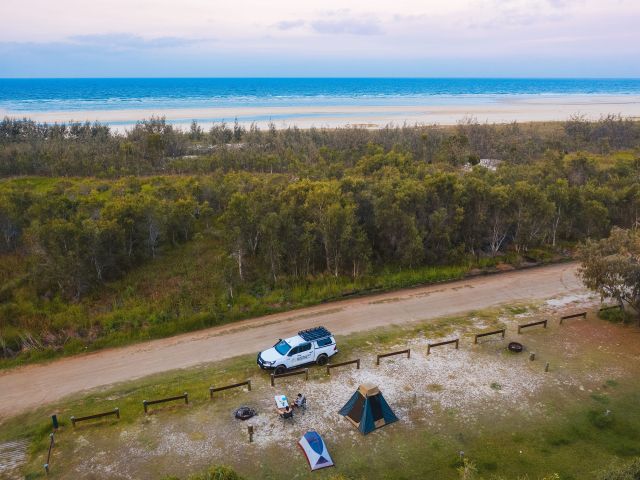
Visitors with children should opt for the fenced sites on the island. The grounds at Central Station, Lake Boomanjin , Dundubara, Dilli Village and Waddy Point are all good kid-friendly accommodation options.
Similar to the aforementioned formal sites, most of the family-friendly ones provide basic facilities like tap water and toilets. There are also barbecues and communal washing-up facilities.
Other notable mentions:
- Best for fishing: Ungowa on the south-western coastline
- Best for sunrises: Marloo, Ocean Lake camping zone on the eastern beach
- Best for fire pits: Dundubara
- Beach camping: Waddy Point on the north-east coast
- Best camping near Boorangoora (Lake McKenzie): If you’re planning on doing the K’gari Great Walk , check out the Boorangoora (Lake McKenzie) walkers’ camp .
How much does it cost to camp on K’gari?
It can cost as little as seven dollars (that’s the same as two flat white coffees) to camp on K’gari. While it’ll only get you entry to one of the more basic campsites, these are the kind of prices that are enough to make even cash-strapped backpackers envious.
Eco-camping tips
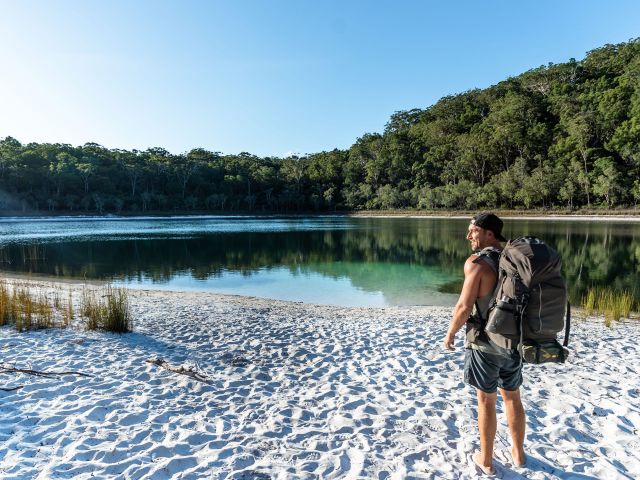
Thankfully, we have already penned some helpful guidelines that eco-conscious campers can abide by.
In addition to this, there are a few K’gari-specific tips that you can follow during your visit to help preserve its beauty for generations to come.
- Avoid reapplying sunscreen or insect repellent before swimming. Unless your sunscreen is reef-safe, the chemicals can impact the water quality and negatively affect its wildlife.
- K’gari is one of the best places in Australia to see dingoes. And while they roam freely around the island, it’s important to keep your distance. They are opportunistic hunters and scavengers, so be cautious if you see these wild animals. Do not feed them or leave food scraps around. Lock your food inside your vehicles and never eat inside your tent.
- Do not bury your rubbish. Use the bins provided or take rubbish with you when you leave the island.
- Open fires are not allowed on K’gari, except for the communal fire rings provided by EPA at select campgrounds.
- Observe the prescribed speed limits in your 4WD. The maximum limits are 80km/h on beach tracks and 30km/h inland. Having a map of the island is also recommended.
Is swimming safe on K’gari?
Although they may look alluring, K’gari beaches are not safe for swimming. Strong rips and sharks can be found lurking beneath the surface, as well as stingrays between October and April.
But will you find crocodiles basking in the shallows of the island paradise? While sightings of saltwater crocodiles are reasonably rare this far south, they have in the past been spotted stopping off at K’gari on their travels abroad.
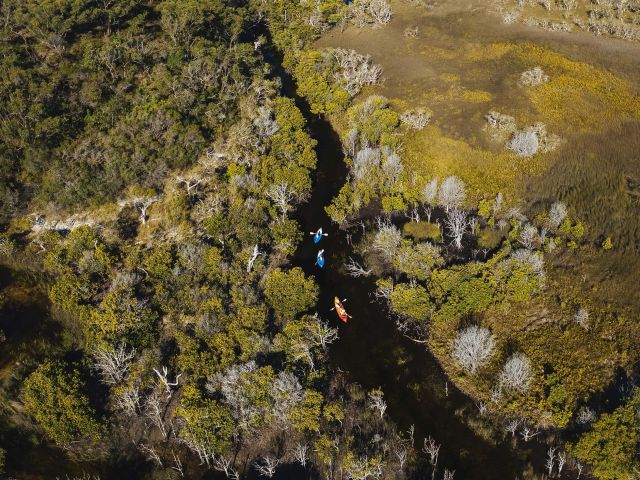
Just another pointy-teethed reason that – if you are keen for a swim – you head for one of the many lakes and creeks – all of which are freshwater and safe.