hero media

K’gari’s unique ancient lakes once dried out. Could this happen again?

John Tibby , University of Adelaide ; Conway Burns , Indigenous Knowledge , and Harald Hofmann , CSIRO

The lakes on the world’s biggest sand island, K’gari, are famous. Pivotal to the World Heritage listing of the Queensland island formerly known as Fraser Island, their turquoise waters feature in international tourism campaigns and social media posts.

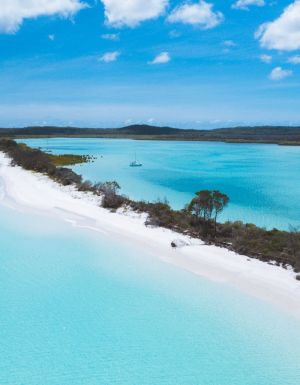
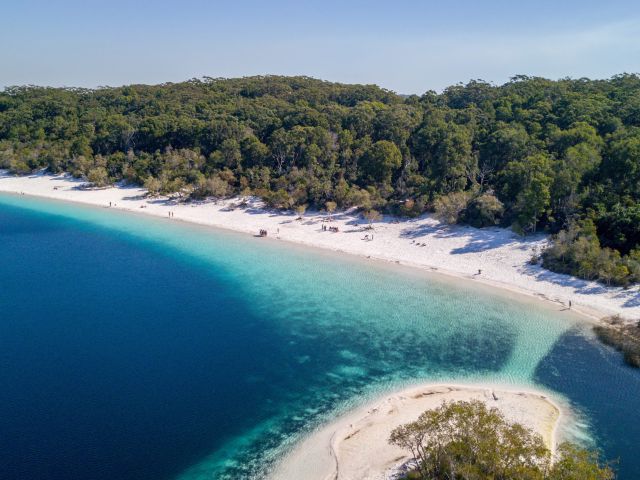
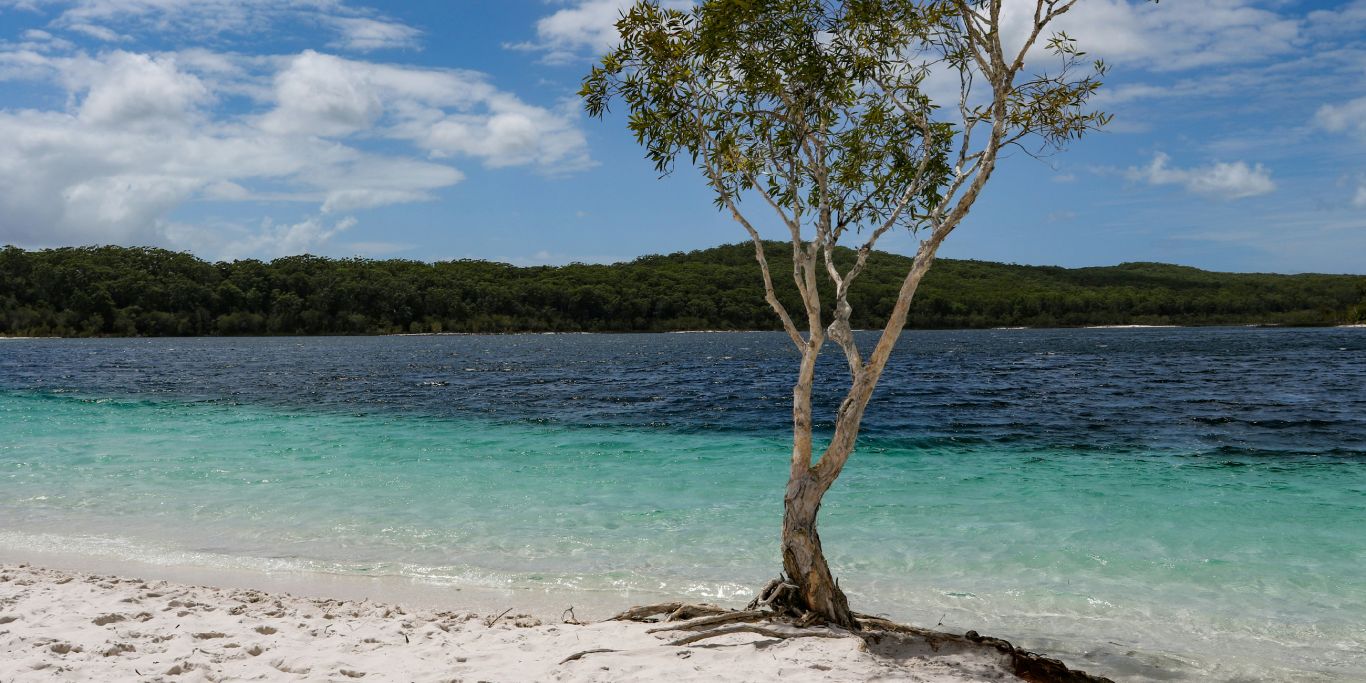
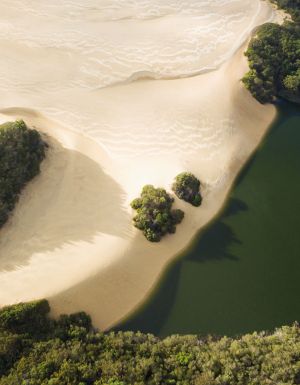
K’gari has more than 40 unique lakes, some more than 55,000 years old. They range from the photogenic clear waters of Boorangoora (Lake McKenzie), pictured above, which filters through the sand dune it rests in, to the emerald-green waters of Lake Wabby, a window lake which is (very) slowly being swallowed by a giant sand dune.

In fact, K’gari is home to more than half of the world’s perched lakes, more than 50, including Boorangoora. Perched lakes form when sand is cemented together with decomposed organic matter (such as leaves and bark), aluminium and iron. This creates an impermeable layer well above sea level. It’s remarkable these lakes exist, given water usually passes quickly through sand.

Until now, it was believed K’gari’s lakes would have contained water since the last ice age ended, about 11,500 years ago. But our new research found some of the island’s deepest lakes dried out only 7,500 years ago. In the current era of climate change, it’s possible this could happen again.
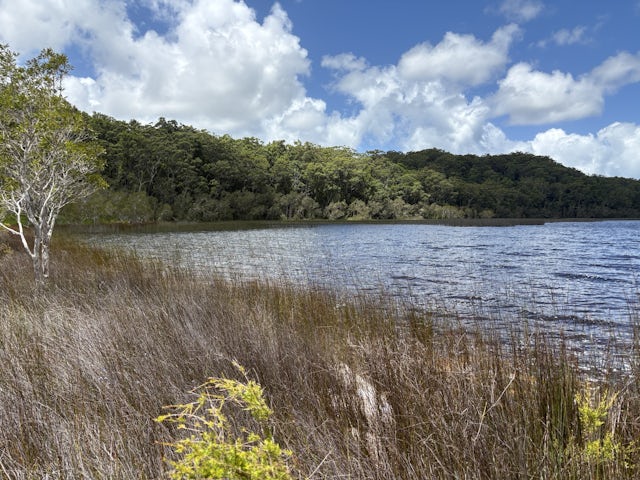
Lake Garawongera is a tannin-stained perched lake, which is isolated from deeper, larger groundwater sources. (Image: John Tibby, CC BY-ND )

The eyes of K’gari

For the island’s Traditional Owners, the Butchulla people , these lakes are the “eyes of K’gari" and their waters are sacred. The Butchulla believe they have been entrusted with an eternal responsibility: to preserve K’gari’s beauty, spirit, waterways and lakes so future generations may experience the same connection.

K’gari is home to two key types of lakes. Perched lakes (described above) are the best-known type, while window lakes , filled by rain and groundwater, are so named because they offer a “window" to groundwater below the land.

The climate history of these lakes is recorded in their muddy sediment. What happens in and around the lake gets “written" into the layers: plant pollen tells us about local vegetation while greater amounts of sand might indicate erosion.
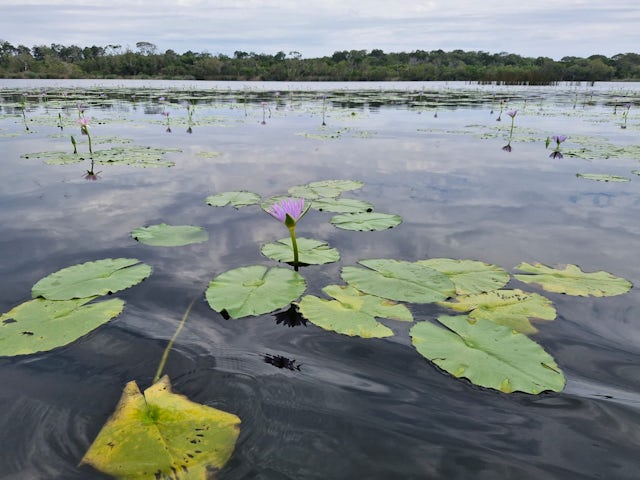
Ocean Lake. In the foreground is a day waterlily, an invasive species on K’gari. (Image: Dave Sternberg, CC BY-ND )

A gap in the record

In our research we found this sediment was missing from some of K’gari’s oldest lakes between 7,500 and 5,500 years ago. This gap in the record was identified by radiocarbon dating of sediments from K’gari’s Lake Boorangoora, Lake Allom and Basin Lake.

This gap in sediment suggests the lake basins were not then covered by water. This can happen when there is not enough rainfall over decades. Many Australian lakes dried up during more than the decade-long Millennium Drought .

Our findings were unexpected. We would not have expected the lakes to dry up, as the sediment gap happened during the current Holocene geological epoch, during which global temperatures have varied by less than one degree and moisture has been abundant.

Recent sediment research from another major sand island, Minjerribah (or North Stradbroke Island), shows this island was wetter than K’gari during the same period. Why, at a time of relatively mild climate variation, was it generally wetter just 250 kilometres south? We think southeasterly trade winds supplied rainfall to Minjerribah but not K’gari.

Researchers at Lake Garawongera. From left to right are Conway Burns, Caitlin Jones, Margaux Dupuy, Harald Hofmann and Bob Broome. (Image: John Tibby, CC BY-ND )

Future of a special place

Our findings highlight the pressing need to know much more about K’gari’s beautiful lakes. In a warming climate expected to become drier but punctuated with more intense rainfall, are these lakes at risk of evaporating? At the moment, we simply don’t know.

For most lakes on K’gari, there’s no information about how much water they hold or even how deep they are. The little information available from a few simple surveys hints that lakes were generally deeper in the 1970s.

In response, we have started surveying the underwater depth and topography of the lakes, using automated monitoring devices to measure how much they fill and drop. Gathering data to understand the water inputs and outputs of today’s lakes will help us better interpret the past – and possibly model the future.

While we are concerned about the future of these lakes, K’gari hosts the greatest diversity of fish and amphibians of any Australian island , hinting at a resilience to climate-driven changes.

In our scientific work, we also try to follow Butchulla teachings. These are: what is good for Country comes first; do not touch or take anything that does not belong to you; and if you have plenty, you must share.

“Gung K’gari Marigurim Yaa": K’gari’s water makes voice strong.The Conversation

Lake Allom, on K’gari. (Image: John Tibby, CC BY-ND )

John Tibby , Associate Professor in Environmental Change, University of Adelaide ; Conway Burns , Butchulla Aboriginal Corporation, Indigenous Knowledge , and Harald Hofmann , Principal Hydrogeologist, CSIRO

This article is republished from The Conversation under a Creative Commons license. Read the original article .

Discover the remote Queensland lodgings bringing luxury to the outback

hero media
Adventure and refined Luxury combine at the stunning Rangelands Outback Camp.

Iconic Australian red dirt, ancient rocky landscapes and bursts of greenery and wildflowers all make the small town of Winton, and its surrounds, a sight to behold. Escape the ordinary and unwind in the Queensland outback, where ancient landscapes and off-grid luxury await at Rangelands Outback Camp.

cosy seats in Rangelands Outback Camp
Unwind in the ancient outback.

About Rangelands Outback Camp

Unforgettable 360-degree views of this 95-million-year-old land await at Rangelands; bathed in style and positioned on top of a jump-up (or mesa), your tented camp seamlessly blends into its outback setting.

Set on the 53,935-square-kilometre Rangelands Station – a working cattle property – the abundant wildlife are your only neighbours; kangaroos, echidnas, eagles and other birdlife all call Rangelands home.

Bathed in style, your tented camp seamlessly blends into its outback setting. Indulge with carefully curated menus, personalised service and supersized luxury tents that guarantee a private experience. This exclusive camp only has a maximum of 12 guests at a time.

Here, the aim is pampering. From tasty menus to supersized tents with all the creature comforts, to a range of guided tours around the property and beyond.

Guests are transferred from Winton or Longreach by a dedicated Rangelands driver.

aerial shot of Rangelands Outback Camp tent
Soak in 360-degree views.

Rangelands Outback Camp tours

Join small-group tours and enjoy exclusive access to the ancient Rangelands Rifts with your Rangelands hosts. These incredible rock formations were formed by millions of years of erosion, leaving dramatic channels through the rock. Or explore the surrounds with Rangeland’s touring partner, Red Dirt Tours .

Get sunset birds-eye views over dramatic mesa country in a helicopter, from Queensland’s own Three Sisters to Corey’s Range, stopping at the best lookouts along the way.

Get up close and personal with this rugged land on four wheels, with expert drivers and guides leading guests through famous Bladensburg National Park, visiting Gondwana Stars Observatory and more.

The Winton area is famous for its boulder opals (the second-rarest opal in the world, after black opals), and a stop at the mining community of Opalton sheds a fascinating light on the unique fossicking method used to find them.

A trip to dinosaur country is a must, as this is the place that ramped up Australia’s dino contribution after a fossilised footprint was found in 1962; after more exploration, the discovery of 3300 footprints made it clear this was the world’s only evidence of a dinosaur stampede. Those same footprints are still on display today at Lark Quarry Conservation Park , a 90-minute drive from Winton. Also check out Australia’s largest collection of Australian Dinosaur fossils Australian Age of Dinosaurs, just 30 minutes from Winton. Here, join a tour through a working laboratory, dinosaur canyon and more.

A twice-daily transfer into downtown Winton is offered to guests, where they can explore the Royal Outdoor Theatre, opal shops, Waltzing Matilda Centre and more.

tour being led through Rangeland rifts
Have an exclusive adventure through the Rangeland Rifts. (Image: TEQ)

Sleeping in luxury

After a day of exploring, return to your tranquil tent for a blissful open shower and uninterrupted views from your private deck.

Designed to integrate guests into the surrounding nature, each tent feels like its own private haven. While being off-grid in the outback (in fact, each tent is powered by its own solar panels, with the added support of a backup generator), guests can also luxuriate in comfortable amenities like air conditioning, a supremely comfortable king-size bed and stylish designer touches.

Guests can stroll to the open-air Sunset Deck for breathtaking panoramic views, or to the main lounge and dining tent, where books, on-demand coffee and drinks make it the perfect place to relax after a day in the outback.

inside Rangelands Outback Camp bedroom
Enjoy plenty of space inside, and stunning views outside.

Rangelands Outback Camp dining

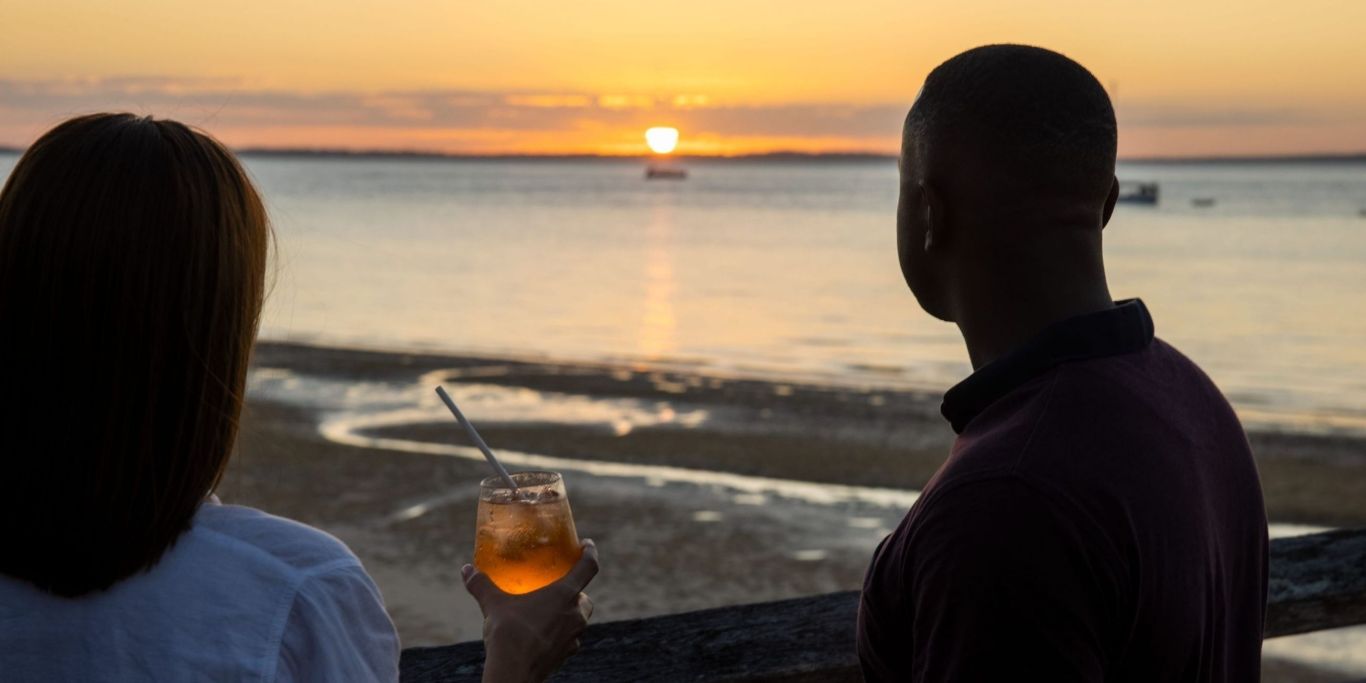
As the sun starts to dip below the horizon, gather for drinks and canapés on the expansive Sunset Deck, watching the sun drench the landscape in pinks and oranges as it sinks below the horizon.

Later, head to The Mahal lounge area and dining tent where mealtime magic happens. Savour a gourmet meal made fresh by Rangeland’s onsite chef. The meals use local produce to elevate classic outback dishes, and don’t worry, dietary requirements are happily accommodated.

Enjoy an open bar filled with an expansive hand-selected list of wines and premium beers, with wine pairings offered by Rangelands hosts come dinner time.

Discover more and book your luxurious stay at rangelandscamp.com.