Tour the R.M. Williams Factory and leave with a pair of handmade boots

hero media
On the outskirts of Adelaide, Alexis Buxton-Collins discovers a pair of modern Australian icons – and comes home with a souvenir that will last a lifetime.

“What do you see?" asks Paul Mettner as he holds up an irregularly shaped piece of leather that looks like the silhouette of a Trojan helmet. Other answers for this tactile Rorschach test include a ghost from Pac-Man or Darth Vader’s head. But for hundreds of workers around us, this is the starting point for one of Australia’s most enduring style icons.

The making of an icon

On an otherwise unremarkable street in Adelaide’s northern suburbs, the R.M. Williams workshop turns out around 1500 pairs of elastic-sided Craftsmen boots a day, and Mettner is showing me around one of the production lines that he supervises. A paragon of simplicity, the design of the signature Craftsman boot has remained virtually unchanged since the shadows of The Great Depression, when Reginald Murray Williams collaborated on the design with an Adnyamathanha man named Dollar Mick.

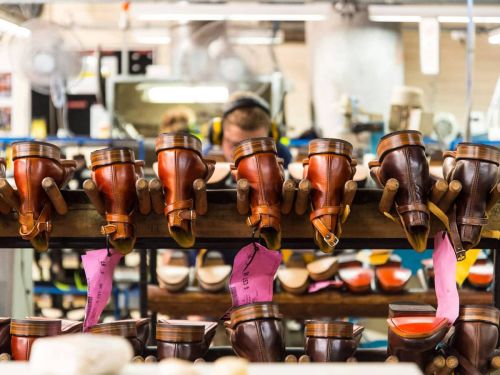
Crafting each upper from a single piece of leather helps to make it durable, comfortable and almost endlessly repairable, though my guide chuckles that “the reason R.M. did it that way is because there’s less sewing – the lace up boots are far more work". But any energy saved in sewing is more than made up for on a production line where every boot will be shaped by 80 pairs of hands.
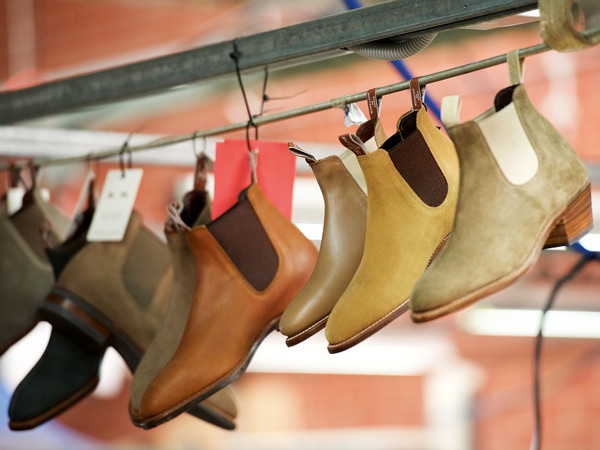
a variety of boot styles hang on display at R.M. Williams Factory in Adelaide
A variety of boot styles hang on display, but the iconic Craftsman is the most popular.

Machines with names such as inseam trimmers, welt beaters and lasters call to mind a Dickensian factory, but the workers here grin and crack jokes as they stretch, steam and stitch pieces of hide. Each job takes less than 10 seconds, well-practised hands moving swiftly but surely so that a single boot takes just three hours to make from start to finish.
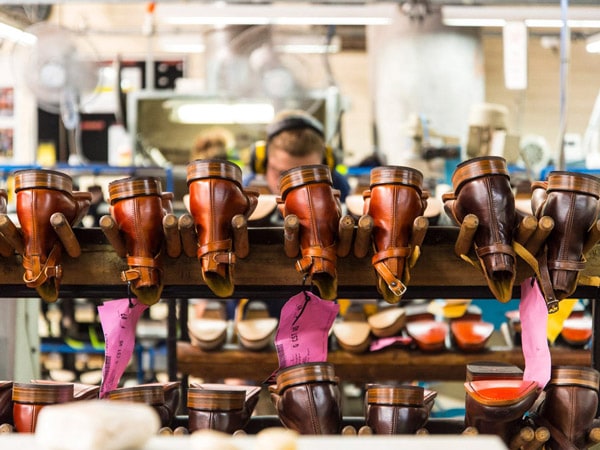
A worker making boots at R.M. Williams

The repairs station

Even more impressive is the repairs station, where shoes are stripped down entirely before being reshaped and resoled. “A few tools might look a little different, but this process hasn’t changed much since 1932," says Mettner. “And as long as you look after the upper, we can repair the boots three or four times."
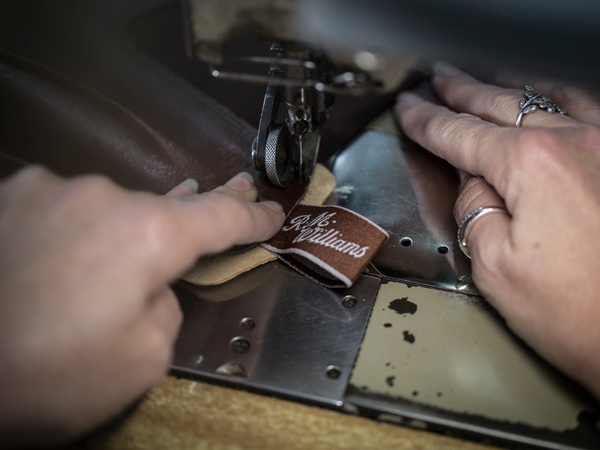
stitching a tug onto a boot at R.M. Williams Factory in Adelaide
A craftsperson stitches a tug onto a boot.

Unsurprisingly, the repaired boots offer a catalogue of shifting styles, from pointy toes and Cuban heels to scuffed Chelsea-style work boots whose owners have specifically requested they remain unpolished.
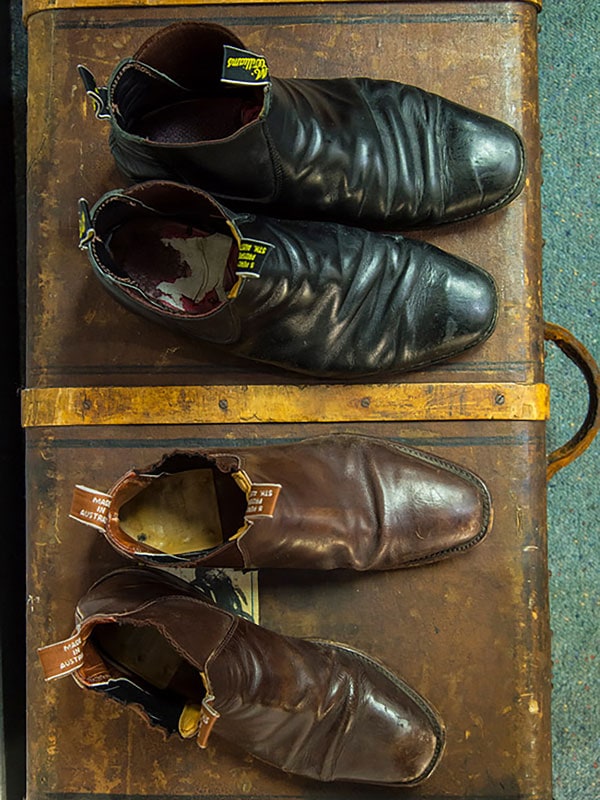
a table-top view of two pairs of R.M. Williams boots
R.M. Williams boots are made to last a lifetime, with a repair service available to renew worn-in pairs.

More than just boots

In the clothing and craft sections, workers skilfully stitch jeans and oilskin jackets, embroider shirts and painstakingly braid strands of kangaroo leather into belts with more than 1000 plaits, all of which are on display when we drive a few suburbs south to the brand’s Prospect showroom.
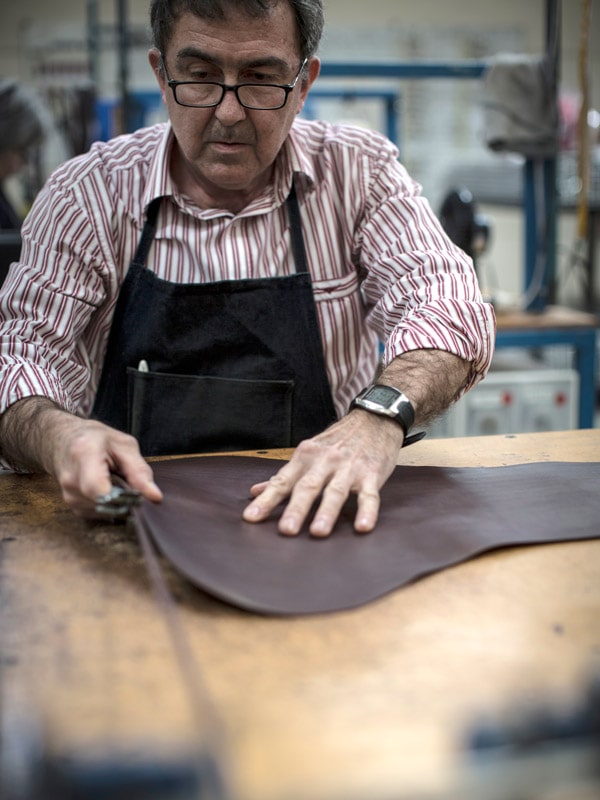
a craftsman shaping a boot at R.M. Williams Factory in Adelaide
At least 80 pairs of hands go into shaping each R.M. Williams boot.

History in the making

Presiding over the space is Rita Stenta, an energetic woman who tells me that after honing his craft at a small workshop in the northern Flinders Ranges, Williams moved production here in the early 1930s. Back then, he worked out of a tin shed behind his parents’ house, and “it still says Percy Street on every pair of R.M.s because this is where it all began."
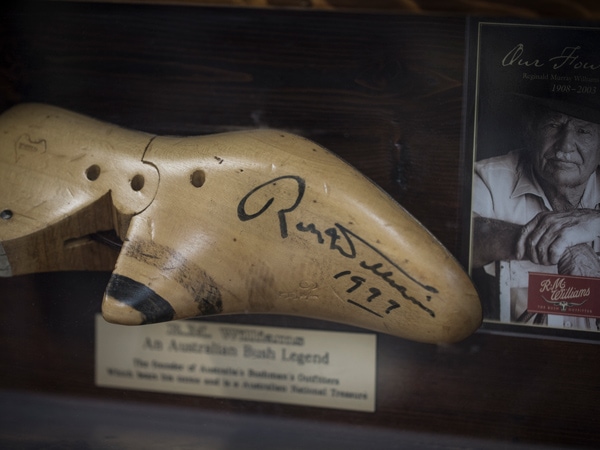
a wood shaped like a boot at at R.M. Williams Factory in Adelaide
A wooden last used for crafting the boots is signed by R.M. Williams and on display in the workshop.

When she started working here in 1980, the store was filled with saddles, bridles and whips. And while styles have changed as the clientele has shifted from stockmen to stockbrokers (with a few prime ministers and rockstars thrown in), the boots have remained a constant.

Stenta has fitted some 20,000 pairs in her time, and I can’t help but admire the workmanship of my finely polished chestnut Craftsman boots as I become number 20,001. In fact, they feel so good as I slip my feet in that I decide to keep them on while I visit another South Australian icon.

Another SA icon: Penfolds Magill Estate

A three-course lunch with matched wines gives me plenty of time to take in the views at Penfolds Magill Estate , where five hectares of shiraz vines grow in the shadow of the Mount Lofty Ranges. Then I get a chance to test out my new kicks as we stroll down to the cottage where Dr Christopher and Mary Penfold lived when they established Australia’s most storied winery in 1844.
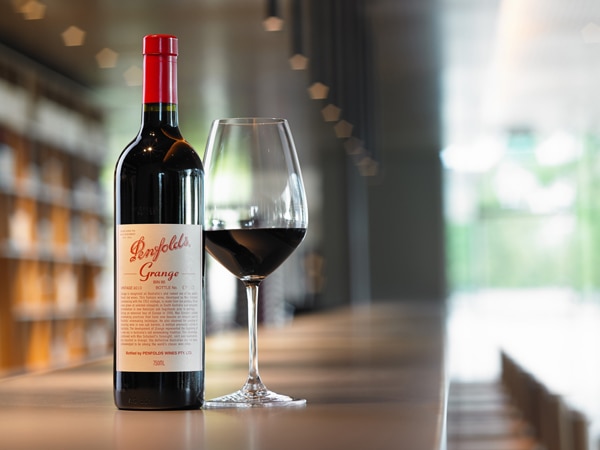
a bottle of wine at Penfolds Magill Estate
Penfolds Grange is arguably the best wine from the brand. (Image: Penfolds Magill Estate)

Just over a century later, legendary chief winemaker Max Schubert began developing a program of cellar-worthy reds that would change the Australian wine industry forever. As we enter the network of tunnels below the winery, our guide casually points out Schubert’s handwritten instructions for making Grange before showing us the indent where he erected a fake wall to hide his pet project from disapproving bosses.

Back at the cellar door, we taste ‘the white Grange’ Yattarna and elegant St Henri before moving on to the main event. Our guide explains that Grange has earned its place in the pantheon of Australian wines with a blend of ageability, quality and consistency. “Look after it well, and a bottle will last decades," she tells us. Add in a few notes of leather, I think, and she could just as easily be talking about another icon located within Adelaide’s city limits.
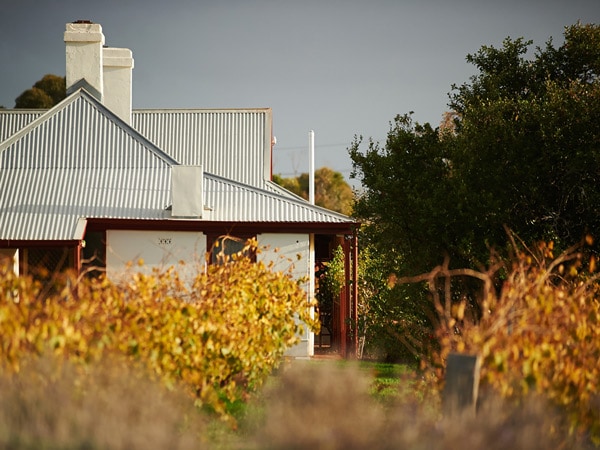
a scenic landscape at Penfolds Magill Estate
Take in scenic views of the winery. (Image: Penfolds Magill Estate)
The R.M. Williams Factory Tour is available exclusively through The Tailor Touring Co. Prices begin at $810 per person, including a personally fitted pair of boots to take home.
Alexis Buxton-Collins
Alexis Buxton-Collins spent his twenties working as a music journalist and beer taster before somehow landing an even dreamier job as a freelance travel writer. Now he travels the world from his base in Adelaide and contributes to publications including Qantas, Escape, The Guardian and Lonely Planet. Alexis has never seen a hill he didn't want to climb and specialises in outdoor adventures (he won the 2022 ASTW award for best nature/wildlife story for a feature on Kangaroo Island). When he's not scouring South Australia for the newest wineries and hikes, he's looking for excuses to get back to spots like Karijini and Ningaloo.
See all articles
hero media

Your guide to what’s new and exciting this summer on the Central Coast

From serene natural beauty to vibrant nightlife, with plenty of arts and culture in between, the NSW Central Coast has been enjoying a serious glow up.

Just one hour from Sydney, the Central Coast has long been the perfect seaside getaway. And with its ECO Destination certification with a focus on sustainability, it’s a trip travellers can feel good about, too. Recently, new and exciting openings have turned the Central Coast into a place where incredible natural beauty is still on the table, but so is a vibrant and sophisticated arts, dining and nightlife scene.

Find out what’s new to discover on the Central Coast.

1. Gosford’s glow up

room at voco gosford
Book into voco and experience the best of Gosford.

Long-time Central Coast lovers will hardly recognise Gosford these days. While always boasting gorgeous water views, a range of revamps and new openings have turned it into a busy hub of arts and culture, with an increasingly diverse and vibrant nightlife.

Landmark lifestyle hotel voco Gosford is the perfect home base for a Central Coast getaway. At this IHG hotel overlooking sparkling Brisbane Water, guests can spend sunny days soaking in the rooftop pool (or just sipping a cocktail beside it). When it comes to meals, you can enjoy multiple venues serving up everything from modern Australian fare to fine-dining Japanese.

Venture out to lay eyes on the Central Coast’s first permanent Moving Image Gallery (MIG) . Opened this year inside the Gosford Regional Gallery , the immersive space is a showcase of screen-based and digital art. While at the gallery, wander around the Edogawa Commemorative Garden, a traditional Japanese strolling garden complete with teahouse, koi pond and an ornamental bridge.

Meanwhile, the revamped Gosford Regional Library has even more than books to discover. Now, it’s one of the best in the southern hemisphere – find exhibitions, historical archives and community initiatives for all ages at this perfect family-friendly escape.

2. Newcomers to the dining scene

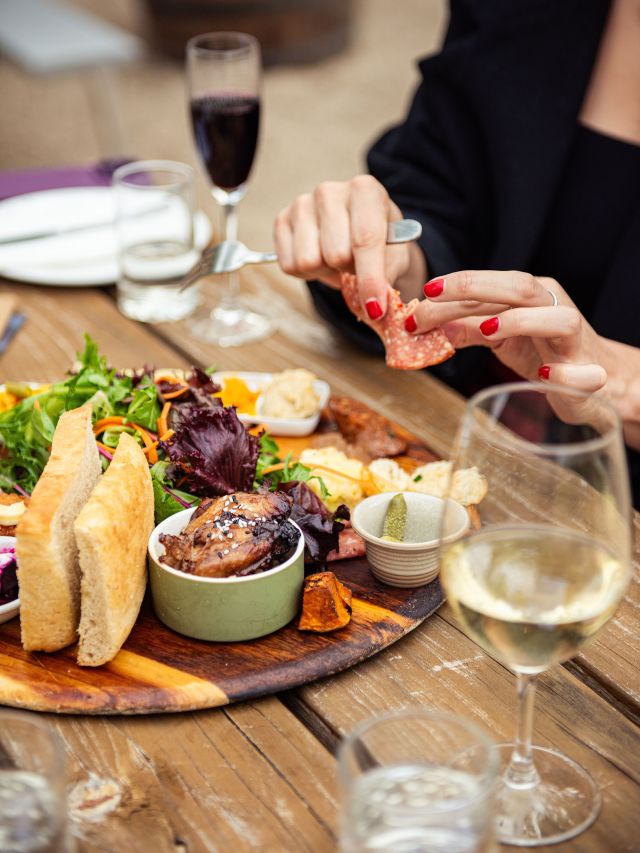
table full of food at Amarilla restaurant terrigal
Treat yourself to sundowners and snacks at Amarilla.

The Central Coast has long been the perfect destination for gourmands, with everything from casual eats to fine dining elevating the local offerings. And three new destinations have been added to the map.

Amarilla at The Haven in Terrigal is the perfect seaside venue for sundowners, with blissed-out beats providing the soundtrack. Book in for golden hour and choose bites from a Spanish tapas menu made for sharing. Do as the locals do and wash it all down with sangria – the Sunday Sangria Sessions have become a local institution.

Also in Terrigal, Little Miss has brought a premium Mediterranean menu to the waterfront. Try the wagyu tartare with Greek caviar or butter-poached lobster and tomato bisque, paired with inventive cocktails and a handpicked selection of Lebanese wines.

Over in Ettalong, Bar Toto is perfect for pre- or post-dinner drinks. This award-winning cocktail bar is known for its creative concoctions, along with craft beer, wine and antipasti platters to snack on. The interior sets the mood, with dim lighting and wooden furnishings.

3. New Central Coast experiences

winemaker at Firescreek Botanical Winery
Book an experience at Firescreek Botanical Winery.

It’s entirely possible (and recommended) to spend a Central Coast getaway relaxing on one of its many peaceful and pristine beaches. But for those who crave more, there’s a long list of options to keep you busy.

Pop into the iconic Australian Reptile Park to see the new Weigel Venom Centre, a state-of-the-art facility that’s home to over 200 of the country’s most venomous snakes.

Get out on the water with Sail Central Coast , which offers 20 years of expertise in yacht charters. Book the Sunset Sail & Dine yacht charter for a private afternoon cruising the waterways of Bouddi National Park and Brisbane Water, stopping at Anchor on Hardys for a two-course meal with a cocktail.

For something completely different, Firescreek Botanical Winery is now offering an Aboriginal Storytelling and Wine Tasting Experience. Learn about local cultures, stories and traditions from an Aboriginal Elder, then enjoy a botanical-inspired wine tasting led by a local winemaking expert.

4. Central Coast accommodation

view from a cottage at Noonaweena
Sleep in the hinterland at Noonaweena.

There’s simply too much to experience on the Central Coast to only stay for one day. Turn your trip into a relaxing getaway by the beach.

Allawah , a retreat on the banks of the Hawkesbury River, is accessible only by boat. This secluded two-bedroom cottage is the perfect place to unwind, allowing you to spend lazy days fishing, kayaking, paddling or unwinding with a book on your own private jetty.

In the Kulnura hinterland, Noonaweena features a range of accommodation styles, from a luxe glamping bell tent to cottages and a treetop suite. It’s a leader in green travel, with 10 years of certification from Eco Tourism Australia. Relax in the onsite wellness centre or get active on various courts and in the gym facilities.

To stay by the ocean at Toowoon Bay, book into Kim’s Beachside Resort . This adults-only property offers a luxury escape nestled within a sub-tropical rainforest. Along with 36 private timber bungalows, indulge in massages or reiki treatments at the dedicated spa, or stop by the cocktail bar and à la carte restaurant.

5. Shopping on the Central Coast

Umina’s Centred Ceramics central coast
Try your hand at Umina’s Centred Ceramics’ pottery courses.

For those after unique trinkets, handmade treasures and beautiful homewares, the Central Coast is a haven.

Markets on the Central Coast have a special flavour. Wander the Umina Beach Markets at twilight, where you’ll find small businesses from the local areas, and the Norah Head Ocean View Markets , where you can soak up good food, live music and artisan finds by the beach after sunset. ‘Tis the season for the Christmas twilight edition of the Avoca Beachside Markets, celebrating the season with pop-up bars, tasty treats and plenty of unique gift options from local artists and producers.

Galleria Ettalong has also added to the Central Coast’s recent makers and creators renaissance, wrapping cinemas, a dining precinct and over 40 boutique shops into one area.

Sign up for a pottery course at Umina’s Centred Ceramics , or peruse the shop for a range of one-of-a-kind pottery made on the premises for a special souvenir.

For more eclectic arts and homewares, pop into Blue Bird Collective Co . This marketplace supports over 35 small, local and handmade businesses, artists and creatives. Take the time to check out fashion, jewellery and homewares that won’t be found anywhere else.

Start planning your coastal getaway at lovecentralcoast.com .