The best things to do in the Cocos Keeling Islands

hero media
The ‘Welcome to Paradise’ brochures handed out at Cocos Keeling Islands’ airport after half a day’s travel from Perth perfectly encapsulates Australia’s most remote group of 27 islands that hang in the Indian Ocean like a sparkling tiara.

One of three Australian external territories, those lucky enough to experience its unhurried landscape either stay or lose no time hurrying back; one escape to the deserted sand-draped isles isn’t nearly enough.

Be warned though, Cocos Keeling is a hard addiction to break. Picture snorkelling in aquarium-clear waters, swishing in hammocks hooked to palm trees, or simply strolling along the water’s edge, splashing up surf. Whether you crave well-earned R&R, a dab of adventure, or losing yourself in the islands’ rich natural environment, we’ve checked out the following what-to-do and where-to-eat options.

Underwater adventures

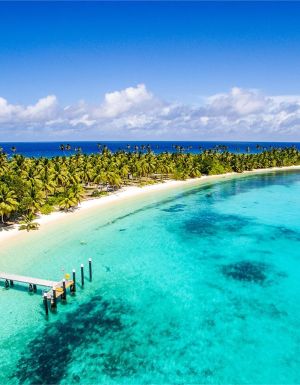
Cocos’ horseshoe-shaped islands sit in one of the world’s most azure archipelagos, giving the illusion a higher power perhaps created them for ocean lovers.

Join Cocos Dive and book an underwater sea-scooter tour or venture deeper with a dive. Either way, you can explore the islands’ wrecks where teems of tropical fish flit and dart through coral-encrusted hulls.
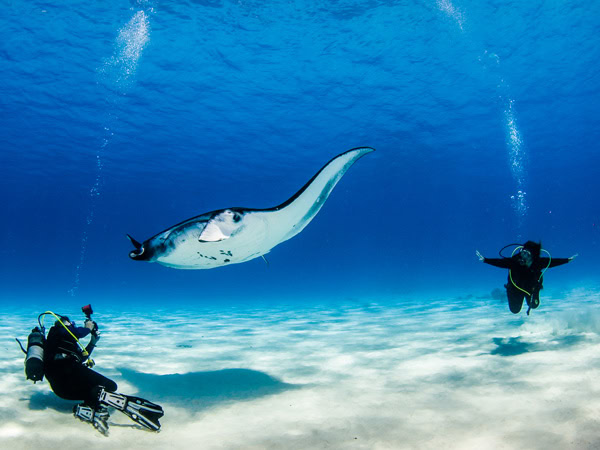
Swimming with manta ray with Cocos Dive on Cocos Keeling Islands
Swim with manta rays with Cocos Dive. (Image: Karen Willshaw)

Since Parks Australia declared the marine park a sanctuary in March 2022, you’ll be snorkelling in waters set to remain pristine and protected.
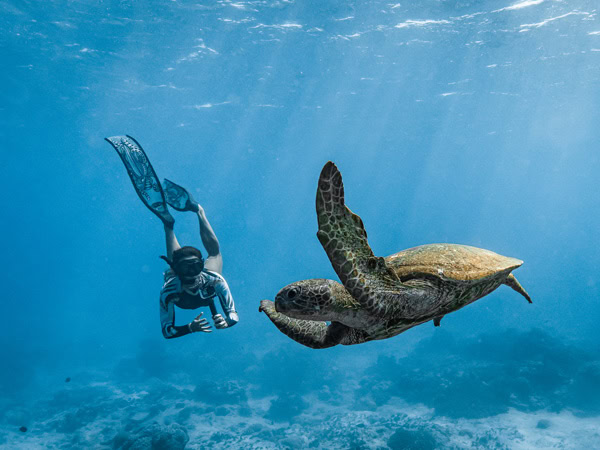
Swimming with turtle on Cocos Keeling Islands
If you’re lucky, you could swim with a turtle. (Image: Supplied)

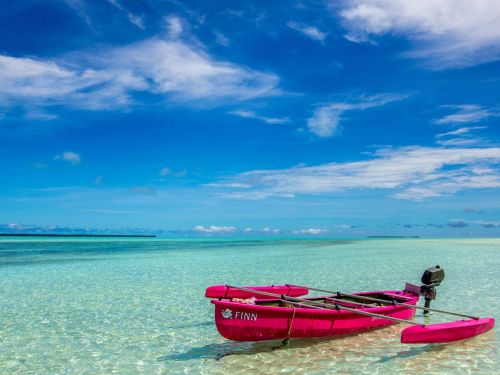
For an experience with a difference, join a motorised canoe tour and discover the untouched islands with Cocosday .

You’ll skim across the lagoon in a motorised canoe, moor at an idyllic isle and indulge in a gourmet champagne picnic. Have your video ready to record the famous Cocos hermit crab race – the commentary alone is a hoot.
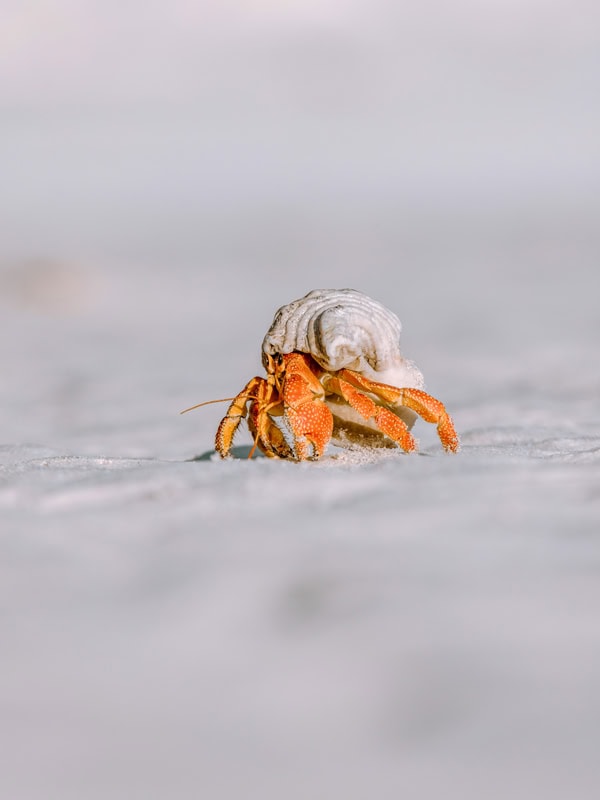
Hermit Crabs on Cocos Keeling Islands
Watch the Cocos hermit crab race. (Image: Supplied)

Bring your snorkel and sense of adventure – the current will carry you around the tip of Pulu Maraya, a tranquil tidbit of an island where coral overflows with magical marine life. For a memorable experience, swim alongside their incredibly handsome shells.
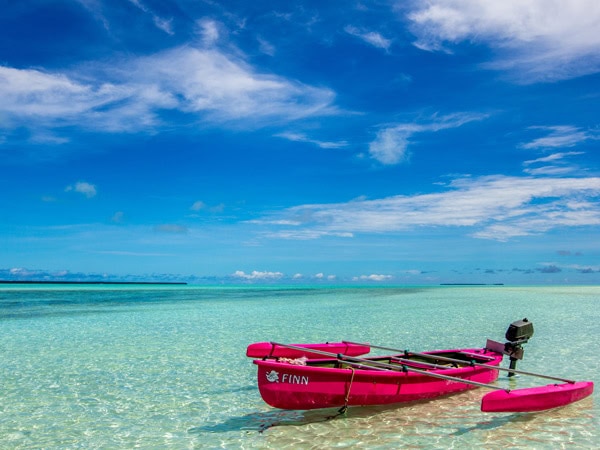
Cocosday Motorised Canoe Safari
The motorised canoe safari is an unmissable experience. (Image: Supplied)

Catch-of the-day

If fishing pumps through your gills, jump on half a day’s trip with Cocos Blue Charters and snag a catch for dinner.

Not into game fishing? Admire the star-studded sea life through the boat’s glass panel instead. Bring your snorkelling gear if you want to come eye-to-fish-eye with Cocos’ vibrant sea life.
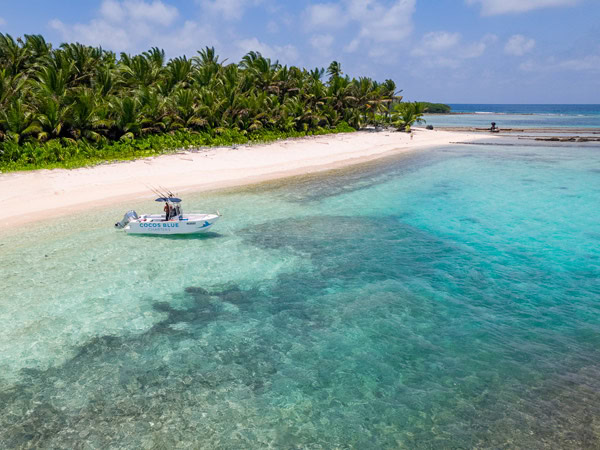
Cocos Blue boat in the Cocos Keeling Islands
Take the boat out with Cocos Blue Charters. (Image: Rachel Claire Photographer)

The owners will also moor at surrounding islands for any history buffs on board. Both Prison Island – once home to a harem – and Horsburgh Islands – where the Australian Army established a base during the Second World War – have intriguing pasts.
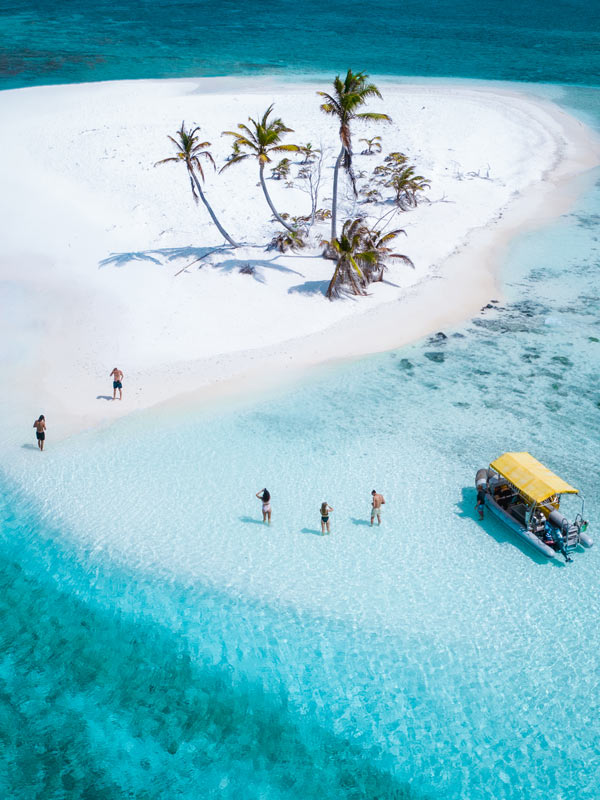
Prison Island on Cocos Keeling Islands
Prison Island has a fascinating past. (Image: Jaxon Roberts)

Dress to get wet and explore the islands’ Eastern Atolls with Cocosday Tours. Snorkel around coral reefs brimming with exotic fish or choose an outlying island to bask and beachcomb to your heart’s content.
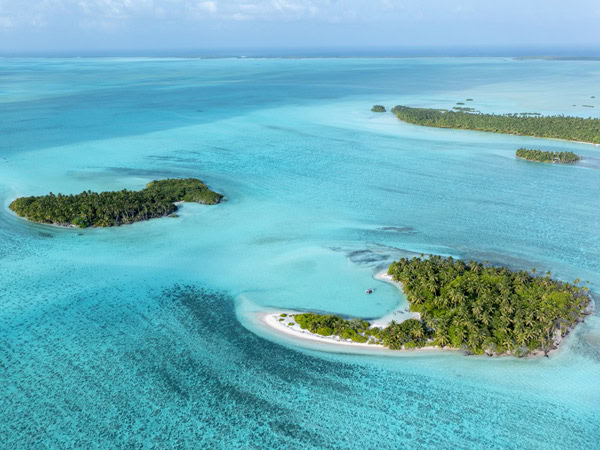
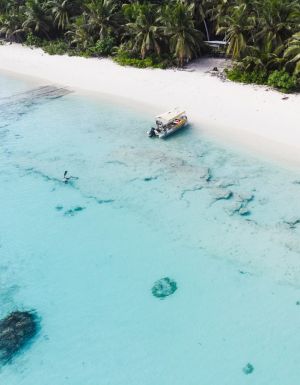
Cocos Keeling Islands aerial shot
Snorkel around coral reefs in the Cocos Keeling Islands. (Image: Ryan Chatfield)

A couple of onboard stand-up paddle boards will help you work up an appetite for the included champers and nibbles.

Cocosday Tours also offers fishing tours around the reef flats. Using their high-quality fishing gear, you can catch coral trout, bluefin trevally, red bass or yellow lip emperor.
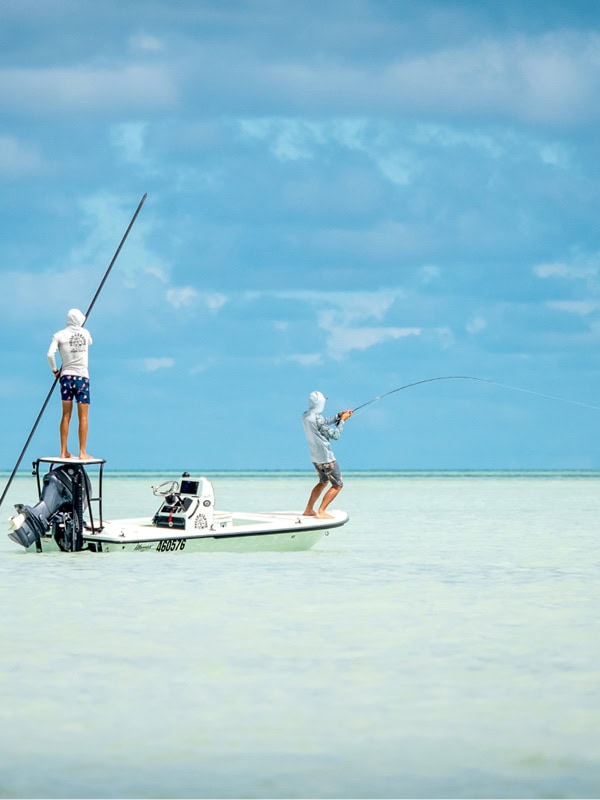
Sports fishing on Cocos Keeling Islands
Go fishing in Cocos. (Image: Josh Cheong)

Take to the air

From July to September, trade winds bring perfect conditions for kite surfing. Fly like a bird over West Island’s curvaceous shoreline with Zephyr Tours or Ape X Kiteboarding – it’ll be an adventure like no other with these experienced kite school tour operators.

The instructors will show you the ropes and have you soaring over a translucent lagoon spotting turtles, black-tip reef sharks and shoals of fish.

Both Zephyr and Ape X Kiteboarding are one-stop shops offering packages including accommodation, transport and island adventures along with unlimited kite lessons.
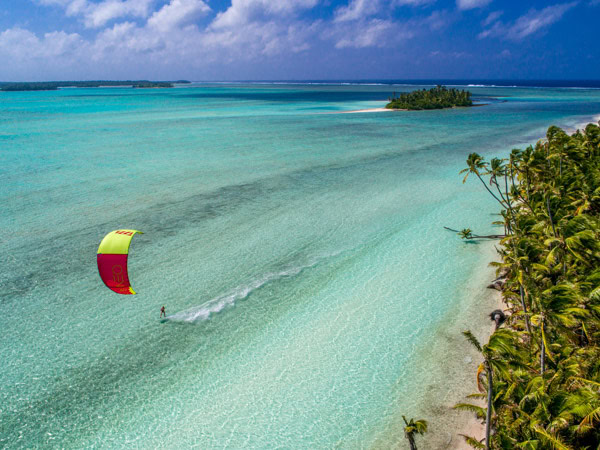
Aerial Kitesurfing on Cocos Keeling Islands
Cocos Keeling has perfect conditions for kite surfing. (Image: Rik Soderlund)

Artistic endeavours

Step down into the hull of a restored barge of Big Barge Art Centre , lined with one-off art pieces made from washed-up flotsam and jetsam.

Local artist, Emma Washer pulled the colossal broken-down ship, the Biar Selamat (meaning ‘let’s be safe’) from the overgrown jungle back in 2001.

Emma devoted over 10 years to turn her vision of creating an art gallery into a reality. The 19-metre-long art centre now sits in a prime beachfront location and offers various workshops on recycling washed-up waste.
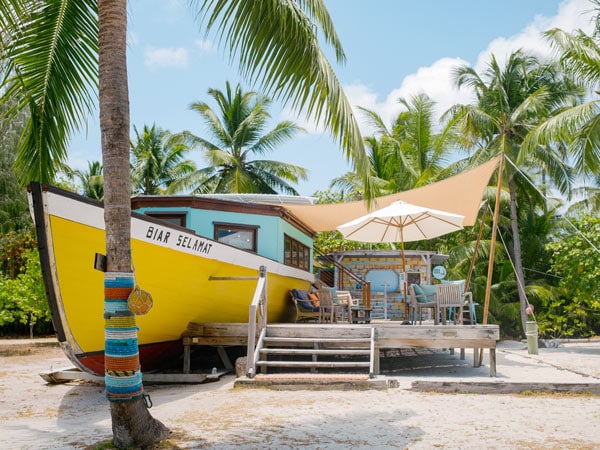
The Big Barge & Sula Sula Servery
Visit the Big Barge Art Centre for some creativity and culture. (Image: Supplied)

All-things-coconut

Join a farm-based tour of the Wild Coconut Discovery Centre  and see behind the scenes of a coconut production centre during a 1.5-hour demonstration. Learn about the timeworn techniques the farmers employ to create their products.

Cocos is laden with coconut palms – you’ll discover how they are utilised to make a range of goods, including tasty coconut chips and delicious ice creams. And you’ll get to enjoy free tastings afterwards in the farm shop.
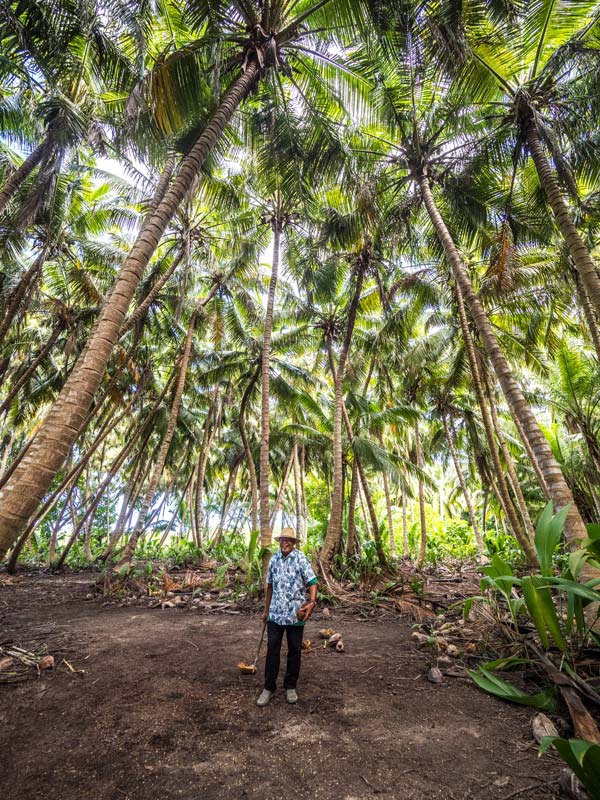
Wild Coconut Discovery Centre
Join a farm-based tour of the Wild Coconut Discovery Centre. (Image: Supplied)

T-off with locals

Scrounger’s Golf is played every Thursday afternoon across the airport’s international runway. It’s an island initiation must-do, like taking the Polar Plunge in Antarctica, though not nearly as cold.

The nine-hole round is all about teamwork, boardies, beers and banter, rather than getting a ball on the putting green.

Make your way to the Donga, West Island’s local club, sign up, grab some coldies, and hire your clubs, ready for tee-off at 3.30pm.
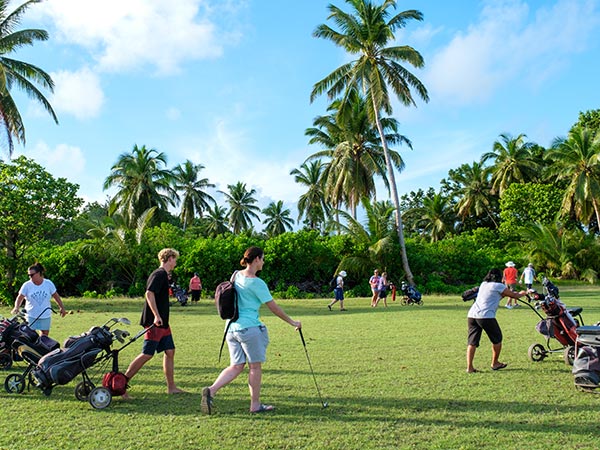
Cocos Keeling Islands golf course
Play golf across an international runway, just to say you have. (Image: Lynn Gail)

Eating on West Island

After exploring deserted beaches, luxuriating in warm crystalline waters whiling away hours in contented bliss, you’ll no doubt be thinking about satisfying your taste buds. With Cocos’ land mass measuring a mere 14 square kilometres, restaurants are limited. However, there’s a good range of Australian, International and Malaysian fare available.

Watch the fading sun dance through waves from your lantern-lit table at Surfer Girl Brewery . Surfer Girl Brewery offers a range of delicious dishes and great cocktails. Chalk your name up on the outside blackboard or drop in to book. The restaurant also opens for breakfast periodically throughout the week – try their tasty avo and bacon toasties with freshly brewed coffee.
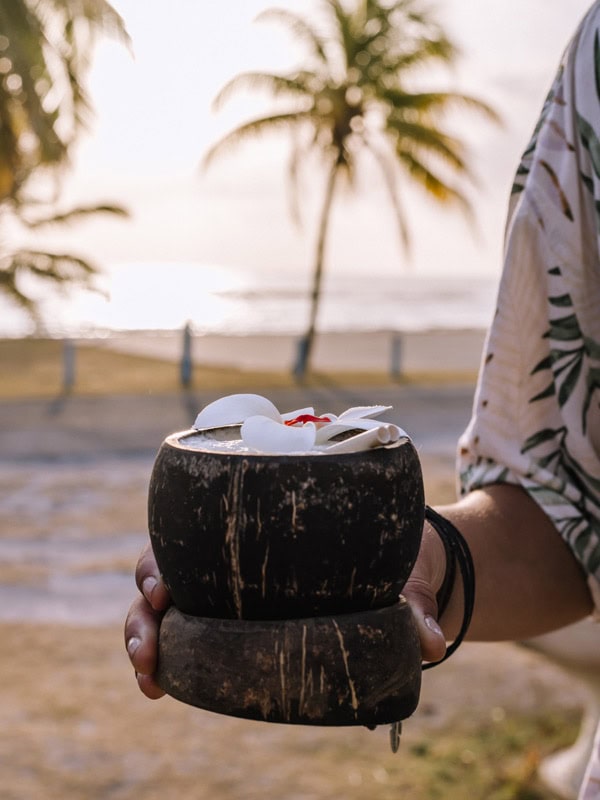
Coconut drink from Surfer Girl Brewery
Surfer Girl Brewery offers a range of delicious drinks. (Image: Supplied)

Pull up a stall next to the locals at Salty’s Grill & Bakery , located externally at the airport. Get your caffeine fix, fresh croissant, pastry or toastie in the mornings. Pop in on Tuesday and Sunday for pizza night, or Friday for fish and chips night. Salty also serves up freshly made sourdough on plane days.

The Big Barge Art Centre’s Sula Sula Servery, a boho-styled cafe built from recycled boat timbers, serves a range of drinks and tasty treats to enjoy as the waves roll in. Check opening hours with the Visitor Centre on West Island.
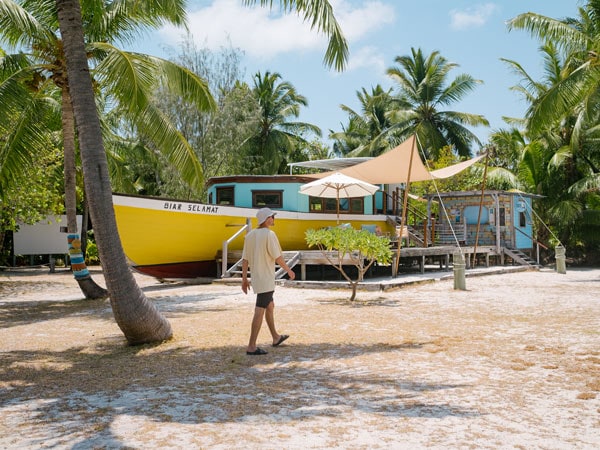
The Big Barge & Sula Sula Servery
The Sula Sula Servery serves a range of drinks and tasty treats. (Image: Supplied)

Add Tropika Restaurant at the Cocos Beach Resort. Buffet style Malaysian and Australian, breakfast, lunch and dinner seven days.

Open daily from 5pm onwards, the Cocos Club is a family-friendly hub, pub and foodery rolled into one. Relax with a cocktail or coldie and play a game of pool as you catch up with locals. They’ll tell you where the surf’s up and where the fish are biting.

Get intimate with your loved one by ordering a delicious spread with Cocos Picnics . They’ll put together a delicious, handmade grazing platter for you to indulge in – your only decision will be which deserted, soft sandy beach to hideaway on.

The basket is filled with gourmet goodies, rugs, cushions, candles and fairy lights – there’s even a pack of cards, a low-ground picnic table and a speaker for your playlist as you lay back to unwind under lazily swaying palms.

Eating on Home Island

Catch the ferry across from West Island for an authentic Malaysian dining experience at Kampong Cafe & Restaurant .

After exploring Home’s Island peaceful Kampong (a traditional Malaysian village) continue your cultural immersion at Island Brunch Cafe with their western-infused Cocos Malay dishes and speciality iced drinks.

Order a takeaway and dip your toes in the water at the lagoon’s edge. The sweeping layers of aquamarine hues are incredible. Pinch yourself to ensure you’re not at home daydreaming, turning pages of a glossy visit-paradise holiday brochure.
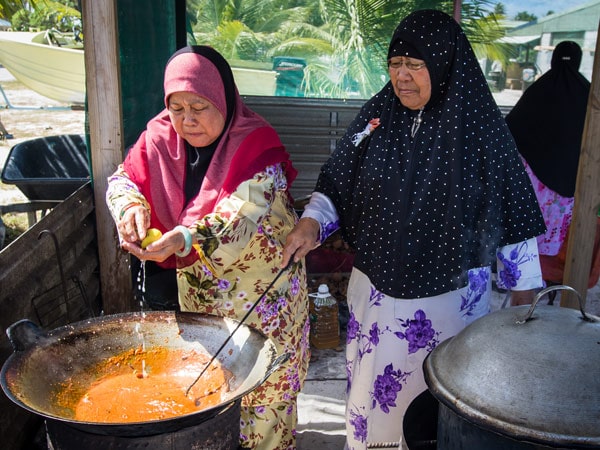
Home Island Cooking Cocos Keeling Islands
Enjoy an authentic Malaysian dining experience on Home Island. (Image: Supplied)
Lynn Gail
Lynn Gail is a travel writer and photographer who supplies both Australian and international travel magazines with features she hopes take readers on immersive journeys. An intrepid traveller, she’s most at home sitting alongside indigenous cultures, learning age-old belief systems. With her photography, Lynn aims to capture an essence of her subjects through making a connection.
See all articles

This scenic Victorian region is the perfect antidote to city life

Video credit: Visit Victoria/Tourism Australia

The Grampians just might be the ultimate antidote for the metropolis, writes one returning Aussie ready to disconnect from the modern world and reconnect to the Great outdoors.

There are no kangaroos back in Chicago: they’re all here in the Grampians/Gariwerd . In the heart of the Grampians National Park’s main gateway town, Halls Gap, pods of eastern greys are eating grass beside my parked rental car beneath the stars. Next morning, when I see the backyard of my rented villa on the edge of town for the first time, there are kangaroos feeding beside a slow-moving creek, lined with river red gums.

Five hundred metres up the road, 50 or so of them are eating by the side of the road in a paddock. I pull over to watch and spot three emus. Yellow-tailed black cockatoos fly overhead towards the tall green mountains just beyond town.

‘Kee-ow, keee-oww’… their calls fuse with the maniacal cackle of a kookaburra (or 10). Gawd, how I’ve missed the sound of them. Far above, a wedge-tailed eagle watches, and there you go: the ‘great birds of Australia’ trifecta, all half a kay from the town limits.

Exchanging city chaos for country calm

kangaroos near Halls Gap, Grampians National Park
The park is renowned for its significant diversity of native fauna species. (Image: Visit Victoria/Robert Blackburn)

I’ve come to the Grampians to disconnect, but the bush offers a connection of its own. This isn’t just any bush, mind you. The Grampians National Park is iconic for many reasons, mostly for its striking sandstone mountains – five ridges run north to south, with abrupt, orange slopes which tumble right into Halls Gap – and for the fact there’s 20,000 years of traditional rock art. Across these mountains there are more than 200 recorded sites to see, created by the Djab Wurrung, Jardwadjali and Gunditjmara peoples. It’s just like our outback… but three hours from Melbourne.

I’ve come here for a chance at renewal after the chaos of my life in America’s third-largest city, Chicago, where I live for now, at the whim of a relative’s cancer journey. Flying into Melbourne’s airport, it only takes an hour’s drive to feel far away from any concept of suburbia. When I arrive in Halls Gap two hours later, the restaurant I’m eating at clears out entirely by 7:45pm; Chicago already feels a lifetime ago.

The trails and treasures of the Grampians

sunrise at Grampians National Park /Gariwerd
Grampians National Park /Gariwerd covers almost 2000 square kilometres. (Image: Ben Savage)

Though the national park covers almost 2000 square kilometres, its best-known landmarks are remarkably easy to access. From my carpark here, among the cockatoos and kangaroos on the fringe of Halls Gap, it only takes 60 seconds’ driving time before I’m winding my way up a steep road through rainforest, deep into the mountains.

Then it’s five minutes more to a carpark that serves as a trailhead for a hike to one of the park’s best vantage points, The Pinnacles . I walk for an hour or so, reacquainting myself with the smells and the sounds of the Aussie bush, before I reach it: a sheer cliff’s edge lookout 500 metres up above Halls Gap.

walking through a cave, Hollow Mountain
Overlooking the vast Grampians landscape from Hollow Mountain. (Image: Robert Blackburn)

There are hikes and there are lookouts and waterfalls all across this part of the park near town. Some are a short stroll from a carpark; others involve long, arduous hikes through forest. The longest is the Grampians Peaks Trail , Victoria’s newest and longest iconic walk, which runs 160 kilometres – the entire length of Grampians National Park.

Local activities operator Absolute Outdoors shows me glimpses of the trail. The company’s owner, Adrian Manikas, says it’s the best walk he’s done in Australia. He says he’s worked in national parks across the world, but this was the one he wanted to bring his children up in.

“There’s something about the Grampians,” he says, as he leads me up a path to where there’s wooden platforms for tents, beside a hut looking straight out across western Victoria from a kilometre up in the sky (these are part of the guided hiking options for the trail). “There are things out here that you won’t see anywhere else in Australia.” Last summer, 80 per cent of the park was damaged by bushfire, but Manikas shows me its regrowth, and tells me of the manic effort put in by volunteers from town – with firefighters from all over Australia – to help save Halls Gap.

wildflowers in Grampians National Park
Spot wildflowers. (Image: Visit Victoria)

We drive back down to Halls Gap at dusk to abseil down a mountain under the stars, a few minutes’ walk off the main road into town. We have headlamps, but a full moon is enough to light my way down. It takes blind faith to walk backwards down a mountain into a black void, though the upside is I can’t see the extent of my descent.

Grampians National Park at sunset
Grampians National Park at sunset. (Image: Wine Australian)

The stargazing is ruined by the moon, of course, but you should see how its glow lights up the orange of the sandstone, like in a theme park. When I’m done, I stand on a rocky plateau drinking hot chocolate and listening to the Aussie animals who prefer nighttime. I can see the streets of Halls Gap off in the distance on this Friday night. The restaurants may stay open until 8pm tonight.

What else is on offer in The Grampians?

a boat travelling along the Wimmera River inDimboola
Travelling along the Wimmera River in Dimboola. (Image: Chris McConville)

You’ll find all sorts of adventures out here – from rock climbing to canoeing to hiking – but there’s more to the Grampians than a couple of thousand square kilometres of trees and mountains. Halls Gap may be known to most people, but what of Pomonal, and Dimboola, and Horsham? Here in the shadow of those big sandstone mountains there are towns and communities most of us don’t know to visit.

And who knew that the Grampians is home to Victoria’s most underrated wine region ? My disconnection this morning comes not in a forest, but in the tasting rooms and winery restaurants of the district. Like Pomonal Estate, barely 10 minutes’ drive east of Halls Gap, where UK-born chef Dean Sibthorp prepares a locally caught barramundi with lentil, pumpkin and finger lime in a restaurant beside the vines at the base of the Grampians. Husband-and-wife team Pep and Adam Atchison tell me stories as they pour their prize wines (shiraz is the hero in these parts).

dining at Pomonal Estate
Dine in a restaurant beside vines at Pomonal Estate. (Image: Tourism Australia)

Three minutes’ drive back down the road, long-time mates Hadyn Black and Darcy Naunton run an eclectic cellar door out of a corrugated iron shed, near downtown Pomonal. The Christmas before last, half the houses in Pomonal burnt down in a bushfire, but these locals are a resilient lot.

The fires also didn’t stop the construction of the first art centre in Australia dedicated to environmental art in a nature-based precinct a little further down the road (that’s Wama – the National Centre for Environmental Arts), which opened in July. And some of the world’s oldest and rarest grape vines have survived 160 years at Best’s Wines, outside the heritage town of Great Western. There’s plantings here from the year 1868, and there’s wines stored in century-old barrels within 150-year-old tunnels beneath the tasting room. On the other side of town, Seppelt Wines’ roots go back to 1865. They’re both only a 30-minute drive from Halls Gap.

Salingers of Great Western
Great Western is a charming heritage town. (Image: Griffin Simm)

There’s more to explore yet; I drive through tiny historic towns that barely make the map. Still part of the Grampians, they’re as pretty as the mountains behind them: full of late 19th-century/early 20th-century post offices, government offices and bank buildings, converted now to all manner of bric-a-brac stores and cafes.

The Imaginarium is one, in quirky Dimboola, where I sleep in the manager’s residence of an old National Australia Bank after a gourmet dinner at the local golf club, run by noted chef and teacher, Cat Clarke – a pioneer of modern Indigenous Australian cooking. Just south, I spend an entire afternoon at a winery, Norton Estate Wines, set on rolling calico-coloured hills that make me think of Tuscany, chit-chatting with owners Chris and Sam Spence.

Being here takes me back two decades, when I lived here for a time. It had all seemed as foreign as if I’d driven to another planet back then (from Sydney/Warrane), but there seemed something inherently and immediately good about this place, like I’d lived here before.

And it’s the Australian small-town familiarity of the Grampians that offers me connection back to my own country. Even in the better-known Halls Gap, Liz from Kerrie’s Creations knows I like my lattes with soy milk and one sugar. And while I never do get the name of the lady at the local Ampol station, I sure know a lot about her life.

Kookaburras on a tree
Kookaburras are one of some 230 bird species. (Image: Darren Donlen)

You can be a local here in a day; how good is that? In Chicago, I don’t even know who my neighbour is. Though each day at dusk – when the kangaroos gather outside my villa, and the kookaburras and the black cockatoos shout out loud before settling in to sleep – I prefer the quieter connection I get out there in the bush, beneath these orange mountains.

A traveller’s checklist

Staying there

Sleep beside the wildlife on the edge of Halls Gap at Serenity .

Playing there

abseiling down Hollow Mountain
Hollow Mountain is a popular abseiling site.

Go abseiling under the stars or join a guided hike with Absolute Outdoors . Visit Wama , Australia’s first environmental art centre. Check out Dimboola’s eccentric Imaginarium .

Eating there

steak, naan bread and beer at Paper Scissors Rock in Halls Gap
Paper Scissors Rock in Halls Gap serves a great steak on naan bread.

Eat world-class cuisine at Pomonal Estate . Dine and stay at much-revered icon Royal Mail Hotel in Dunkeld. The ‘steak on naan’ at Halls Gap brewhouse Paper Scissors Rock , can’t be beat.

Dunkeld Arboretum in Grampians National Park
The serene Dunkeld Arboretum.

For Halls Gap’s best breakfasts head to Livefast Cafe . Sip local wines at Great Western’s historic wineries, Best’s Wines , Seppelt Wines and Norton Estate Wines .

two glasses of beer at Paper Scissors Rock in Halls Gap
Sink a cold one at Paper Scissors Rock.