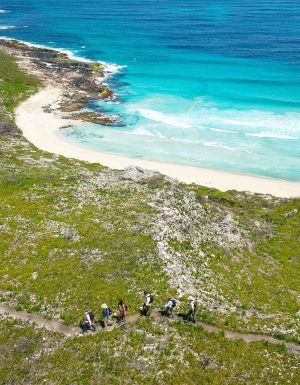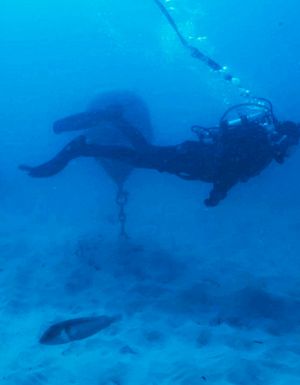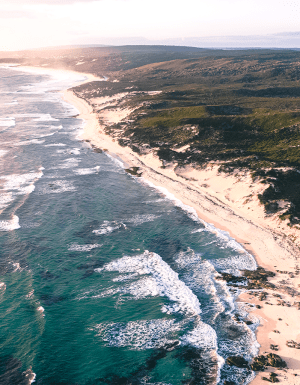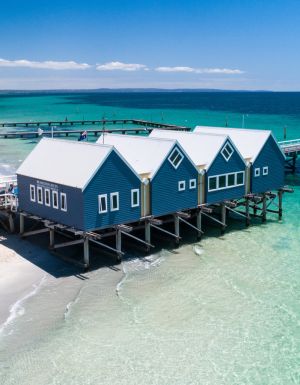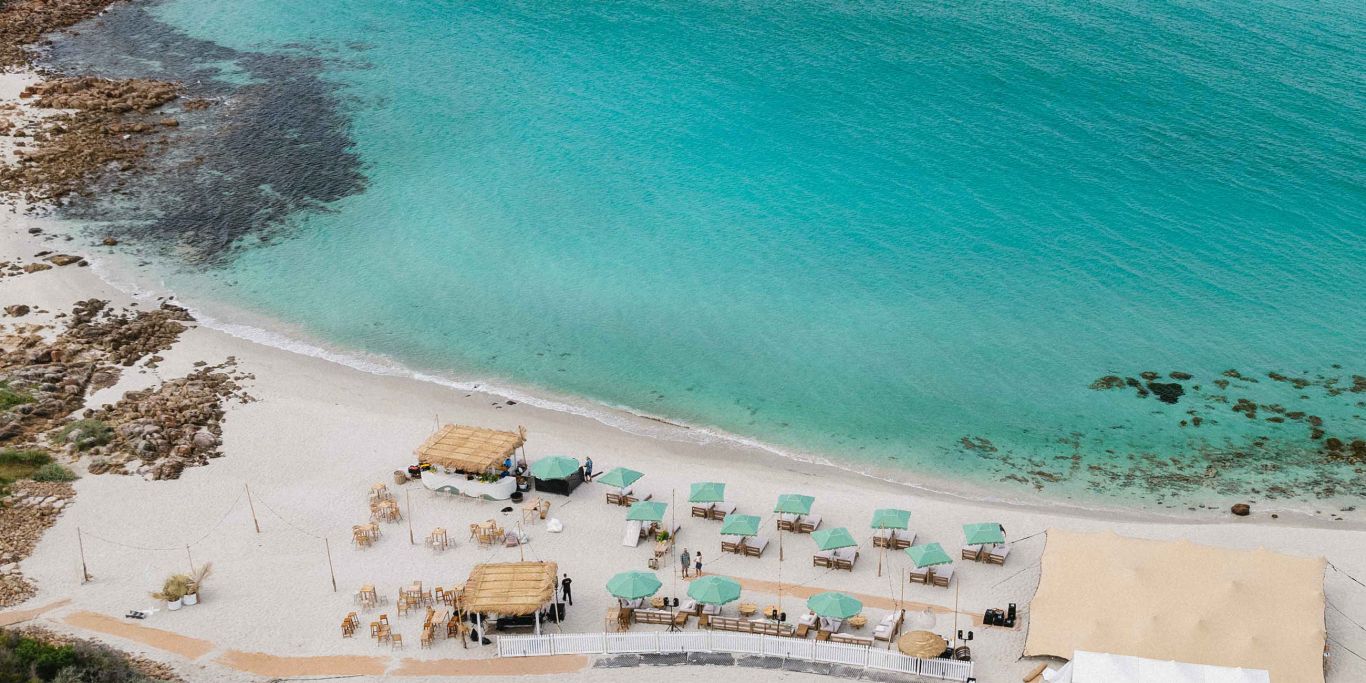
Whether you want to swim, surf, or just play in the sand, here’s where to find the best Margaret River beaches.
There’s no denying that Margaret River beaches are some of the most beautiful in all of Australia. They vary from the calm and protected to the wild and wonderful; stretches of coast where you can busy yourself with any beachside activity from fishing and snorkelling to surfing and swimming. To better plan which beaches in Margaret River to visit when you’re in the region, consult our comprehensive guide.
1. Eagle Bay

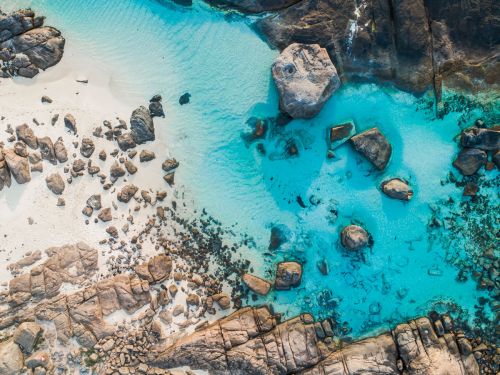
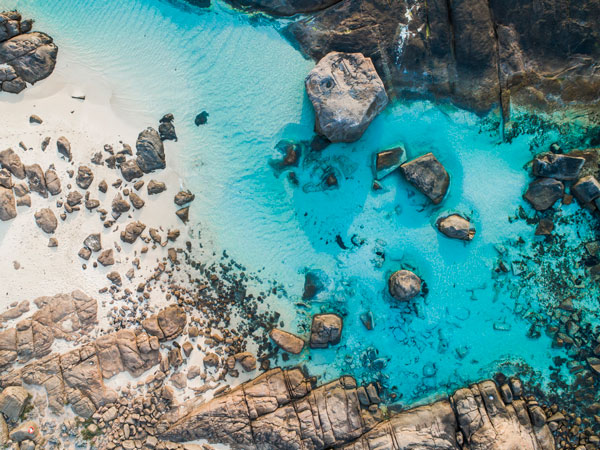
Take the coastal route from Meelup Beach towards Eagle Bay, and you’ll be rewarded with the most idyllic scenery in the South West. It’s white sand bay after white sand bay along here, and there are plenty of opportunities to park up and enjoy them. The water at Eagle Bay is Bombay blue and calm as can be, an incredible contrast to the powdery sand, green bushland, and red rocks that also characterise this part of the coast. If you’re bringing your dog, they’re welcome on the north end of the beach (by the Eagle Bay boat ramp).
Address: Eagle Bay-Meelup Road, Eagle Bay
2. Injidup Beach

Drive a short distance south of Yallingup, and you’ll arrive at Injidup Beach. It’s a popular Margaret River surf spot with an intermediate to advanced right-handed reef break, at its best in swells of 1.8m to 3m. The reef’s rocky outcrops are also great for snorkelling and diving, with all kinds of sea life calling them home. If you’re handy with a rod, throw a line in off the beach or rocks and see what you can hook for dinner; tailor, skippy, or whiting.
Address: Cape Clairult Road, Yallingup
3. Boranup Beach
The only way to reach Boranup Beach is on a bumpy and potholed 4WD track. It makes it a bit of a mission to get to, but it’s well worth it for surf lovers. This 8km stretch of sandy beach has a friendly wave onshore, and bigger sets roll throughout the back. To get to the best surf, head north up the beach. If you’re not a surfer, enjoy a long stroll along the shoreline or walk the nearby section of the Cape to Cape track.
Address: Grace Road, Boranup
4. Contos Beach
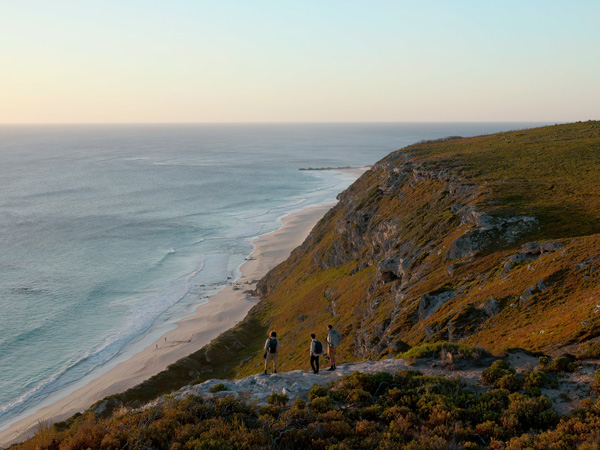
Swimming, surfing, and bush walking: you can do it all at Contos Beach, a 25-minute drive from the Margaret River township. Flanked by bush and towering cliffs, Contos is isolated but not at all inaccessible. Though the track that leads off Conto Road and down to the carpark is unsealed, the sand and gravel are compact, so even 2WDs can make it down there. From the carpark, there’s a short walk to the sand. Or, you can head off in the other direction, to a section of the Cape to Cape track, to complete a short, looped bushwalk. On the beach, you can poke around in the rockpools or paddle in the shallows, and novice surfers can give the small point break a crack.
Address: Conto Road, Boranup
5. Gnarabup Beach
Gnarabup Beach is the longest and most popular beach in Prevelly. At one end, you’ll find the White Elephant Beach Cafe, some public changerooms, and a large carpark. At the other is Surfer’s Point. While the swell is often pounding out at Surfer’s Point, Gnarabup Beach is well protected and has smaller waves than elsewhere in the Margaret River Region. Bring the dog and splash around in the shallows, or go for a wander in the dune trails.
Address: Walcliffe Road, Gnarabup
6. Grunters
Head down past Gnarabup Beach, and you’ll find one of the region’s most consistent surf breaks, Grunters. Off the northern reef is a challenging wave with barrels in perfect conditions (a southwest swell and an offshore wind from east-north-east). There are also some smaller reef and beach breaks for less advanced surfers. At the southern end of the beach, there’s a permanent rip at Marmaduke Point, so caution is advised.
Address: Walcliffe Road, Gnarabup
7. Smiths Beach

Just south of Yallingup is the long, sandy Smiths Beach. Fans of beach walking and combing will appreciate the 1.5km stretch of shoreline, as will families with dogs. Four-legged friends are welcome to join you anywhere on the beach, though time restrictions apply during peak season from December to February. To the south end of the beach, the water is more suited to swimmers and families, while the northern end is surf-central, with a sand break and clear tubes on a good day.
Address: Smiths Beach Road, Yallingup
8. Canal Rocks
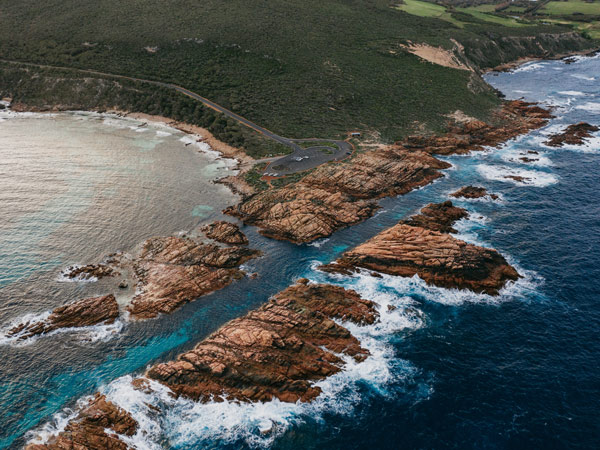
Less a beach and more a coastal ‘must-do’, Canal Rocks is one of the most iconic sites in the Margaret River region. Follow the timber bridge over the narrow channel that connects a series of granite boulders and watch as the surging ocean rushes beneath you. At the end of the pathway, plenty of small pools and lagoons exist to explore; just refrain from getting in the water as rips, surges, and king waves can occur. You can go snorkelling and fishing in a protected area near the canal, but it’s important that all signs are read and warnings are heeded.
Address: Leeuwin-Naturaliste National Park, Canal Rocks
9. Cowaramup Bay
Gracetown’s Cowaramup Bay appeals to all kinds of beach-goers. The shallows are perfectly calm and family-friendly, with big waves thundering on the outlying reef breaks. Dogs are welcome to join you on the stretch of beach directly across from the cafe and general store. Perhaps, though, this beach is best known as a surfing hotspot. When the conditions align, and there’s a southwest swell with an easterly wind, the barrelling waves out at North Point are some of the heaviest on the coast. As such, it’s a great spot to park up on the rocks and watch skilled surfers riding the break.
Address: Cowaramup Bay Road, Gracetown
10. Three Bears
Consistency is key at Three Bears, with the famous surfing spot’s three reef breaks—mumma’s, pappa’s, and baby’s—all pumping when the swell hits 1.5 – 2.5m. Due to their size, intensity, and remoteness, they’re recommended for intermediate to advanced surfers only. You’ll need a 4WD to get down the sandy and rocky track to the carpark, from which you can see all three breaks.
Address: Three Bears 4WD Track (off Sugarloaf Road), Naturaliste
11. Meelup Beach
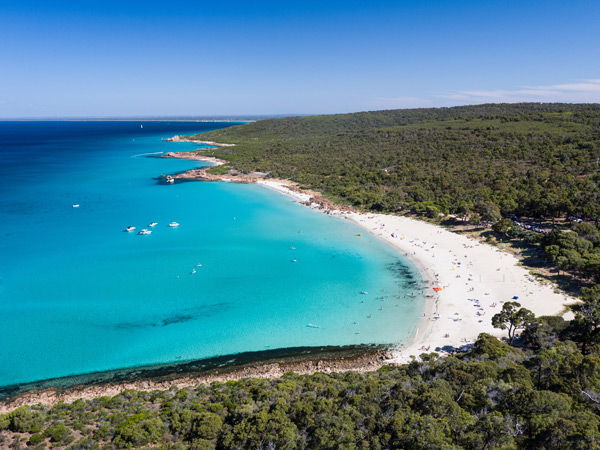
If a ‘beaches of the Margaret River Region’ popularity contest existed, Meelup Beach would be the clear front runner. There’s good reason for its popularity; it’s easily accessible, there are plenty of shady spots to set up, and the water is as clear and blue as a swimming pool, with little to no swell. The carpark fills up quickly in summer, so get in early for the best chance at nabbing one. There are public barbecues under the Peppy trees on the grassed areas for family picnics, but you’ll also find food and coffee vans here in season.
Address: Meelup Beach Road, Dunsborough
12. Dunsborough Foreshore Beach
If you’re staying in the heart of Dunsborough, the beach at the foreshore is just a short walk away. Head down Dunn Bay Road from the Dunsborough Park Shopping Centre, and you’ll be there in no time. The water here is perfect for young families as it’s extremely calm and shallow, protected by a large sandbank some 50m out. At certain times, you can wade all the way out to the exposed sand bank. On a summer evening, bring some sausages down and have a sunset cook-up at the public barbecues in the grassed area. Dogs are welcome in the park and on parts of the beach; just check the signage to know where.
Address: Geographe Bay Road (at the end of Dunn Bay Road), Dunsborough
13. Honeycombs Beach
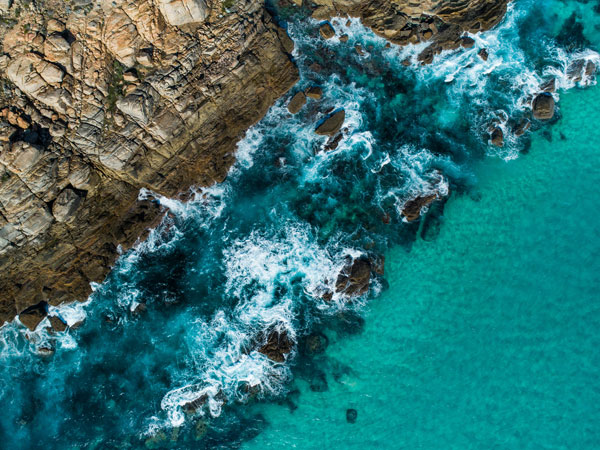
Like so many Margaret River beaches, the ocean at Honeycombs Beach is fringed with white, sugar-fine sand and flanked by dunes and heathland. In the shallows, you can swim and explore the rock pools. A little further out, when there’s a westerly swell and easterly wind, you can ride a neat little left or right-hander wave. It’s a reliable break but not a place for novices. Prefer to stay dry? Walk a section of the Cape to Cape, which extends both north and south of the carpark. Just follow Moses Rock Road and turn left at the signposted unsealed trail to get here.
Address: Moses Rock Road, Wilyabrup
14. South Point + Huzzawuiie
North Point isn’t the only surf break in Cowaramup Bay. Head to the bay’s south end, and you’ll find Huzzawuiie (Huzza’s) and South Point, two of the only breaks in the region surfable in a southwesterly wind. The former is straight down the stairs from the South Point carpark. It’s a long, rolling wave with a left and right wall that’s good for grommets and intermediate surfers. Along a dirt track and further out on the water is South Point, a slow rolling left-hander break.
Address: Cowaramup Bay Road, Gracetown
15. Yallingup Beach
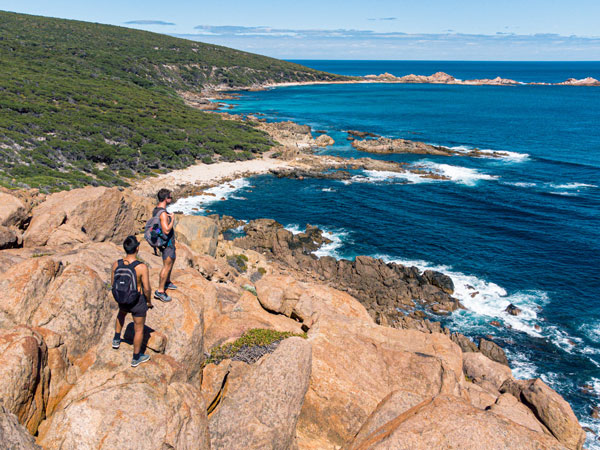
The drive into Yallingup is as scenic as they come, with sweeping views of the hillside houses and bay as you round the corner on Yallingup Beach Road. It’s a quaint little town, with a row of local cafes and stores abutting the beach carpark. Families flock to Yallingup for its shady park area, playground, barbecues, and calm, shallow reef-protected lagoon. Surfers, on the other hand, come for the heavy reef break out deep.
Address: Yallingup Beach Road, Yallingup
16. Cosy Corner
Sheltered and secluded, this sheltered Margaret River beach certainly lives up to its name. Cosy Corner is at the southern end of the Knobby Head headlands, about 10 minutes south of Hamelin Bay. It’s a popular spot for swimming, snorkelling, diving, and rock or beach fishing. On calm days, swim out to the drop-offs around the limestone islands just offshore to snorkel or dive. But be warned: it can be quite a mission to cart your scuba gear from the car down to the beach. Though fishing is allowed here, spearfishing, netting, or potting is strictly prohibited.
Address: Cosy Corner Road, Hamelin Bay
17. Surfer’s Point
Though it’s technically a Margaret River beach, Surfer’s Point isn’t somewhere you go swimming; the shallow reef runs right up to the shore and is rife with rips and undertows. But if you’re a surfer, Mainbreak, The Bombie, and Southsides are easily the most iconic waves in the region. The annual Margaret River Pro takes place at Surfer’s Point, and some of the world’s biggest names have surfed these waves. That being said, they’re not waves for the faint of heart. Anyone not surfing at an advanced level can watch the pros tackle them from the natural grassed amphitheatre by the carpark. It’s also a great spot to watch the migrating whales (in season) or catch a classic WA sunset.
Address: Surfers Point Rd, Prevelly
18. Hamelin Bay Beach

Though the beach at Hamelin Bay is perfect for swimming, snorkelling, and fishing, it’s the resident smooth stingrays and eagle rays that it’s most famous for. They cruise through the shallows daily, scouring the sandy bottom for a feed. Being wild creatures, there’s no telling exactly when—or if—they’ll show up, but when they do, it’s important to refrain from feeding them and to give them their distance. At all other times, the bay is all yours to do as you please.
Address: Hamelin Bay Road West, Hamelin Bay
19. Bunker Bay
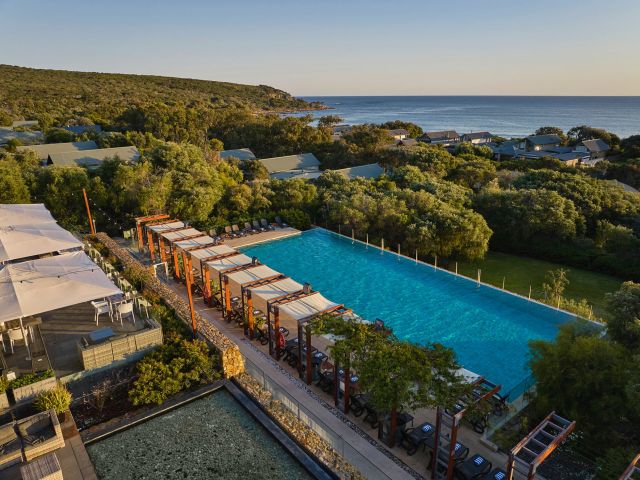
Bunker Bay is one of the few north-facing beaches in WA, protected by the rocky outcrop at Cape Naturaliste. Though the beach isn’t patrolled, the bright blue water is always calm, so it’s a safe place for kids and those less confident in the water to swim. Outside of Pullman Bunker Bay and Bunkers Beach House cafe, there’s not much else around, so there’s little to interrupt your peaceful day by the water.
Address: Bunker Bay Road, Naturaliste
20. Margaret River Mouth
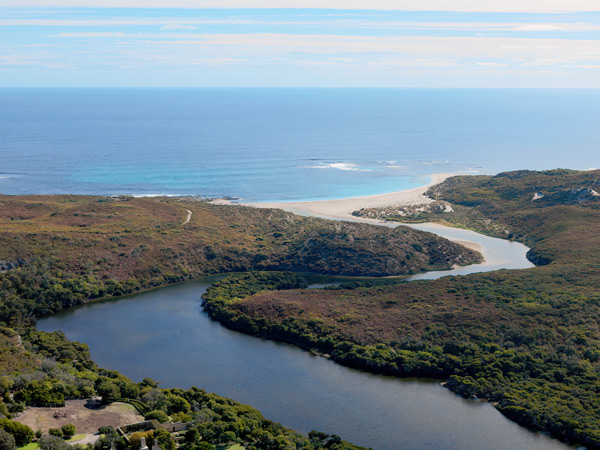
Fresh water or salt water, surfing or kayaking, the Margaret River Mouth is a beach of contrasts. It’s where the Margaret River meets the Indian Ocean, having snaked its way through the bush-covered hills to the beachfront. Very rarely does the river break through the sand bar and connect with the ocean, so young children can stay clear of the heavy beach break and paddle safely on the still water of the river. When the swell is up, novice surfers love testing their skills on the crumbling shore dumpers.
Address: Walcliffe Road, Margaret River
21. Redgate Beach
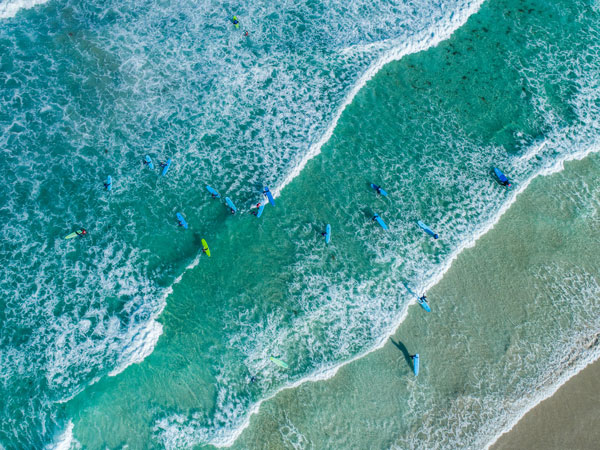
Sandwiched between rocky outcrops, Redgate Beach is classed as a special-purpose surfing zone. On shore, there’s plenty of soft sand for sandcastle-building and rock pools for kids to explore. In the right conditions, learner surfers can cut their teeth on the beach break. At all other times, the waves are more suited to intermediate to advanced surfers.
Address: Redgate Road, Redgate
Discover the best things to do in Margaret River.