hero media

This new bushwalking trail lets you experience Canberra’s wild side

Lace up your hiking boots – a new outdoor adventure in our capital awaits.

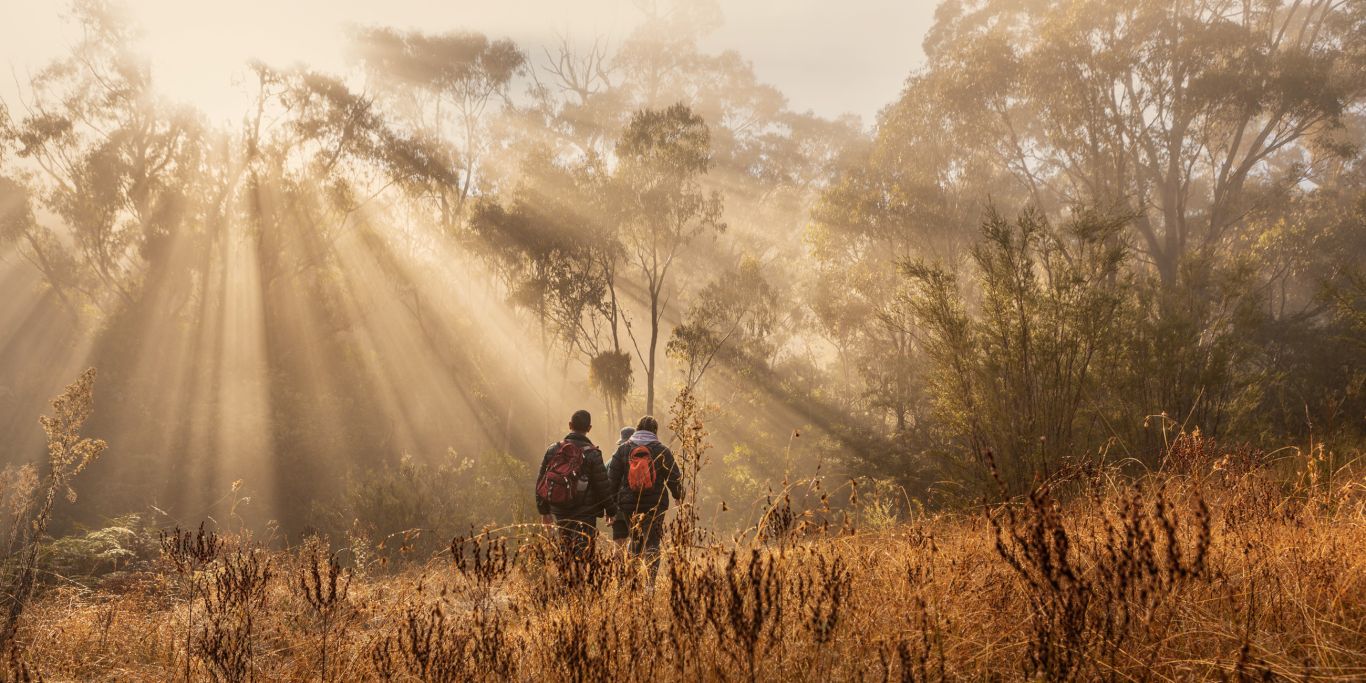
While there are plenty of reasons to visit Canberra, this one deserves a spot near the top of your list. The newly opened Mindjagari Track is a network of hiking trails weaving through pristine bushland and rugged mountain terrain – designed to showcase the capital’s wild beauty and draw nature lovers from across the country.

All about the Mindjagari Track

At first glance, it might seem like just another bushwalk – but the Mindjagari Track is anything but ordinary. The new network spans roughly 14 kilometres between Fishing Gap and Johns Peak in the Tidbinbilla Range, a mountainous region deep in the ACT’s wilderness.

Tidbinbilla Ranges, ACT
Explore Canberra’s wilderness along the new Mindjagari Track. (Image: VisitCanberra)

It comprises four main ascending routes: the nine-kilometre Short ‘n’ Brutal, 11.5-kilometre Snowy Corner Traverse, 12.5-kilometre Banggu Loop and the 22-kilometre Full Traverse. The beauty of the Mindjagari Track is its choose-your-own-adventure style. Each route is connected via a series of trails and loops, so hikers can cut or extend their walk to suit.

You’ll be fully immersed in the Tidbinbilla Range’s remote landscape from the minute you take off, some of which was previously inaccessible to the public. Hikers will also be treated to sweeping views across the nearby Brindabellas and Kosciuszko National Park, home to the new Snowies Alpine Walk.
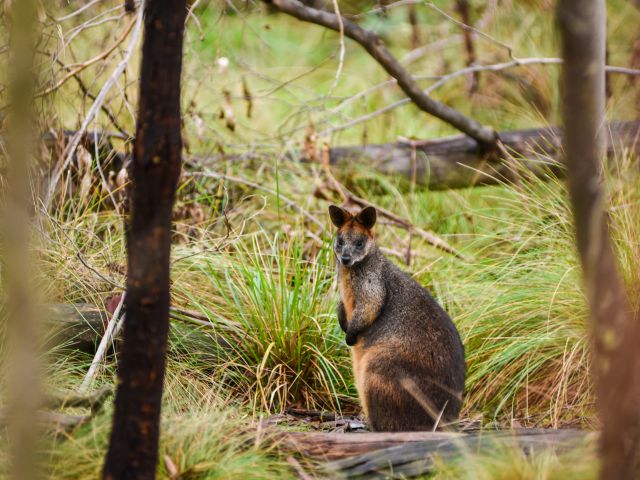
Wallaby in the Tidbinbilla Ranges, ACT
The Tidbinbilla Range is home to an abundance of native wildlife, including wallabies. (Image: Getty/Daniiielc)

Native wildlife like kangaroos, wallabies, koalas and echidnas are commonly sighted along the way, so keep your eyes peeled. Look a little closer and you may catch a glimpse of its smaller residents, too – from platypus and potoroos to critically endangered species like the northern corroboree frog and grassland earless dragon.

Your experience here will shift with the seasons. In winter, snow can drape the landscape in peaceful silence. Come spring and summer, wildflowers bloom and the Tidbinbilla Range bursts to life with colour and energy. Either way, you’ll see parts of this under-the-radar region few have laid eyes on, from subalpine woodlands and eucalypt forests to rocky outcrops and swampy wetlands.

What to expect

While the Mindjagari Track is an exciting addition to Canberra’s impressive collection of walks, it may not be for everyone. All four trails that ascend the range are listed as Grade 5 under the Australian Walking Track Grading System .

Tidbinbilla Ranges, ACT
The track is classified as a Grade 5, characterised by steep and rough terrain. (Image: Richard Poulton/VisitCanberra)

A Grade 5 classification means the terrain is steep, rough and challenging – best suited to very experienced hikers with advanced skills in navigation and first aid. Anyone planning to tackle the track should check their fitness, prepare for all conditions, plan ahead and monitor their progress along the way.

It’s important to note that camping is not permitted within Tidbinbilla. Failure to return before the park closes each day will prompt a search and rescue response. Carrying an emergency Personal Locator Beacon is highly recommended, too – mobile reception is unreliable at best – and can be hired from the visitor centre at Tidbinbilla Nature Reserve .
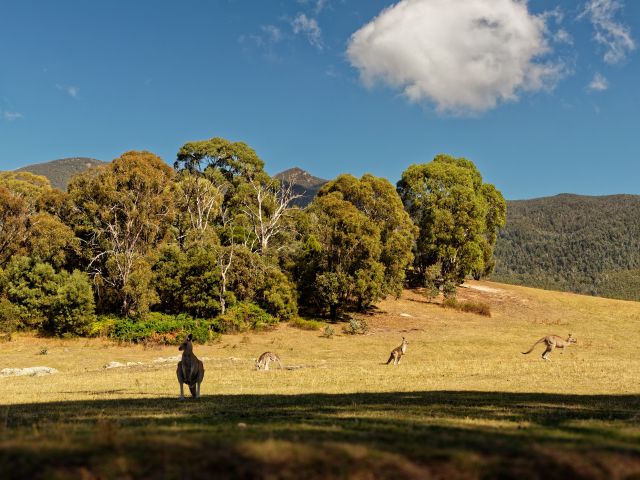
Tidbinbilla Ranges, ACT
Other parts of the reserve offer easier walking trails for varying abilities. (Image: Getty/Phototrip)

Keen to explore the region but still finding your feet? No sweat – the reserve is also home to shorter tracks suitable for all abilities. There’s the 2.2-kilometre Wandarawari Track and four-kilometre Devils Gap Loop, as well as the wheelchair accessible 700-metre Koala Path and 2.1-kilometre Sanctuary Loop. Or check out nearby Namadgi National Park, another outdoor mecca full of walking trails.

The details

The new Mindjagari Track is accessed via the Tidbinbilla Nature Reserve, an approximate 45-minute drive (50 kilometres) from Canberra, ACT. All four routes start at the Mountain Creek car park, where hikers can leave their car for the day.
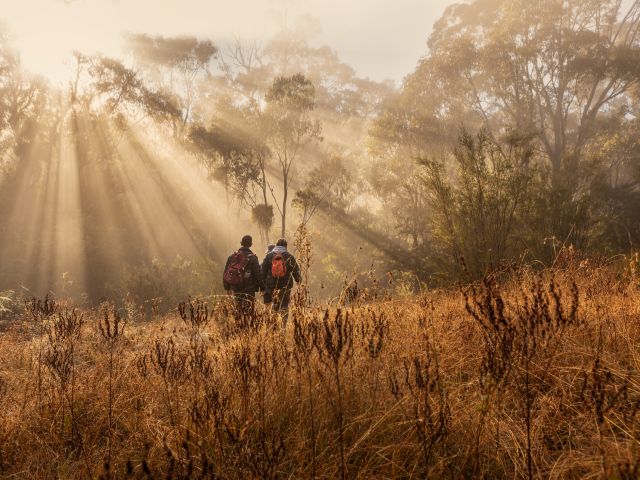
Tidbinbilla Ranges, ACT
The Mindjagari Track is roughly 45 minutes from Canberra by car. (Image: Richard Poulton/VisitCanberra)

An entry fee is required, with varying prices depending on visitor type. Day passes for a private vehicle with up to eight seats will cost $15.53, while those travelling by coach pay $2.07 per passenger. If you plan on returning, annual passes are also available. You can purchase a pass online through Access Canberra or by popping into the visitor centre.

Tidbinbilla Nature Reserve is open every day except Christmas, from 7:30am–6pm during winter and 7:30am–8pm in summer. However, it may close on days with a total fire ban, severe weather or for management. Visitor centre hours are 9am–5pm daily.


Taylah Darnell
Taylah Darnell is Australian Traveller's Writer & Producer. She has been passionate about writing since she learnt to read, spending many hours either lost in the pages of books or attempting to write her own. This life-long love of words inspired her to study a Bachelor of Communication majoring in Creative Writing at the University of Technology Sydney, where she completed two editorial internships. She began her full-time career in publishing at Ocean Media before scoring her dream job with Australian Traveller. Now as Writer & Producer, Taylah passionately works across both digital platforms and print titles. When she's not wielding a red pen over magazine proofs, you can find Taylah among the aisles of a second-hand bookshop, following a good nature trail or cheering on her EPL team at 3am. While she's keen to visit places like Norway and New Zealand, her favourite place to explore will forever be her homeland.
See all articles

How a $1 deal saved Bendigo’s historic tramways

The passionate community that saved Bendigo Tramways has kept the story of this city alive for generations.

It was an absolute steal: a fleet of 23 trams for just $1. But such a fortunate purchase didn’t happen easily. It was 1972 when the Bendigo Trust handed over a single buck for the city’s historic collection of battery, steam and electric trams, which had transported locals since 1890.

inside the historic Bendigo Tram
Bendigo Tramways is a historic transport line turned tourist service. (Image: Bendigo Heritage)

The city’s tram network had been declared defunct since 1970 due to post-war shortages in materials to upkeep the trams and declining passenger numbers as motor vehicles were increasing. However, determined locals would not hear of their beloved trams being sold off around the world.

The Bendigo Trust was enlisted to preserve this heritage, by converting the trams into a tourist service. The Victorian government approved a trial, however news spread that the Australian Electric Tramways Museum in Adelaide had acquired one of the streetcars for its collection.

a tram heading to Quarry Hill in 1957
A tram on its way to Quarry Hill in 1957. (Image: Bendigo Heritage)

An impassioned group rallied together to make this physically impossible. Breaking into the tram sheds, they welded iron pipes to the rails, removed carbon brushes from the motors, and formed a blockade at the depot. The community response was extraordinary, and a $1 deal was sealed.

A new chapter for the city’s fleet

the old Tramways Depot and Workshop
The old Tramways Depot and Workshop is one of the stops on the hop-on, hop-off service. (Image: Tourism Australia)

Today, Bendigo Tramways welcomes some 40,000 passengers annually, operating as a hop-on, hop-off touring service aboard the restored trams. Fifteen of the now 45-strong fleet are dubbed ‘Talking Trams’ because of the taped commentary that is played along the route. The trams loop between Central Deborah Gold Mine and the Bendigo Joss House Temple, which has been a place of Chinese worship since 1871, via other sites including the old Tramways Depot and Workshop.

a Gold Mine Bendigo Tram
The fleet comprises 45 trams that have been restored. (Image: Visit Victoria/Robert Blackburn)

Keeping things interesting, throughout the year visitors can step aboard different themed trams. Tram No. 302 becomes the Yarn Bomb Tram, decorated both inside and out with colourful crochet by an anonymous group of locals.

During the festive season, Tram No. 15 operates as a tinsel-festooned Santa Tram, and the big man himself hides out somewhere along the route for excited children to find. And on selected dates, the adults-only Groove Tram runs nighttime tours of the city, accompanied by local musicians playing live tunes and a pop-up bar.

the historic post office turned visitor centre in Bendigo
Visitors can hop on and off to see the city’s sites such as the historic post office turned visitor centre. (Image: Tourism Australia)

As well as preserving the city’s history, however, the continuation of the tram service has kept the skills of tram building and craftsmanship alive in a practical sense. Bendigo’s Heritage Rail Workshop is world-renowned for restoring heritage trams and repurposing vehicles in creative ways.

Locally, for example, Tram No. 918 was transformed into the Dja Dja Wurrung Tram with original Aboriginal artworks by emerging artist Natasha Carter, with special commentary and music that shares the stories and traditions of Bendigo’s first people. You can’t put a price on preserving history. Nonetheless, it was a dollar very well spent.