The ultimate guide to Namadgi National Park

hero media
Taking up almost half of the Australian Capital Territory, Namadgi National Park is one of Australia’s greatest natural wonders.

Namadgi National Park represents 46 per cent of the ACT, lying just 40 minutes southwest of Canberra City with more than 106,000 hectares of alpine, sub-alpine and mountain areas.

Since it was first declared a national park in 1984, this immensely diverse region has been a source of great inspiration for nature lovers, offering an incredible range of landscapes from grassy pains and snow gum woodlands to sub-alpine meadows and hidden fern gullies.

It’s often unexplored because visitors are unsure of what to do with something so wonderfully vast. To help, we’ve rounded up some of the top things to do in Namadgi National Park so you can make the most of your visit to this important, largely underappreciated, part of Australia’s geographically diverse east coast.

1. Search the national park for historic huts
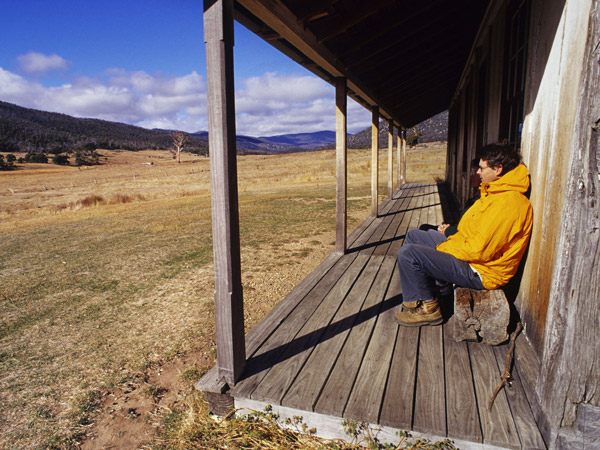
a man sitting outside a homestead, Orroral
The Orroral homestead was built in the 1860s and has stood the test of time. (Image: Michael Maconachie)

Several historic homesteads lie across Namadgi National Park, retelling the story of colonial pastoralists and early recreational skiers. Filled with character, these homes are not only great photo opportunities but they tell the story of this region with every crack and crevice.

Gudgenby, for example, is a timber slab hut built in 1845. After serving time in a shipping container, it’s been beautifully restored and reconstructed near the Namadgi National Park visitors’ centre and can be viewed anytime. Audio features retelling tales of early settlers help contextualise the park before you set off to explore.

You’ll also want to look for Orroral, the park’s oldest original homestead which was built in the 1860s and can be found near the Orroral campground.

2. Walk to Booroomba Rocks
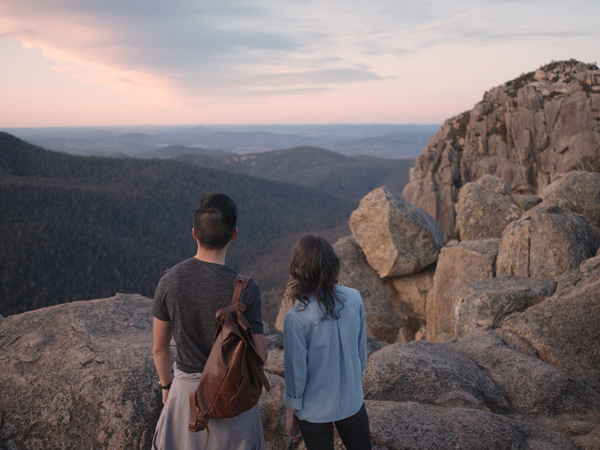
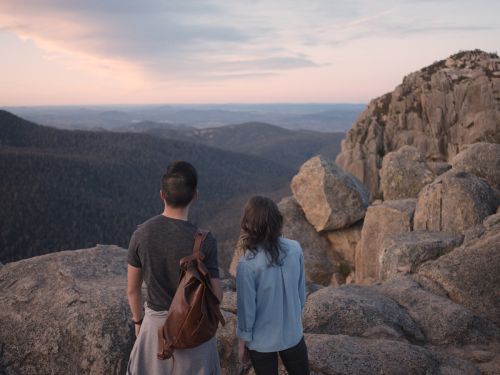
a couple standing atop Booroomba Rocks, Namadgi National Park
One of Namadgi’s best walks, hiking to Booroomba Rocks affords spectacular views. (Image: Visit Canberra)

If you’ve only got time for one hiking trail in Namadgi National Park, take the short 2.5 Booroomba Rocks tail up to the park’s most cinematic section. The 40-minute walk will take you through tall forests up to sweeping granite cliffs surrounded by big, beautiful boulders.

With great views of the Brindabella Range, this is one of the most scenic walks in the state, starting from Booroomba Park Park with clear markings along the way.

The walk is best done in spring when the area is blanketed in beautiful multi-coloured wildflowers like yellow and orange peas, daisies and flax lilies. Keep an eye out for Canberra’s signature royal bluebells along some of the wetter areas of the trail.

3. See Australia’s tallest mountain range
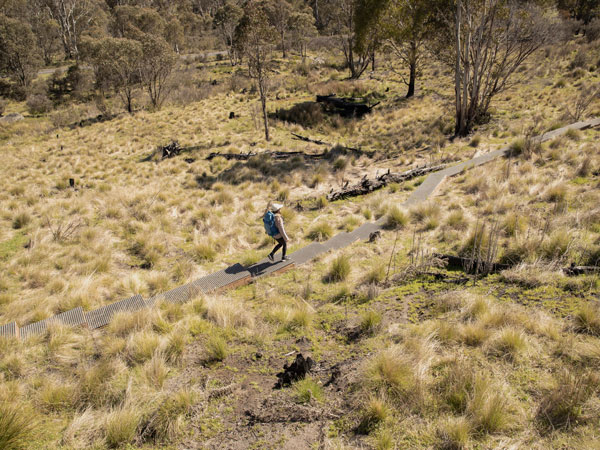
a woman walking along the Mount Tennent Trail, Canberra
Mount Tennent Trail is one of Canberra’s hardest walking trails. (Image: We Are Explorers for VisitCanberra)

Namadgi National Park is notable for many reasons, though mostly because it forms the northern tip of the Australian Alps. The various microclimates created by Australia’s tallest mountain range mean the park has an incredible diversity of environments, from steep slopes and open plateaus to dramatic alpine meadows strewn with natural beauty.

The best way to experience this end of the Australian Alps is by walking the 13.7-kilometre Mount Tennent Trail. Challenging as it may be, this is one of the most rewarding walks in Australia, taking you through many of these landscapes across five hours.

4. Pitch a tent
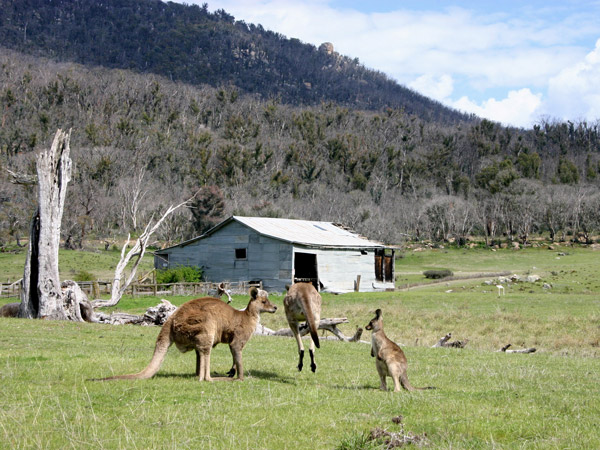
kangaroos grazing on the field, Orroral
Spot kangaroos grazing on lush green grass. (Image: Visit Canberra)

Camping in Namadgi National Park is allowed at either of three designated campgrounds – Orroral, Mt Clear, or Honeysuckle. And each offers a remarkably different experience for those who want to really give themselves over to this cinematic slice of Australia.

Orroral Campgrounds is ideal for anyone wanting easy access to the picturesque Orroral Heritage Walking Track, which is around 6 kilometres one-way and should take around 2.5 hours to complete. Mt Clear is preferred for its bounty of historic huts nearby. Meanwhile, Honeysuckle is frequented by history buffs, keen to camp at the actual spot where the world’s first vision of the moon landing was transmitted.

If you don’t want to camp, hire out the historic Ready-Cut Cottage instead. The heritage cottage can sleep up to seven and is positioned in one of the most beautiful areas of the park near the Gudgenby River.

5. Look for Indigenous rock art

a couple admiring ancient Aboriginal paintings at Yankee Hat rock art site
See ancient Aboriginal paintings at Yankee Hat rock art site. (Image: Tourism Australia)

There are plenty of things that make Namadgi National Park one of the most historically significant regions in Australia. Although the primary reason would be more than 200 recorded Aboriginal sites, not only covered with fascinating rock art but plenty of other details best showcased by Dhawura Tours on one of their custodian-led itineraries.

6. Spot the incredible flora and fauna
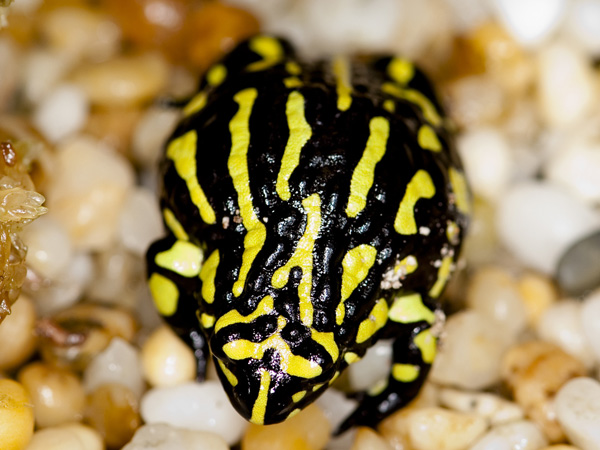
a Corroboree Frog in Namadgi National Park
Only hundreds are left of the Critically Endangered Northern Corroboree Frogs (NCF) in the wild. (Image: Visit Canberra)

Namadgi National Park is also one of the most bountiful regions of on Australia’s east coast, rivalling Western Australia when it comes to beautiful, multi-coloured wildflowers. Search the park and you might even spot the reddish-purple Brindabella midge orchid, found nowhere else on Earth.

You’ll almost certainly bump into kangaroos and wallabies but Namadgi is home to 13 threatened species so wildlife encounters are pretty much a given. This also includes wombats, gliders, lyrebirds, wedge-tail eagles and the critically endangered Northern Corroboree Frog.

Discover the best things to do in Canberra.

Chris Singh
Chris Singh is an arts, travel and food journalist with 17 years of experience in digital media and 4 years of experience in SEO writing. He is the former travel editor of premium men's lifestyle title Boss Hunting and currently balances his role as Deputy Editor-At-Large of the AU review with freelance travel writing gigs at Australian Traveller, Luxury Escapes, Cruise & Travel and Sydney Travel Guide. Chris holds a Bachelor of Arts & Sciences (Sociology and Psychology) from the University of Sydney and once worked as a line dancer for steakhouse chain Lone Star (no, seriously). He's always got his finger on the pulse for good live music and delicious new restaurants, has a particular love of historic hotels and is starting to see the restorative value of the ever-present wellness industry. Although he is a born-and-bred Sydneysider, his favourite Australian cities are Hobart and Adelaide. Internationally, he can never get enough of big cities like Tokyo, New York and Chicago. If you're looking for him, he's either at a concert, on a plane or behind a laptop.
See all articles
hero media

6 reasons the best way to experience the Kimberley is by cruise

This remote corner of Australia is one of the world’s last frontiers. This is how to see it properly.

Vast, rugged and deeply spiritual, the Kimberley coast in Australia’s North West feels a world away from everyday Australia – and there are countless ways to explore it. But if you want to reach ancient rock art, hidden gorges and lonely waterfalls, it has to be by boat. Whether you’re aboard a nimble expedition vessel or a luxury yacht with all the trimmings, exploring by the water brings exclusive experiences, shows unique views and makes travel easier than any other mode. And that’s just the beginning of Australia’s North West cruises.

The True North Adventure Cruise in between sandstone cliffs.
Adventure starts where the road ends.

1. Discover Broome, and beyond

Explore your launchpad before you set sail: Broome. Here camels and their riders stride along the 22 kilometres of powdery Cable Beach at sunset. That’s just the start.

At Gantheaume Point, red pindan cliffs plunge into the turquoise sea, whose low tide uncovers fossilised dinosaur footprints. Broome’s pearling history runs deep. Japanese, Chinese, Malay and Aboriginal divers once worked these waters, and their legacy lives on in boutiques where South Sea pearls still shine.

If the moon’s right, you may catch the Staircase to the Moon over Roebuck Bay. Or simply kick back with a cold beverage and a film under the stars at Sun Pictures , screening since 1916.

Ride a camel along Cable Beach as the sun sinks into the Indian Ocean, casting golden light across the sand and sea.
Ride a camel along Cable Beach. (Image: Nick Dunn)

2. Unmatched access to The Kimberley

Once you’re onboard, expect a backstage pass to some of the most isolated places on Earth. No roads. No ports. No phone reception.

At Horizontal Falls/ Garaanngaddim, 10-metre tides surge through twin gorges like a natural waterpark ride that’ll make your palms sweat. Then there’s Montgomery Reef/ Yowjab: a giant living platform of coral and seagrass, where the sea pulls back to reveal waterfalls, sea turtles and ospreys.

Up north, King George Falls/ Oomari rage 80 metres down red cliffs. Zodiac boats often nudge in closer so you can feel the spray on your sun-warmed cheeks. You might even fly in to reach Mitchell Falls/ Punamii-unpuu, a four-tiered cascade where you can swim in freshwater pools above the drop.

Come spring, some itineraries veer west to Rowley Shoals: an atoll chain of white sand and reef walls. Then it’s up the winding Prince Regent River to King Cascade/ Maamboolbadda, tumbling over rock terraces, and into a Zodiac to view the Gwion Gwion rock art, whose slender, ochre-painted figures are older than the pyramids.

A cruise drifts beneath King George Falls, where sheer sandstone cliffs frame the thunderous plunge into turquoise waters.
Get closer to the Kimberley than ever before.

3. Taste the Kimberley with onboard hospitality

You might spend your days clambering over slippery rocks or charging past waterfalls. But when you’re back on the water, it’s a different story. Meals are chef-prepared and regionally inspired: grilled barramundi, pearl meat sashimi, mango tarts, and bush tomato chutney. One night it’s barefoot beach barbecues with your shipmates; the next, alfresco dining on the ship.

Small expedition ships each have their own personality, but many carry just 12 to 36 guests, making being out on the water a whole other experience. You might sink into a spa on the foredeck or sip coffee in a lounge while watching crocodiles cruise by. It’s choose-your-own-relaxation, Kimberley style.

4. Expert-led excursions through the Kimberley

These voyages are led by people who know the Kimberley like the back of their sunburnt hand. Attenborough-esque naturalists might gently tap your shoulder to point out rare birds or tell the story beneath a slab of rock. Historians can explain exactly how that rusted World War II relic came to rest here.

If your ship has a helipad, you might chopper straight to a waterfall-fed swimming hole. If not, you’ll still be hopping ashore for that wet landing at a secret creek.

Then come the evenings: songlines shared by Traditional Owners under the stars, or astronomy sessions that link what’s overhead with what’s underfoot and what’s within.

A small group glides through Kimberley’s rugged coastline by boat, passing ancient cliffs.
Explore with naturalists and historians by your side.

5. Relax in luxurious lodgings

Just because you’re off-grid doesn’t mean you have to rough it. These Kimberley vessels are small in size, but mighty in luxury. True North’s ships come with their own helicopters and a no-sea-days policy, so you’re always in the thick of it. Try the luxurious offerings from Ocean Dream Charters for exploration in style. Kimberley Quest offers a fast boat for easy, off-ship adventures. On the larger end of the scale, Coral Expeditions has open-deck bars and curated wine cellars. And then there’s Ponant’s luxury yachts sleek and incredibly stylish French sailing yachts.

A helicopter soars above the sea, with a sleek cruise ship gliding in the distance.
See the Kimberley from sky to shore.

6. The adventure continues with pre- and post-cruise experiences

You’ve already come this far – so, why not go further? Broome makes it easy to ease in before you board, or wind down when your voyage ends, and there is no reason to stop there.

Head an hour and a half south to Eco Beach to stay off-grid and off the clock. Join a Yawuru guide for a mangrove walk or ocean forage. Dive even deeper into Broome’s pearling past at Willie Creek or Cygnet Bay, where divers and craftspeople still pull the seawater-slicked gems from the deep.

If you’re still craving adventure, it’s time to go further. Soar over the Buccaneer Archipelago, or detour inland with a 4WD trip along the Gibb River Road. Book a scenic flight over the Bungle Bungles. Or – because you never know when you’ll be back – do all three.

aerial of people walking on eco beach in the kimberley western australia
Stay off grid at Eco Beach. (Image: Tourism WA)

Find out more about your trip to Australia’s North West at australiasnorthwest.com .