5 Australian road trips you’ve never heard of

hero media
Beyond the caravan convoys lies a world of rustic road trip routes just waiting to be explored.

Head off the beaten path, and outside the typical tourist routes and you might just find something reminiscent of a long-forgotten authentic Australia.


Here, road trips you’ve never heard of but definitely need to explore.

1. New England Highway (NSW)

878km/approx. 10 hours drive

Why you should do it

The New England Highway is an alternative route to the Pacific Highway that links Sydney and Brisbane. Beginning in Hexham, Newcastle in the south, the highway ends in Yarraman, north of Toowoomba in Queensland.


The route stretches a little longer than its coastal cousin, but is worth it for the peace and quiet that takes you through quintessential Australian towns, reminding you of simpler times passed.


Swap your city-style latte for a meat pie at the servo and enjoy lazy landscapes intercepted by nostalgically charming architecture. Pack your winter woollies if you’re travelling in the cooler seasons and drink in the fresh, crisp air.

Must-see

Check out the beautiful cathedrals of the late 1800s in Armidale, indulge in the great grub (especially for meat eaters) and Celtic culture of Glen Innes, soak up the country music scene in Tamworth and explore the beautiful national parks surrounding Tenterfield.
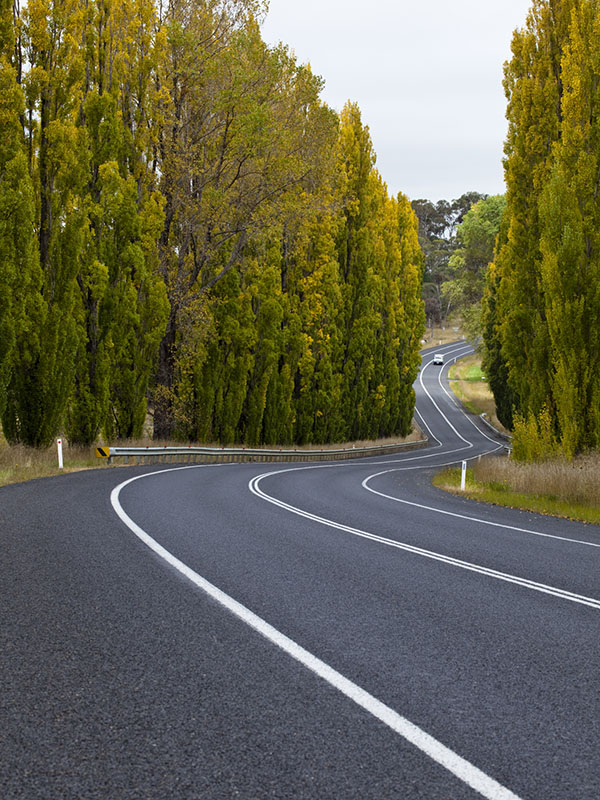
Wind your way along the The New England Highway

2. Gold Coast to Seventeen Seventy (QLD)

568km/approx. 7 hours drive

Why you should do it

Travelling along Queensland’s Pacific Coast Way isn’t exactly unheard of with tourists flocking to explore the enchanted forests of the far north. However, what most people don’t realise is that Seventeen Seventy is the perfect destination, and it’s hours before you hit the tropics. Slowly savour the scenery as you embrace your inner Queenslander – chill out, slow down and enjoy the ride.

Must-see

Slow city-lovers can stop off in Brisbane while coastal cruisers continue north to explore the Sunshine Coast (embrace the glitz and glamour of Noosa or stay slightly south if you’re into more chilled vibes), stop off in Bundaberg if you’re a fan of old Aussie towns and rum, and explore the secret beaches and magnificent nature at Seventeen Seventy – where you can easily while away a few days cracking coconuts and exploring untouched nature.
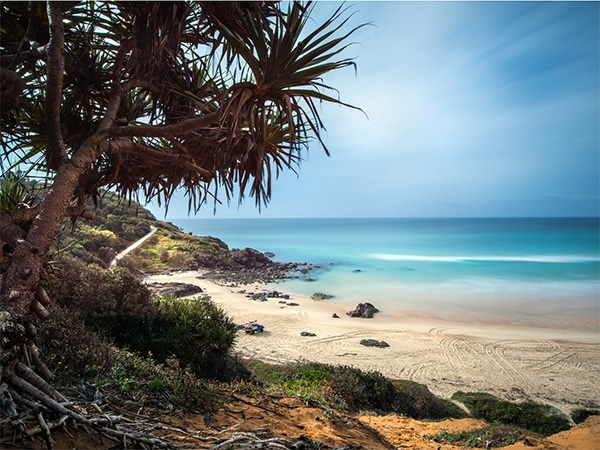
Seventeen Seventy is the perfect destination

3. Sydney to Adelaide (via Blue Mountains and Broken Hill) (NSW + SA)

1700km/approx. 19 hours drive

Why you should do it

Experience the raw and rugged beauty of this sunburnt country. Think outback, red landscapes, quirky country treasures, and wide open spaces that will undoubtedly invite a deeper connection to the earth and appreciation for Australian culture.

Must-see

Bush walk in the Blue Mountains, experience the old country charm of Bathurst, enjoy wine-tasting in sophisticated Orange, check out the famous Dubbo Zoo, discover The Dish in Parkes, enjoy spectacular sunsets and red earth in Broken Hill, soak up the water-soaked scenery at dawn or dusk at Menindee Lake (also a breeding ground for a variety of waterbirds, including herons, ibises, spoonbills and black swan), explore Aboriginal artefacts at Mungo National Park, indulge in the impressive culture of Mildura and the Murray River and enjoy wine tasting in the peaceful Barossa Valley near Adelaide.
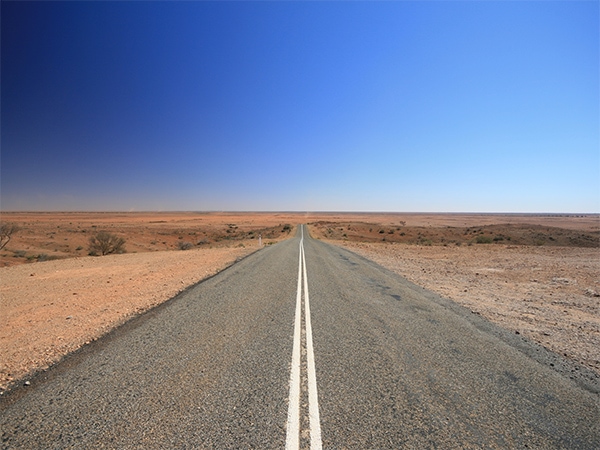
A straight Broken Hill road

4. The Munja Track (WA)

220km/approx. 18 + hours drive

Why you should do it

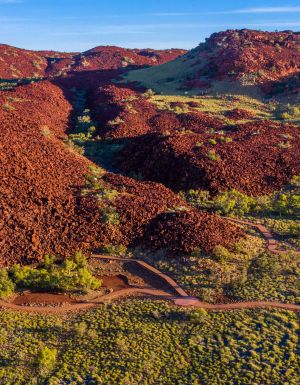
Not for the faint hearted, this 4WD-only track allows respite from the crowds conga-lining through the Gibb River Road across the Kimberley, and access to some of Australia’s most rugged, remote land.


The three-day trip takes you from Mt Elizabeth station to Walcott Inlet on the coast, and is the only access point to Walcott Inlett – a pristine stretch of Kimberley coastline. For those with the resources and stamina, this track offers some of Australia’s most awe-inspiring scenery, epic swimming holes and incredible, ancient Aboriginal art.

Must-see

You’ll pass through the Drysdale River, Bachsten Bush Camp and discover sacred Aboriginal rock art sites (keep your eyes peeled for the stack of rocks to the right of the track at Wren Gorge which indicates a track that leads to the gorge and some majestic art).


The magnificence of the natural delights cannot be over stated –it is truly worth the effort. Set up on the mud banks at Walcott Inlet to watch the impressive light show at sunrise and sunset (don’t forget your camera!).
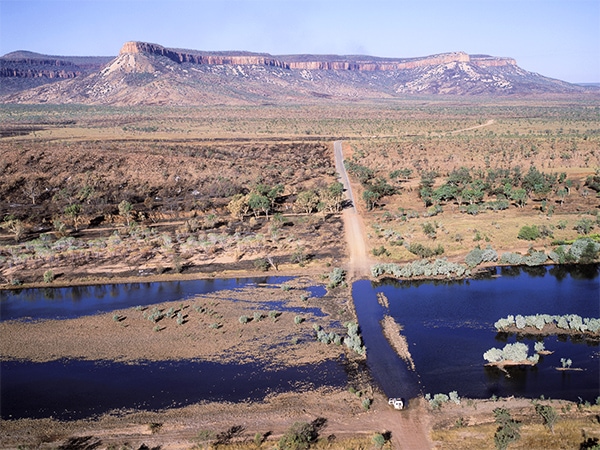
Access some of Australia’s most rugged, remote land

5. Seafood Frontier (SA)

Approx. 11 hours drive

Why you should do it

While it’s not exactly unheard of (you may meet a few grey nomads along the way), with so many road trippers heading north or for the Great Ocean Road, South Australia’s Seafood Frontier remains one of the less appreciated coastal road trips.


Not for good reason though, as it boasts some seriously serene nature as well as, you guessed it, a sumptuous seafood safari. Taking in the best of the Eyre Peninsula, this track goes from Adelaide to Ceduna via Port Lincoln.

Must-see

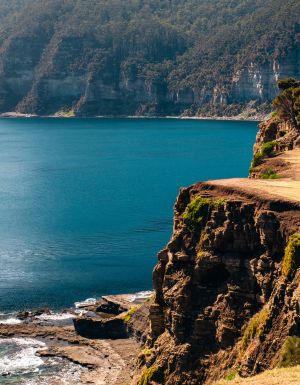
Give yourself plenty of time (5 days minimum) to meet the giant cuttlefish in Whyalla (one of the world’s most incredible aquatic experiences, according to marine biologists), take a stroll along the picturesque beach at Port Neil, swim with the sea lions and take a seafood cooking class at Port Lincoln, discover the white sand beach at Fishery Bay, indulge in an oyster feast at Coffin Bay, explore the Great Ocean Drive, cliff sculptures and stunning sunsets at Elliston and enjoy some serious seafood indulgence at Streaky Bay.
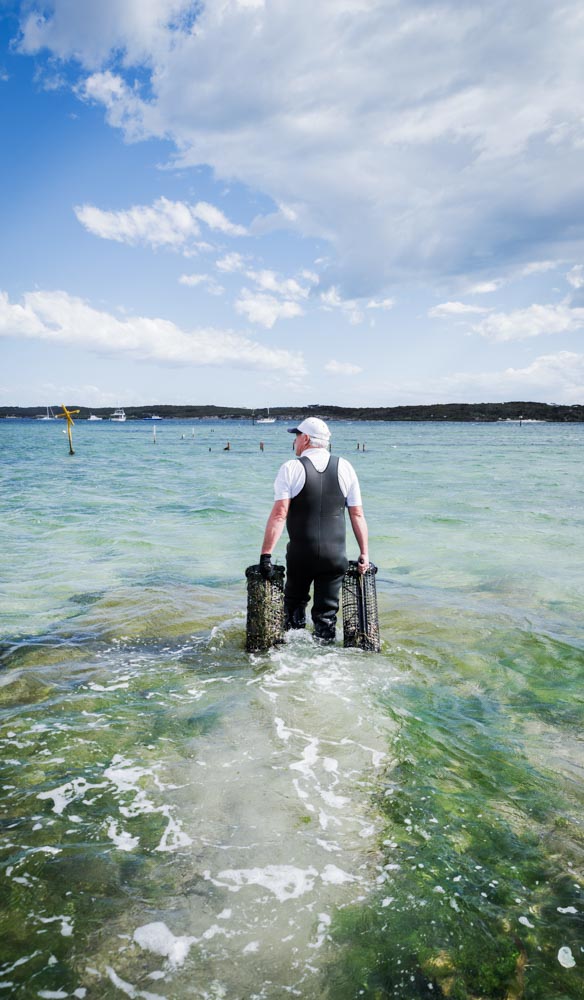
the seafood frontier south australian road trips
On the hunt for the fresh oysters, on the oyster farm tour in Coffin Bay (photo: Michael Wee).
Jessica Humphries
Jessica Humphries is a travel and wellbeing writer, with a passion for slow travel, nature, and exploring the world mindfully. Formerly the editor of Australian Yoga Journal and a current contributor to a number of well-being publications, Jessica's writing is inspired by her love for yoga, wellness and sustainable living. Her work is a celebration of the beauty of the world and the joys of gentle travel. She is based in the Northern Rivers of NSW and loves to explore her local area too!
See all articles
hero media

8 Red Centre locations to explore after seeing the new movie, Kangaroo

    Lucy CousinsBy Lucy Cousins
    Spend a few days visiting the real-life Central Australian locations that inspired the new film everyone is talking about, and discover why Alice Springs is such an important part of Australian culture.

    In the credits of the new Australian film Kangaroo , the first name under ‘cast’ should read ‘The Northern Territory ’. Not only is Alice Springs (and the surrounding landscape) integral to the movie itself, but the spiritual heart of Australia and its local Indigenous owners also inform the look and feel of every frame, explains Producer Trisha Morton-Thomas of Brindle Films, who also plays Charlie’s grandmother Gwennie.

    “By setting Kangaroo in Alice Springs (Mparntwe), the film embraces how visible Aboriginal people are here, and the living Aboriginal culture that is woven through this community,” she explains.

    still from kangarro film
    See Kangaroo, then visit the real-life filming locations.

    And while shooting in such a sacred part of the Northern Territory required extra planning, it was something the cast and crew were highly invested in.

    “There are incredibly significant sacred sites and places of deep cultural stories in the area, that at times are very gender-specific, which we’ve kept out of the production,” she explains. “Even if overhead drone footage captures a sacred site that isn’t meant to be seen by other people outside of that clan, we’ve made sure to omit it from the film.”

    If Kangaroo piqued your interest in a Central Australian holiday, we don’t blame you. Read on to discover eight places featured in the movie that you can visit in real life – and get planning. Don’t forget to pack sunscreen and a hat.

    1. Alice Springs/ Mparntwe

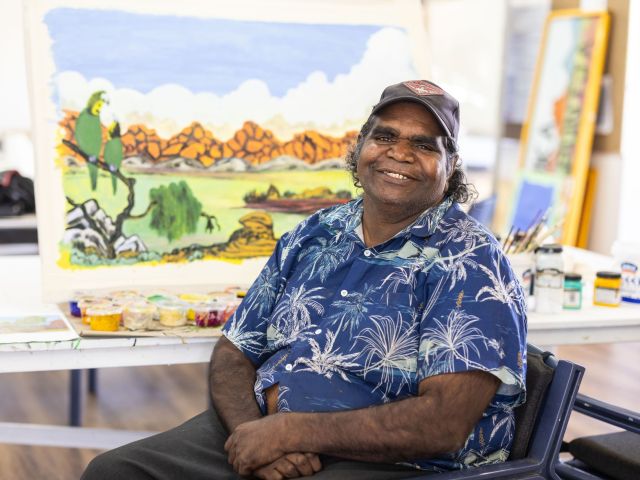
    artist at Many Hands Art Centre
    Visit the galleries of Alice Springs, like Many Hands Art Centre. (Image: Tourism NT/ Helen Orr/ Many Hands Art Centre)

    The red and dusty streets of the film’s fictional town of Silvergum were filmed on the outskirts of Alice Springs. And, while the art gallery featured in the film is fictional, Alice Springs is a hub of creativity. See the work of local artists at the Araluen Art Centre , Yubu Napa Art Gallery , Iltja Ntjarra (Many Hands) Art Centre and the famous Tjanpi Desert Weavers .

    2. The Kangaroo Sanctuary & Kangaroo Rescue Centre

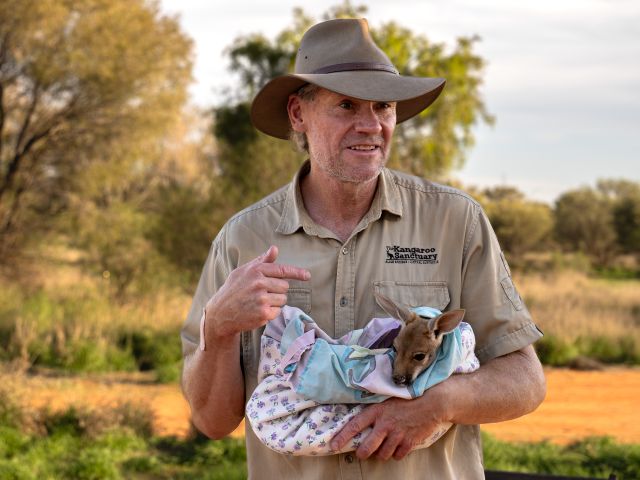
    The Kangaroo Sanctuary Alice Springs, the inspiration for the Kangaroo move
    Visit the movie’s inspiration at Kangaroo Sanctuary. (Image: Tourism NT/ Kangaroo Sanctuary)

    Kangaroo was inspired by the journey of Chris ‘Brolga’ Barns, who founded the now world-renowned Kangaroo Sanctuary based in Alice Springs. For lead actor, Aussie Ryan Corr, the animals were central to the movie, alongside the landscapes.

    “The animals in this story were a real calling point for me,” he explains. “What this story tries to tell us about the connection between humans and animals is beautiful.”

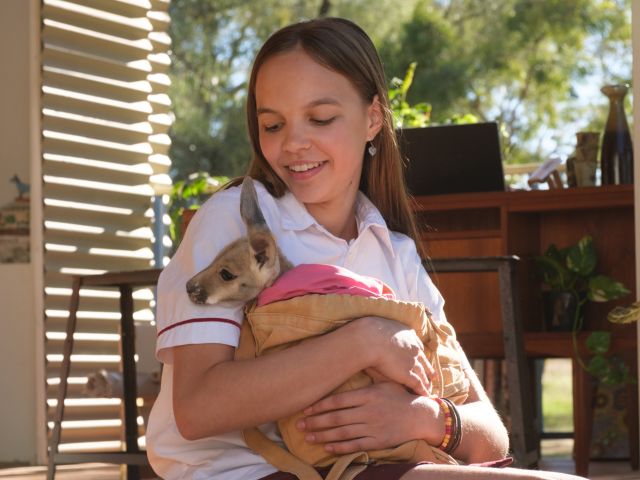
    To gain a real insight into the fauna and flora of the Red Centre, you can visit the Kangaroo Sanctuary on a sunset tour, where you might even get the chance to hold a baby kangaroo.

    3. Ormiston Gorge

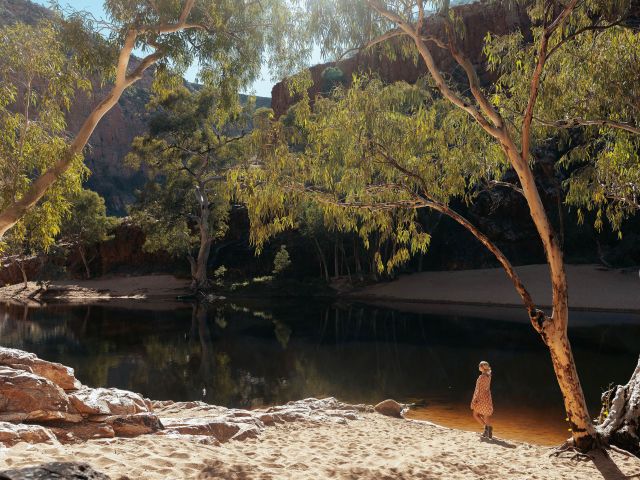
    woman walking along the edge of Ormiston Gorge near alice springs
    Take a dip in Ormiston Gorge. (Image: Tourism NT/ @domandjesso)

    The film captures the raw beauty of the West MacDonnell Ranges, known in the Arrernte language as Tjoritja. This national park is rich in Indigenous culture and stark geological wonders.

    Only a 15-minute drive from Alice Springs, Tjoritja offers visitors the chance to camp, hike and swim among ancient landscapes (most attractions are less than a three-hour drive away).

    Ormiston Gorge , a cooling oasis in among the red desert sands, is one of the most popular destinations, no doubt because of the permanent swimming hole and towering red cliffs. From here, visitors can also embark on the beautiful Ormiston Pound Walk and the shorter – more accessible – Ghost Gum Walk. Bring your bathers – it’s safe for swimming.

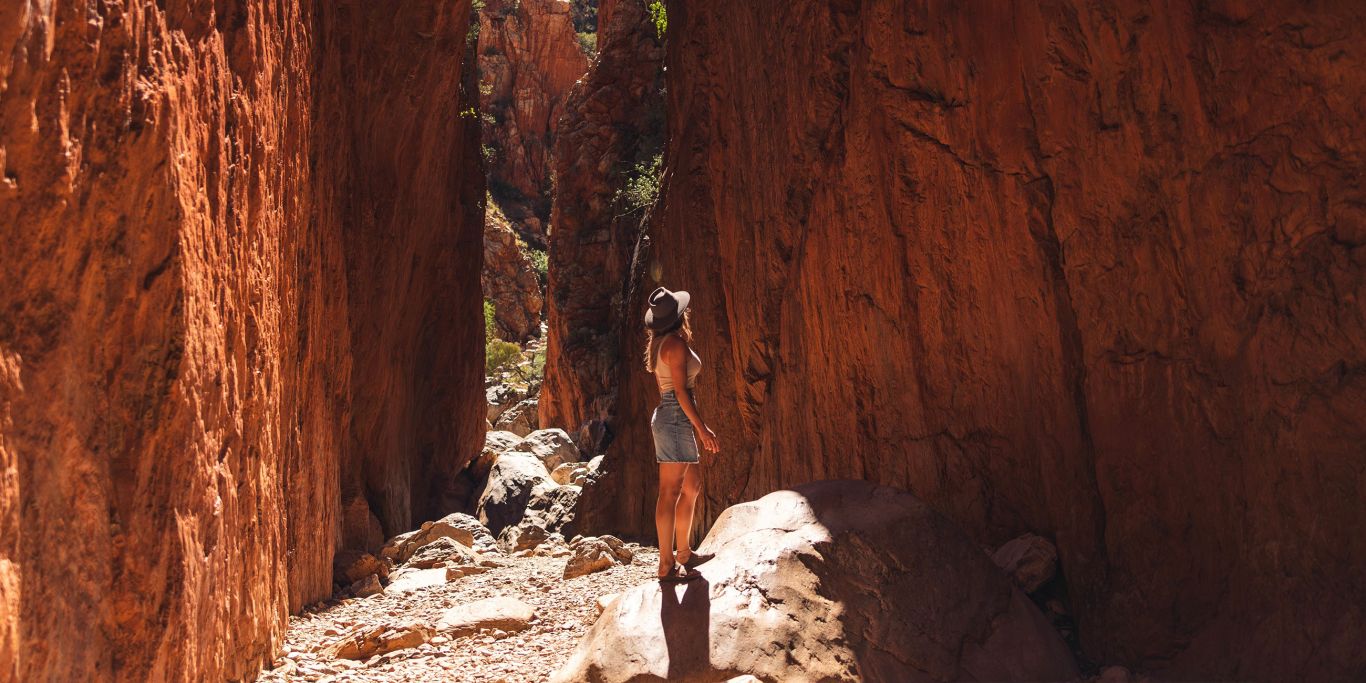
    4. Standley Chasm

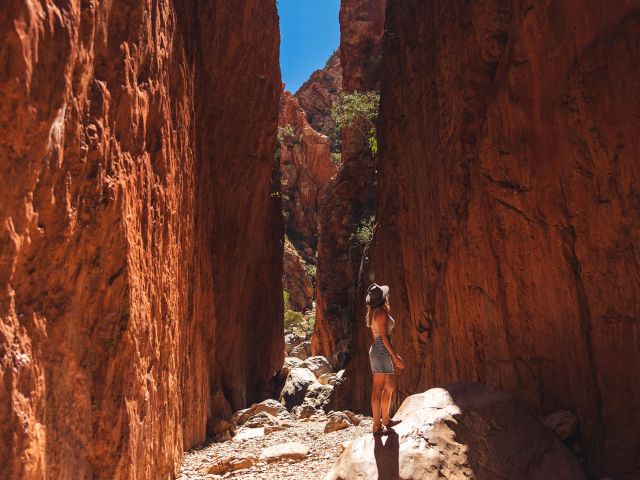
    woman walking through Standley Chasm near alice springs
    Wander through Standley Chasm. (Image: Tourism NT)

    The 1.2-kilometre walk to nearby Standley Chasm will be a highlight for any visitor as the imposing 40 metre-high chasm walls project strength and ancient wisdom.

    Visit at midday to experience the path illumined by the midday sun. Not only will you fill your camera roll with vibrant red images of the gorge and its intoxicating shadows, but you can also camp nearby in a powered or unpowered site so you can watch the brilliance of the desert stars fill the night sky after dusk.

    5. Simpsons Gap

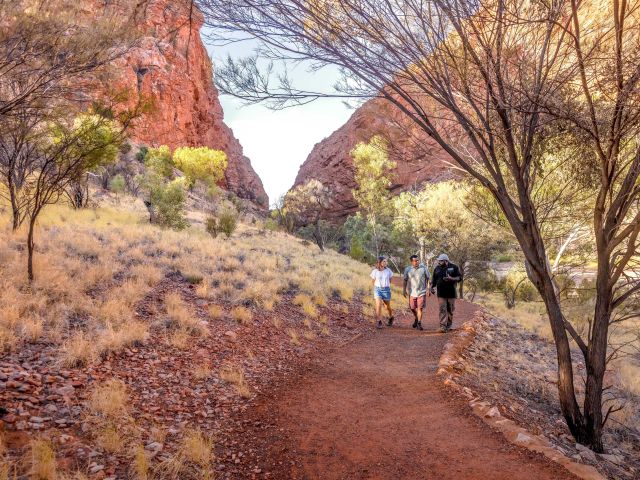
    three people walking on path through simpsons gap near alice springs
    Walk the trails of Simpson’s Gap. (Image: Tourism NT/ Helen Orr)

    Closer to Alice Springs, the photogenic Simpsons Gap is the perfect place to spot the endangered Black-footed Rock wallaby near the permanent watering hole. While swimming isn’t permitted, soaking up the sun and views certainly is.

    Explore the area’s numerous walking trails, appreciate the soaring cliffs on either side of the ‘gap’ and pick out the shooting locations of Kangaroo in the area.

    6. Ellery Creek Big Hole

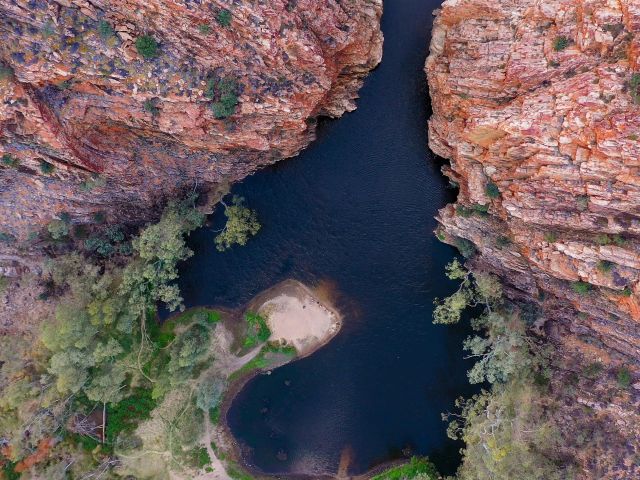
    aerial of Ellery Creek Big Hole near alice springs
    Dive into Ellery Creek Big Hole. (Image: Tourism NT/ Tourism Australia)

    When it comes to classic Northern Territory landscapes, you can’t go past Ellery Creek Big Hole/ Udepata : tall gum trees sidling up to a refreshing watering hole (fed by the West MacDonnell Ranges and surrounded by rugged red cliffs.

    Swim in the cooling waters, hike the cliff tops, watch for birds and even stargaze as you camp here overnight. It’s locations like this that attracted the film’s director Kate Woods to the project.

    “It humbles you to be in this environment: it’s so beautiful, so old and so vast,” she explains. “I was thrilled to get a chance to … shoot such a beautiful story in the incredible landscape of the Northern Territory.”

    7. Larapinta Drive

    aerial of Larapinta Drive into alice springs
    Drive along Larapinta Drive. (Image: Tourism NT)

    There is no better way to get a feel for how the characters arrived at the fictional Central Australian town of Silvergum than to travel along the iconic state road, Larapinta Drive.

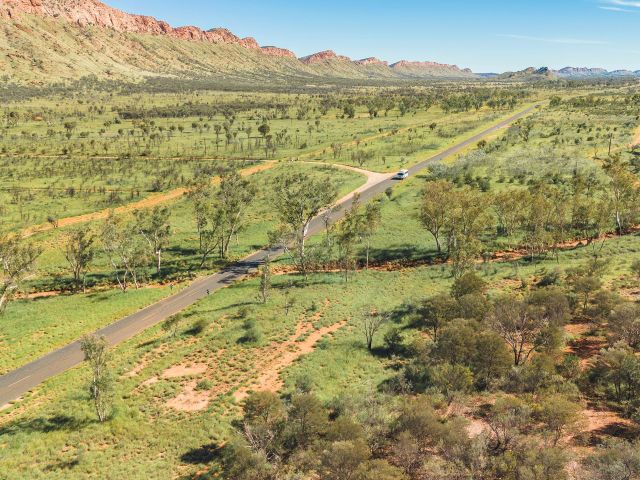
    Connecting Alice Springs to the mighty King’s Canyon in the west, via the historic community of Hermannsburg, this road takes in the West MacDonnell National Park, Alice Springs Desert Park and artist Albert Namatjira’s house, among other attractions. Take your time, bring a camera and prepare for numerous stops along the way.

    8. Todd River

    competitors in Henley on Todd Regatta, alice springs
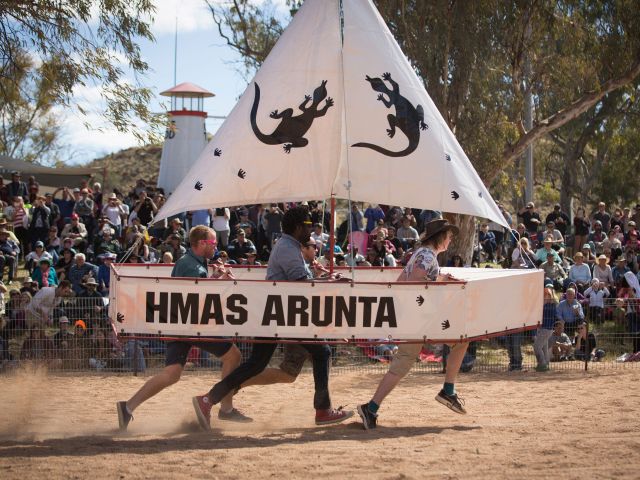
    Join in the fun of the quirky Henley on Todd Regatta. (Image: Tourism NT/ TImparja Creative)

    Meandering through Alice Springs like a lazy Western Brown snake, the Todd River is a central part of Alice Springs culture. Known as an ‘intermittent river’, the Todd can go from a dry dusty riverbed to a flowing waterscape in less than 15 minutes after heavy rainfall.

    When it’s dry, the famous Henley on Todd Regatta fills the sandy riverbed with handmade ‘boats’ carried by sailors. This is the world’s only dry river boating event, and it’s referenced in the ‘Silvergum Boat Race’ in the movie. Inspired by the real-life event, the characters built quirky “Flintstones-style boats” and competed in teams.

    See Kangaroo in cinemas now, and start planning your NT getaway at northernterritory.com.