7 of Australia’s quirkiest towns

hero media
From underground houses to UFO hotspots, here are Australia’s quirkiest towns.

1. Coober Pedy, SA

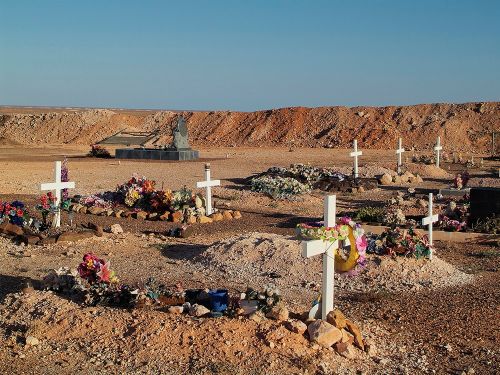
Laying its claim to being the Opal Capital of the World, the Hollywood of the Outback and a place of extreme temperatures, the reason for which most of its locals live underground, the tiny outback town of Coober Pedy is indeed one of the country’s most unusual places.


The reason behind the town’s moniker – an Aboriginal term for ‘white man in a hole’ – the famous Coober Pedy dugouts were introduced by opal mining pioneers in the early 20th century to escape the heat. More than half of the town’s homes are found underground, as well as the four-star Desert Cave Hotel , a campsite and a Siberian Orthodox church.


With the majority of the world’s opals found in Coober Pedy’s 70 opal fields, visitors can try their hand at ‘noodling’ – digging for opal by hand – or tour a working mine. The town is also home to a desert golf course that is open at night, one of the country’s last surviving drive-in movie theatres , and has been the setting for many a movie including Mad Max Beyond the Thunderdome and Priscilla Queen of the Desert.
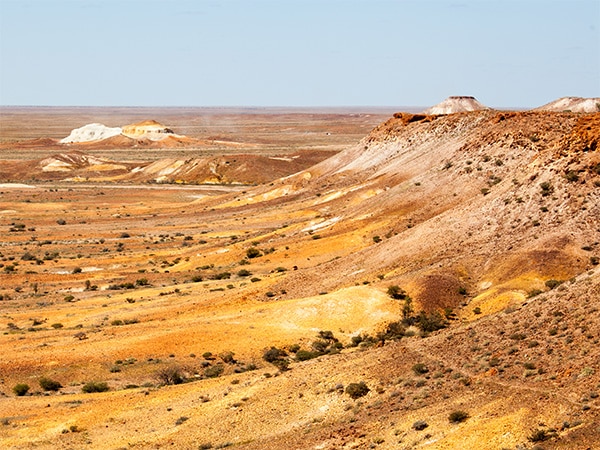
Coober Pedy is indeed one of the country’s most unusual places

2. Nimbin, NSW

This sleepy village 70 kilometres west of Byron Bay is infamous for its, er, liberal lifestyle. The psychedelic town was thrown into the spotlight when it hosted the 1973 Aquarius Festival, Australia’s version of Woodstock, and it hasn’t shaken this carefree, counter-culture, peace-loving guise ever since.


A wander down the main street is like stepping into an alternate universe. You’ll find myriad wellbeing services from yoga and acupuncture to shamans and psychics ; a thriving arts and culture scene of art galleries, street art and buskers; a host of organic/vegan/vegetarian/sustainable food options; and some businesses that specialise in… let’s just say alternative medicinal products.

3. Wycliffe Well, NT

Who knew a remote town located 380 kilometres north of Alice Springs was considered the UFO Capital of Australia? After reading about sightings during World War 2, one man by the name of Lew Farkas purchased the local roadhouse and, after dropping a cool $4 million, created a gimmicky tourist attraction complete with kitsch UFO murals, spaceships, plastic green aliens and even (a now defunct) toy train.


There is a journal on display where visitors have recorded sightings such as colourful lights that move and change shape, descend behind trees and quickly disappear; even some of which have followed cars.


Sceptics put it all down to aircraft and weather phenomena (or a few too many schooners at the pub), while believers think it’s Wycliffe Well’s geographical location and intense energy that draws these unique visitors in. Others think there’s a link to the nearby US military intelligence base Pine Gap. Whatever the reason, there have been no abductions… as yet.
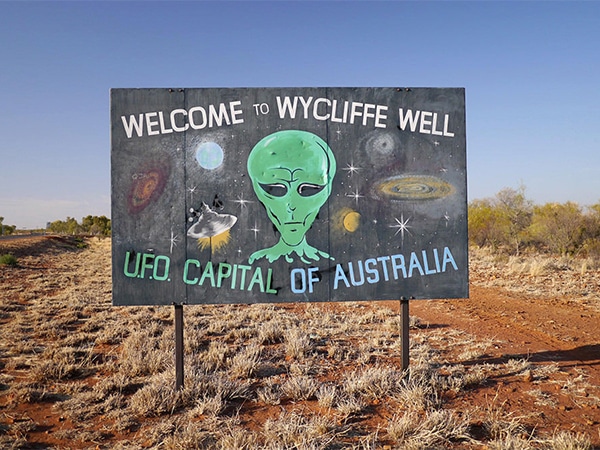
Have you considered the UFO capital of Australia?

4. Grindelwald, Tas

The locals in this Swiss-style settlement, 15 minutes north of Launceston, do not speak any Swiss-German nor do they have any Swiss heritage. In fact, this unique little town has no ties to Switzerland at all. The man who built it in 1989 simply did so for his wife who enjoyed a recent holiday to the scenic European country so much she wanted to relocate there. Next best thing? Build her a mini Switzerland closer to home… naturally.


The town possesses Swiss chalets and wooden farmhouses, and is surrounded by a lake and the rolling green hillsides of the Tamar Valley. There’s also the Tamar Valley Resort for those who want to stay in this little slice of Switzerland a little longer.

5. Birdsville, Queensland

Located more than 1500 kilometres west of Brisbane, the tiny town of Birdsville (Population: 115) bursts at the seams with visitors twice a year during two of the country’s most iconic events: The Birdsville Races and The Big Red Bash. Dubbed as the Melbourne Cup of the outback, the Birdsville Races is the second race meet of the Simpson Desert Racing Carnival, while the Big Red Bash is one of the world’s most remote music festivals.


While these extraordinary events have put Birdsville on the map, the red, dusty township has been a welcome respite for intrepid outback travellers for decades, many of whom stop in at the charming 1884-built Birdsville Hotel for an ice-cold beer and some pub grub. The pub’s sandstone walls are graced with memorabilia including the hats of locals, cloth insignia, stickers, road signs and flags. Visitors can also try a camel pie at the bakery and tackle the 40-metre Big Red Dune in the Simpson Desert while passing through.
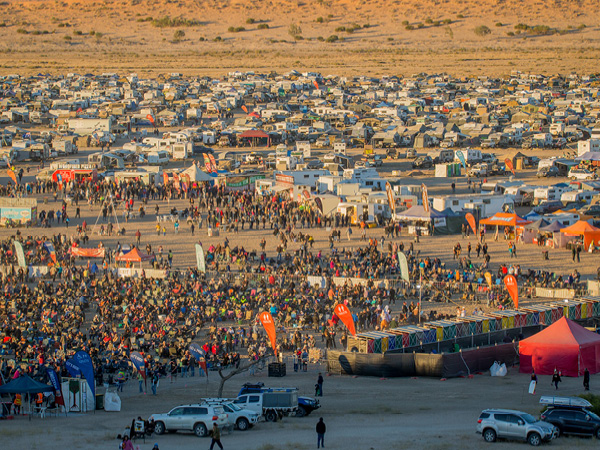
A birds eye view of the Big Red Bash Festival, Birdsville

6. Hahndorf, SA

Tucked in the Adelaide Hills, just a 30-minute drive from the city, Hahndorf is Australia’s oldest surviving German settlement. Its German history dates back to 1838, when 187 German Lutheran immigrants arrived after escaping persecution by the King of Prussia. Many of the 19th-century German farmhouses and timber frame buildings they constructed still stand today.


The charming European-style village boasts a number of specialty shops, including a leathersmith, knife shop, confectionary, cheese cellar, butcher, baker, and candlestick maker (for real). There are also many eateries where you can sample traditional German fare, including the German Arms Hotel : order a stein of German beer to enjoy with a schnitzel or trio of German wursts.
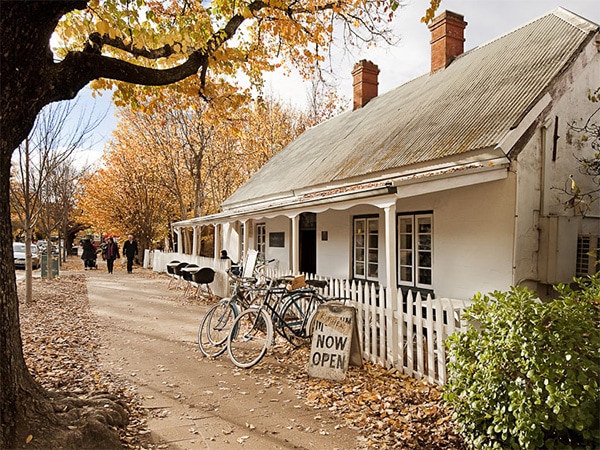
Hahndorf is Australia’s oldest surviving German settlement

7. Nain, WA

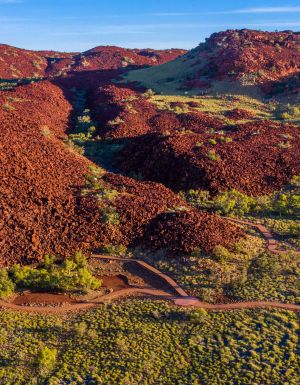
Located in Western Australia, 516 kilometres north of Perth, relatively unknown Nain is not actually an Australian town – it’s the capital of the Principality of Hutt River , Australia’s only Independent Sovereign State.


In 1970, the 7500-hectare wheat farm was seceded from Australia after its owner, the late Leonard George Casley (AKA His Royal Highness Prince Leonard the First), had disputes with the then state government over wheat quotas.


The Principality of Hutt River has its own currency, postage stamps and national anthem, and was – until January 2020 – open to tourists who would come to visit the museum, see the ‘royal art collection’, have their passport stamped, and to meet members of the royal family. The current monarch and son of Leonard, Prince Graeme Casley, made the decision to temporarily close its borders for financial reasons. Watch this space.

Megan Arkinstall
Megan Arkinstall is a freelance travel writer who you’ll often find at the beach, bushwalking or boating with her young family. She loves reliving travel memories through writing, whether that be sipping limoncello in a sun-drenched courtyard of Monterosso or swimming with green turtles in the aquamarine waters of Tropical North Queensland.
See all articles

This scenic Victorian region is the perfect antidote to city life

Video credit: Visit Victoria/Tourism Australia

The Grampians just might be the ultimate antidote for the metropolis, writes one returning Aussie ready to disconnect from the modern world and reconnect to the Great outdoors.

There are no kangaroos back in Chicago: they’re all here in the Grampians/Gariwerd . In the heart of the Grampians National Park’s main gateway town, Halls Gap, pods of eastern greys are eating grass beside my parked rental car beneath the stars. Next morning, when I see the backyard of my rented villa on the edge of town for the first time, there are kangaroos feeding beside a slow-moving creek, lined with river red gums.

Five hundred metres up the road, 50 or so of them are eating by the side of the road in a paddock. I pull over to watch and spot three emus. Yellow-tailed black cockatoos fly overhead towards the tall green mountains just beyond town.

‘Kee-ow, keee-oww’… their calls fuse with the maniacal cackle of a kookaburra (or 10). Gawd, how I’ve missed the sound of them. Far above, a wedge-tailed eagle watches, and there you go: the ‘great birds of Australia’ trifecta, all half a kay from the town limits.

Exchanging city chaos for country calm

kangaroos near Halls Gap, Grampians National Park
The park is renowned for its significant diversity of native fauna species. (Image: Visit Victoria/Robert Blackburn)

I’ve come to the Grampians to disconnect, but the bush offers a connection of its own. This isn’t just any bush, mind you. The Grampians National Park is iconic for many reasons, mostly for its striking sandstone mountains – five ridges run north to south, with abrupt, orange slopes which tumble right into Halls Gap – and for the fact there’s 20,000 years of traditional rock art. Across these mountains there are more than 200 recorded sites to see, created by the Djab Wurrung, Jardwadjali and Gunditjmara peoples. It’s just like our outback… but three hours from Melbourne.

I’ve come here for a chance at renewal after the chaos of my life in America’s third-largest city, Chicago, where I live for now, at the whim of a relative’s cancer journey. Flying into Melbourne’s airport, it only takes an hour’s drive to feel far away from any concept of suburbia. When I arrive in Halls Gap two hours later, the restaurant I’m eating at clears out entirely by 7:45pm; Chicago already feels a lifetime ago.

The trails and treasures of the Grampians

sunrise at Grampians National Park /Gariwerd
Grampians National Park /Gariwerd covers almost 2000 square kilometres. (Image: Ben Savage)

Though the national park covers almost 2000 square kilometres, its best-known landmarks are remarkably easy to access. From my carpark here, among the cockatoos and kangaroos on the fringe of Halls Gap, it only takes 60 seconds’ driving time before I’m winding my way up a steep road through rainforest, deep into the mountains.

Then it’s five minutes more to a carpark that serves as a trailhead for a hike to one of the park’s best vantage points, The Pinnacles . I walk for an hour or so, reacquainting myself with the smells and the sounds of the Aussie bush, before I reach it: a sheer cliff’s edge lookout 500 metres up above Halls Gap.

walking through a cave, Hollow Mountain
Overlooking the vast Grampians landscape from Hollow Mountain. (Image: Robert Blackburn)

There are hikes and there are lookouts and waterfalls all across this part of the park near town. Some are a short stroll from a carpark; others involve long, arduous hikes through forest. The longest is the Grampians Peaks Trail , Victoria’s newest and longest iconic walk, which runs 160 kilometres – the entire length of Grampians National Park.

Local activities operator Absolute Outdoors shows me glimpses of the trail. The company’s owner, Adrian Manikas, says it’s the best walk he’s done in Australia. He says he’s worked in national parks across the world, but this was the one he wanted to bring his children up in.

“There’s something about the Grampians,” he says, as he leads me up a path to where there’s wooden platforms for tents, beside a hut looking straight out across western Victoria from a kilometre up in the sky (these are part of the guided hiking options for the trail). “There are things out here that you won’t see anywhere else in Australia.” Last summer, 80 per cent of the park was damaged by bushfire, but Manikas shows me its regrowth, and tells me of the manic effort put in by volunteers from town – with firefighters from all over Australia – to help save Halls Gap.

wildflowers in Grampians National Park
Spot wildflowers. (Image: Visit Victoria)

We drive back down to Halls Gap at dusk to abseil down a mountain under the stars, a few minutes’ walk off the main road into town. We have headlamps, but a full moon is enough to light my way down. It takes blind faith to walk backwards down a mountain into a black void, though the upside is I can’t see the extent of my descent.

Grampians National Park at sunset
Grampians National Park at sunset. (Image: Wine Australian)

The stargazing is ruined by the moon, of course, but you should see how its glow lights up the orange of the sandstone, like in a theme park. When I’m done, I stand on a rocky plateau drinking hot chocolate and listening to the Aussie animals who prefer nighttime. I can see the streets of Halls Gap off in the distance on this Friday night. The restaurants may stay open until 8pm tonight.

What else is on offer in The Grampians?

a boat travelling along the Wimmera River inDimboola
Travelling along the Wimmera River in Dimboola. (Image: Chris McConville)

You’ll find all sorts of adventures out here – from rock climbing to canoeing to hiking – but there’s more to the Grampians than a couple of thousand square kilometres of trees and mountains. Halls Gap may be known to most people, but what of Pomonal, and Dimboola, and Horsham? Here in the shadow of those big sandstone mountains there are towns and communities most of us don’t know to visit.

And who knew that the Grampians is home to Victoria’s most underrated wine region ? My disconnection this morning comes not in a forest, but in the tasting rooms and winery restaurants of the district. Like Pomonal Estate, barely 10 minutes’ drive east of Halls Gap, where UK-born chef Dean Sibthorp prepares a locally caught barramundi with lentil, pumpkin and finger lime in a restaurant beside the vines at the base of the Grampians. Husband-and-wife team Pep and Adam Atchison tell me stories as they pour their prize wines (shiraz is the hero in these parts).

dining at Pomonal Estate
Dine in a restaurant beside vines at Pomonal Estate. (Image: Tourism Australia)

Three minutes’ drive back down the road, long-time mates Hadyn Black and Darcy Naunton run an eclectic cellar door out of a corrugated iron shed, near downtown Pomonal. The Christmas before last, half the houses in Pomonal burnt down in a bushfire, but these locals are a resilient lot.

The fires also didn’t stop the construction of the first art centre in Australia dedicated to environmental art in a nature-based precinct a little further down the road (that’s Wama – the National Centre for Environmental Arts), which opened in July. And some of the world’s oldest and rarest grape vines have survived 160 years at Best’s Wines, outside the heritage town of Great Western. There’s plantings here from the year 1868, and there’s wines stored in century-old barrels within 150-year-old tunnels beneath the tasting room. On the other side of town, Seppelt Wines’ roots go back to 1865. They’re both only a 30-minute drive from Halls Gap.

Salingers of Great Western
Great Western is a charming heritage town. (Image: Griffin Simm)

There’s more to explore yet; I drive through tiny historic towns that barely make the map. Still part of the Grampians, they’re as pretty as the mountains behind them: full of late 19th-century/early 20th-century post offices, government offices and bank buildings, converted now to all manner of bric-a-brac stores and cafes.

The Imaginarium is one, in quirky Dimboola, where I sleep in the manager’s residence of an old National Australia Bank after a gourmet dinner at the local golf club, run by noted chef and teacher, Cat Clarke – a pioneer of modern Indigenous Australian cooking. Just south, I spend an entire afternoon at a winery, Norton Estate Wines, set on rolling calico-coloured hills that make me think of Tuscany, chit-chatting with owners Chris and Sam Spence.

Being here takes me back two decades, when I lived here for a time. It had all seemed as foreign as if I’d driven to another planet back then (from Sydney/Warrane), but there seemed something inherently and immediately good about this place, like I’d lived here before.

And it’s the Australian small-town familiarity of the Grampians that offers me connection back to my own country. Even in the better-known Halls Gap, Liz from Kerrie’s Creations knows I like my lattes with soy milk and one sugar. And while I never do get the name of the lady at the local Ampol station, I sure know a lot about her life.

Kookaburras on a tree
Kookaburras are one of some 230 bird species. (Image: Darren Donlen)

You can be a local here in a day; how good is that? In Chicago, I don’t even know who my neighbour is. Though each day at dusk – when the kangaroos gather outside my villa, and the kookaburras and the black cockatoos shout out loud before settling in to sleep – I prefer the quieter connection I get out there in the bush, beneath these orange mountains.

A traveller’s checklist

Staying there

Sleep beside the wildlife on the edge of Halls Gap at Serenity .

Playing there

abseiling down Hollow Mountain
Hollow Mountain is a popular abseiling site.

Go abseiling under the stars or join a guided hike with Absolute Outdoors . Visit Wama , Australia’s first environmental art centre. Check out Dimboola’s eccentric Imaginarium .

Eating there

steak, naan bread and beer at Paper Scissors Rock in Halls Gap
Paper Scissors Rock in Halls Gap serves a great steak on naan bread.

Eat world-class cuisine at Pomonal Estate . Dine and stay at much-revered icon Royal Mail Hotel in Dunkeld. The ‘steak on naan’ at Halls Gap brewhouse Paper Scissors Rock , can’t be beat.

Dunkeld Arboretum in Grampians National Park
The serene Dunkeld Arboretum.

For Halls Gap’s best breakfasts head to Livefast Cafe . Sip local wines at Great Western’s historic wineries, Best’s Wines , Seppelt Wines and Norton Estate Wines .

two glasses of beer at Paper Scissors Rock in Halls Gap
Sink a cold one at Paper Scissors Rock.