The Australian Outback’s best myths and legends

hero media

The Australian outback is home to as many tall stories and fallacies as it is feral camels (more than a million, at last count). But which are true, and which are merely folklore? AT rates these as its top five from the myths and legends vault. By Craig Roberts

1. The Bunyip: Don’t stray too close to the billabong

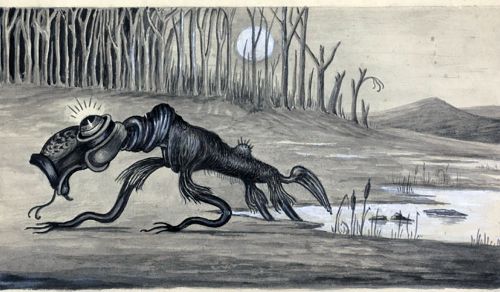
Unfamiliar to the sights an alien environment, early European settlers quickly took to the idea of a Bunyip being a new creature waiting to be discovered, and set out on foolish attempts to find one in the hope of fame and riches. To various local Aboriginal tribes, this wasn’t the case; the Bunyip was a malevolent force that lurked at the bottom of creeks and billabongs, ready to devour anyone silly enough to wander down at the wrong time. (At least this was the line used on wayward children.)


Like any good folkloric tale, the Bunyip legend has been fuelled by unsubstantiated sightings and incompatible facts. Bunyips have been reported to have horse’s manes, dog faces, flippers, fangs, tusks, one eye, two eyes, shaggy fur, short hair, horns, and to be variously as big as a horse and as small as a dog. All very confusing. What we know for certain is that this is one myth that has been embraced by Indigenous and non-Indigenous Australians alike.

Did you know?

Some say the legend of the Bunyip stems from Aboriginal ancestral memories of the Diprotodon australis, a three-tonne, bear-like creature that was the biggest marsupial in existence – before it became extinct around 40,000 years ago.

2. Drop Bears: If attacked, take two Panadol and prepare for certain death

We all know the joke; we’ve all pulled the punch line. Usually on some newly arrived tourist, terrified of a country filled with man-eating sharks, killer crocs and venomous snakes. So what’s the harm to add one more? Even better, why not take our fluffiest, and thus cutest, creature, the snuggleriffic koala, and turn him into a remorseless widow-maker with a taste for the sweet, sweet tang of human flesh?


For those who don’t know the details, get up to speed here and remember a few basics, in case anyone with an accent asks: Drop Bears are related to koalas, although they’re slightly darker with blood-dripping fangs, and they hunt at night.

Did you know?

Here at AT we have no ethical qualms whatsoever in suggesting to British backpackers that vegemite smeared liberally on the face is the only effective deterrent for Drop Bears.

3. The Great Inland Sea: BYO rowboat

Given that every other continent worth its salt has a huge and intricate internal river system, early European settlers theorised thatAustraliamust surely have one too. And since Australian rivers flowed inland, the question rang out: where was all this water being stored? There must be a giant Mediterranean-sized sea in the deep, dark interior.


This presumption was so great that it gave birth to dozens of failed expeditions intoAustralia’s red centre on fruitless searches for water – none more foolhardy than that mounted by Charles Sturt, who departed civilisation with 15 men and a boat.


Sturt became trapped for six months near Milparinka, NSW, and got as far the Simpson Desert before giving up, broken, in temperatures so hot that the party’s lead fell from their pencils, and scurvy blackened skin fell from their mouths.


Not to worry, though. The search continues to this day, but far underground. Speculators are eternally drilling in the hope of finding anotherGreatArtesianBasinthat could allow the desert to flourish with flowing water for generations to come.

Did you know?

The Great Inland Sea inspired several books on the subject, none more ridiculous than Thomas J Maslen’s The Friend of Australia, which managed to contain maps, detailed advice on navigating the sea and rivers and local knowledge of the interior, despite the fact that the author never, EVER set foot on Australian soil.

4. Jandamarra: Che of the outback?

In the 1890s, while working for police in the southern Kimberleys, Jandamarra, an Aboriginal from the Bunuba tribe, helped capture a large group of his own people. But, upon seeing their suffering, Jandamarra rebelled, shot a trooper, freed the captives and stole some guns. The story of an Aboriginal bounty hunter gunning down a white trooper raised local fevers, and soon Jandamarra became the most wanted man in theKimberley.


For nearly three years, Jandamarra lead police and outraged posses of bounty hunters on wild goose chases throughout theKimberley. His hit and run guerrilla raids were the first time European tactics and guns were used against whites, and it was signal that he and his people would not go quietly; they would defend themselves and their lands. His extensive knowledge of the local landscape allowed him to “disappear" at will and helped fuel rumours that he may not have been human at all.


When Jandamarra couldn’t be caught, the police brought in Micki, an Indigenous tracker from an opposing tribe. With skills equal to Jandamarra’s, Micki did what was seemingly impossible for white troopers: he unravelled Jandamarra’s bush tricks, tracked him down and shot him dead at his Tunnel Creek hideout. Micki, the Indigenous tracker, had killed the Indigenous resistance.

Did you know?

In the end, Jandamarra’s body was decapitated and the head sent toEnglandto be displayed as a trophy.

5. Lasseter’s Reef: the Holy Grail of lost gold mines

Just before the turn of the 20th Century, 17-year-old Harold Lasseter set out on foot fromAlice Springsto the WA goldfields to make his fortune. And somewhere along the way he claims to have done so. Only problem was he couldn’t remember where he left it. Thus began the legend of Lasseter’s Reef, a supposed 14-mile long, gold-rich Quartz-Ironstone outcrop somewhere west ofAlice.


Since then, many have wandered into the desert with visions of uncovering its vast riches. Lasseter himself died some 30 years later on just such a journey, in 1931. Many have wasted countless hours, their own fortunes and their sanity on the basis of a kid’s tale. Some have claimed to have already found it – Lutz Frankenfeld, founder of the Alice Springs Beer Can Regatta, reckons he did so back in 1994 and is just waiting to form a joint venture with the right mining company.


More recently, in Nov ‘08, a Mutijulu Elder – who recalls caring for Lasseter out in the desert before he perished – also passed away, severing what could be the final link to the lost reef of gold.

Did you know?

Facing bankruptcy, the South Australian Government funded Lasseter’s last expedition, not because they thought he was right, but in hopes that the subsequent gold fever would see many of the unemployed leave Adelaide.

hero media

Farm fresh produce to a trail of lights: the ultimate guide to Mildura

The charm of Mildura is hidden in plain sight along the Sturt Highway. The capital of Tropical North Victoria is in a league of its own.

From the moment you arrive in Mildura , the warm air and palm trees invite you to slow down. While most Australians might drive right past it, Mildura is full of surprises. Here you’ll spend one day witnessing over 50,000 years of First Nations history in a UNESCO-listed National Park, and the next dining in a hatted restaurant after wandering through 12,500 fireflies as the outback sunset bursts to life above. From roadside fruit stalls and family-run wineries to houseboats and galleries, it’s time to explore Mildura.

Feast Street, at the heart of Langtree Avenue in Mildura.
Taste, wander and be surprised in Mildura.

Taste Mildura’s produce

It makes sense to start your trip by addressing the most important question: where to eat. In the beating heart of Australia’s food bowl, sample the local produce directly from the source. And then, of course, experience it through the menu of a hatted chef. Or sandwiched between pillowy slices of Nonna’s ciabatta.

Rows of orchards and olive groves invite you to spend the day traipsing from farm to farm. Taste olives propagated from Calabrian trees brought over in the 40s, oranges picked right from the tree and squeezed into juice and spoons full of honey . Bring the holiday back to your kitchen by stocking your pantry at roadside produce stalls, or calling into the ‘silver shed ’ (Sunraysia’s gourmand Mecca).

Thanks to the warm, balmy air and fertile soils, the wineries dotted along these hills produce award-winning local wines. Like Chalmers , a family-run, innovative winery dedicated to making their wines as sustainable as possible. And picturesque Trentham Estate offers views of the snaking Murray River as you sample their vintages.

Venture beyond the gnarled shadows of olive groves and fragrant rows of blossoming fruit trees and you’ll find an otherworldly side to Mildura. With Discover Mildura as your guide, visit Murray River Salt’s Mars-like stacks. The naturally pink salt is formed from an ancient inland sea and evaporated entirely by the sun to create one of the region’s most iconic exports.

Start your day with just-squeezed sunshine.

Hatted dining & Italian history

Mildura is home to a proud community of Calabrians and Sicilians. This, paired with the exceptional local produce, means that you can find paninos on par with those in Italy. The Italian is a Paninoteca serving up made-to-order, hefty, authentic Sicilian paninos. Nonna Rosa’s pork meatballs, slowly cooked in tomato ragu and served in a crusty, fluffy roll topped with gratings of Grana Padano cheese and salsa verde, will call you back to Mildura for the rest of your days.

To find hatted dining in Mildura, simply follow the staircase down into the basement of the historic Mildura Grand Hotel to find Stefano’s . Following the muscle memory and instinct of his Italian roots, he delivers on the principle of ‘cucina povera’. That is, the Italian cooking ideology that turns simple, local ingredients into magic.

Things to do in Mildura include dining at the acclaimed Stefano’s, where simple local ingredients are transformed into Italian culinary magic beneath the historic Grand Hotel.
Bite into Mildura’s Italian heritage.

Discover a thriving culture scene

The city is alive with culture. Whether it’s painted on the town’s walls, told in ancient yarns, or waiting for you in a gallery.

The Mildura Arts Centre was Australia’s first regional art gallery. Behind the walls of Rio Vista Historic House, you’ll find a lineup of ever-changing exhibitions. The gallery’s wall space pays tribute to the art and songlines of local First Nations People, the region’s awe-inspiring landscapes and more. Outside, on the gallery’s lawn, find 12 contemporary sculptures in the Sculpture Park.

Mildura’s streetscapes are a punch of colour. Swirling strokes of paint blend the winding artery of the Murray River, red dirt and local characters into a story you can see with your own eyes, thanks to the Mildura City Heart’s Mural Art Project . Pick up a copy of the Murals of Mildura guide from the Visitor Information Centre.

Follow the border of NSW and Victoria on a map and you’ll see it hugs the curves of a tiny island on the Murray. That’s Lock Island, where, as the sun and moon trade places, the island comes alive as darkness falls. The island is dotted with 12,500 firefly lights that lead you on a meandering path through the outback sunset. The installation is known as Trail of Lights and was created by the same visionary who dreamt up Field of Light at Uluu, Bruce Munro.

Things to do in Mildura include exploring its rich cultural scene. From vibrant street art and ancient stories to exhibitions at the Mildura Arts Centre, Australia’s first regional gallery.
Find culture around every corner.

Wonder at ancient landscapes

The landscapes of Mildura feel almost transcendental. The skyline bursts to life with reds, pinks, and deep, sparkly night skies.

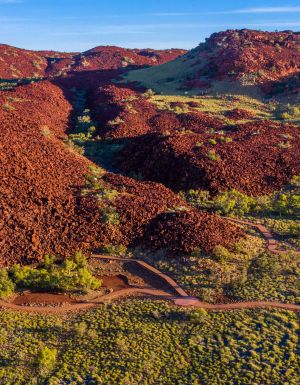
The nature will leave you in awe. See hues of pink water changing with the weather at Pink Lakes inside Victoria’s largest national park, Murray Sunset National Oark. Cast a line into Ouyen Lake. Watch the sunset against 70-metre tall red cliffs that reflect the setting sun. Or get the heart racing and sandboard down the Perry Sandhills dunes, formed 40,000 years ago at the end of an ice age.

Just don’t leave without following the twists and turns of the Murray. Stroll or ride along the Shared River Front Path, or jump onboard a boat for a scenic ride.

Your itinerary will be incomplete without a visit to UNESCO World Heritage-listed Mungo National Park . Head out with an Indigenous ranger to witness ancient campsites and footprints, before standing in awe of ancient civilisation near the discovery site of Mungo Man—Australia’s oldest human skeleton at 42,000 years old.

Mungo National Park at night is a vast, silent landscape where ancient dunes glow under moonlight and stars blanket the sky in breathtaking clarity.
Walk in the footsteps of ancient civilisation.

Meet your home away from home

On equal par with planning your meals and adventures, is finding the perfect place to relax at the end of each day.

Sleep inside a Palm Springs postcard at Kar-Rama . A sleek boutique hotel complete with a butterfly shaped, sun-soaked pool. Here you’re staying right in the heart of Mildura but you’ll feel worlds away. Or if you really wish to connect with nature, a night glamping under the stars at Outback Almonds will have you spellbound.

When in Mildura it’s only right to stay on one of the Murray River’s iconic houseboats . Wake up each day to the calm waters of the Murray lapping outside your window. Enjoy days full of river swims, fishing and exploring. All boats are solar-powered and can be self-skippered or moored along the river.

A solar-powered houseboat on the Murray River in Mildura.
Stay and play on the Murray in a solar houseboat.

Start planning the perfect getaway at mildura.com .