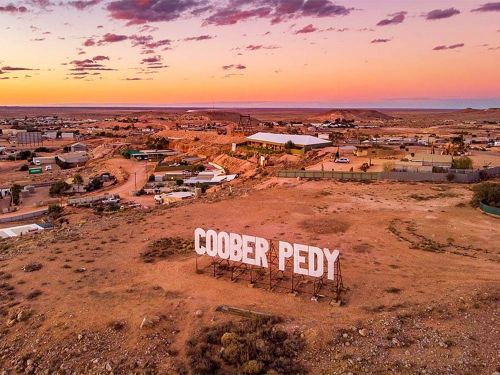
From Australia’s UFO capital to the world’s most isolated pub, these outback towns deliver more than dusty horizons.
Wycliffe Well, NT
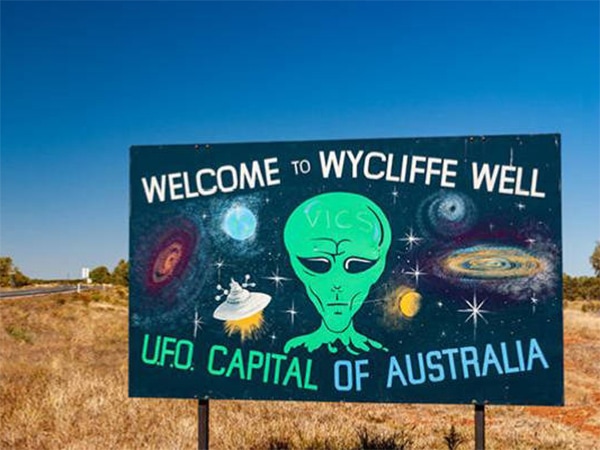
Venture 380 kilometres north of Alice Springs and you’ll land smack bang in the UFO Capital of Australia. After reading about sightings during the Second World War, one man by the name of Lew Farkas purchased the local roadhouse and, after dropping a cool $4 million, created a gimmicky tourist attraction complete with kitsch UFO murals, spaceships, plastic green aliens and even (a now defunct) toy train.
There is a journal on display where visitors can record suspicious sightings by way of colourful lights that move and change shape, descend behind trees and quickly disappear; some of which have even followed cars.
Sceptics put it all down to aircraft and weather phenomena (or a few too many schooners at the pub), while believers think it’s Wycliffe Well’s geographical location and intense energy that draws these unique visitors in. Others think there’s a link to the nearby US military intelligence base Pine Gap. Whatever the reason, there have been no abductions… yet.
Hutt River, WA
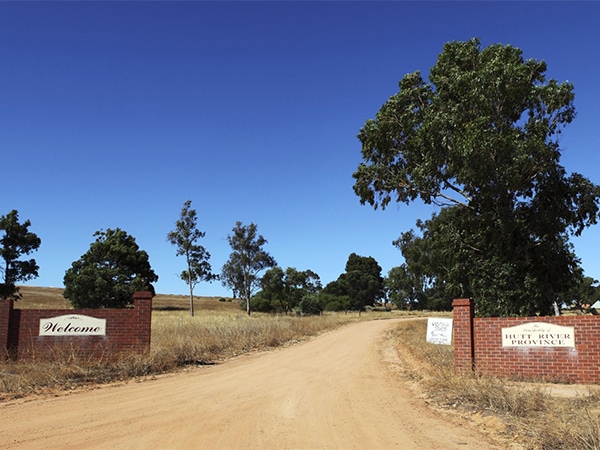
As a result of the COVID-19 pandemic, Hutt River monarch, Prince Graeme Casley, made the decision to rejoin the Commonwealth of Australia as a result of “harsh times". However, that shouldn’t stop us from learning about Australia’s biggest Independent Sovereign State.
In 1970, the 7500-hectare wheat farm was seceded from Australia after its owner, the late Leonard George Casley (AKA His Royal Highness Prince Leonard the First), had disputes with the then state government over wheat quotas.
Prior to August 2020, the Hutt (population 26) was open to tourists who would come to visit the museum, see the ‘royal art collection’, have their passport stamped, and to meet members of the royal family.
William Creek, SA
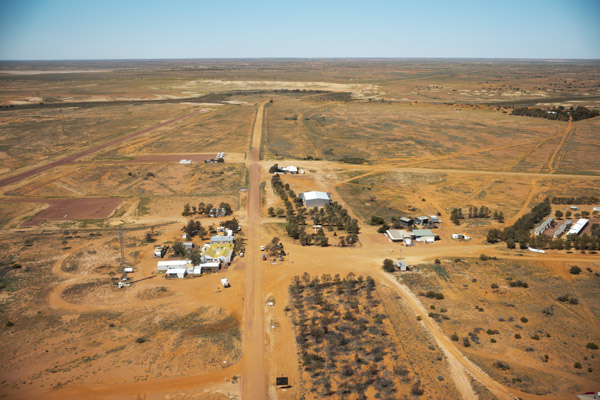
Dry, dusty and sparse – three words that are excellent for describing the outback. And the lengthy look down the Oodnadatta, which seems almost endless from William Creek in far northern South Australia, isn’t too far from that description either.
With a population of three permanent residents and two workers, William Creek is officially the smallest town in South Australia. Despite that, it’s situated smack in the middle of the world’s largest working cattle property, Anna Creek Station, which is almost half the size of Tassie.
William Creek also has the world’s most isolated pub, which offers a surprising variety of services, including joy flights.
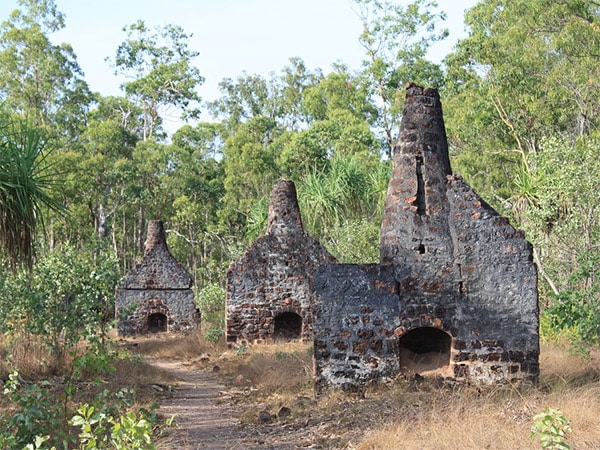
Victoria Settlement, NT
The Victoria Settlement was perhaps the first serious European settlement attempt in northern Australia. Established 1838 and disbanded 1849, the site was brought about by a plan of the British government and the East India Company to set up a military base and a point for shipping through Torres Strait.
Sadly, it quickly became known as ‘The Forsaken Settlement’, as nearly every single person who lived here died – though that didn’t stop the English from trying to settle the area again… and again. Eventually they succeeded nearby, with Darwin. Fifth time lucky.
Located in the now-dubbed Cobourg Peninsula in the Garig Gunak Barlu National Park, Victoria Settlement ruins are accessible only by boat (tours are available, book well in advance) and a permit is required to enter the Garig Gunak Barlu National Park.
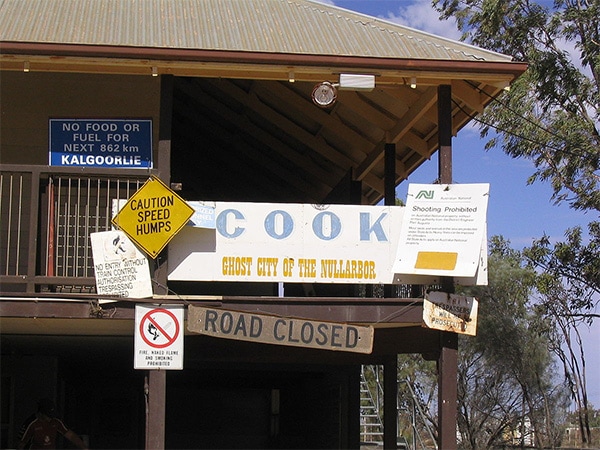
Cook, SA
Named after the sixth Prime Minister of Australia, Joseph Cook, Cook is home to a number of spooky landmarks worthy of a pit stop.
It is home to the longest stretch of straight railway in the world, extending for around 478 kilometres from Ooldea to Loongana. It is the only scheduled Nullarbor Plain stop for the Indian Pacific passenger train across Australia, and curious visitors are welcome to wander the ‘living ghost town’.
Despite the silence, Cook’s atmosphere is alive and well via a number of eerie abandoned buildings. The bush hospital keeps medical supplies in case of a train accident, signposted with the amusing catch cry: “If you’re crook come to Cook."
The handful of railroad working residents are a friendly bunch. Stop for a yarn and they may sell you a souvenir; official Nullarbor crossing certificates go for a fiver.
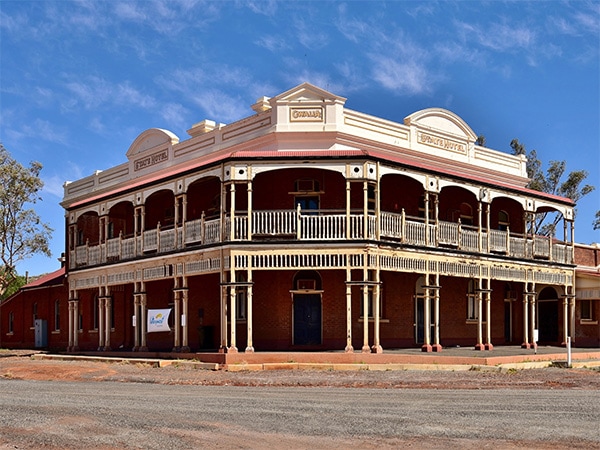
Gwalia, WA
The abandoned mining town of Gwalia is so off-the-beaten-track, that we – an authority in domestic travel – are yet to even write anything about it. Don’t hold that against us though.
It’s a trifecta of uniqueness that includes history, solitude and views. Gwalia is a living ghost town that once housed a young Herbert Hoover, former President of the US, on a geology expedition. Hoover was sent to WA to oversee burgeoning mining operations in 1897 and chose to set up shop in Gwalia, 230 kilometres north-east of Kalgoorlie.
The Sons of Gwalia mine closed down in 1963 and the population departed, leaving the town’s remains to serve as a living museum of one of Australia’s most successful mines.
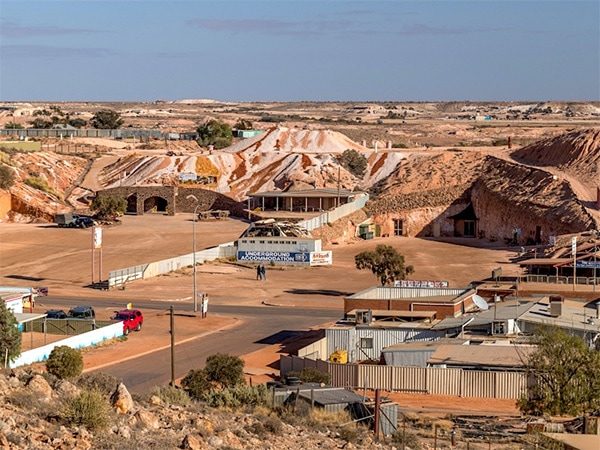
Coober Pedy, SA
We hope this isn’t the first time you’re hearing about Australia’s opal capital. Far removed from the rest of the country, this delightfully strange place has a varying population from around 2000 to 4000, with 45 different nationalities.
After opals were discovered here in 1915, the Coober Pedy community got innovative and built their town underground. Four out of five residents live below the surface, and many dwellings come complete with swimming pools and entertainment rooms.
The stark landscape surrounding Coober Pedy, including the 40 kilometres or so in every direction that’s dotted with shafts and mullock heaps from opal workings, has formed the backdrop for films like Mad Max III, Priscilla, Pitch Black and Red Planet. Learn all about it with a visit to one of the underground museums.
The best time of the year to visit is between April and October, when the weather is mild and the nights are cold. You take your chances rocking up in summer, when it can reach a scorching 45ºC and dust storms can blow in from nowhere without much warning.
White Cliffs, NSW
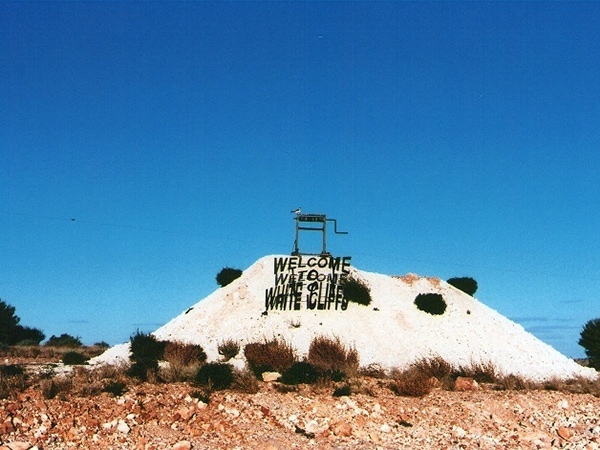
Usually living in the shadows of her more famous cousin in SA, White Cliffs proves there’s life underground elsewhere than in Coober Pedy.
Ever since roo shooters stumbled across a precious white opal here, a tight community of dreamers has called this deserted town home, with an estimated two-thirds of the 100 or so residents living underground to escape the lunar-level extremes.
While you’re here, go underground into a working mine with the Red Earth Opal Mine Tour and try your hand at uncovering a glittering gem. And, you can’t go past a stay at the Underground Motel, with its rabbit warren of ever-expanding dugouts that will have little ones running amok for hours mind-mapping the place. After a long drive it’s a subterranean oasis in the otherwise scorched tundra of the Strzelecki Desert.
A rude place, NT
Giving a place a weird name is a very Australian thing. However, nowhere does it quite like the Northern Territory.
Humpty Doo, Bing Bong, Fannie Bay, Mount Unapproachable, Aaaa Road, Boggy Plain, Dirty Water Billabong – these are just the tip of the iceberg for Territorians. And we’re not the only ones that think so.
English company ST&G’s Marvellous Maps has immortalised this hilarity via its Marvellous Map of Actual Australian Place Names. The map points out all the funny and rude names of locations across the nation – classy from afar, and very classy up close.
Check it out here.