Plane bad behaviour – a flight attendant’s confessions

hero media
Manners can often disappear above the clouds. We chat to a flight attendant on the frontline of bad behaviour to find out what causes mile-high anxiety.

What is it about soaring above the clouds in a metal bullet that has the capacity to turn a normally rational individual into an unhinged rage monster?


Flying used to be a civilised affair, complete with cocktails and pleasantries. But these days it seems more and more flights teeter on the edge of grudging courtesies and all-out-brawl.


If you’ve been paying attention, you will have noticed an increase in passenger-related disputes popping up in your news feeds.


Most recently, we heard of Grant Hackett and the Nipple-gate fiasco, whereby our great Olympic hope, furious that the (male) passenger in front of him dared to recline, lurched forward to administer a nipple cripple on the unsuspecting recipient.


Hackett has since apologised and admitted being inebriated at the time, but really, does that excuse a mid-flight teat-tweak?


There has also been a proliferation in the US of bad manners en route, including a situation whereby a ‘knee-blocker’ device was employed by a passenger, preventing the person in front from reclining.


The situation escalated to a point where the victim threw a cup of water at the perp and the flight had to be diverted.


What is going on up there? Surely travelling at great speed some 38,000 feet above the ground should engender a we’re-all-in-it-together kind of spirit? Yet it seems tensions increase with altitude.


It used to be that bad behaviour on board was reserved for the Mile High Club and pinching a few extra miniatures from the drinks trolley, but now we’re having hissy fits over where we sit, hogging the overhead compartment, and waging passive-aggressive wars for the armrest.


The need for airlines to effectively keep costs down while not making huge losses has seen an increase in seats on planes.


Thus, the trade-off for low airfares is slightly more cramped conditions, but surely given the choice, most of us would happily sacrifice a few centimetres to save a few dollars.


The sad truth is the glamour of flying is now as lifeless as the in-flight meal and while we expect to scuttle here and there, we don’t seem prepared to acknowledge flying is just another mode of public transport.


Daily commuters learn a certain level of resigned tolerance for the excessive invasion of personal space, but in the air our fuse is shorter.


While the vast majority of flights do hum along to their destination without any animosities, there’s little denying air travel can be a crucible of malcontent, so we wanted to chat to someone who sees it all, from the good to the bad and the earth-shatteringly ugly.


We chat to a real-life Virgin Australia flight attendant, who we’ll call Karen Singleton for the purpose of this article, about what actually happens up there and how we can all be better passengers.

How long have you been a flight attendant with Virgin?

KS: Twelve years. Ten flying domestically and two internationally.

What’s with all the bad behaviour?

KS: There’s a lot of passenger shaming going on at the moment, with people taking videos and photos and sharing them on social media. It’s always difficult to contain that.

Do people generally behave on flights?

KS: The majority do but there’s always one who’s a bit needy. There always seems to be one person that you have to take care of.

What’s the most common cause of bad behaviour between passengers?

KS: It’d have to be anything to do with personal space invasion, such as hogging the arm rest or when people put their feet into the space next to them. Or sometimes a passenger will come up to us and say they can’t sit next to someone because they smell.

Whoa, how do you handle that?

KS: It’s a difficult one, it puts us in an awkward position. I can’t go up to someone and say, “Hey, you smell!" and hurt their feelings. It’s hard when we don’t have an extra seat to move people to.


We can use sprays, or there is an old trick of putting coffee on as it draws out the odour, but you have to be discreet about it. The last thing we want is an altercation.

Are there any hygiene issues from travellers that surprise you?

KS: When people go to the toilet with bare feet. You don’t want to be doing that.

At what point do the cabin crew intervene in a dispute between passengers?

KS: If I see two passengers having a heated conversation I ask if I can help, give them suggestions or offer amenities. We’re there to help, we want everybody to get along.


People think they are there by themselves, but we’re 200 or 300 people crammed in and we all have to get along harmoniously.

When is it OK to recline?

KS: Don’t recline during meal service, that’s a courtesy to everyone so they can enjoy the meal. At other times, turn around and see if there is anyone there and if they are working on a laptop or using the tray table.


If they are, ask if it’s OK to put your seat back. Everyone has a right to recline.

Who gets the arm rest?

KS: I’d say the middle person, because there has to be some kind of compensation for that seat. The window seat can lean on the window, and the aisle seat has toilet access.

What do you think makes people intolerant in the air?

KS: It must be that we’re closed in, you can’t open the windows and there is that claustrophobic feeling. Also, people travel for different reasons, someone could be travelling for a funeral and the person next to them for a wedding or holiday. There’s also stress with holidays and getting everyone ready for a trip.

What are your tips for containing the rage when in air?

KS: Just breathe and put yourself in the shoes of the person annoying you. Mental health is a big issue we have on planes, because it’s hard to see.


It’s not visible until people are stressed about things. There are also people who will drink alcohol excessively because they are nervous flyers and all sorts of things.

What’s the best thing passengers can do if a fellow passenger is being aggressive?

KS: Definitely get the attention of the cabin crew, because they have the training, experience and skills to deal with situations.

How can people help the cabin crew?

KS: ‘Please’ and ‘thank you’ go a long way. About 95 per cent of people just say, ‘I’ll have chicken’, instead of saying ‘thank you’. Manners stand out so much for us. It’s crazy, but no one says it.

Anything else we should know?

KS: Treat the crew and the plane with respect; it’s our little home. We’ve had people cut their toenails or peel their sunburn and flick it on the ground. I don’t go to your workplace and do that, so don’t do it in mine.

hero media

8 Northern Territory secrets the locals don’t want you to know

Summer transforms the Northern Territory into a lush paradise of colour and life, as a visit during the ‘low-season’ reveals secrets the locals willingly share.

Waterlilies bloom, floodplains are alive with birdlife, waterfalls are gushing, and everywhere the green is dazzling. Summer in the Top End and the Red Centre is a kaleidoscope of unexpected wonders that delight and surprise visitors. Of course, the locals know only too well that the Northern Territory low season is often the best time to see and experience this amazing part of Australia.

Here are some of the reasons why savvy travellers – avoiding the crowds – are discovering a new dimension to the Territory. Remember that you’ll need a Parks Pass to visit national parks.

1. Take a dip in the Florence Falls waterhole

Wander through savanna woodland and monsoon forest to discover the perfect place to cool off – the waterhole at the base of spectacular Florence Falls in the magnificent Litchfield National Park , just 90 minutes’ drive from Darwin. The falls flow year-round but are most spectacular during the summer. Camping is available nearby but bookings are essential and must be made online before you visit.

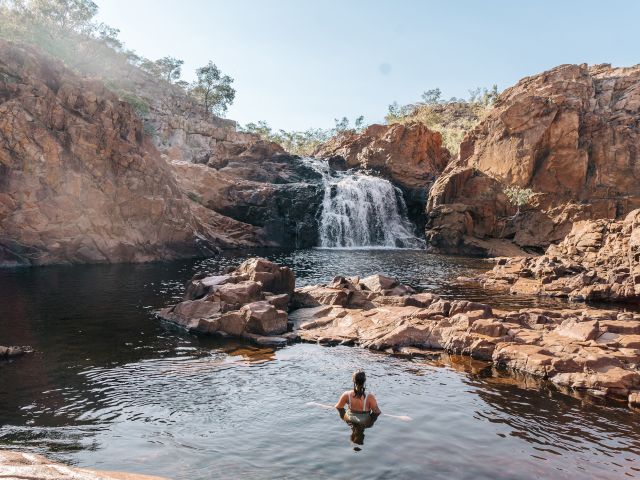
Surrounded by lush forest, a woman cools off in Florence Falls, just one of many incredible things to do in the Northern Territory.
Cool off beneath the cascading waters of Florence Falls. (Image: Joshua Griffin)

2. Wind down at Buley Rock Hole

Another popular local swimming spot in Litchfield National Park is Buley Rock Hole , open year-round. This is a great place to wind down after exploring everything the park has to offer, including towering termite mounds. Wade through the rock pools, soak up the scenic bush or just lie back and relax as the cool water rolls over you.

Buley Rockhole, Litchfield National Park
Let the cool water wash over you. (Image: Tourism Australia)

3. Tour the Tiwi Islands

The Tiwi Islands , a scenic 80km flight from Darwin across the narrow Clarence and Dundas Straits, reveal a different side to the Territory, with their own distinctive culture. Take a day tour with Tiwi by Design to visit Bathurst Island and learn about creation stories, the Mission days, World War II history and the islanders’ obsession with AFL!

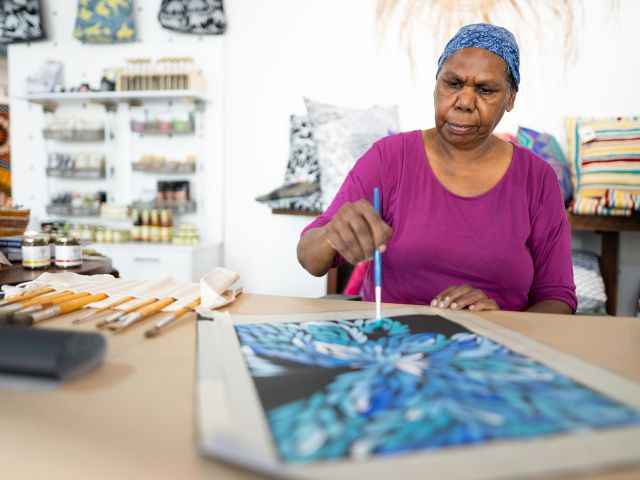
Take a ‘behind-the-scenes’ tour of Tiwi Design’s screen-printing workshop and pick up a great souvenir in the form of art. Choose from contemporary or traditional Tiwi designs and a wide range of work including carvings, paintings, pottery, printmaking, bark paintings and tunga (bark baskets).

A creative moment shared inside Tiwi Design’s screen-printing space.
Take a peek inside Tiwi Design’s screen-printing studio. (Image: Tourism NT)

4. Dine in Darwin

Foodies are spoilt for choice in multi-cultural Darwin. Try Sri Lankan flavours at Ella by Minoli, where Masterchef contestant Minoli De Silva creates delectable dishes, or head to Charlie’s of Darwin for gin-tasting, cocktails and more. Bowls of fragrant laksa, excellent coffee, fresh vegetables and authentic crafts are all part of a weekend visit to Darwin’s Parap Markets , Rapid Creek Markets and the Nightcliff Markets .

Prefer to catch your own dinner? Book a Top End fishing charter to bag a barramundi – and from October register for the annual Million Dollar Fish competition. Hooking one of the tagged barra released each year in waterways across the Territory could win you up to $1 million.

A bowl of Laksa.
Eat your way through multicultural Darwin. (Image: Tourism NT)

5. Up close with Uluṟu

The magnificent monolith Uluṟu is even more magical when the summer rains fall. When it rains on The Rock, the locals come out to watch – consider yourself lucky if that happens when you visit. Waterfalls cascading off the sides of Uluṟu is a sight that relatively few tourists see.

There’s so much to do at Uluṟu, from guided walks to learn the stories of the Aṉangu people and the ancient landscape they live in to scenic flights for a bird’s-eye view or a leisurely walk around the base of Uluṟu. Book ahead to spend the evening wandering through the Field of Light installation by Bruce Munro.

A closer look at Uluru and uncover its ancient stories, sacred sites, and striking natural beauty – one of the most iconic things to do in the Northern Territory.
Discover the details that make Uluṟu truly sacred. (Image: Tourism NT)

6. Drive the Red Centre Way

From Alice Springs, take an epic road trip along the Red Centre Way, taking in Uluru and Watarrka National Park, home to the magnificent Kings Canyon. Allow at least a week to drive through the red heart of Australia by 4WD, a little longer on the sealed road by 2WD vehicle, travelling through ochre deserts, palm-lined valleys and dramatic gorges. Stop off at waterholes for a refreshing dip along the way.

Kings Canyon offers hiking options for all levels of fitness, from the three-hour Rim Walk atop soaring sandstone walls to the gentler Kings Creek Walk. Either way, you’ll have breathtaking views.

SEIT Outback Australia is a small group touring specialist offering exciting, adventurous, exclusive and specialised iconic, pioneering and cultural touring in the Red Centre of Australia, giving you the time to learn, absorb and relax in the heart of Australia.<br /><br />This innovative tour company focuses on providing clients with the ultimate interpretive touring experiences with a range of products and customised touring itineraries for small groups and bespoke private charters.<br /><br />The company bases its philosophies from the key words of Spirit, Emotion, Intellect and Task (SEIT).
Drive through Australia’s heart. (Image: Outback Australia Tours)

7. Take a walk at Kata Tjuṯa

Head out early to tackle the Valley of the Winds Walk at Kata Tjuṯa . This natural wonder, also known as The Olgas, is a labyrinth of soaring ochre domes that glow golden at sunrise and sunset (the walk may be closed during the middle of the day as temperatures rise).

Walking trails range from easy to longer, more difficult tracks. At the Kata Tjuṯa dune viewing area, take in the panoramic view of the domes. The longest of the trails is the Valley of the Winds Walk, a 7.4km circuit that winds between the domes and through creek beds. It’s moderately difficult and steep in places, but offers stunning views – and occasional encounters with kangaroos.

The Valley of the Winds Walk at Kata Tjuta is one of the most awe-inspiring things to do in the Northern Territory, especially at sunrise when the domes glow golden.
Step into the golden light of Kata Tjuṯa. (Image: Tourism NT)

8. Explore Tjoritja/West MacDonnell Ranges

Tjoritja/West MacDonnell National Park lies 135km west of Alice Springs, with many fascinating natural features to beguile visitors. The ‘West Macs’ formations include chasms, gorges and waterholes – take your swimsuit for a dip at Ormiston Gorge waterhole, open year-round. The Ormiston Pound Walk is a three to four-hour circuit that leaves from the visitor centre and loops back along the gorge via the main waterhole. Other places of interest in the park include Simpsons Gap , Standley Chasm , Ellery Creek Big Hole and Glen Helen .

Soaking in the serenity of Ormiston Gorge, these two travellers enjoy one of the most scenic things to do in the Northern Territory.
Take the plunge at Ormiston Gorge waterhole. (Image: Joshua Griffin Litchfield)

Start planning the NT road trip of a lifetime at northernterritory.com