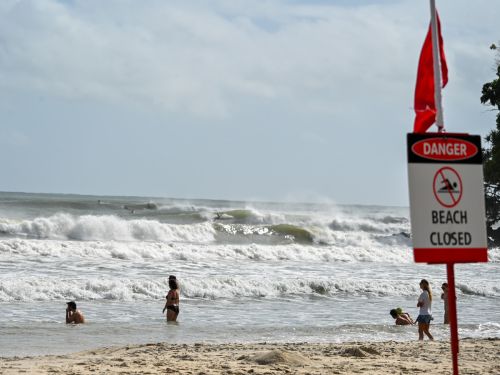
Beloved beaches were washed offshore by Cyclone Alfred

hero media
Javier Leon , University of the Sunshine Coast

For many people, the most visible impact of Cyclone Alfred was the damage big waves and storm surge did to their local beaches.

Beaches in southeast Queensland and northeast New South Wales are now scarred by dramatic sand cliffs, including the tourist drawcard of Surfers Paradise.

Sand islands off Brisbane – Bribie, Moreton and North Stradbroke – protected the city from the worst of the storm surge. But they took a hammering doing so, reducing their ability to protect the coastline.

The good news is, the sand isn’t gone forever. Most of it is now sitting on sandbars offshore. Over time, many beaches will naturally replenish. But sand dunes will take longer. And there are areas where the damage will linger.

Why did it do so much damage?

Cyclone Alfred travelled up and down the coast for a fortnight before crossing the mainland as a tropical low. On February 27, it reached Category 4 offshore from Mackay. From here on, the cyclone’s intense winds whipped up very large swells.

By the time the cyclone started heading towards the coast, many beaches had already been hit by erosion-causing waves. This meant they were more vulnerable to storm surge and further erosion.

As Alfred moved west to make landfall, it coincided with one of the year’s highest tides . As a result, many beaches have been denuded of sand and coastal infrastructure weakened in some places.
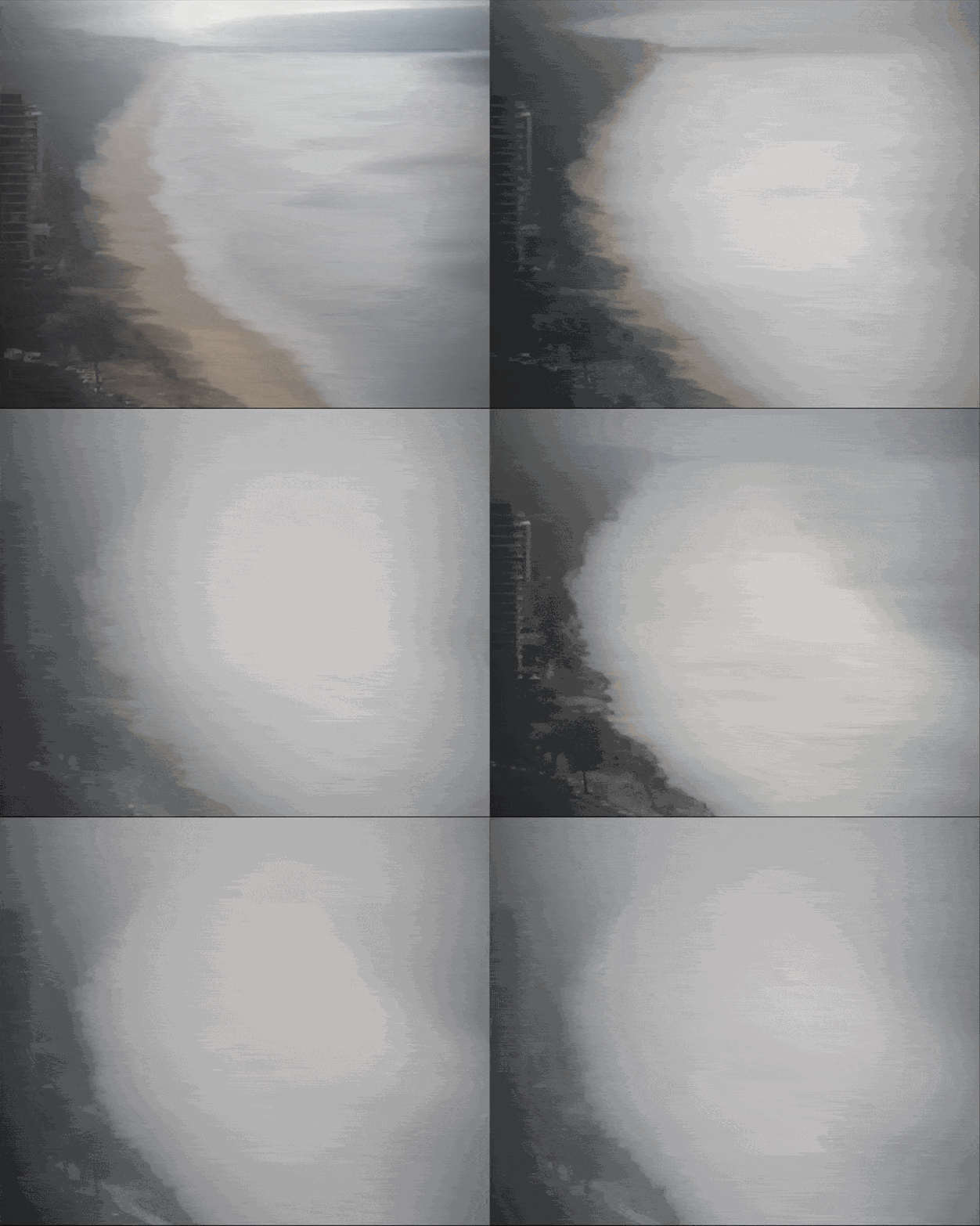
Timelapse showing the coastal erosion caused by ex-Tropical Cyclone Alfred, looking north from Surfers Paradise to The Spit.
UNSW Water Research Laboratory

Which beaches were hit hardest?

Areas south of the cyclone’s track have been hit hardest, from the Gold Coast to the Northern Rivers.

Some beaches and dunes have significantly eroded. Peregian Beach south of Noosa has lost up to 30 metres of width.

Erosion cliffs, or “scarps", up to 3 metres high have appeared on the Gold Coast. It exposed sections of the last line of coastal defence – a buried seawall known as the A-line , constructed following large storms in the 1970s.

Up and down the Gold Coast, most dunes directly behind beaches (foredunes) have been affected by storm surge of up to 0.5 metres above the high tide mark and eroded . Even established dunes further inland have been eroded.

beach erosion on sunshine coast
Up to 3 metre high dune erosion scarps have appeared along the Sunshine Coast.
Javier Leon, CC BY-NC-ND

Where did the sand go?

In just a week, millions of tonnes of sand on our beaches seemingly disappeared. Where did it go?

Beaches change constantly and are very resilient. As these landforms constantly interact with waves and currents, they adapt by changing their shape.

When there’s a lot of energy in waves and currents, beaches become flatter and narrower. Sand is pulled off the beaches and dunes and washed off offshore, where it forms sandbars. These sandbars actually protect the remaining beach, as they make waves break further offshore.

Dunes form when sand is blown off the beach on very windy days and lands further inland. Over time, plants settle the dune. Their roots act to stabilise the sand.

Healthy dunes covered in vegetation are normally harder to erode. But as beaches are washed away during large storms and the water level rises, larger waves can directly attack dunes.

The tall erosion scarps have formed because dunes have been eaten away. In some areas, seawater has flooded inland, which may damage dune plants.

Graphic of beach erosion during a storm
The Conversation, CC BY-SA

Most sand will return

As coastal conditions return to normal, much of this sand will naturally be transported back ashore. Our beaches will become steeper and wider again.

It won’t be immediate. It can take months for this to occur, and it’s not guaranteed – it depends on what wave conditions are like.

Some sand will have been washed into very deep water, or swept by currents away from the beaches. In these cases, sand will take longer to return or won’t return at all. Dunes recover more slowly than beaches. It may take years for them to recover.

Australia’s east coast has one of the longest longshore drift systems in the world, where sand is carried northward by currents to eventually join K’Gari/Fraser Island.

Can humans help?

Sand will naturally come back to most beaches. It’s usually best to let this natural process take place.

But if extreme erosion is threatening buildings or roads, beach nourishment might be necessary. Here, sand is added to eroded beaches to speed up the replenishment process.

Other options include building vertical seawalls or sloping revetment walls. These expensive methods of protection work very well to protect roads or buildings behind them. But these engineered structures often accelerate erosion of beaches and dunes.

We can help dunes by staying off them as much as possible. Plants colonising early dunes are very fragile and can be easily damaged. Temporary fencing can be used cheaply to trap sand and help dunes recover. Re-vegetating dunes is an efficient way of reducing future erosion .

How can we prepare for next time?

The uncertainty on Cyclone Alfred’s track, intensity and landfall location kept many people on edge, including at-risk communities and disaster responders. This uncertainty puts many scientists under enormous pressure . Decision-makers want fast and clear information, but it’s simply not possible.

In Australia, almost 90% of people live within 50km of the coast. In coming decades, the global coastal population will grow rapidly – even as sea level rise and more intense natural disasters put more people at risk .

As the climate crisis deepens, rebuilding in high-risk areas can create worse, more expensive problems .

Communities must begin talking seriously about managed retreat from some areas of the coast. This means not building on erosion-prone areas, choosing not to defend against sea incursion in some places and beginning to relocate houses and infrastructure to safer heights inland.

Decision-makers should also consider deploying nature-based solutions such as dunes, mangroves and oyster reefs to reduce the threat from the seas.

Technology has advanced rapidly since Cyclone Zoe made landfall in this region in 1974. We can track weather systems from satellites , get up-to-date weather and wave forecasts on our phones and use drones to see change on beaches and dunes .

But these technologies only work if we use them. The Gold Coast has the world’s largest coastal imaging program . But most other coastal regions don’t conduct long-term monitoring of dunes and beaches. Without it, we don’t have access to data vital to protecting our beaches and communities.The Conversation

Javier Leon , Associate Professor in Physical Geography, University of the Sunshine Coast

This article is republished from The Conversation under a Creative Commons license. Read the original article .

hero media

7 great day trips from your Coffs Coast homebase

Make this dazzling stretch of beaches and natural wonders your home base for a grand adventure

Whether you’re setting out solo, bringing a mate, or packing in the whole family, no road trip along Australia’s East Coast is complete without at least a few days spent exploring the Coffs Coast. A stunning stretch of NSW coastline nestled between ancient high-elevation rainforests and magnificent, undiscovered beaches, Coffs offers amazing biodiversity, stunning natural beauty, and heaps of local charm, without the crowds. Pull up in Coffs Harbour , your perfect home base for these unforgettable day-trips.

1. Southern Beaches

The Coffs region boasts 30 of Australia’s most beautiful, unspoiled beaches, directly abutting a dramatic tableau of mountains and rainforests. Drive South of Coffs Harbour to find up-and-coming surf destinations where it’s still possible to catch an empty wave. First up is the picturesque Sawtell village . Wander the famous fig-tree-lined main street packed with laid-back places to eat and drink. Enjoy panoramic views and seasonal whale sightings at Bonville Headland on the Southern end of the beach.

Nearby Bongil Bongil National Park boasts seven kilometres of empty beach, along with hiking and cycling trails through beachfront rainforests – keep an eye out for koalas living in the trees. Boambee Beach and Boambee Creek Reserve are great for families, with shallow waters perfect for kayaking and SUPing, plus an off-leash dog beach.

family eating lunch in sawtell
Experience small-town charm in Sawtell.

2. Orara Valley Tourist Trail

The Orara Valley Tourist Trail has it all: hinterland bushwalks, birdwatching, horse riding, pristine swimming holes and rolling green pastures dotted with dairy farms and historic villages. And it’s only 15 minutes west of Coffs Harbour.

Sample produce at a roadside stall, stop into Coramba Hotel for a quintessential country pub lunch, or try the Idle in Cafe in Nana Glen for coffee and scones. Then spend the afternoon kayaking the Orara River or mountain biking on Mt Coramba. If you’re feeling adventurous, follow the 4WD touring route along the Orara Escarpment in Bindarri National Park , a rugged landscape with dazzling views that winds through untouched eucalypt rainforests and waterfalls.

A family sitting by the Orara Valley Tourist Trail.
Explore the green heart of Coffs.

3. Dorrigo National Park

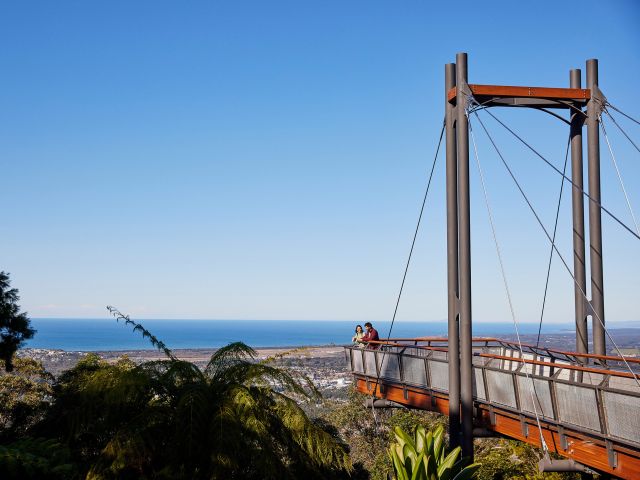
Enjoy a classic day trip from Coffs to forest bathe in some of the oldest subtropical rainforests in the world at Dorrigo National Park, part of the World Heritage-listed Gondwana Rainforests. These million-year-old ecosystems promise rare bird sightings, towering strangler figs, and epic walking tracks and picnic spots. Try the 6.6 km Wonga Walk to experience dreamy Crystal Shower Falls (where you can walk behind the falls) and the Skywalk Lookout, which offers spectacular views of the valley and coast. Then stop in Dorrigo town for a homey lunch. It’s worth noting that a section of the road between Ulong and Dorrigo – which dates to the 1880s – is unsealed, adding to the area’s end-of-the-earth allure but making travel difficult in adverse weather conditions. Alternatively, head to Dorrigo via the delightful township of Bellingen .

Three people standing at the SkyWalk lookout.
Wander the Skywalk.

4. Northern Beaches

For another tranquil expanse of sun, sand and surf breaks, head north to Woolgoolga (Tourism Australia’s Best Mainland Beach for 2025. Taste the coffee and local-produce breakfast at one of several cafes, then spot whales during their migration season along the Woolgoolga Whale Trail to the headland. Emerald Beach offers clear blue waters and another headland walk, perfect for taking in views of South Solitary Island, a dramatically rocky-cliffed island with a historic lighthouse. Red Rock, some 40km north of Coffs and named for its striking coastal rock formations, boasts a gorgeous estuary reserve that’s perfect for languorous days spent picnicking, swimming, fishing, and connecting with the relaxed local pace.

Freshly caught seafood by the beach, with sparkling ocean views.
Enjoy fresh seafood overlooking Woolgoolga Beach.

5. Jetty precinct

You could easily spend a whole day exploring the Jetty precinct – from its foreshores to the marina to Muttonbird Island. Start with fresh fish and chips from local institution Coffs Harbour Fisherman’s Co-op , before browsing the popular Harbourside Markets held every Sunday on the foreshores.

Take a scenic walk along the breakwall to Muttonbird Island , a cultural and ecological treasure with panoramic views and rich Gumbaynggirr heritage. The Giidany Miirlarl Education Space shares the island’s ancient stories, or join a guided moonlight tour to see the seasonal return of the muttonbirds.

Back at the Jetty Strip, find a buzzing mix of cafes, bars and restaurants with cuisines from around the world, open from morning until late. Don’t miss The Jetty Pavilion , a favourite for its unique menu blending modern Australian cuisine with vibrant world flavours.

walk to muttonbird island from coffs harbour
Walk the path where land meets sea and sky.

6. Grafton

Head inland from mid-October to early November to catch Grafton’s jacaranda season, when the town’s streets and parks are covered in purple. Even better, time your trip between 24 October and 2 November to attend the famous Jacaranda Festival, with special food items, performances and more. At any time of year, follow the self-guided Grafton Heritage Trail to discover the town’s historic buildings, landmarks and stories. Or get the blood pumping with a trip along the longest mapped white-water trail in Australia – the Clarence Canoe and Kayak Trail. Book a tour with Exodus Adventures .

woman walking through jacaranda trees in grafton
Time your Grafton trip to see the jacarandas in full bloom. (Image: @myclarencevalley)

7. Nambucca

Just south of Coffs Harbour sits Nambucca, the ideal town for a relaxed, coastal day trip. Hire a canoe, kayak or boat to explore over 80 kilometres of waterways stretching from the hinterland to the ocean. For those who prefer to stay on dry land (or double up their adventure for the day), stretch your legs along the V-Wall – a scenic coastal walk along the Nambucca River – dotted with boulders painted by the community, sharing messages, art and local stories. Stop along the way to buy Sydney rock oysters direct from local farmers, or try your own hand at fishing. Before heading back to Coffs, refuel on fresh seafood and wood-fired pizzas at Matilda’s in Nambucca .

a boat zooming through Nambucca Heads
Explore Nambucca’s waterways. (Image: Seen Australia)

Visit coffscoast.com and download the Coffs Coast Explorer App for more daytrips and trails.