Australian Traveller draws ever closer to solving one of its greatest myths: are Hoop Snakes real?
Forget the ubiquitous and highly nefarious Drop Bear. The dreaded Hoop Snake is the real scourge of the Australian outback.
The hoop snake began life as an American myth. Native to hilly or mountainous areas, when disturbed it’s said to form a rigid hoop by clasping tail in mouth and pursuing you silently and swiftly, using the slope to gain terrifying speed. Sightings in the US are still reported, with one naturalist offering $10,000 to the first confirmed evidence of a hoop snake. That money remains unclaimed.
Most online blogs or forums advising overseas visitors of the dangers of spiders and reptiles within Australia have at least one reference to hoop snakes and how best to evade attacks (usually something like “jump through the hoop to confuse it, then make your escape"). AT even discovered one lengthy exchange between a potential buyer and seller of a captive hoop snake. As the hapless purchaser drew nearer to making a decision, all kinds of advice from online onlookers poured in: be careful to build a big enclosure so it can hoop properly; make sure one end is higher than the other; perhaps use a small paddock on a hillside. Eventually the penny dropped and the sale aborted.
Three-toed skink.
In terms of the real thing, the nearest AT could find is the three-toed skink (Saiphos equalis) pictured above, a similar shot had been captured by Chris Rehberg who manages the excellent local action and conservation website www.wherelightmeetsdark.com.
Chris came across the rare skink in the southern Sydney suburb of Peakhurst (interestingly, among Chris’ stated missions in life is to “slowly but surely capture all Sydney skink species in photographs.")
Has he stumbled upon the real life Aussie hoop snake? Or at least a possible source of the legend here on our shores? When frightened, this skink shows off its reddened underbelly by curling into a tight hoop, but there’s certainly never been evidence of the tiny creatures (they only measure a few centimetres in length) attacking in full hoop formation. So it would appear the outback remains safe.
Under wide-open outback skies, discover a fossicking gem that’s managed to slip under the radar.
While the name Clermont may feel new to even the most intrepid traveller, its gilded history stretches back centuries. You’ll find it just off the highway, humming quietly under the hazy veil of Queensland’s outback sun. It’s here, hemmed in by mountains and perched atop soil heavy with the earth’s treasures, that one of Australia’s most accessible outback adventures awaits.
Thanks to deposits of gold, copper and gemstones – souvenirs left by exploding supernovas and the heave of tectonic plates – Clermont became a centre point of Queensland’s Gold Rush. And now? Australia’s fossicking capital is yours to discover.
Getting there
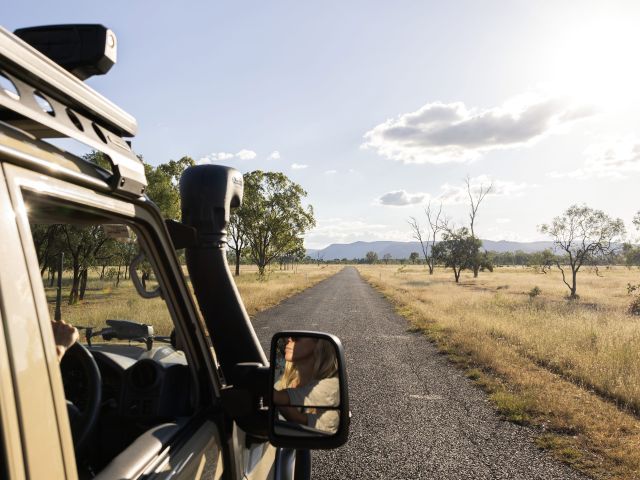
Take a drive through Queensland’s Mackay Isaac region. (Image: Sean Scott/ TEQ)
You’ll find Clermont in Queensland’s Mackay Isaac region. To get here, it’s an easy three-hour drive over sealed roads from Mackay. Or, if you’re heading from the Sapphire Fields of Emerald, the drive will carve out just over an hour from your day.
Whether you’re road-tripping through outback Queensland or just tracing your way through all that Australia has to offer, Clermont is remote but easily accessible.
Best accommodation in Clermont
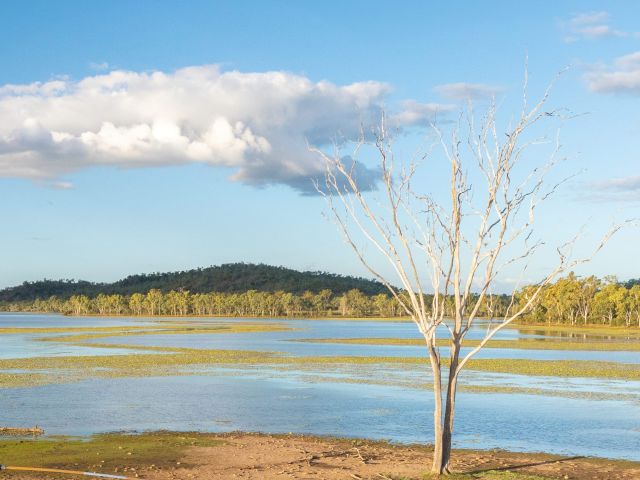
Camp by Theresa Creek Dam. (Image: Riptide Creative/ TEQ)
All accommodation comes with a generous helping of country hospitality here. The choice is yours between modern hotels, parking up the camper or pitching a tent.
Theresa Creek Dam lies just outside town. Begin each day with crisp country air and bright outback sunrises. Spend the night under the sparkling country stars and your days out on the dam fishing or kayaking. Even if you aren’t camping, be sure to save space in your itinerary for an afternoon on the red dirt shore.
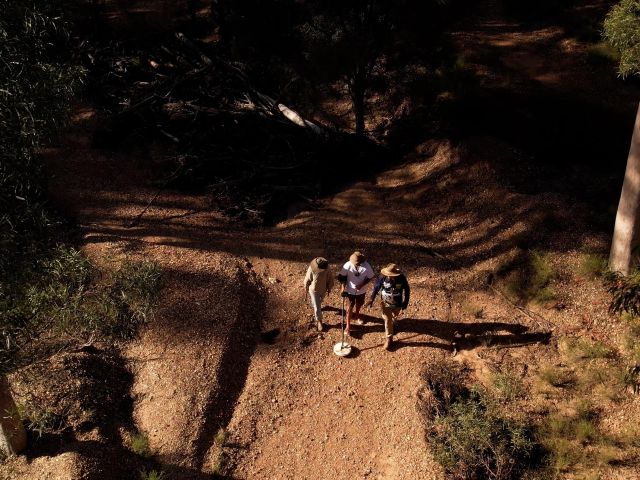
One does not visit Clermont without trying their hand at fossicking. There are strict rules when it comes to fossicking, so stick to areas dedicated for general permission and make sure you obtain your license beforehand. Try your luck at McMasters , Four Mile , Town Desert, McDonald Flat and Flat Diggings . To increase your odds, sign on for a tour with the expert team at Golden Prospecting . They’ll give you access to exclusive plots and expert advice along the way.
Once you’ve tried your luck on the gold fields, head to the Clermont Township and Historical Museum . Each exhibit works like an archaeologist’s brush to dust away the layers of Clermont’s history. Like the steam engine that painstakingly relocated the entire town inch by inch to higher ground after it was decimated by flooding in 1916. See the tools that helped build the Blair Athol mine, historic fire engines, shearing sheds and all sorts of relics that make up Clermont’s story.
The historic Copperfield Chimney offers a change of pace. Legend has it that fossickers found a solid wall of copper here, over three metres high, kick-starting Queensland’s first-ever copper mine.
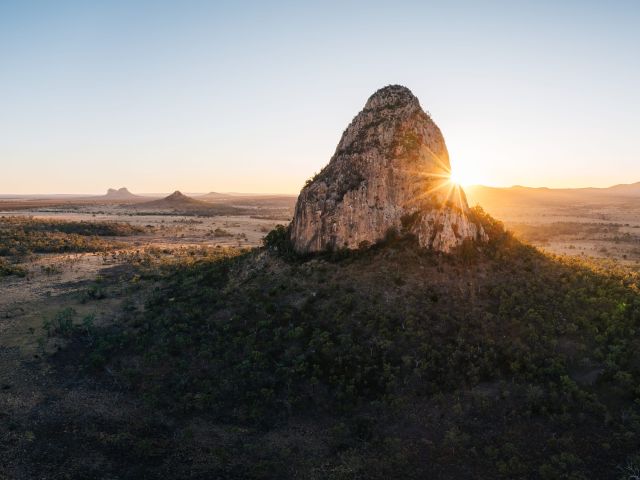
See Clermont from above with Bush Heli Services. (Image: Riptide Creative/ TEQ)
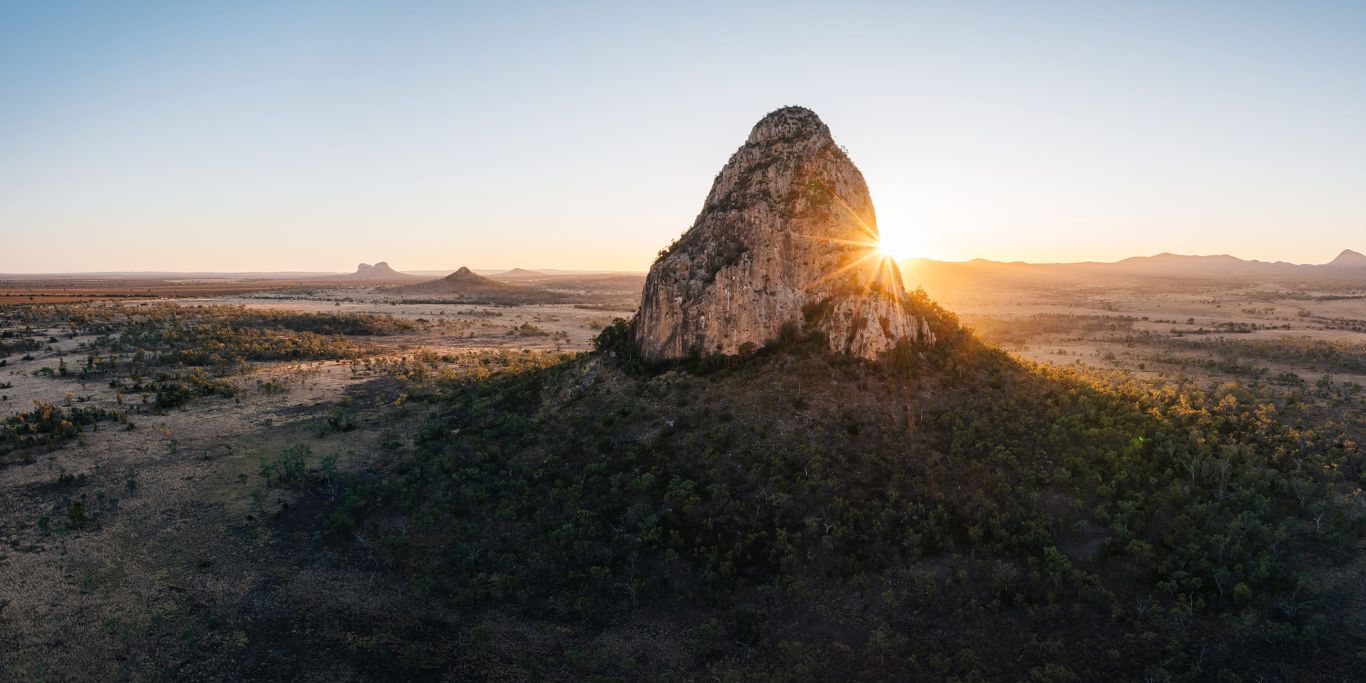
For hiking, nearby Dysart is the best place to access Peak Range National Park. Here, mountainous horizons stretch across the outback as if plucked from another world. Set off for a scenic drive along the Peak Downs Highway for access to countless geological wonders. Like the slanting rockface of Wolfang Peak. Summit it, and you’ll find yourself looking out across a scene surely conjured up by Banjo Paterson. Dry scrub dancing in the warm breeze, grazing cattle, eucalypts and the gentle creak of windmills. Don’t miss visiting Gemini Peaks, either, for one of the park’s best vistas, and a blanket of wild flowers after rain.
Then, take to the skies with a scenic helicopter tour with Bush Heli-Services . Shift your perspective and cruise above all the sights from your trip. Spots like Lords Table Mountain and Campbell’s Peak are best viewed from the skies.
Before you head home, be sure to explore the neighbouring townships. Spend a lazy afternoon in the shade of Nebo Hotel’s wrap-around verandahs . The hotel’s 1900s dance hall has since been replaced with one of the area’s biggest rodeo arenas, so consider timing your trip to line up with a boot scootin’ rodeo. Or, stop by a ghost town. Mount Britton was once a thriving town during the 1880s Gold Rush. It’s been totally abandoned and now lies untouched, a perfect relic of the Gold Rush.
Best restaurants and cafes in Clermont
Stop into the Commercial Hotel Clermont.
Days spent fossicking, bushwalking and cramming on history call for excellent coffee and hearty country meals. Luckily, Clermont delivers in spades.
Lotta Lattes Cafe is beloved by locals for a reason. Start your days here for the best caffeine fix in town and an impeccable brunch menu.
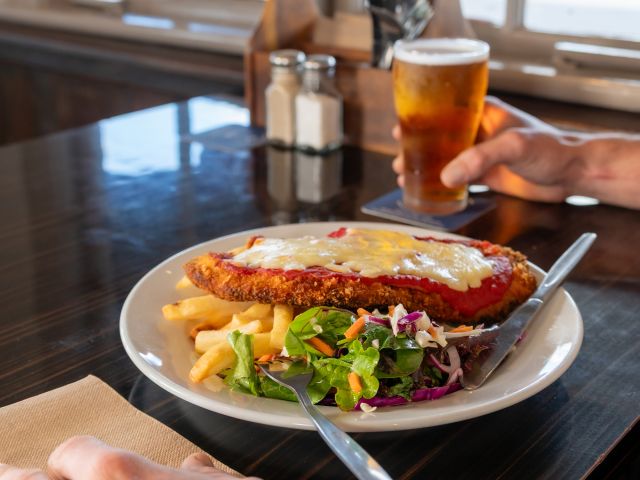
For a real country meal, an icy cold beer and that famed country hospitality, head straight to the town’s iconic hotel: the Commercial Hotel (known endearingly to locals as ‘The Commie’). It’s been a staple in Clermont since 1877. The hotel even survived the flood of 1916 when it was sawn in two and moved to higher ground.
Naturally, time spent in the outback must include calling into the local bakery. For delicious pies and a tantalising array of sweet treats, make Bluemac Bakehouse your go-to while in town.