Embracing the art of aperitivo hour

hero media
Negroni, Sbagliato, Bicicletta. From Brunswick to Chippendale, bitter aperitivo drinks are officially the new black. But ask an Italian and they’ll tell you that ‘aperitivo hour’ isn’t just about what’s in your glass, it’s a daily ritual that embodies the spirit of ‘la dolce vita’.

You don’t need to look too far to see that the Spritz is having a big moment in Australia right now. It crept its colourful way into bars and backyards a few summers ago with the approachable and now ubiquitous Aperol Spritz, coinciding with a global resurgence in aperitif drinks across the board (hello vermouth, sherry, pastis).


But while it’s all very well to embrace the bitter refreshment of fashionable Italian pre-dinner drinks, it seems a shame not to do as the Italians do and partake in the accompanying cultural and culinary joys of aperitivo hour too.


The word aperitivo is derived from the Latin aprire, which means ‘to open’. On a practical level, it refers to the ritual of taking a dry or bitter drink ahead of a meal in order to ‘open’ one’s stomach and prime the appetite, but on a social level fare un’aperitivo is the Italian answer to happy hour – just with more food, less drunkenness, and a double shot of convivial Italian ebullience.
Food italian wine drinks bar restaurant
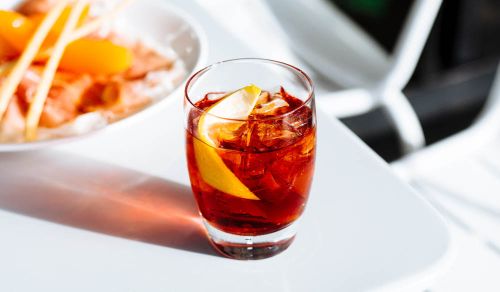
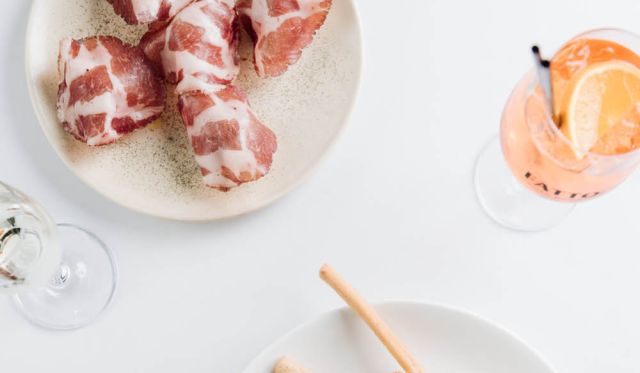
A good aperitivo begins with a well-mixed drink.

In their recent book Spritz, authors Talia Baiocchi and Leslie Pariseau describe aperitivo hour as, “An attitude – a devil-may-care moment in the day when the Italian Dream seems a little more tangible." Having perfected the art over several summers spent in Italy in my youth, I’d have to agree. There’s just something so evocative and enduring about sipping bitter bubbly drinks in a bustling Italian piazza at dusk.


If you too have been lucky enough to holiday in Venice, Milan or Rome, you’ll know the scene well – it’s that magical time of the day (usually between 4:30 and 9pm) when work is done for the day and the night is still young.


It’s when the young, the old, the humble and the fabulous all gravitate to their local piazza bar to meet friends and unwind with a not-too-boozy drink and a few simple salty snacks (olives, nuts, potato chips, crostini and the like always come gratis with an aperitivo drink in Italian bars).


OK, so we like the Italian drinks, what do we need to learn about Italian drinking culture?
Food italian wine drinks bar restaurant
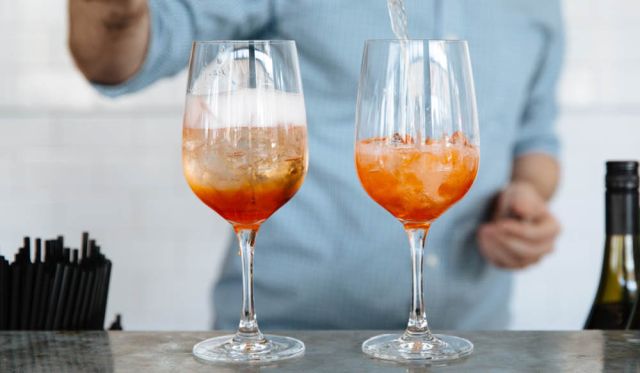
Italians have perfected the practice of a drink and snack.

First of all, aperitivo drinks are usually low in alcohol (think Campari, Aperol, vermouth). Getting drunk just isn’t a thing for Italians. Secondly, aperitivo drinks are always sipped slowly – with a bite on something in between. The ritual should never be rushed. Piano, piano, as the Italians say.


Mark Ward, the man behind Aussie vermouth brand, Regal Rogue, says the ritual of drinking an aperitif marks a transition from the work day into the “relaxation" part of the day. “For me, aperitif drinks mark the romantic transition into the evening, especially when you’re on holiday."


My colleague Sam just spent a few years spent living and working in Treviso, northern Italy where she got an insight into what makes the social rite of aperitivo hour so important.


“Italians place a huge emphasis on enjoying life," she says. “Probably because they’re stifled by such heavy-handed bureaucracy; there’s a system, structure, hierarchy, line or form to fill out for absolutely everything, which can really wear you down."


Sam says that for working Italians, aperitivo hour is about celebrating the end of a weekday. “It’s social, fun, and rarely involves work chat, surprisingly. The conversation is never anything too serious – it’s all lighthearted banter and lots of laughing."


She also explains that in northern Italy, social drinking is “an art-form" and a way of life. “It’s treated with respect, from a young age. You rarely see the drunken fool outside bars, and if you do, it’s likely they’re an expat."


Meanwhile, Ward says that while aperitivo culture is starting to stir in Australia, it won’t be long before it takes off. “The influence of Italy runs through every Australian city," he says. “As the nation’s palate evolves, a new generation of taste explorers want to enjoy what else is out there."


hero media

The iconic Victorian beach where true Aussie surf culture was born

Torquay’s Bells Beach is considered one of the best surf beaches in the world.

It’d be easy to think Australian surf culture was born around the right-hand point breaks of the Gold Coast and Byron Bay. These regions seem the epitome of how the world views Aussie surfers – bronzed (or burnt), languishing in warm water and sunshine. The reality is a lot different.

The rise of surf culture along Victoria’s coastline

surfers at Bells Beach in Australia
Surfers stand on the shore at Bells Beach, where the country’s biggest surfing competition is held each year. (Image: Getty/Filed Image)

True Aussie surf culture was born on the chilly waves of Victoria’s winters, when huge swells from the Great Southern Ocean hit cliff-lined beaches along the Great Ocean Road . These beaches were the ultimate proving ground – surfers from all over Australia arrived in panel vans and VWs to do battle with the biggest waves they could find.

huge swells from the Great Southern Ocean at Bells Beach
Surfers take advantage of the huge swells from the Great Southern Ocean at Bells Beach. (Image: Tourism Australia/Cameron Murray)

There are surf breaks all along this very picturesque coast – but those around Torquay were most revered. The ultimate test of a surfer’s ability – and durability – however, was Bells Beach: Australia’s answer to Hawai‘i’s Pipeline. Just beyond, the breaks at Jan Juc and Winkipop beckoned.

an aerial view of surfers at Bells Beach
Hit the waves along the picturesque coast. (Image: Tourism Australia)

Torquay became surfing’s Silicon Valley: HQ for the entire Australian surf culture revolution. Four young locals worked out of their backyards in Torquay to create two of the world’s biggest surf labels – Rip Curl and Quiksilver , which soon became the region’s biggest employers.

surfers out at Bells Beach
Surfers out at Bells Beach, Victoria’s most famous beach. (Image: Tourism Australia/Cameron Murray)

Rip Curl started sponsoring the Bells Beach Pro in 1973 – and have done ever since. It’s been going since 1962 – making it the world’s longest continually run surfing contest. Held every Easter, it’s part of the world surfing tour. Spectators line its 30-metre-high cliffs to watch the world’s best take on enormous waves – it’s the ultimate coliseum for the sport and has inspired generations of Aussie surfers to join the list of heroes whose names are on its iconic bell.

Follow the waves through Victoria’s surfing heartland

Australian National Surfing Museum, Torquay
The Australian National Surfing Museum in Torquay. (Image: Tourism Australia)

Just behind Torquay’s main drag, you can see all that history on display at the world’s best surf museum – the Australian National Surfing Museum . Here you can take your time absorbing the 100-year-or-so history of Australian surfing and check out the 150-strong surfboard collection.

surfboards on display at Australian National Surfing Museum
The museum holds surfing memorabilia, including a room dedicated to the history of boards. (Image: Tourism Australia)

But classic Aussie surf culture can be observed in everyday life all over the Great Ocean Road and Torquay. Surfing dictates life here; no work is done until the big swells have come and gone. Just being here provides a window into 60-odd years of rebellion against convention; for no-one likes nine-to-five living on the Great Ocean Road.

surfing memorabilia at Australian National Surfing Museum
The varied displays celebrate the Bells Beach competition, surfing legends and Aussie surf culture. (Image: Tourism Australia)

There’s less panel vans and VW Beetles these days, but surf culture still rules life. Surfers run this coast; you’re better off keeping out of their way when they’re running down past you to face the biggest swells – then hear them swap stories at cafes, restaurants and bars all around you.

surfing at Bells Beach
The beach near Torquay is Australia’s answer to Hawai‘i’s Pipeline. (Image: Visit Victoria/William Watt)