From donating funds for animal feeds to volunteering your time and skillset, here’s how we can help out.
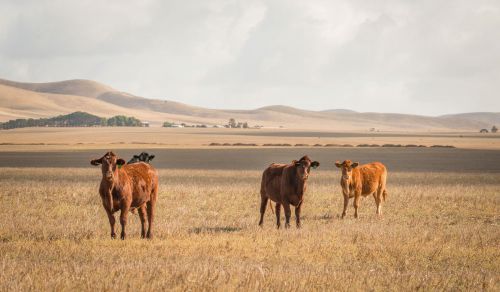
We’re all well aware of the current and distressing state of affairs for farmers across the country. The entire state of New South Wales has been declared officially in drought, while large regions of other states are also seriously affected by the lack of rainfall, especially in north-west Victoria, eastern South Australia and parts of Queensland.
And here are some examples of how this plays out: farmers are being forced to cart water onto their property to keep both their family and animals alive. In some cases there is not enough coverage in their paddocks, necessitating the spending of more than $20,000 a week on animal feed alone. Extreme cases call for farmers to make the heartbreaking decision to sell the bulk of their livestock, many of which have bloodlines that have been within the family for generations.
All donation methods listed below are registered charities and tax deductible, and not every way to help is monetary.
Provide animal feed
The easiest way to help is providing respite in the form of animal feed, $20 will cover a farmer with a small bale of hay, including transportation costs. Companies such as Rural Aid Australia – Buy a Bale and Lions – Need for Feed allow you to make one-off donations or set up continuous contributions.
Provide human feed
Drought Angels and Rural Aid Australia provide support for Aussie farmers in the form of food packages, vouchers and prepaid Visa cards to assist with household purchases.
Collect signatures
Assistance need not cost you a thing. Farmers and community groups are collecting signatures to send a message to the government and encourage them on to do more. Maitland Mercury is heading up a petition with the aim of receiving 10,000 signatures to start a parliamentary debate on drought support.
Individual help
Some farmers have taken matters into their own hands. The Fairley family behind Country Valley Milk in Picton has started an ‘Adopt a Cow’ program , whereby you can donate a nominal amount and in return receive a photo and profile of the dairy cow you have taken under your wing.
Other individual live campaigns for drought relief can be found on Go Fund Me pages. It is worth noting campaigns such as Adopt a Cow and Go Fund Me pages are not tax deductible.
Volunteer
If you are living in an area where you are in a position to volunteer your time and skillset, head on over to Aussie Helpers. These guys connect tradies willing to donate their time to farmers who have jobs needing completion but are lacking the necessary funds.
Alternatively, should you live in an area with a higher rainfall count and have suitable acreage for agistment (grazing livestock), offering your land free of charge will assist farmers greatly with fresh feed for their animals.
Beyond the winding bitumen and coastal views lies another side to Victoria’s most famous route.
There’s something hypnotic about this stretch of Victoria’s coast. Maybe it’s the way the road hugs the ocean so tightly, or how the cliffs catch the sun in colours you can’t name. Or, for local Victorians who drove this route as kids, maybe it’s the memories of winding through the impossibly tall trees as they seemingly guide you on your journey like wooden guardian angels. Most travellers know it for the 12 Apostles, but there are plenty of alternate experiences on the Great Ocean Road equally as worthy of your time.
So, next time you’re in that neck of the woods, park that car, stretch those legs and try these experiences.
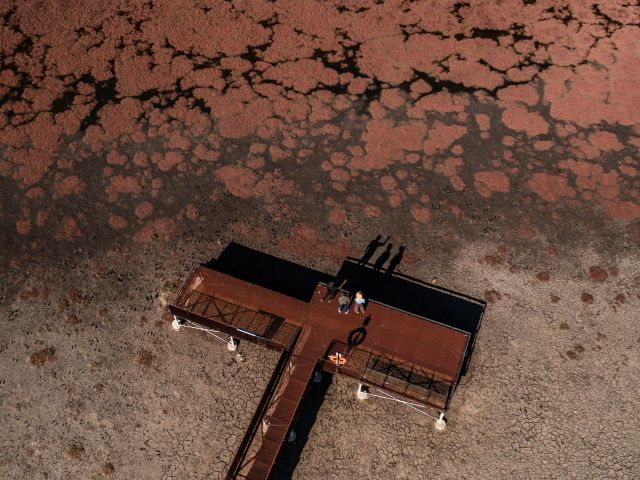
1. Discover living culture at Budj Bim
Walk across the world’s oldest known aquaculture system. (Image: Visit Victoria)
Breakaway Creek’s Budj Bim Cultural Landscape is a masterclass in educational storytelling. Join a guided tour with Budj Bim Cultural Landscape Tourism to walk across the world’s oldest known aquaculture system, where the Gunditjmara people built sophisticated eel traps and stone channels more than 6,000 years ago.
Budj Bim’s aquaculture system predates Egypt’s pyramids by roughly 2,000 years, making it one of the oldest examples of human engineering on Earth. If that’s not enough to get your history-loving family members involved in this road trip, we’re out of ideas.
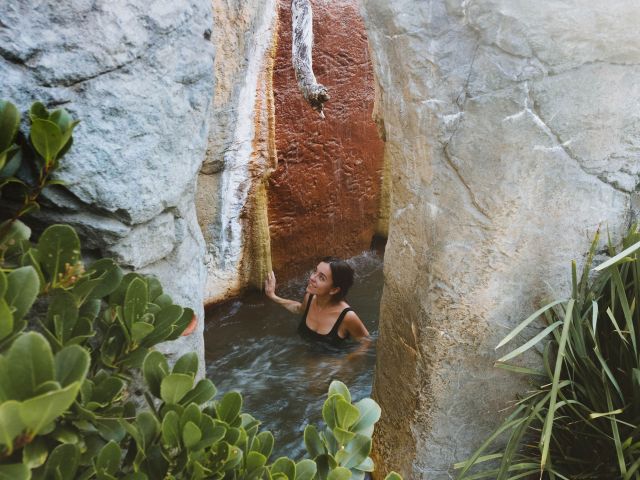
2. Unwind in the hot springs at Warnambool
Let mineral-rich water heal you.
If your legs need a break after a long drive, Deep Blue Hot Springs is your remedy. The geothermal pools sit just metres from the coastline, filled with mineral-rich water that bubbles up from deep underground. Move between open-air baths, waterfall pools and quiet zones made for meditation.
The water in Deep Blue’s geothermal pools comes from an ancient aquifer nearly 850 metres below the Earth’s surface, which, in non-scientific terms, means it’s far more likely to have healing properties than the mineral water you’d find at the supermarket.
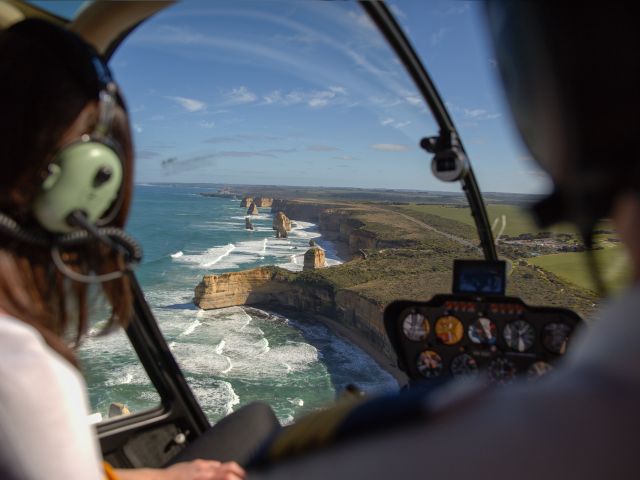
3. Take to the air at Princetown
See an icon from a different view.
You may have seen the Twelve Apostles from the trusty viewing platform, but a helicopter flight with 12 Apostles Helicopters shows you just how sprawling and rugged this coastline really is.
The trip covers everything from Port Campbell to London Bridge (not to be confused with the UK’s own), giving you a rare chance to watch waves carving the limestone cliffs from above. It’s worth noting that the limestone stacks of the Twelve Apostles are said to erode by roughly two centimetres each year, so the longer you leave it, the less of the Apostles you’ll see.
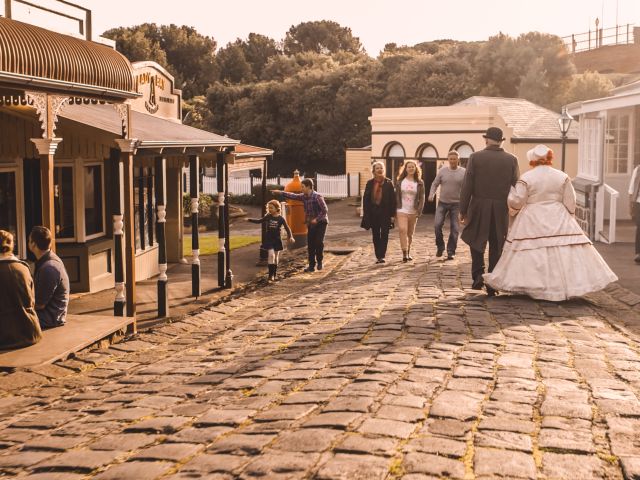
4. Step into the past at Flagstaff Hill
Visit a time of yore.
Continue the tour through Warnambool at Flagstaff Hill Maritime Village and Museum , a recreated 19th-century port town. Hear stories from the days when shipwrecks were as common as seagulls, with an astounding 180 ships believed to have sunk along the Shipwreck Coast in less than five years.
The night show, complete with lights, sound, and sea spray, brings the coastline’s most dramatic stories to life.
If you’re staying the night, Simon’s Waterfront offers relaxed dining with fresh local seafood and oceanfront views. Order the catch of the day and toast to the sailors who never made it ashore.
5. Learn to surf in Torquay, Lorne, or Anglesea
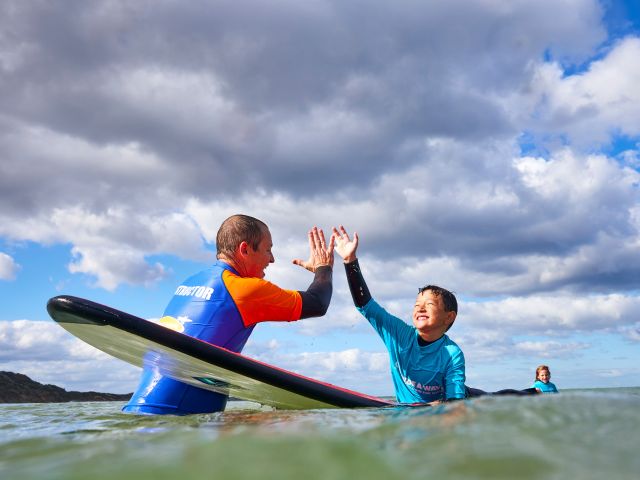
Learn how to hang 10. (Image: Visit Victoria)
Whether you’ve surfed before or can barely stand on a board, Go Ride A Wave will have you upright in no time. Torquay’s calm beaches are ideal for first-timers, while Lorne and Anglesea bring a bit more energy for those unafraid to get dunked.
Bells Beach, just down the road from Torquay, has even hosted the world’s longest-running professional surfing competition since 1962. So, for those eager to have a gander at pros using surfboards like they’re an additional appendage, the competition usually runs sometime in autumn.
6. Tackle the trails in Forrest
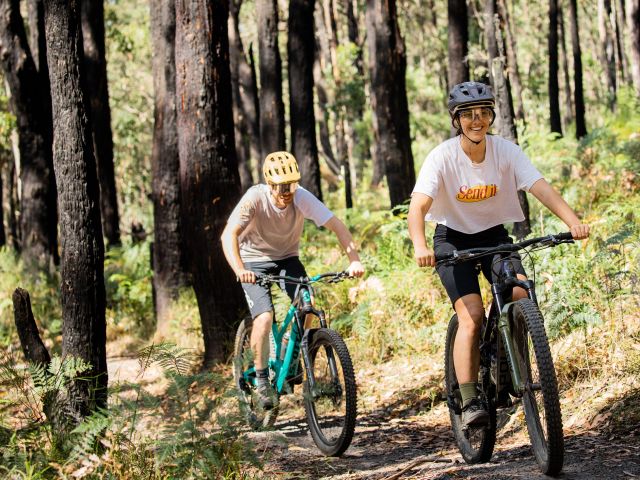
Hire a bike and explore MTB trails through the Otways.
Forrest is a haven for mountain bikers thanks to an expansive network of trails through stunning natural scenery. The Forrest trail network has almost 100 kilometres of singletrack across 36 trails, so there’s something for every level of rider. That’s including more than 60 kilometres of purpose-built mountain bike trails winding through the Otways’ dense forest. Cycle through ancient myrtle beech trees and towering tree ferns, with smaller ferns and soft mosses forming a carpet at your feet.
Hire a bike from Forrest MTB Hire and take your pick from easy, scenic rides to more challenging singletracks, such as Red Carpet or Rollercoaster.
7. See wildlife up close in Apollo Bay
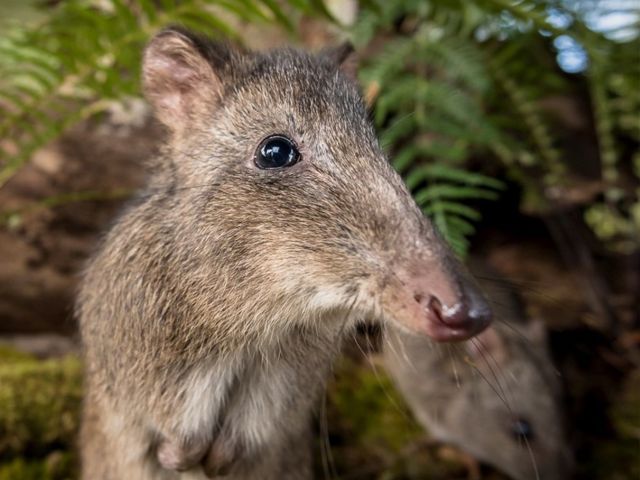
Get help spotting the locals. (Image: Doug Gimsey)
If spotting koalas and kangaroos in the wild feels like winning the lottery, Wildlife Wonders gives you guaranteed sightings without cages or crowds. Every visit to the sanctuary helps fund the Conservation Ecology Centre which supports endangered species across the Otways, so your business is appreciated by humans and animals alike.
The guided walk takes you through protected Otways habitat where you might spot potoroos (or joey lookalikes for those unfamiliar with a potoroo), wallabies, and sleepy koalas lounging in the trees.
8. Visit the Cape Otway Lightstation
Delve into the tales of Cape Otway Lightstation.
Towering over the sea on a cliff above the Southern Ocean, Cape Otway Lightstation has been guiding ships since 1848. Before the lighthouse was built, Cape Otway was one of the most treacherous points on the Victorian coast, with dozens of shipwrecks occurring in its surrounding waters. Pick the right day, and you may bump into a local willing to tell you about the wreck of Eric the Red .
While at the Cape Otway Lightstation, explore the keeper’s quarters, walk the coastal trails, and take in views that only stop short at the horizon.
And no, contrary to popular belief, the Round the Twist lighthouse is actually located in Split Point, just shy of two hours in the direction of Melbourne. Nothing’s stopping you from embarking on a lighthouse crawl, though.