The ultimate guide to becoming an eco-camper

hero media
From solar power to beeswax wraps, here’s our ultimate guide to becoming an eco-camper.

1. Solar panels

Let’s start with one of the best decisions you could make for a more environmentally-friendly camping experience: solar panels. Whether you’re towing a caravan or driving a van, installing solar panels is a no-brainer. Keep in mind that in case of bad weather you will have to recharge your battery or else contact a tow truck to take you to a place where you can either replace or change your vehicle battery.

Not only do they mean you’re not drawing on a town’s electricity supply, but they’ll give you the freedom to go anywhere. Relying on the sun to power a 12-volt fridge, lights, camera, laptops and your phone means you can camp in remote locations, and that means more money in your pocket for tours and eating out when you return to civilisation. You don’t have to permanently attach solar panels to your vehicle either, with plenty of collapsible set-ups on the market. Folding solar panels and solar blankets are great because they can be moved during the day to capture the best sunlight and then packed away easily at night.

Check out… 4WD SupaCentre and REDARC  to familiarise yourself with the options.
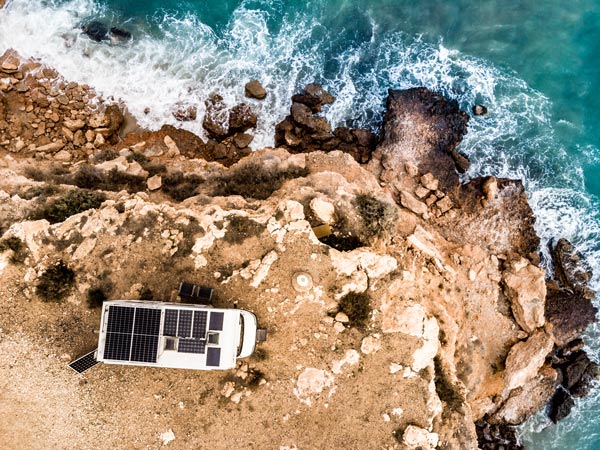
A van with solar panels on the roof camping on cliff sea shore.
Solar power means more money in your pocket (or more travel)

2. Mozzie spray

Those nostril-burning mosquito repellents certainly do their job, but one sniff and it’s obvious they’re not doing the environment – or your skin – any good. Thankfully, there are natural alternatives, mostly in the form of creams.

Keep an eye out for the term “DEET-free" and look for child-friendly options. Essential oils such as citronella, tea tree, lemongrass and eucalyptus are said to keep mozzies at bay, so get yourself a designated camping diffuser. If nights are cool, light a campfire as the smoke is also believed to be a deterrent. 

Check out… Australian-made Nature’s Botanical or any repellent made from essential oils. 

Woman spraying insect repellent on skin outdoor.
DEET-free mozzie repellent is a lifesaver.

3. DIY washing machine

Forget saving up coins for caravan park laundries, which can be stocked with dated (read: power-zapping) washing machines, and let your caravan or car wash your clothes for you. Yes, you heard right. Buy a tub with a lid from a hardware store, fill it with water and soap, and then stuff it with your red-dirt-stained camp clothes before you head to your next destination.

As the car or caravan moves, the water and clothing will agitate, knocking that dirt out of your favourite sundress. Once you arrive at the next campsite, rinse the clothing under a tap, hang it in the sun to dry and Bob’s your uncle.

Check out… Bunnings Warehouse for a cheap, hardy bucket. 

4. Beeswax wraps

Tupperware was so last century and using plastic wrap is a wasteful, bad habit. Stay ahead of the crowds by replacing both products with beeswax wraps. At $30 a pop for a three-pack, they’re expensive but worth the coin.

Not only do they take up less room in your caravan kitchen, but they’re better for the environment and your long-term health. Simply made out of cloth and beeswax, the wraps can be used as a lid for ceramic and glass crockery, and can be wrapped around cheese and cut vegetables to keep them fresh. You’ll find a lot of small businesses producing them, too, so you know your money is going directly into the pocket of the creator. 

Check out… @bumblebeewraps on Instagram. The 100 per cent cotton wraps are handmade in the NSW Riverina and the business is part of the #buyfromthebush social media movement supporting communities in drought.
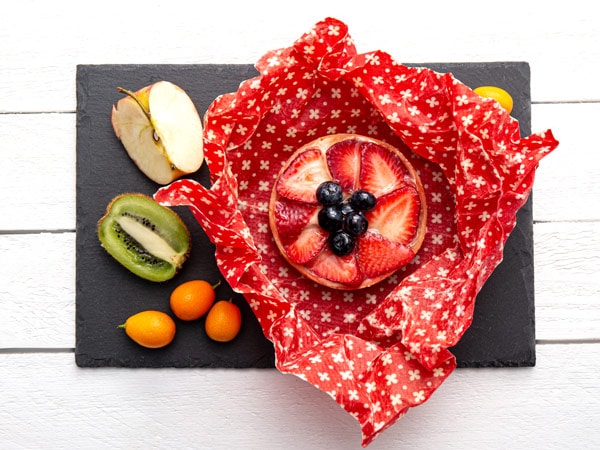
Take away cake inside homemade beeswax wraps. Wrapping food in handmade beeswax wrap cloth indoors, alternative for plastic. Using iron machine to melt beeswax into cotton cloth.
The ultimate kitchen essential.

5. Shop local

The lure of big supermarkets for both convenience and low prices can be strong when you’re travelling but, wherever possible, you should also head along to produce markets to stock up on your camping food and beverages.

While it might mean you are paying a bit more, this is offset by the fact you will be reducing your food miles, buying in-season fruit and veg, and supporting local farmers, which in turn boosts the economy of the tourist town you’re enjoying so much. If you’re travelling through Queensland, you’ll likely come across a tonne of roadside stalls selling bananas, passionfruit and other delicious produce for reasonable prices. Make sure you pull over and stock up.

Check out… some of our favourite markets, such as Albany Farmers’ Market and Albany Boat Shed Markets in WA; Rusty’s Markets in Queensland; and Mudgee Farmers’ Markets in NSW.
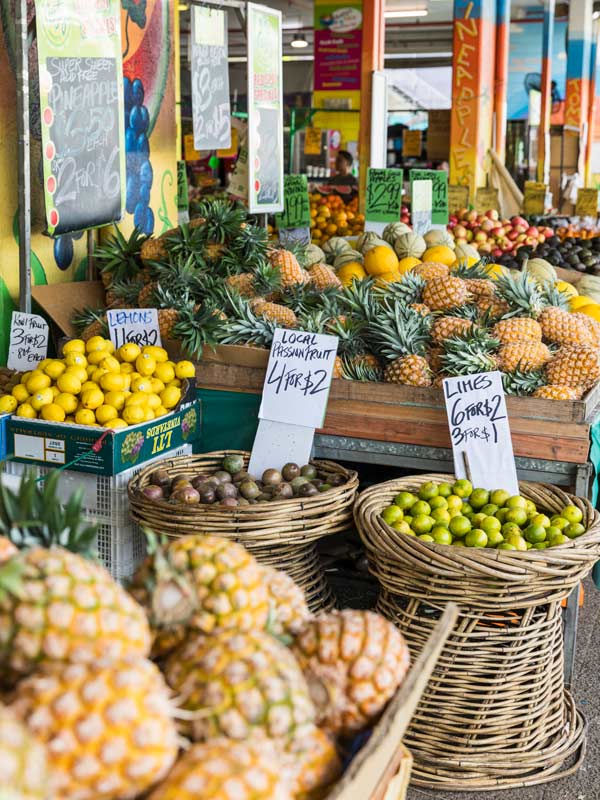
Fresh tropical fruit stalls at Rusty's Markets in the heart of Cairns. (Image: Tourism and Events Queensland)
Rusty’s Markets is a must-stop in the heart of Cairns. (Image: Tourism and Events Queensland)

6. Wood fires

It may be harder, but relying on old-fashioned newspapers and matches to light a campfire is far gentler on the environment than quick-to-ignite fire starters made from kerosene (paraffin). If you’re determined to stick with fire-starters, look for products that are labelled “no kerosene".

Recycle any newspapers and cardboard by using them in the fire, and follow national park rules about only burning fallen branches. Get the kids to collect any sticks around the campsite for kindling (it’ll keep them busy and they’ll love helping). 
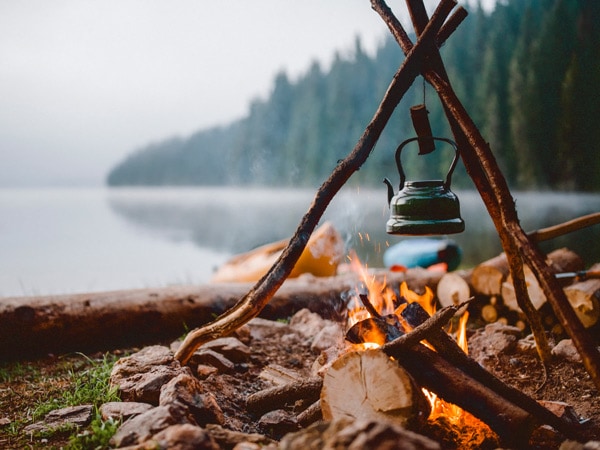
Campfire with a vintage kettle next to the beautiful lake.
Steer clear of the kerosene when lighting your campfire.

7. Your location

Camping on the beach can be controversial due to fragile dunes and unruly 4WDers who ignore signs about protecting the vegetation. Then there’s the issue of inexperienced campers incorrectly disposing of human waste (carry a shovel, people).

That’s why it’s important to pick an appropriate campsite for your style of travel. If you’re not willing to obey local council rules about where you can pitch a tent or you couldn’t be bothered to take your rubbish home, it’s best you stick to holiday parks. Also, while rinsing off in a free beach shower is fine, it’s not acceptable to use soap in the ocean or fragile river ecosystems.
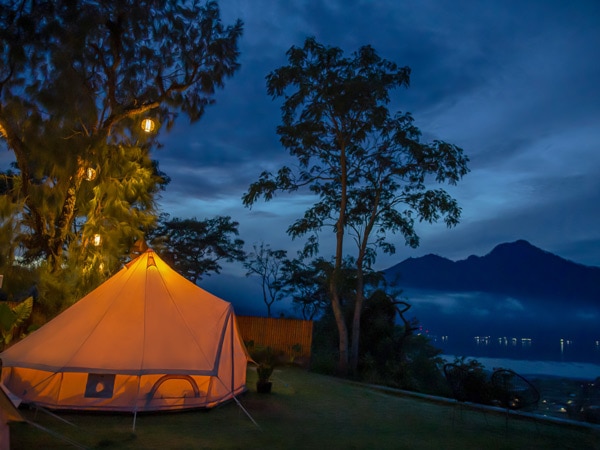
Shot of illuminated tent in a romantic glamping site at night with Mount Batur view.
Be mindful of where you choose to set up camp.

8. Take 3 for the Sea

You’d be surprised by how many campers leave their rubbish behind, sometimes unwittingly, after a weekend away with mates. Throwing your beer bottle tops in the campfire doesn’t make them disappear and, if you head to the beach for a morning coffee, carry a reusable mug.

If camping and fishing go hand in hand for you, be sure to bin any cut fishing line and hooks, and avoid casting a line where it’s likely to get snagged on rocks and end up in the ocean. 

Check out… Instagram account @take3forthesea for inspiration on doing the right thing.
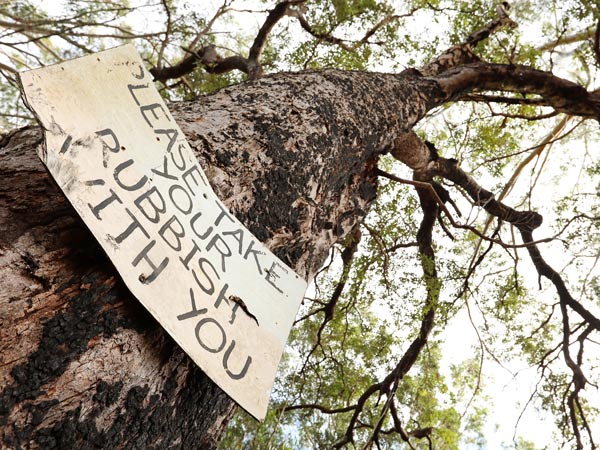
multiple views of an old worn sign post instructing campers fishermen bush walkers hikers to take responsibility for removing all waste trash rubbish and take it with them. Environmentally responible behaviour. warning sign no littering. Say no to illegal dumping concept story
Pretty self-explanatory…
Jennifer Ennion
Jennifer Ennion is a freelance travel and ski journalist who loves encouraging people to spend more time outdoors. From snorkelling with belugas in sub-Arctic Canada to hiking the Himalayas, Jennifer is constantly searching for stories that inspire readers to push their boundaries.
See all articles
hero media

Goat yoga to gastronomy: The ultimate guide to Wimmera Mallee, Vic

A world away from the hustle, bustle and chaos of the big smoke – yet with a distinct sense of familiarity – Victoria’s Wimmera Mallee region is an incomparable place.

Victoria’s Grampians are a visual feast, a seemingly endless vista of craggy cliffs, rolling valleys and untamed bushland. But they’re also much more than a scenic mountain landscape. Diverse and storied, each region within the range has its own rhythm. The Wimmera Mallee – a pocket in the state’s north-west, stretching from Horsham to near Mildura – is one of the most captivating. 

Once known as Victoria’s agricultural heartland, the Wimmera Mallee has evolved in recent years into a dynamic, slightly offbeat hub. It buzzes with a creative hum and welcoming energy, and harbours an eclectic mix of long-time locals and tree-changers. Once you encounter its unmistakable charm, feel its warm country hospitality and taste its nationally celebrated vanilla slice, you may find yourself lingering longer than planned. 

Eager to explore? These must-visit spots let you experience the inimitable spirit of this special part of the world. 

Wimmera Mallee’s quirky attractions

The Dimboola Imaginarium, Wimmera Mallee victoria
Step into the whacky Dimboola Imaginarium. (Image: Denis Bin)

If you’re after something a little more unconventional, the Wimmera Mallee delivers in droves. 

The Dimboola Imaginarium – located in a historic bank building in its namesake town – is a gift shop and boutique accommodation in one. Shop for unique and whimsical keepsakes, stay overnight in an elegant themed room, and lose yourself in one of the Imaginarium’s interactive experiences.  

Also in Dimboola, just a short drive from the Imaginarium, is a menagerie of utter delight. Tiny Goats and Co. is home to a herd of miniature goats, with the farm offering group visits and special events like goat yoga and cuddle sessions. 

Arcade aficionados should visit the Australian Pinball Museum in nearby Nhill. Here, you’ll find the biggest selection of playable pinball machines in the country, featuring modern models and classics dating all the way back to 1931.  

Arts and culture in Wimmera Mallee

Step into the Wimmera Mallee’s storied history at the Stick Shed
Step into history at the Stick Shed. (Image: Visit Vic)

As a thoroughly creative community, it’s no wonder the Wimmera Mallee has a host of venues focused on its rich arts and culture scene. 

Wander Trickbots Metal Art & Sculpture Garden in Nullawil, a winding trail filled with unique and quirky creations fashioned from metal odds, ends and scrap. A walk through the garden is inspiring enough, but consider buying a piece to take home and treasure. 

The town of Nhill also has a significant Karen-Burmese refugee community, who make up 10 per cent of the local population. Discover the artistry of this vibrant culture at Paw Po , where you can purchase traditional hand-woven and textile products. Choose from a selection of beautifully crafted homewares, fashion and dolls. 

Step into the Wimmera Mallee’s storied history at the Stick Shed , the only WWII emergency grain store still standing today. This National Heritage-listed structure takes you on a journey through the region’s agricultural past and is a dramatic sight with its towering and eerily striking timber poles. 

Nature escapes around Wimmera Mallee

pink Lake Tyrrel, Wimmera Mallee, Victoria Australia
Take in the pink hues of Lake Tyrrell. (Image: Visit Vic)

Much like the majestic beauty of the wider Grampians, the Wimmera Mallee is a mélange of serene and spellbinding nature escapes. 

Victoria’s pink lakes are famed nationwide, and two of them are found right here. See the flamingo-pink hues of Loch Iel, particularly vivid after a heavy downpour, or the vast and ancient Lake Tyrrell , which turns pink during wet and warm conditions. 

The Snowdrift dunes in Wyperfeld National Park are ideal for adventurers. Set amid the area’s semi-arid landscape, the dunes are expansive mounds of sand deposited around 40,000 years ago. Hike or sandboard them and make sure to visit at sunset, when the sand glows golden. 

And while some travellers chase the highest peaks, you can see the most modest in the Wimmera Mallee. Standing a mere 43 metres above the surrounding terrain, Mount Wycheproof is considered the smallest registered mountain in the world. Courtesy of its relatively gentle inclines, it’s a lovely spot for a walk and a picnic. 

Culinary adventures in Wimmera Mallee

border inn in the Wimmera Mallee
Meet the locals at Border Inn.

As a region rich in agricultural bounty, it’s little surprise the Wimmera Mallee has such a robust and vibrant food scene. The community is fiercely proud of its local produce, showcasing the flavours and heritage of the area. 

The Border Inn in the village of Apsley is a quaint country pub and meeting spot for the local community, featuring a classic country menu and warm hospitality. 

The Horsham Golf Club is a popular spot for golf buffs with an adjoining bistro and bar. Try a modern twist on hearty favourites while taking in views of the green.  For a taste of the area’s vintages, head to Norton Estate Wines – a boutique wine producer and cellar door open weekends.  

A Wimmera Mallee jaunt wouldn’t be complete without a visit to the famed Sharp’s Bakery in Birchip. Here, you’ll find a velvety vanilla slice that’s been crowned as Australia’s best seven times. 

Wimmera Mallee accommodation

Fulham Homestead in wimmera mallee
Escape to Fulham Homestead.

If you’re enjoying an extended trip, you’ll need somewhere to rest. After a day tackling Wyperfeld’s epic dunes, visit Pine Plains Lodge , also in the national park. Built from reclaimed timber planks and logs, and anchored by rugged stone fireplaces, the lodge is a rustic and cosy hideaway. 

For a refined yet relaxing escape, head to Fulham Homestead – a gorgeously restored guesthouse on an idyllic working farm, complete with farm animals and scenic vistas. Built in the 1840s, it has all the elegance and charm of its heritage, plus contemporary comforts like a modern kitchen, wi-fi and air-conditioning. 

The Hermitage Hotel is Victoria’s oldest inland pub and an equally delightful blend of old and new. The restored rooms are perfectly appointed and adorned with period furnishings and high-quality linens. The pub itself is a favoured food and wine spot among locals and travellers alike. 

If camping is more your style, the Lake Lascelles Cabins and Camping (formerly Mallee Bush Retreat) is a sprawling oasis with powered and unpowered sites and snug cabins. The setting is stunning too, the pristine Lake Lascelles sitting right in its centre. 

Annual events

Wimmera Mallee Nhill Aviation Museum
Time your visit to Nhill Aviation Museum for the annual air show.

You may not need an excuse to revisit the Wimmera Mallee, but these annual and bi-annual events will almost certainly have you returning again and again. 

Each year, the Lake Chalegrark Country Music Marathon takes over the town for a spectacular line-up of musicians from around Australia. The event is easygoing, family-friendly, and set in scenic surrounds on the shores of Lake Charlegrark. 

Every two years, the region holds colourful events like the Wimmera Steampunk Festival , a raucous celebration of 19th-century steampunk culture with a different theme each time; the Nhill Air Show , which features jaw-dropping aerial stunts, aircraft displays, music, activities and more; and the Nati Frinj , a festival of art, culture and performance showcasing the many talents of the Natimuk community. 

From the quirky to the tasty, start planning at visitwimmeramallee.com.au