holiday with teens and both actually enjoy it

hero media
When holidays with kids become holidays with teens, parents need to traverse a whole new landscape beyond the one they are actually exploring together, as Ann Hamilton discovers.

Children make brilliant travel companions. When they are small (and portable) you can take them almost anywhere, and as they grow, their wide-eyed wonder at new sights, sounds and experiences has a way of rubbing off on everyone around them. It’s what makes family holidays so much fun. But what happens when time away with tots turns into family vacations with teens? Can a guileless appreciation of the world survive Google, smartphones and hormones?


As our children get bigger it sometimes seems that the world around them shrinks in equal proportion. Via Instagram they have already seen the backstreets of Paris, the street tribes of Tokyo and the beaches of Bondi before ever boarding a plane. And the 24-hour news cycle fills in the gaps of what’s going on around the globe – both good and bad.


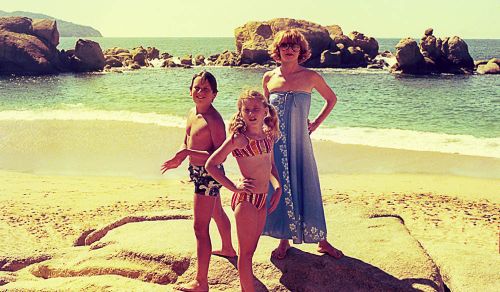
A recent sun, sand and sea trip with my teenage daughter presented a new landscape to navigate, beyond the one we were exploring together. Where in the past, flying was the ultimate adventure, and furnishing her with unfettered access to a swimming pool, sweet treats (preferably ice-cream) and a theme park with some sort of Harry Potter guise to it would assure holiday happiness for everyone involved, it’s harder to rest on your laurels as they grow older.


Now her reactions are a lot more muted; she doesn’t love flying any more due to a heightened awareness of how things work (and the contribution of a friend’s macabre fascination with the Air Crash Investigations TV show); the pool outside our room went largely untouched; the sweet treats weren’t consumed with as much glee as they used to be. I became fixated on coaxing positive responses from her. It was all increasingly annoying for her and tiring for me.


But as our holiday progressed I slowly started to figure out that the issue wasn’t actually with my daughter, it was with me. I had somehow failed to notice that my darling child was no longer a baby (although she’ll always be my baby).


Maybe the whirlwind pace of daily life had masked the change or maybe it was just wishful thinking on my part (if she wasn’t ageing then neither was I), but when the lightbulb moment came it was a revelation. It turns out I had been gauging her enjoyment levels on outdated measures harking back to when she was eight years old instead of paying attention to what was resonating with her at the age of 13.


Deliberating over ice-cream flavours now comes a distant second to browsing sunglasses in the resort shop; pool time needs to be interspersed with ‘me time’; and Harry Potter, while not yet superannuated, now plays second fiddle to more cerebral and challenging experiences.


So, midway through our getaway I recalibrated my approach. I let her decide what she wanted to do with her day instead of planning things down to the last detail for her; I stopped insisting she do things with me when all she wanted was to stretch out on a cushion-strewn daybed and read; I let her foster friendships independent of me. And I stopped worrying and started noticing that she was actually having fun.


Family holidays often throw our day-to-day life into stark relief. Maybe it has something to do with being at such close quarters with each other or not having the usual distracting touchstones around. And they often result in ongoing change once you get back home based on what you learn about each other during the journey. I returned home as a fully-fledged teenager’s mum; my daughter as an increasingly independent young woman, albeit one with the beginnings of a very nice sunglasses collection.

hero media

3 wild corners of Australia that let you reconnect with nature (in comfort)

The country’s rawest places offer some of its most transformative, restorative experiences.

Australia offers sublime opportunities to disappear into the ancient, untouched wilderness, worlds away from modern stress. Wild Bush Luxury offers a collection of experiences that are a portal into the continent’s wildest, most undiscovered landscapes, from wide floodplains to vast savannas, where the only distractions are birdsong, frog calls, curious wallabies and the daily drama of sunset. With a focus on conservation and Indigenous knowledge, these all-inclusive experiences allow guests to slow down and quiet their minds for intimate encounters with the natural world.

1. Bamurru Plains

safari tent at Bamurru Plains wild bush luxury
Let nature take front row.

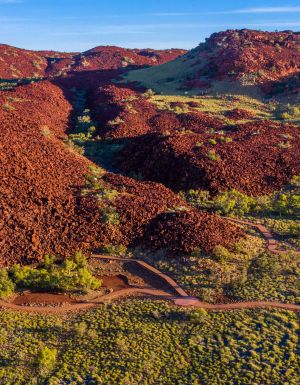
In the remote Top End, just outside Kakadu National Park on the fringes of the spectacular Mary River floodplains, you’ll find Bamurru Plains , a peerless Australian safari camp. After a quick air transfer from Darwin to the camp’s private airstrip, you’ll be whisked away via 4WD to a vivid natural wonderland of shimmering floodplains, red earth, herds of peacefully grazing water buffalo and 236 bird species (Bamurru means magpie goose to the Gagadju people).

Accommodations consist of 10 mesh-walled bungalows and two luxe stilted retreats where guests enjoy panoramic, up-close views that invite them into their rightful place in the landscape (and binoculars to see it even better). Being an off-grid experience designed to help guests disconnect, the only distractions are birdsongs, frog calls, curious wallabies, the occasional crocodile sighting and the daily drama of the spectacular golden sunset.

It’s a place where nature’s vastness rises to the level of the spiritual, and Bamurru’s understated, stylish,  largely solar-powered lodgings are designed to minimise human impact and let nature take front row.  Guests relax in comfort with plush linens, an open bar, communal tables that allow for spontaneous connections and curated dining experiences from the in-house chef using local ingredients and bush-inspired cooking methods.

Bamurru Plains airboat tour
Zoom across the floodplains. (Image: Adam Gibson)

It’s a restorative backdrop for days spent zooming across the mist-covered floodplains in an airboat, birding with expert guides, taking an open-sided safari drive or river cruise through croc country. Spend time at the Hide, a treehouse-like platform that’s perfect for wildlife spotting.

In fact, nature is so powerful here that Bamurru Plains closes entirely during the peak monsoon season (October to April), when the floodplains reclaim the land and life teems unseen beneath the water. Yet Wild Bush Luxury’s ethos continues year-round through its other experiences around Australia – each designed to immerse travellers in a distinct Australian wilderness at its most alive and untouched.

2. Maria Island Walk

woman on a headland of Maria Island Walk
Maria Island Walk offers sweeping coastal scenes.

Off Tasmania’s rugged east coast, the iconic Maria Island Walk is an intimate four-day journey through one of the country’s most hauntingly beautiful and unpopulated national parks, encompassing pristine beaches, convict-era ruins, and wildlife sightings galore. Accessible only by a small ferry, Maria Island feels like a place reclaimed by nature, which is exactly what it is: a penal settlement later used for farms and industry that finally became a national park in 1972.

These days, the island is known as ‘Tasmania’s Noah’s Ark’ and its only human inhabitants are park rangers. It’s a place where wombats amble through grassy meadows, wallabies graze beside empty beaches, dolphins splash in clear water just offshore and Tasmanian devils – successfully reintroduced in 2012 after near-extinction on the mainland – roam free and healthy.

Each day unfolds in an unhurried rhythm: trails through coastal eucalyptus forests or along white-sand bays, plateaus with sweeping ocean views, quiet coves perfect for swimming. Midway through the journey, you’ll explore Darlington, a remarkably preserved 19th-century convict settlement whose ruins tell stories of human ambition at the edge of the known world.

At night, sleep beneath a canopy of stars in eco-wilderness camps – after relaxing with Tasmanian wine and locally-sourced meals, and swapping stories with your fellow trekkers by candlelight.

3. Arkaba

two people standing next to a 4wd in Arkaba
Explore Arkaba on foot or on four wheels.

For a bush immersion with more of an outback flavour, Arkaba offers a completely different type of experience. A former sheep station and historic homestead in South Australia’s striking Flinders Ranges that has been reimagined as a 63,000-acre private wildlife conservancy. It’s now patrolled mainly by kangaroos and emus.

Small-scale tourism (the homestead has just five ensuite guestrooms) helps support rewilding projects, and guests become an essential part of the conservation journey. Days begin with sunrise hikes through ancient sandstone ridges or guided drives into the ranges to spot yellow-footed rock-wallabies. And end with sundowners on a private ridgetop watching the Elder Range glow vibrant shades of gold, crimson and violet as the air cools and time stands still.

Here, you can join conservation activities like tracking native species or learning about Arkaba’s pioneering feral-animal eradication projects, then unwind with chef-prepared dinners served alfresco on the veranda of the homestead, which is both rustic and refined. The highlight? Following Arkaba Walk, a thriving outback wilderness where emus wander and fields of wildflowers grow.

It’s an unforgettable immersion in Australia’s vast inland beauty, a place where the land’s deep and complicated history – and astounding resilience – leave their quiet imprint long after you return home. In a world where genuine awe is rare, Wild Bush Luxury offers a return to what matters most in the untamed beauty of Australia’s wilderness.

Disconnect from the grind and reconnect with nature when you book with at wildbushluxury.com