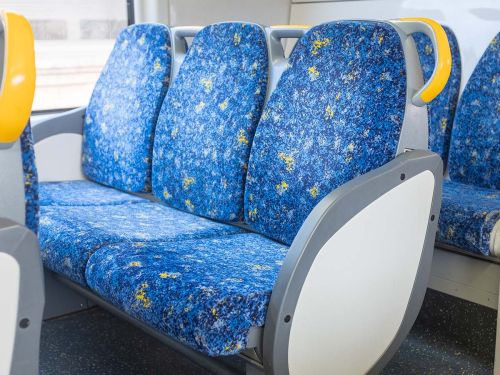
Ever wondered about the distinctive patterns on the seats of trains and buses? These are called moquettes, a type of upholstery that’s normally brightly coloured and intricately designed (to conveniently disguise signs of wear and discourage graffiti on public transport). We may take them for granted, but the designs vary from city to city and have changed over the decades, making each pattern a time capsule of a time and place.
But what if you could transform these distinctive patterns into wearable designs? Meet Sydney-based designer Kate Shanahan, whose brand, Designed by Kate , creates quirky bags and accessories from recycled and deadstock train moquettes.
“People love the idea of being able to keep a piece of transit history," says Kate. “The colour and pattern can take people back to a journey on holiday, or school years. A customer once said to me that seeing [the patterns] out of context, you get to value the design in the fabric, which you don’t really do when it’s on a seat".
Kate started working with public transport moquettes when she “stumbled across some London Underground moquettes at Reverse Garbage". Kate loved the pattern and texture, and the fabric was durable and perfect for making bags. Pretty soon, Kate started exploring moquettes, finding designs from all over the globe.
“I have a background in theatre design and I have a passion for transforming something found into something unique and beautiful," Kate says.
The Mind the Gap collection features patterns that will be familiar to most Aussies, made from moquettes that have appeared on buses and trains across Sydney, Brisbane, Perth and regional Victoria through a variety of eras. The collection, which ranges from tote bags to pencil cases and coin purses, lets you carry a piece of transit history wherever you go.
The Mind the Gap collection also invokes Art Deco London with moquette patterns used on trains from the 30s and 50s, as well as funky retro prints used on Los Angeles Transit. For those who love nostalgia, these bags are the perfect souvenir, capturing something uniquely tied to a place and time.
Elizabeth Whitehead is a writer obsessed with all things culture; doesn't matter if it's pop culture or cultures of the world. She graduated with a degree in History from the University of Sydney (after dropping out from Maths). Her bylines span AFAR, Lonely Planet, ELLE, Harper's BAZAAR and Refinery 29. Her work for Australian Traveller was shortlisted for single article of the year at the Mumbrella Publishing Awards 2024. She is very lucky in thrifting, very unlucky in UNO.
From rainforest walks and scenic drives to historic gold-rush towns and standout regional dining experiences, you can find it all in West Gippsland.
Hover over West Gippsland on Google Earth and you’ll see vast tracts of land spread out like green velveteen around the Toorongo Falls Reserve. It’s a landscape that feels almost impossibly lush for a region sitting little more than an hour from Melbourne.
Track southeast in late autumn and early winter and you’ll see pockets of the Mt Baw Baw Plateau dusted in snow. In addition to the forests of mountain ash veined with creeks and rivers, there are pastures and farmland cross-stitched together to form pretty patchworks.
But West Gippsland isn’t defined by scenery alone: in addition to its awe-inspiring nature, a Venn diagram of the region includes gold-rush history and great culinary experiences. Spend a long weekend here and it quickly becomes clear how often these three overlap.
Getting there
Spend the weekend eating and exploring in West Gippsland. (Credit: Messmates Dining)
Getting to West Gippsland involves as easy drive – it’s just over an hour out of Melbourne along the Monash Freeway.
Not driving? Catch the train from Melbourne on the Gippsland line, terminating at either Traralgon or Bairnsdale, and hop off at Warragul or Drouin.
Visit historic villages
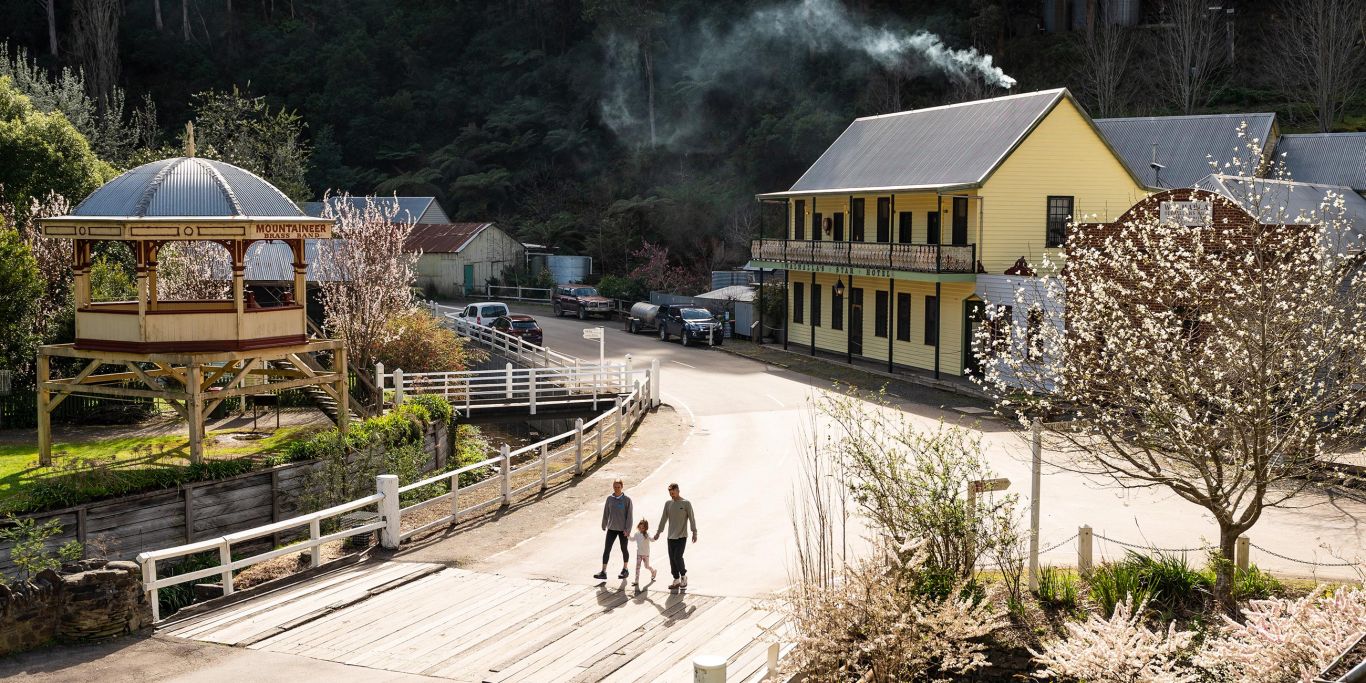
Wander into Australia’s Gold Rush history at Walhalla. (Credit: Rob Blackburn)
The West Gippsland region is on the Traditional Lands of the Kulin and Kurnai nations, specifically linked to the Bunurong, Gunaikurnai and Wurundjeri Peoples, whose connection to Country stretches back thousands of years.
European settlement occurred in the 19th century as timber cutters, farmers and gold seekers pushed into the region’s dense forests. Small towns grew around sawmills and railway lines, and many of those gold rush settlements, timber towns and railway villages still shape the character of the region today.
The most evocative of these is Walhalla Historic Township , a remarkably preserved gold-rush township tucked deep in the mountains. In the late 1800s, it was one of Victoria’s richest goldfields. Today visitors can step inside that history at the Long Tunnel Extended Gold Mine, where underground tours reveal the scale of the mining operation that once powered the town’s prosperity. Nearby, the Walhalla Goldfields Railway retraces part of the original narrow-gauge line through the valley, offering a slow journey past forest and river scenery.
Further west, Noojee is a classic mountain village. It’s surrounded by dense forest and waterfalls and has become a natural base for exploring the Baw Baw region. Just outside town, Noojee Trestle Bridge stands as one of West Gippsland’s most striking relics of the rail era. The towering wooden structure is the tallest surviving trestle bridge in Victoria and today forms the centrepiece of an easy scenic walk with wide views across the valley.
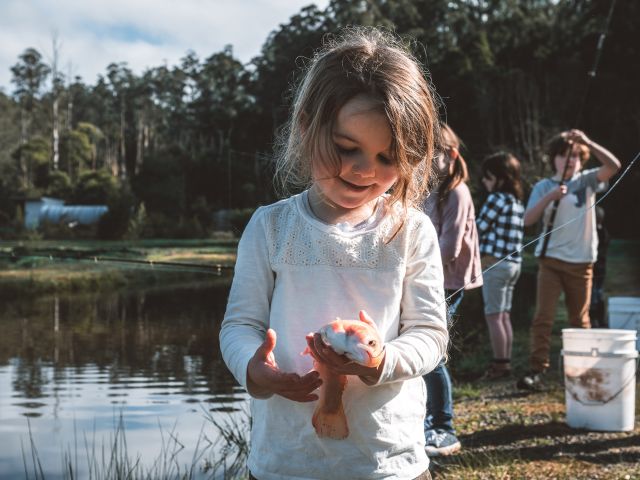
Catch your own lunch at Alpine Trout Farm. (Credit: Nicky Cawood)
At Alpine Trout Farm near Noojee, visitors can fish for trout in mountain-fed ponds before enjoying the catch prepared fresh onsite. It’s a simple experience that reflects the area’s long connection to the surrounding waterways.
Back in Warragul , the region’s main service town, the story shifts from heritage to modern regional life. With galleries, restaurants and sweeping views across the rolling farmland of Gippsland, the town has become a lively hub linking the district’s past with its evolving food and cultural scene. Drive through the town and you’ll find heritage buildings, old pubs and weatherboard cottages that hint at the area’s early days as a frontier landscape.
In other towns the past survives in quieter ways – a historic hall here, a century-old bakery there.
Even simple roadside stops can feel cinematic in West Gippsland. The region also delivers plenty of opportunities to lace up your walking shoes.
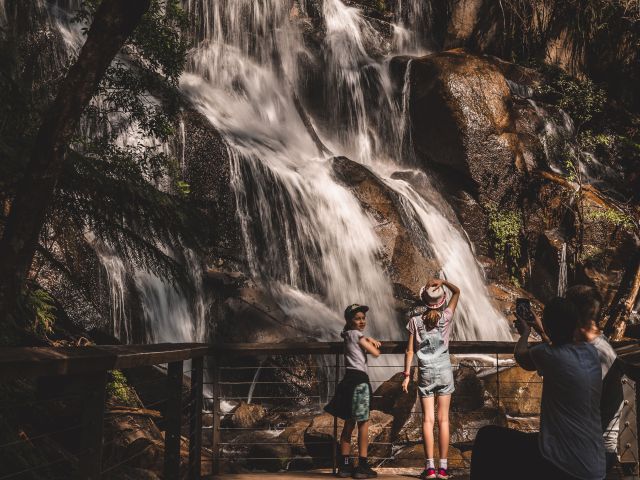
One of the region’s most rewarding nature escapes lies just outside Noojee at Toorongo Falls Reserve . A network of walking tracks winds through the cool-temperate rainforest where towering mountain ash trees filter the light and the air smells of rich, damp earth. The 2.2-kilometre trail to the viewing platform overlooking Toorongo Falls is short, but spectacular, as the water cascades down over moss-covered rock faces into a cool, green gully in Little Toorongo River.
Further north, the Mount Baw Baw Alpine Resort offers year-round adventures. In winter, the mountain attracts skiers and snowboarders. The warmer months are just as compelling, with scenic drives to see alpine wildflowers, mountain bike trails and panoramic hiking routes that open across the plateau.
Cyclists and walkers looking for a more relaxed pace can follow the Rokeby Neerim Rail Trail , which traces a former railway line through farmland and small Gippsland villages. The mostly flat trail passes rolling paddocks, creeks and historic bridges, making it an easy way to drop it down a gear when exploring the countryside.
Taste the best eats of West Gippsland
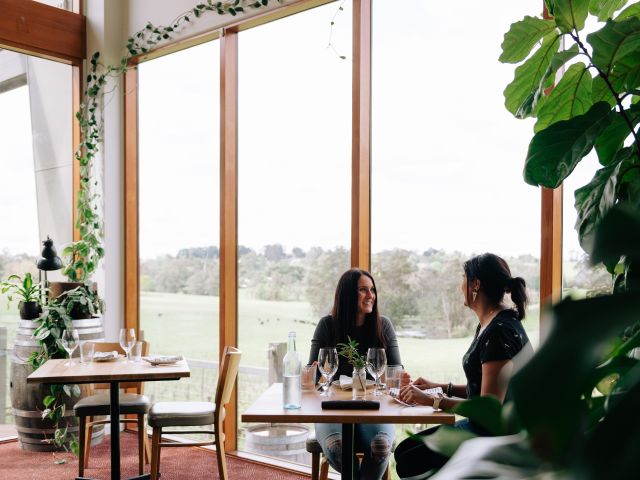
Taste the best of the region at Hogget Kitchen.
For many travellers, the real drawcards of West Gippsland are the food and wine. The region sits in the heart of Victoria’s fertile dairy country, and that agricultural backdrop has helped shape a dining scene where seasonal produce and local provenance take centre stage.
Hogget Kitchen has helped put Warragul firmly on the radar for serious regional dining in West Gippsland. Here, head chef and owner Trevor Perkins runs the kitchen alongside well-known winemakers William (Bill) Downie and Pat Sullivan. Hogget Kitchen lives up to its promise of exceptional destination dining; what lands on the table depends largely on what nearby farms have harvested that week as well as a wine list from Wild Dog Winery and other Gippsland producers.
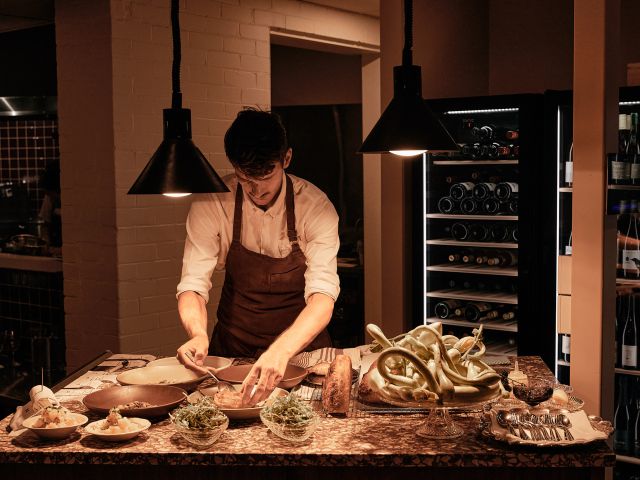
Warragul is also where you’ll find Messmates Dining where the kitchen team is led by Michelin-trained chefs. The Euro-leaning bistro and wine bar brings a polished edge to the local dining scene using produce sourced from across West Gippsland.
For something more casual, the century-old Noojee Hotel is the kind of hub that every traveller dreams of finding after a long drive. Expect generous pub classics served on the sunny deck in summer or beside the crackle of a log fire in winter. Nearby, rustic Toolshed Bar, Bistro & Cabins is the place to go for a wood-fired pizza topped with smoked local trout paired with Gippsland wine, making it a rewarding stop for lunch or an overnight stay.
Time your visit with the Truffle Festival
Food lovers visiting in winter should consider timing their trip to coincide with Noojee Truffle Festival , running from 10 July to 2 August 2026. The inaugural event celebrates the region’s emerging truffle industry with tastings, special menus and events built around one of winter’s most prized ingredients.