After a dry spell in June, Australia’s ski fields are finally blanketed in snow – and there’s more powder on the way.
If you’ve been patiently checking the live snow cams and wondering whether winter was ever going to show face, there’s finally some good news. Australia’s ski season has found its footing, with fresh snowfall and icy temperatures giving the country’s alpine resorts a welcome winter boost just as the school holidays get underway.
This year, Australia experienced its warmest June in decades. And while the heat was celebrated by the cold-averse, the country’s alpine areas suffered. The unusually high temperatures resulted in severe snow droughts and one of the slowest starts to the Aussie ski season in more than 70 years.
Thankfully, the weather has turned. A series of cold fronts beginning on 3 July swept across south-east Australia last week, bringing natural snowfall and much-needed freezing temperatures. While there has been no new powder in the last 48 hours, weather forecasts are predicting up to 48cm of fresh snowfall for the next 15 days at certain resorts.
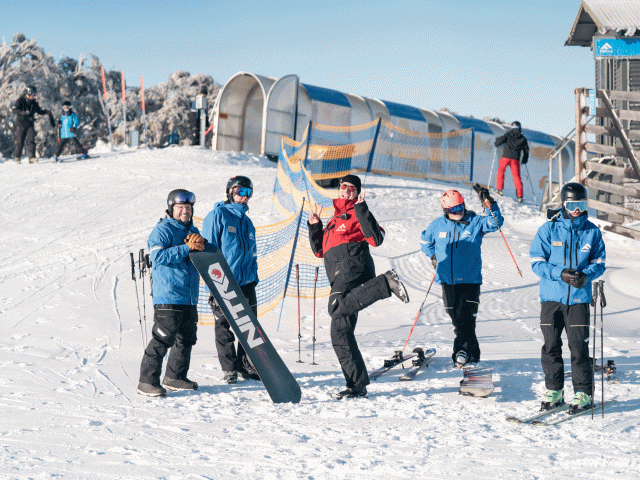
Skiers and snowboarders rejoicing on 4 July after fresh snowfall. (Credit: Falls Creek)
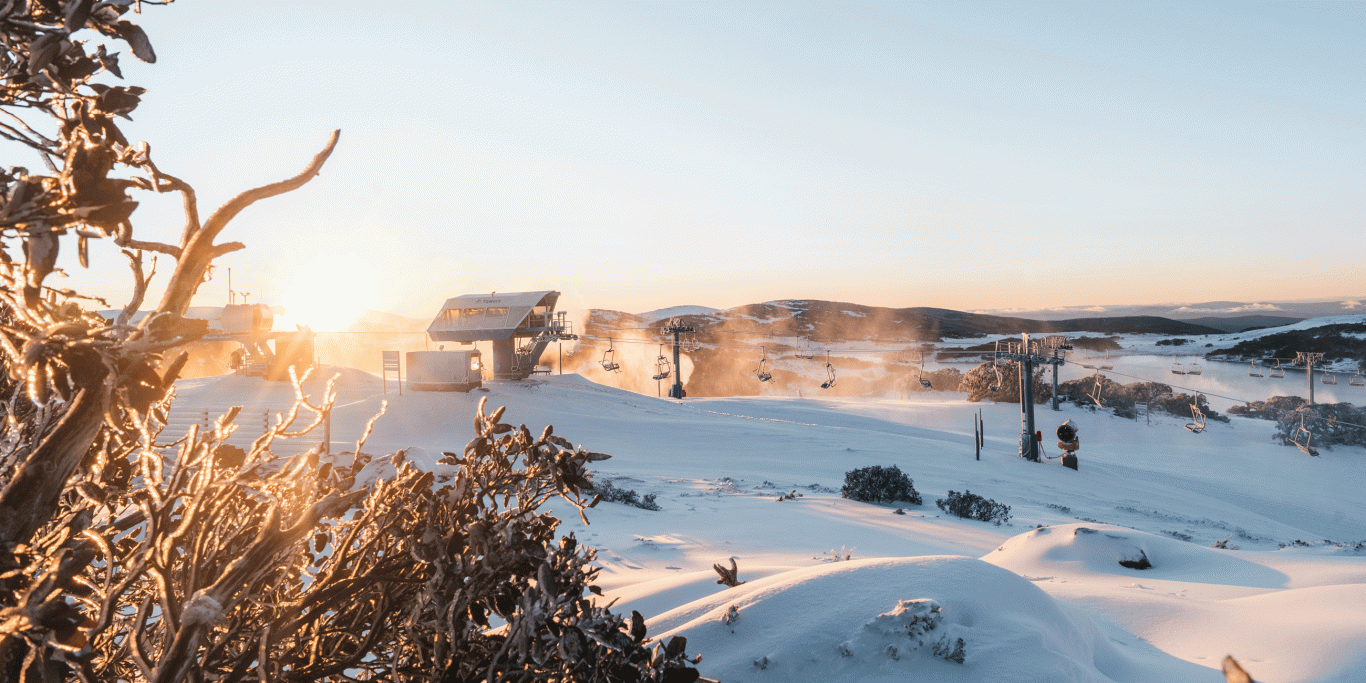
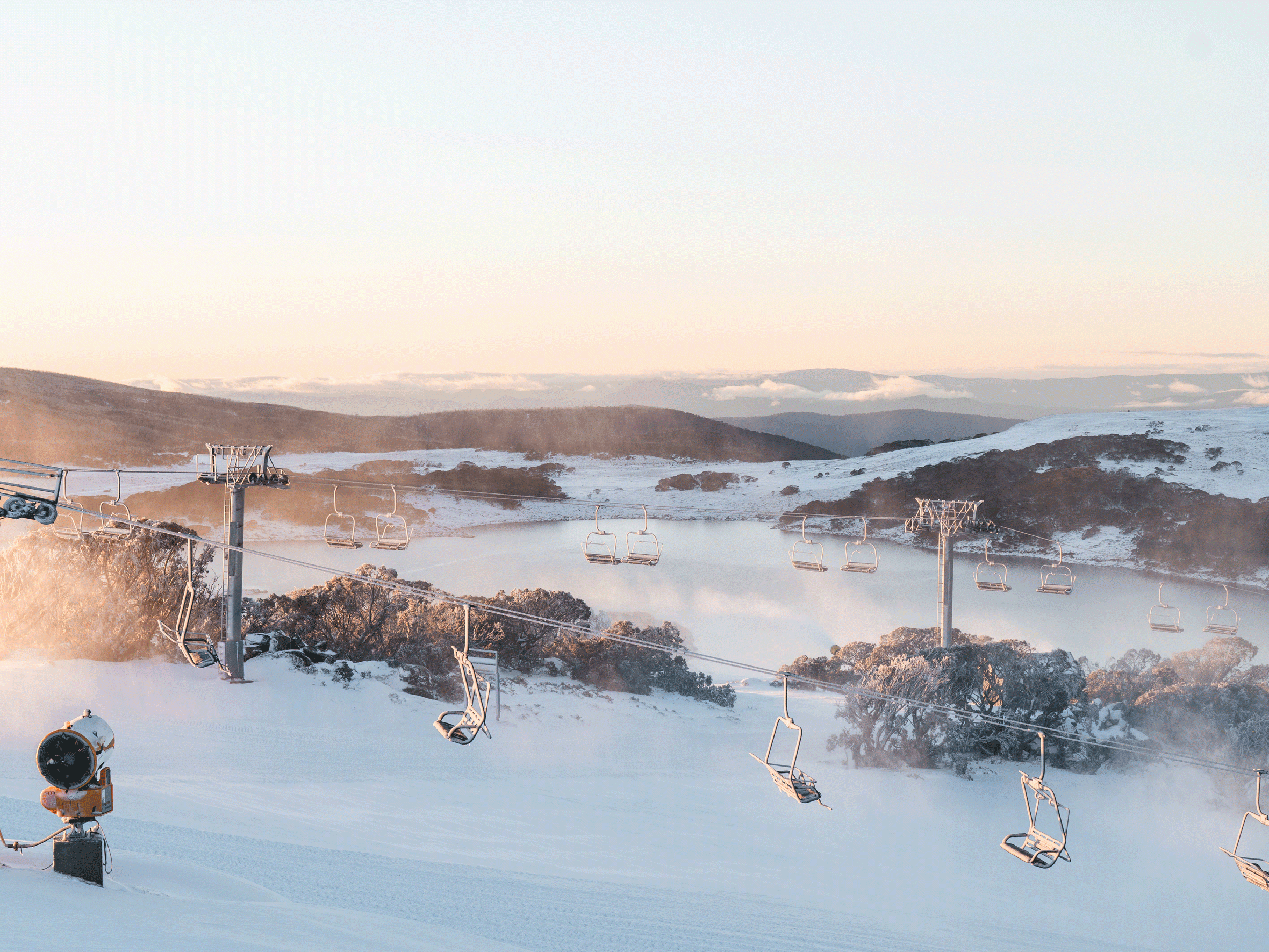
With the added help of extensive snowmaking, conditions have improved dramatically – allowing resorts to progressively open more terrain. The welcome burst of cold weather has transformed the slopes and lifted the spirits of skiers and snowboarders who have been waiting to dust off their gear.
Victoria’s Falls Creek was among the biggest beneficiaries of last week’s blast, reporting 33cm of fresh snow. Four lifts are currently operating, with temperatures dropping to -6°C overnight and 20-48cm of new snowfall predicted for the next 15 days. In time for the July school holidays, the resort is buzzing with a lineup of fun activities, including visiting the new 10-metre Flower of the Alpine Sun sculpture installed as part of the resort’s $750,000 makeover.
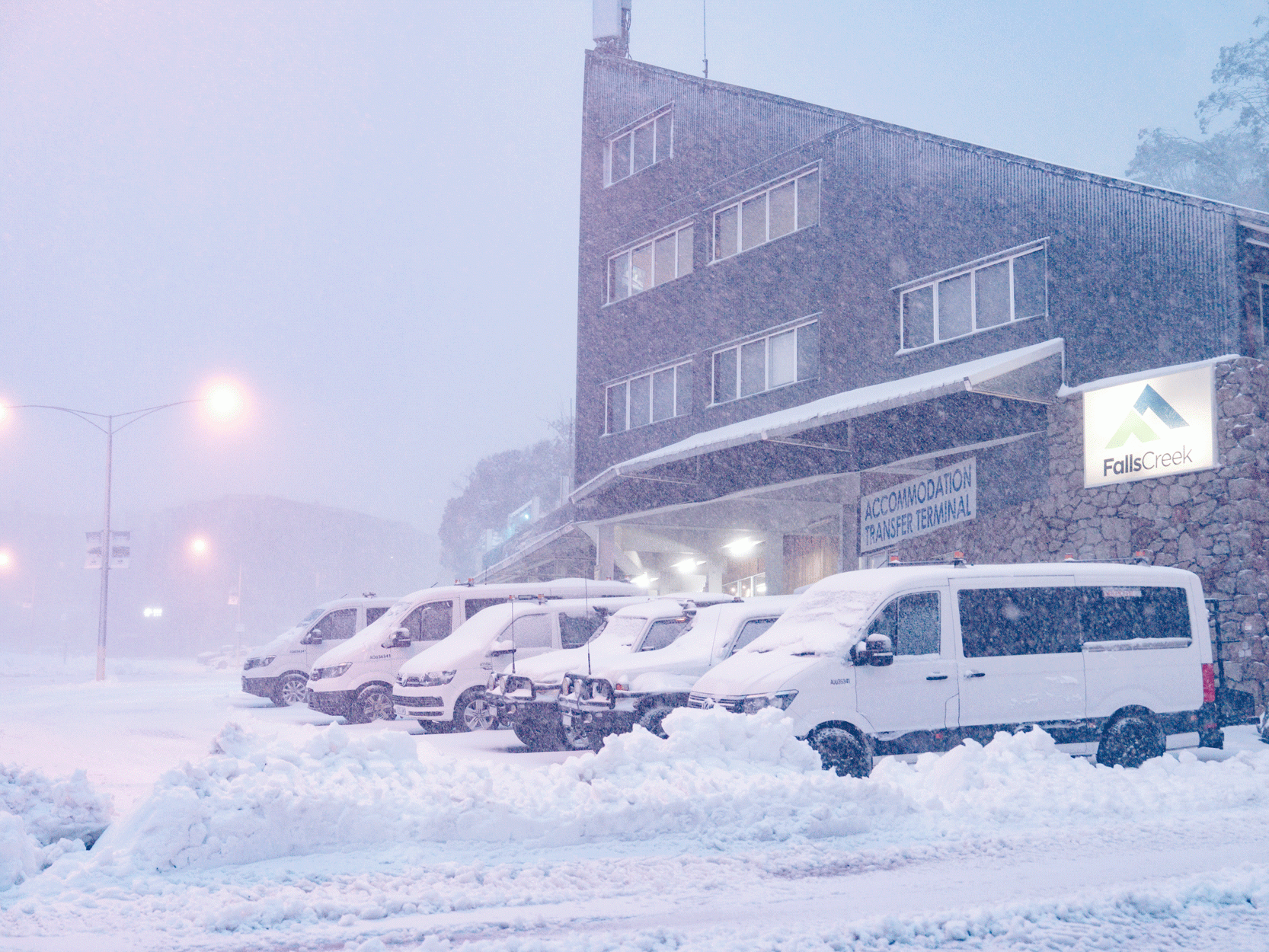
Last week brought 33cm of snow for Falls Creek, Victoria. (Credit: Falls Creek)
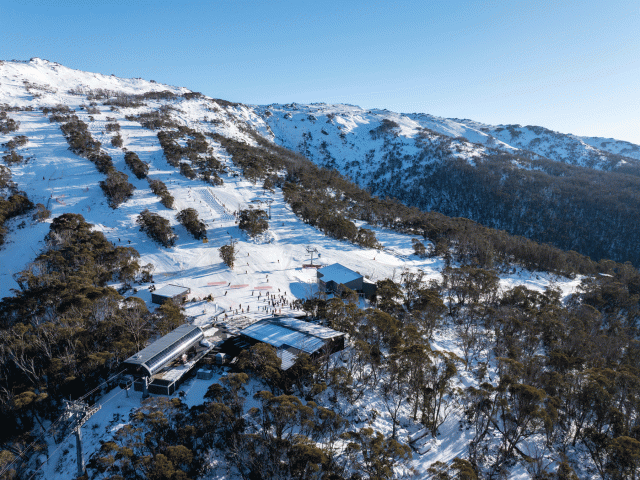
Keen skiers are back on Thredbo's white slopes.
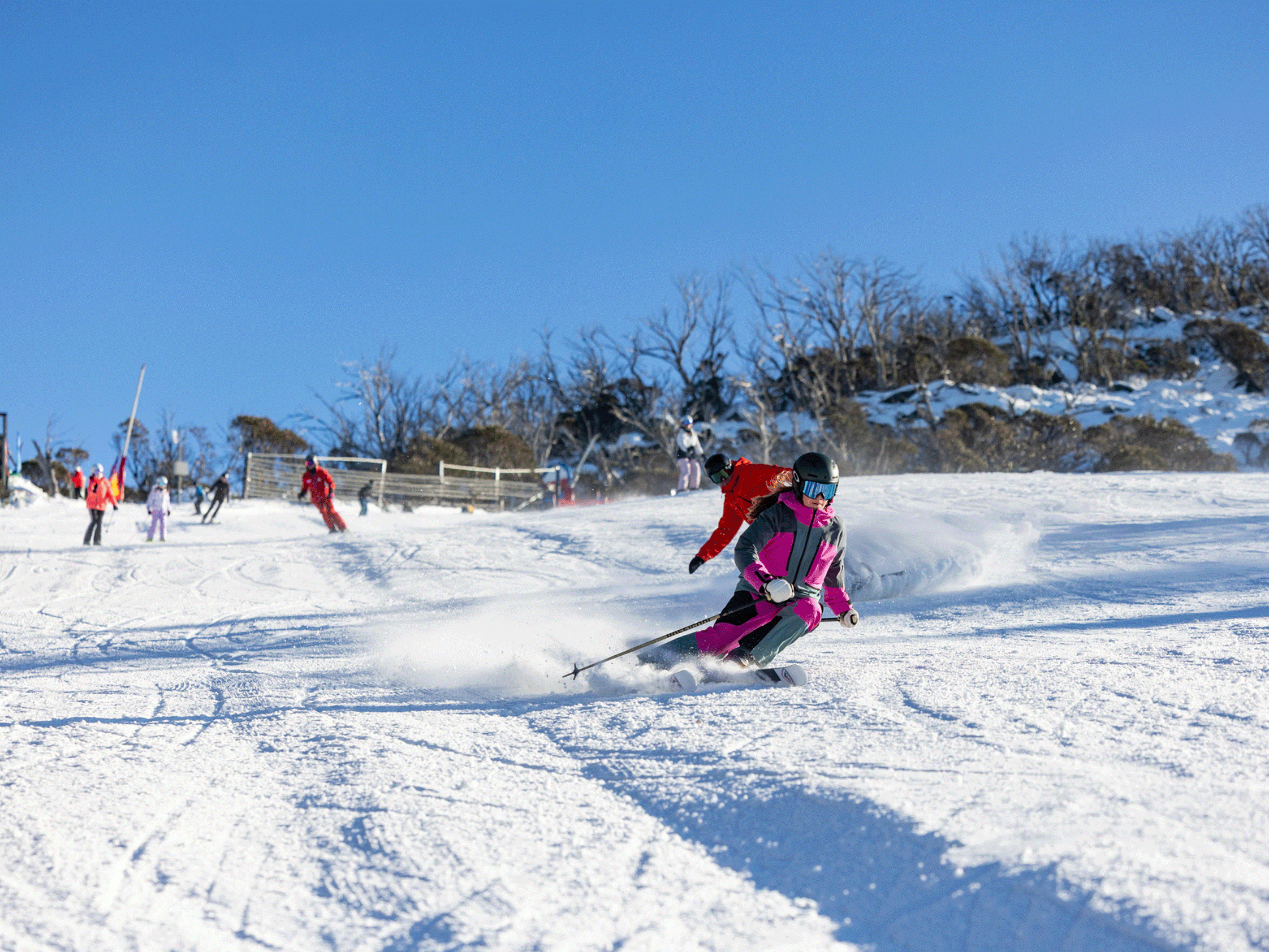
Mouse Trap at Falls Creek on 4 July, 2026. (Credit: Falls Creek)
Over on Mt Hotham, last week’s snowstorm delivered 30cm of fresh snow in 48 hours, accumulating to 36cm of total snowfall in the past week. The mountain’s machines have been working to maintain the cover since. Like Falls Creek, forecasts predict a confident 20 to 48cm of snow over the next two weeks.
Mt Buller has also bounced back after the slow start to winter. Following a burst of almost 30cm of snow on 3 July, visitors can expect between 15 and 37cm of snowfall over the next 15 days. Today skiers are out enjoying the firm conditions, thanks to snowmaking overnight and grooming helping to bolster the snowpack.
Thredbo’s mountain is back in business for the winter season.
In NSW, Perisher has received 32cm of natural snowfall over the past week and is readying for more: an estimated 16 to 38cm across the next two weeks. Overnight, the temperature dropped below -7°C, with 225 snow guns firing to help maintain the snow cover.
Thredbo is also seeing significantly improved ski conditions. Thanks to more than 25cm of natural snowfall last week and consistent artificial snowmaking, slope shredders have finally been able to carve tracks down the mountain.
Safe to say, there are plenty of happy faces on the mountains this week. With conditions continuing to improve, it’s shaping up to be an opportune time to experience our alpine regions.
Want to see more stories from Australian Traveller in your Google search results?
Tick the box next to "Australian Traveller". That's it.
Eleanor Edström is Australian Traveller’s Associate Editor. Previously a staff writer at Signature Luxury Travel & Style and Vacations & Travel magazines, she's a curious wordsmith with a penchant for conservation, adventure, the arts and design. She discovered her knack for storytelling much earlier, however – penning mermaid sagas in glitter ink at age seven. Proof that her spelling has since improved, she holds an honours degree in English and philosophy, and a French diploma from the University of Sydney. Off duty, you’ll find her pirouetting between Pilates and ballet classes, or hunting down Sydney's cosiest cafes.
Adventure and refined Luxury combine at the stunning Rangelands Outback Camp.
Iconic Australian red dirt, ancient rocky landscapes and bursts of greenery and wildflowers all make the small town of Winton, and its surrounds, a sight to behold. Escape the ordinary and unwind in the Queensland outback, where ancient landscapes and off-grid luxury await at Rangelands Outback Camp.
Unwind in the ancient outback.
About Rangelands Outback Camp
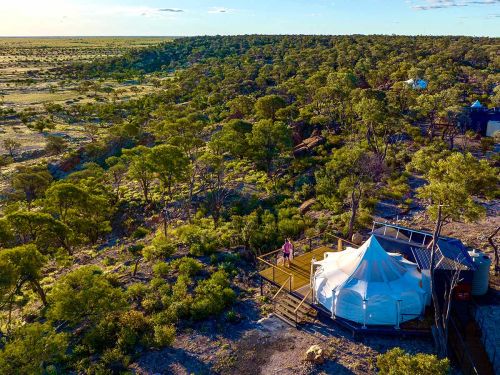
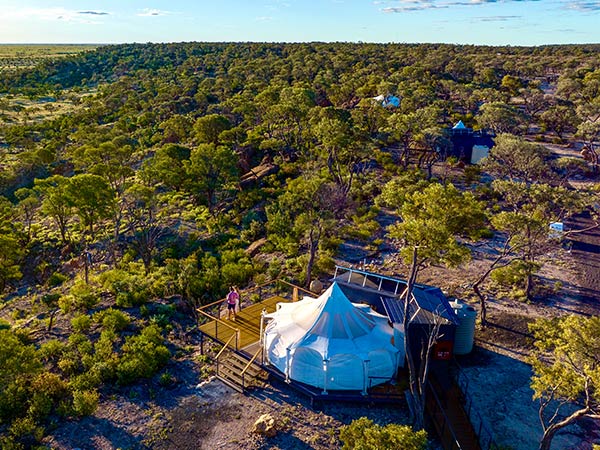
Unforgettable 360-degree views of this 95-million-year-old land await at Rangelands; bathed in style and positioned on top of a jump-up (or mesa), your tented camp seamlessly blends into its outback setting.
Set on the 53,935-square-kilometre Rangelands Station – a working cattle property – the abundant wildlife are your only neighbours; kangaroos, echidnas, eagles and other birdlife all call Rangelands home.
Bathed in style, your tented camp seamlessly blends into its outback setting. Indulge with carefully curated menus, personalised service and supersized luxury tents that guarantee a private experience. This exclusive camp only has a maximum of 12 guests at a time.
Here, the aim is pampering. From tasty menus to supersized tents with all the creature comforts, to a range of guided tours around the property and beyond.
Guests are transferred from Winton or Longreach by a dedicated Rangelands driver.
Soak in 360-degree views.
Rangelands Outback Camp tours
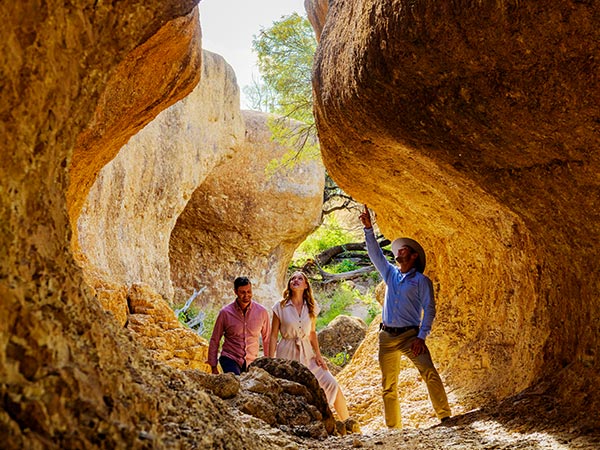
Join small-group tours and enjoy exclusive access to the ancient Rangelands Rifts with your Rangelands hosts. These incredible rock formations were formed by millions of years of erosion, leaving dramatic channels through the rock. Or explore the surrounds with Rangeland’s touring partner, Red Dirt Tours.
Get sunset birds-eye views over dramatic mesa country in a helicopter, from Queensland’s own Three Sisters to Corey’s Range, stopping at the best lookouts along the way.
Get up close and personal with this rugged land on four wheels, with expert drivers and guides leading guests through famous Bladensburg National Park, visiting Gondwana Stars Observatory and more.
The Winton area is famous for its boulder opals (the second-rarest opal in the world, after black opals), and a stop at the mining community of Opalton sheds a fascinating light on the unique fossicking method used to find them.
A trip to dinosaur country is a must, as this is the place that ramped up Australia’s dino contribution after a fossilised footprint was found in 1962; after more exploration, the discovery of 3300 footprints made it clear this was the world’s only evidence of a dinosaur stampede. Those same footprints are still on display today at Lark Quarry Conservation Park, a 90-minute drive from Winton. Also check out Australia’s largest collection of Australian Dinosaur fossils Australian Age of Dinosaurs, just 30 minutes from Winton. Here, join a tour through a working laboratory, dinosaur canyon and more.
A twice-daily transfer into downtown Winton is offered to guests, where they can explore the Royal Outdoor Theatre, opal shops, Waltzing Matilda Centre and more.
Have an exclusive adventure through the Rangeland Rifts. (Image: TEQ)
Sleeping in luxury
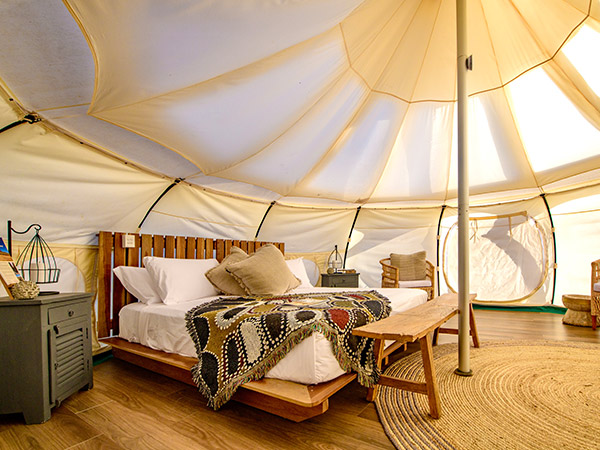
After a day of exploring, return to your tranquil tent for a blissful open shower and uninterrupted views from your private deck.
Designed to integrate guests into the surrounding nature, each tent feels like its own private haven. While being off-grid in the outback (in fact, each tent is powered by its own solar panels, with the added support of a backup generator), guests can also luxuriate in comfortable amenities like air conditioning, a supremely comfortable king-size bed and stylish designer touches.
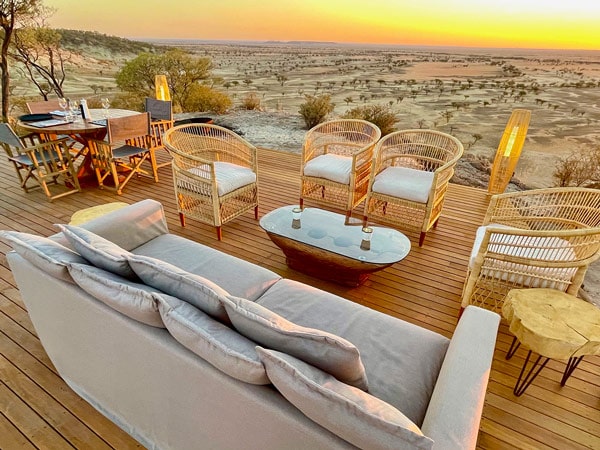
Guests can stroll to the open-air Sunset Deck for breathtaking panoramic views, or to the main lounge and dining tent, where books, on-demand coffee and drinks make it the perfect place to relax after a day in the outback.
Enjoy plenty of space inside, and stunning views outside.
Rangelands Outback Camp dining
As the sun starts to dip below the horizon, gather for drinks and canapés on the expansive Sunset Deck, watching the sun drench the landscape in pinks and oranges as it sinks below the horizon.
Later, head to The Mahal lounge area and dining tent where mealtime magic happens. Savour a gourmet meal made fresh by Rangeland’s onsite chef. The meals use local produce to elevate classic outback dishes, and don’t worry, dietary requirements are happily accommodated.
Enjoy an open bar filled with an expansive hand-selected list of wines and premium beers, with wine pairings offered by Rangelands hosts come dinner time.