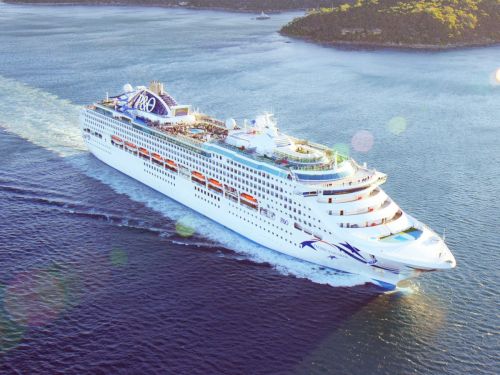
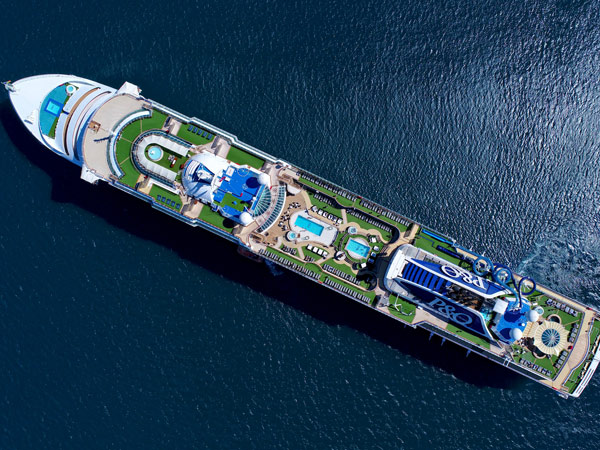
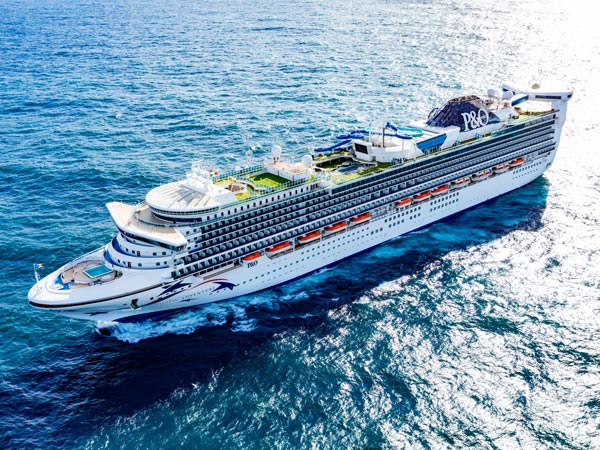
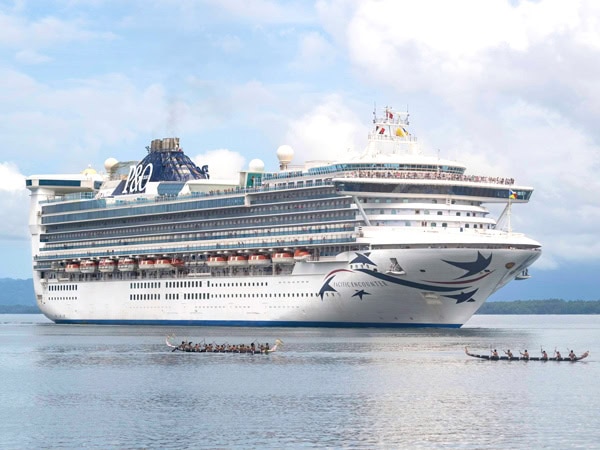
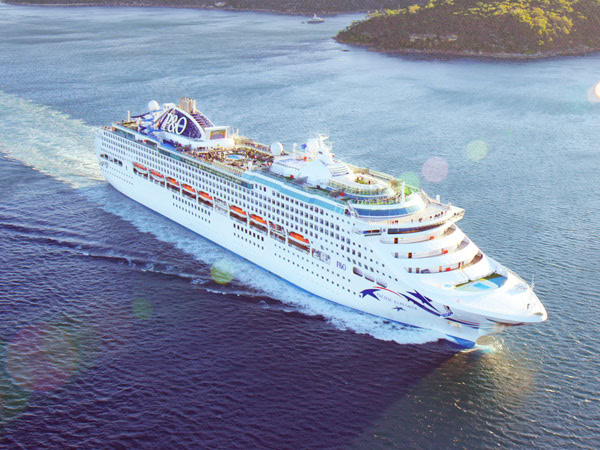
P&O Cruises Australia drops anchor after 90 years.
To the shock of many dedicated cruisers, the P&O Cruises Australia brand will set sail for the last time in March 2025.
P&O Cruises Australia drops anchor after 90 years.
P&O Cruises’ shock exit from Australia
Australia’s most historic cruising brand reached the end of the line when parent company Carnival Corporation announced on Tuesday P&O Cruises Australia will be folded into Carnival Cruise Line’s operations from March 2025.
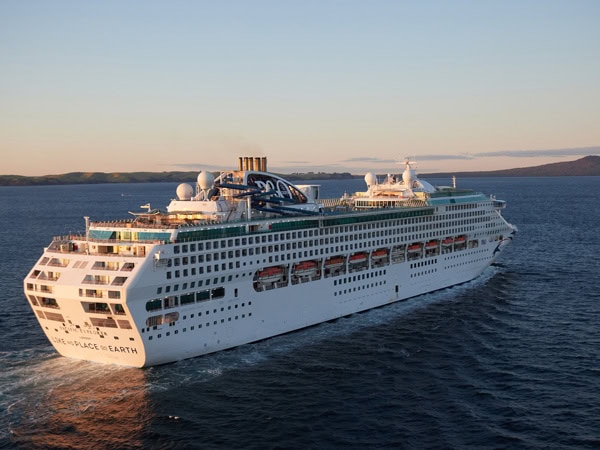
Two of P&O Cruises Australia’s existing cruise ships (Pacific Encounter and Pacific Adventure) will be transferred into the Carnival fleet, while Pacific Explorer will exit the fleet.
Pacific Adventure will be transferred into the Carnival fleet.
How Carnival Corporation explains the move
Carnival Corporation chief executive officer Josh Weinstein said that while the company is proud of what P&O Cruises Australia has achieved, the costs have become too high to be able to operate the brand in Australia.
“Given the strategic reality of the South Pacific’s small population and significantly higher operating and regulatory costs, we’re adjusting our approach to give us the efficiencies we need to continue delivering an incredible cruise experience year-round to our guests in the region," Weinstein said.
While it’s not clear how many jobs will be lost, the ABC reported that between 10 and 20 jobs will be lost in Australia.
Costs have become too high to be able to operate the brand in Australia.
Need tips, more detail or itinerary ideas tailored to you? Ask AT.
AI Prompt
But what is really behind the demise of Australia’s home-grown cruising brand?
To get some insights we asked Australian Traveller Media’s co-founder and cruise enthusiast Quentin Long what he thinks is going on.
“There are three driving factors I can see," he says.
“The first is pure economic efficiency through cost rationalisation. Running a small regional cruise line without the centralised systems of a huge corporation is a lot of cost on a small revenue base – in other words incredibly difficult to make profitable."
So, cost consolidation would instantly make it a lot easier for P&O to be more profitable. “Well maybe just profitable as the rumour is they have not been profitable for 10 years," he adds.
The second motive follows closely on the first according to Long.
“The Carnival brand has great penetration into the valuable US and global cruise market so now these rebranded ships address a larger source market. To meet that market, you can now easily move the ships to the destinations and develop itineraries to match this demand."
Pacific Explorer will exit the fleet.
So, does that mean we may have fewer or even no cruise ships permanently based in Australia?
“Yes, that is certainly a possibility. It will be purely demand driven whether three, two, one or no ships are here in Australia year-round," Long says.
According to Long, the impact of that outcome will be felt far deeper than just the cruise passengers.
“Sure, a lot of Australians who could really only afford a P&O cruise will be left high and dry which is devastating. But what about the businesses that are serving the ships? They will lose 50 per cent of their business if they are pulled out of the market for the quiet winter season," he says.
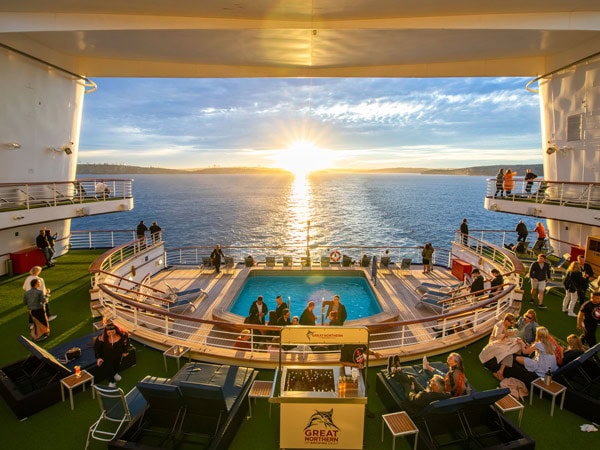
The impact of this decision will be felt across the board.
Weekly travel news, experiences insider tips, offers, and more.
And dare we ask about the third driving factor?
“Oh, that’s just about modernising and evolving the product to meet the new cruise passengers’ expectations," Long says.
Carnival Cruise Line will implement some technology upgrades and other small changes to the P&O fleet, most notably by introducing Carnival’s HubApp which allows guests to make reservations, get food and drinks delivered and chat with other guests.
“After the initial swift tech upgrade, I expect they will add more contemporary experiences that are in line with the Carnival Cruises brand – more glitz and brash US-style fun. So, more water slides etc," he continues.
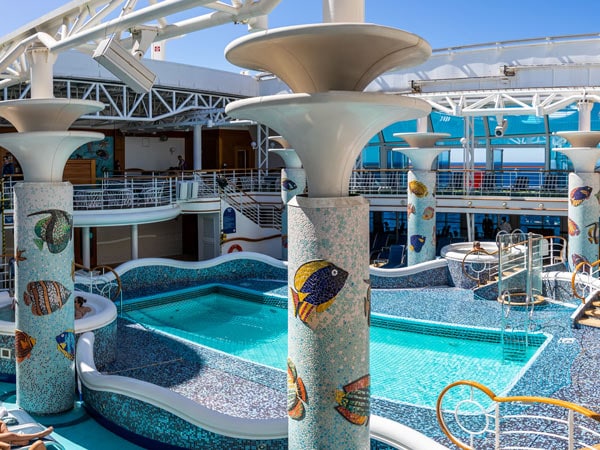
Carnival Cruise Line will upgrade the P&O fleet.
What P&O passengers need to know
Passengers who have booked a P&O Cruise in 2024 won’t be affected.
Guests booked on Pacific Encounter and Pacific Adventure after March 2025 will not be affected in most cases as the itineraries and departures will be maintained. Just a bit more tech when you get on the ships named Carnival Adventure and Carnival Encounter.
Passengers booked on Pacific Adventure will have options for a full refund, future cruise credit and even in some cases onboard credits.
At this stage, it’s unclear how many jobs will be lost.
Want to see more stories from Australian Traveller in your Google search results?
Tick the box next to "Australian Traveller". That's it.
Emily Murphy is Australian Traveller's Email & Social Editor, and in her 4+ years at the company she has been instrumental in shaping its social media and email presence, and crafting compelling narratives that inspire others to explore Australia's vast landscapes. Her previous role was a journalist at Prime Creative Media and before that she was freelancing in publishing, content creation and digital marketing. When she's not creating scroll-stopping travel content, Em is a devoted 'bun mum' and enjoys spending her spare time by the sea, reading, binge-watching a good TV show and exploring Sydney's vibrant dining scene. Next on her Aussie travel wish list? South Australia and The Kimberley.
The Great Ocean Road has captured the hearts of Australians with its astounding scenery since 1932, but going off-course can enrich your experience with untouched nature, foodie delights and charming towns.
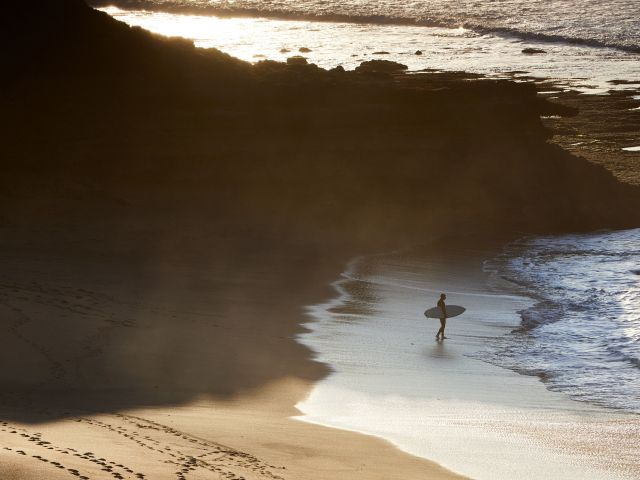
It’s a chilly 16 degrees. My husband pulls on a steamer and jogs – as all seasoned surfers do – into the water. We’re at Bells Beach, the legendary break on Victoria’s Surf Coast that’s home to the Rip Curl Pro, the world’s longest-running event in competitive surfing. Each year, over the Easter long weekend, up to 40,000 people descend on the region for the event. Today, though, we have the beach almost to ourselves, and the less-than-favourable temperature doesn’t deter my husband from surfing this famous break.
Bells Beach is known for its epic surf break and is at the start of the Great Ocean Road. (Image: Tourism Australia)
Torquay to Anglesea and Aireys Inlet
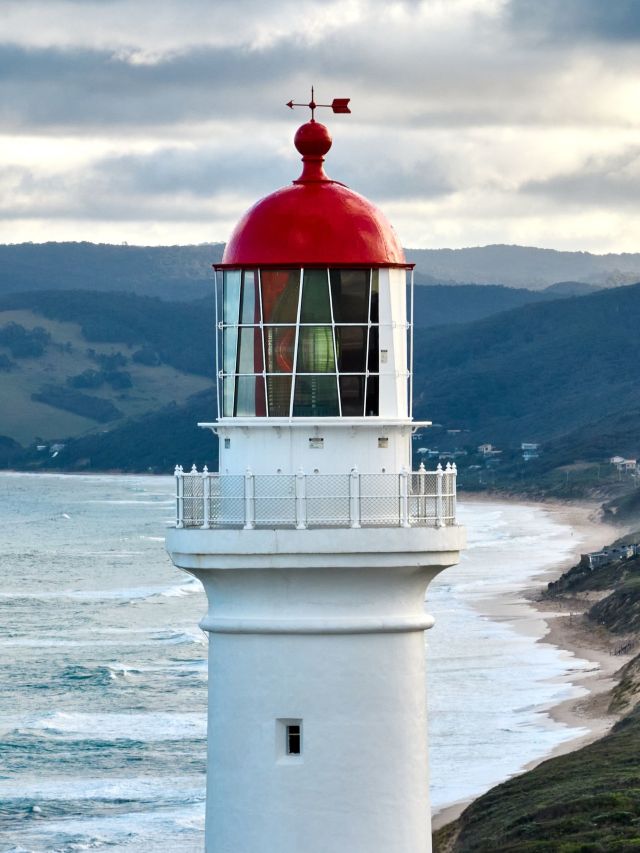
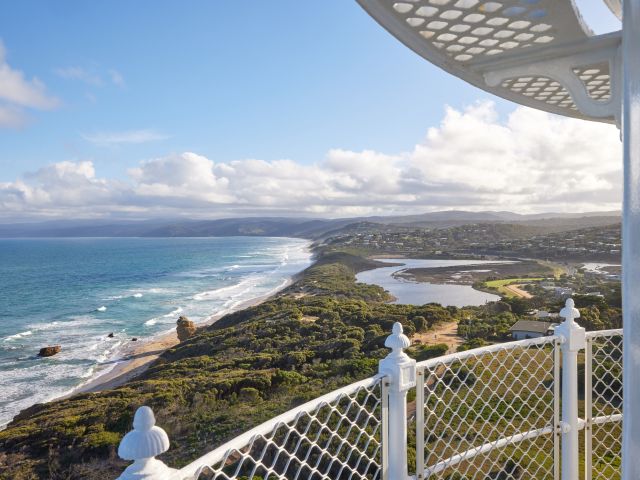
The red dome of Split Point Lighthouse in Aireys Inlet. (Image: Tourism Australia)
The nearby surf town of Torquay marks the starting point for the Great Ocean Road. Unfolding our map, which we have marked out with a highlighted route for our children to follow, we set off for lesser-known Anglesea, a chilled-out town 20 minutes south of here. Its wide, sandy beach is a gentler swimming option for our young family. Groms can learn to surf here with Go Ride a Wave, which also runs stand-up paddle boarding on the Anglesea River.
The lighthouse overlooks the Shipwreck Coast. (Image: Tourism Australia)
After a couple of nights in Anglesea, we hit the road again, first stopping at Aireys Inlet. Here we stretch our legs at Split Point Lighthouse, which was made famous by the 1990s television series Round the Twist, before driving under the Memorial Arch that welcomes us, officially, to the Great Ocean Road.
This 243-kilometre coastal road was built by returned First World War servicemen and serves as a permanent memorial to those who fought and died during the war. Carved into rock using hand tools and horse-drawn carts, it was a huge engineering feat and provided much-needed access to isolated coastal communities.
Lorne to Birregurra
Lorne is a delightful beachside stop for lunch and browsing boutique stores. It’s also the gateway to Great Otway National Park, which comprises a varied landscape of old-growth forests, cool-temperate rainforests, heathy woodlands and rugged coast. With the highest rainfall in Victoria, the region is home to many waterfalls – 10 of which are within 10 kilometres of Lorne.
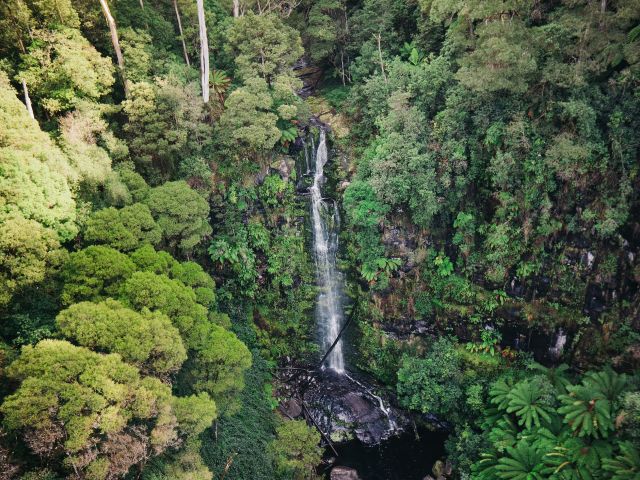
Turning slightly off the main drag, we wind along a gum-shaded road to Erskine Falls. Here, our son leads the way through the hyper-green rainforest and down 200-plus stairs to the cascade that drops 30 metres into a lush fern gully. We hop over large boulders to get closer to the falls, enjoying the entire place to ourselves; it’s worth the return climb.
From Sheoak Falls Picnic Area, there are walking trails to Henderson Falls, Phantom Falls, Won Wondah Falls and Kalimna Falls, some of which follow an old timber tramway from forest-logging days, which only came to an end in 2008.
Erskine Falls is one of many falls within a day trip of Lorne. (Image: Visit Victoria)
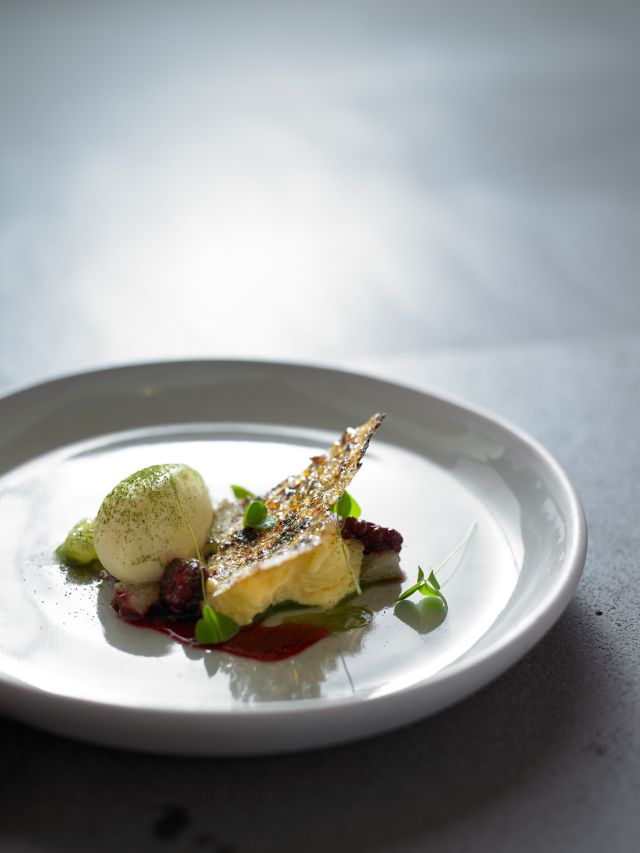
You can follow your appetite north to the town of Birregurra, which is part of the Otway Harvest Trail that connects farm gates, markets, wineries, breweries and distilleries. It’s home to three-hatted modern Australian restaurant Brae, helmed by celebrated chef Dan Hunter, set among native gardens and an organic farm, and Otways Distillery, which produces small-batch spirits using local produce and botanicals.
Brae is a three-hatted restaurant in Birregurra. (Image: Tourism Australia)
Apollo Bay to The Otways
Back on track, the cliff-hugging stretch between Lorne and Apollo Bay is breathtaking. At Teddys Lookout, we overlook the winding road ahead and St George River spilling into the ocean. We spend languid days in Apollo Bay, a buzzy seaside town that boasts a three-kilometre-long, crescent-shaped beach with a backdrop of rolling green hills. One evening, as the sun sets, we take the steep 10-minute walk to Marriners Lookout, which affords panoramic views of the ocean, hinterland and town.
A 15-minute drive along the road, Maits Rest is a lush rainforest gully that has been protected since the early 20th century. Wandering along the 800-metre boardwalk, we inspect the delicate moss-covered forest floor and the gnarled roots of 300-year-old myrtle beech trees, then crane our necks to see their canopies, some 50 metres above us. It’s therapy in nature.
Cape Otway to the Twelve Apostles
One of the famous Twelve Apostles, limestone sea stacks that rise from the Southern Ocean. (Image: Ben Savage)
The southernmost tip of Cape Otway is a delightful detour, home to the 1848-built Cape Otway Lightstation, the oldest surviving lighthouse on mainland Australia. We climb the narrow winding staircase to the gallery deck, explore the keepers’ quarters and telegraph station, and enjoy a coffee and some ‘famous’ scones at the charming onsite cafe.
It’s a pinch-me moment to finally see the Twelve Apostles in person. This unmistakable cluster of limestone stacks rising abruptly from the sea were never 12, however. When coined this in the 1890s as a marketing ploy, there were only nine; today, only seven remain after two collapsed in 2005 and 2009. We admire these Aussie icons from the viewing platform, in awe of Mother Nature’s ever-evolving artwork.
The Grotto is another natural attraction within Port Campbell National Park. (Image: Carmen Zammit)
Edging the wild Southern Ocean, this part of the coast – dubbed Shipwreck Coast – is made up of many sea-carved natural wonders including London Bridge, The Grotto and Gibson Steps. After exploring the lookout trails of Loch Ard Gorge/Poombeeyt Kontapool – its English name taken from the site of the 1878 shipwreck – we nestle into the sandy beach encircled by towering sandstone cliffs, as our children splash about on the water’s edge, and soak it all in.
Port Campbell to Timboon
Timboon Fine Ice Cream is part of a regional foodie trail. (Image: C McConville)
Just north of Port Campbell National Park, the region of Timboon is part of the 12 Apostles Food Artisans Trail, filled with purveyors of delicious foodstuffs such as Timboon Fine Ice Cream, Timboon Railway Shed Distillery and Apostle Whey Cheese. As an antidote to the indulgence, the 20-kilometre Poorpa Yanyeen Meerreeng Trail is a self-guided ride or walk between Port Campbell and Timboon through tall forests, over historic bridges and past sparkling lakes and farmland with grazing cattle.
Warrnambool to Port Fairy
A 19th-century building in Warrnambool. (Image: Peter Foster)
In Warrnambool, a town rich in maritime history, we take the four-kilometre Thunder Point Walk that traces the coast. The kids squeal when an echidna shuffles out from beneath the wooden boardwalk, and we stop to admire a seal lazing on a rock at the port.
Further along, the streets of quaint fishing village Port Fairy are lined with 19th-century cottages, old stone churches and Norfolk pines. Follow the historic walking trail to see some of the 60-plus National Trust buildings. Port Fairy is also home to Port Fairy Folk Festival (6-9 March), one of the country’s longest-running music and cultural festivals. You could time your road trip with the event for a fittingly celebratory end to any journey.
The Great Ocean Road can easily be done in three days, but we’ve spent a week on the road. The highlighted line on our now creased and well-worn map doesn’t follow the famous route precisely. It has sprouted branches in many directions, leading us to untouched rainforest and charming rural towns filled with culinary delights, and where we experienced some of our most memorable moments on the Great Ocean Road.
A traveller’s checklist
Staying there
The Oak & Anchor in Port Fairy.
The Monty is a highly anticipated, newly refurbished motel with a chic Palm Springs-inspired aesthetic set across the road from the Anglesea River.Basalt Winery in Port Fairy grows cool-climate wines such as pinot noir and Riesling in rich volcanic soil. Stay among the vines in its tiny home, complete with a kitchen, lounge area and outdoor firepit.
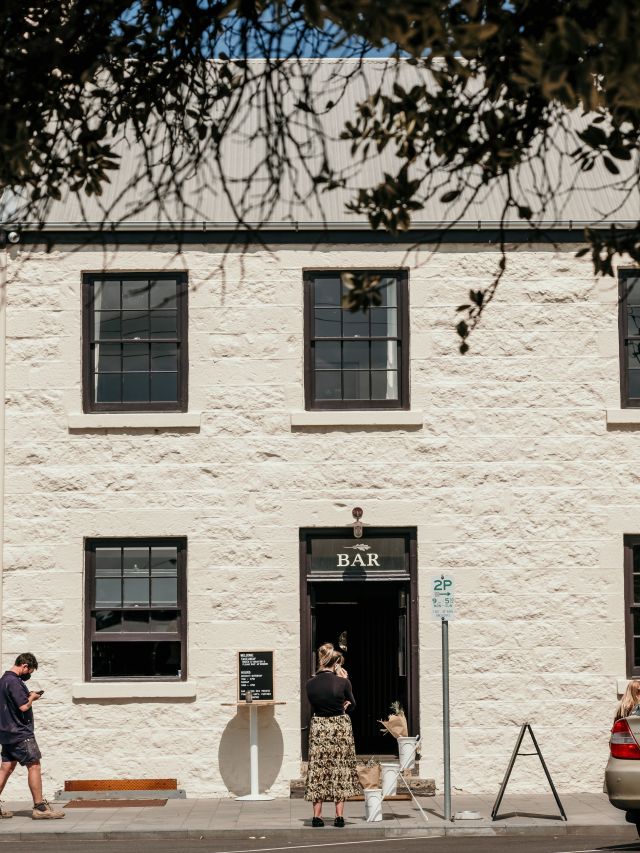
The Oak & Anchor Hotel has been a Port Fairy institution since 1857. Cosy up by the bar in winter or bask in the sunshine of the Lawn Bar in summer. The rooms are beautifully boutique with considered details, such as luxe baths for sinking into post-road trip.
Eating there
The Coast in Anglesea is a modern Australian restaurant focused on local ingredients. Grand Pacific Hotel has been a local landmark in Lorne since 1879 and recently underwent a restoration. It serves a mix of traditional pub and Italian fare alongside ocean views.
Graze is a cosy 40-seat dining room in Apollo Bay with a modern Australian menu complemented by regional wines. Apollo Bay Distillery offers tasting flights, a gin blending masterclass and serves woodfired pizzas.
P&O Cruises Australia Drops Anchor After 90 Years - Australian Traveller