The most beautiful lavender farms around Australia

 By
hero media
Rows upon rows of purple-drenched lavender fields are grown on farms around Australia – and it is time to get acquainted with the best of them.

From the soothing scent of lavender-infused products and the oddly pleasing taste of edible lavender treats to the grounding experience of wandering through fields of purple blooms, Australians just can’t get enough of lavender.

The soothing, calming properties of lavender might even be enough to cure our prolonged state of pandemic-induced stress. And we’re not the only ones who think so. The Covid-19 pandemic has caused Australian lavender sales to spike, and new research by La Trobe University and AgriFutures Australia will investigate exactly how we can make our country a world leader in lavender oil exports. Undoubtedly the world needs lavender as much as we do right now.

In the meantime, we give you a list of the most beautiful lavender farms around the country. Daydream about your next visit, which should hopefully arrive just in time for the lavender season.

Bridestowe Lavender Estate, Tas

To get the obvious out of the way first, let’s venture northeast from Launceston to arrive at the rural town of Nabowla. Population 112. Here you’ll find Bridestowe Lavender Estate , which is renowned for its seemingly endless fields of lavender flowers that bloom each year between December and January.
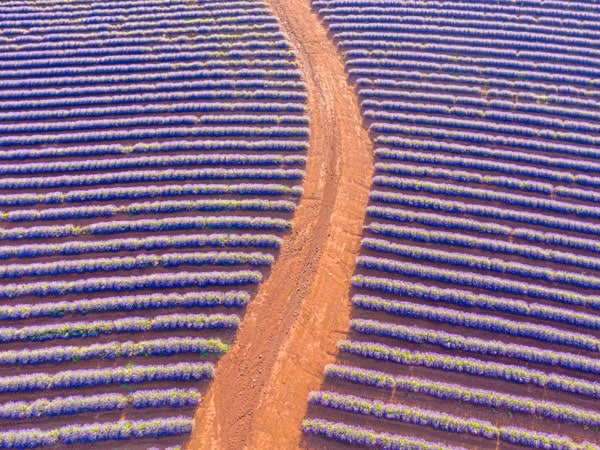
an aerial view of the Bridestowe lavender farm
The Bridestowe lavender fields spread across 200 kilometres. (Image: Luke Tscharke)

The lavender farm’s history can be traced all the way back to 1922 when its founder Charles Denny sailed from England to Tasmania with a bag of lavender seeds that he procured from the French Alps. With his future in his hands, so to speak, Denny went on to build the world’s largest privately-owned lavender farm; with lavender rows that stretch for about 200 kilometres.
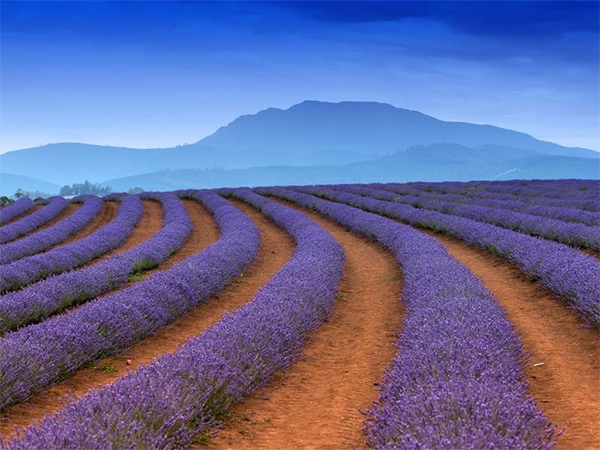
Bridestowe Lavender Farm
Bridestowe is worth the visit all year round.

The 260-acre farm costs $10 to visit – a small fee to pay for such a tranquil outing. Pick up one of Bridestowe’s famous lavender ice creams and spend your time roaming and photographing the fragrant purple fields. There are also guided tours that run regularly throughout the day.

a hand holding Bridestowe's famous lavender ice cream
Bridestowe’s famous lavender ice cream is a must-try. (Image: Luke Tscharke)

Address: 296 Gillespies Rd, Nabowla, Tas
Flowering season: December to January
Unique attraction: The lavender ice cream is a little taste of heaven.

Herbicos Lavender Farm, NSW

Imagine driving less than 90 minutes out of Sydney to find 25 hectares of picture-perfect lavender fields to run through. Well, a visit to Herbicos is the ticket to your daydreams. It’s home to one of New South Wales’ largest naturally grown lavender farms and yes, it is within reach for Sydneysiders.

Herbicos use their lavender to supply and produce pure, plant-based, natural skincare products. The lavender is even used to produce products for nail care, beauty equipment, salon disposables and hot wax materials.

When visiting the fields, make sure to greet the locals who call Herbicos home. The onsite goat, pig, ram, rabbit, alpaca and peacock will be glad to make your acquaintance.

Address: 440 Mulholland Rd, Thirlmere, NSW. The farm is open to the public on weekends.
Flowering season: December to February
Unique attraction:  The range of skincare products that are made from the lavender fields you just frolicked through.
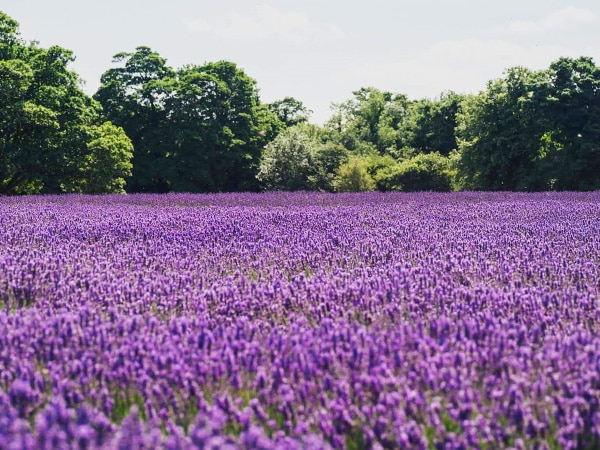
Herbicos Lavender Farm
A visit to Herbicos is the ticket to your purple daydreams.

Yanchep Lavender Farm, WA

Yanchep, a coastal suburb of Perth, is better known for being home to Yanchep National Park: a beautiful slice of native bush with koala colonies, wild kangaroos, and fascinating Aboriginal lifestyle and cultural programs. Veer inland a touch and you’ll also encounter 25 acres of pristine lavender fields.

When former miners Karla and Gary bought their Yanchep property back in 2005 they were on the hunt for a water-tolerant plant that would blend and complement the rural environment. Initially, they set their sights on olive and sandalwood trees, before finally settling on lavender – and they’ve been opening up their lavender farm to grateful visitors ever since.

Visit today and discover mountains of treats, thoughtful gifts and plenty of essential oils, lotions and other household products.

Address: 272 Old Yanchep Rd, Carabooda, WA
Flowering season: December to February
Unique attraction: The lavender oil is to die for.

Warratina Lavender Farm, Vic

The Yarra Valley is well known for its food and drink offering, but there are plenty of other reasons to visit the region – including the picture-perfect Warratina Lavender Farm.

Back in 1991, owner Annemarie planted a small plot of lavender on land that had once been a cherry orchard. After people began lining up down to the driveway to catch a glimpse of the purple paradise, Annemarie decided to transform her humble hobby into the business you can visit today – now with more than ten thousand lavender plants to be admired.
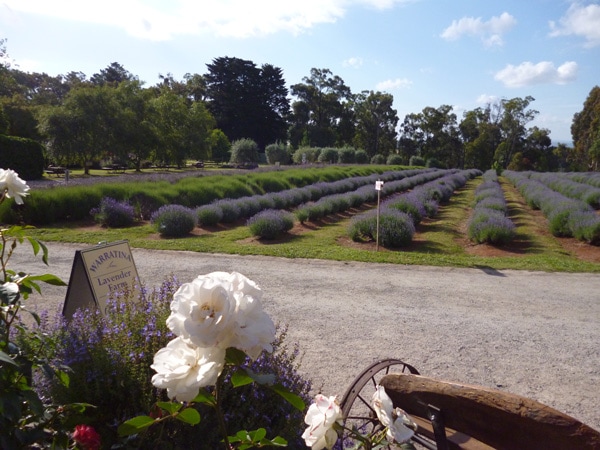
Warratina lavender Farm in Victoria
Look out over the farm from the tea rooms.

Visitors, who are welcome all year round, come to enjoy both Warratina’s Australian-made lavender products and the peaceful atmosphere of the lavender farm. Even outside of the flowering period, the estate is the perfect place to see the turning seasons reflected in the ornamental gardens, native bushland and contoured rows of lavender set against the striking backdrop of the Dandenong Ranges.

Address: 105 Quayle Rd, Wandin North, Vic
Flowering season: November to January
Unique attraction: Warratina hosts a lavender festival each November. Come and enjoy the spoils of the setting alongside market stalls, live music and craft demonstration.

Lavandula Swiss Italian Farm, VIC

With 100 acres of manicured gardens to explore, the only problem you’ll encounter at Lavandula will be finding the time to explore it all. It’s the kind of place that is just bursting with photo opportunities – rambling vines, manicured gardens, sweet little picnic spots and, of course, plenty of blissful lavender.
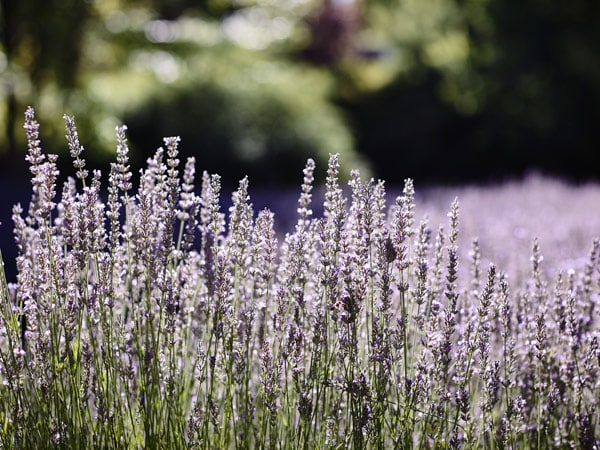
a close-up of lavenders at Lavandula Swiss Italian Farm, VIC
Lavandula offers plenty of idyllic picnic spots.

Speaking of bliss, Lavandula  is one of the loveliest spots we know of for a wander and a bite for lunch. Explore the restored 1850s homestead, coo at the runabout emus and make your way to the little restaurant outback, where you can sit under light green leaves and watch as a gaggle of geese perform their synchronised routine following each other around the grass. They break formation only to chase after scraps. Or the occasional small child.
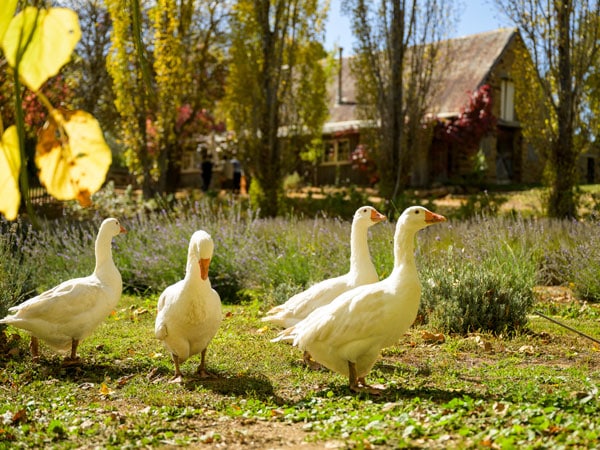
a gaggle of geese at Lavandula Swiss Italian Farm, VIC
Watch as a gaggle of geese perform their synchronised routine.

Address: 350 Hepburn-Newstead Rd, Shepherds Flat, Vic
Flowering season: October to January
Unique attraction: The onsite restaurant – La Trattoria – is your opportunity to indulge in some famous Daylesford produce.

Emu Bay Lavender Farm, SA

Taking a short break on Kangaroo Island is one of the best ways to revitalise the tourism businesses that are still recovering from the impact of the 2019/20 bushfires and ongoing pandemic.
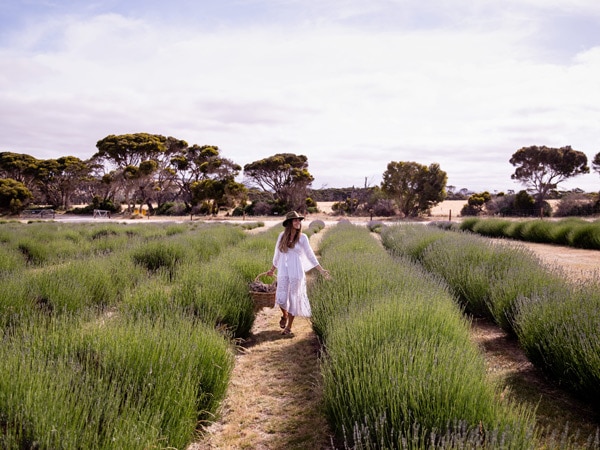
a woman in the middle of Emu Bay Lavender Farm with a basket
Emu Bay Lavender Farm is spread across 51 acres of land. (Image: South Australian Tourism Commission)

It is here, nestled within the 540-kilometre-long stretch of rugged island beauty, that you’ll find Emu Bay Lavender Farm. The space – over 51 acres of land with an estimated 7,500 lavender plants – is owned by a fifth-generation Kangaroo Island family.
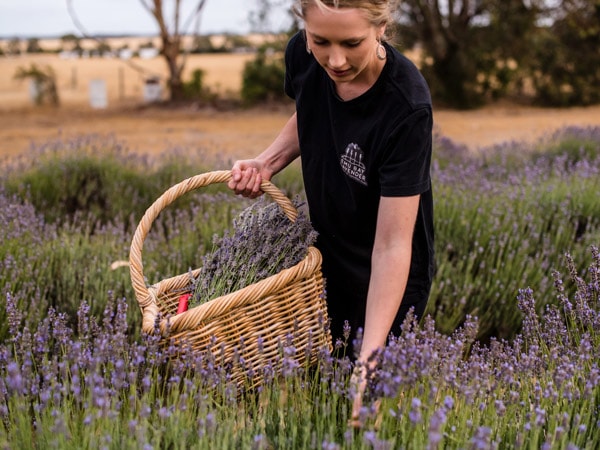
a woman picking lavenders at Emu Bay Lavender Farm, SA
Collect fresh lavender at Emu Bay. (Image: Meaghan Coles)

Visit during summer to get the full-bloom experience. During these months, the famous KI Ligurian bees are busy pollinating the flowers to produce their signature lavender honey.
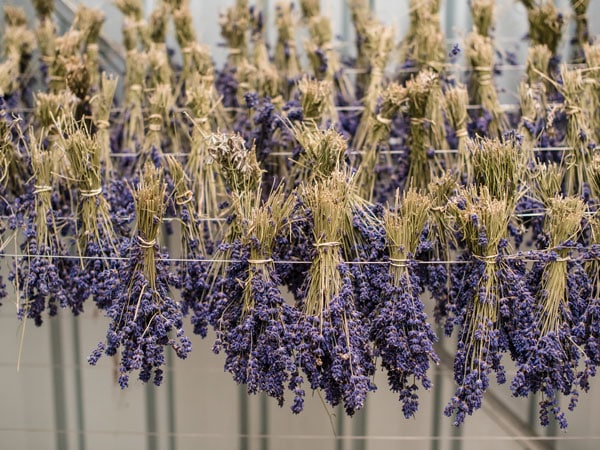
lavenders hanged to dry at Emu Bay Lavender Farm, SA
Each year they harvest around 8,000 bunches of lavender. (Image: Meaghan Coles)

Around 8,000 bunches of lavender are harvested and stripped each year to distil around eight kilograms of essential oil – no wonder essential oils often come with a hefty price tag. You can learn more about the fascinating process on your visit.
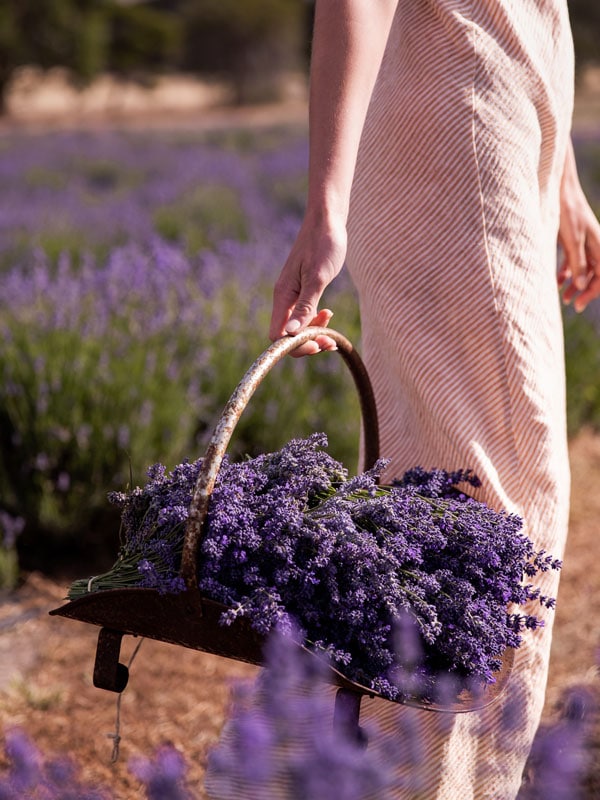
a close-up of a woman holding a lavender basket at Emu Bay Lavender Farm, SA
Get the full-bloom experience in the summer. (Image: South Australian Tourism Commission)

Address: 205 Emu Bay Rd, Wisanger, SA
Flowering season: December to February
Unique attraction: If you can’t make it to Emu Bay in person, browse the range of Lavender-infused recipes online here.

Kooroomba Vineyards and Lavender Farm, Qld

The Queensland Scenic Rim serves as the perfect backdrop to the purple perfection of Kooroomba Vineyards and Lavender Farm . The property houses a cellar door and an upscale restaurant and gift shop that overlooks a six-hectare vineyard and a field full of lavender.
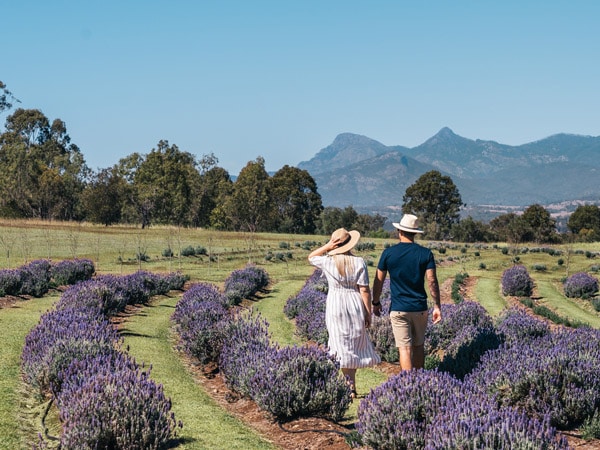
a couple strolling around Kooroomba Vineyards and Lavender Farm, Qld
Stroll around the six-hectare vineyard full of lavender. (Image: Tourism and Events Queensland)

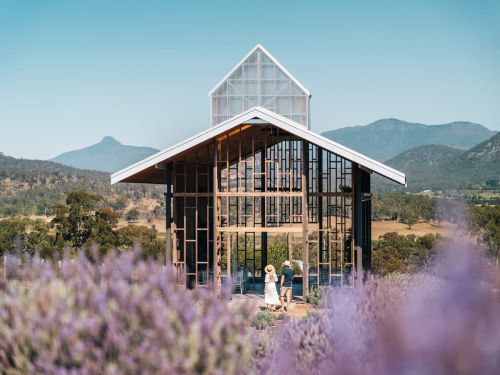
Perhaps more famous than the seemingly endless rows of lavender is the freestanding chapel that stands among it. Countless couples have used the aesthetic surroundings as a place to get hitched.
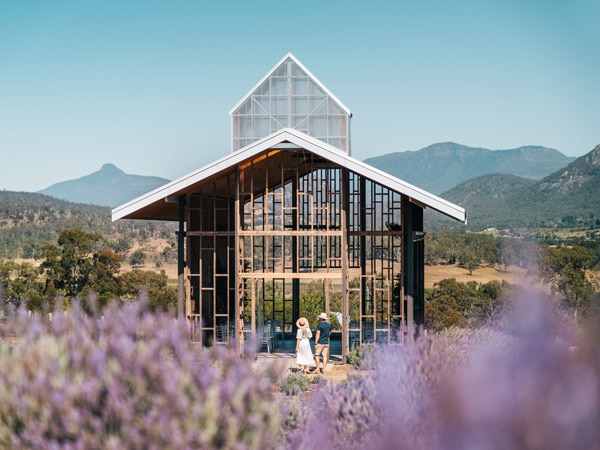
the chapel at Kooroomba Vineyards and Lavender Farm, Qld
The open-plan chapel is worth the journey alone. (Image: Tourism and Events Queensland)

If you’re not here to say ‘I do’, then wander through the six types of lavender that grow on the property and soak up its beauty instead. You can also enjoy the view from a window seat at the onsite restaurant. There are 180-degree views from Mt Barney to Mt Alford, which you can enjoy while sipping on a glass of chardonnay from the vineyard.
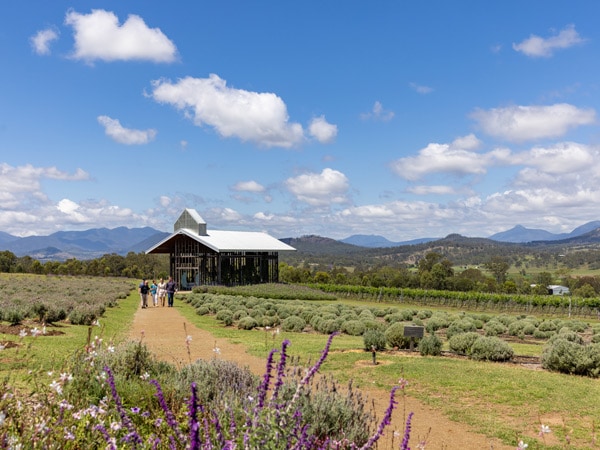
a distant view of the chapel at Kooroomba Vineyards and Lavender Farm, Qld
Soak up scenic views of Queensland’s Scenic Rim. (Image: Tourism and Events Queensland)

Address: 168 F M Bells Rd, Mount Alford, Qld
Flowering season: December to January
Unique attraction: The open-plan chapel is worth it for the Instagram post alone.

From coast to bush: these are Gippsland’s best hikes

Video credit: Tourism Australia

From coast to mountains, hiking in Gippsland offers a stunning array of landscapes, with trails that take you deep into the region’s heritage.

I step out onto the sand and it cries out underfoot. Kweek! I take another step and there’s another little yelp. Screet! Picking up the pace, the sounds follow me like my shadow, all the way down to the water. It’s obvious how this spot got its name – Squeaky Beach – from the rounded grains of quartz that make the distinctive sounds under pressure.

For many, Wilsons Promontory National Park is the gateway to Gippsland , and the best way to explore it is by walking its network of hiking trails, from coastal gems such as Squeaky Beach through to the bushland, among the wildlife. But it’s still just a taste of what you’ll find on foot in the region.

Venture a bit further into Gippsland and you’ll discover the lakes, the rainforest, and the alpine peaks, each changing with the season and offering summer strolls or winter walks. Just like that squeaky sand, each step along these trails has something to tell you: perhaps a story about an ancient spirit or a pioneering search for fortune.

The best coastal hikes in Gippsland

sunset at Wilsons Promontory National Park
Wilsons Promontory National Park is a sprawling wilderness with many coastal bushland trails. (Image: Mark Watson)

Wilsons Promontory National Park (or ‘The Prom’, as you’ll end up calling it) is an easy three-hour drive from Melbourne, but you might ditch the car when you arrive, with much of the park’s 50,000 hectares accessible only by foot. From the inky water of Tidal River (dyed dark purple by abundant tea trees), I like the easy walks along the coast, among lichen-laden granite boulders, to golden beaches and bays.

a couple on Mount Oberon
Panoramic views from the summit of Mount Oberon. (Image: Everyday Nicky)

The trail to the panoramic views at the summit of Mount Oberon is a bit harder, up steep timber and granite steps, but it’s a popular 6.8-kilometre return. The more remote hikes are found through the open banksia and stringybark woodland of the park’s north, or along the multi-day Southern Circuit , which ranges from about 35 to 52 kilometres, with sunrises and sunsets, kangaroos and cockatoos, and maybe even whales.

a golden sand beach at Wilsons Promontory National Park
Walk ‘The Prom’s’ golden sand beaches. (Image: Tourism Australia/Time Out Australia)

You might also see whales on the George Bass Coastal Walk , even closer to Melbourne on the western edge of Gippsland. This dramatic seven-kilometre trail along the clifftops takes in sweeping views of the wild ocean, occasionally dipping down from grassy green hills to coastal gullies and a secluded beach. It also now links into the Bass Coast Rail Trail for an extra 14 kilometres.

the George Bass Coastal Walk
George Bass Coastal Walk trails for seven kilometres along clifftops. (Image: Visit Victoria/Time Out Australia)

Over at the eastern edge of Gippsland, in Croajingolong National Park, you can wander along the lakeshores beneath koalas and around goannas (I keep my distance since one chased me here!). For those who are even more adventurous, the park is also the starting point for the 100-kilometre Wilderness Coast Walk , usually done over seven days.

the Croajingolong National Park, Gippsland
Wander along the lakeshores in Croajingolong National Park. (Image: Tourism Australia)

The best bush hikes in Gippsland

the Baw Baw National Park
The alpine heath of Baw Baw National Park. (Image: Everyday Nicky)

Deep in the Long Tunnel Extended Gold Mine at Walhalla, mining guide Richard tells me how this small town in the mountains east of Melbourne boomed when prospectors found gold here in 1862. These days, you’ll find most of the town’s treasure – its heritage – above ground, with the Walhalla Tramline Walk a wonderful way to explore it.

Just seven kilometres long, the walk takes you through decades of Gold Rush history, following the original rail trail from lush bushland to the mining sites, and through the charming village of just 20 residents with its wooden cottages and old shopfronts adorned with turn-of-the-century advertising posters. Blazing a trail where trailblazers once opened up the region, this is also the starting point for the 650-kilometre Australian Alps Walking Track.

Nearby, Baw Baw National Park has walks through gnarled snow gums and alpine heaths that show off the colourful wildflowers in summer and the pristine carpet of white in winter. Several trails are perfect for snowshoes, including a 45-minute route from St Gwinear up to vast views across the Latrobe Valley.

Further up into the mountains, the Toorongo and Amphitheatre Falls Loop Walk is an easy 2.2-kilometre path that serenades you with the sound of flowing water as you pass mossy rocks and tree ferns en route to two sets of waterfalls cascading over boulders in the remote wilderness.

The best cultural hikes in Gippsland

the Mitchell River National Park, Gippsland
Hike the Mitchell River National Park. (Image: Parks Victoria/Grace Lewis)

Across a pool in a natural sandstone amphitheatre, deep within a cave behind a waterfall, it’s said the Nargun has its lair. A fierce creature, half human and half stone, that abducts children and can’t be harmed by boomerangs or spears, the story of the Nargun has been told around the campfires of the local Gunaikurnai people for generations.

As a culturally significant place for women, hikers are asked not to go into the Den of Nargun, but a 3.4-kilometre loop walk leads you through a rainforest gully to the entrance where you can feel the powerful atmosphere here in Mitchell River National Park , along Victoria’s largest remaining wild and free-flowing waterway.

the bee-eaters at Mitchell River National Park
Bee-eaters at Mitchell River National Park. (Image: Parks Victoria/Grace Lewis)

The Den of Nargun is part of the Bataluk Cultural Trail , a series of important traditional Gunaikurnai sites through central Gippsland. Another location is Victoria’s largest cave system, Buchan Caves Reserve, with trails to important archaeological sites of human artefacts up to 18,000 years old. The FJ Wilson Interpreted Walk includes the naturally sculpted white limestone steps of the 400-metre-long Federal Cave, while the Granite Pools Walk goes among tall timber and moss-covered gullies.

the ancient rainforest of Tarra-Bulga National Park
The ancient rainforest of Tarra-Bulga National Park. (Image: Josie Withers)

Also important to the Gunaikurnai people is Tarra-Bulga National Park , known for its ancient myrtle beeches and enormous mountain ash trees. Just 40 minutes return, the Tarra Valley Rainforest Walk offers a taste of this verdant landscape, while the Grand Strzelecki Track takes you deep into the lost world of forest giants on an epic 100-kilometre trail rich with tradition.

A traveller’s checklist

Staying there

the WildernessRetreats in The Prom
Wilderness Retreats in The Prom. (Image: Christian Pearson)

Wilderness Retreats in Wilsons Promontory offers glamping-style tents with luxurious queen beds. Star Hotel is a reconstruction of a Gold Rush-era hotel from 1863 in the heart of heritage Walhalla. Caves House is a historic three-bedroom house with views over the Buchan River.

Eating there

the Carrajung Estate, Gippsland
Enjoy a post-hike lunch at Carrajung Estate. (Image: Everyday Nicky)

Kilcunda General Store serves great coffee and meals of local produce at the George Bass Coastal Walk. Alpine Trout Farm is located near Toorongo Falls in Noojee. Fish for your own lunch and barbecue it with the provided cookware.

Carrajung Estate is a short drive from Tarra-Bulga National Park. The winery’s restaurant offers a seasonal menu of regional ingredients and you can stay at The Lodge.

a seafood feast at Carrajung Estate, Gippsland
The table is set for a seafood feast at the estate.

Video credit: Tourism Australia