Here’s how to do the outback on a budget

hero media
Where else in the world can you feast on feral animals, fossick for opals and see horse, camel and yabby races, all on the one road trip?

Now is an especially exciting time to venture into the outback, with recent rainfall transforming the usually arid landscape into grassy plains, teeming with wildlife. And you don’t have to save up for a lifetime to do the trip of a lifetime.

How to get there on the cheap

Self-drive

Driving yourself through the outback not only gives you more freedom and flexibility to explore at your own pace, but it’s also the most affordable option, with the main expense being fuel. The more friends who come along for the road trip and chip in, the cheaper it is again.


But if you don’t have a reliable 4WD on hand, there are affordable rental operators such as Australian 4WD Rentals , which for example can provide a 4WD for up to 20 days from $100 a day, depending on the season.


Alternatively, there are many 2WD-friendly routes across the outback, such as the route from Halls Creek to Kununurra on the Great Northern Highway, from Alice Springs to Glen Helen on the Red Centre Way, and the drive from Brisbane to Longreach. See page 92 for more itinerary ideas.

By train

If you’re the kind of traveller who prefers to relax and let someone else do the driving while you view the scenery, there are many outback train lines to jump on board.


COUNTRYLINK train services through western NSW are an economical option, passing through many outback towns such as Bourke, Broken Hill and Lightning Ridge. There are also special outback packages through remote regions, such as the seven-day Corner Country Eco Experience from $1997 twin-share.


QUEENSLAND RAIL’s Spirit of the outback train service runs from Brisbane to Longreach – 1325km – twice weekly. For an extra $165, you can also pack your car onboard and drive the trip home instead.


THE PICHI PICHI RAILWAY in SA’s Flinders Ranges provides regular heritage train journeys on the oldest remaining section of the old Ghan railway. It uses the historic Barwell Bull railcar and offers steam services during school holidays and long weekends using historic carriages, some dating from the 19th century. Adults can jump on board a return trip for $47, concession holders for $44, children for $16. Family passes available.

By bus

Alternatively, various bus services tour the outback, with cheap deals to boot.


AAT KINGS will take you all over Australia in an air-conditioned coach, and offers an array of guided tours including trips to the Top End from $1719, Best of the Kimberley from $4739 and the Red Centre from $685.


GREYHOUND BUSES run tours through the outback, such as the three-day Kakadu Tour from $495 per adult.


TRANSWA bus services weave through WA’s south, running from Perth to Kalgoorlie, Albany to Mount Magnet. WA pensioners can also get a free return trip on this service once a year – and it doesn’t get much cheaper than that!

Where to stay to save cash

Pubs

Be fed, watered and sheltered at one stop with an affordable outback pub stay.


• WILLIAM CREEK HOTEL in SA sits in the biggest cattle station in Australia and is the halfway point on the Oodnadatta Track, while Lake Eyre can be seen just up the road. It provides classic pub fare and has hotel rooms from $110 per room per night, and air-conditioned cabins from $65 per night.


THE FAMILY HOTEL in Tibooburra in outback NSW’s Corner Country is an unusual hub of Australian art history. It dates back to 1882 but it was during the 1960s that it really started to find fame, when it became a base for many travelling artists as they explored the outback for inspiration. As a result, several famous Australian artists such as Clifton Pugh, Eric Minchin and Russell Drysdale began painting the interior walls of the hotel and more artists have since followed the trend, turning the hotel into a living art gallery. Travellers can still drink, eat and stay there, with pub rooms from $60 per night, or motel rooms (located across the road) from $90 per night.


THE PALACE HOTEL in Kalgoorlie was built in 1897 to flaunt the town’s sudden wealth gained from the local goldmines. Considered the most luxurious hotel in the state outside of Perth, it was also the first outback hotel to have electric lighting – thanks to its own generator – and fresh water piped to the bathrooms. Today the historic two-storey hotel runs several bars and eateries, and various accommodation options starting from $70 per night.

• THE BARK HUT INN is situated on the Arnhem Highway, halfway between Darwin and Kakadu National Park. It was built by hand by the former owner during the 1960s using ironwood and scrap materials, with the help of the local Aboriginal people. Today it offers a bar and restaurant, fuel, a souvenir shop, as well as cabins and motel rooms from $65 per night.

Camping

If you can handle the heat, get under the outback stars: there are plenty of picturesque but affordable campgrounds throughout Australia’s heartland.


ARKAROOLA WILDERNESS SANCTUARY in South Australia’s Flinders Ranges features granite peaks, waterholes and an abundance of native wildlife such as the endangered yellow-footed rock wallaby. There are 50 powered sites at the sanctuary’s caravan park from $25 per couple per night, and more than 200 unpowered sites across 300 hectares of bush by Wywhyanna Creek, from $18 per night per couple. Guests can also access Arkaroola’s restaurant and bar, shop and barbecue facilities.


ADELS GROVE in Queensland’s Gulf Savannah is adjacent to Lawn Hill National Park, 200km south-west of Burketown. There are two campgrounds: The Grove, down by a river, and the Main Campground. Both are equipped with modern amenities, water and fireplaces, while the Main Campground also has barbecue plates but no power. Campsites cost from $16 per night for adults, $8 for children, and there are also seven pre-erected tents from $80 per night per couple. Visitors can also make use of the on-site bar and restaurant.


GUNLOM CAMPGROUND within Kakadu National Park has powered and unpowered sites and is equipped with flushing toilets, showers and barbecue facilities. Most impressive, though, is the nearby Gunlom plunge pool, which has spectacular views over the southern region of Kakadu National Park. To camp it costs $10 per person per night, plus a $25 per person entry fee into Kakadu National Park, which is good for 14 days. During the wet season (December-April) access is restricted, so check the latest road reports from Bowali Visitors Centre.


• LAKE CROSBIE CAMPGROUND overlooks the largest of Victoria’s unique Pink Lakes (which are literally pink due to algae) in Murray Sunset National Park. The campground is basic but has toilets, picnic tables, fireplaces and water. Best of all, visitors can enjoy all of this without putting a dent in the budget – it’s free.


FOUR MILE CAMPING RESERVE just outside the township of Brewarrina in central north NSW sits on the Barwon River – especially popular for fishing and said to hold the secrets of the Rainbow Serpent. The reserve is equipped with an all-weather access road, toilets, cold showers, barbecue facilities, a jetty and boat ramp. What’s even better for the bank balance, there is no camping fee: the local council just asks that campers take care of the area and clean up.

hero media

7 Kimberley experiences that need to be on your bucket list

From thundering waterfalls to ancient Indigenous art, Kimberley’s raw beauty will take your breath away.

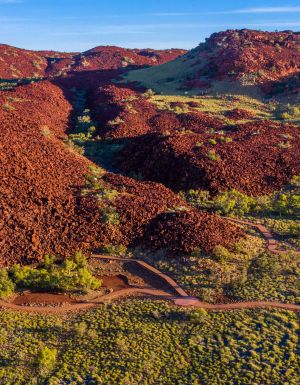
Wild, pristine, and shaped by nature, the Kimberley Coast is one of Australia’s most spectacular landscapes. A remote and rugged frontier that remains a bucket list destination for many travellers. Its most breathtaking attractions – including Montgomery Reef, King George Falls and Horizontal Falls – are accessible only by sea or air, making a guided expedition cruise aboard Silversea’s luxury expedition ship, Silver Cloud, the ideal way to explore it.

From its intricate intertidal zones to ancient rock art, extreme tides and rare wildlife found nowhere else in Australia – or the world – this journey offers an unparalleled exploration of one of Earth’s last true wildernesses.

Why Silversea?

Silversea offers a 10-day expedition departing Broome, or an extended 16-day expedition voyage from Indonesia, including landings on the hidden gems of Palopo Sulawesi and Komodo. Accompanied by expert guides and specialists in marine biology, history and geology, guests gain a deeper understanding of the Kimberley’s dramatic landscapes, rich cultural heritage and extraordinary biodiversity.

Silversea offers one of the experiential travel industry’s leading crew-to-guest ratios. Along with all-suite accommodation (80 per cent with private verandah), 24-hour butler service, a swimming pool and four dining options. Silver Cloud also has an experienced crew of multilingual expedition guides and specialists in marine biology, history and geology to enhance your Kimberley Experience.

silversea cruise ship pool deck
Take a dip in the pool deck.

1. Koolama Bay

​​Before visitors see King George Falls, they hear them – a growing rumble in the distance, steady and foreboding as the Zodiac glides through the gorge, the sound echoing off sheer rock formations. At 80 meters tall, the twin cascades carve through the red cliffs, churning the waters below in a spectacular finale – but Koolama Bay holds secrets beyond its striking scenery.

Named after a ship that beached here following an aerial attack by Japanese bombers in World War II, the bay may seem desolate, yet it teems with life. With Silversea’s expert guides on their 10-day Kimberley itinerary, guests gain a sharper eye for its hidden wonders – rock wallabies darting across the cliffs, crocodiles lurking among dense green mangroves, and high above, the silhouette of a bird of prey circling the sky.

King George Falls at koolama bay excursion on Silversea Kimberley Cruise
Take a shore excursion to see King George Falls.

2. Freshwater Cove / Wijingarra Butt Butt

Connect with Country on a wet landing at Freshwater Cove, also known as Wijingarra Butt Butt. Considered one of the most special experiences on both the 16-day and 10-day Kimberley cruises, Silversea guests are welcomed by the traditional Indigenous custodians of the land, painted with traditional ochre, and invited to take part in a smoking ceremony.

Located on the mainland near Montgomery Reef, Wijingarra Butt Butt holds deep cultural significance to the local Indigenous community. Here, rock formations along the shore represent spiritual ancestors, and guests are guided to a nearby rock overhang filled with ancient art, where traditional owners share the stories and meaning behind these sacred paintings.

welcome to country on freshwater cove during silversea kimberley cruise
Take part in a smoking ceremony. (Image: Tim Faircloth)

3. Vansittart Bay (Jar Island)

Modern history, ancient culture and mystery converge in Vansittart Bay, which is also known as Jar Island. Here, the first thing to catch the eye is the dented, silver fuselage of a World War II-era C-53 plane – a striking relic of the past. Yet, the true cultural treasures lie just a short hike away where two distinct styles of Indigenous rock art – Gwion Gwion and Wandjina – can be found.

The Wandjina figures, deeply connected to Indigenous traditions, stand in stark contrast to the enigmatic Gwion Gwion (Bradshaw) paintings, which date back more than 12,000 years. Significantly different in form and style, the two different styles create a striking juxtaposition, offering a rare glimpse into the region’s rich and complex past.

aerial view of Vansittart Bay, See it in you Silversea Kimberley Cruise.
Explore ancient Gwion Gwion rock art at Vansittart Bay. (Image: Janelle Lugge)

4. Horizontal Falls

Part illusion, part natural phenomenon, the Kimberley’s much-lauded Horizontal Falls aren’t a waterfall, but a tidal and geographic spectacle that visitors have to see to comprehend. Known as Garaanngaddim, the phenomenon occurs when seawater rushes through two narrow gaps- one just twenty metres wide, and the other seven metres in width, between the escarpments of Talbot Bay.

With each tidal shift,  the force of the water creates whirlpools, furious currents and the illusion of a horizontal cascade as thousands of gallons of water are pushed and pulled in through the gap every six hours with relentless movement, making this one of the Kimberley ’s most mesmerising natural wonders.

Horizontal Falls are described as "One of the greatest wonders of the natural world". They are formed from a break in-between the McLarty Ranges reaching up to 25m in width. The natural phenomenon is created as seawater builds up faster on one side of the gaps than the other, creating a waterfall up to 5m high on a King tide.
Watch whirlpools and furious currents collide. (Image: Janelle Lugge)

5. Montgomery Reef

As the tide turns in Montgomery Reef, magic happens. With the Kimberley’s legendary tides varying up to ten metres, at low tide the submerged reef almost appears to rise from the depths: exposing up to four metres of the sandstone reef.

The impact is otherworldly: as the water drains, waterfalls cascade on either side of the channel,  turtles left exposed scramble and dive, and fish leap in search of sanctuary in shallow pools. Meanwhile, the dinner bell rings for the migratory seabirds dugongs, reef sharks and dolphins that scavenge and feast in the area.

Using zodiacs, guests cruise through one of the world’s most significant inshore reef systems navigated by experienced guides, exploring the most intricate and fascinating parts of a 300-square-kilometre-wide biodiversity hotspot.

aerial view of boat going along Montgomery Reef
Witness seabirds, dolphins and reef sharks on the hunt.

6. Mitchell Falls by Helicopter

Experiencing the Kimberley by sea allows you to feel the power of the tides, but travelling by helicopter reveals the sandstone tapestry of the Kimberley, a landscape geologists believe is over 1.8 billion years old.

One of Silversea’s most popular optional excursions , guests who opt to fly into the interior from the onboard helipad soar up above the rust-coloured landscape of the Mitchell plateau, taking in one of Australia’s most scenic waterfalls: Mitchell Falls, a series of four emerald-coloured pools gently cascades into each other, before plunging down to the river below.

Seeing the landscape from above reveals a landscape weaved and shaped by the power of the freshwater wet season, juxtaposed to the constant lapping of the relentless and powerful tide on the coast.

aerial view of mitchell falls on silversea helicopter excursion
See emerald pools cascade into the river below. (Image: Tim Faircloth)

7. Indigenous Art Caves, Wandjina Art

The Kimberley Region of Western Australia is home to some of the most striking and significant

Indigenous rock art in Australia. Dotted throughout the landscape are caves, cliffs and rock overhangs depicting the striking, ethereal image of Wandjina, the rainmaker spirit and creation being central to many of the Dreamtime stories in this region.

Some of the paintings are regularly repainted by traditional custodians, while others are believed to be over 4,000 years old. Each artwork serves as both a cultural record and a living connection to the past, offering a rare opportunity to engage with the enduring traditions of the Kimberley’s Indigenous communities.

Freshwater Cover Rock Art the kimberleys
Walk among cultural records preserved in stone. (Image: Tim Faircloth)

See the best of this incredible part of the world on a Silversea Kimberley cruise. Book your 10- or extended 16-day expedition voyage at silversea.com