hero media

Australia’s top town for 2026 is a wine region with no beach

Credit: Tourism and Events Queensland / Jewels Lynch

The Granite Belt locale is also home to Queensland’s coldest winters.

Stanthorpe has been named Australia’s Top Tourism Town for 2026, taking gold at a ceremony at Parliament House in Canberra on 15 September.

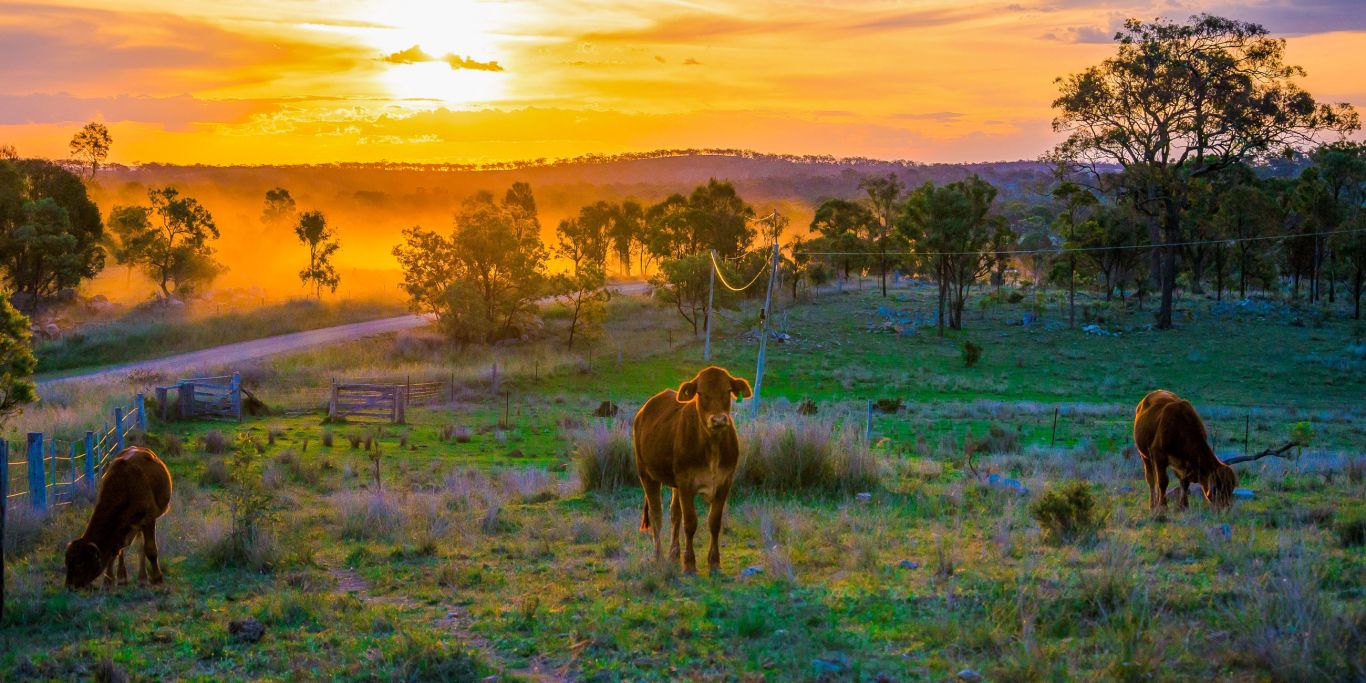
It’s a win for a town that doesn’t usually collect national titles. It doesn’t have the reef, or the rainforest, or a celebrity chef strip. What Stanthorpe has is granite country, cellar doors pouring cool-climate shiraz and pinot, apple and stone-fruit orchards, and the coldest winters in Queensland, and that turned out to be enough to beat everything else in the country.

Announcing the win, Australian Tourism Industry Council CEO Erin McLeod said Stanthorpe brought together “outstanding visitor experiences with a strong sense of local character and a community that understands what it takes to create an exceptional visitor experience".

“Our regional towns are central to the way visitors experience Australia. They encourage people to travel beyond our major cities, discover new destinations and experience the landscapes, people, produce and stories that make different parts of our country unique," McLeod said.
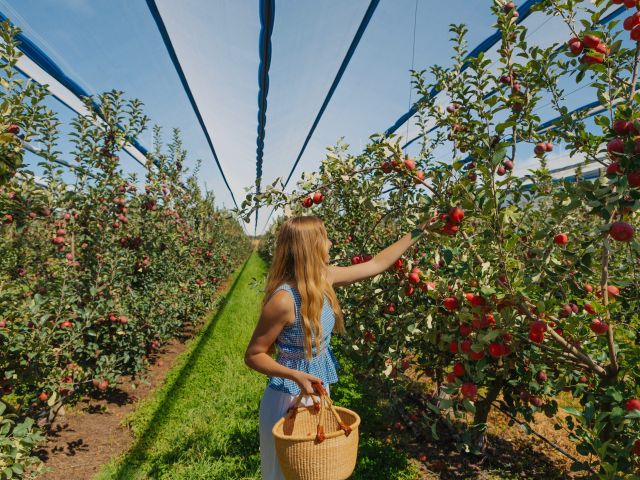
Lady picking apples at Nicoletti Orchards in Stanthorpe, Queensland
Go apple picking in Stanthorpe. (Credit: Demi Gavin)

The result has been building. Stanthorpe took silver in the Queensland awards in 2025, went one better in June when it was crowned Queensland’s Top Tourism Town, and has now converted that into national gold. It also placed 78th on Australian Traveller’s 100 Best Aussie Towns for 2026 list.

Worth remembering how far the town has come to get here. Stanthorpe began trucking in drinking water in January 2020 after Storm King Dam dropped to critically low levels, and the ABC reported 14 truckloads a day were going in to meet a requirement of 1.3 million litres.

“The tourism industry died when the drought really started to bite," Stanthorpe and Granite Belt Chamber of Commerce president Graham Parker told the ABC in 2021, as the dam refilled and he urged travellers to come back.

Five years on, they have, and then some.

Winter is the drawcard on the Granite Belt. Frost, fireplaces and cold-climate reds are the whole point, and the harvest calendar gives the warmer months their own reason to go. It’s about three hours from Brisbane by car, which makes it a weekend rather than something you need annual leave for.

“We are fortunate in Australia to have extraordinary stories and experiences in every corner of the country, especially in regional communities where nature, culture, heritage, local knowledge and people that create lasting memories for visitors," Federal Minister for Trade and Tourism, Don Farrell, said.

“The towns nominated today showcase the breadth and diversity of our tourism offering and reward the visitors who choose to venture further and discover the regions that help make Australia so unique."

Need tips, more detail or itinerary ideas tailored to you? Ask AT.

AI Prompt

All 2026 winners

Top Tourism Town
Autumn morning with cows in Stanthorpe, Queensland
A crisp autumn morning in Stanthorpe. (Credit: Tourism and Events Queensland / Jewels Lynch)

Gold – Stanthorpe, Qld

Silver – Kiama, NSW

Bronze – Echuca, Vic

Small Tourism Town
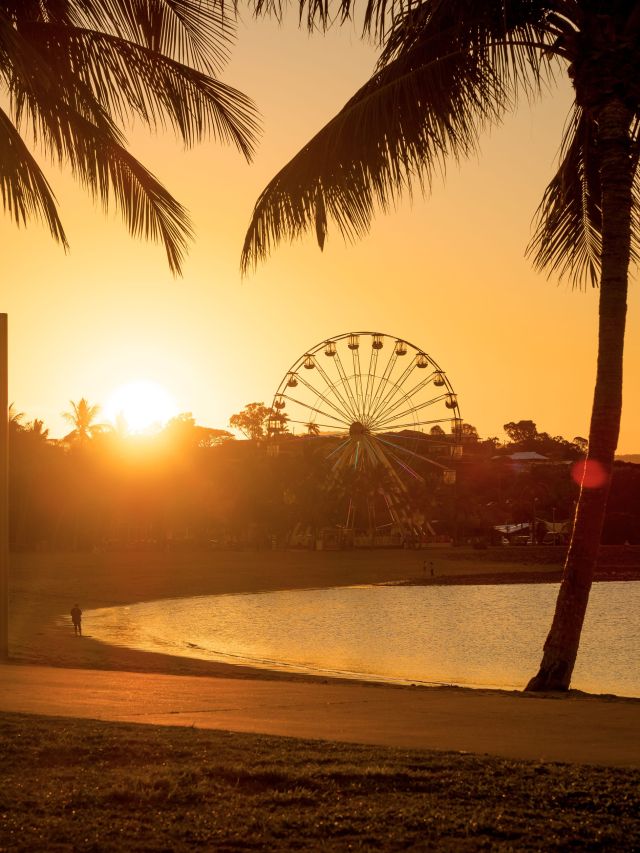
Airlie Beach Main Beach
Airlie Beach is Australia’s best small town. (Credit: Tourism and Events Queensland / The Greener Two)

Gold – Airlie Beach, Qld

Silver – Gulgong, NSW

Bronze – Portarlington, Vic

Weekly travel news, experiences
insider tips, offers, and more.

Tiny Tourism Town
Portsea on the Mornington Peninsula in Victoria
The country’s top tiny town is Portsea on the Mornington Peninsula. (Credit: Rob Blackburn)

Gold – Portsea, Vic

Silver – Toogoolawah, Qld

Bronze – Port Arthur, Tas

Top Tour Guide

Gold – Laura Stone, Sydney by Kayak, NSW

Silver – Jools de Loryn, Go West Tours, Vic

Bronze – Angie Ouyang, National Museum of Australia, ACT

Want to see more stories from Australian Traveller in your Google search results?

  1. Click here to set Australian Traveller as a preferred source.
  2. Tick the box next to "Australian Traveller". That's it.
Emily Murphy
Emily Murphy is Australian Traveller's Email & Social Editor, and in her 4+ years at the company she has been instrumental in shaping its social media and email presence, and crafting compelling narratives that inspire others to explore Australia's vast landscapes. Her previous role was a journalist at Prime Creative Media and before that she was freelancing in publishing, content creation and digital marketing. When she's not creating scroll-stopping travel content, Em is a devoted 'bun mum' and enjoys spending her spare time by the sea, reading, binge-watching a good TV show and exploring Sydney's vibrant dining scene. Next on her Aussie travel wish list? South Australia and The Kimberley.
View profile and articles
hero media

This geological wonder is hiding in the heart of Victoria

    Michael Turtle Michael Turtle
    Mythical, historical and most of all, spectacularly beautiful, Buchan Caves demands you take your time – and a tour. 

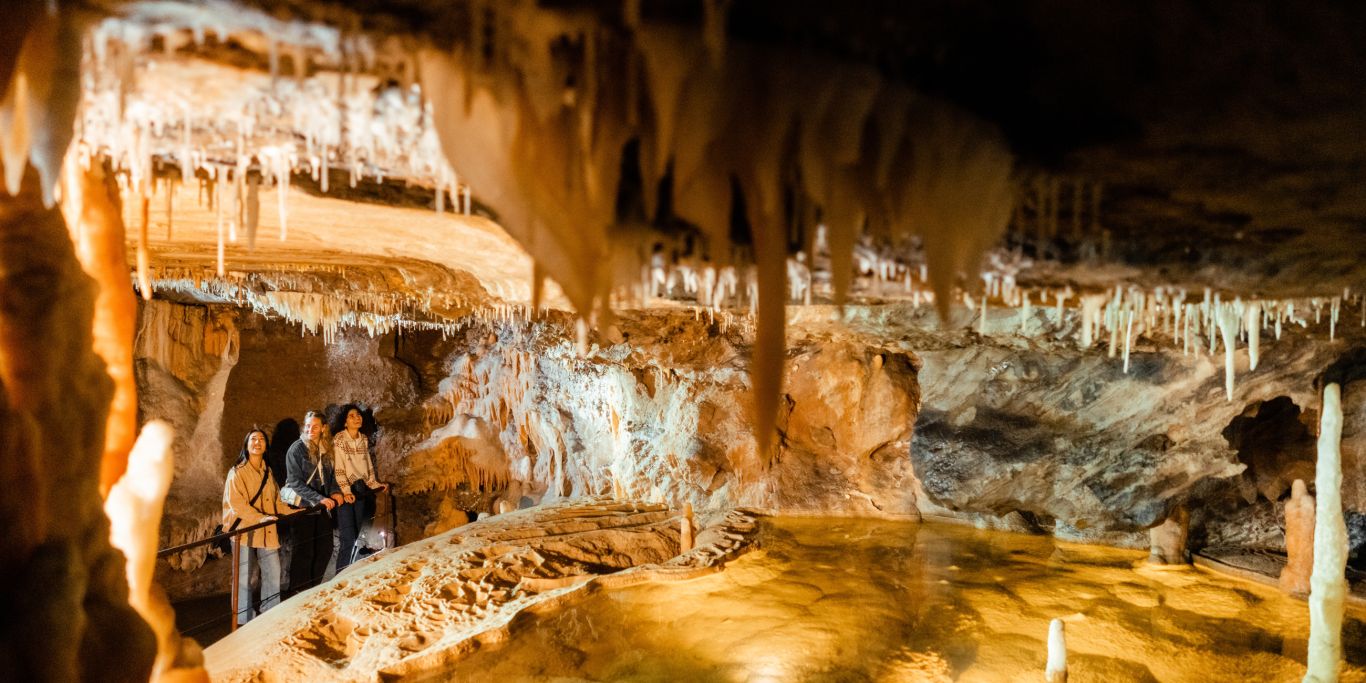
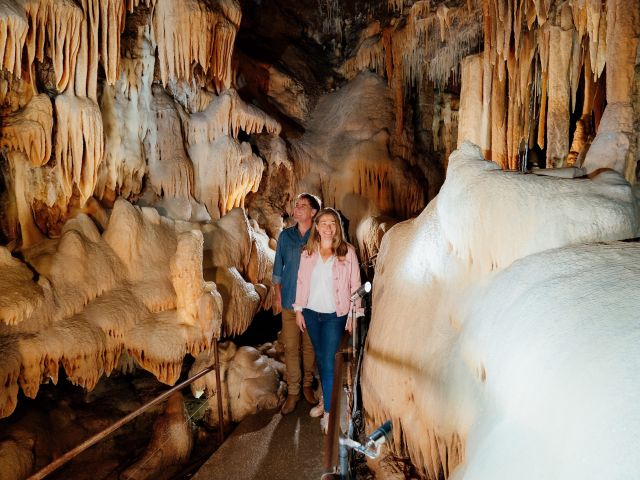
    In the pools of water, so still they could be mirrors, the reflections of the stalactites make these limestone towers seem even taller. Almost 400 million years ago, an underground river carved through the rock to create the Buchan Caves. Now, artworks created by dripping water adorn these subterranean galleries: stalactites hanging from the ceiling, pillars connecting some to the ground, even curtain-like wave formations clinging to the stone.

    Caves House
    Visit the caves for the day or stay onsite in the campground or at the self-contained Caves House. (Image: Ben Savage)

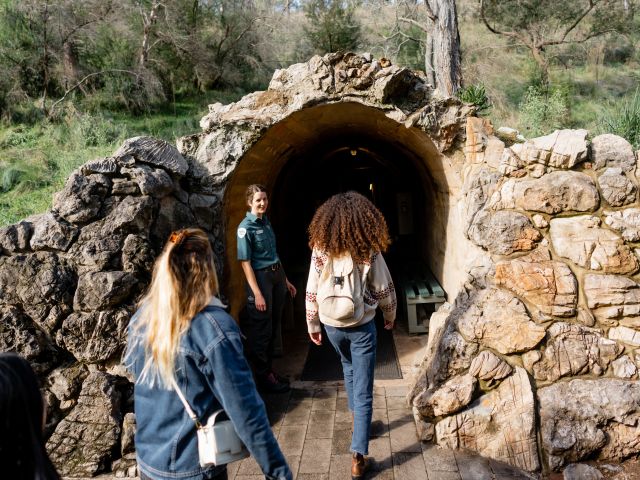
    “This is called the Fairy Cave because it’s full of fairy dust,” a guide tells visitors as they enter a cavern glittering with “calcite that’s solidified into thousands of tiny little diamond shapes”.  Buchan Caves is Victoria’s largest cave system, but Fairy Cave is a highlight and, along with nearby Royal Cave, is accessible only by tour. Naturally cold, naturally dark, these caverns deep below the surface light up as the local experts tell their stories. 

    couple walking in cave
    You’ll need to book a guided tour to see the caves. (Image: Tourism Australia)

    Among the hundreds of caves, some can be easily accessed from the surface. For instance, a casual stroll along the FJ Wilson Interpreted Walk, as kangaroos watch on from beneath acacia trees, leads into the 400-metre-long Federal Cave and its natural steps of white limestone. A slightly longer track, the Granite Pools Walk heads through soaring forest down into moss-covered gullies where the calls of lyrebirds trill through the leaves. 

    A quick history lesson on Buchan Caves 

    Buchan Caves
    Buchan Caves are a must-visit attraction in Gippsland. (Image: Tourism Australia)

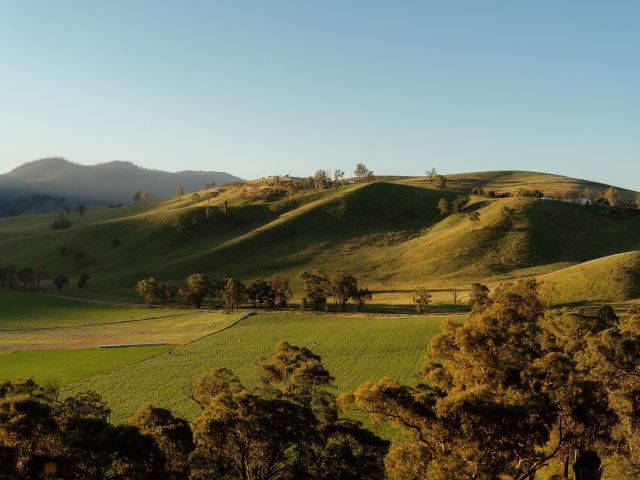
    Among the geology and the nature are millennia of history. This part of East Gippsland connects the high country to the coast and was long a place of refuge for the local Gunaikurnai people on seasonal migrations to the mountains. Archaeological studies show humans lived here up to 18,000 years ago, with artefacts such as small stone tools found around the site. But not too far into the caverns – oh no! The Gunaikurnai didn’t dare venture deep into the dark at Buchan Caves, telling stories they were inhabited by gnome-like nyols (small grey-skinned creatures that could steal memories). 

    Buchan Caves Hotel
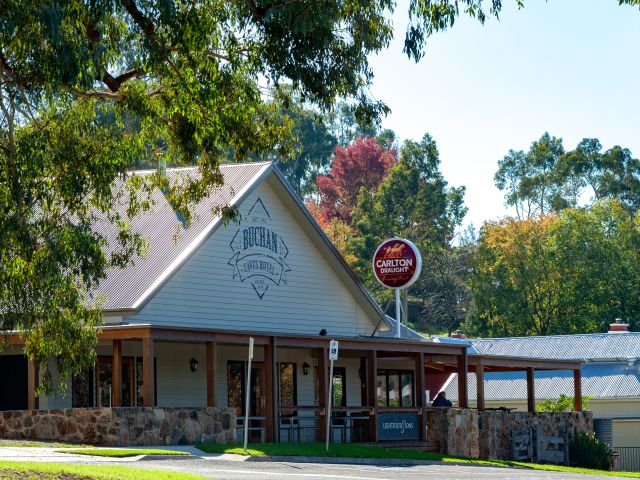
    The Buchan Caves Hotel was rebuilt after burning down in 2014. (Image: Jess Shapiro)

    By the early 1900s, more people had started to hear about these incredible caves and so the Moon family set up home at the site and started to run tours below ground for intrepid visitors. More than a century later, their historic residence is available as accommodation, with the three-bedroom house sleeping up to eight people and now equipped with modern amenities the Moons could only have dreamt of. 

    But whether you stay overnight or just spend the day here, it’s worth taking your time to explore more than just the main caves, to get a deeper understanding of one of Victoria’s fascinating geological attractions.