With a foundation centred in craftsmanship and human experience, Island House distils a family’s connection to place into a timeless design-led stay on Lord Howe Island.
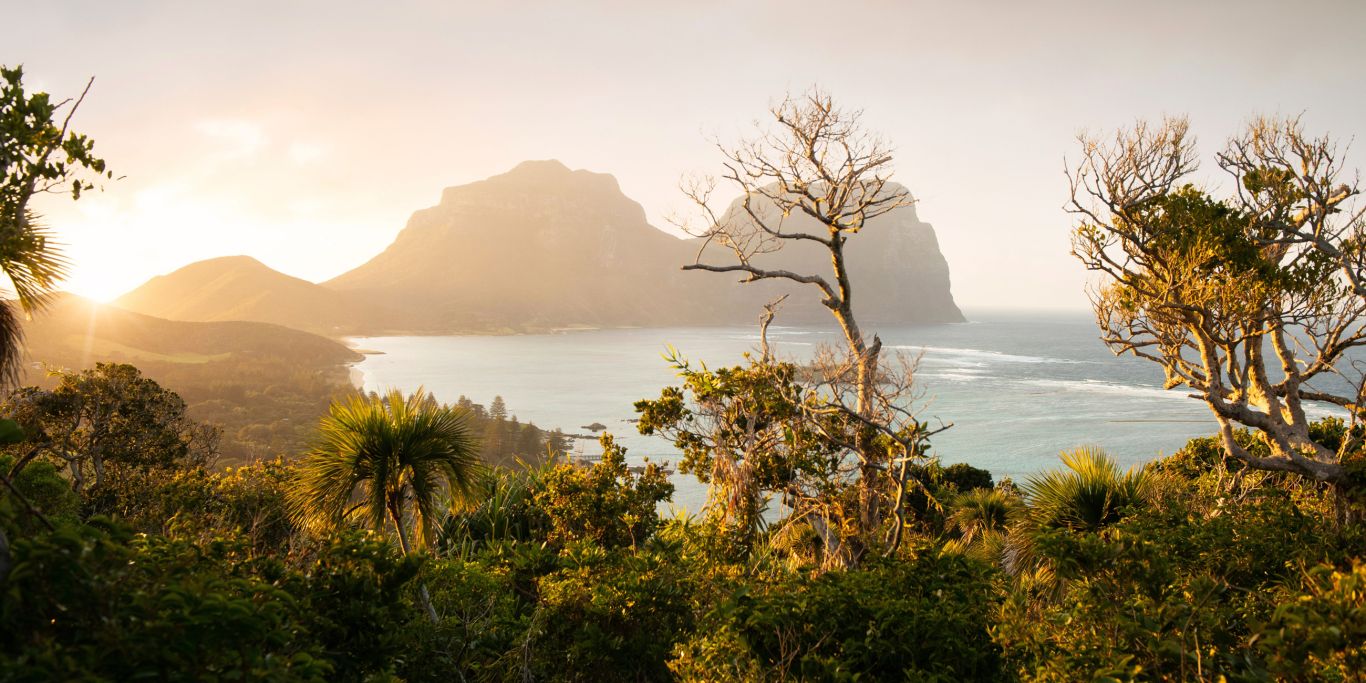
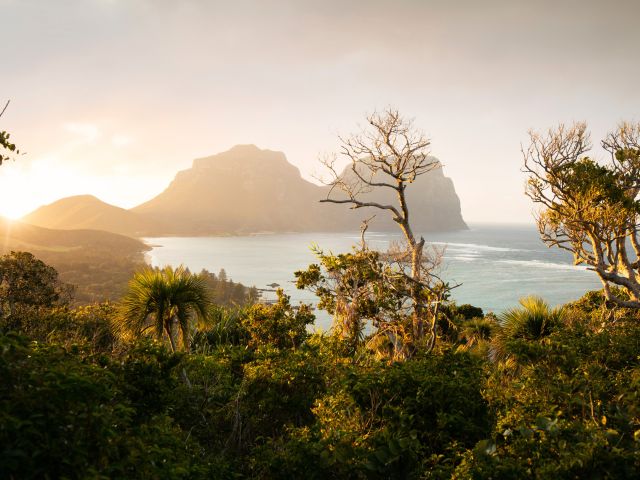
“I’ve got my grandfather’s Super 8 footage of landing on the lagoon, with the water slapping up against the windows." Timmy Maxwell’s parents visited Lord Howe as children, when flying boats serviced the island from Sydney’s Rose Bay. Today, I skim over the same glassy lagoon to touch down beside it on the short airstrip built in 1974 – but the view must look unchanged: a crescent-shaped island of volcanic peaks fringed with golden sand and a shock of turquoise.
The story behind Island House
Timmy himself began holidaying here in 2000, after his parents jumped at the chance to buy their own parcel of paradise 600 kilometres off Australia’s east coast. Fast-forward 25 years and we meet at Island House , the meticulous result of a five-year build he completed with his father, Michael Maxwell. Opening in 2020, they transformed what was once a cluster of holiday apartments into a luxury eight-guest hideaway.
The lodge comprises two distinct properties – North House and South House – designed by the father-and-son duo in collaboration with Newcastle-based Derive Architecture & Design. Their sleek and understated exteriors are crafted from hardwood and copper, and set on elevated platforms to preserve the natural landscape.
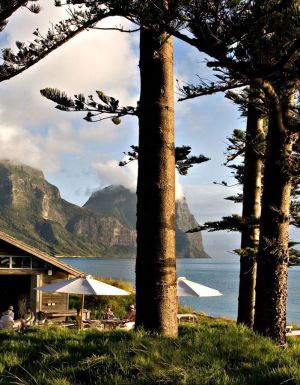
Hidden within a grove of endemic Kentia palms and centuries-old banyan trees, the two houses are connected by an al fresco area that serves as a central gathering point and, each sleeping four, can be booked separately or together.
The copper-and-hardwood-clad South House exteriors. (Image: Anson Smart)
Timmy Maxwell built the property with his father. (Image: Anson Smart)
North House has been designed with high ceilings and plenty of light. (Image: Anson Smart)
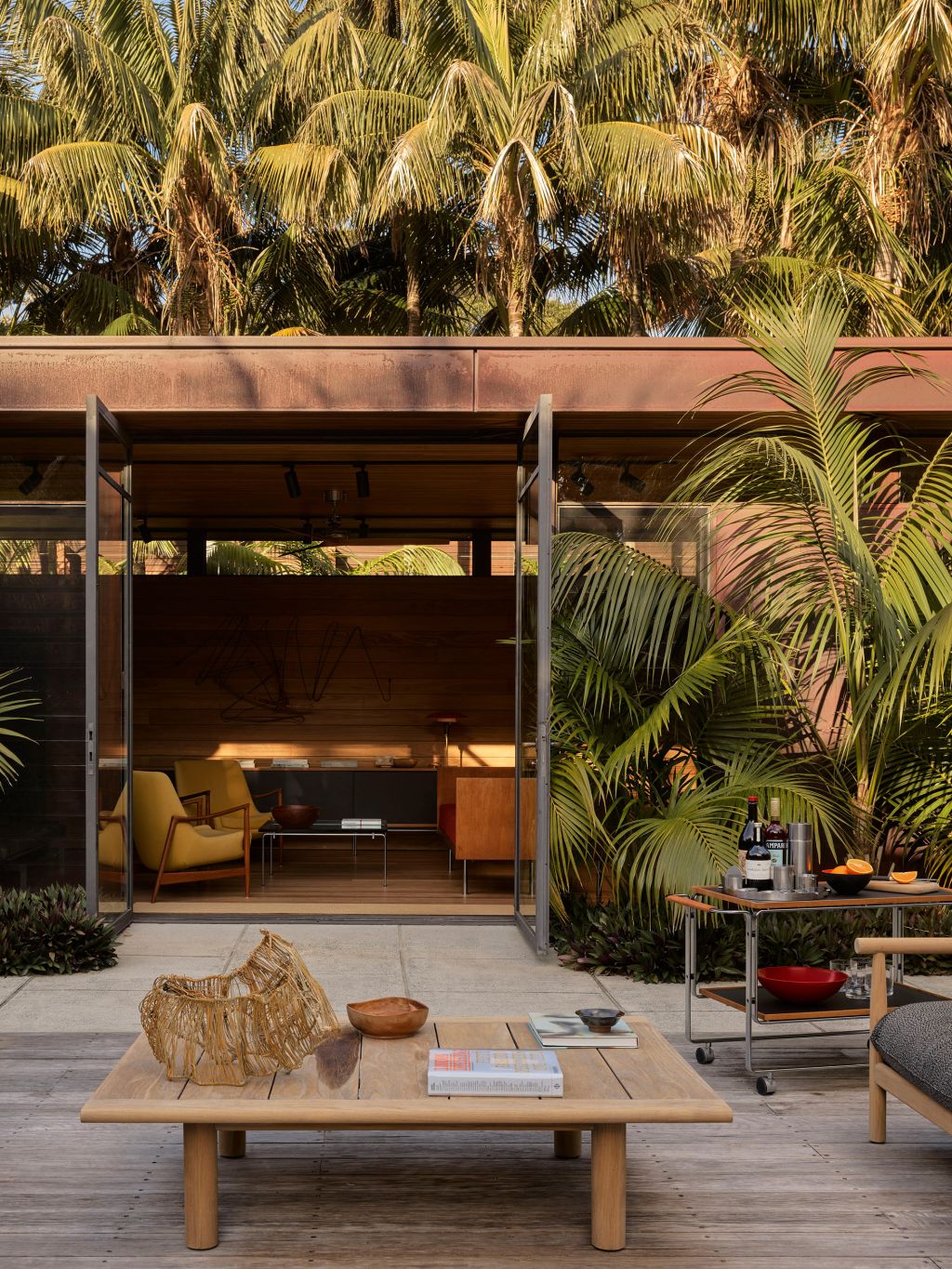
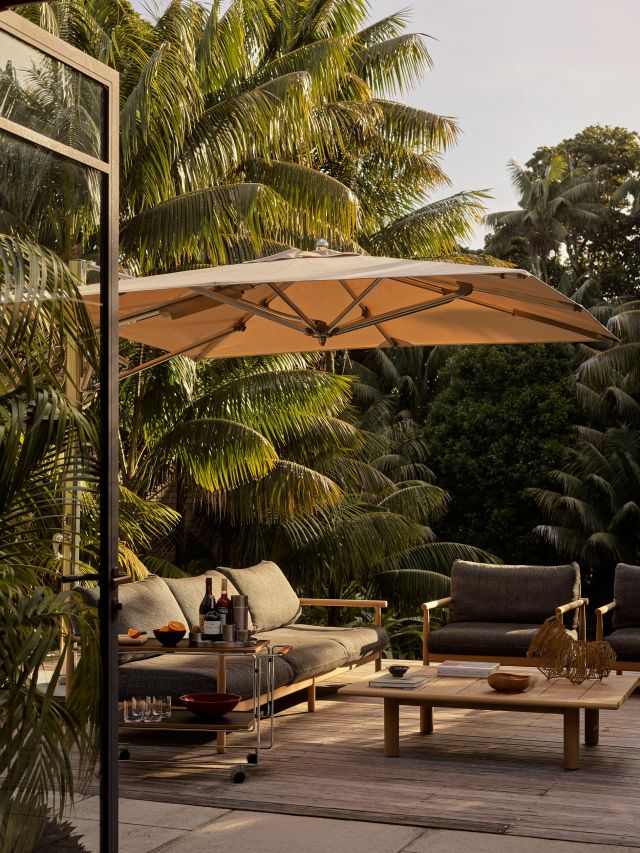
Enjoy a cocktail al fresco surrounded by Kentia palms. (Image: Anson Smart)
The menu at Island House revolves around available fresh produce. (Image: Anson Smart)
The design honours the landscape
True to its setting on Lord Howe Island, a UNESCO World Heritage site since 1982 where visitor numbers are capped at 400 at any one time, Island House treads lightly, capturing rainfall, drawing on solar power and treating sewage onsite to protect the island’s fragile ecosystem. It’s a place of careful consideration, where everything – from customised daily adventures to meals prepared by a private chef – feels intuitive.
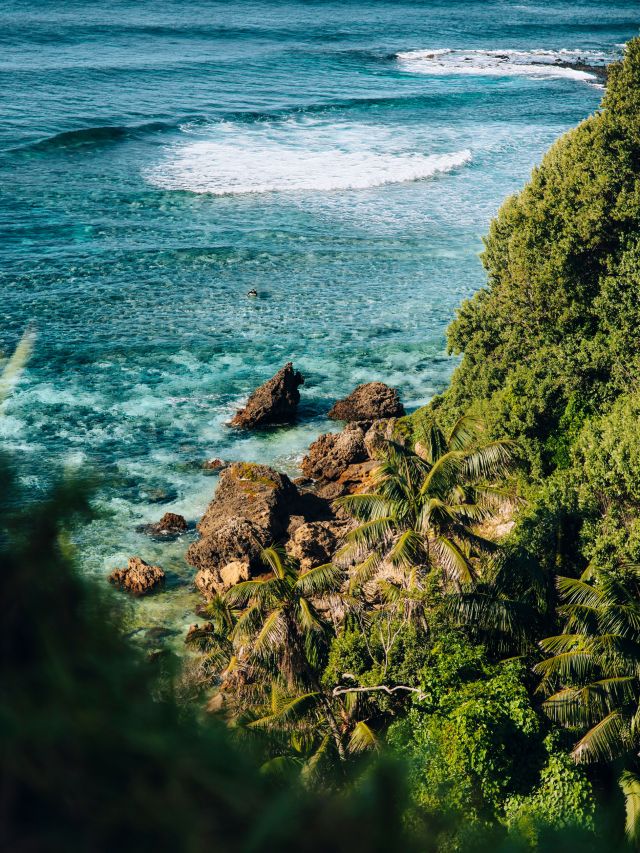
Island House is a launchpad for exploring Lord Howe’s wild coastline. (Image: Jonny Fuhri)
The experience unfolds from a grounding in design, with a visual language shaped by the layering of Michael and Timmy’s shared history. “We really wanted to do something that reflected our passions and spoke to our personal experiences and inspirations," says Timmy. Michael’s career in finance and property ran parallel to cultural pursuits such as restoring wooden boats and architectural homes and serving as chairman of Sculpture by the Sea.
While Timmy’s path blends adventure (a sense of which, from fishing to trail running, was first fostered here on the island) with hospitality; by the age of 24 in 2013 he had opened his own Sydney wine bar, Kubrick’s, before turning his sights back to Lord Howe. With touchpoints to draw on such as sound, art, sculpture, furniture, food, architecture and adventure, “this language of celebrating what’s really timeless started to come through," Timmy tells me.
South House, a medley of mid-century Danish design, books and First Nations art. (Image: Anson Smart)
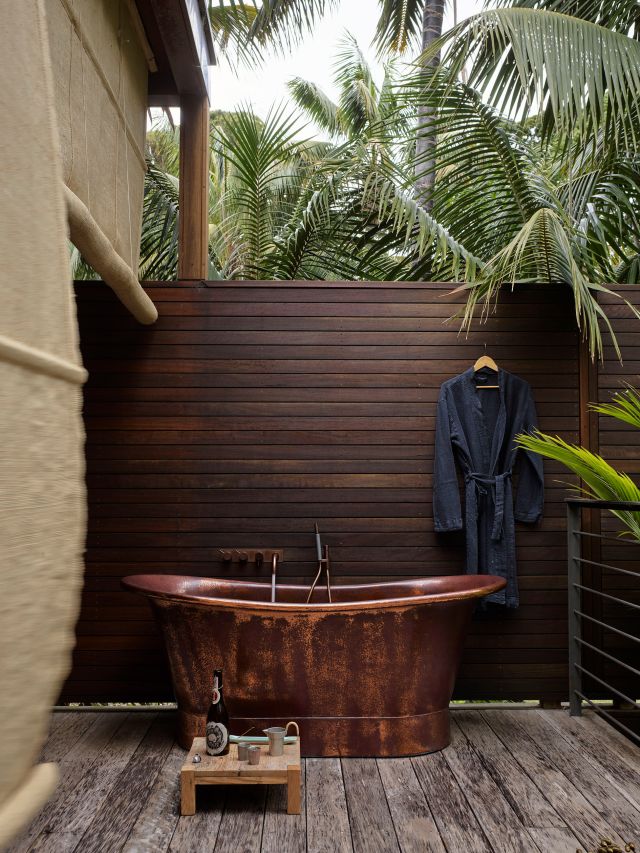
That ethos finds form in mid-century Danish furniture, sourced in Copenhagen – with original pieces from leading proponents of the movement including Poul Kjærholm, Hans Wegner and Finn Juhl – alongside Italian marble, American oak floorboards and stainless steel. There are botanical sculptures by Alison Coates. A whole wall of books. Ceramics from Kyoto, copper bathtubs and a significant collection of Indigenous Australian art, including pieces by celebrated Ngan’gikurrungurr woman Regina Pilawuk Wilson and the late Pintupi man Mick Namarari Tjapaltjarri, a founder of the Western Desert art movement.
An outdoor copper tub at Island House. (Image: Anson Smart)
The Maxwells’ love of music is expressed through each house’s sound system; Timmy admits to having “nerded out" over the statement Wilson Audio speakers that anchor the North House lounge. Fanta-orange sculptural forms that look not unlike robots. “They’re both high-spec and forgiving," he says. Fuzzy round the edges – like the evenings my partner and I spend curled up here, drinking wine and listening to music in a way we haven’t for ages.
Outdoor lounging at Island House. (Image: Anson Smart)
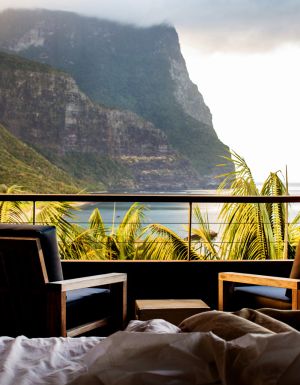
Every design choice reflects an investment in craftsmanship and an instinct for what feels right to humans – not least the proportions, with North House seemingly hitting a golden ratio with its four-metre ceilings. Strategically placed skylights keep us connected to the outdoors; when the sun shines, shafts of light illuminate curated corners while palm shadows dance across the walls. It’s a place to cocoon in after a day spent in the elements.
The role of food and hospitality at Island House
In-house chef Kimie Uemeto prepares fresh food, often with Japanese flavours. (Image: Anson Smart)
The human aspect is at play in every moment our hosts anticipate for us. When our snorkelling trip in the lagoon ends abruptly in a torrential downpour, general manager Anna Klein is already waiting at the shore with towels and the car to whisk us back to warmth. With our beach barbecue plans pivoted, chef Kimie Uemeto has prepared a hearty pumpkin soup to enjoy in-house – exactly what we need.
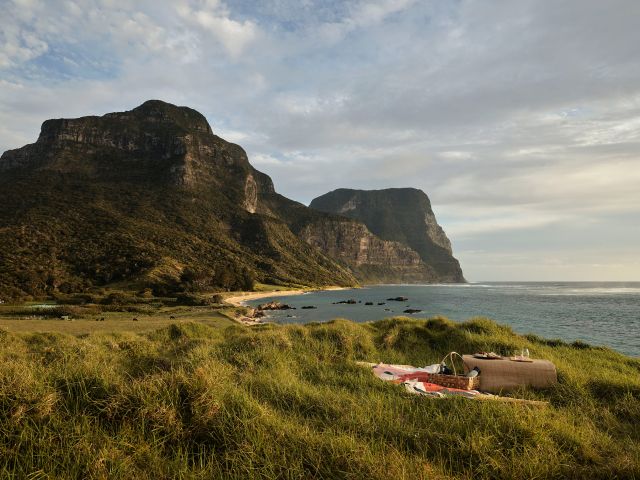
Private picnics are par for the course while staying at Island House. (Image: Anson Smart)
The next morning, we head out on a walk, waving g’day to the omnipresent Lord Howe woodhen, the island’s endemic flightless bird, and follow a trail through bushland to 360-degree views from Transit Hill. The weather has turned fine and on our return to the house, plans for our ‘we curate, you cook’ lunch have been switched for a beach picnic. Anna has laid out a rug under the shade of two palms, and all that remains is to cycle down to Ned’s Beach and raid a hamper packed with whipped feta to slather on soft rolls, with juicy tomatoes and fresh salad greens. “Pack your snorkels," Anna had advised – and soon enough we wade into the bath-like sea, snorkelling the coral just offshore in gin-clear water.
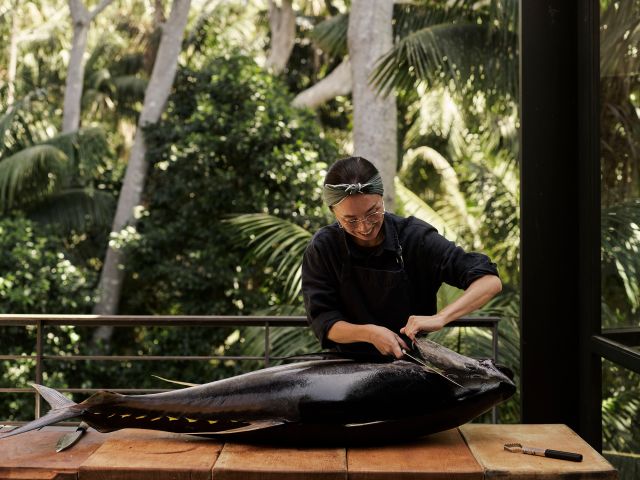
Chef Kimie Uemeto with a fresh catch. (Image: Anson Smart)
Dinners, too, are intuitive affairs, with Kimie working with whatever produce is available on the island, from freshly caught fish to daily finds at the Nursery down the road. “It’s very different from what I used to cook in Japan, because I used to cook very traditional cuisine," she says. Moving here from Sydney five years ago with her young family, she has learned to be flexible. “Here on the island, you don’t know what’s available tomorrow," she says. “I like cooking with my feeling. And this place allows me to do that."
Exploring other Lord Howe Island highlights
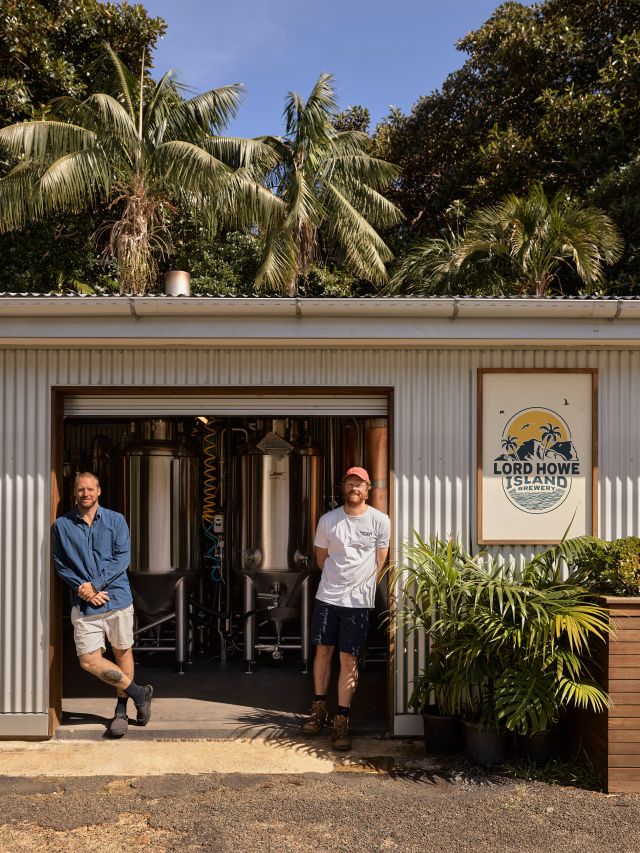
Timmy Maxwell and head brewer Alastair Gillespie at Lord Howe Island Brewery. (Image: Anson Smart)
We visit the Nursery the next day, a greenhouse project the Maxwells oversee that grows fresh produce as well as cultivating Kentia palms for export (a tradition that goes back to Victorian times; the world’s most popular endemic plant is native to Lord Howe). It’s on the same site as the Lord Howe Island Brewery , which father and son also founded, and which serves as a community hub. It’s open Thursday and Saturday for woodfired pizzas and drinks in the convivial beer garden and offers weekly tours for those keen to go behind the scenes of one of the world’s most remote breweries.
Our own visit in April coincides with the inaugural Dark Sky Festival and we join a Science Talk hosted at the brewery one evening. Among topics ranging from the transit of Venus to black holes and moon illusion, we learn about light pollution and the importance of dark sky conservation. How the planet would benefit if we all turned our lights down.
By design, not much has changed on Lord Howe Island since the days the flying boats splashed down on the lagoon. There’s still no mobile reception on the island, and being totally out of range as we are out and about exploring feels like a rare liberty. An apparent luxury in a too-connected world. Some guests looking forward to a digital detox, says Timmy, are disappointed to learn that Island House has Starlink and ask for it to be turned off.
The island’s famed peaks, Mt Lidgbird and Mt Gower. (Image: Destination NSW/Tom Archer)
Lord Howe Island is an otherworldly place. The afternoon we freewheeled down to the base of Mt Lidgbird and Mt Gower confirmed this: a fierce burst of post-rain sunshine sent rainbows shooting across the famous peaks, while providence petrels – which nest nowhere else on Earth – swirled overhead. Lord Howe evolved out of step with the rest of the planet and in its gloriously lo-fi way it retrains you to be human. True enough, when we head back to Island House after our dark sky talk, we stoke the fire, dim the lights and watch nothing but the flickering flames.
A traveller’s checklist
Getting there
SmartLynx Australia operates daily flights from Sydney, with a flight time of under two hours. Eastern Air Services offers weekly flights and charters from Port Macquarie, the Gold Coast and Newcastle.
Staying there
Nightly rates at Island House start from $4260 for a single house and $8660 for a full-site buyout and include: custom island adventures such as guided hikes, snorkelling and diving; dedicated equipment room for guided and self-directed exploration; in-house dining by chef Kimie Uemeto, who pairs freshly sourced local ingredients with Japanese culinary techniques; fully stocked pantry and bar; private picnics with mountain views or beach settings; complimentary hotel car transfers and airport pick-up and drop-off.
On the horizon
Lord Howe Island’s next Dark Sky Festival is planned for 16–23 May 2026. Andstay tuned for news of Michael and Timmy Maxwell’s next accommodation project, set to launch in southern Tasmania.
Peeking through the palms. (Image: Anson Smart)
Weekly travel news, experiences insider tips, offers, and more.
Imogen Eveson is Australian Traveller’s Print Editor. She was named Editor of the Year at the 2024 Mumbrella Publish Awards and in 2023, was awarded the Cruise Line Industry Association (CLIA) Australia’s Media Award. Before joining Australian Traveller Media as sub-editor in 2017, Imogen wrote for publications including Broadsheet, Russh and SilverKris. She launched her career in London, where she graduated with a BA Hons degree in fashion communication from world-renowned arts and design college Central Saint Martins. She is the author/designer of The Wapping Project on Paper, published by Black Dog Publishing in 2014. Growing up in Glastonbury, home to the largest music and performing arts festival in the world, instilled in Imogen a passion for cultural cross-pollination that finds perfect expression today in shaping Australia’s leading travel titles. Imogen regularly appears as a guest on radio travel segments, including ABC National Nightlife, and is invited to attend global travel expos such as IMM, ILTM, Further East and We Are Africa.
The ultimate road trip begins and ends on NSW’s stunning Grand Pacific Drive.
Whales, charming villages, fine wine and stunning natural vistas: there’s a lot to love about a road trip along the Grand Pacific Drive in New South Wales. Winding from the Royal National Park through Wollongong, Shellharbour, Kiama and Shoalhaven before heading inland to the Southern Highlands, this scenic drive makes for an unforgettable road trip.
But like all great road trips, it’s not just about the drive but the stops made along the way. From incredible farm-to-plate (and grape-to-glass) dining options to unbeatable natural vistas and quaint towns with beautiful accommodation, there’s plenty to explore en route.
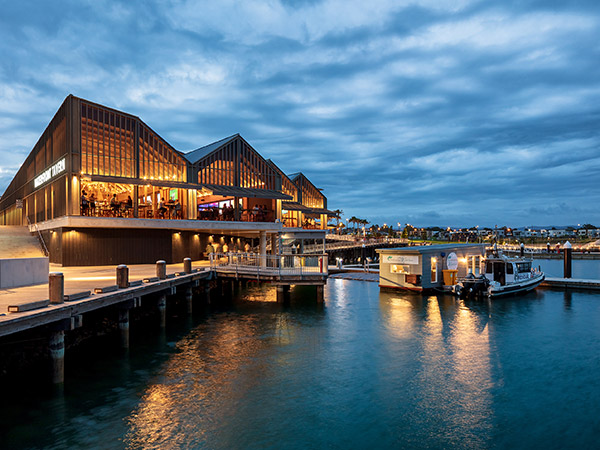
Spend time in Shellharbour Marina.
Where to eat
What is a road trip without incredible food? Whether you’re after fresh seafood, slow-cooked paddock-to-plate feasts or delicious wines, you’ll find something around every bend along Grand Pacific Drive.
Restaurant Santino is a local Wollongong secret we can’t keep quiet any longer. With a fresh take on Italian cuisine, servings are hearty and flavours are comforting. The chitarra with blue swimmer crab, garlic, chilli, parsley and crustacean oil is a crowd favourite.
Keep it local in Shellharbour with a menu all about fresh local produce at Relish on Addison. From South Coast oysters and blue swimmer crab linguine to crispy pork belly, surf and turf takes on an elevated meaning here.
Kiama’s neighbourhood wine and cocktail bar, Little Betty’s, is just as good for a tasty share plate as it is for creative cocktails. The signature Grilled Octopus with burnt honey, garlic confit and sautéed Asian greens is worth a trip on its own.
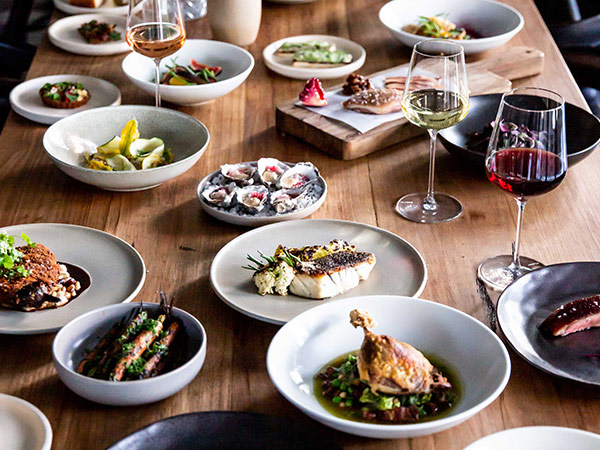
Only the best will do in Shoalhaven, where multi-award-winning Bangalay Dining uses native Australian ingredients to bring its dishes to life. Start with the Smoked trout croquette before moving on to the sautéed potato gnocchi. Don’t forget the white chocolate mousse for dessert.
Meanwhile, the Southern Highlands are full of culinary highlights. From dining on incredibly fresh, local fare (we’re talking ingredients plucked from the team’s on-site kitchen garden or sourced through local producers) at Eschalot Restaurant in Berrima to creating gin blends at Millsheds Distillery.
Taste native flavours at Bangalay Dining.
Exploring nature
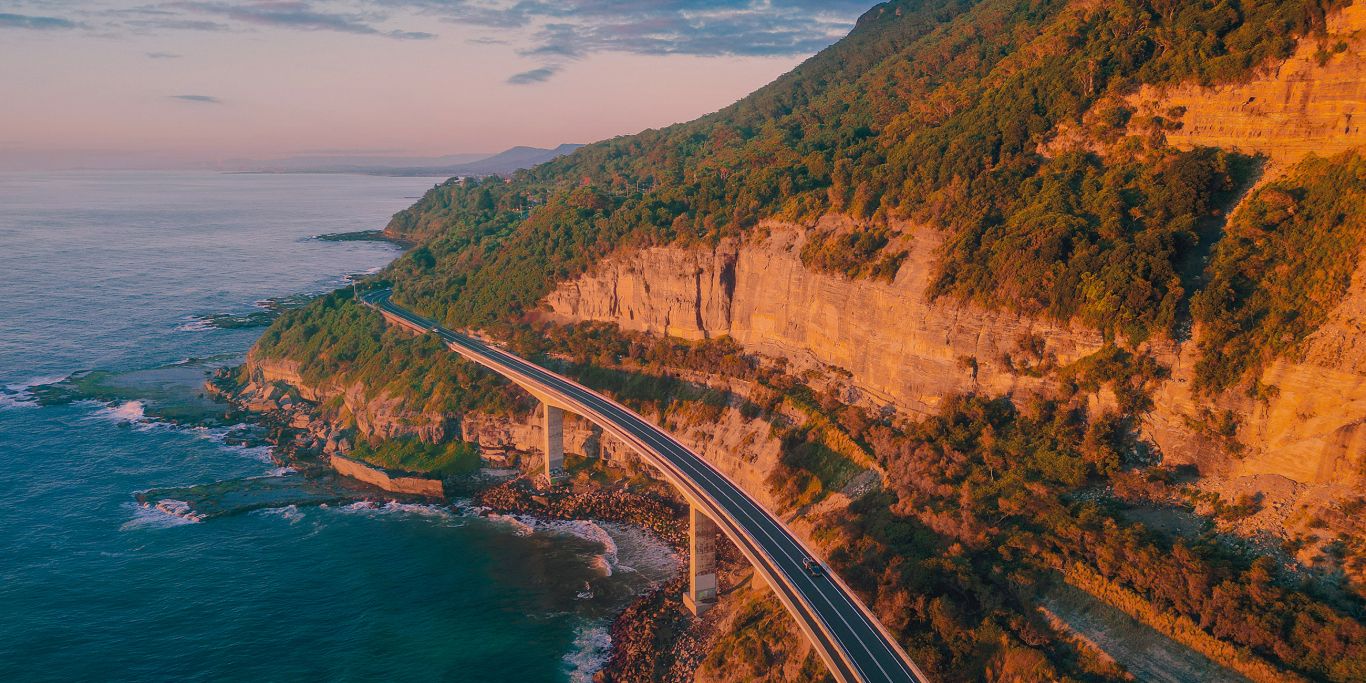
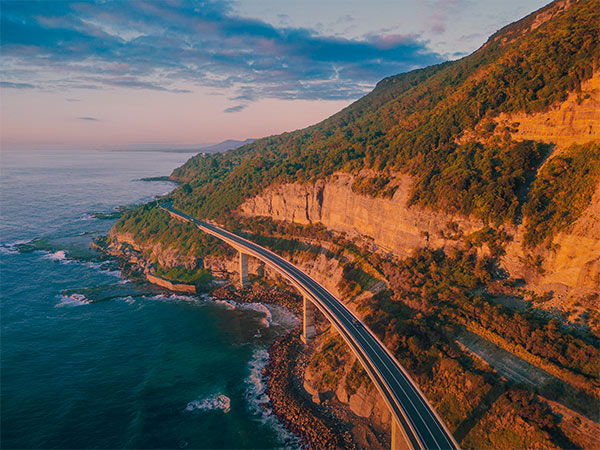
Scenery is everything when hitting the road, and Grand Pacific Drive serves it up in spades. Drivers don’t even have to leave the car to enjoy the iconic ocean views from Seacliff Bridge (but several lookouts make it easy to stop).
Seaside Kiama boasts stunning beaches and famous blowholes. But travellers can also swap ocean for rainforest when taking the Minnamurra Rainforest walk, culminating in a picturesque waterfall. Or soar overhead at Illawarra Fly Treetop Adventures.
Cruise along the stunning Grand Pacific Drive.
Between May and November, 30,000 whales make their way passed the South Coast between May and November. Spot them from the coastal shores or join a whale-watching cruise from Shellharbour Marina or Jervis Bay. Dive in with Woebegone Freedive.
Shellharbour’s Killalea Regional Park is home to a traditional bush tucker and medicine walk with Aboriginal tour group, Gumaraa. Learn Indigenous healing practices and gain a deeper appreciation for the rich heritage and wisdom of the land’s Traditional Owners.
Wollongong is the perfect place for hikers, with the 6.5-kilometre Wodi Wodi track serving up views, settler history and a variety of landscapes in one loop. If you prefer, skip the walk and pull up at Bald Hill Lookout for expansive views south towards Wollongong (and a hang-glider or two).
For something truly unique, join the Highland Cow experience at The Swallow’s Nest in the Southern Highlands. In a brand-new offering, get a taste of farm life and help groom and feed these gorgeous creatures.
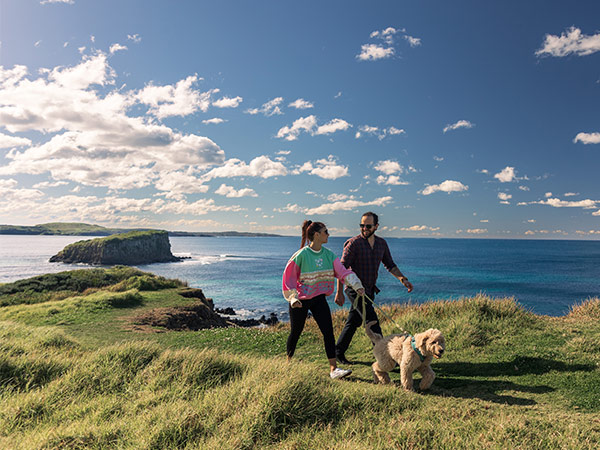
Wander the Kiama Coast Walk.
Unique experiences
No need to choose between an adrenaline rush or a culture fix, Grand Pacific Drive serves up both.
Soar into aviation history at Shellharbour’s HARS Aviation Museum.Tour the museum, then join a guided walk onto the wing of the record-breaking Qantas Boeing 747 and see the significant historic aircraft up close.
If ever there was a place to skydive, it’s in Wollongong. Dive from 15,000 feet (tandem, of course) with Sky Dive Wollongong and see the coastal beauty of this region from above.
Shoalhaven’s Bundanon Art Museum has to be one of the most unique offerings in the country. The legacy of artist Arthur Boyd and more than just a gallery, find eco-accommodation, fine dining, award-winning architecture and community here.
Kiama’s Crooked River Estate is about more than just delicious wine.Grab a picnic blanket and enjoy casual food and drinks with live music at Kick Back Fridays, every week.
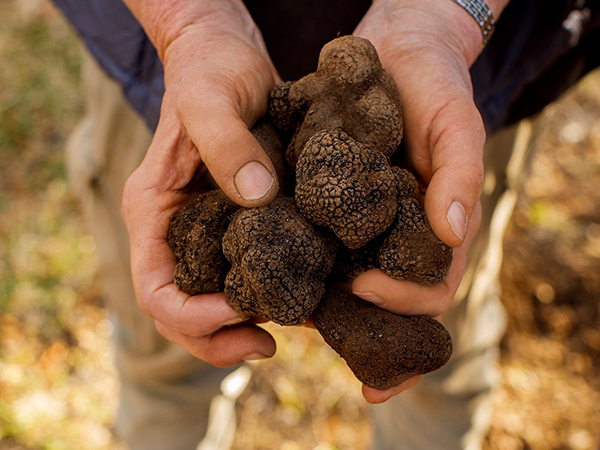
Between June and August, the Southern Highlands’ Robertson attracts novice truffle hunters. Join the hunt at family-owned and operated Robertson Truffles (alternatively, you can order truffle treats online, if your sense of adventure isn’t up for it).
Discover hidden gems beneath the soil in the Southern Highlands. (Image: Destination NSW)
Where to stay
Road trips are the ultimate promotion for slow travel, encouraging visitors to take their time, enjoy the journey and stop along the way to really immerse themselves in local towns.
Find history and elegance at Berida Hotel in the Southern Highlands. Intimately set amongst gardens, but still close to the main street of Bowral, this 1920s private residence turned boutique hotel is the perfect stay.
Stay in one of Barranca’s private villas with views of rolling farmland overlooking the dramatic escarpment at Kangaroo Valley or be surrounded by native bushland (a short walk from the beach) in Jervis Bay.
Speaking of beachside escapes, Headlands Hotel Austinmer Beach delivers unrivalled access to Wollongong’s beaches. These serviced apartments enjoy coastal views from spacious balconies.
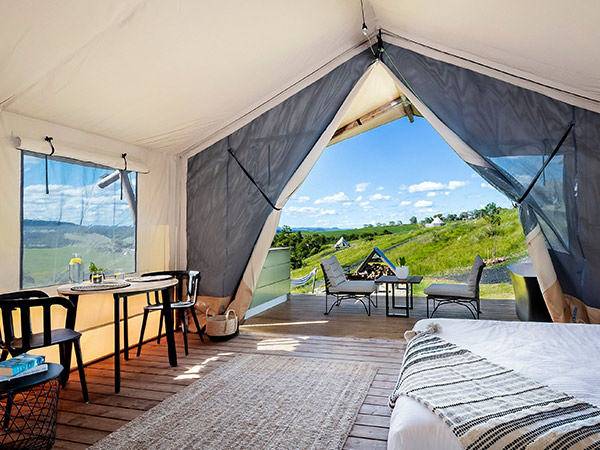
For something completely different again, check in at Cicada Luxury Camping. Stay in safari-style or large bell tents, each with a private fire pit and top-notch kitchen facilities. Outside, enjoy spectacular countryside views.