On the largest moving coastal dune system in the southern hemisphere, discover a long history and deep cultural meaning in the shifting sands.
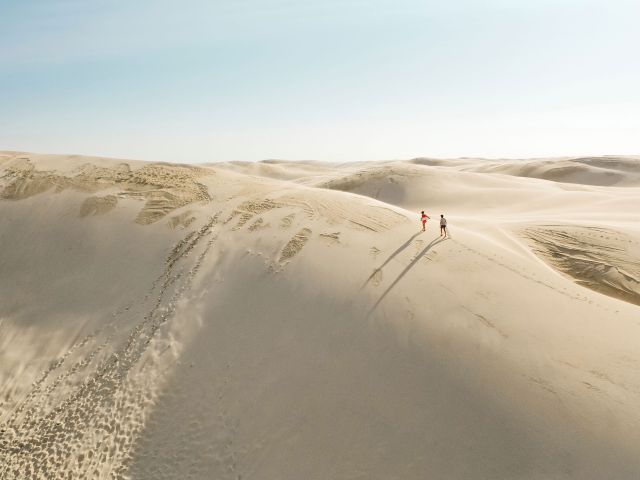
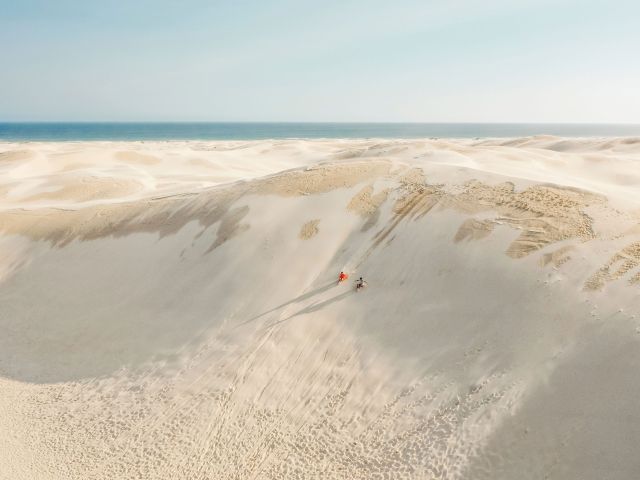
Standing at the top of the dune, I feel like a little kid again. A little kid who’s worried about his ACL. I’ve got a sandboard in my hand, but I’m about 30 metres up and it’s a long way down. But at least it’s not too steep, so here I go… arghhh… OK, it is reeeaaally steeeep!
I get to the bottom of the dune, sandboard still in hand, knee intact, and now with sand where you don’t want it to be. But what a rush! The actual kids are running back up to the top, ready for another slide down. I follow them, a bit slower. Why not?
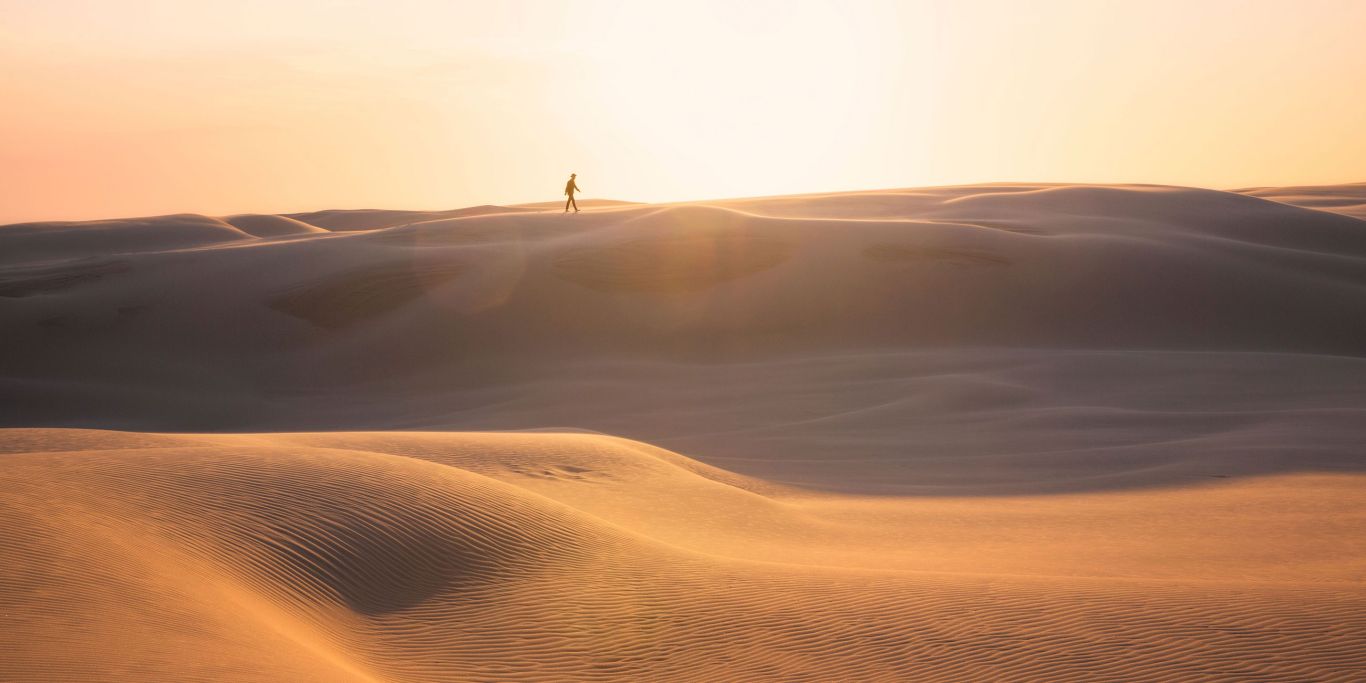
A landscape of ancient Worimi stories and song. (Credit: Destination NSW/Ethan Rohloff)
The Stockton Dunes are enormous, stretching for about 32 kilometres from Anna Bay in Port Stephens down to the tip of Newcastle. I’ve been driven out here by Port Stephens 4WD Tours in one of its special dune buses, but these sands were marked by footprints well before tours were even imagined.
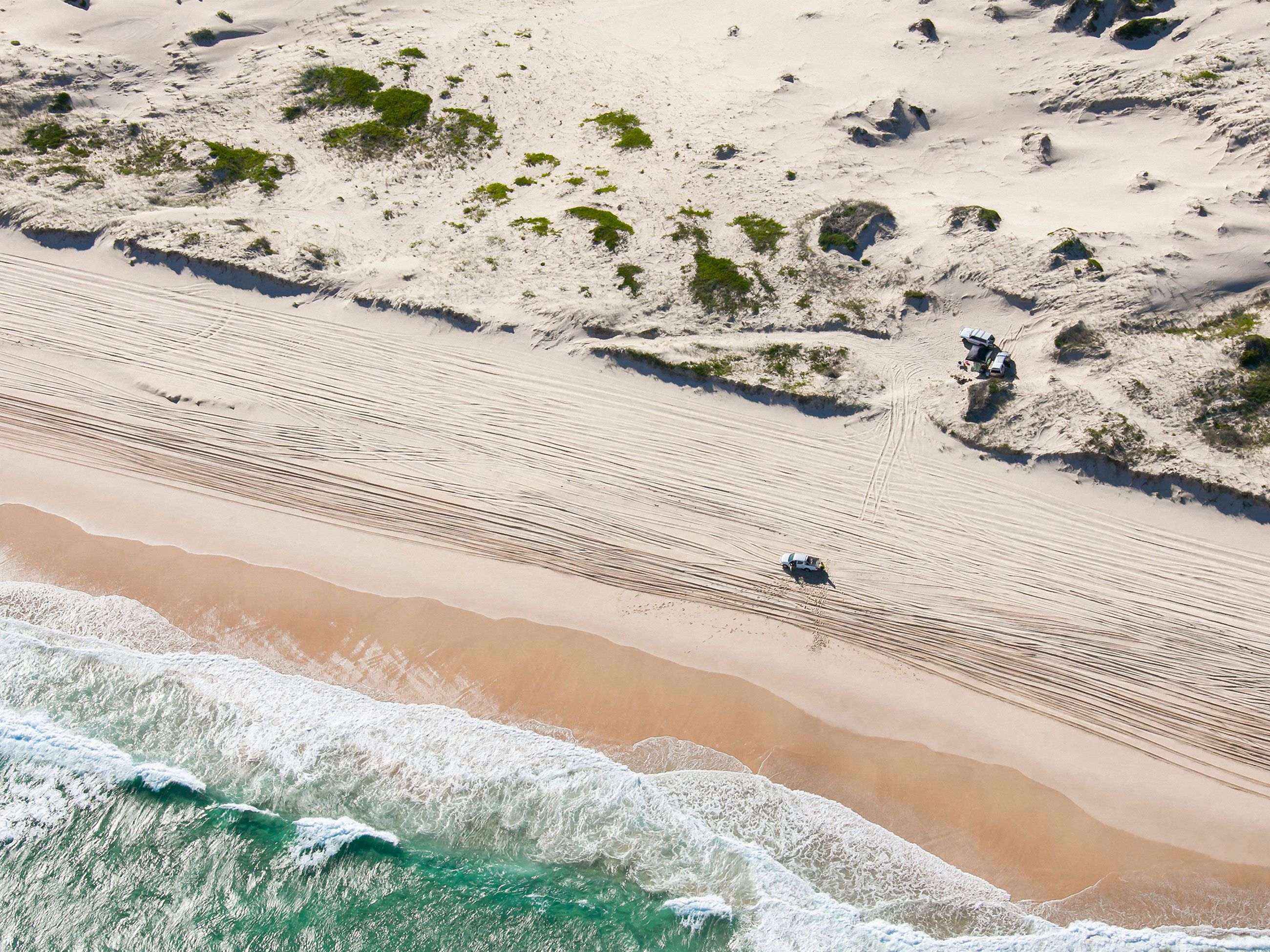
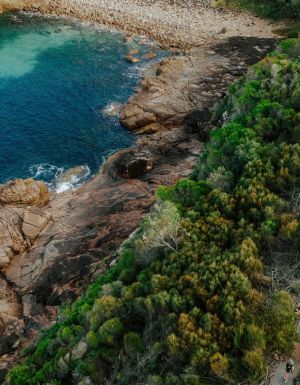
The dunes are flanked by coastal heathland and forest. (Credit: Destination NSW)
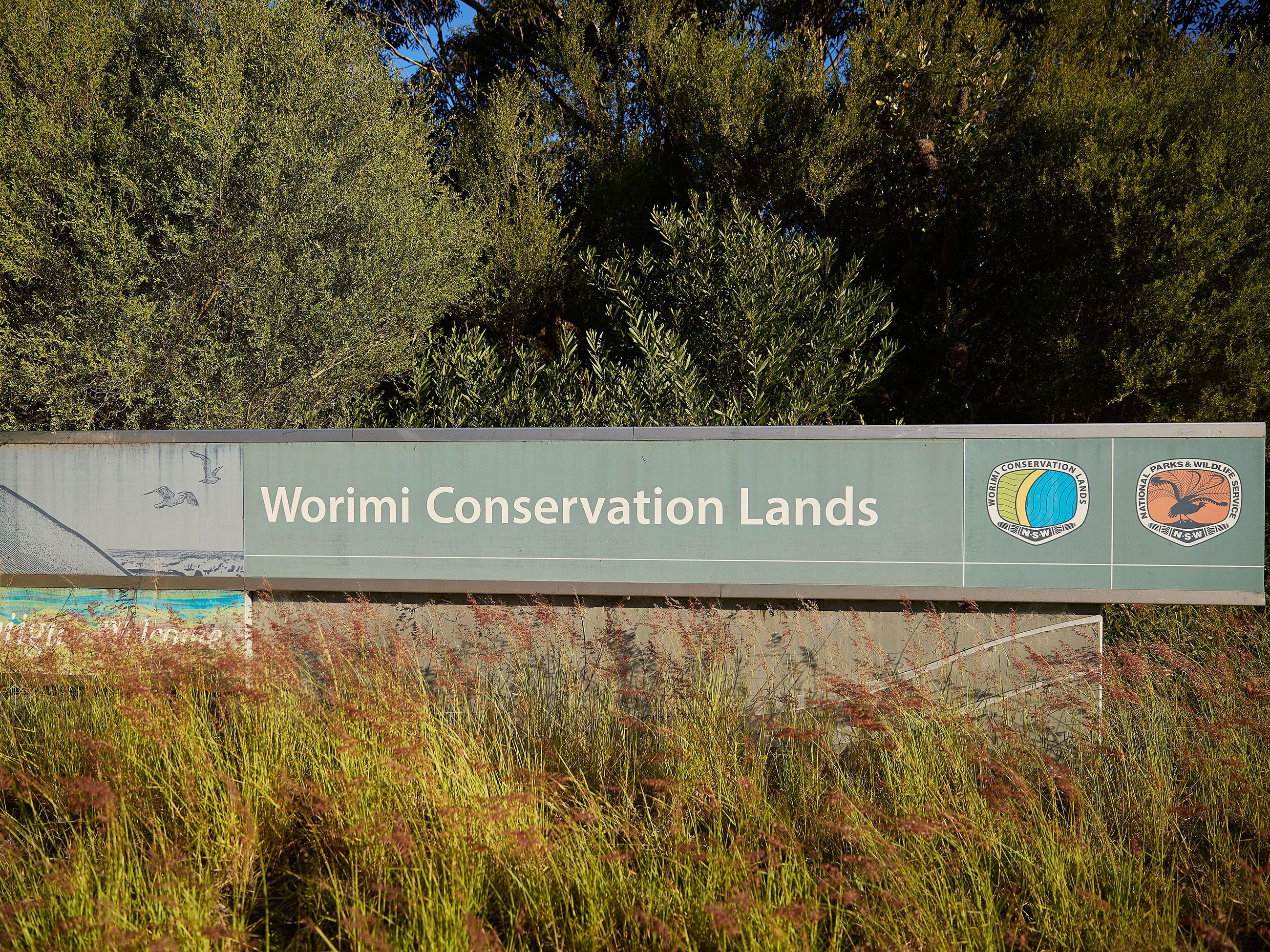
A boundary sign for Worimi Conservation Lands. (Credit: Destination NSW)
For millennia, the Worimi people have lived in the region and used this sweeping bit of coastline to travel between different parts of their Country. Traditionally, they caught fish and collected pipis, mussels and oysters – with cultural living sites still marking the places of rest. And along their coastal journeys are Dreaming tracks that tell the stories of the landscape’s formation.
These important cultural connections are one of the reasons the dunes, along with the beach on one side and forest on the other, are now protected as part of the Worimi Conservation Lands. Owned by the local Aboriginal community, the lands are co-managed by NSW National Parks and Wildlife Service for public access.
With a permit, you can drive your own car along Stockton Beach, stopping wherever you want to explore or relax. But one of the benefits of joining Port Stephens 4WD Tours is a guided trip to some of the beach’s highlights on the way to the sandboarding experience.
The raw thrill of sandboarding. (Credit: Destination NSW)
“I like walking up behind the frontal dunes," guide Craig Hallam tells me. “It’s like beachcombing. I’ve found a 1930s medicine vial and a Coke bottle from the ’60s, and there’s lots of black pumice at the moment from the underwater eruption in Tonga a few years ago."
The guides will also help you find pipis in the sand near the waterline, just as the Worimi people have always done. Or there’s even a different tour that goes much further down the beach, about 12 kilometres, to the eerie Tin City.
Need tips, more detail or itinerary ideas tailored to you? Ask AT.
AI Prompt
Wandering Tin City
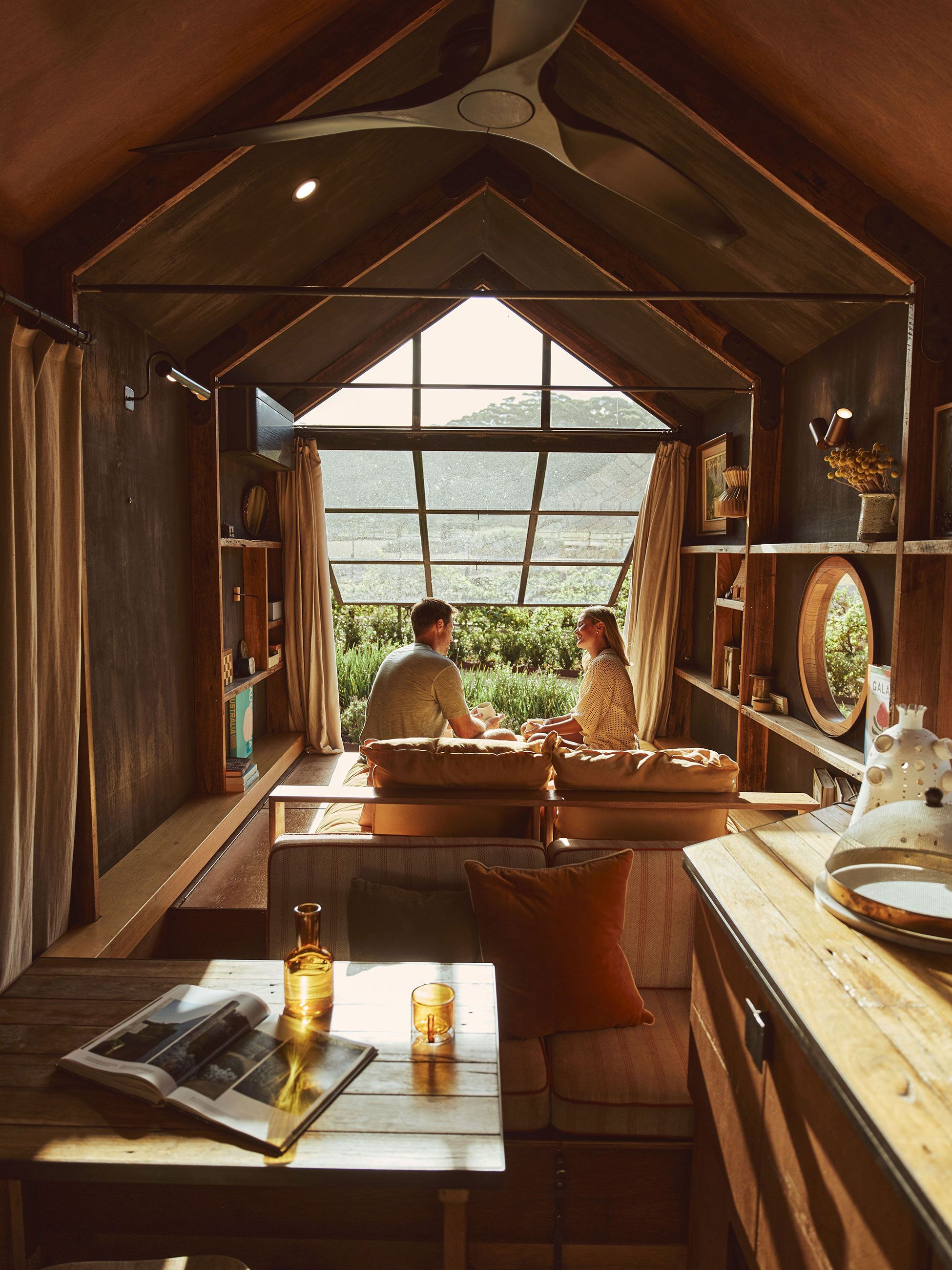
Stay at Sally the Skywatcher tiny home at B.Farm. (Credit: Destination NSW/Jason Ierace)
Hyper-local dishes
are a highlight of the precinct’s culinary
offerings. (Credit: Destination NSW/Jason Ierace)
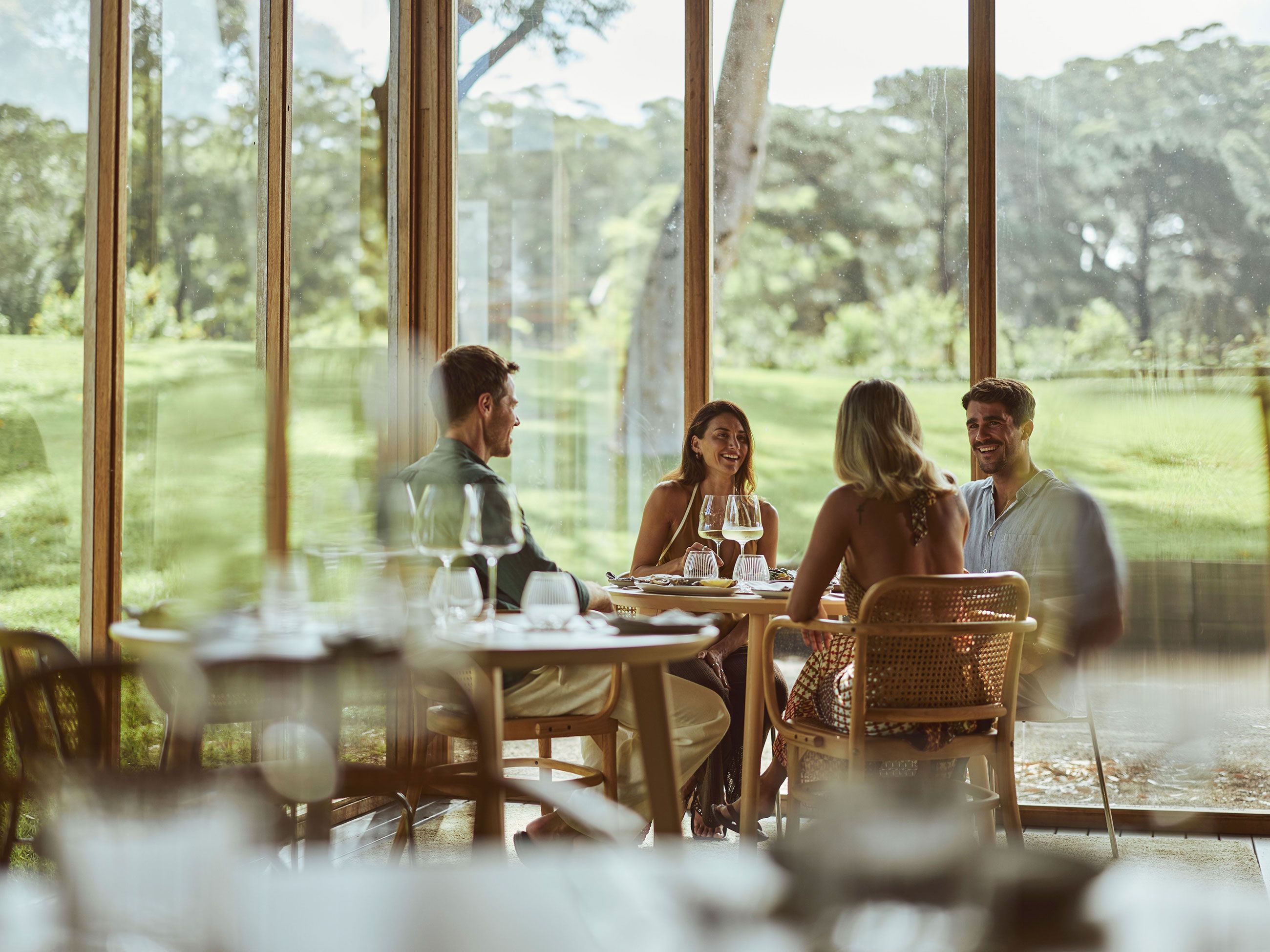
Guests enjoy lunch with sweeping views of the property. (Credit: Destination NSW/Jason Ierace)
While the origins of Tin City can feel like a mystery to visitors, the first sheds were actually built for shipwreck survivors in the late 1800s, before being expanded by squatters during the Great Depression of the 1930s. Incredibly, the 11 remaining tin huts are still privately occupied as holiday retreats. The deal is that owners can maintain the properties, but not improve or rebuild them. It’s strange to see these rustic shelters in the middle of a windswept beach.
Even without a tour, you can access this part of the Stockton Dunes via a walking track through forest just off the peninsula’s main arterial road. And from the car park, I’d recommend popping into B.Farm, a lifestyle and hospitality precinct just a minute’s drive away. The original garden bar from Murray’s Craft Brewing is still here and there’s fine dining at Restaurant William, as well as an elegant high tea. There’s also a farm shop, wine tastings and a distillery. It’s an experiential destination, so I’m told.
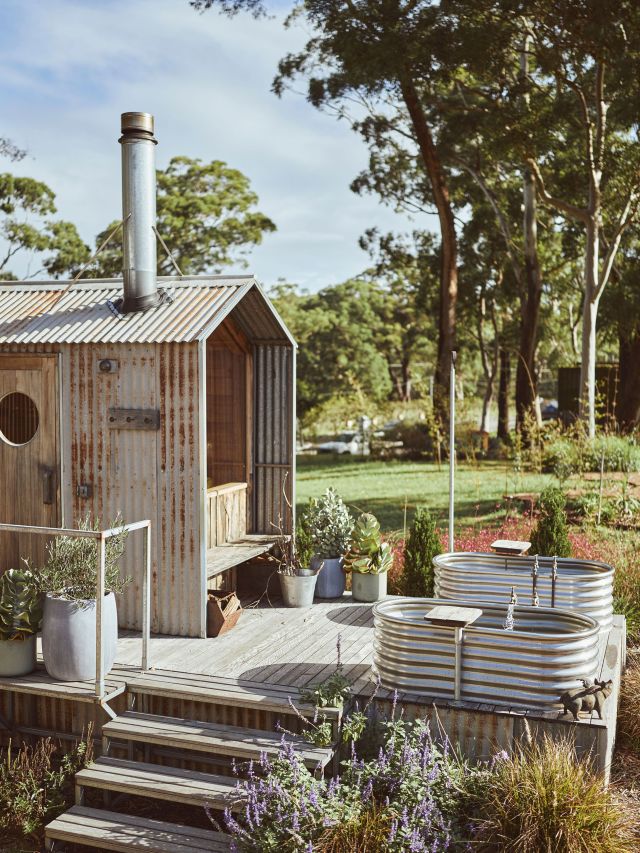
Sally the Skywatcher has a sauna and bathhouse. (Credit: Destination NSW/Jason Ierace)
The Stockton Dunes may be constantly moving, some of the things you can do around them may be constantly evolving, but the spirit here has always been bright. The Worimi fought to protect this – for everyone – and it’s easy to see why it is so special, whether that’s by the water, among the blackbutts and paperbarks of the forest, or even at the top of a dune with a board held fearfully in your hand.
Travel details
How to get there
Port Stephens is 2.5 hours’ drive from Sydney and 40 minutes from Newcastle. Once there, the Stockton Sand Dunes are a 10-minute drive from Nelson Bay, the area’s main town.
Where to stay
Sally the Skywatcher is a luxury, tin tiny house at B.Farm complete with a private sauna and retractable roof designed for star-bathing.
Tours to try
The Beach and Dune Tour with Port Stephens 4WD Tours costs $57 for adults and $49 for children. A family pass is $180.
Weekly travel news, experiences insider tips, offers, and more.
Want to see more stories from Australian Traveller in your Google search results?
Tick the box next to "Australian Traveller". That's it.
Michael Turtle left Australia in 2011 to explore the world – and ended up travelling nomadically as a blogger for almost a decade! A little pandemic brought him home, where he rediscovered his love of Australia and all its fascinating stories. Michael is just as happy sipping a shiraz at a vineyard as hiking in the Outback, but his special place is a sunrise walk along Sydney Harbour.
An untapped side to this popular holiday spot is hiding in plain sight.
Laidback Lake Macquarie draws in holidaygoers and day trippers with its casual coastal allure and raw beauty. But even though it’s just 90 minutes from Sydney, most visitors have only scratched the surface of what this region has to offer.
Foodie hotspots, quaint towns, tranquil waterways and compelling art are all waiting to be discovered. You just need to know where to find them.
1. Most visitors don’t make it to the western side
Explore beyond the western side. (Credit: Beau Pilgrim)
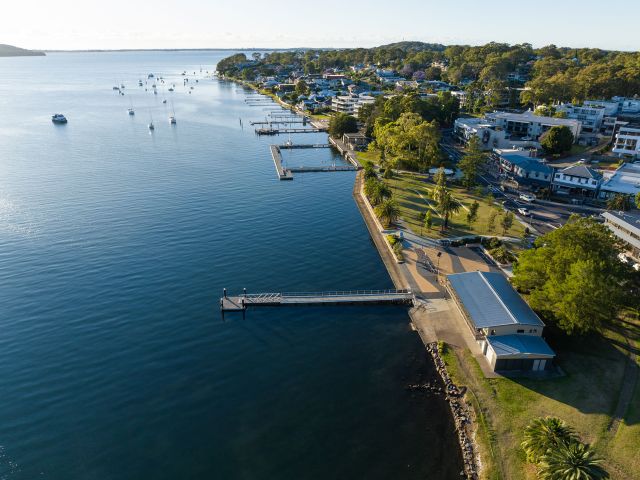
While there’s no harm in walking the well-worn path in this idyllic pocket of the world, the area west of Lake Macquarie is defined by stretches of ancient rainforests and quaint towns with a more local feel. Toronto is the largest town on this side and features a golf course and sailing clubs, while peninsula-based Wangi Wangi is fantastic for bushwalking and swimming.
2. There’s a booming arts scene
Discover the Museum of Art and Culture, YAPANG.
Lake Macquarie is a must-visit destination for creatives. Discover the Museum of Art and Culture, YAPANG; this modern gallery is set on a five-hectare sculpture park and showcases a free rotating program of exhibitions and events, with a strong focus on contemporary Aboriginal art. In Wangi Wangi, explore the Wangi Owl Trail, which includes Dobell House, the preserved home of prolific artist Sir William Dobell. And enjoy live music every Saturday evening at the recently renovated Toronto Hotel.
3. It’s a nature lover’s paradise
In and out of the water, find a natural paradise. (Credit: Beau Pilgrim)
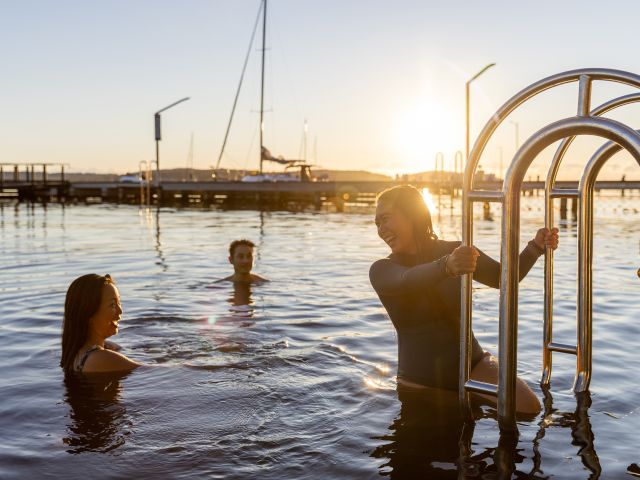
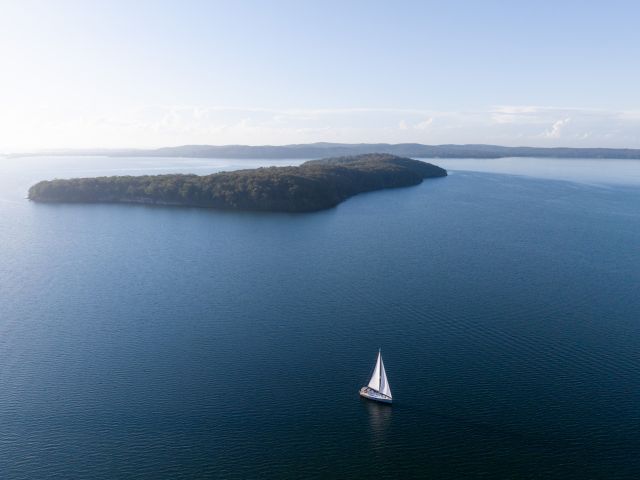
Lake Macquarie is a playground for nature lovers. It’s home to Australia’s largest saltwater lake, a 110-square-kilometre haven for swimming, fishing, boating and sunset views. Another oasis is the Lake Macquarie State Conservation Area, a 761-hectare protected reserve with wildflowers, Second World War heritage sites and spectacular views to Pulbah Island. The upgraded Toronto baths, complete with jetty decking and netting, make for a sheltered spot for a refreshing dip, while the Awaba Mountain Bike Park gives adrenaline junkies their fix.
4. The dining scene is unbeatable
Treat yourself to 8 at Trinity.
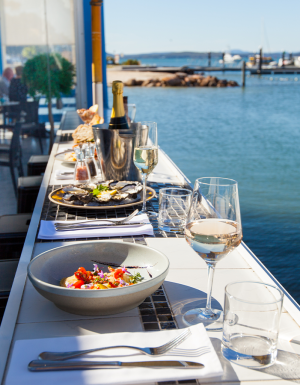
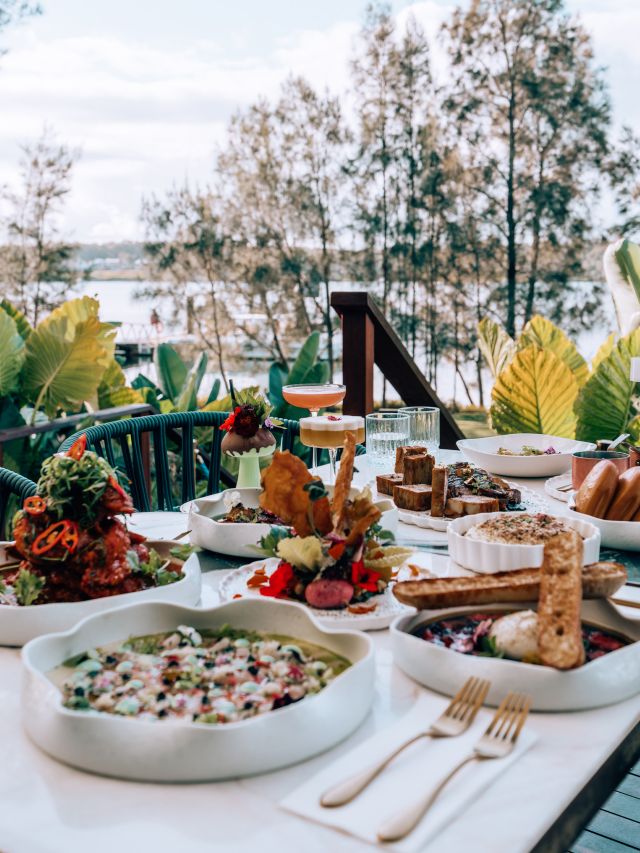
Gourmands are well looked after in Lake Macquarie. At Emerson’s on the Lake in Toronto, the modern Australian fine dining menu spoils seafood lovers with the freshest ocean produce and stunning lake views. Sitting on Trinity Point’s waterfront, 8 at Trinity is another standout offering, serving Mediterranean fare in an open-air setting. For a more relaxed affair, the microbrewery trail lets craft beer enthusiasts sip on inventive brews from The Yard, Lake Mac Brewing and Bread & Brewery.
5. There are hidden coves and waterways
Get out onto the lake. (Credit: Beau Pilgrim)
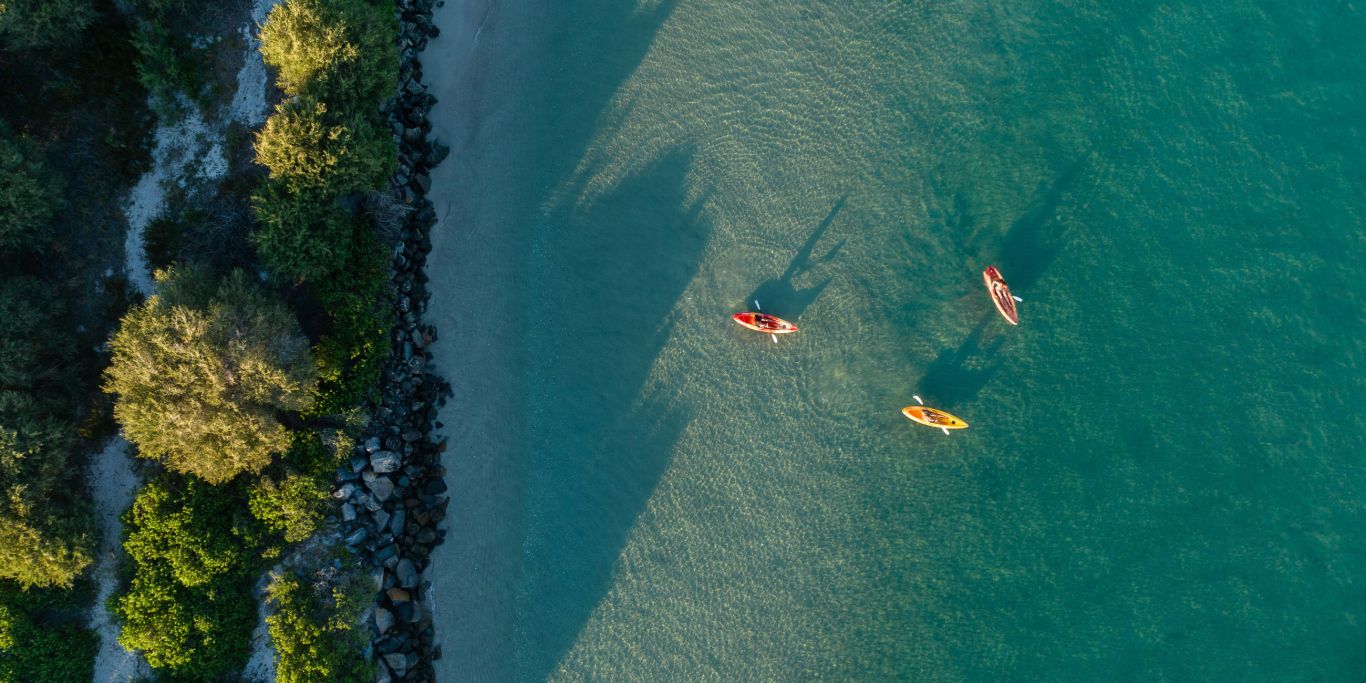
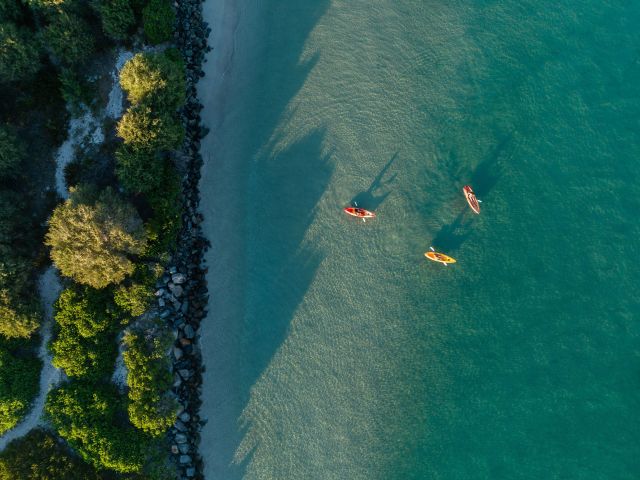
There’s no better way to experience Lake Macquarie than directly on its waters, and in doing so you’ll discover a world of hidden coves and secluded waterways. Jump in a kayak for a tour with the friendly team at School of Yak and paddle to Cockle Creek, Awaba Bay, Green Point and Fennel Bay, discovering underwater life along the way. Or go all in and stay the night on one of Lake Macquarie Houseboats’ spacious vessels or hire a BBQ pontoon boat for the day from Lake Macquarie Boat Hire to enjoy a feast in the sunshine while admiring the marine life and picturesque waterscape.
6. It’s a birdwatcher’s paradise
Keep an eye out for local birdlife. (Credit: Walter Coppola)
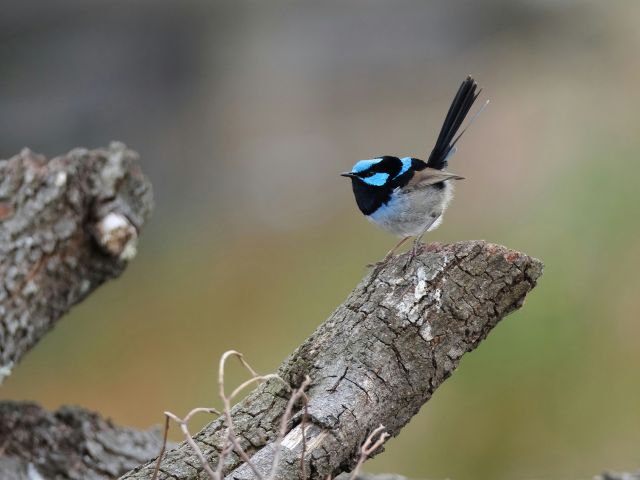
Twitchers are in for a real treat as hundreds of fascinating bird species such as Australian pelicans, black swans, white-bellied sea-eagles and superb fairy-wrens call this area home. Take a self-guided tour around top spots including Bird Cage Point and Lake Macquarie State Conservation Area (near Morisset) or be guided in a clear-bottom kayak through the waterways with Lake Macquarie Kayak Adventures, observing feathered friends as you go.
7. The lake has islands
Charter a boat to see Lake Macquarie’s islands.
Hop on a private boat, kayak or charter around the lake to discover the plethora of small islands peppered around Lake Macquarie. The largest is Pulbah Island, a 69-hectare nature reserve home to goannas and sugar gliders with secluded beaches. Sandy islands such as Spectacle Island and Pelican Island have a tropical lagoon-like look to them as they sit in the tidal path of Swansea Channel, which filters the sand and creates a pristine environment. Stop by for a dip and a picnic.