In the Snowy Mountains, when the powder melts, a summer alpine wonderland ripe with adventure is revealed.
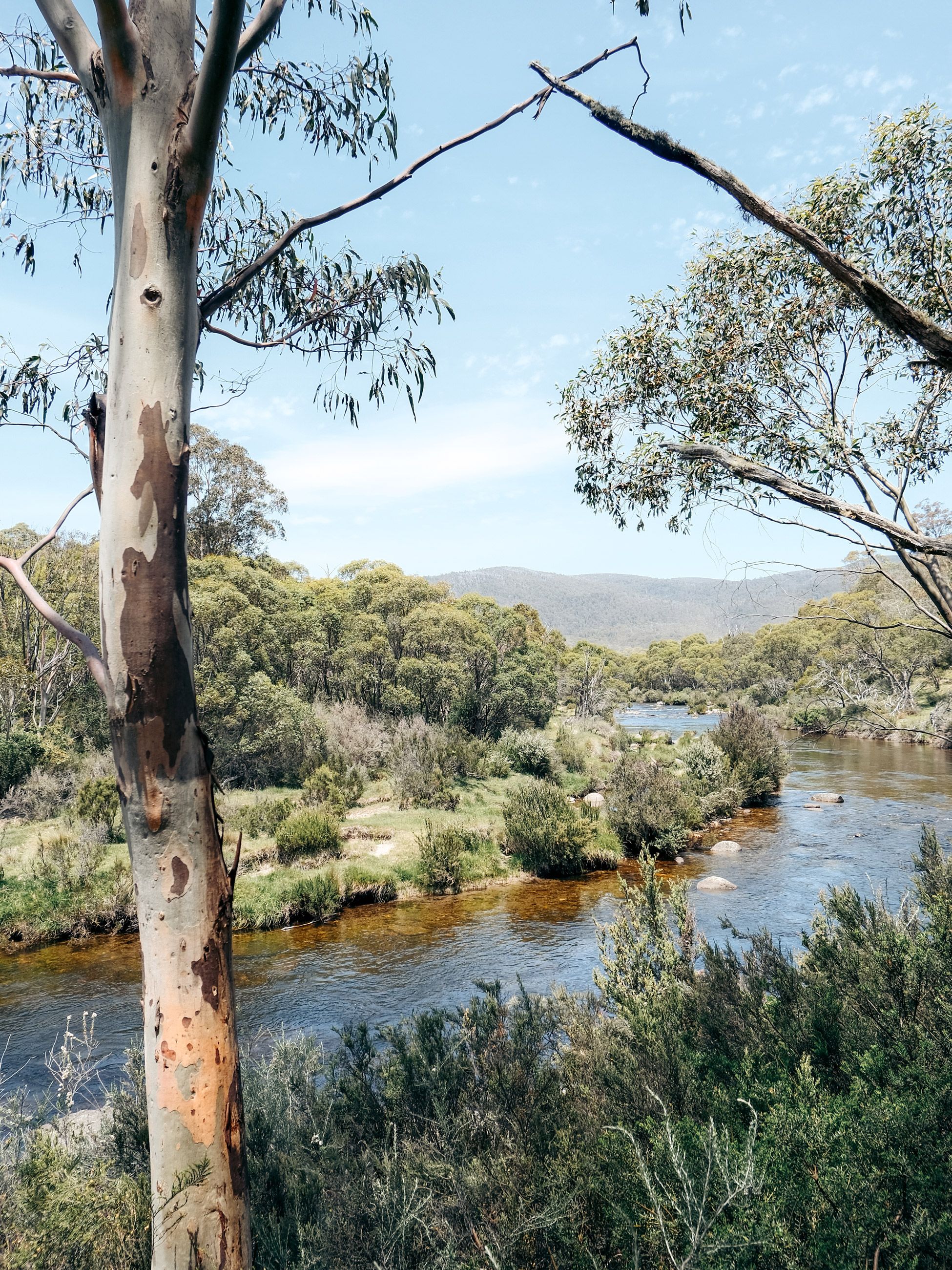
I’m swimming at a bend in the Thredbo River. The water is cold, fresh and tea-coloured, as if it has been steeped deep in the mountains before finding its way here. After hiking through Thredbo Valley on a section of the Snowies Alpine Walk, I’ve waded in to let the water soothe my aching limbs. From the river bank, the trees emanate with the chirp of cicadas and the call of whipbirds.
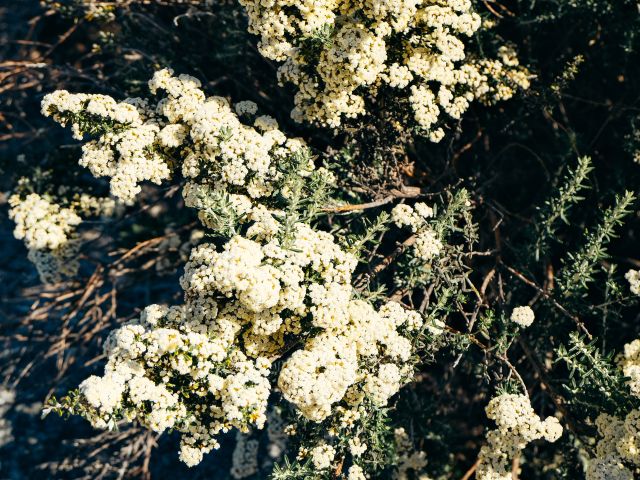
This is the Snowy Mountains out of season, when the snow melts to reveal a carpet of wildflowers blooming in a triptych of yellow, white and pink. The scenery comes to life with the sound of wildlife and wallabies bounding along the roadside. It’s as if there’s an entirely new landscape hiding beneath the snow, one that’s overlooked by the many Aussies who head home to hang up their skis after the season ends.
Where are Australia’s Snowy Mountains?
The Snowy Mountains are about a five-and-a-half-hour drive from Sydney and around three hours from Canberra.
Why visit the Snowy Mountains in summer
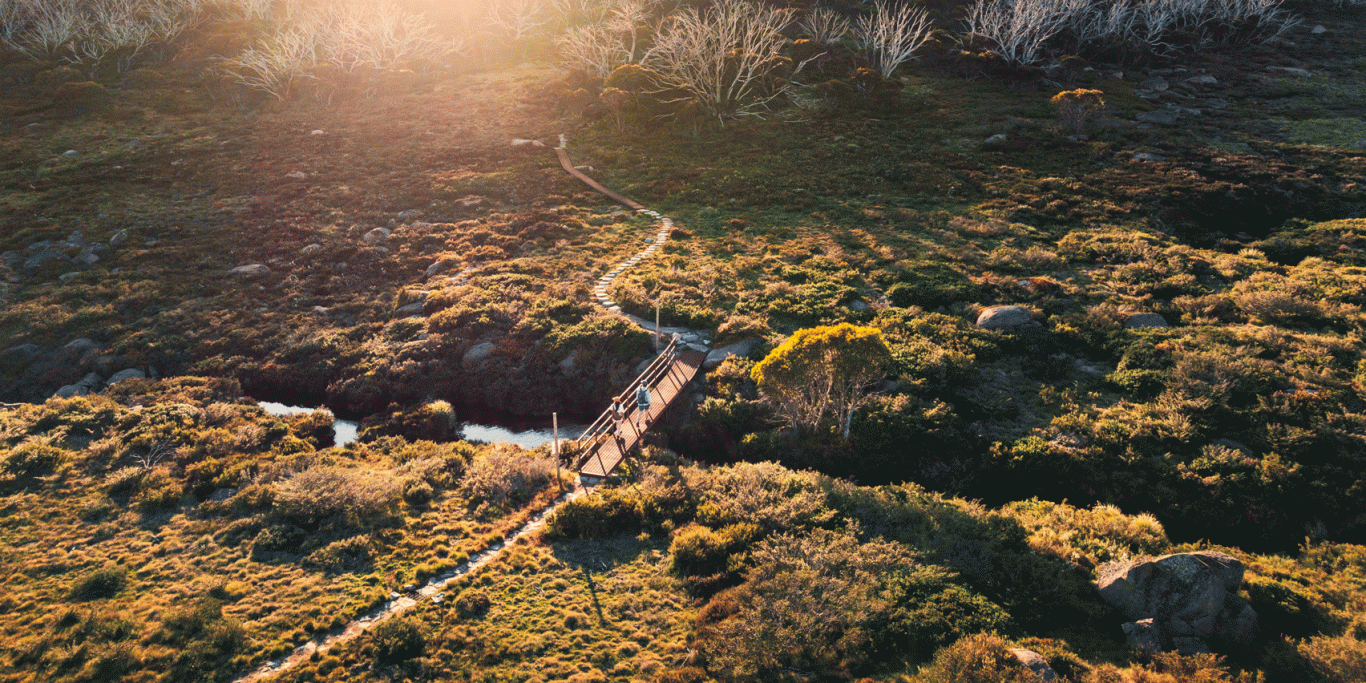
Hike the Snowies Alpine Walk, ending at Bullocks Flat. (Credit: Destination NSW)
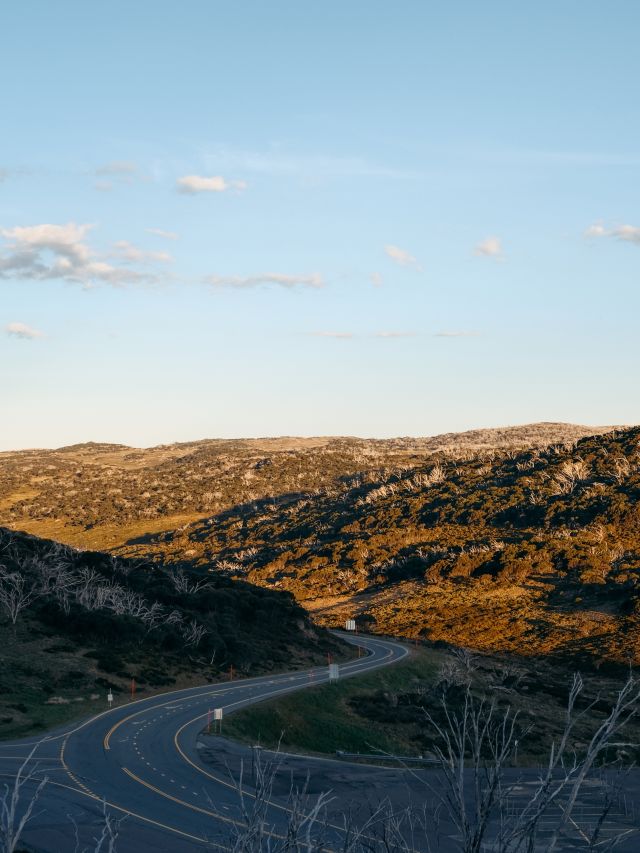
There are many reasons to return to the Snowies in summer. In the warmer months, the region transforms into a hub for sports, such as hiking, fishing, horseback riding and mountain biking. Where families shush downhill in the winter snow, you now see them crunching around bends on two wheels. And without the snow, you can drive the snaking mountain roads with ease, stopping in the many historic towns and old pubs nestled in the landscape.
You’ll also discover an uncommon quietude during summer school holidays. While most families stuff the car with floaties, eskies and high-tail it to the coast, fewer people think to head to the high country. But here, in the cooler alpine landscape where the soft breeze fans snow gum leaves, summer is all fresh air and blue skies with as much action to rival the beach. Days fill with kayaking and swimming in Lake Jindabyne, splashing in the Yarrangobilly Caves thermal pool and deflecting repeated requests from the kids to ride the Thredbo Alpine Coaster.
What can I do in the Snowy Mountains during the summer?
Hiking the Snowies Alpine Walk
Need tips, more detail or itinerary ideas tailored to you? Ask AT.
AI Prompt
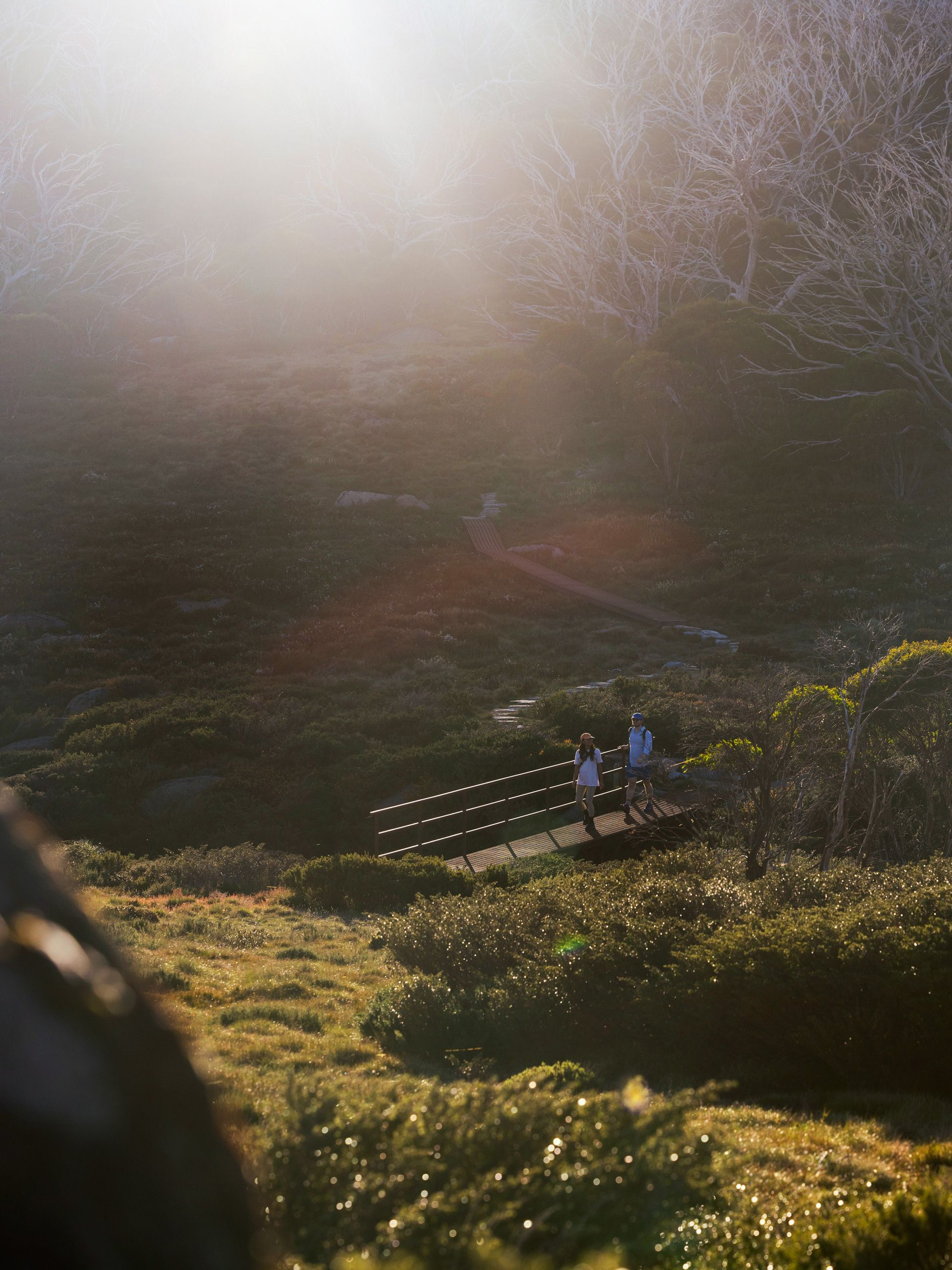
Tackle a section of the Snowies Alpine Walk in summer to reveal a less-explored side of the region. (Credit: Destination NSW)
The Snowies Alpine Walk crosses pretty streams, creating picturesque scenes and perfect spots for cooling off. (Credit: Elizabeth Whitehead)
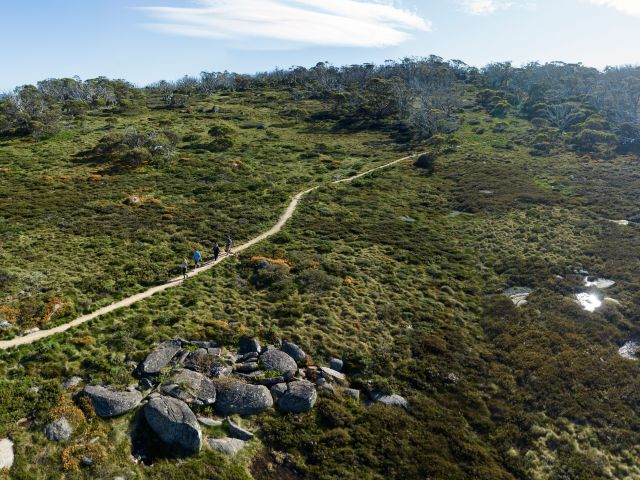
The 56-kilometre walk
crosses stunning terrain. (Credit: Destination NSW)
One of the region’s biggest summer draws is the Snowies Alpine Walk. Opened in late 2024, this 56-kilometre route connects existing trails into a four-day hike that takes walkers across Australia’s alpine roof, linking Guthega, Charlotte Pass and Perisher. The highlight is climbing to the summit of Australia’s highest peak, Mt Kosciuszko.
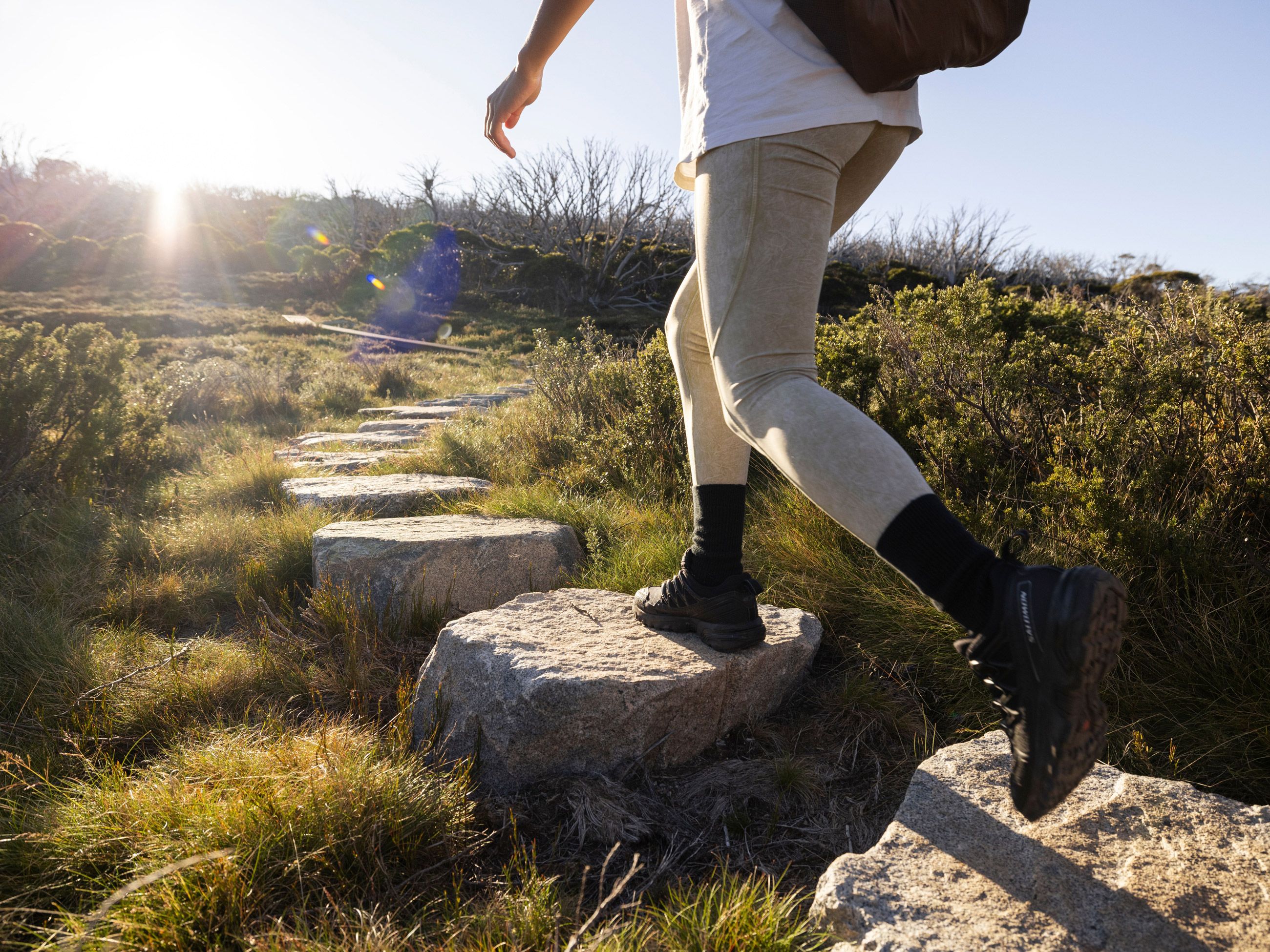
I opt to walk the trail in sections, with the help of local transfer company Snow Connect. Day hikes mean I can take just a day pack, crammed with goodies from Birchwood cafe in Jindabyne, leaving me free to appreciate the landscape. The scenery is ever-changing as I walk. I weave through a cool canopy of snow gums, wobble over suspension bridges threaded over alpine rivers and march across meadows speckled with wildflowers. And whenever the track reaches the bank of a river, I can’t help but stop to splash my face with the mountain-fresh water – or just jump right in.
March across meadows speckled with wildflowers. (Credit: Elizabeth Whitehead)
My final hike ends at Bullocks Flat, the location of Perisher’s Skitube terminal, and I exit to find the sprawling car park nearly empty. But I don’t mind the feeling of having all this space to myself. And while many resorts shut during summer, the iconic Eagles Nest restaurant remains open. Sitting at the top of the Kosciuszko chairlift, it’s the perfect opportunity to stop for lunch and dine at the country’s highest restaurant while enjoying sweeping views.
Trout fishing in Jindabyne
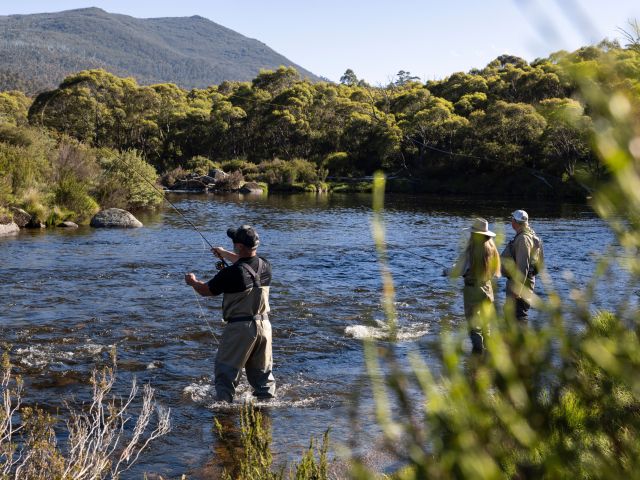
Experts can give lessons in fly fishing to increase your chances of snaring a trout. (Credit: Destination NSW)
After the walk, I stay in Jindabyne for a few days to explore the region. The Snowies are famous for trout-rich waters so I decide to try my luck, whipping my line into streams and waiting patiently on river banks. The fish elude my line and I come up empty-handed. No matter: the landscape is reward enough. Next time, I’ll be sure to recruit the help of a pro angler – there are plenty of local guides that offer lessons in the art of fly fishing.
There’s also the simple pleasure of driving around the region and seeing the countryside from the road. I follow the highways through the Monaro Plains, driving through sprawling pastures dotted with woolly sheep and grazing cattle.
The historic town of Dalgety
Hit the road to explore quiet villages and their history. (Credit: Elizabeth Whitehead)
One excursion leads me to the town of Dalgety. Formerly known as Buckley’s Crossing, this quiet village was once considered a possible site for Australia’s capital city. In the 1800s, it was an important river crossing along the Travelling Stock Route, but today its past is well preserved in its quaint old buildings, such as the historic village pub, The Dalgety Hotel.
As I walk along the peaceful riverbank that runs across town, I wonder how different this place might look had the capital call gone another way. It’s already hard to imagine this as a bustling hub of regional life, but the photos preserved in the pub offer a glimpse of its once-busy streets. I take it all in as I sip a locally brewed beer, a dark, malty schooner of Alpine Red X by Jindabyne Brewing.
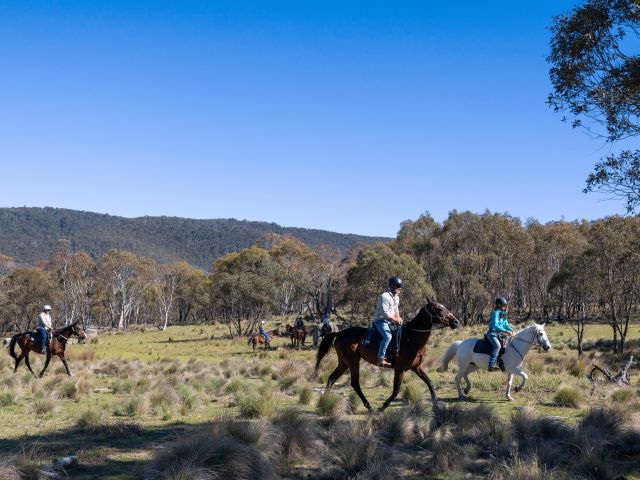
Horseback tours give a different view of the countryside, from short trips to multi-day experiences. (Credit: Destination NSW)
My time doesn’t permit a horse trek on this visit, but it’s yet another reason to return. The idea of exploring the high country on horseback has me dreaming of a drover’s life, and luckily there are day trips that offer a taste of the experience, following old tracks and crossing mountain streams on horseback. There are also multi-day treks that offer the chance to fully step into stockman mode. Operators such as Snowy Wilderness run multi-day horse treks, with overnight stays in a swag and the chance to learn traditional stockman skills of leatherwork and cracking a stockwhip. It’s like a living portal into a Banjo Paterson poem.
The area is also a playground for mountain bikers. There are fun, easy trails close to the town of Jindabyne – including leisurely rides suitable for kids – that follow the curving shores of Lake Jindabyne, as well as tracks for more experienced riders. And in the summer, the heat dusts the snow off Thredbo to reveal a network of mountain bike trails, where you can take a lift to enjoy the adrenaline rush of riding downhill. The 37-kilometre Thredbo Valley Track offers great riding, with a beginner-friendly section followed by some uphill bursts and challenging terrain that’s perfect for more advanced riders.
There’s so much variety here in summer, and I feel like I’ve packed a lot into my few short days in the region: fishing, hiking and driving through the countryside to discover historic gems, watching the landscape unspool from my window. But the abundance of activities reminds me that there’s still so much to come back for.
Weekly travel news, experiences insider tips, offers, and more.
Where to stay
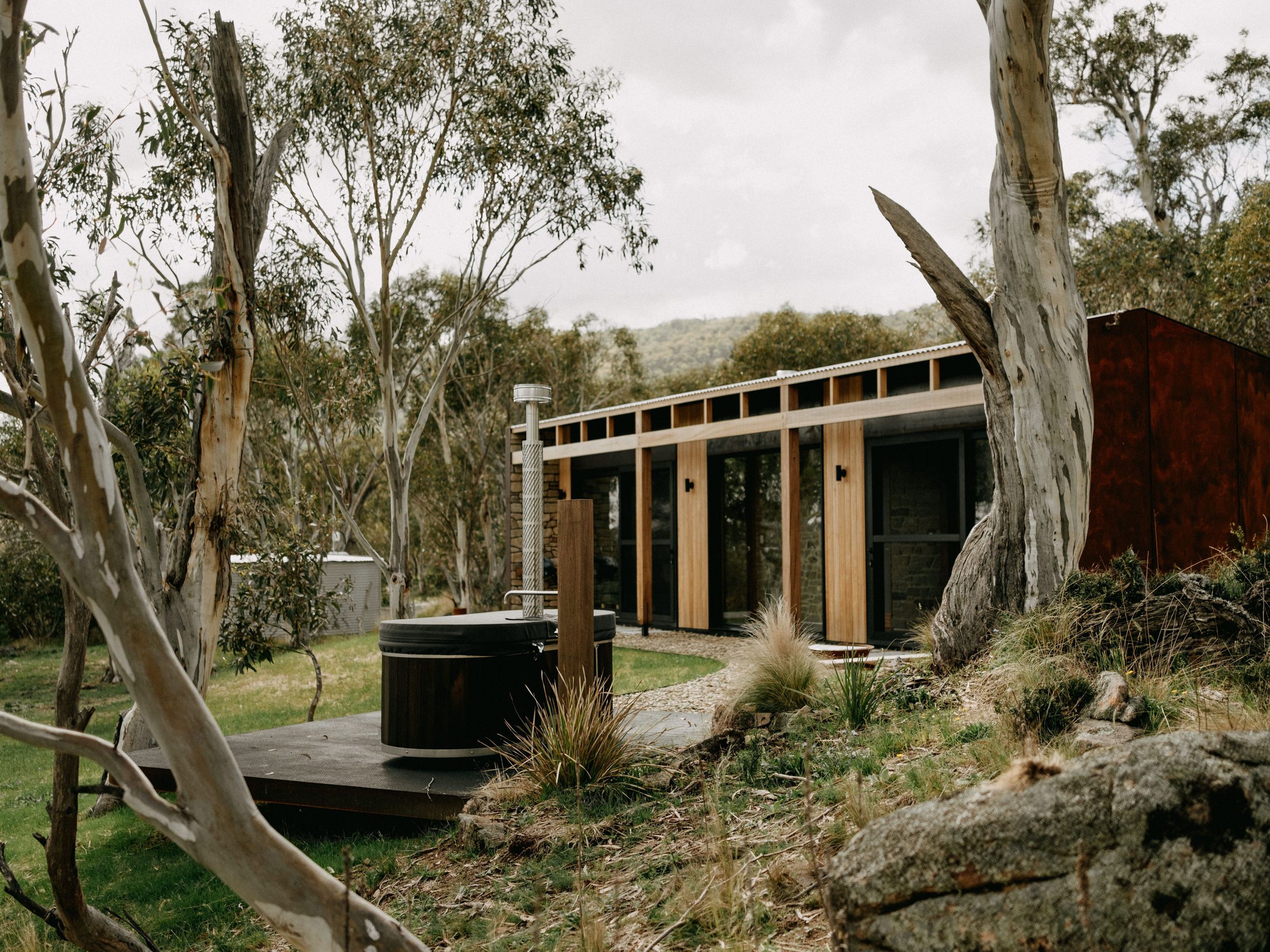
The secluded Crafters Cabins offers a peaceful stay on five hectares of alpine country. (Credit: Crafters Cabins)
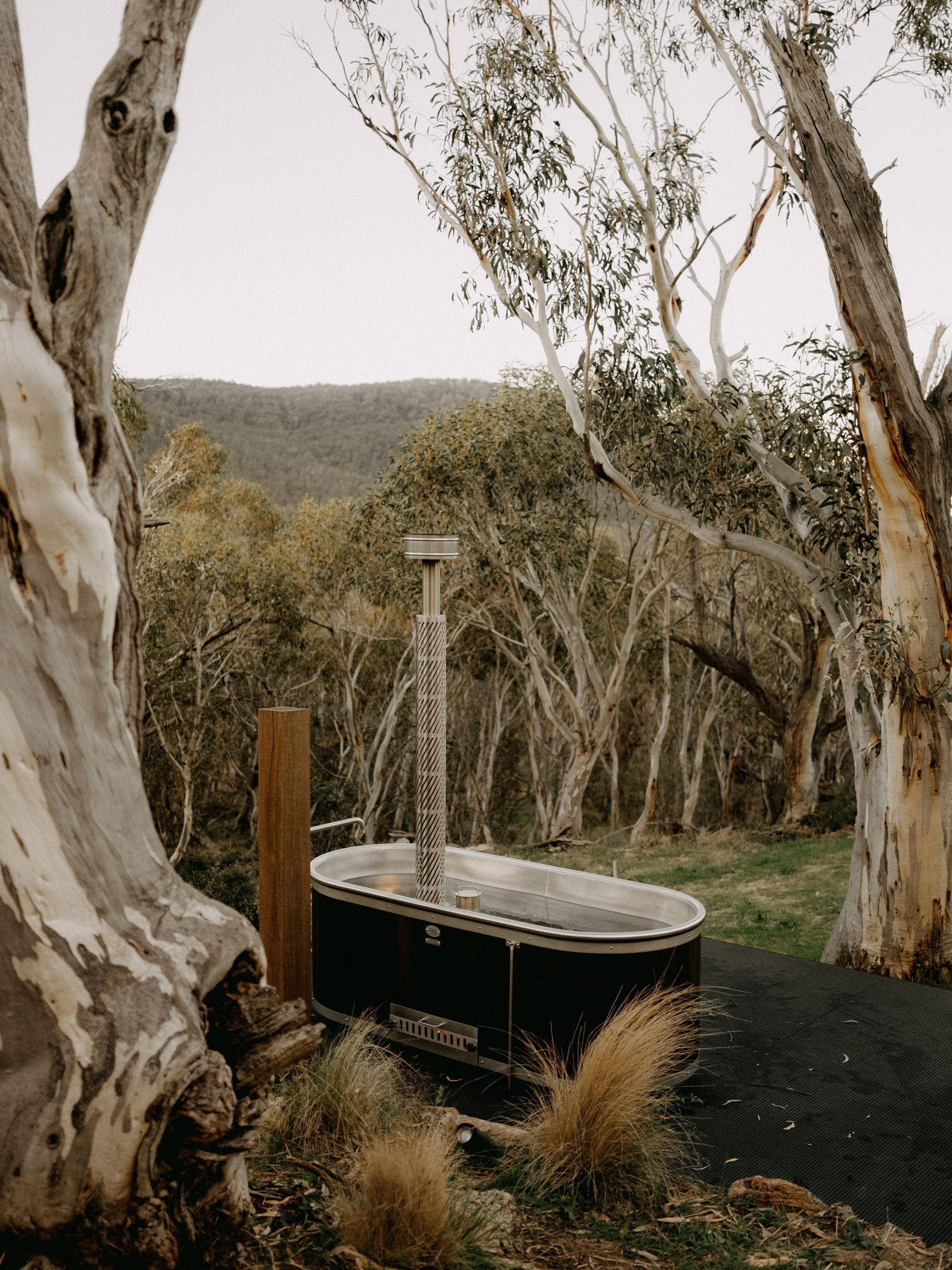
The cabins feature a hot tub under the stars. (Credit: Crafters Cabins)
For a country retreat near Cooma, Kallarroo Farmstay offers rustic cabins and cottages surrounded by native forest. For family escapes, sink into the quietude of alpine bushland at Big Yard Farm, a premium three-bedroom accommodation, 25 minutes from Jindabyne.
In Crackenback, a luxurious stay at private Crafters Cabins includes an outdoor wood-fired hot tub, firepit, fully equipped kitchen and more, tucked away in five hectares of alpine bushland.
Eating there
Eagles Nest is Australia’s highest restaurant, at the top of the Kosciuszko Express Chairlift. It offers sweeping views of the surrounding alpine landscape and operates on a walk-in basis. Jindabyne’s Birchwood offers convenient and delicious packed lunches for hikers, as well as elevated breakfast and dinner catering options.
Want to see more stories from Australian Traveller in your Google search results?
Tick the box next to "Australian Traveller". That's it.
Elizabeth Whitehead is a writer obsessed with all things culture; doesn't matter if it's pop culture or cultures of the world. She graduated with a degree in History from the University of Sydney (after dropping out from Maths). Her bylines span AFAR, Lonely Planet, ELLE, Harper's BAZAAR and Refinery 29. Her work for Australian Traveller was shortlisted for single article of the year at the Mumbrella Publishing Awards 2024. She is very lucky in thrifting, very unlucky in UNO.
The outback is calling, and the adventure is made all the easier with this hot new AAT Kings’ tour.
It’s the desert palette of rust-red earth and vast cobalt sky that calls you at first, for where better to get away from it all than the outback? Of course, once you start driving, taking note of all the weathered pubs, dusty tracks and tiny towns held together with humour, resilience and more corrugated iron than ever deemed possible, something else grabs a hold of you: the idea that far from the celebrated icons and landmarks associated with Australia, you’re finally immersed in an authentic slice of local life that few have ever experienced.
Ancient landscapes, proud pastoral histories, ghost towns, culinary powerhouses and a rich Indigenous heritage; there are plenty of facets to life on the land. The best way to experience all of the above with both ease and like-minded friends? AAT Kings’ new Outback New South Wales Adventurer, a 9-day small group tour. This Sydney-return itinerary is designed to connect travellers not only with iconic outback destinations, but with the characters, culture and experiences that bring each place to life.
Highlights? The Adventurer has more than a few, but here are eight to start.
1. Broken Hill
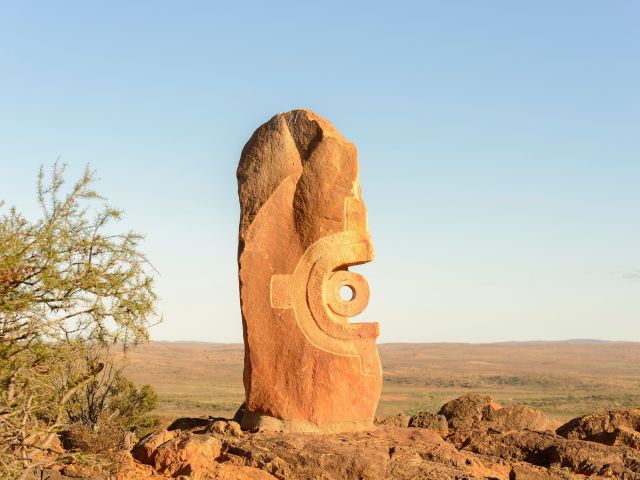
See the striking art at Living Desert and Sculptures. (Credit: Destination NSW)
Welcome to Broken Hill, where mining history, outback eccentricity and a surprisingly rich arts scene unite in a rusty desert landscape. In Australia’s first heritage-listed city, exploration is quickly rewarded. Begin with a guided walking tour taking in the city’s grand Victorian and Art Deco architecture. Later, enjoy visits to both the Broken Hill City Art Gallery and the Living Desert and Sculptures – the perfect place to enjoy the changing colours of an outback sunset. Of course, no visit to Broken Hill is complete without a stop at the historic Palace Hotel Broken Hill, famous for its role in The Adventures of Priscilla, Queen of the Desert. Happily, it makes for the perfect spot for dinner.
2. White Cliffs
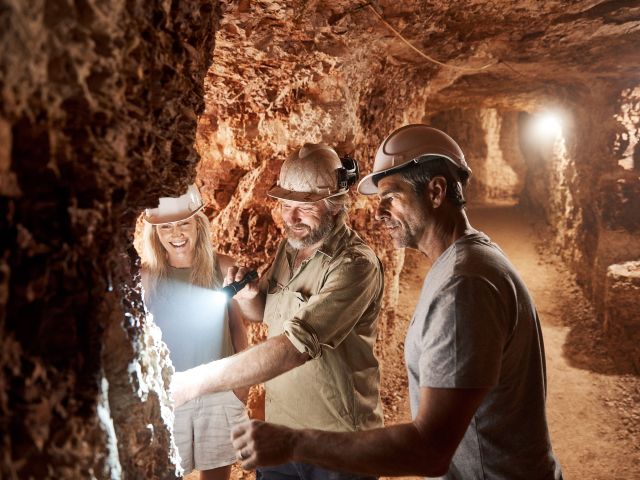
Strap on your hardhat and head underground. (Credit: Destination NSW)
Strap on your hardhat and start spending your imaginary fortunes; White Cliffs, Australia’s oldest commercial opal field, is begging you to come in search of rare pineapple opals. Admittedly, you’re much more likely to find white opals, but the true gems of White Cliffs – where much is built underground to escape the desert heat – are everywhere.
Here, you’ll descend 13.5 metres underground into a working mine to learn about the region’s heritage, and observe how miners continue the search for these prized gemstones. Perhaps you’ll even find a couple yourself?
3. Mungo National Park
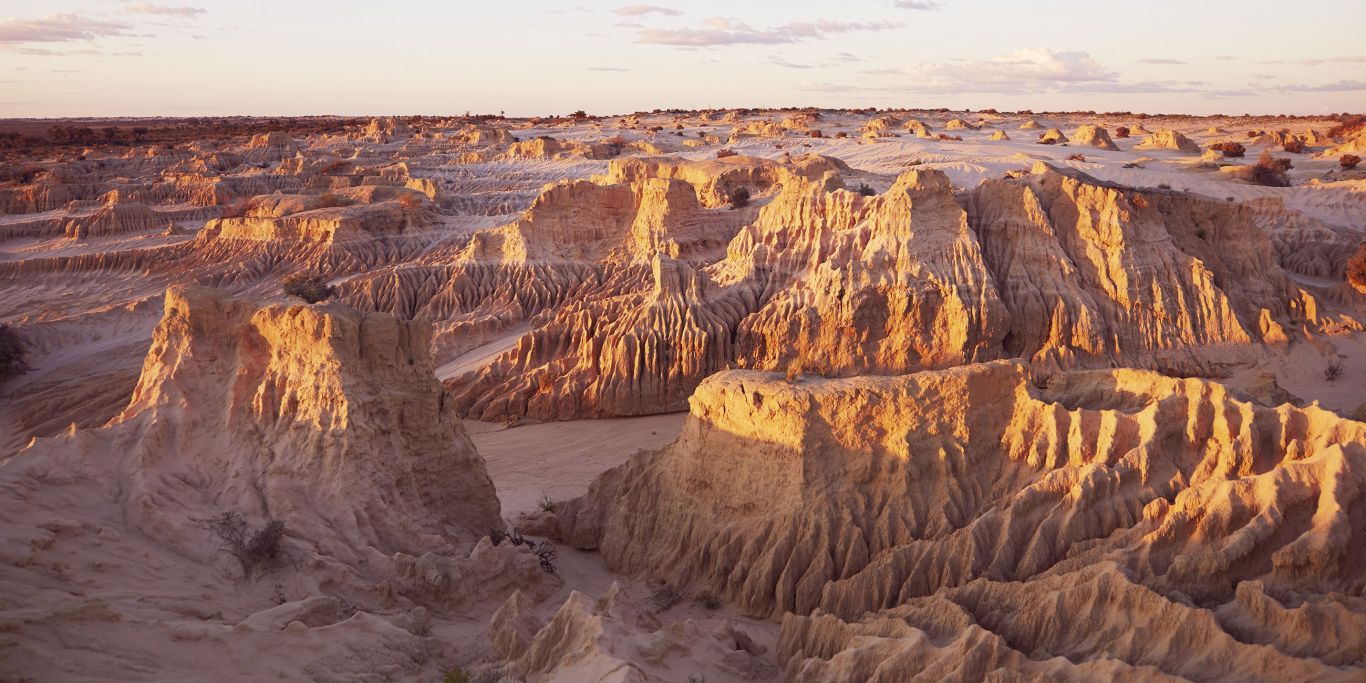
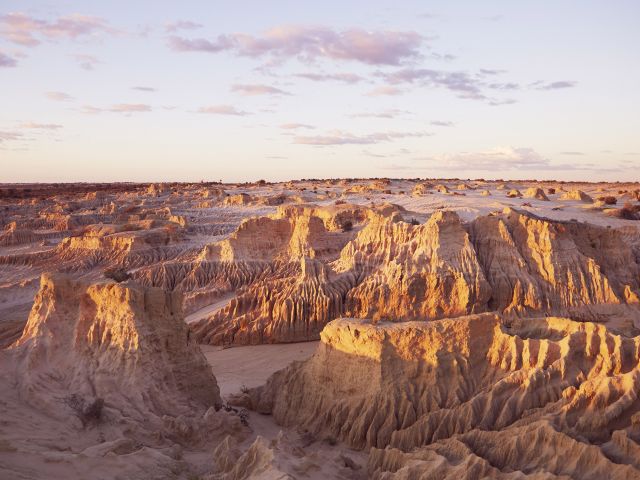
Spend time in the striking, lunar-like landscape of Mungo National Park. (Credit: Destination NSW)
With its lunar-like landscape made up of ancient, dried lake basins and sculpted sand and clay formations, a drive into UNESCO World Heritage-listed Mungo National Park is somehow two things all at once: uniquely Australian with vast outback skies, and somehow otherworldly, as though you’ve been dropped off by spaceship. At its heart lies the iconic Walls of China, a 30-kilometre sand-and-clay lunette shaped by thousands of years of erosion.
Understanding more than 40,000 years of Barkindji, Mutthi Mutthi and Ngiyampaa history begins with a visit to the Visitor Centre, and concludes with a sunset tour led by local Aboriginal guides. A key experience? Learning about the discovery of Mungo Man and Mungo Lady. At 40,000+ years old, these are among the oldest human remains found anywhere in the world.
4. Kinchega National Park
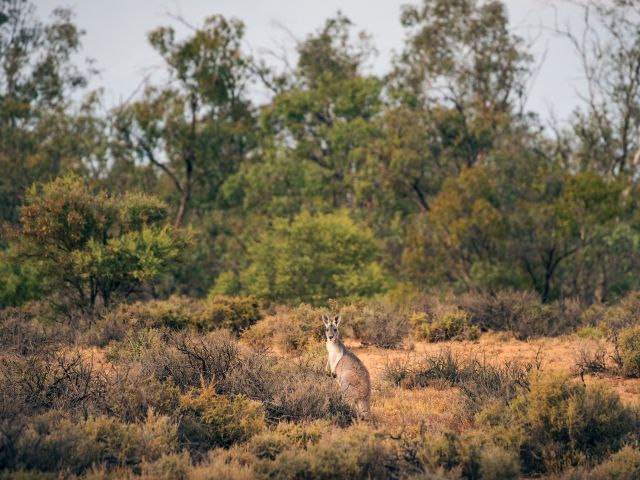
Meet the locals of Kinchega National Park. (Credit: Destination NSW)
Some come to Kinchega National Park for its iconic Darling River landscapes full of birdlife and haunting river red gums; others visit for its rich First Nations and pastoral history. Your visit will encompass all of the above, with a guided tour (part of AAT Kings’ MAKE TRAVEL MATTER Experience) designed to give a deeper understanding of Barkindji cultural heritage, history and traditions.
Walk with local guide David as he shares ancestral knowledge and creation stories, and explains how native plants – through bush food and bush medicine – have sustained Indigenous communities for thousands of years. Then sit back and enjoy those views alongside native tea and sweet treats.
5. Griffith
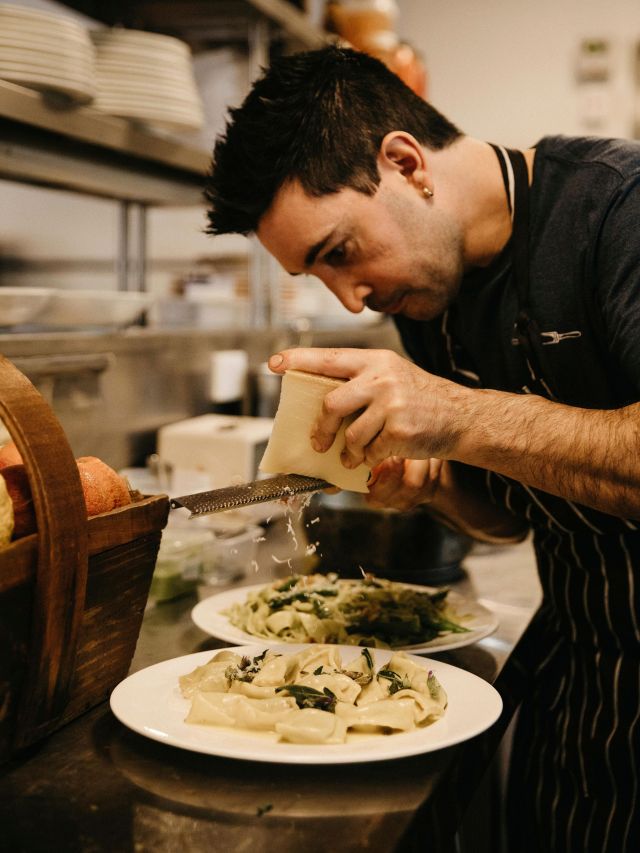
Treat your tastebuds to ‘the food bowl of Australia’. (Credit: Destination NSW)
How can you say no to a visit to a destination widely regarded as ‘the food bowl of Australia’? Shaped by fertile farmland and home to approximately 75 per cent of New South Wales’ wine grapes, this is a day to roll up your sleeves and enjoy the best gastronomy the state has to offer. Think vineyards, cellar doors, cafes and restaurants largely shaped by its multicultural heart (Griffith is not only home to over 60 nationalities, but has the highest proportion of Italian ancestry anywhere in Australia).
6. Mudgee
Visit some of Mudgee’s best wineries. (Credit: Destination NSW)
Nestled by the Cudgegong River, Mudgee packs a big punch for a heritage country town, having carved a reputation for itself as one of the country’s leading (and award-winning) wine regions, a key epicurean destination, and a regional arts centre growing in both visibility and vibrancy.
Take a moment to enjoy the town’s 19th-century charm before heading to Lowe Family Wine Co. for a guided tasting of organic and biodynamic wine, followed by a relaxed lunch featuring a feast of homegrown and local produce. Will you walk away with bottles of Mudgee’s iconic reds under your arms? It’s a distinct possibility.
7. Silverton
See the living ghost town of Silverton.(Credit: Destination NSW)
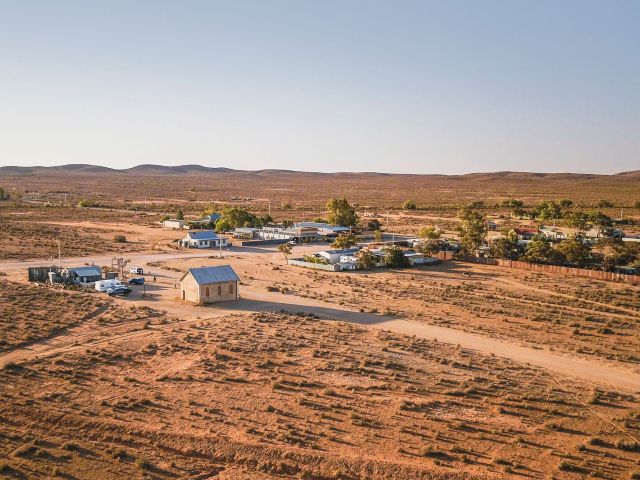
A once-booming silver mining hub, the dystopian setting for Mad Max 2, and now a tranquil settlement that’s home to around 50 people; Silverton is considered a living ghost town and remains a sight to behold.
Take time to explore its heritage streets (and perhaps take a look at the quirky Mad Max 2 Museum) and the Silverton Hotel, an iconic outback pub, before a visit to Silverton Gaol & Historical Museum. It’s home to a wealth of colonial artefacts, early mining equipment and stories from the outback’s pioneering past which will serve to anchor you firmly in place.
8. Shear Outback
Get a glimpse behind the wool curtain. (Credit: Destination NSW)
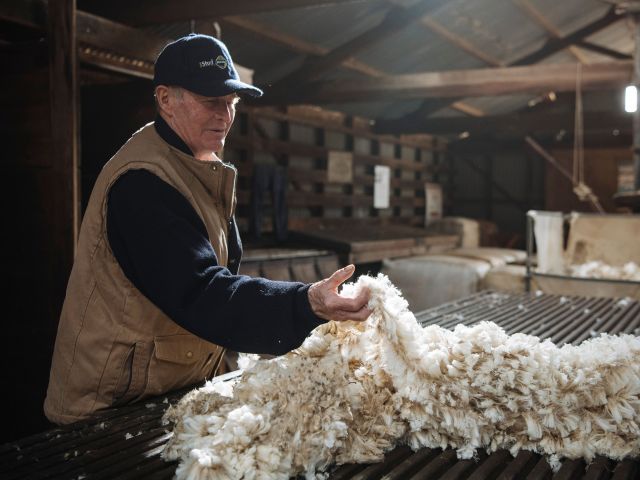
If you ever find yourself singing, “click go the shears boys, click, click, click…”, you’ve come to the right place. Shear Outback, an award-winning tourist and education attraction located in Hay, brings to life the traditions and stories of one of the outback’s most enduring industries: sheep shearing.
Here, in the heart of the Riverina, you’ll enjoy live shearing demonstrations, meet the shearers, shedhands, sheepdogs and yes, sheep, who come together to show guests exactly what it takes to provide Australians with all that glorious wool.