A guide to the coastal Spit to Manly Walk

hero media
Lace up your shoes and get ready for an outstanding bushwalk, because the Spit Bridge to Manly walk is always an excellent idea.

The Spit to Manly walk, also known as the Manly Scenic Walkway, is a must-see 10-kilometre coastal track offering striking views of Sydney Harbour, stunning secret beaches, sites of cultural significance and snapshots of Australian plants and wildlife. It’s popular, so expect to encounter a combination of Sydneysiders enjoying their favourite day hike and wide-eyed international visitors soaking in the natural beauty for the first time.

It’s not just a track for hiking, remember to pack your swimmers to enjoy the secluded swimming spots along the way, and throw in your snorkels for good measure, so you’re prepared when you reach Fairlight Beach, one of the best snorkelling spots in Sydney.

Here is how to get the most out of this stunning coastal walk.

The Spit Bridge to Clontarf

Distance: 2.3 kilometres (approximate)

Beginning at the Spit, take an opportunity to grab a coffee from either Plonk Beach Cafe or Grumpy’s Wharf Cafe, and use the bathroom facilities before starting. Walk down the steps at the northern end of the Spit Bridge to reach Ellery’s Punt Reserve and make your way east. It doesn’t take long for the sounds of steady traffic to be replaced by an earthy soundtrack of bird calls; look out for lorikeets and kookaburras in the canopy above.

The first highlight is inside a rock cave which can be found just on from Fisher Bay. Here, you’ll find signs of small, sun-bleached, white shells indicating an Aboriginal midden.

Keep walking and you’ll pass by dog-friendly Sandy Bay. Dogs aren’t allowed in the national park, so if you’d like your dog to run free here, it’s best to come back another time with a car.
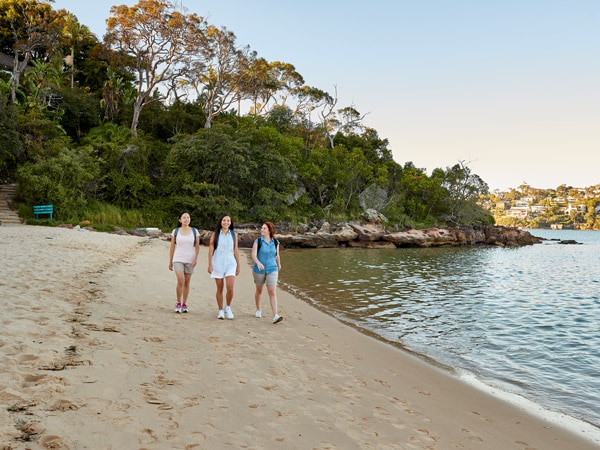
friends walking along Clontarf Beach
Walk along the serene shore at Clontarf Beach. (Image: Destination NSW)

You’ll soon find yourself at the stretch of golden sand that is Clontarf Beach. Clontarf is family-friendly, with shallow and calm waters, and an enclosed tidal pool swimming area. You can grab a takeaway drink and a bite to eat at Bosk Kiosk or stop by Sandy Bar Cafe if you prefer to take a break from walking. Keep in mind that this is the last cafe until you are significantly further along the trail at North Harbour Reserve.
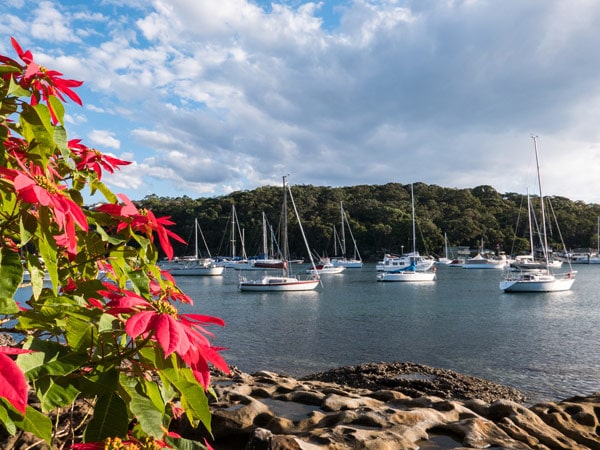
a Poinsettia plant next to North Harbour, Spit to Manly Coastal Walk, Sydney, Australia
Stop at North Harbour Reserve. (Image: lrosebrugh via Getty Images)

As you make your way along the foreshore, you’ll notice a large and enticing shaded playground. The grassed area behind the beach is shady, with barbecues and picnic tables available, as well as bathroom facilities (the last until Reef Bay). It is advisable to fill up your water here too, as there are no water fountains until the end of the track at Fairlight Beach.
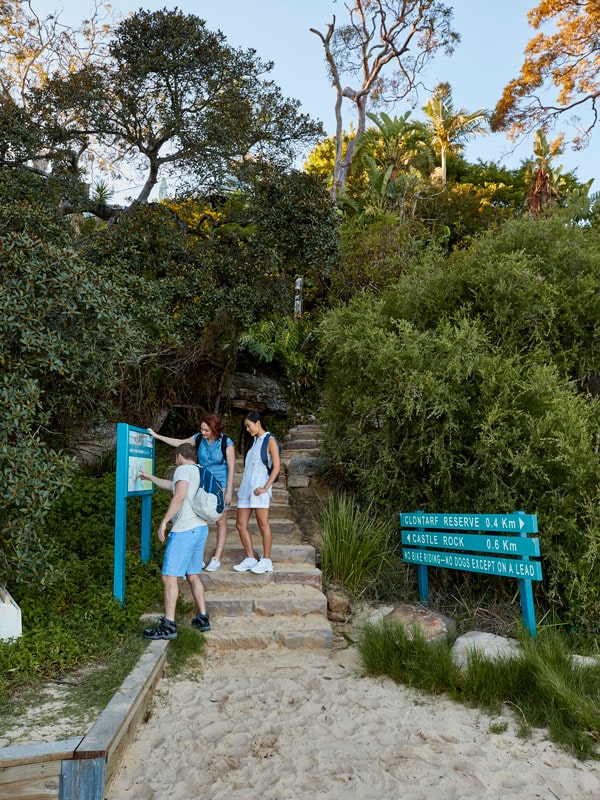
walking from Spit Bridge to Manly via Clontarf Beach
Traverse the Spit Bridge to Manly via Clontarf Beach. (Image: Destination NSW)

Clontarf to Dobroyd Head

Distance: three kilometres (approximate)

This leg of the track is often people’s favourite part. The path hugs the coastline to reveal beautiful water views and some parts of the walk feel like lush rainforest. The first stretch from Clontarf is along a sandy beach only accessible at low tide.
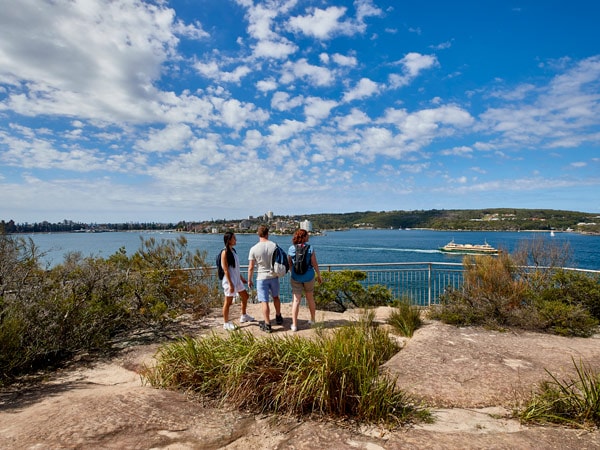
friends enjoying stunning coastal views of Sydney Harbour from Dobroyd Head, Balgowlah Heights.
Soak up scenic coastal views in Balgowlah Heights. (Image: Destination NSW)

You’ll have to take the alternative road along Monash Crescent if you’re walking through at high tide. This is clearly signposted, and the end of the road takes you back to the track. Be on the lookout for wildlife as you may come across eastern water dragons and a range of birds, including bush turkeys.
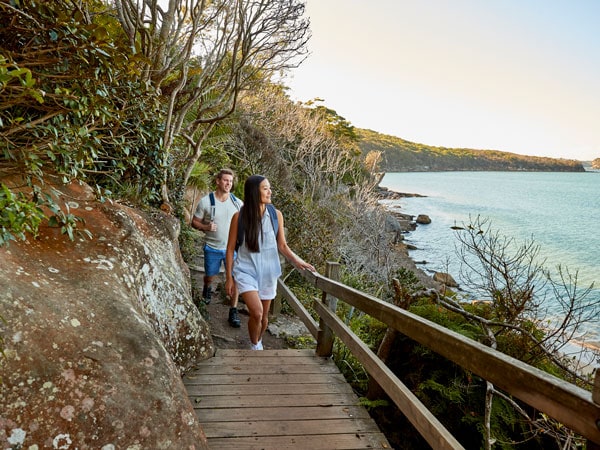
a couple enjoying the walk from Spit Bridge to Manly with scenic views across Sydney Harbour
You’ll be spoilt for stunning coastal views from Spit to Manly. (Image: Destination NSW)

If you didn’t stop for a swim at Clontarf, there are some great options in this section. Consider taking the steps down to secluded and rocky Isoldes Beach. Be mindful of the tides and where you leave your belongings as parts of this beach are prone to disappear underwater.

Further along the track is pristine and popular Castle Rock Beach, which is bigger than Isoldes and home to an ancient Aboriginal rock carving. While there can usually be a handful of keen swimmers floating in the water, this beach is certainly more private than Clontarf.

The next part of the track does become more challenging as you walk through bushland. You’ll pass a detour sign for Grotto Point, which will take you down to the historic Grotto Point Lighthouse and hidden Washaway Bay. Grotto Point Lighthouse dates back to 1911 and was originally constructed to help ships coming through Sydney Harbour; it’s still operational today.
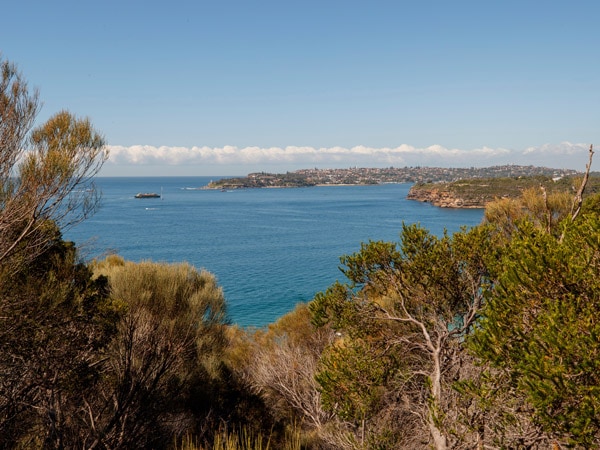
views across Sydney Harbour from Grotto Point
Take in panoramic views across Sydney Harbour from Grotto Point. (Image: Destination NSW)

It’s important to note that the detour is not an official part of the track, nor factored into the overall track distance length. While this detour section is good for birdwatching and scenic views, the path is not clearly signposted like the Spit to Manly track and a map is needed.

the Grotto Point Aboriginal engraving site along theSpit Bridge to Manly walk
You’ll spot the Grotto Point Aboriginal engraving site. (Image: Destination NSW)

Keep an eye out for the signpost to see the Grotto Point Aboriginal rock engravings, which are only a very short distance from the track. If you look carefully, you will see a whale, small fish, boomerangs and a large kangaroo. There is a boardwalk and timber enclosures to protect these well-preserved engravings, and an information sign to learn more.
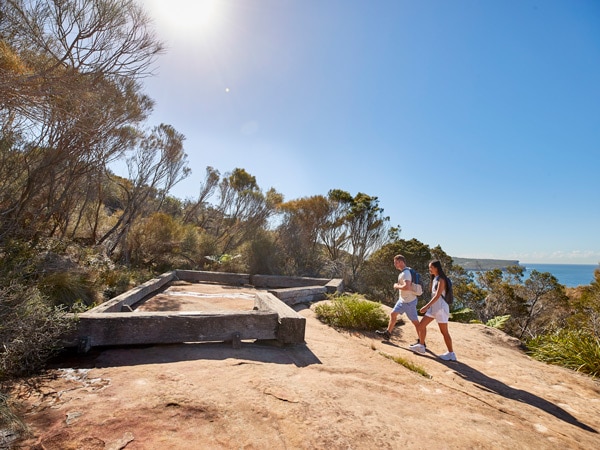
friends visiting the Grotto Point Aboriginal engravingsalong the Spit Bridge to Manly walk
See rock engravings at Grotto Point. (Image: Destination NSW)

Breathtaking lookouts showcasing incredible panoramic views of Sydney Harbour round out the leg of this track. A slight detour up to Arabanoo lookout at Dobroyd Head offers expansive views of North and South Head – it’s an especially great spot during whale-watching season.
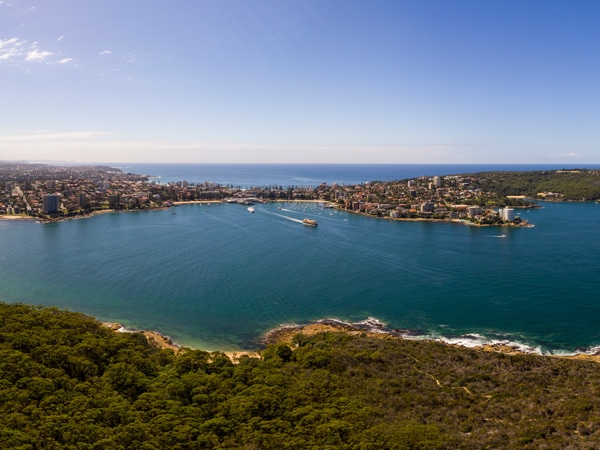
scenic coastal aerial view across Sydney Harbour from the Spit Bridge to Manly Walk
Sydney Harbour looks stunning atop the Spit Bridge to Manly Walk. (Image: Destination NSW)

The lookout is named after Arabanoo, an Aboriginal man who was abducted from Manly, on Governor Arthur Phillip’s orders, to act as an intermediary between the new government and local Aboriginal peoples. On your way through you will also pass by Fairlight Lookout, Dobroyd Head Lookout and Dobroyd Lower Lookout; all with picturesque views and incredible photo opportunities.
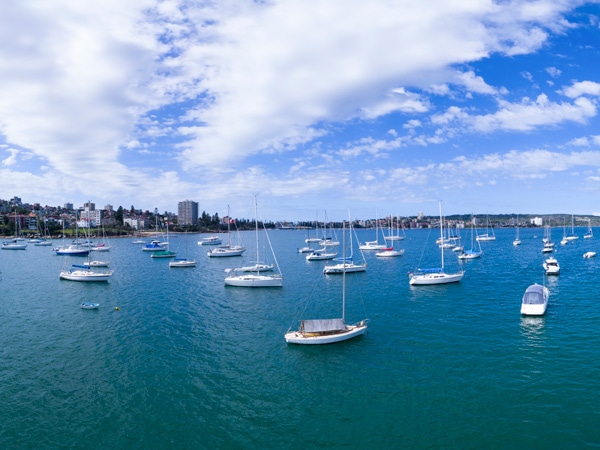
boats docked across Sydney Harbour
Boats and yachts are moored across Sydney Harbour. (Image: Destination NSW)

Dobroyd Head to Manly

Distance: five kilometres (approximate)

The final section of the track comprises a mix of bushland, coastal track and residential area. Accordingly, it’s more exposed without the canopy’s shade, so a hat is particularly important here.

While facilities across this whole track are limited, there are more options in this final section, with toilets available at Reef Beach, Forty Baskets Beach, North Harbour Reserve and Fairlight Beach.
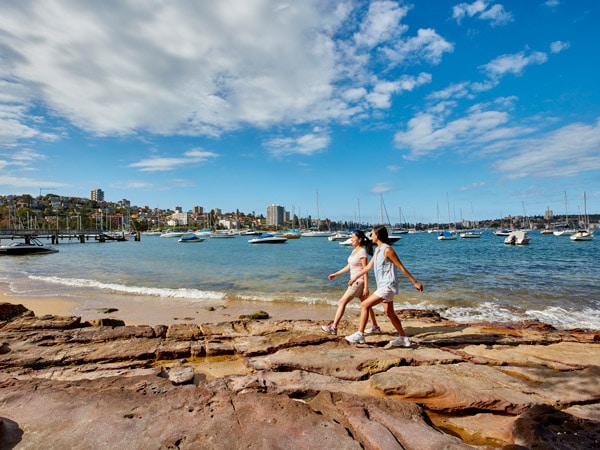
friends enjoying a walk along Forty Baskets Beach,Balgowlah
Go for a stroll along the Forty Baskets Beach. (Image: Destination NSW)

To celebrate passing the halfway point, stop for a refreshing swim at Reef Bay. Keep an eye out for an ice cream vendor boat that roams the beaches. Like an ice cream truck on land, you’ll hear the bell and know it’s coming, giving you enough time to find some money (cards are also accepted).

Further along at Forty Basket Beach, you’ll find an enclosed swimming bath and a children’s playground. The beaches from here onwards tend to be busier, as there is nearby car access. Forty Beans Cafe is accessible and can be found at the North Harbour reserve, so pop in for a coffee or to grab a bite.

This marks a shift in the trail towards residential areas, so keep an eye out for signs to ensure you are following the correct street. Eventually, you will rejoin the coast, replacing the bush with a backdrop of houses and apartments.
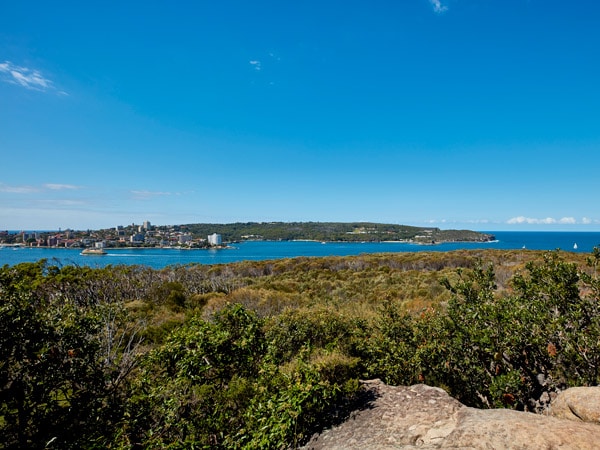
stunning coastal views of the Manly Ferry passing through Sydney Harbour from Dobroyd Head, Balgowlah Heights
The view above Dobroyd Head is nothing short of spectacular. (Image: Destination NSW)

Bustling Fairlight Beach attracts swimmers, snorkelers and those wanting to relax on the sand. Head further along to smaller Delwood Beach to swim with less crowds. You’ll also see signs for penguins – yes, little penguins call Delwood Beach and Manly home. It’s only a small penguin colony, and numbers are sadly diminishing each year. The penguins return to Manly for breeding between May and February and are most likely spotted at sunset when they return to their burrows.

Make your way towards Manly Wharf, where the coastal trail ends, and soak in the vibrant Manly atmosphere. If you would like to extend your walk further and complete the whole Manly Scenic Walkway, consider undertaking the North Head circuit.

Beginning above Shelly Beach and looping around North Head, this eight-kilometre walk brings the total distance of the Walkway track to 20 kilometres.

Manly has a wealth of fun and dynamic activities to do, there’s so much to see and enjoy. Head to Manly Beach or stop for a drink at one of Manly’s cafes or pubs: you’ve certainly earned it!
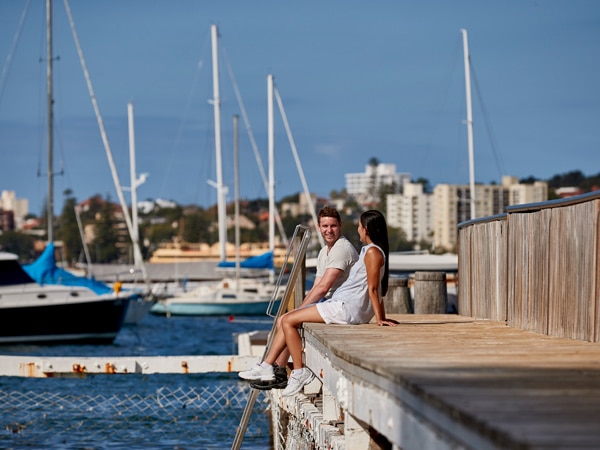
a couple sitting by the wharf at Forty Baskets Beach
Sit by the wharf at Forty Baskets Beach. (Image: Destination NSW)

Frequently asked questions

How long does it take?

Walking usually takes between 3.5 and four hours, without breaks. This is a Grade three track, meaning it is moderate to challenging. There are parts with sand, paved walkways, trails and boardwalks. There is an alternate dog route track available, which doesn’t enter the national park, and takes approximately two hours.
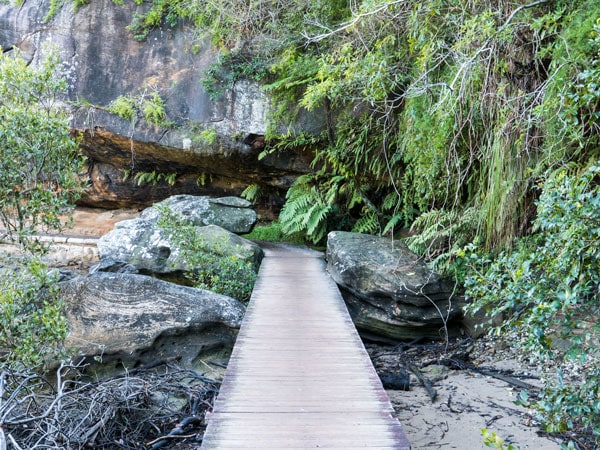
a wooden boardwalk along the Spit Bridge to Manly Coastal Walk
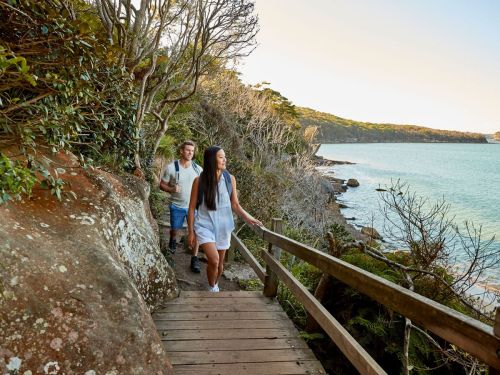
Find paved walkways and boardwalks on your journey to Manly. (Image: lrosebrugh via Getty Images)

How to get there and back?

While you can begin from either The Spit or Manly, a popular option is to begin at the Spit and finish at Manly, where the lively atmosphere and ocean make the perfect place to relax after the long walk. This route is also the easiest for public transport, as there are regular buses from Wynyard departing for the Northern Beaches.

From Manly, there are returning buses towards the city but a popular option is to catch the ferry back to Circular Quay. As there is paid parking at the Spit reserve, some walkers prefer to park at The Spit, complete the track and catch a bus back to where they started.
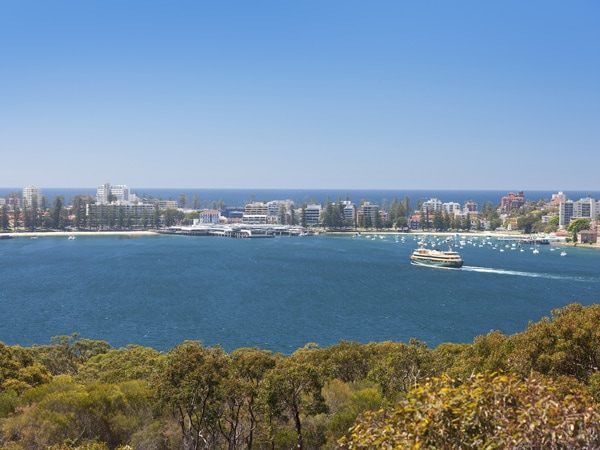
an aerial view of Manly Cove from the Manly to Spit Walk in Sydney Harbour National Park
Ferries go between Manly and Circular Quay. (Image: Hamilton Lund; Destination NSW)

Parking tips?

Due to its popularity, we recommend arriving early to nab a park. There are two car parking areas at The Spit: Spit West car park and Spit East reserve.

Manly has council-owned parking garages where you can park for free for a set number of hours, however, the walk is anticipated to take double this amount of time, so plan ahead. Manly also has timed and paid street parking options, and some free street parking far from the beach.
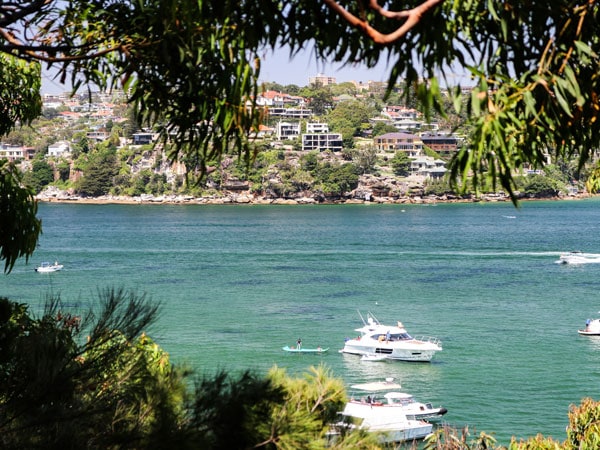
a scenic view from Spit Bridge to Manly walk
Rewarding views await you. (Image: dalal nizam)
Once you’ve tackled this walk, consider exploring another one of Sydney’s magical coastal walks. 
hero media

Why the Central Coast is a foodie mecca

Underpinned by grassroots hospitality and award-winning organic produce, the Central Coast’s gastronomy scene is thriving, with the region quickly becoming one of the best destinations in NSW for epicures.

Revered for its rugged natural splendour and laid-back seaside charm, NSW’s Central Coast has soared in popularity in recent years, becoming a top choice for an affordable slice of weekend escapism for Sydneysiders. Just a short 45-minute drive north of Sydney, it’s the kind of place that, no matter how many times you visit, leaves you with the sense that there’s always more to uncover. But while the ocean pools, bushwalks and beaches have (rightly) taken the spotlight, it’s the Central Coast food offerings which have been quietly simmering in the background.

From fresh-as-it-gets seafood and juicy organic citrus you can pluck yourself, through to regenerative farming and reputable farm-to-fork dining, this coastal gem has become an idyllic foodie mecca. Here are some of the best ways to immerse yourself in grassroots hospitality and gastronomic glory on the NSW Central Coast.

vegetables in a basket at Bells Garden at Bells At Killcare
From picking your own, to farm-to-table, discover the best Central Coast food experiences. (Image: Remy Brand)

Central Coast oyster experiences

From humble grub to opulent delicacy, oysters have ascended into a league of their own. Epicureans are fascinated by them – willing to pay upwards of $35 per dozen (double at some of Sydney’s reputable fine dining restaurants) – and ‘shuck bars’ seem to be popping up at every milestone celebration.

But it’s rare to find places that really draw back the curtain on how they’re farmed and why everyone is mad for these molluscs. The Central Coast , however, is home to several of these venues. With its pristine waters, mild climate and nutrient-rich estuaries, it’s the perfect breeding ground for oysters.

Learn about oyster farming and, importantly, how to shuck them at Sydney Oyster Farm Tours . Nestled on the Hawkesbury River at Mooney Mooney, Sheridan Beaumont and her team offer a hands-on foodie experience where you can feast on dozens of oysters (white tablecloth and all) while wading through the calm waters. You can even bring your own bottle of bubbles to wash them down.

guests in the water for an experience at Sydney Oyster Farm - Central Coast food
Learn tricks of the trade at Sydney Oyster Farm Tours. (Image: Remy Brand)

Elevate your oyster knowledge even further by heading north over the Hawkesbury River Bridge to the Hawkesbury River Oyster Shed . Tour their scenic oyster leases and saltwater paddocks by boat to uncover the distinct characteristics of the Sydney rock oyster and creamy Pacific oyster. They’ve also partnered with Broken Bay Pearl Farm to offer a one-of-a-kind oyster and pearl farming guided tour, showcasing the Central Coast’s very own pearl oyster, the Broken Bay ‘Akoya’. But if you’re simply in the mood to devour a dozen delectable oysters while soaking in the tranquil river views, pull up a chair at the shed. It’s friendly in every sense of the word: pets, families and BYO welcome.

shucking oysters at Broken Bay Pearl Farm
Taste freshly shucked oysters at Broken Bay Pearl Farm. (Image: James Horan)

Central Coast farms to pick your own fruit

While the Central Coast is known for its breathtaking 40 beaches and 80-kilometre coastline, its lush hinterland is equally impressive – abundant with orchards and agriculturally rich farmland. And when it comes to the simple joy of picking your own fruit, the Central Coast is a ripe playground.

Family-owned Meliora Farm at Peats Ridge is an orchard that blends conventional, biodynamic and organic philosophies. Third-generation farmer Tim Kemp and his wife Elise are dedicated to honouring the family legacy by growing a rich variety of oranges, lemons, limes, mandarins and avocados. In late May, roam the sustainable and nutrient-dense property during ‘Pick Your Own’ weekends.

Eastcoast Beverages is another bountiful citrus orchard boasting over 60 hectares of fruit. From June you can learn about the cultivation of high-quality ingredients – like lemons, limes, grapefruit and oranges – by touring both the farm and factory before setting out and picking your own straight from the source. You can also sample an array of citrus-inspired sweet and savoury treats at their on-site cafe, Bambino’s .

If it’s just juicy oranges you’re after, Cedar Farm in Dooralong is a must-visit. Located about 30 minutes north of Peats Ridge, it features 15 flourishing orchards and over 3000 orange trees – with take-home bags during the season (from July) at low prices. Not bad for a fruity weekend haul.

woman picking oranges at Oranges at Dooralong
Pick your own citrus fruits on the Central Coast. (Image: James Vodicka)

Organic dining

What makes the Central Coast hinterland so special is the unwavering respect the communities have for their cherished backyard. Locally owned and operated farms are all striving for more sustainable practices and methods to both enhance biodiversity and reduce environmental impact, each with a heartwarming food philosophy.

The Food Farm in Wyong Creek believes good food is worth both the work and the wait. Devoted to regenerative farming, first-generation ‘farmily’ Tim Eyes and Hannah Greenshields are recognised for their grass-fed, grass-finished beef and pasture-raised, gold medal-winning chickens. With an open gate policy, The Food Farm encourages visitors to swing by and try some of their slow-grown produce at their small ‘honesty’ farm shop. With no staff, you can pick up a few quality cuts of meat and pasteurised eggs, leaving the owing amount in cash or via eftpos.

Keeping the spirit of generational organic farming alive is Fanelli Organics . Nestled in the Central Coast’s scenic and sleepy Mangrove Mountain, founders Eden and Louise Fanelli own over 45 hectares of plentiful farmland and orchards that produce a huge range of organic fruit and vegetables, like purple Dutch carrots, blood oranges, broccoli and Tuscan kale. A true home-grown operation, Fanelli Organics shares its fresh produce with local restaurants and community markets, including the beloved markets at Like Minds Cafe at Avoca Beach every Wednesday afternoon.

farmers holding fresh produce picked at Fanelli Organics
See where your food comes from at Fanelli Organics.

Paddock-to-plate dining

High-quality ingredients go hand in hand with premium dining, and the Central Coast is home to several paddock-to-plate restaurants that showcase its diverse and rich agriculture. Paired with warm, grassroots hospitality, there are culinary triumphs, new menus and revered chefs constantly popping up, putting the local dining scene firmly on the map.

Award-winning Mount White restaurant Saddles is a quintessential Australian dining destination, dedicated to country-style cooking and seasonal produce. Nestled in thick bushland with wraparound verandahs, floral gardens and an idyllic dam, the gourmet homestead and bakehouse is unlike any restaurant on the Central Coast. Here, head chef Reece Collins and his team serve up an impressive breakfast and lunch menu that oozes rustic charm. Pull up a comfy armchair on the expansive deck, listen to birdsong, and tuck into flavoursome dishes like the farmhouse Benedict with honey-cured ham, lemon myrtle hollandaise and Warrigal gremolata, or the hearty beef brisket pie with confit garlic potato purée and rainbow chard.

woman writing in notebook next to a table of food at Saddles, Central Coast food
Taste country-style cooking at Saddles. (Image: Destination NSW)

Delivering a slice of sophistication and luxury to the shores and bushland of Bouddi Peninsula is Bells at Killcare . One of the few boutique resorts on the Central Coast, it’s known for its premium service and five-star suites, as well as its bountiful kitchen gardens that boast an orchard, olive trees, avocado trees, free-range hens and a honey bee hive.

Cameron Cansdell has returned to Bells at Killcare as head chef, bringing his expertise to the casual yet refined menus that feature a raw bar with Oscietra caviar, freshly shucked Sydney rock oysters and Moreton Bay bugs, all served alongside optional matched wines. Sample some of Australia’s best regional wines and standout dishes, like roasted Wollemi duck with grilled leeks, rocket, grilled grapes and 10-year-aged balsamic, or the shareworthy salt-crusted snapper with herb salad and salsa, before roaming the picturesque gardens, wine in hand.

cocktail at Bells At Killcare
Sample incredible wine, cocktails and dishes at Bells At Killcare. (Image: Nikki To)

Plan your next visit to the delicious Central Coast.