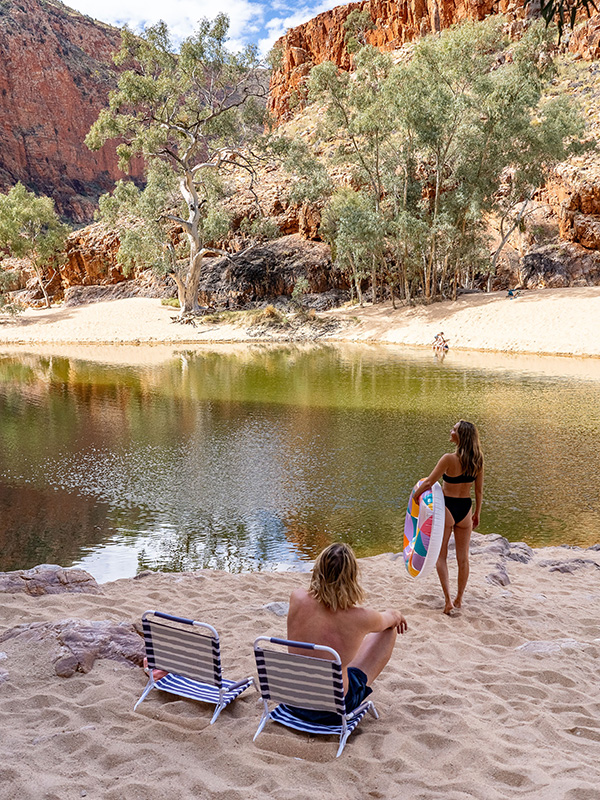
Play a wild card with one of these Arnhem Land accommodation options.
Covering vast tracts of Australia’s northern fringes, Arnhem Land is a destination rich in First Nations cultures, rare wildlife and breathtaking scenery that needs to be experienced to be understood. A stay at one of these three unique wilderness lodges is a good place to start.
1. Seven Spirit Bay
We trace the contours of northern Australia’s coastline from the vantage of a twin-propeller plane. The scene below us is a shifting mirage of land and sea that stretches unendingly into the horizon until the pilot banks left to home in on a red-dirt airstrip that seems to appear out of nowhere.
We land at the ironically named international airport – with its tin-roofed shelter and not much else – and clamber into an open-back 4WD to be whisked to our destination through bush thick with stringybark and palms, eyes peeled all the way for wild buffaloes, bantengs and ponies.
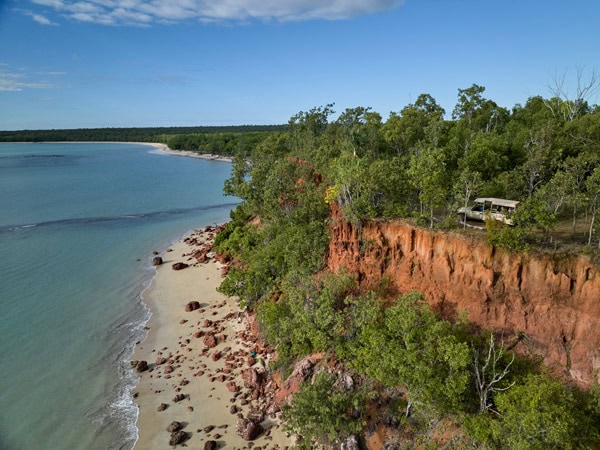
Fabled wilderness lodge Seven Spirit Bay is hidden on the Cobourg Peninsula, a scallop-edged finger of West Arnhem Land that uncurls into the Arafura Sea north of Kakadu and forms part of Garig Gunak Barlu National Park.
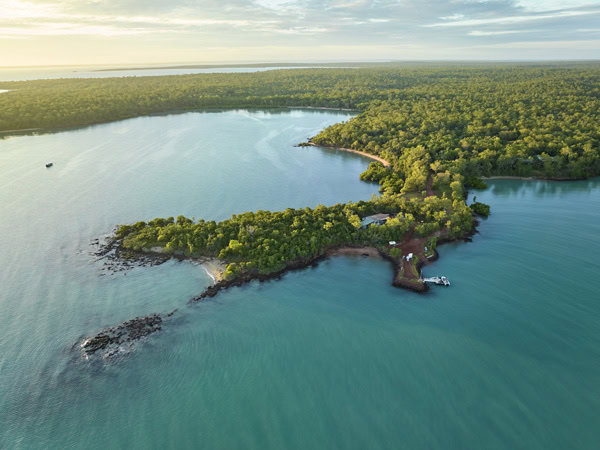
Home to saltwater crocodiles, manta rays, dolphins, turtles, pilot whales and the endangered dugong, this marine sanctuary is also the site of the world’s first RAMSAR-listed wetland. And, run under a joint arrangement between the Arrarrkbi people and the Northern Territory’s Parks and Wildlife Commission that dates back to 1981, Garig Gunak Barlu National Park was the first in Australia to be formally managed in partnership with its Traditional Owners.
A trailblazer itself, when Seven Spirit Bay was built in 1990 it was one of the first luxury lodges in the outback and provided a new, rarified type of travel experience that combined the elemental with the elegant.
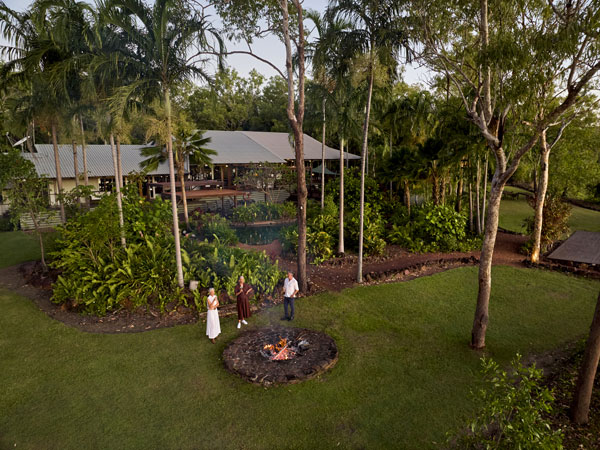
True enough, once we reach the lodge the wildness of our arrival is tempered by a cold glass of sparkling wine as we take in its big reveal: the glittering emerald arc of Coral Bay that it rests lightly above.
Seven Spirit Bay was acquired by Outback Spirit in 2015 as a hero stay on the small group tour company’s Arnhem Land trips: as the spectacular finale to a 13-day Arnhem Land Wilderness Adventure that takes in lodges and safari camps in rare locations operated with permission from Traditional Owners; or as part of a seven-day Seven Spirit Bay & Darwin Short Break.
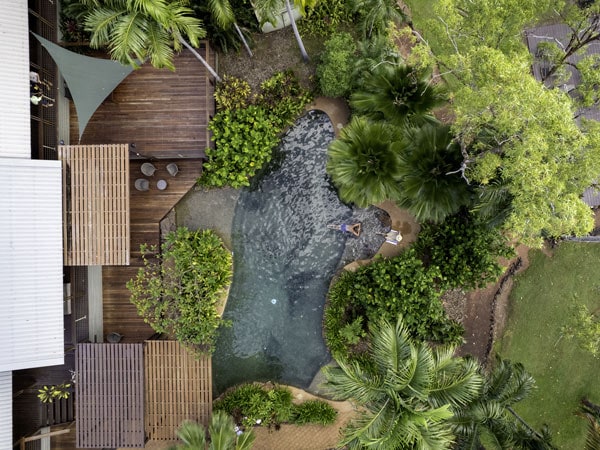
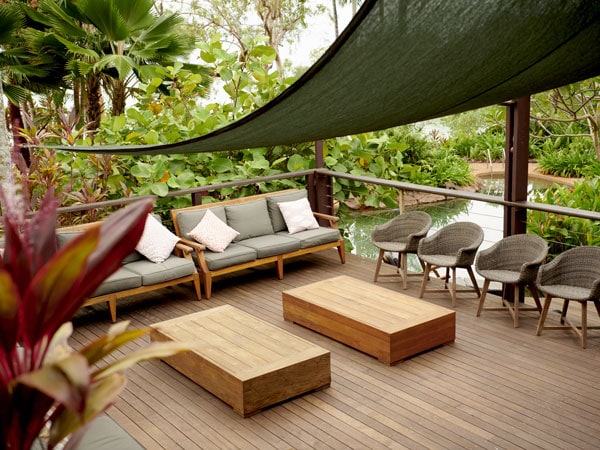
The Wawidada Pavilion houses the lodge’s airy restaurant, lounge and bar; the palm-fringed pool beckons as a salve to the heat; a yawning verandah makes the most of the Northern Territory’s killer sunsets; and 24 luxurious bay-facing villas, or ‘habitats’ are pitched among the native tropical forest.
Each day spent at Seven Spirit Bay is met with a new adventure through the surrounding environments of eucalypt forests, billabongs, mangroves and turquoise seas chock-full of crocodiles.
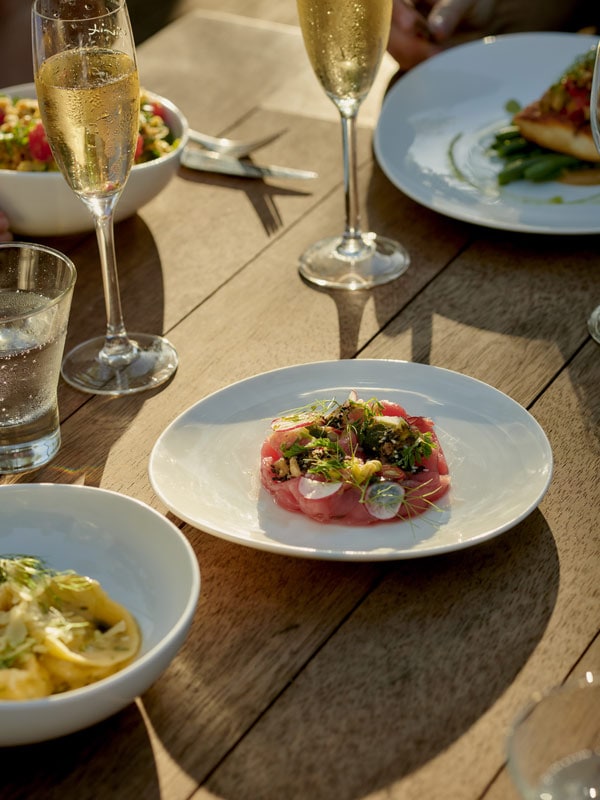
A fishing excursion might yield tonight’s catch-of-the-day dinner. A tour of the historic Victoria Settlement, which dates back to 1838, educates on the failed British occupation of this wild place and what a folly it was to think it possible to dominate a landscape like this.
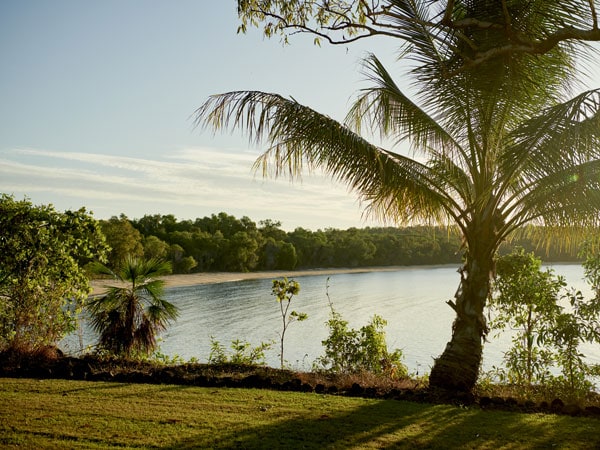
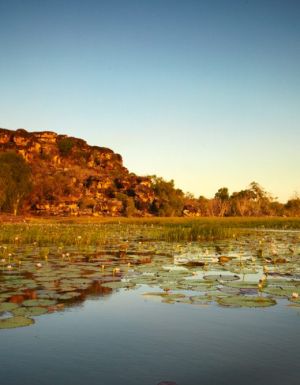
We join an open-back 4WD safari with marine and nature guide Phil Woolaston and head into the fecund bush that’s constantly changing. Right now, it is a forest of green and brown and flashes of colour – a red flowering kapok tree, a shining flycatcher’s wings illuminated petrol in the sunlight, the purple water lilies that litter the billabong of a paperbark forest. The bush will be covered in vine during the wet season.
“It’s a very transient part of the world here, nothing stays for long," says Phil.
This cycle of transience is reflected in the seven seasons, adapted from local Aboriginal calendars, that lend Seven Spirit Bay its name: Lightning, Thundering, Rainmaking, Greening, Windstorming, Fireraging and Cloudless Blue.
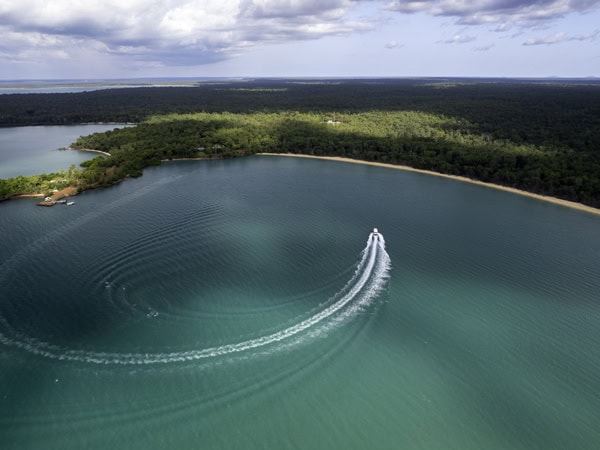
The next day we head out on the MV Arafura. Guide Jess Collins points out Black Point Ranger Station, the last place you can drive to in West Arnhem Land and where Outback Spirit buses stop before guests are ferried to Seven Spirit Bay; the lodge is accessed by water and private air charter only.
Here, a rickety old pier decaying into the sea is a relic from a time someone had the bright idea to bring cruise ships in, I’m told. But the Cobourg Peninsula is too wild and remote, so it remains a certain type of conscious and intrepid tourist who comes.
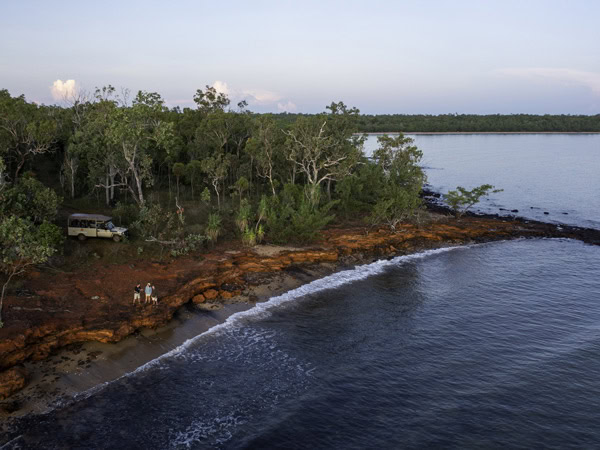
We trace the jagged shoreline I’d been mesmerised by from above. Weathered by the elements, the vibrant red cliffs steeped in iron-rich laterite appear to be rusting away into the ocean, bloodwood trees hanging on for dear life.
We reach a point and the land ends, for now, sand smudging into blue as if it wasn’t really there. But Arnhem Land isn’t a mirage at all. For however transient this wild part of the world is, it’s here and it’s visceral and needs to be felt to be understood.
By Imogen Eveson
Need tips, more detail or itinerary ideas tailored to you? Ask AT.
AI Prompt
2. Davidson’s Arnhemland Safari Lodge
“See that?" Sab Lord asks, tilting his battered Akubra as he gestures towards a rocky crevice where I can just make out a small form.
“You can tell it’s a Wilkins’ rock-wallaby by the fluffy tail." As we venture deeper inside the cave, he points out a coiled serpent, a huge monitor with fearsome claws and even a collection of marine life.
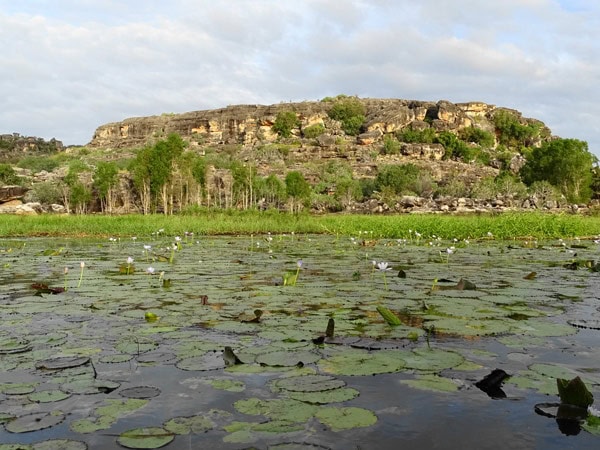
Every wet season, the birds, animals and fish of Arnhem Land scatter as monsoonal rains create a shallow inland sea. But even with much of the landscape underwater, I can still see many of the local species recorded in the incredible rock art galleries accessible from Davidson’s Arnhemland Safari Lodge.
“It’s all done so beautifully you need to call it art;’ says Sab as he guides me around the site known as Left Hand, his sense of wonder undiminished by the dozens of trips he’s made here as born-and-bred Kakadu bushman and owner of Lords Kakadu & Arnhemland Safaris.
“But at the end of the day; this was used to pass information down. This mullet has its head snapped back to teach kids how to prepare it, and the stingray is drawn like an X-ray so you can see where its lungs are."
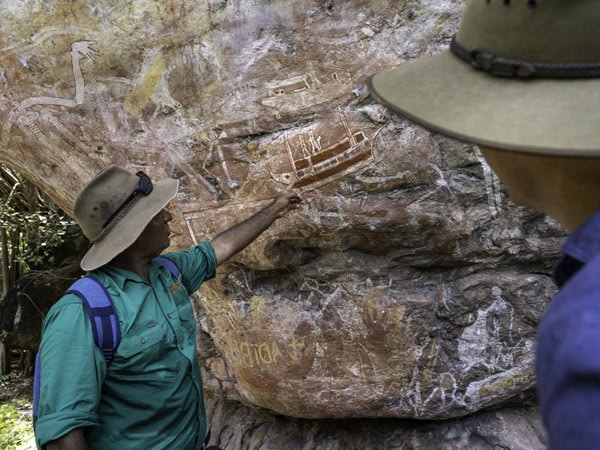
The walls and ceilings around us are a giant palimpsest of bright red, mustard yellow and ghostly white figures, thousands of animals and humans dancing around (and sometimes over) each other with the dynamism of a Keith Haring mural. It’s an astonishing collection that documents a vibrant, continuously evolving culture.
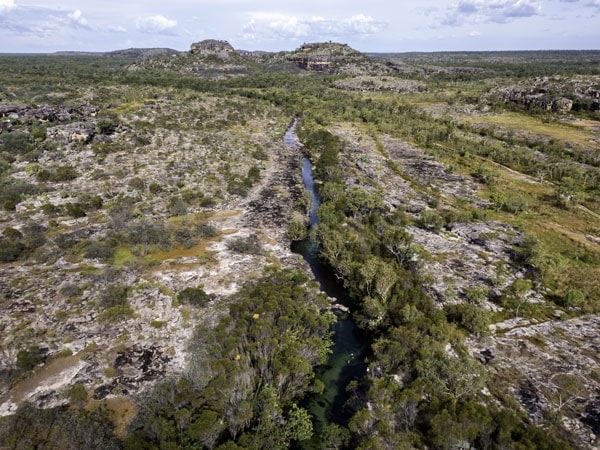
But the most surprising thing is that this is just one of more than a dozen major sites clustered around the rocky escarpment of Awunbarna (Mt Borradaile), which has been a sacred space for generations of the Amurdak Traditional Owners.
“It’s a living museum and you could spend a month out here and not see everything," Sab tells me.
“I like this site because there are three different eras of artwork."
Together we identify faded handprints from the pre-Estuarine period that ended around 10,000 years ago, bold outlines of Estuarine figures and intricately crosshatched rarrk animals from the Freshwater period that began 4000 years ago.
Over the next few days, Sab shows me recent Contact art depicting a three-masted schooner pulling into Darwin dock and Creation figures like a fearsome rainbow serpent with fangs bared that must be eight metres long – reputedly the largest ever found in Australia.
Some walls are covered with hundreds of handprint ‘signatures’ from the pre-Estuarine period, while more modern additions include lacy European gloves and striking cobalt highlights drawn with Reckitt’s Blue laundry powder.
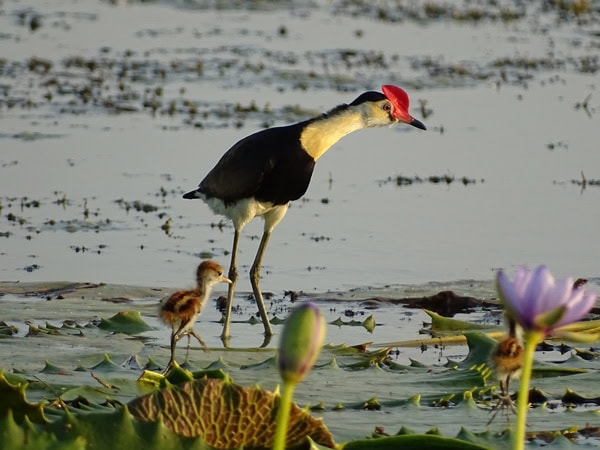
The abundance of rock art is the headline attraction at Davidson’s, but guests can also catch cricket scores of barramundi by the waterfalls on nearby Cooper Creek, explore melaleuca and pandanus forests and spot some of the 250-plus species of birds recorded on the 700 square-kilometre property.
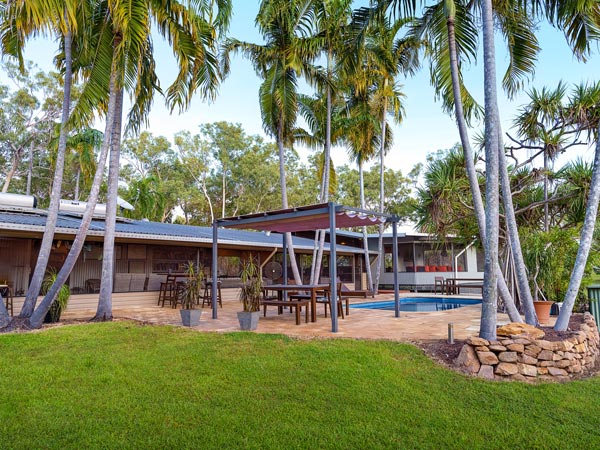
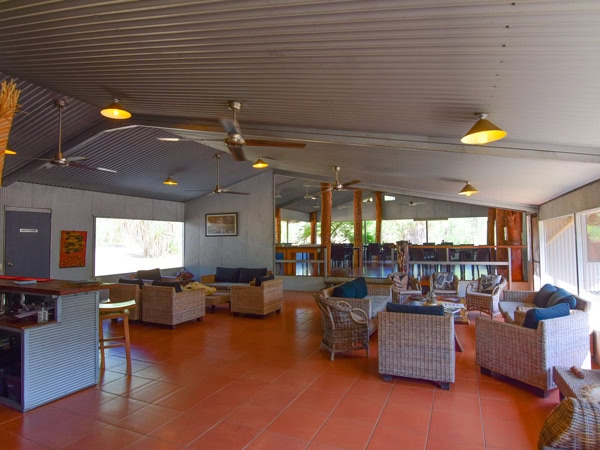
Between excursions, we return to a camp with 20 comfortable cabins that are open on three sides to ensure plenty of airflow and bring in the sounds of the surrounding bush. In its centre is a pool and common area that includes a spacious dining room where Jawoyn chef Solomon Hunter serves up feasts incorporating local produce, like tender barramundi fillets and lemon meringue dessert dusted with powdered Kakadu plum.
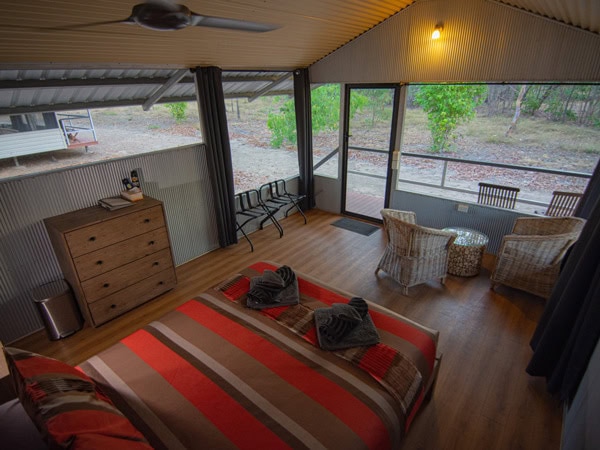
It’s a far cry from the rough hunting camp founded by the late Max Davidson in the 1980s, but his daughter Di tells me that the most important aspects of the property remain almost completely unchanged.
“I was at Uluṟu 30 years ago and you wouldn’t recognise it now. Here, the camp has become much more comfortable but once you get out into the bush, none of it has changed at all."
By Alexis Buxton-Collins
Weekly travel news, experiences
insider tips, offers, and more.
3. Banubanu Beach Retreat
When, for centuries, the Macassans sailed from the shores of Indonesia to the north coast of Australia to trade for trepang or sea cucumber, they named what we call Arnhem Land today Marege. It means Wild Country.
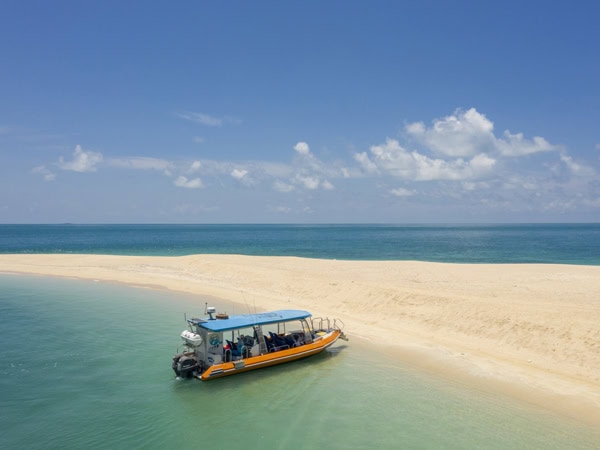
On an island in North East Arnhem Land, a 40-minute boat trip off the coast of Nhulunbuy on the Gove Peninsula, this rings true. I’m rattling through the interior of Bremer Island or Dhambaliya, a Yolŋu homeland, with Banubanu Beach Retreat co-founder Trevor Hosie.
The landscape is tangled with tussock grass and coastal heath that pops with pink hairy mulla mulla. Pandanus leaves cut spiky silhouettes in the late afternoon sky and we duck to avoid being walloped by wattle as we follow overgrown desire lines in the ATV.
A brown hawk soars overhead and a grasshopper as big as a bird flits in front of us. We are never far from a view that opens up to reveal a surprise of turquoise ocean. Reaching a beach, we taste salty pig face plucked from the sand and spy the telltale tracks of sea turtles that nest on the island’s white-sand shores.
It’s on these shores that the Macassans would come to trade with the Yolŋu. In fact, many words in Yolŋu Matha were adopted from Bahasa Indonesian. Examples include balanda, or white person, which comes from the word Hollander; the name Arnhem itself is a Dutch word – given by Abel Tasman in 1644 after the Dutch vessel Arnhem that had explored the area some 20 years earlier.
Banubanu Beach Retreat opened in 2005 as a small fishing camp operated in partnership with the local Yolŋu community, whose Ancestral Land we visit. The original lodge, now a staff breakout area, is filled with flotsam and jetsam that has washed up on these shores and doubles as a museum and a tribute to the tides and the passage of time – a whale’s backbone, a boat tiller, a life ring bearing the name Jakarta.
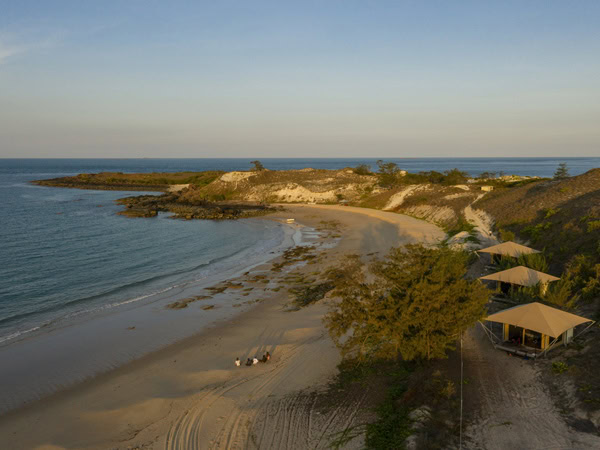
Since then, Banubanu has evolved into a luxe off-grid island eco retreat thanks to the vision of its founders, Trevor, who first visited the island in 1983 to survey Sacred Sites for his role with the Aboriginal Areas Protection Authority, and his wife Helen Martin, an Arrernte woman and prominent figure in the tourism industry.
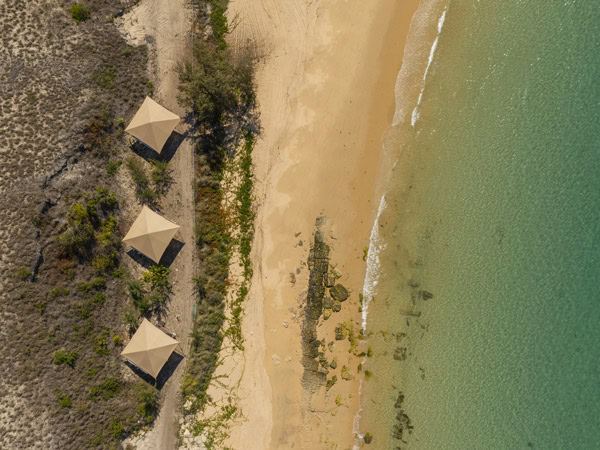
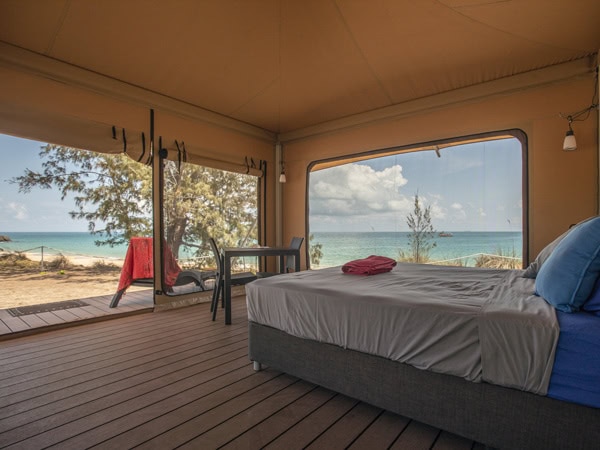
Five beachfront bungalows are hidden among tropical greenery a shell’s throw from the water and a penthouse perched high on the sand dunes takes in the glittering expanse of the Arafura Sea. A laid-back restaurant, cooling plunge pool and a bar primed for sunset complete the picture.
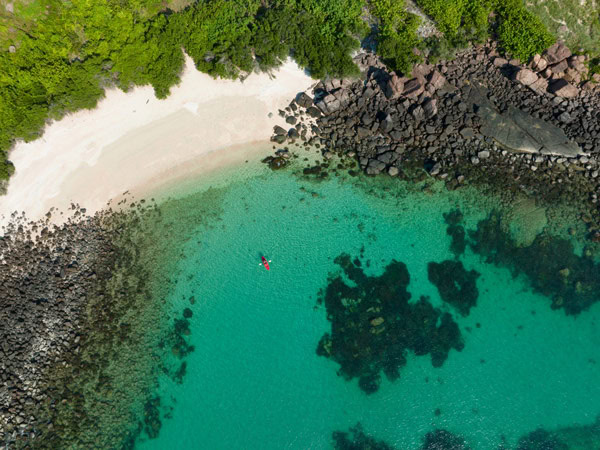
Guests can spend their days heading out on walking trails and exploring the island by ATV Looking for turtle tracks. Fishing, snorkelling and kayaking. Or meeting some of the island’s Yolŋu community through organic experiences facilitated by your hosts that might include a cultural tour of the island, a mud-crabbing excursion or simply sitting and chatting under the shade of a tree.
You could say it is remote here on this tiny tropical island at the tip of the country. But it’s all about perspective. When I visit Banubanu, the Garma Festival has just wrapped up for another year – one of the most important cultural events in Australia that sees leaders from across the country converge on nearby Nhulunbuy.
“How much more central can you get?" posits Trevor.
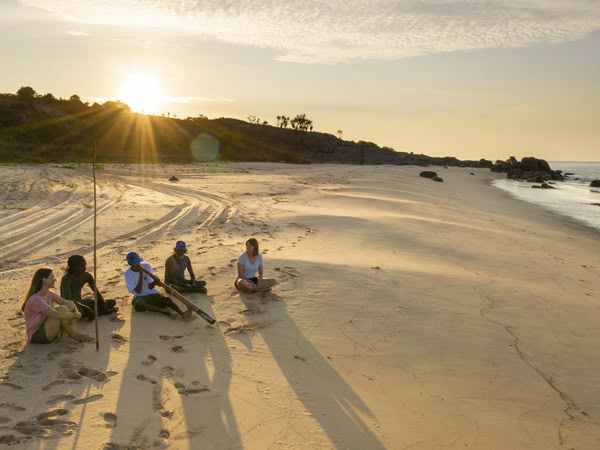
The island has a rich cultural history including ties to the Miraka family, who belong to the Rirratjingu clan of the Yolŋu and whose influential lineage of land rights activists, artists and musicians include Witiyana Marika, a founding member of seminal band Yothu Yindi, which livestreamed a concert right here from the sands of Banubanu during Covid.
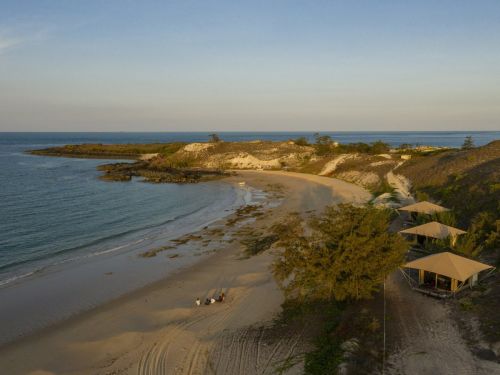
And while the layers of history, culture and politics swirl on the breeze that the Macassan traders sailed in on, Banubanu, at its heart, is a carefree beach retreat. Here, where the glamping tents have pleasing pun names like Sea Clusion, Sea La Vie and Seas the Day, all that’s required of you is to burrow your feet in the sand and sip a cocktail as the sun blazes goodnight over the sea.
It’s your quintessential tropical island getaway. Just a little on the wild side.
By Imogen Eveson
Want to see more stories from Australian Traveller in your Google search results?
- Click here to set Australian Traveller as a preferred source.
- Tick the box next to "Australian Traveller". That's it.

Editor
View profile and articles