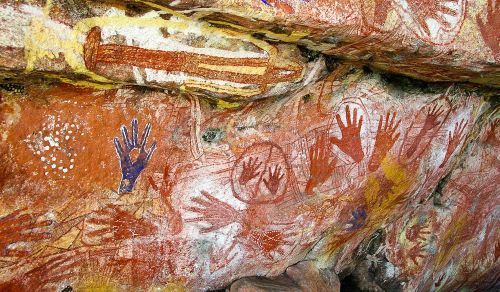
Australia?

hero media
Susan Gough Henly thinks she might have seen the best Indigenous art in the land.  Welcome to Arnhem Land’s Mount Borradaile.

I have crossed the Northern Territory’s East Alligator River and gone deep into Arnhem Land.
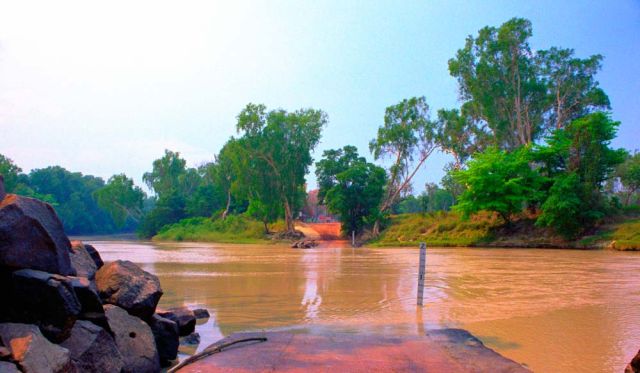
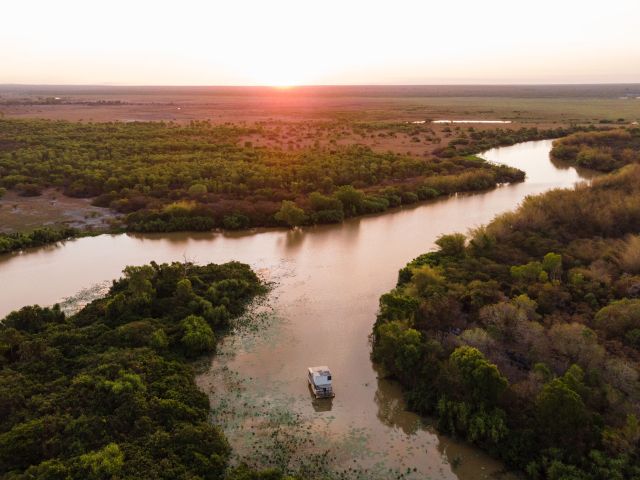
Cahills Crossing In Kakadu National Park
Cahill Crossing along Alligator River. Aptly named because of its crocodile population. Located in the Arnhem Land region of NT.

Now, sitting on a sandstone ledge at Mount Borradaile, I gaze at a mulberry red Tasmanian devil with jagged teeth underneath a large yellow sting ray. Nearby are two punishment spearings and a rainbow serpent creation ancestor. I can scarcely believe I am one of the few people to have seen this art since its rediscovery.


Davidson’s Arnhem Land Safari’s senior guide Clare Wallwork and her partner Roger Johnsson discovered these art-filled shelters just last year.


Today, their excitement is still palpable as we walk along the escarpment pocked with the dogged roots of fig trees and spiky pandanas palms. A lime green wetland stretches to the horizon.
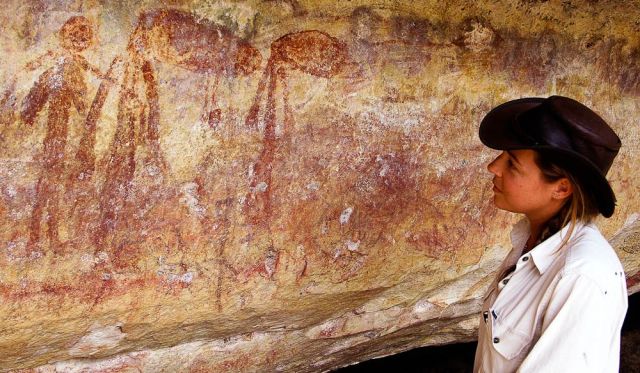
Davidson’s Arnhem Land Safari’s senior guide Clare Wallwork surveys figures in headdresses.

In 1986 Charlie Mungulda, senior Indigenous owner of the Ulba Bunij clan, asked former buffalo hunter Max Davidson to open a safari camp to show a select few white folk his country.
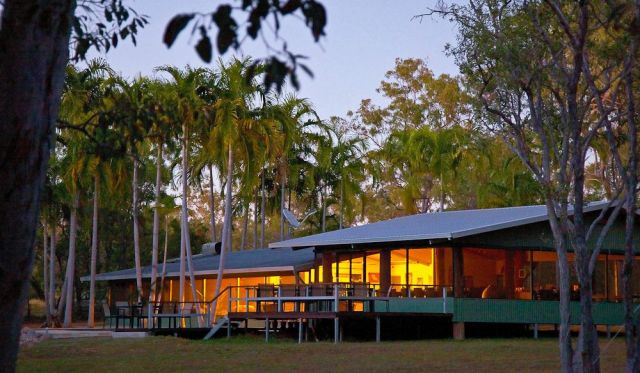
Davidson's Arnhem Land Safaris, NT
The camp at Davidson’s Arnhem Land Safaris, NT

Davidson and his guides have found more than a dozen rock art galleries that archaeologist Josephine Flood describes as “unrivalled in terms of artistic quality, quantity, colourfulness and excellent state of preservation."


Mount Borradaile is magical. The art in the rock shelters tells stories that plumb tens of thousands of years in a landscape that still brims with crocodiles, barramundi, and courting brolgas. It feels like you have pierced the curtain of the 21st century and returned to prehistoric times.
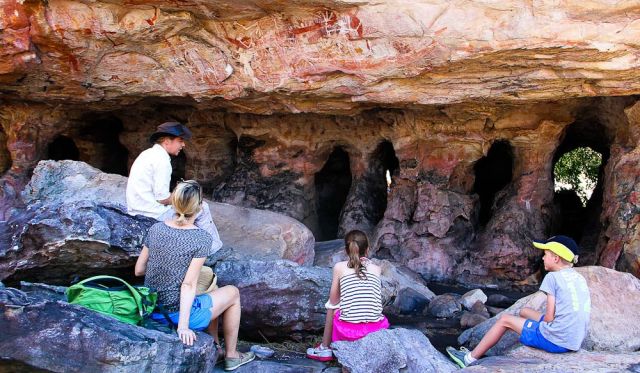
Discovering rock art at Mt Borradaile's catacombs.
Discovering rock art at Mt Borradaile’s catacombs.

“It’s so pristine yet Indigenous Australians lived here for thousands of years," says Wallwork. “Aboriginal groups worked within the environment yet we Europeans seem to work against it. Everywhere you walk it feels like they left only yesterday."


“Rock art offers a window into the past," says Professor Paul Tacon, Chair in Rock Art Research at Queensland’s Griffith University.


“It is all about the history of human experience and the imaginative telling of stories. It shows everything from what extinct animals looked like to how climate change impacted social life."
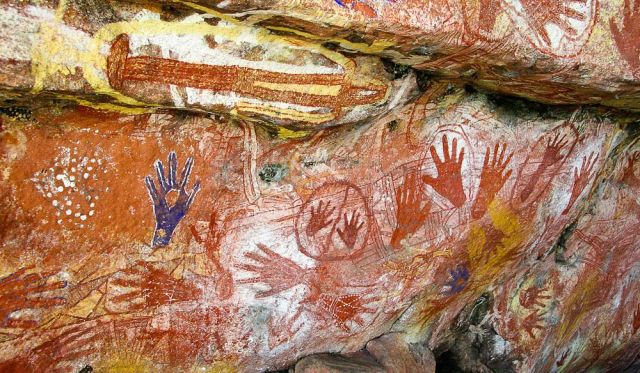
Arnhem Land's Mount Borradaile houses some of the best Indigenous rock art around.
Arnhem Land’s Mount Borradaile houses some of the best Indigenous rock art around.

For traditional owners, the art tells the story of their country and their culture. More important than the paintings themselves, which are often superimposed on each other, the act of painting connected Aboriginal artists with their creation ancestors.


“Australian rock art is so remarkable firstly because there is so much of it," says Professor Jo McDonald, director of the Centre for Rock Art Research and Management at the University of Western Australia. “Australia is unique because its entire occupation was by hunter gatherers and this history is beautifully recorded in the rock art."


She adds, “The French promote their relatively few sites, such as Lascaux (whose art dates back 20,000 years), as part of their cultural identity. Australia has 100,000 known sites with incredible diversity and complexity yet few Australians know much about them."


Indeed, the enormity of the legacy of Aboriginal culture – its complexity and spiritual depth – is barely understood by most of us. From finger scratching deep in the Nullarbor caves and coded petroglyphs on the Burrup Peninsula to the vast swath of rock paintings across the continent, every type of artistic endeavour practiced by ancient cultures has been produced here.


“The detail, freshness, range of colour and age of Australian rock art make it unequalled worldwide," says Cambridge PhD, Jamie Hampson, who recently moved to the UWA Centre for Rock Art Research + Management because, “as an archaeologist with an anthropological approach to rock art, Australia is a wonderful place to work because there are still Indigenous descendants who can provide so much cultural understanding."


In spite of extensive studies, it is still extremely difficult to pinpoint the age of rock art because most organic pigments cannot be carbon dated. A rare charcoal drawing on the Central Arnhem Land Plateau has been radiocarbon-dated to 28,000 years, making it the oldest painting in Australia and among the oldest in the world with reliable date evidence – but the engravings are probably much older.

See Arnhem Land for yourself

Davidson’s Arnhem Land Safaris  at Mount Borradaile, which can be visited both in the wet and dry seasons, offers a remarkable body of rock art including an enormous rainbow serpent, expansive contact galleries, early naturalistic animals, dynamic figures and X-ray art.
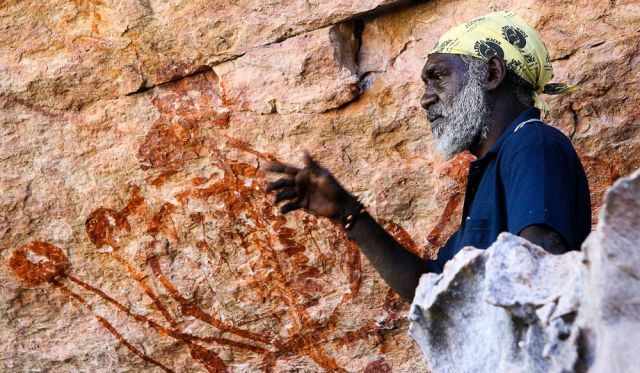
An Indigenous guide at Injalak Hill explaining the rock art.
An Indigenous guide at Injalak Hill, also in west Arnhem Land explaining the rock art.

For a complete indigenous experience in Arnhem Land, visit the site of Injalak near the community of Oenpelli where Aboriginal guides describe the stories behind the great variety of paintings at Injaluk Hill.


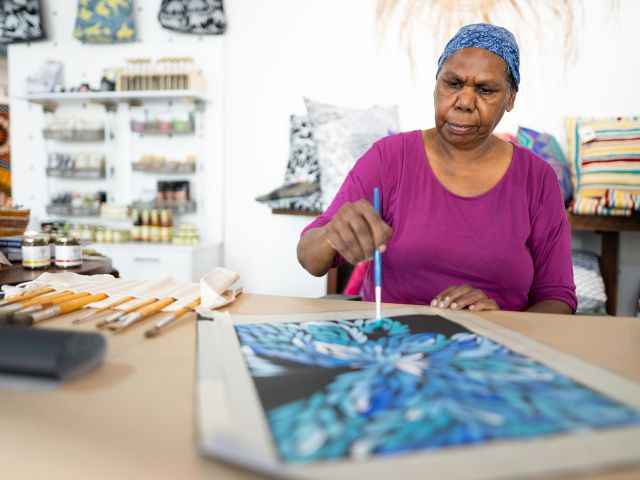
You can also buy stunning weavings and bark paintings at the art centre. Entry permit required (injalak.com ).

For more information on Arnhem Land & things to do in the NT, visit the official Northern Territory website at northernterritory.com

Sue Gough Henly
Sue Gough Henly divides her time between a treehouse on Sydney's Northern Beaches and a farmhouse in Bordeaux, with lengthy sojourns in the United States. Wherever she's travelling, she's always looking to meet the locals and to discover the most authentic experiences that offer a real sense of place. Then she does her best to bring readers along for the ride.
See all articles
hero media

8 Red Centre locations to explore after seeing the new movie, Kangaroo

Spend a few days visiting the real-life Central Australian locations that inspired the new film everyone is talking about, and discover why Alice Springs is such an important part of Australian culture.

In the credits of the new Australian film Kangaroo , the first name under ‘cast’ should read ‘The Northern Territory ’. Not only is Alice Springs (and the surrounding landscape) integral to the movie itself, but the spiritual heart of Australia and its local Indigenous owners also inform the look and feel of every frame, explains Producer Trisha Morton-Thomas of Brindle Films, who also plays Charlie’s grandmother Gwennie.

“By setting Kangaroo in Alice Springs (Mparntwe), the film embraces how visible Aboriginal people are here, and the living Aboriginal culture that is woven through this community,” she explains.

still from kangarro film
See Kangaroo, then visit the real-life filming locations.

And while shooting in such a sacred part of the Northern Territory required extra planning, it was something the cast and crew were highly invested in.

“There are incredibly significant sacred sites and places of deep cultural stories in the area, that at times are very gender-specific, which we’ve kept out of the production,” she explains. “Even if overhead drone footage captures a sacred site that isn’t meant to be seen by other people outside of that clan, we’ve made sure to omit it from the film.”

If Kangaroo piqued your interest in a Central Australian holiday, we don’t blame you. Read on to discover eight places featured in the movie that you can visit in real life – and get planning. Don’t forget to pack sunscreen and a hat.

1. Alice Springs/ Mparntwe

artist at Many Hands Art Centre
Visit the galleries of Alice Springs, like Many Hands Art Centre. (Image: Tourism NT/ Helen Orr/ Many Hands Art Centre)

The red and dusty streets of the film’s fictional town of Silvergum were filmed on the outskirts of Alice Springs. And, while the art gallery featured in the film is fictional, Alice Springs is a hub of creativity. See the work of local artists at the Araluen Art Centre , Yubu Napa Art Gallery , Iltja Ntjarra (Many Hands) Art Centre and the famous Tjanpi Desert Weavers .

2. The Kangaroo Sanctuary & Kangaroo Rescue Centre

The Kangaroo Sanctuary Alice Springs, the inspiration for the Kangaroo move
Visit the movie’s inspiration at Kangaroo Sanctuary. (Image: Tourism NT/ Kangaroo Sanctuary)

Kangaroo was inspired by the journey of Chris ‘Brolga’ Barns, who founded the now world-renowned Kangaroo Sanctuary based in Alice Springs. For lead actor, Aussie Ryan Corr, the animals were central to the movie, alongside the landscapes.

“The animals in this story were a real calling point for me,” he explains. “What this story tries to tell us about the connection between humans and animals is beautiful.”

To gain a real insight into the fauna and flora of the Red Centre, you can visit the Kangaroo Sanctuary on a sunset tour, where you might even get the chance to hold a baby kangaroo.

3. Ormiston Gorge

woman walking along the edge of Ormiston Gorge near alice springs
Take a dip in Ormiston Gorge. (Image: Tourism NT/ @domandjesso)

The film captures the raw beauty of the West MacDonnell Ranges, known in the Arrernte language as Tjoritja. This national park is rich in Indigenous culture and stark geological wonders.

Only a 15-minute drive from Alice Springs, Tjoritja offers visitors the chance to camp, hike and swim among ancient landscapes (most attractions are less than a three-hour drive away).

Ormiston Gorge , a cooling oasis in among the red desert sands, is one of the most popular destinations, no doubt because of the permanent swimming hole and towering red cliffs. From here, visitors can also embark on the beautiful Ormiston Pound Walk and the shorter – more accessible – Ghost Gum Walk. Bring your bathers – it’s safe for swimming.

4. Standley Chasm

woman walking through Standley Chasm near alice springs
Wander through Standley Chasm. (Image: Tourism NT)

The 1.2-kilometre walk to nearby Standley Chasm will be a highlight for any visitor as the imposing 40 metre-high chasm walls project strength and ancient wisdom.

Visit at midday to experience the path illumined by the midday sun. Not only will you fill your camera roll with vibrant red images of the gorge and its intoxicating shadows, but you can also camp nearby in a powered or unpowered site so you can watch the brilliance of the desert stars fill the night sky after dusk.

5. Simpsons Gap

three people walking on path through simpsons gap near alice springs
Walk the trails of Simpson’s Gap. (Image: Tourism NT/ Helen Orr)

Closer to Alice Springs, the photogenic Simpsons Gap is the perfect place to spot the endangered Black-footed Rock wallaby near the permanent watering hole. While swimming isn’t permitted, soaking up the sun and views certainly is.

Explore the area’s numerous walking trails, appreciate the soaring cliffs on either side of the ‘gap’ and pick out the shooting locations of Kangaroo in the area.

6. Ellery Creek Big Hole

aerial of Ellery Creek Big Hole near alice springs
Dive into Ellery Creek Big Hole. (Image: Tourism NT/ Tourism Australia)

When it comes to classic Northern Territory landscapes, you can’t go past Ellery Creek Big Hole/ Udepata : tall gum trees sidling up to a refreshing watering hole (fed by the West MacDonnell Ranges and surrounded by rugged red cliffs.

Swim in the cooling waters, hike the cliff tops, watch for birds and even stargaze as you camp here overnight. It’s locations like this that attracted the film’s director Kate Woods to the project.

“It humbles you to be in this environment: it’s so beautiful, so old and so vast,” she explains. “I was thrilled to get a chance to … shoot such a beautiful story in the incredible landscape of the Northern Territory.”

7. Larapinta Drive

aerial of Larapinta Drive into alice springs
Drive along Larapinta Drive. (Image: Tourism NT)

There is no better way to get a feel for how the characters arrived at the fictional Central Australian town of Silvergum than to travel along the iconic state road, Larapinta Drive.

Connecting Alice Springs to the mighty King’s Canyon in the west, via the historic community of Hermannsburg, this road takes in the West MacDonnell National Park, Alice Springs Desert Park and artist Albert Namatjira’s house, among other attractions. Take your time, bring a camera and prepare for numerous stops along the way.

8. Todd River

competitors in Henley on Todd Regatta, alice springs
Join in the fun of the quirky Henley on Todd Regatta. (Image: Tourism NT/ TImparja Creative)

Meandering through Alice Springs like a lazy Western Brown snake, the Todd River is a central part of Alice Springs culture. Known as an ‘intermittent river’, the Todd can go from a dry dusty riverbed to a flowing waterscape in less than 15 minutes after heavy rainfall.

When it’s dry, the famous Henley on Todd Regatta fills the sandy riverbed with handmade ‘boats’ carried by sailors. This is the world’s only dry river boating event, and it’s referenced in the ‘Silvergum Boat Race’ in the movie. Inspired by the real-life event, the characters built quirky “Flintstones-style boats” and competed in teams.

See Kangaroo in cinemas now, and start planning your NT getaway at northernterritory.com.