Everything you need to know about The Garma Festival in Arnhem Land

hero media
Quentin Long witnesses an extraordinary celebration of culture at  Australia’s largest Indigenous event –  the Garma Festival – in Arnhem Land.


In dry and easy terms, the Garma Festival is the nation’s “largest", “biggest" or “most important" annual celebration of Indigenous culture in Australia. The reality of living with around 1000 white fellas and 1000 black fellas on the edge of an escarpment in remote Australia is certainly something big and important. But it’s also much more than that.

We have returned to Garma since this story was published, check out the latest update Experiencing Garma.

What is Garma?

Organised by the Yothu Yindi foundation as a celebration of Yolnju culture, the Garma Festival is an opportunity to highlight the plight of Aboriginal people, and a chance for two-way learning between the Yolnju and peoples from all over the world.


The Yolnju are from the northeastern tip of the NT and Arnhem Land. Their most famous exports are the didgeridoo and the Yothu Yindi band. The band’s lead singer, Mandawuy Yunupingu, is a key figure in the clan and the Yothu Yindi foundation. His brother, Galarrwuy, was the real seat of power in the nation. Together with a number of other families, the Yunupingu are responsible for the Yolnju people being one of the most respected, powerful and pioneering of all Aboriginal peoples.

Where is it?

Garma is held a 30-minute drive from Nhulunbuy on the Gove Peninsula at a place called Gulkula. In Yolnju culture, this is the home of the didgeridoo, known as a yidaki. It’s at Gulkula that the yidaki was first made in Australia centuries ago.

How do I get there?

Most people fly to Nhulunbuy from either Cairns or Darwin. AT drove the 13 hours from Darwin, nine of which were along the dangerous dirt track of the Central Arnhem Road.


Notes to travellers: FLY. It’s safer and easier. The road has no fuel stops, infrequent travellers, and fatal accidents are far too common.

Where do I stay?

Everyone camps at Garma – tents, meals, toilet blocks and cold showers are all supplied. You can’t just pay your money and show up either. You must complete a registration of interest and be accepted to attend.

This is to ensure those with the most to gain from the experience get to go.

What goes on there?

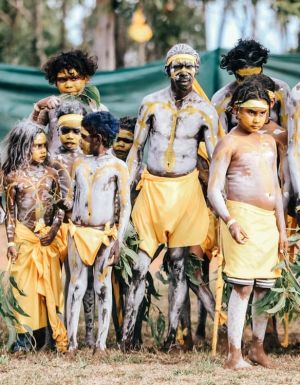
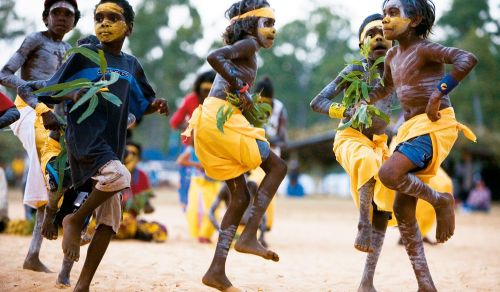
Every afternoon at around four o’clock the day ends with a Bunngul – traditional dancing. This brings everyone together for a good old-fashioned spectacular. Each dance is accompanied by cheers and encouragement in several languages.


After dinner, there’s a stage for bands, providing a platform to practice live performances and get noticed within the community.


The reasons people attend are many and varied. Some are at a conference on Aboriginal health, education or welfare (every year it’s one of these three). Some are learning a musical instrument. Others, like Australian Traveller, are on organised cultural tours.


At the same time many of the Yolnju youngsters are being taught valuable skills for employment. Some are recording the festival for their media training, while yet others are acting as security at the concerts to gain their security certificates.


Garma draws people from all over the world for any number of surprising reasons. They spend four or five nights camping out, enduring cold showers and reasonable (yet very bush) conditions. Australian Traveller was there to be part of Garma – but as it means so many things to so many different people, we’ve let them tell their own stories . . .

The Mates

Jack Thompson has been coming to Garma for seven years. The festival is so important to him that nothing prevents him from attending – not even Hollywood. Jack’s contract for the Baz Luhrmann film Australia explicitly states his unavailability while Garma is on.

Jack has been in the ear of one of his mates, telling him for ages that this is well and truly “his kind of gig."

In fact, George Negus has been on the receiving end of Jack’s invitations – he calls it “nagging" – for the past five years. George found Garma to his liking. “Personally and professionally, this is an opportunity not many of us have," he says.


“And we must be involved when the opportunity arises. Seeing and sensing the difference close up and having to live with it is even better. Having one of the oldest cultures on earth in this country, we should not only be proud, but feel like it’s a privilege."


When asked why he comes to Garma, Jack, perhaps uncharacteristically, is near speechless. He’s certainly in love with the land and the people.


“I do not have to go to Africa to feel and experience a unique and ancient culture," he says. “It’s all right here."

But dig a little deeper and you realise it’s also work. Jack is part of the Garma family. He was adopted by Mandawuy and Galarrwuy Yunupingu, and often acts as a spokesperson to the media when, and if, the need arises.

It’s an honour Jack takes incredibly seriously. “I said to Manda, I’m onto you, mate. This is not just an honour – it’s a bloody job."

The Students

Matthias Muller is attending his fifth Garma Festival. He travels from Basel in Switzerland to be at Garma and has done so for the past four years. He comes for one reason and one person. The yidaki is the Yolnju word for the didgeridoo. And every year at Garma, yidaki Master Djalu Gurruwiwi conducts a master class attracting people like Matthias from all over the world. The students relay much of what Djalu teaches and says.


According to Scott from the Sunshine Coast, who’s using the didgeridoo in his corporate team building exercises, Djalu is teaching more and more non-Aboriginal people, as they seem the most passionate and interested. Djalu is disappointed but feels the knowledge must be maintained and handed on.


The master class starts with students learning the pronunciation and words. It’s a bit like learning to read sheet music. Djalu believes you cannot play the yidaki without having your mouth trained to form sounds like the original performers.


The second most important part of the training is receiving the yidaki spirit. Djalu teaches that the yidaki is a lot more than a musical instrument. It can be used to heal, educate, communicate and tell stories.

Students sit in front of Djalu, close their eyes and place the yidaki on their stomach. Djalu tells Scott he can help cure aches and ailments with his yidaki.


“Garma is an opportunity to understand the spirit of the yidaki," says Scott. “To be with a man of this stature and to share in his tradition is very special. I love what Djalu says at the beginning. We’re not of the same colour skin, but of the same colour blood."

The Dancer

Crusoe Kurrdal isn’t a name you’ll forget once you realise who he is. As the lead in Ten Canoes, Australia’s most successful Indigenous movie, Crusoe would be hot property anywhere outside Australia. At Garma, he’s just relaxing with his mates. He’s not even slightly put out by the attention of a Garma worker, Tizza, who’s determined to get a “me and the celebrity" photo. Crusoe smiles and poses languidly next to the stocky Tizza.

Crusoe isn’t that talkative. When asked why he came, he looks confused. It’s like asking someone why they eat. “Dancing," he says. “The people asked me to come and dance." And just to be absolutely certain the concept is getting across, Crusoe adds, “It’s good fun."

To the majority of Garma people the festival is about having a great time singing, dancing and meeting with their mates. To the rest of us, it seems as though we’re witnessing a celebration of culture.

hero media

8 Northern Territory secrets the locals don’t want you to know

Summer transforms the Northern Territory into a lush paradise of colour and life, as a visit during the ‘low-season’ reveals secrets the locals willingly share.

Waterlilies bloom, floodplains are alive with birdlife, waterfalls are gushing, and everywhere the green is dazzling. Summer in the Top End and the Red Centre is a kaleidoscope of unexpected wonders that delight and surprise visitors. Of course, the locals know only too well that the Northern Territory low season is often the best time to see and experience this amazing part of Australia.

Here are some of the reasons why savvy travellers – avoiding the crowds – are discovering a new dimension to the Territory. Remember that you’ll need a Parks Pass to visit national parks.

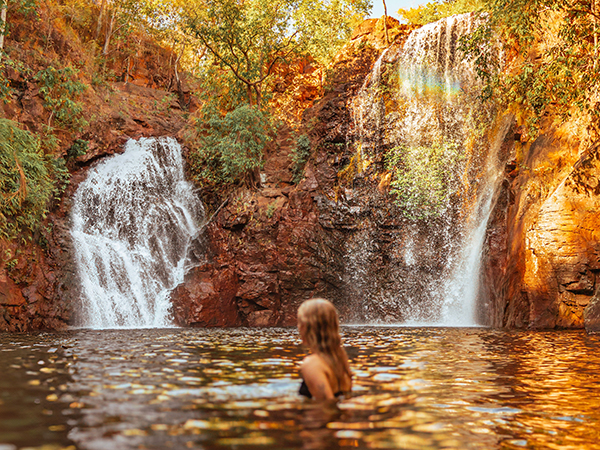
1. Take a dip in the Florence Falls waterhole

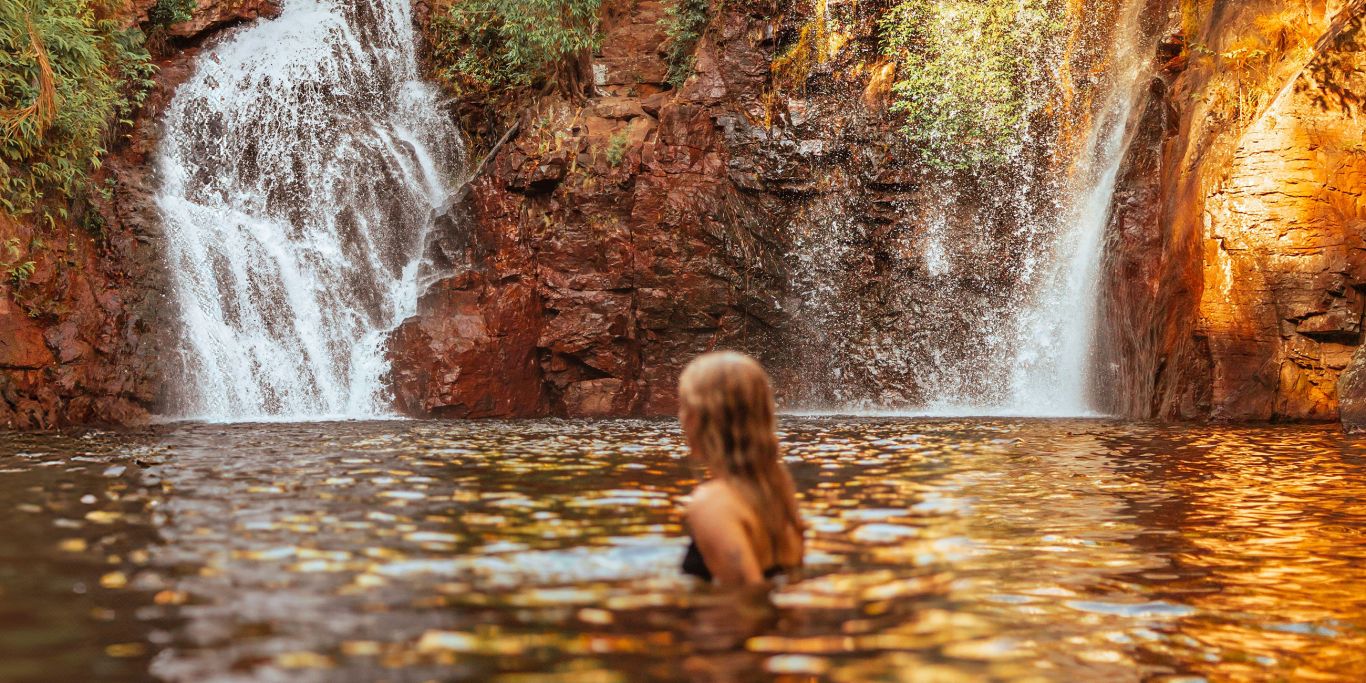
Wander through savanna woodland and monsoon forest to discover the perfect place to cool off – the waterhole at the base of spectacular Florence Falls in the magnificent Litchfield National Park , just 90 minutes’ drive from Darwin. The falls flow year-round but are most spectacular during the summer. Camping is available nearby but bookings are essential and must be made online before you visit.

Surrounded by lush forest, a woman cools off in Florence Falls, just one of many incredible things to do in the Northern Territory.
Cool off beneath the cascading waters of Florence Falls. (Image: Joshua Griffin)

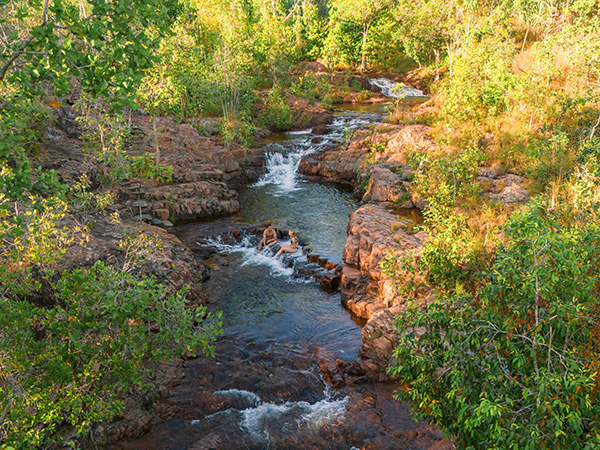
2. Wind down at Buley Rock Hole

Another popular local swimming spot in Litchfield National Park is Buley Rock Hole , open year-round. This is a great place to wind down after exploring everything the park has to offer, including towering termite mounds. Wade through the rock pools, soak up the scenic bush or just lie back and relax as the cool water rolls over you.

Buley Rockhole, Litchfield National Park
Let the cool water wash over you. (Image: Tourism Australia)

3. Tour the Tiwi Islands

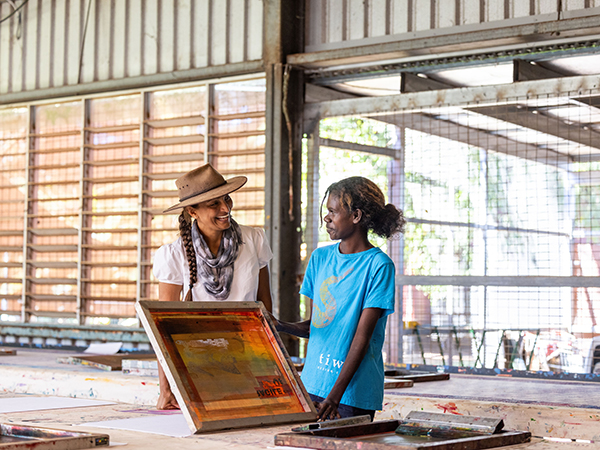
The Tiwi Islands , a scenic 80km flight from Darwin across the narrow Clarence and Dundas Straits, reveal a different side to the Territory, with their own distinctive culture. Take a day tour with Tiwi by Design to visit Bathurst Island and learn about creation stories, the Mission days, World War II history and the islanders’ obsession with AFL!

Take a ‘behind-the-scenes’ tour of Tiwi Design’s screen-printing workshop and pick up a great souvenir in the form of art. Choose from contemporary or traditional Tiwi designs and a wide range of work including carvings, paintings, pottery, printmaking, bark paintings and tunga (bark baskets).

A creative moment shared inside Tiwi Design’s screen-printing space.
Take a peek inside Tiwi Design’s screen-printing studio. (Image: Tourism NT)

4. Dine in Darwin

Foodies are spoilt for choice in multi-cultural Darwin. Try Sri Lankan flavours at Ella by Minoli, where Masterchef contestant Minoli De Silva creates delectable dishes, or head to Charlie’s of Darwin for gin-tasting, cocktails and more. Bowls of fragrant laksa, excellent coffee, fresh vegetables and authentic crafts are all part of a weekend visit to Darwin’s Parap Markets , Rapid Creek Markets and the Nightcliff Markets .

Prefer to catch your own dinner? Book a Top End fishing charter to bag a barramundi – and from October register for the annual Million Dollar Fish competition. Hooking one of the tagged barra released each year in waterways across the Territory could win you up to $1 million.

A bowl of Laksa.
Eat your way through multicultural Darwin. (Image: Tourism NT)

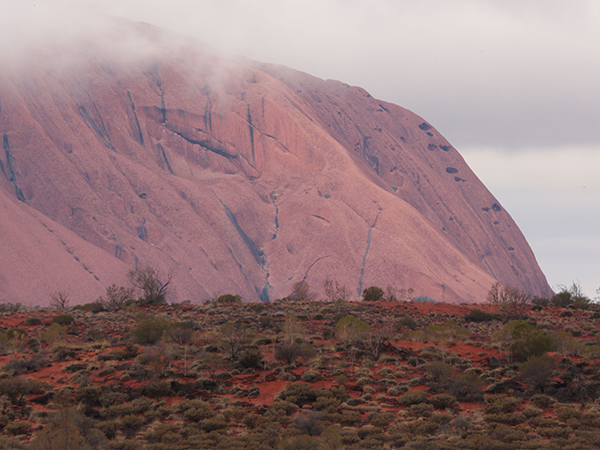
5. Up close with Uluṟu

The magnificent monolith Uluṟu is even more magical when the summer rains fall. When it rains on The Rock, the locals come out to watch – consider yourself lucky if that happens when you visit. Waterfalls cascading off the sides of Uluṟu is a sight that relatively few tourists see.

There’s so much to do at Uluṟu, from guided walks to learn the stories of the Aṉangu people and the ancient landscape they live in to scenic flights for a bird’s-eye view or a leisurely walk around the base of Uluṟu. Book ahead to spend the evening wandering through the Field of Light installation by Bruce Munro.

A closer look at Uluru and uncover its ancient stories, sacred sites, and striking natural beauty – one of the most iconic things to do in the Northern Territory.
Discover the details that make Uluṟu truly sacred. (Image: Tourism NT)

6. Drive the Red Centre Way

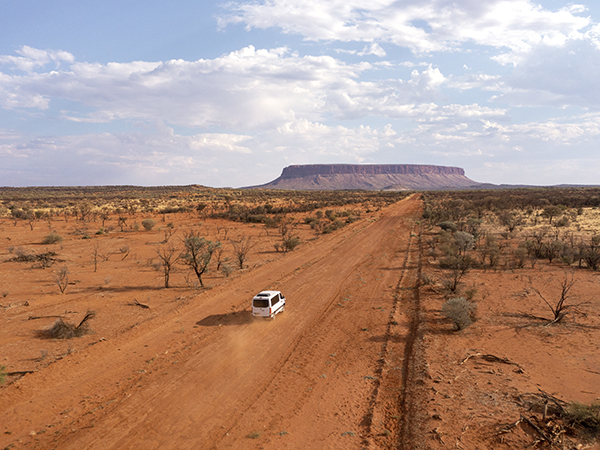
From Alice Springs, take an epic road trip along the Red Centre Way, taking in Uluru and Watarrka National Park, home to the magnificent Kings Canyon. Allow at least a week to drive through the red heart of Australia by 4WD, a little longer on the sealed road by 2WD vehicle, travelling through ochre deserts, palm-lined valleys and dramatic gorges. Stop off at waterholes for a refreshing dip along the way.

Kings Canyon offers hiking options for all levels of fitness, from the three-hour Rim Walk atop soaring sandstone walls to the gentler Kings Creek Walk. Either way, you’ll have breathtaking views.

SEIT Outback Australia is a small group touring specialist offering exciting, adventurous, exclusive and specialised iconic, pioneering and cultural touring in the Red Centre of Australia, giving you the time to learn, absorb and relax in the heart of Australia.<br /><br />This innovative tour company focuses on providing clients with the ultimate interpretive touring experiences with a range of products and customised touring itineraries for small groups and bespoke private charters.<br /><br />The company bases its philosophies from the key words of Spirit, Emotion, Intellect and Task (SEIT).
Drive through Australia’s heart. (Image: Outback Australia Tours)

7. Take a walk at Kata Tjuṯa

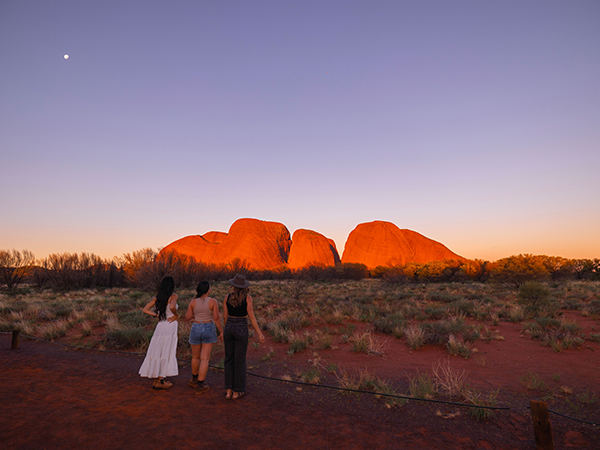
Head out early to tackle the Valley of the Winds Walk at Kata Tjuṯa . This natural wonder, also known as The Olgas, is a labyrinth of soaring ochre domes that glow golden at sunrise and sunset (the walk may be closed during the middle of the day as temperatures rise).

Walking trails range from easy to longer, more difficult tracks. At the Kata Tjuṯa dune viewing area, take in the panoramic view of the domes. The longest of the trails is the Valley of the Winds Walk, a 7.4km circuit that winds between the domes and through creek beds. It’s moderately difficult and steep in places, but offers stunning views – and occasional encounters with kangaroos.

The Valley of the Winds Walk at Kata Tjuta is one of the most awe-inspiring things to do in the Northern Territory, especially at sunrise when the domes glow golden.
Step into the golden light of Kata Tjuṯa. (Image: Tourism NT)

8. Explore Tjoritja/West MacDonnell Ranges

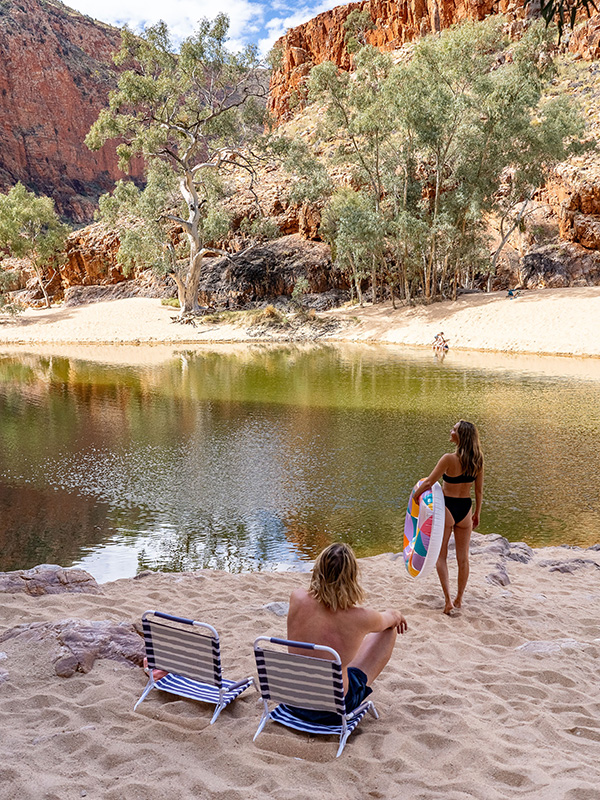
Tjoritja/West MacDonnell National Park lies 135km west of Alice Springs, with many fascinating natural features to beguile visitors. The ‘West Macs’ formations include chasms, gorges and waterholes – take your swimsuit for a dip at Ormiston Gorge waterhole, open year-round. The Ormiston Pound Walk is a three to four-hour circuit that leaves from the visitor centre and loops back along the gorge via the main waterhole. Other places of interest in the park include Simpsons Gap , Standley Chasm , Ellery Creek Big Hole and Glen Helen .

Soaking in the serenity of Ormiston Gorge, these two travellers enjoy one of the most scenic things to do in the Northern Territory.
Take the plunge at Ormiston Gorge waterhole. (Image: Joshua Griffin Litchfield)

Start planning the NT road trip of a lifetime at northernterritory.com