Everything you need to know about ethically buying Aboriginal Art

hero media
Investing in Aboriginal art is about more than just finding something to hang on your wall.

For an art form with traditions and practices stretching back multiple millennia, the Aboriginal and Torres Strait Islander art movement is having a moment right now in the global market. With dedicated followers such as actor Steve Martin (who famously loaned 10 paintings from his collection to the influential Gagosian Gallery in New York in 2019 as part of its Desert Painters of Australia exhibition) and renowned international museums including London’s Tate Modern adding pieces to its permanent collections, this is a bona fide contemporary art movement steeped in ancient history. But the good news is that investing in it does not require a Hollywood-sized bank balance; in fact, every visitor to the Northern Territory can buy a unique piece of art all their own.
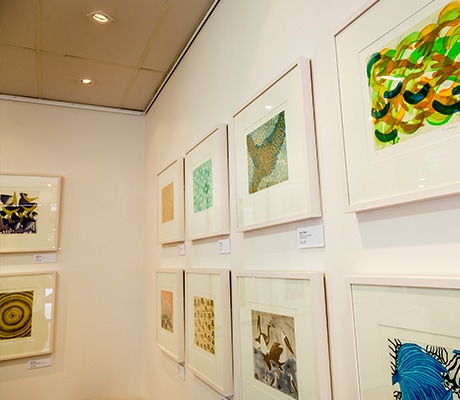
Aboriginal artwork at Nomad Art, Darwin
Nomad Art is a gallery specialising in limited edition artworks by artists from Indigenous art centres. (Image: Tourism NT/Nick Pincott)

While Aboriginal and Torres Strait Islander art has been called ‘Australia’s greatest cultural gift to the world’, buying it here in Australia, and specifically on a trip to the Northern Territory, offers an irresistible opportunity to go beyond the mere provenance of a piece. It allows buyers to meet and interact with the artists themselves and experience the country, the colours, the sounds, the mood and the traditions that have influenced and shaped it.
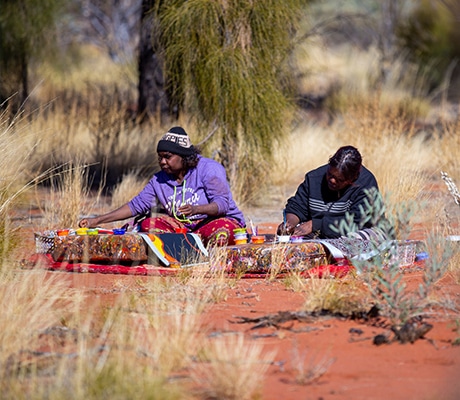
Women painting Desert art at Maruku, Uluru
An art form with traditions and practices stretching back multiple millennia. (Image: Tourism NT/Felix Baker)

It is estimated that Aboriginal and Torres Strait Islander art contributes up to $100 million to the Australian economy each year, but on a much more human level, the sale of art through Indigenous owned and operated art centres and any number of art fairs held across the country each year not only provides an invaluable source of income for artists, families and remote communities, but also allows them to take pride in continuing the traditions of the world’s oldest living culture.
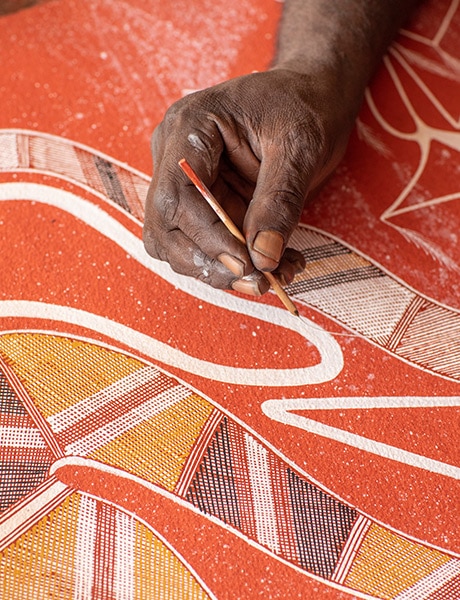
Artwork at Venture North's 4 Day Arnhem Land and Cobourg Peninsula Tour
Aboriginal and Torres Strait Islander art contributes up to $100 million to the Australian economy each year. (Image: Tourism NT/James Fisher)

With so much significance woven into the act of buying a piece of art, it is important to be respectful of the process, do the research and make informed decisions in order to end up with a work that is both authentic and ethical, and that you can also take pride in owning.
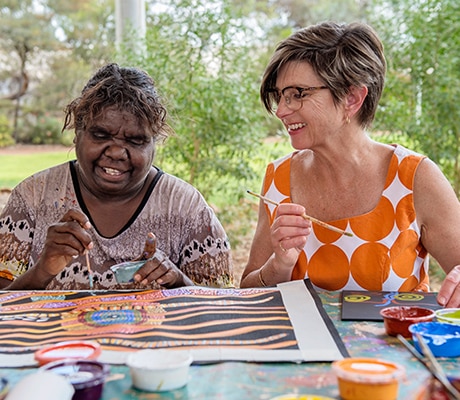
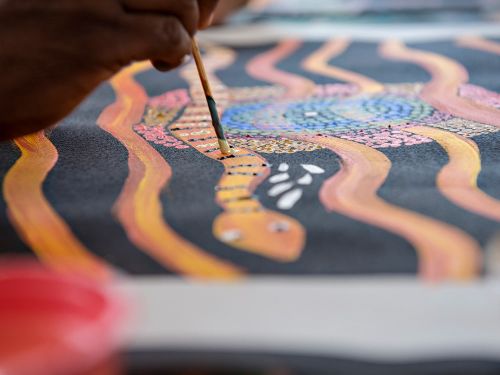
Women dot painting
Buying in Australia allows buyers to meet and interact with the artists themselves. (Image: Tourism NT/Shaana McNaught)

Do your research

While most people considering buying a piece of Aboriginal or Torres Strait Islander art to commemorate a trip to the Northern Territory will imagine themselves returning with a painting, there are myriad styles and mediums to choose from: mesmerising contemporary dot paintings on canvas, traditional bark paintings, sculpture, woven fibre art, digeridoos, works on paper, prints and cultural regalia.

Decide the style you are interested in and seek out artists and community art centres in regions and locations that specialise in them, from the ochre paintings on bark that are typical of Arnhem Land to the intricate woven fibre art produced by the female Tjanpi artists of the remote Central and Western desert regions (Tjanpi Desert Weavers, a social enterprise of the Ngaanyatjarra Pitjantjatjara Yankunyytjatjara [NPY] Women’s Council, also has a public gallery in Alice Springs).
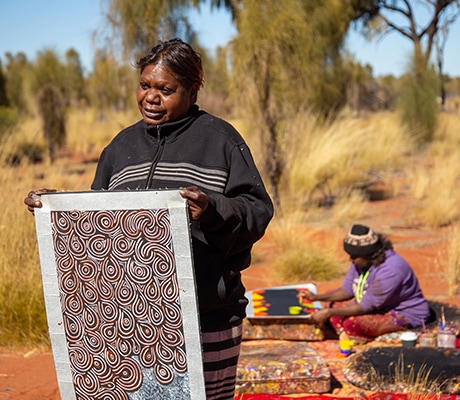
Women holding art work at Desert art at Maruku, Uluru
There are myriad styles and mediums to choose from. (Image: Tourism NT/Felix Baker)

Connect with the artist

Buying art in an ethical way means you are contributing to the sustainability of Aboriginal art into the future and showing respect for the artists themselves and the rich history that influences their work. According to the Indigenous Art Code , developed to establish a set of standards between dealers and artists to ensure fair and ethical trade in artwork, buyers should not be afraid to be inquisitive, whether buying from a gallery, at auction or at an art fair; the three questions you should be asking when making a purchase are: ‘Who is the artist?"; ‘Where are they from?’ And ‘How are they paid?’
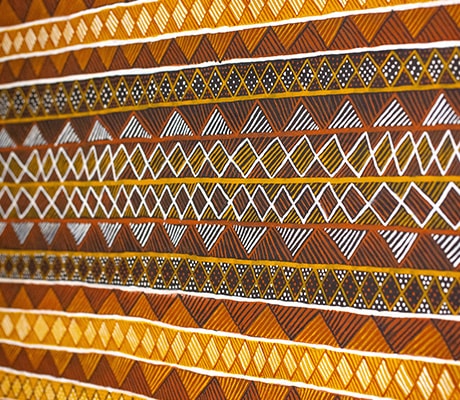
Aboriginal art, Godinymayin Yijard Rivers Arts and Culture Centre
Be inquisitive, whether buying from a gallery, at auction or at an art fair. (Image: Tourism NT/Felix Baker)

It is also important to establish provenance, a record of ownership that confirms that an artwork is authentic and has been traded in an ethical way, including fair payment for the artist. The Indigenous Art Code advises that any piece of Aboriginal or Torres Strait Islander art bought for more than $250 at an art centre should come with an authentication certificate; you should always ask for one if it is not offered.
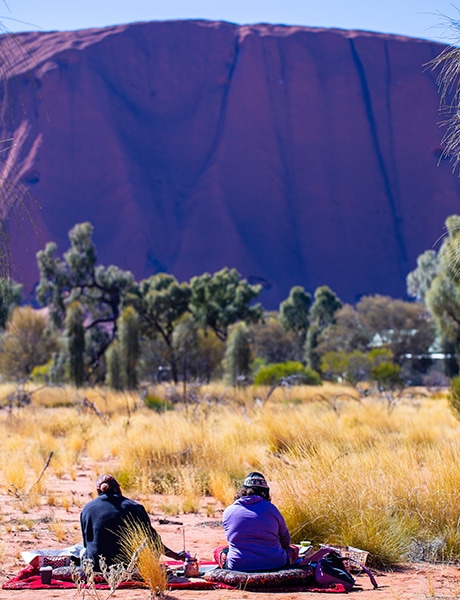
Women painting with Uluru in the background
Buying art in an ethical way means you are contributing to the sustainability of Aboriginal art. (Image: Tourism NT/Felix Baker)

Buy (really) local

While it is possible to buy Aboriginal art from dealers, the most ethical way to purchase is from Indigenous-owned and operated art centres, including the likes of Injalak Arts in Gunbalanya, Jilamara Arts and Crafts Association on Melville Island, Karungkarni Art and Culture in Katherine and Aaruku Arts in Uluru, owned and operated by Anangu of the Central and Western Desert. Non-profit cooperatives run by artists and communities, in addition to offering direct access to the artists, offering the chance to see first-hand how artworks are made and the inspiration behind them, these community art centres allow you to be confident the art you are buying is authentic and that the artists benefiting from all sales.
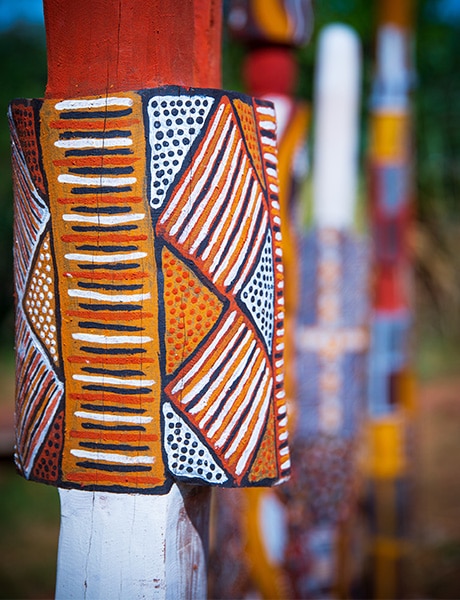
Aboriginal art for sale at Jilamara Arts and Craft Association
Contemporary Aboriginal art for sale at Jilamara Arts and Craft Association. (Image: Tourism NT/Felix Baker)

Art fairs are another great way to buy Aboriginal art straight from the source. There are a number of fairs held each year in the Northern Territory including Desert Mob in Alice Springs, presented by Araluen Arts Centre and Desart and representing Aboriginal arts and crafts centres of the Central Desert, and the Darwin Aboriginal Art Fair (DAAF). Staged by the not-for-profit Darwin Aboriginal Art Fair Foundation, DAAF does not attach commission to works sold, which means 100 per cent of the money made (some $11.6 million in the last five years) goes directly to the artists and their communities.
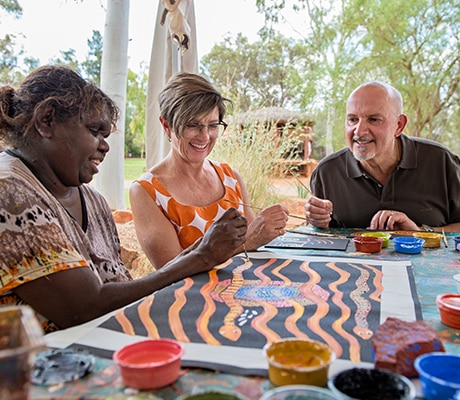
Artist teaching couple to dot paint
The most ethical way to purchase is from Indigenous-owned and operated art centres. (Image: Tourism NT/Shaana McNaught)

Enjoy the experience

In the homogenised, mass-produced world in which we live, being able to source artworks directly from the artists producing them and gaining insight into the creative process is not just unusual, it’s a privilege. Going straight to the source to buy Aboriginal art when visiting the Northern Territory, interacting with the artists and hearing their stories, is as much an experience as seeing Uluru or exploring Kakadu. Take the time, make the effort and you will be richly rewarded.
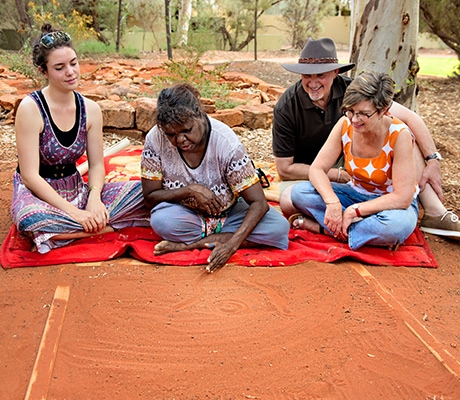
Learning to dot paint with artist
Interacting with the artists and hearing their stories, is as much an experience as seeing Uluru. (Image: Tourism NT/Shaana McNaught)
hero media

8 Northern Territory secrets the locals don’t want you to know

Summer transforms the Northern Territory into a lush paradise of colour and life, as a visit during the ‘low-season’ reveals secrets the locals willingly share.

Waterlilies bloom, floodplains are alive with birdlife, waterfalls are gushing, and everywhere the green is dazzling. Summer in the Top End and the Red Centre is a kaleidoscope of unexpected wonders that delight and surprise visitors. Of course, the locals know only too well that the Northern Territory low season is often the best time to see and experience this amazing part of Australia.

Here are some of the reasons why savvy travellers – avoiding the crowds – are discovering a new dimension to the Territory. Remember that you’ll need a Parks Pass to visit national parks.

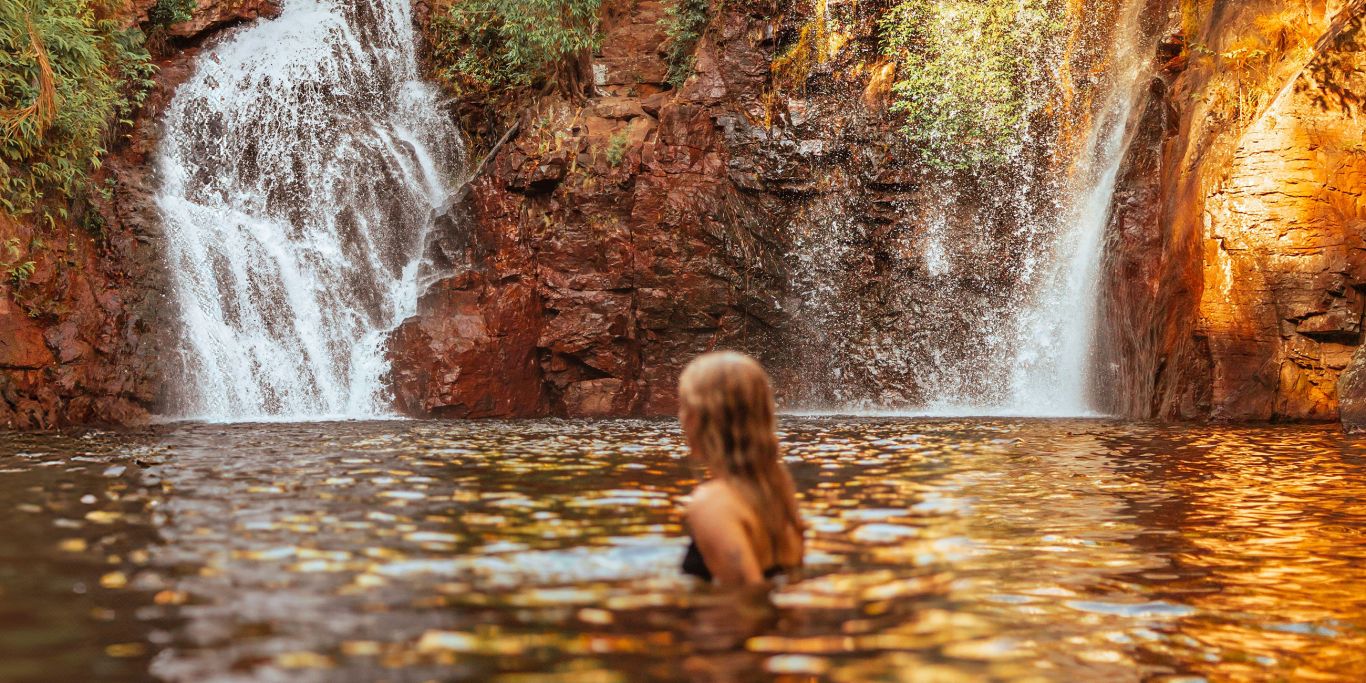
1. Take a dip in the Florence Falls waterhole

Wander through savanna woodland and monsoon forest to discover the perfect place to cool off – the waterhole at the base of spectacular Florence Falls in the magnificent Litchfield National Park , just 90 minutes’ drive from Darwin. The falls flow year-round but are most spectacular during the summer. Camping is available nearby but bookings are essential and must be made online before you visit.

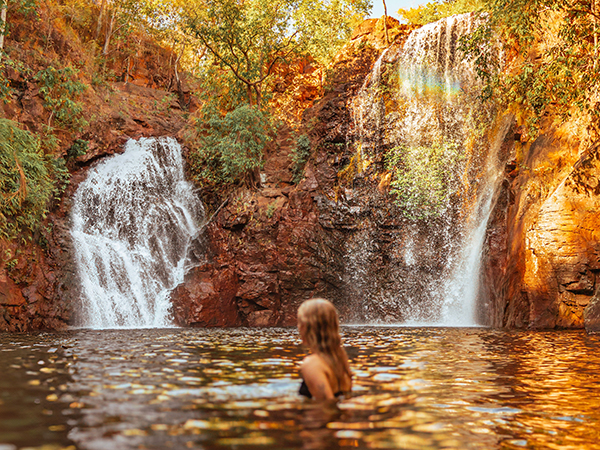
Surrounded by lush forest, a woman cools off in Florence Falls, just one of many incredible things to do in the Northern Territory.
Cool off beneath the cascading waters of Florence Falls. (Image: Joshua Griffin)

2. Wind down at Buley Rock Hole

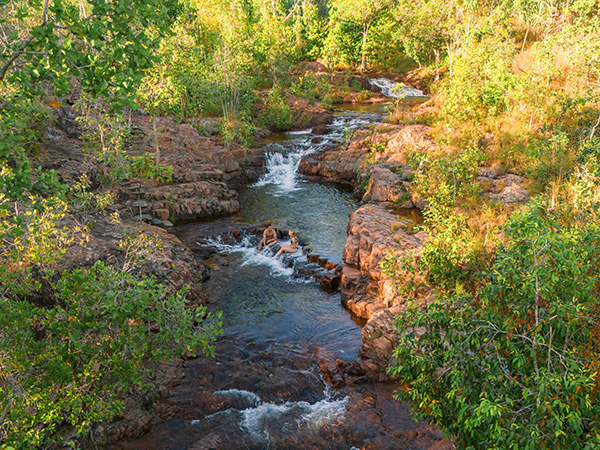
Another popular local swimming spot in Litchfield National Park is Buley Rock Hole , open year-round. This is a great place to wind down after exploring everything the park has to offer, including towering termite mounds. Wade through the rock pools, soak up the scenic bush or just lie back and relax as the cool water rolls over you.

Buley Rockhole, Litchfield National Park
Let the cool water wash over you. (Image: Tourism Australia)

3. Tour the Tiwi Islands

The Tiwi Islands , a scenic 80km flight from Darwin across the narrow Clarence and Dundas Straits, reveal a different side to the Territory, with their own distinctive culture. Take a day tour with Tiwi by Design to visit Bathurst Island and learn about creation stories, the Mission days, World War II history and the islanders’ obsession with AFL!

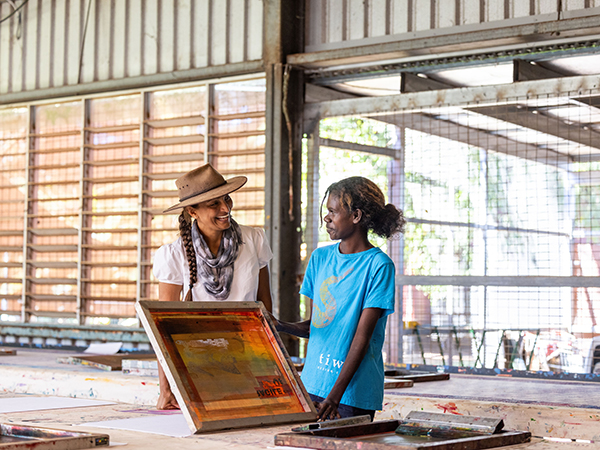
Take a ‘behind-the-scenes’ tour of Tiwi Design’s screen-printing workshop and pick up a great souvenir in the form of art. Choose from contemporary or traditional Tiwi designs and a wide range of work including carvings, paintings, pottery, printmaking, bark paintings and tunga (bark baskets).

A creative moment shared inside Tiwi Design’s screen-printing space.
Take a peek inside Tiwi Design’s screen-printing studio. (Image: Tourism NT)

4. Dine in Darwin

Foodies are spoilt for choice in multi-cultural Darwin. Try Sri Lankan flavours at Ella by Minoli, where Masterchef contestant Minoli De Silva creates delectable dishes, or head to Charlie’s of Darwin for gin-tasting, cocktails and more. Bowls of fragrant laksa, excellent coffee, fresh vegetables and authentic crafts are all part of a weekend visit to Darwin’s Parap Markets , Rapid Creek Markets and the Nightcliff Markets .

Prefer to catch your own dinner? Book a Top End fishing charter to bag a barramundi – and from October register for the annual Million Dollar Fish competition. Hooking one of the tagged barra released each year in waterways across the Territory could win you up to $1 million.

A bowl of Laksa.
Eat your way through multicultural Darwin. (Image: Tourism NT)

5. Up close with Uluṟu

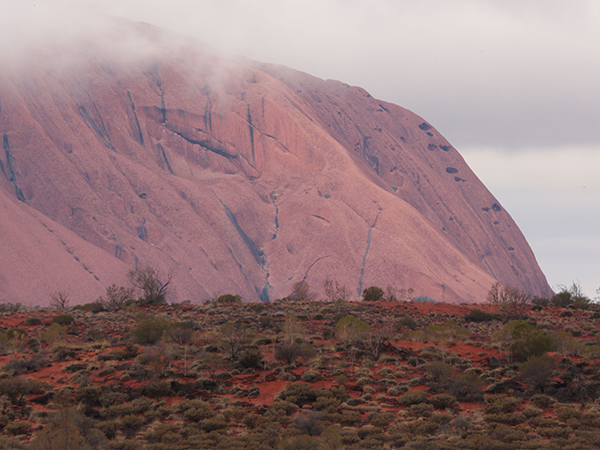
The magnificent monolith Uluṟu is even more magical when the summer rains fall. When it rains on The Rock, the locals come out to watch – consider yourself lucky if that happens when you visit. Waterfalls cascading off the sides of Uluṟu is a sight that relatively few tourists see.

There’s so much to do at Uluṟu, from guided walks to learn the stories of the Aṉangu people and the ancient landscape they live in to scenic flights for a bird’s-eye view or a leisurely walk around the base of Uluṟu. Book ahead to spend the evening wandering through the Field of Light installation by Bruce Munro.

A closer look at Uluru and uncover its ancient stories, sacred sites, and striking natural beauty – one of the most iconic things to do in the Northern Territory.
Discover the details that make Uluṟu truly sacred. (Image: Tourism NT)

6. Drive the Red Centre Way

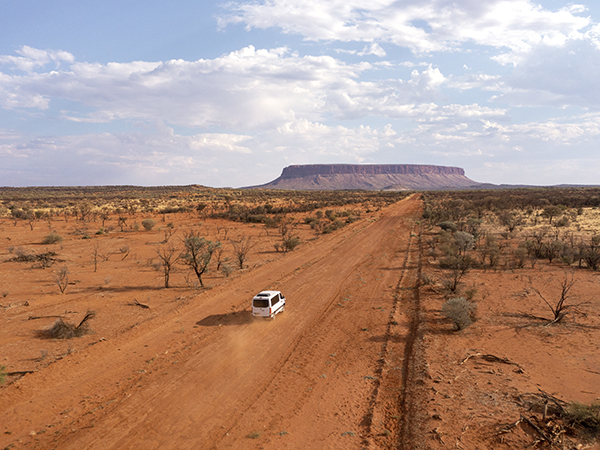
From Alice Springs, take an epic road trip along the Red Centre Way, taking in Uluru and Watarrka National Park, home to the magnificent Kings Canyon. Allow at least a week to drive through the red heart of Australia by 4WD, a little longer on the sealed road by 2WD vehicle, travelling through ochre deserts, palm-lined valleys and dramatic gorges. Stop off at waterholes for a refreshing dip along the way.

Kings Canyon offers hiking options for all levels of fitness, from the three-hour Rim Walk atop soaring sandstone walls to the gentler Kings Creek Walk. Either way, you’ll have breathtaking views.

SEIT Outback Australia is a small group touring specialist offering exciting, adventurous, exclusive and specialised iconic, pioneering and cultural touring in the Red Centre of Australia, giving you the time to learn, absorb and relax in the heart of Australia.<br /><br />This innovative tour company focuses on providing clients with the ultimate interpretive touring experiences with a range of products and customised touring itineraries for small groups and bespoke private charters.<br /><br />The company bases its philosophies from the key words of Spirit, Emotion, Intellect and Task (SEIT).
Drive through Australia’s heart. (Image: Outback Australia Tours)

7. Take a walk at Kata Tjuṯa

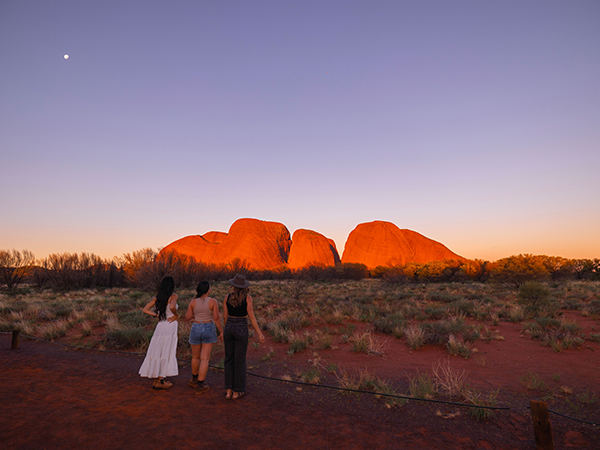
Head out early to tackle the Valley of the Winds Walk at Kata Tjuṯa . This natural wonder, also known as The Olgas, is a labyrinth of soaring ochre domes that glow golden at sunrise and sunset (the walk may be closed during the middle of the day as temperatures rise).

Walking trails range from easy to longer, more difficult tracks. At the Kata Tjuṯa dune viewing area, take in the panoramic view of the domes. The longest of the trails is the Valley of the Winds Walk, a 7.4km circuit that winds between the domes and through creek beds. It’s moderately difficult and steep in places, but offers stunning views – and occasional encounters with kangaroos.

The Valley of the Winds Walk at Kata Tjuta is one of the most awe-inspiring things to do in the Northern Territory, especially at sunrise when the domes glow golden.
Step into the golden light of Kata Tjuṯa. (Image: Tourism NT)

8. Explore Tjoritja/West MacDonnell Ranges

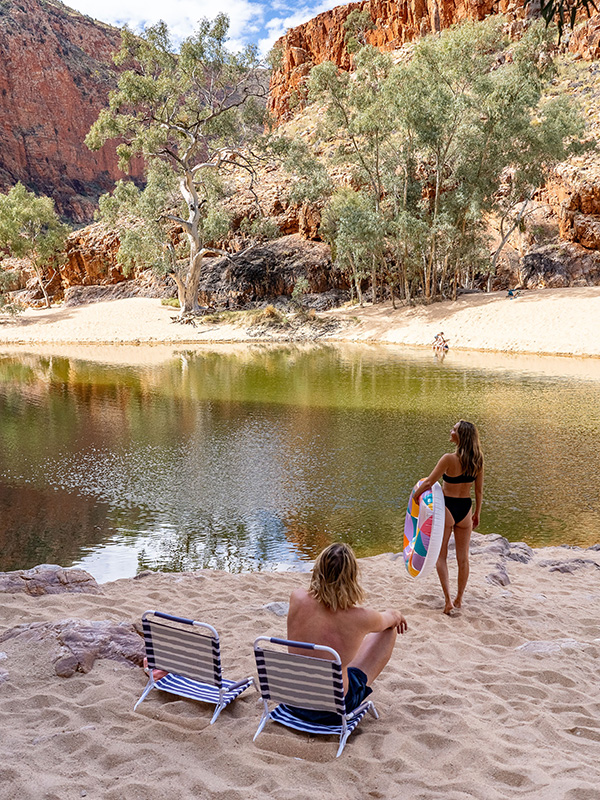
Tjoritja/West MacDonnell National Park lies 135km west of Alice Springs, with many fascinating natural features to beguile visitors. The ‘West Macs’ formations include chasms, gorges and waterholes – take your swimsuit for a dip at Ormiston Gorge waterhole, open year-round. The Ormiston Pound Walk is a three to four-hour circuit that leaves from the visitor centre and loops back along the gorge via the main waterhole. Other places of interest in the park include Simpsons Gap , Standley Chasm , Ellery Creek Big Hole and Glen Helen .

Soaking in the serenity of Ormiston Gorge, these two travellers enjoy one of the most scenic things to do in the Northern Territory.
Take the plunge at Ormiston Gorge waterhole. (Image: Joshua Griffin Litchfield)

Start planning the NT road trip of a lifetime at northernterritory.com