6 days solo on the Larapinta Trail

hero media
With only a week up her sleeve, Caro Ryan squeezes in the best of the Larapinta Trail’s wild swimming holes, classic ridgetop hikes and a summit sunrise that leaves her longing for more.

In my dreams I find myself out in the wilderness, taking on one of Australia’s long-distance hiking trails, The Larapinta Trail, in a single, unbroken journey. But, like so many of us, the realities of life dictate that my adventures are squeezed into bite-sized chunks of week-long forays, book-ended by a frantic rush to prepare, followed by an Everest of washing.

So, while the 223 kilometres of the Northern Territory’s Larapinta Trail can be swallowed whole in 14 to 20 days, I’m content with just six days and a taste of the best the Larapinta Trail has to offer.

Day 1 – Alice Springs and Section 10 (Ormiston Gorge to Finke River)

Piling into a minibus in Alice Springs, I take stock of my group for the next six days: an eclectic mix of Aussies aged between 40 and 60, including a few solo hikers, a married couple and a pair of friends who do a week-long hike together each year. We’re the types who love to feel the earth under our feet and to connect with wild places in a way that leaves our bodies feeling like they’ve moved, climbed or scrambled. It’s not long before we’re sharing stories as the van rushes west along the Namatjira Highway.
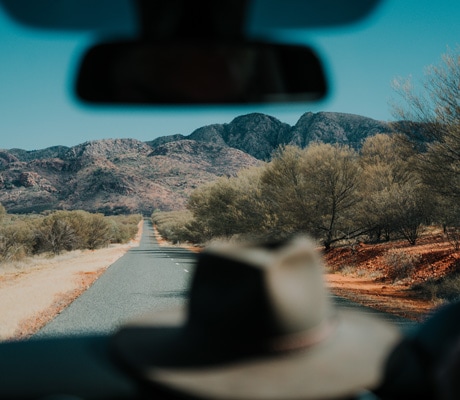
Larapinta Trail, Northern Territory
On the road to the start of the Larapinta Trail.

Arriving at Ormiston Gorge, we hit the trail along Section 10, which – at just 9.1 kilometres ­– is the shortest of Larapinta’s 12 sections. It’s a good introduction to this big sky country with a gentle ascent to a great lunch spot at Hilltop Lookout.

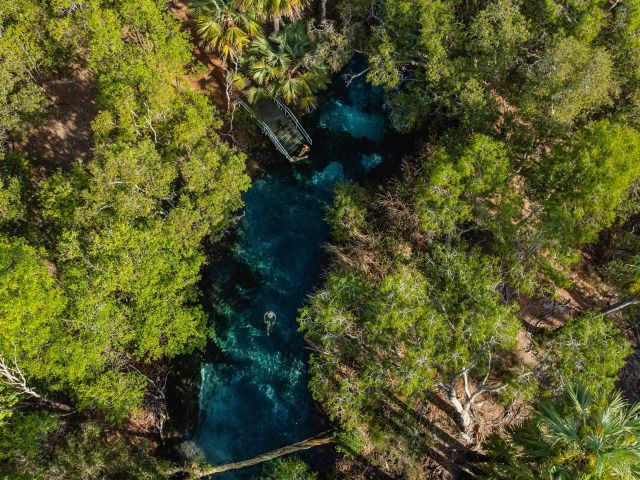
It’s late in the April to September hiking season so, after a few hours walking in 34°C temperatures, sliding into the cool, calm waters of the Finke River – the first of many wild-swimming opportunities – is the respite everyone has been waiting for.
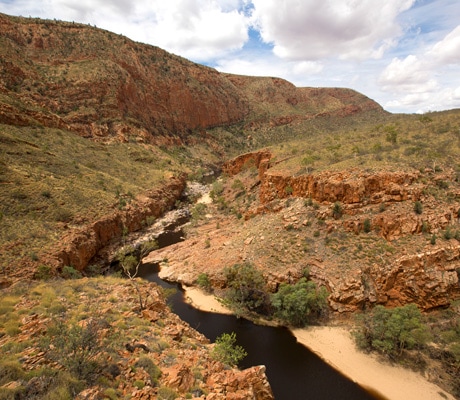
Ormiston Gorge, Northern Territory
Arriving at Ormiston Gorge at the start of the Larapinta Trail.

Later, at basecamp, with our bellies full after three delicious courses, I fight heavy eyelids, trying to stay awake to watch just a little more of the star-heavy sky as it presses down on me. Just one more satellite; one more shooting star. Fortunately, I still have five nights in the swag to take it all in.

Day 2 – Serpentine Gorge to Serpentine Chalet (section 8)

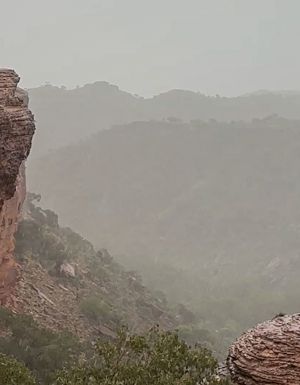
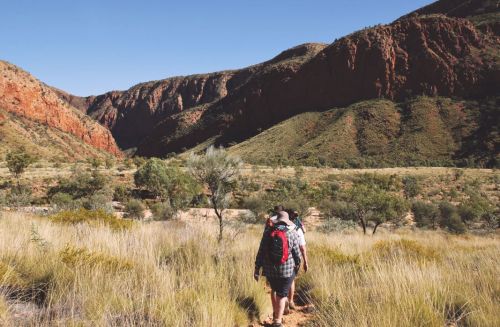
With three litres of water in our daypacks, we hit the trail before 8 am for the first real ascent (350 metres) up to the Heavytree Range. This is my type of hiking: skimming along broken, rocky ridgelines with 360-degree views that zigzag until we reach Counts Point lookout; the perfect little lunch spot. Here, our guide interlaces geological stories about how the landscape came to be with those of its traditional owners, the Arrernte people. Somehow, from up here, it all makes sense.
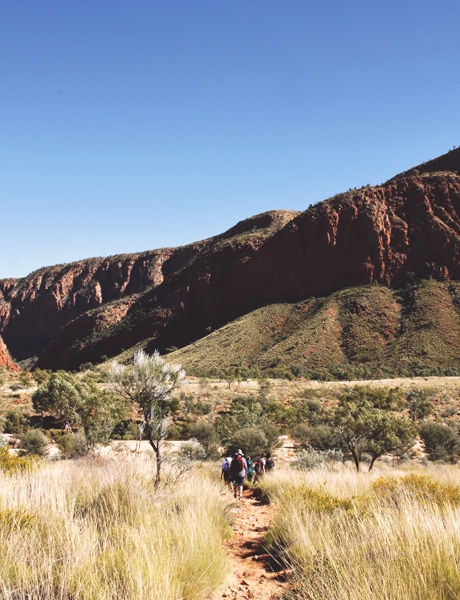
Larapinta Trail, Northern Territory
Hiking the Larapinta Trail.

We finish up at one of the chillier swimming holes. Brisk, but not bracing, the now-familiar ochre cliffs keep the setting sun at bay.

Day 3 – Serpentine Chalet Dam to Inarlanga Pass and the Ochre Pits (section 9)

Conscious of the pre-dawn wakeup call tomorrow, we spend a gentle morning walking to Inarlanga Pass, learning about the ceremonial site’s significance along the way. A mildly technical (and fun) rock scramble leads us through a high-walled, open-sky tunnel, birthing us out into the vast channel between two ridges of the Tjoritja/West MacDonnell Ranges National Park. We return along the Arrernte Walking Track and a trailhead at the Ochre Pits, with its earthy rainbow-stained walls evidence of the site’s 40,000-year-old history.


By now, we’re used to having a post-walk swim and today delivers a chilly dip in the reed-edged waters of Glen Helen Gorge. Not content with simply an aquatic refreshment, we stop in at Glen Helen Homestead for the classic outback pub (and grub) experience (the works burger and a cold beer hits the spot).
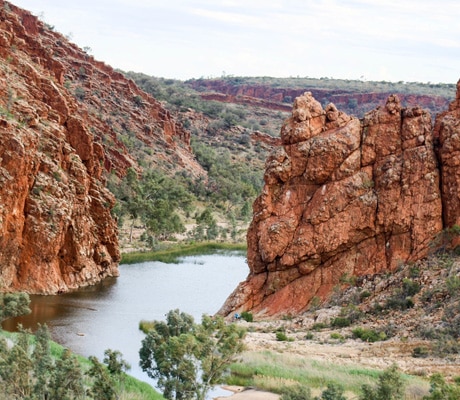
Glen Helen Gorge, Northern Territory
Today delivers a chilly dip in the reed-edged waters of Glen Helen Gorge.

Day 4 – Mount Sonder Sunrise

We’ve been ambling along towards Mount Sonder (the western end of the Larapinta) for the past four days, listening to the Arrernte stories of how she is a reclining pregnant woman, and today is our moment to finally meet her. With fresh batteries in our head torches, beanies on and jackets zipped to brave the surprisingly strong cold wind, we start the 8-kilometre, 680-metre ascent at 2.45 am. We make the summit just in time to see the boiling red sun start her ascent across the Territory sky. Only after turning my back do I see my favourite view of the entire trip: the bold dawn light has cast Sonder’s feminine shadow across the plains below.
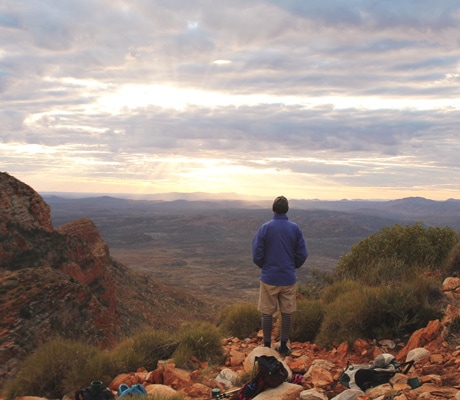
Mount Sonder summit
The summit of Mount Sonder at sunrise is a highlight of the Larapinta Trail.

Day 5 – Ormiston Gorge and The Pound Walk

Not strictly part of the Larapinta Trail, the seven-kilometre (3-4 hour) Ormiston Pound circuit walk is one of the best day walks of the West MacDonnell Ranges. Refreshed after yesterday’s lazy afternoon, we set off in an anti-clockwise circuit. Upon summiting the lookout, I ponder the pound’s bowl-like structure and notice the harsh, vibrant colours of the desert mixed in with the soft pastel mauves of an Albert Namitjira painting. The circuit ends by leading you through (yes, through) the chilly waters of Ormiston Gorge and back to the hubbub of the campground and kiosk.
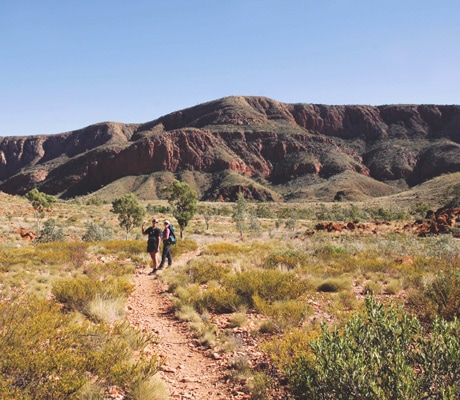
Ormiston Pound, Larapinta Trail
The Ormiston Pound circuit walk is one of the best day walks of the West MacDonnell Ranges.

Day 6 – Drive to Alice Springs via Ellery Creek Waterhole

The end of the trip and my Everest pile of washing is sadly not too far away. It’s just under a two-hour drive back to Alice Springs, but we’re not leaving without stopping for a final dip. The popular Ellery Creek Big Hole (waterhole) provides my final wild baptism, inspiring me to return one day to walk the full length of the epic Larapinta.
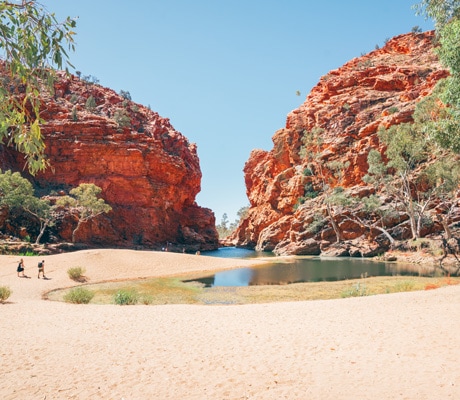
Ellery Creek Big Hole, Northern Territory
Be sure to stop for a final dip at the popular Ellery Creek Big Hole.

Details

Getting there: Virgin Australia flies to Alice Springs from Adelaide, Darwin and Brisbane, while Qantas flies direct from Darwin, Uluru, Sydney, Adelaide, Melbourne and Perth.

Staying there: You can bush camp along the full length of the Larapinta Trail at 29 designated campsites . All trailheads have a water supply and some have free gas BBQs.

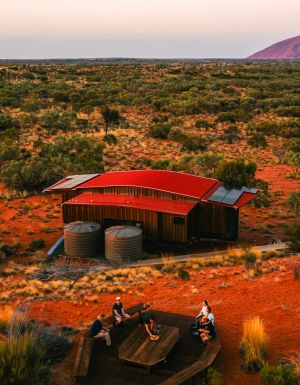
Several tour companies provide semi-permanent base camps as part of their itineraries. Check out Trek Larapinta , World Expeditions, Walking Country and Epicurious Travel .
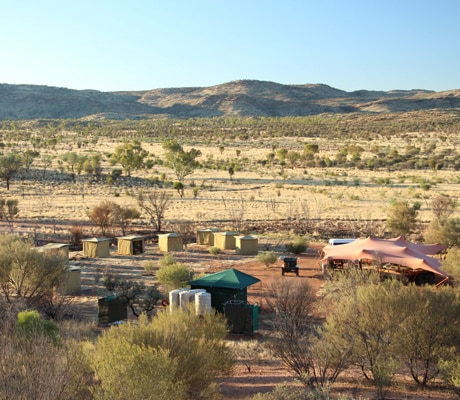
World Expeditions
The Larapinta Trail camp with World Expeditions.

Eating there: Independent trekkers must bring all their own supplies, with food drops and logistics available. Fully guided tours provide all meals and snacks.

Hiking there: End-to-end trekking along the Larapinta Trail is for fit, experienced and well-equipped hikers only. If in doubt, go with a licensed tour operator for a shorter guided journey. The best time to go is during winter; be prepared for day temperatures in the mid-30s and cool nights of around 5°C. The trails consist of uneven, sharp and broken rocks that are unforgiving on shoes. Good hiking boots with quality soles are essential.

Always, always carry plenty of drinking water.

For more information read our outback survival guide and this Larapinta Trail safety information sheet .
Caro Ryan
Writer, producer, director, podcaster and search & rescue volunteer, Caro is driven by connecting people to wild places in meaningful ways. A passionate hiker, she’s all about teaching folk to look after themselves and their mates, inspiring them to protect the precious places we visit.
See all articles
hero media

Red earth, light shows and ancient culture: discover the ultimate NT road trip

(Credit: Tourism & Events NT/ Ben Savage)

    Kassia ByrnesBy Kassia Byrnes
    The Northern Territory is made for road trips, and this one hits all the highlights.

    Craggy mountain ranges, inviting waterholes, ochre soil: the landscape of the Northern Territory is asking to be explored by road and foot. There are many iconic road trips to choose from here, but none so all-encompassing than the roughly 3000 kilometres of sealed road that make up Explorer’s Way.

    Spend 14 days (or more, to really make the most of it) driving this route from Adelaide, hitting the NT near the small settlement of Kulgera before later finishing in Darwin. Along the way, you’ll find nearly all the territory’s most iconic sights.

    Discover some of the top highlights that make Explorer’s Way one of Australia’s most incredible road trips.

    1. Alice Springs

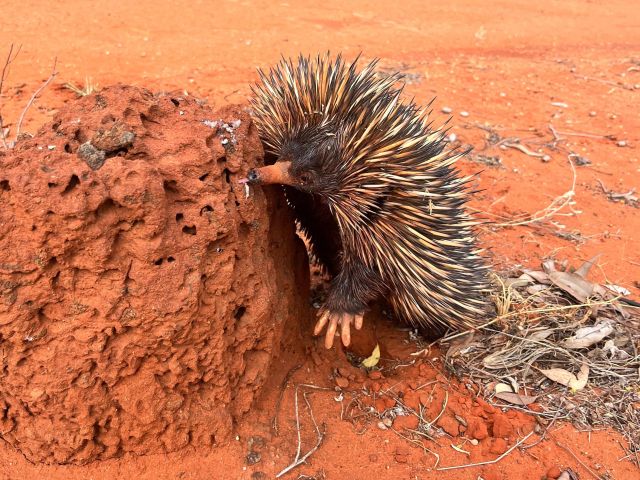
    echidna at Alice Springs Desert Park
    See the locals at Alice Springs Desert Park. (Credit: Tourism & Events NT)

    Recently hitting the big screen again with the story of The Kanagroo Sanctuary , there’s a lot to surprise you in Alice Springs.

    Three distinct desert habitats – desert rivers, sand country and woodland – are recreated over 1300 hectares at Alice Springs Desert Park . Time your visit for a presentation or a free bird show.

    Later, turn your attention to the skies above, taking a dive into local astronomy at Earth Sanctuary . You’ll find a range of experiences, from a 90-minute toe-dip into the stars through to an overnight adventure.

    Alice Springs packs a surprising punch with its tasty dining options, including pub grub and unique brews at Alice Springs Brewing Co , tapas and pizza at Epilogue Lounge and tasty cafe fare at the quirky Page 27 .

    2. Tjoritja/West MacDonnell National Park

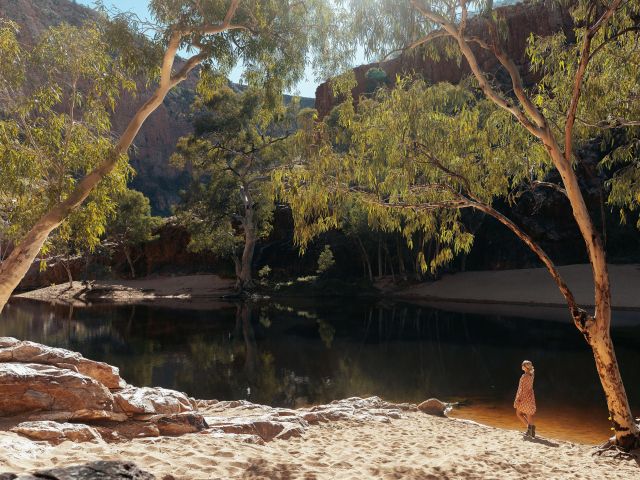
    woman standing at Ormiston Gorge
    Dive into Ormiston Gorge. (Credit: Tourism & Events NT/ Dom and Jesso)

    Beginning 15 minutes from Alice Springs and stretching across 161 kilometres, Tjoritja/West MacDonnell National Park is packed with striking ancient landscapes and inviting water holes.

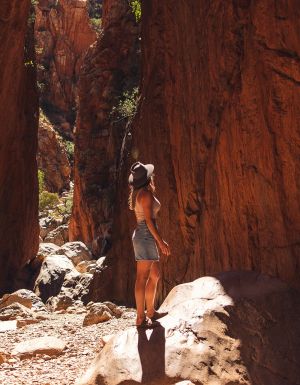
    Visit Standley Chasm – traditionally known as Angkerle Atwatye, meaning ‘Gap of Water’ – to take in its bold red and orange hues, and to observe the diverse bird species, lizards and wallabies that call it home.

    Cool off in one of several picturesque natural swimming holes, like Ellery Creek Big Hole and Ormiston Gorge.

    3. Uluru & Kata Tjuta

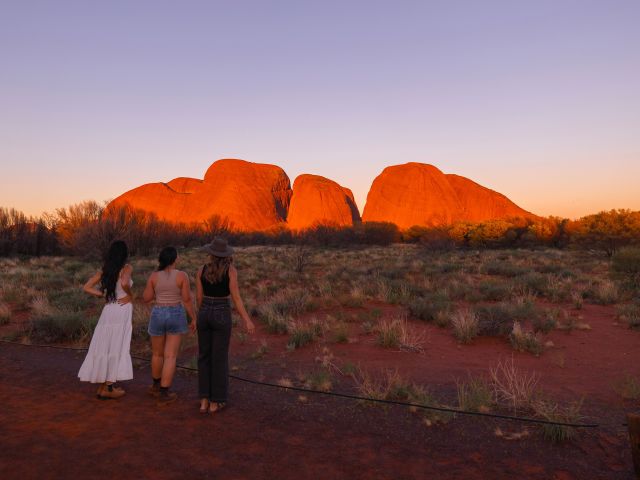
    three women looking at Kata Tjuta at sunset
    Explore Kata Tjuta. (Credit: Tourism & Events NT)

    Visiting the Cultural Heart of Australia is something everybody should experience. There are so many side trips in the Red Centre you could easily spend a week here, but to get the most out of a short time, park the car then get out on foot.

    Take the 10-kilometre Base Walk around the entirety of Uluru or join a free, ranger-guided Mala Walk along part of the base, learning about Tjukurpa (creation stories) and geology as you go.

    For a change of pace, wait until nightfall and wander through the iconic Field of Light display by celebrated artist Bruce Munro, or see the Wintjiri Wiru lightshow that shares the ancient Mala story using drones, lasers and projections.

    4. Tennant Creek

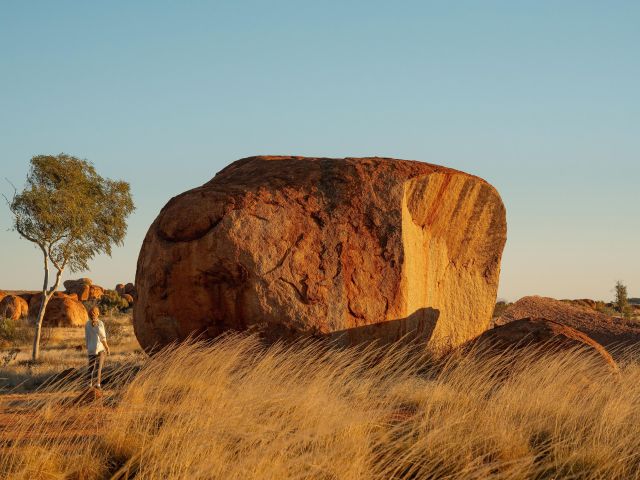
    pson looking at Karlu Karlu (Devils Marbles) northern territory
    See the ancient granite boulders of Karlu Karlu (Devils Marbles). (Credit: Tourism & Events NT/ Dom And Jesso)

    Tennant Creek was Australia’s third-largest gold mining town in the 1930s, and visitors can discover that history at Battery Hill Mining Centre – and even try their own hand at gold fossicking.

    For a completely different side of history, pop into Nyinkka Nyunyu Art & Culture Centre , which preserves and shares Warumungu culture through art, performance, a museum and more.

    Just outside town, find the ancient granite boulders of Karlu Karlu (Devils Marbles). A site integral to important stories held by the Warumungu, Kaytetye, Warlpiri and Alyawarra peoples, the boulders appear to almost have dropped out of the sky and seemingly continue to defy gravity.

    5. Mataranka

    aerial of people swimming in bitter springs northern territory
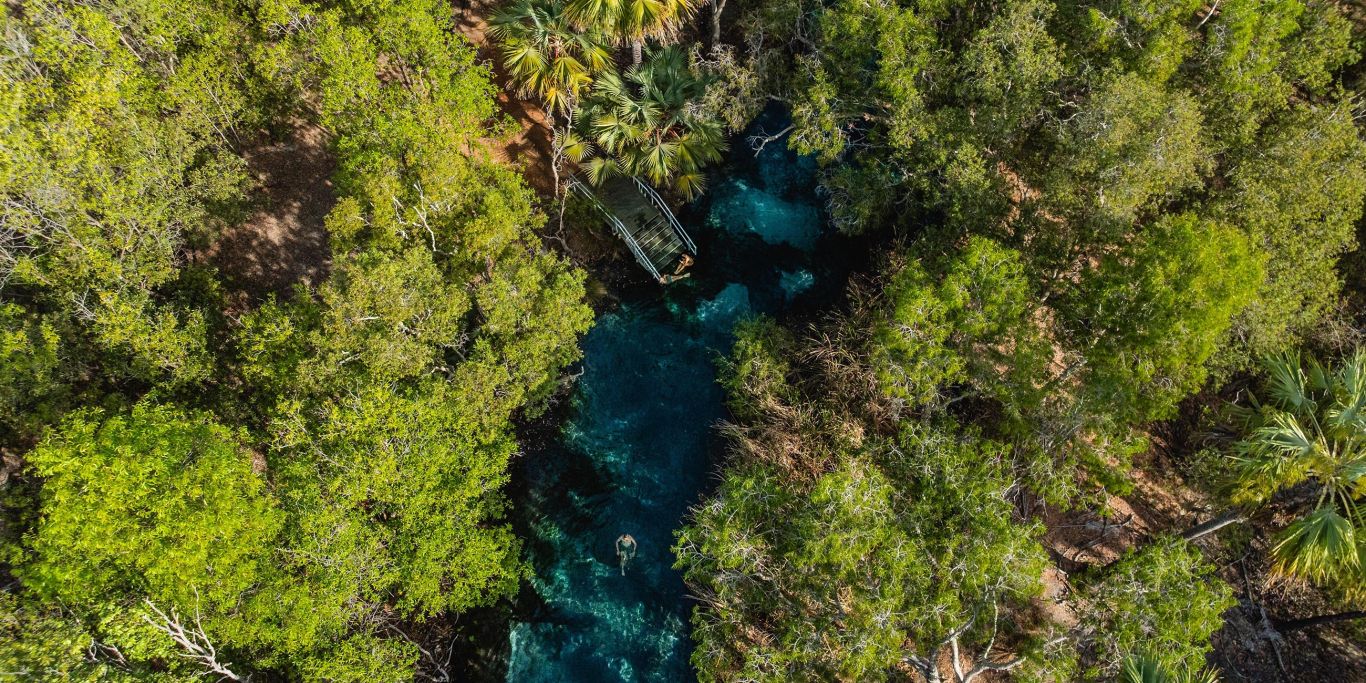
    Dive into Bitter Springs. (Credit: Tourism & Events NT/ Ben Savage)

    A town made famous by the novel We of the Never Never by Jeannie Gunn (and a movie of the same name), Mataranka is also known for its sandy-bottomed thermal pool, Bitter Springs , within Elsey National Park. Follow a 500-metre loop track around these spring-fed pools that stay a toasty 34°C year-round, before choosing your favourite spot to dive into. Enjoy the local birdlife while you relax.

    Elsewhere in the park, find historical sites, several scenic walks and Roper River, which is perfect for boating and fishing.

    6. Nitmiluk National Park

    Nabilil Dreaming Sunset Dinner Cruise
    Join a sunset cruise with Nabilil Dreaming. (Credit: Tourism & Events NT/ Lachlan Gardiner)

    Nitmiluk National Park is sandstone country, with 13 stunning gorges and plenty of waterfalls waiting to be explored.

    One of the most beautiful spots can be found along the 62-kilometre Jatbula Trail, a five-to-six day bushwalk that follows an ancient Jawoyn songline from Nitmiluk Gorge to Leliyn (Edith Falls). Numbers are restricted and book out quickly, so be sure to plan well ahead. Not up for the hike? Drive right up to the falls and enjoy a dip without the challenge.

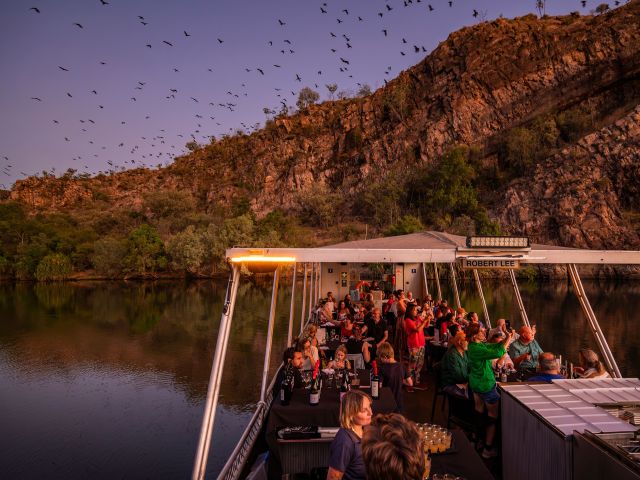
    Elsewhere, explore Nitmiluk (Katherine) Gorge. Paddle a kayak through the river running through the canyon, or save your energy on a Nabilil Dreaming Sunset Dinner Cruise , discovering the stories and ways of the Jawoyn people while enjoying a candlelit dinner as the cliffs around you shift colour and glow with the changing daylight.

    Continue your cultural journey at local art centres like Godinymayin Yijard Rivers Art & Culture Centre or Mimi Aboriginal Art & Craft .

    7. Litchfield National Park

    cathedral termite mounds in Litchfield national park
    Be awed by giant cathedral termite mounds. (Credit: Tourism & Events NT/ As We Wander)

    Just over an hour’s drive from Darwin lies the beautiful Litchfield National Park. It’s famous for stunning waterfalls and swimming holes, including Buley Rockhole, Wangi Falls, Florence Falls and Tjaynera Falls.

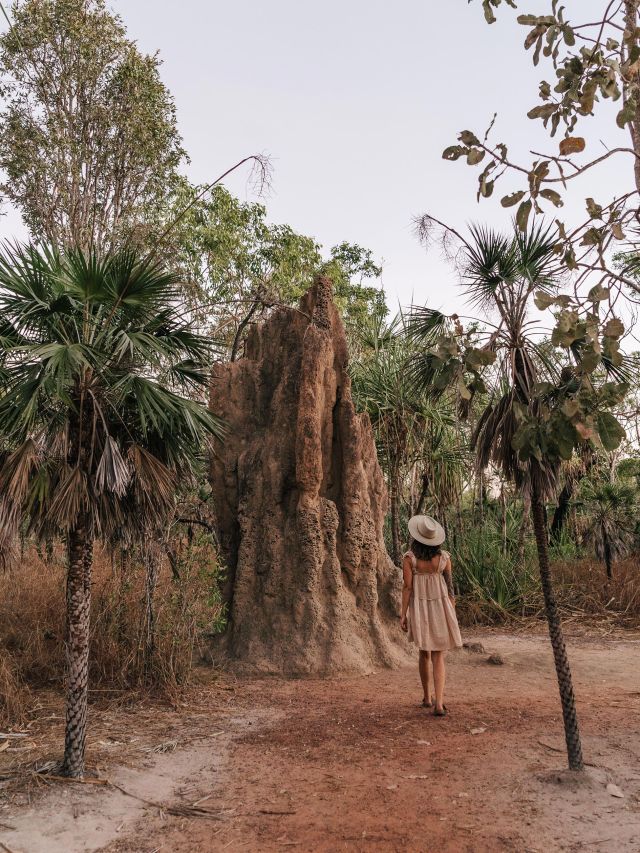
    Here you’ll also find hundreds of giant – and magnetic – cathedral termite mounds that are truly a sight to see. Ageing up to 100 years old, you won’t find mounds like these outside the northern parts of Australia. Stroll along the accessible boardwalk to see them up close.

    8. Darwin

    darwin street art
    Darwin art is streets ahead. (Credit: Tourism & Events NT/ Mark Fitzpatrick)

    This list wouldn’t be complete without the territory’s capital city: Darwin. Situate yourself upon arrival with a stroll through the main streets, admiring the many art murals by local, interstate and international artists. They’re all remnants of the annual Darwin Street Art Festival , one of Australia’s longest running street art festivals.

    Stop to recharge along Darwin’s Waterfront Precinct , an area of delectable restaurants, public swimming pools and free events. And, of course, it would be wrong to leave the city without enjoying a bowl of laksa at Mindil Beach Sunset Market as the sun goes down.

    Learn more and start planning your Explorer’s Way road trip at northernterritory.com/drive.