Uluṟu’s new Lodge Walk trims the kilometres, skips the camping and opens up one of Australia’s most powerful walking experiences to more travellers.
The Tasmanian Walking Company is gearing up to launch the Uluṟu-Kata Tjuṯa Signature Walk in April 2026, but it has now also announced a shorter, lodge-based alternative designed for travellers with less time, less walking experience and zero interest in camping.
The new Uluṟu-Kata Tjuṯa Lodge Walk is a modified 34-kilometre version of the 54-kilometre Uluṟu-Kata Tjuṯa Signature Walk tailored for people who want to experience the desert’s magic on foot without a tent.
Only one departure per month from June until September is on the calendar for this launch season, with plans to expand if it proves a hit with travellers.
All the highlights, less distance
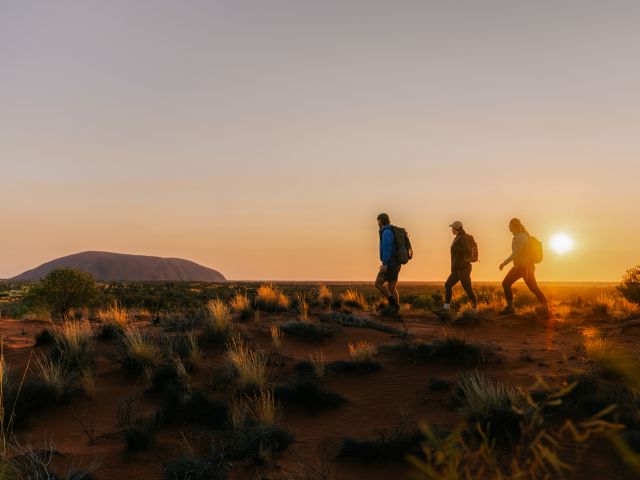
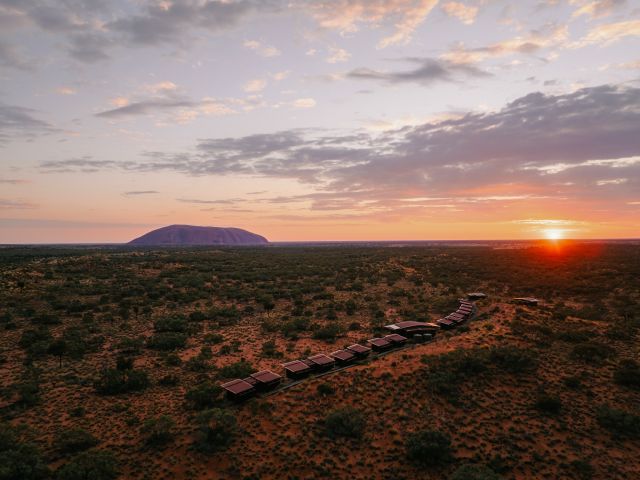
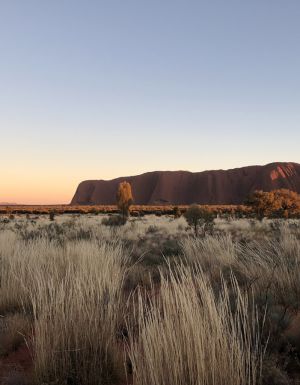
The new Uluṟu-Kata Tjuṯa Lodge Walk is a modified version of the Uluṟu-Kata Tjuṯa Signature Walk. (Image: Michael Peters)
Instead of five days of walking and two nights camping, this new itinerary focuses on shorter, high-impact walks through Uluṟu-Kata Tjuṯa National Park that showcase the Red Centre’s most iconic landscapes.
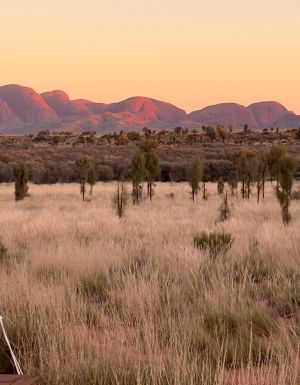
Walkers experience Uluṟu’s base, explore sections of the Valley of the Winds, and stand on sandstone ridges overlooking Kata Tjuṯa, guided by experts sharing stories of Country and culture along the way.
Daily distances are reduced, and the pace is intentionally gentler, leaving time to rest, reflect and absorb the scale of the landscape without rushing.
Need tips, more detail or itinerary ideas tailored to you? Ask AT.
AI Prompt
Comfort takes centre stage
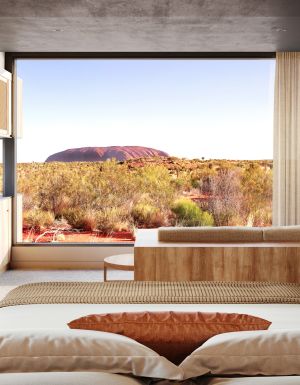
Sleep in a real bed. (Image: Michael Peters)
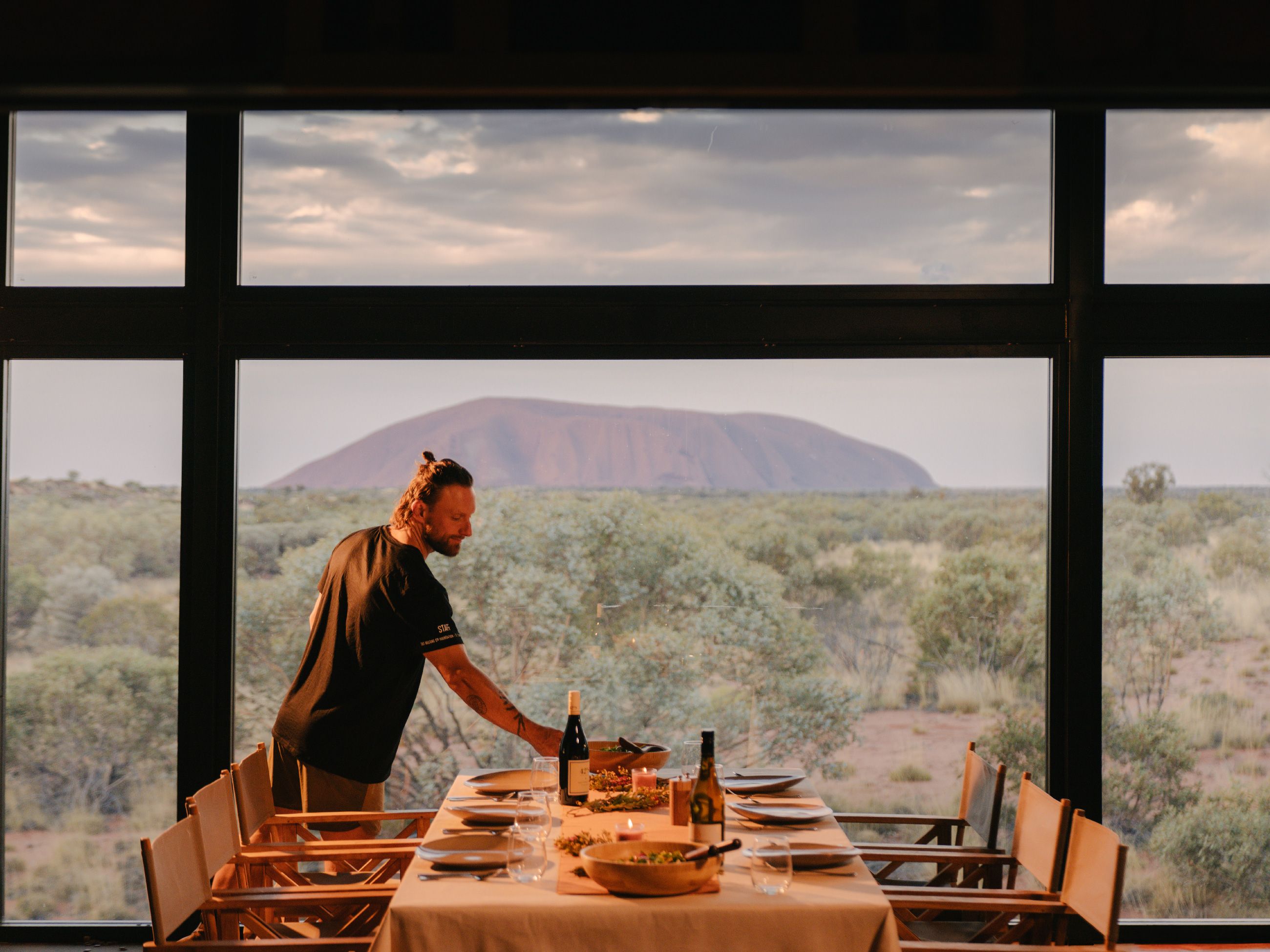
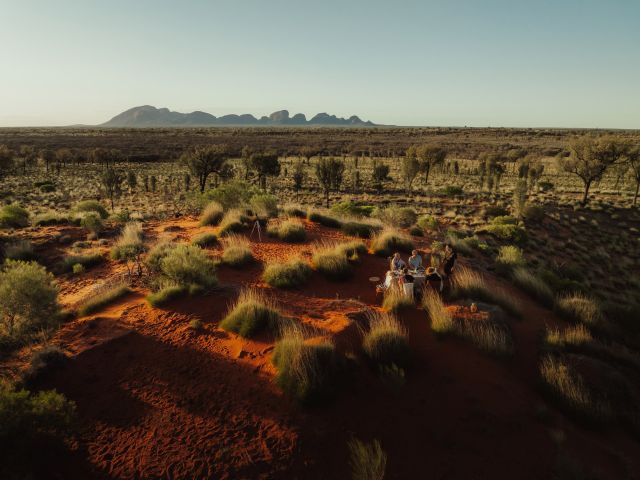
Enjoy dinner with a view. (Image: Michael Peters)
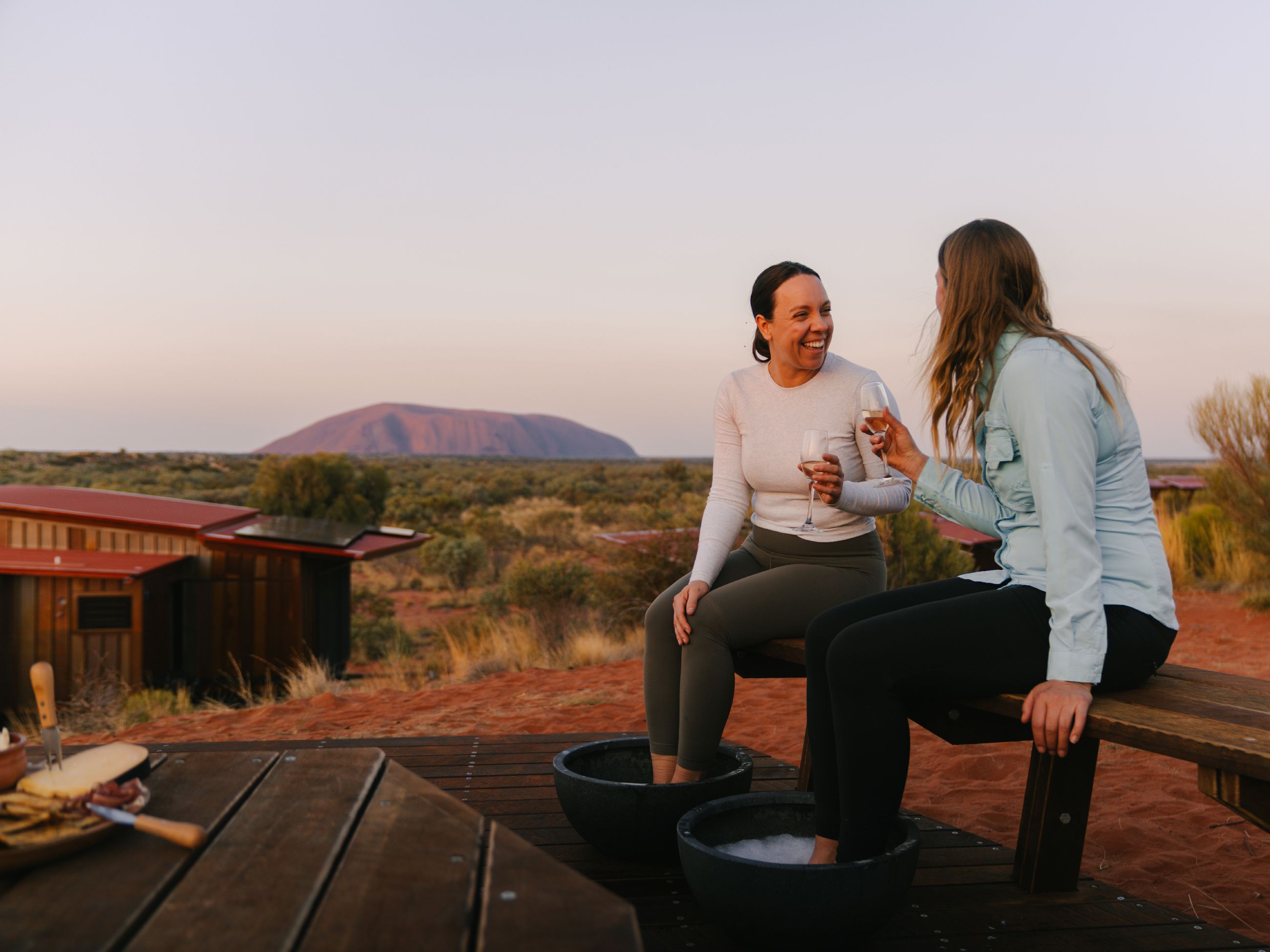
Pamper yourself after a big day. (Image: Michael Peters)
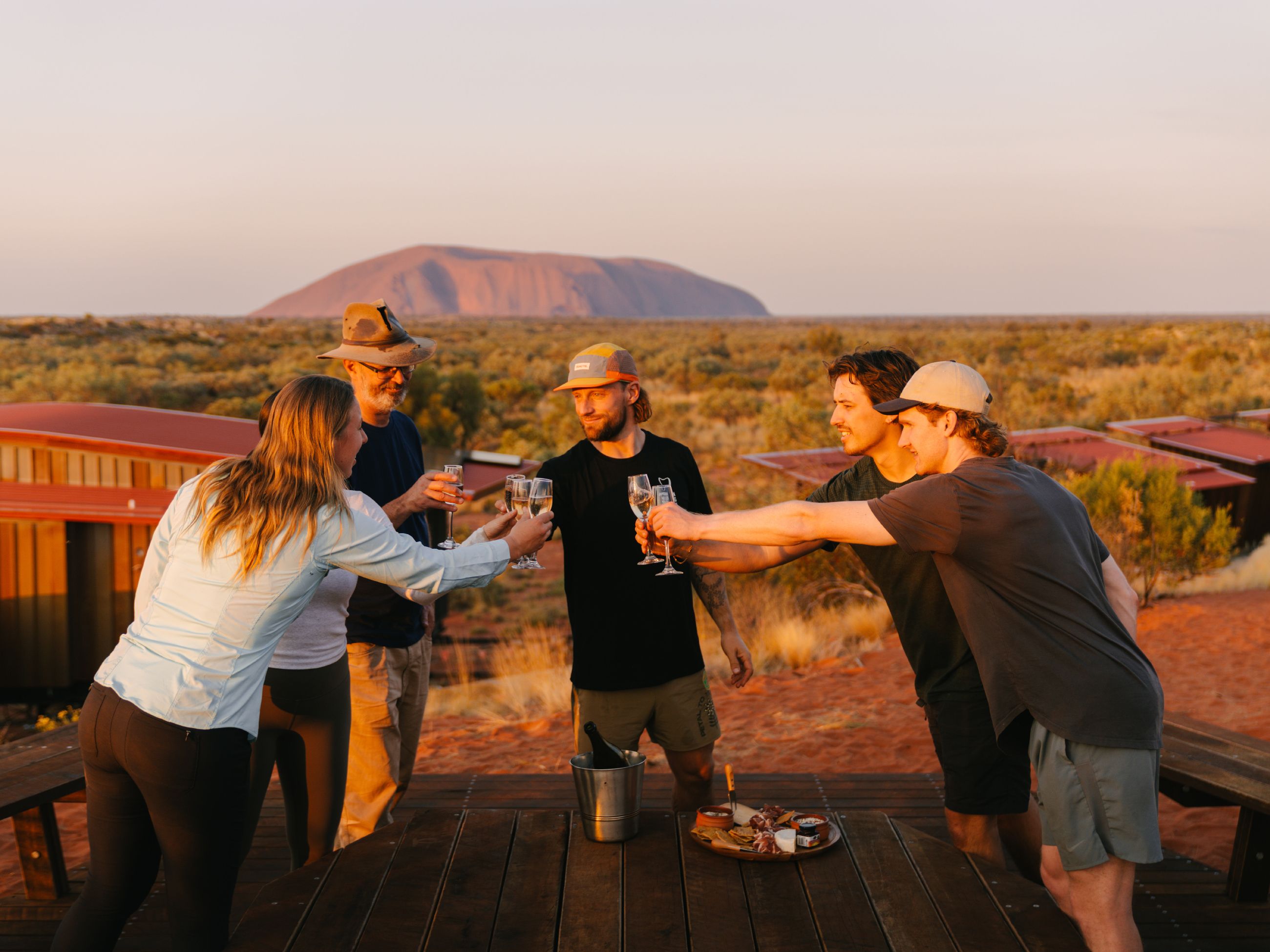
Socialise with the other walkers. (Image: Michael Peters)
The biggest difference from the Signature Walk is where you rest after a day on Country.
Instead of camping under canvas, guests on the Uluṟu-Kata Tjuṯa Lodge Walk spend the first night atDesert Gardens Hotel in Yulara, followed by two nights at theUluṟu-Kata Tjuṯa Lodge– a comfortable outback base inside the national park.
On the Uluṟu-Kata Tjuṯa Signature Walk, guests will spend two nights at private exclusive campsites and two nights at the lodge.
The lodge was developed in close collaboration with Aṉangu Traditional Owners and Parks Australia. It offers generous rooms, sweeping desert views and easy access to walking start points, with sundowners and shared meals replacing campfire chores.
The itinerary also includes a cultural opening on the first night with the Wintjiri Wiṟu Sunset Dinner, combining Indigenous storytelling, light and contemporary cuisine to introduce the ancient Aṉangu stories that define this landscape.
Why it matters
Lodge accommodation makes the walk more accessible. (Image: Michael Peters)
This new lodge-based version opens the outback walk to people who may never have considered a multi-day trek before.
For time-pressed travellers, photography lovers, people new to hiking, or anyone who wants the experience of walking on Country without hauling gear or sleeping in a tent, the Uluṟu-Kata Tjuṯa Lodge Walk offers a compelling new way to explore Australia’s spiritual heart.
Weekly travel news, experiences insider tips, offers, and more.
Details
The walk is designed for travellers with less time, less walking experience and zero interest in camping. (Image: Michael Peters)
Price: From $3995 per person, twin share (compared with $5395 for the five-day Signature Walk).
Day 1: Wintjiri Wiṟu Sunset Dinner and overnight at Desert Gardens. Day 2: Uluṟu Base Walk with optional Gorge walk (10.7km). Overnight at Uluru-Kata Tjuta Lodge. Day 3: Camp to Camp walk (16.5 km). Overnight at Uluru-Kata Tjuta Lodge. Day 4: Karingana Lookout at Valley of the Winds Walk (5.4km).
Departures are limited this year, so early booking is recommended.
Uluṟu’s most powerful walk, without the camping. Shorter distances, lodge stays, and big Red Centre moments make the new Uluṟu-Kata Tjuṯa Lodge Walk one of Australia’s most accessible multi-day hikes yet.
Want to see more stories from Australian Traveller in your Google search results?
Tick the box next to "Australian Traveller". That's it.
Emily Murphy is Australian Traveller's Email & Social Editor, and in her 4+ years at the company she has been instrumental in shaping its social media and email presence, and crafting compelling narratives that inspire others to explore Australia's vast landscapes. Her previous role was a journalist at Prime Creative Media and before that she was freelancing in publishing, content creation and digital marketing. When she's not creating scroll-stopping travel content, Em is a devoted 'bun mum' and enjoys spending her spare time by the sea, reading, binge-watching a good TV show and exploring Sydney's vibrant dining scene. Next on her Aussie travel wish list? South Australia and The Kimberley.
Summer transforms the Northern Territory into a lush paradise of colour and life, as a visit during the ‘low-season’ reveals secrets the locals willingly share.
Waterlilies bloom, floodplains are alive with birdlife, waterfalls are gushing, and everywhere the green is dazzling. Summer in the Top End and the Red Centre is a kaleidoscope of unexpected wonders that delight and surprise visitors. Of course, the locals know only too well that the Northern Territory low season is often the best time to see and experience this amazing part of Australia.
Here are some of the reasons why savvy travellers – avoiding the crowds – are discovering a new dimension to the Territory. Remember that you’ll need a Parks Pass to visit national parks.
Uluṟu’s most powerful walk, without the camping. Shorter distances, lodge stays, and big Red Centre moments make the new Uluṟu-Kata Tjuṯa Lodge Walk one of Australia’s most accessible multi-day hikes yet.
1. Take a dip in the Florence Falls waterhole
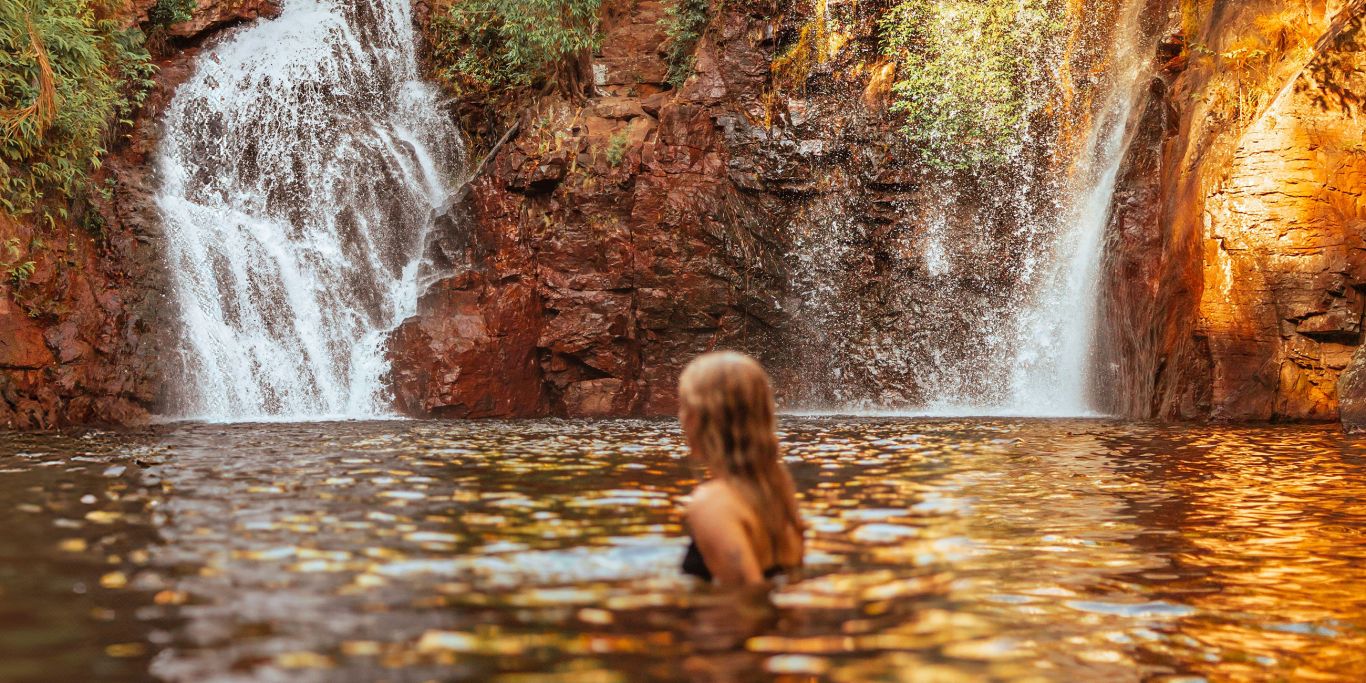
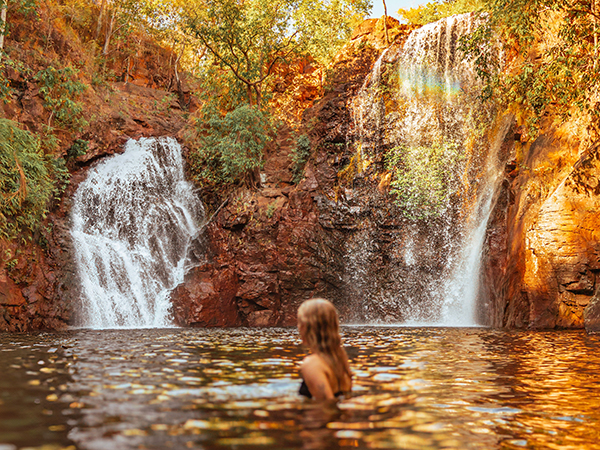
Wander through savanna woodland and monsoon forest to discover the perfect place to cool off – the waterhole at the base of spectacular Florence Falls in the magnificent Litchfield National Park, just 90 minutes’ drive from Darwin. The falls flow year-round but are most spectacular during the summer. Camping is available nearby but bookings are essential and must be made online before you visit.
Cool off beneath the cascading waters of Florence Falls. (Image: Joshua Griffin)
2. Wind down at Buley Rock Hole
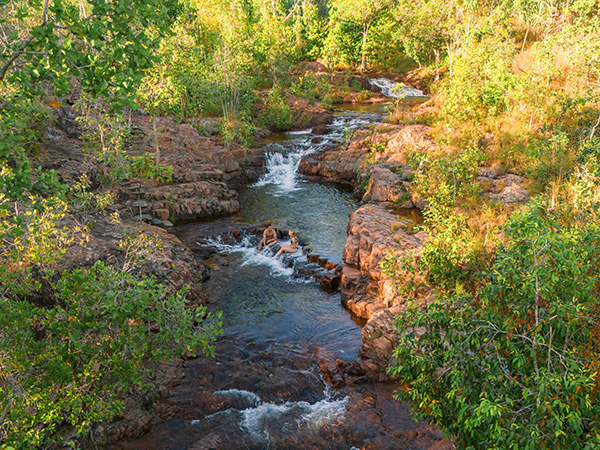
Another popular local swimming spot in Litchfield National Park is Buley Rock Hole, open year-round. This is a great place to wind down after exploring everything the park has to offer, including towering termite mounds. Wade through the rock pools, soak up the scenic bush or just lie back and relax as the cool water rolls over you.
Let the cool water wash over you. (Image: Tourism Australia)
3. Tour the Tiwi Islands
The Tiwi Islands, a scenic 80km flight from Darwin across the narrow Clarence and Dundas Straits, reveal a different side to the Territory, with their own distinctive culture. Take a day tour with Tiwi by Design to visit Bathurst Island and learn about creation stories, the Mission days, World War II history and the islanders’ obsession with AFL!
Take a ‘behind-the-scenes’ tour of Tiwi Design’s screen-printing workshop and pick up a great souvenir in the form of art. Choose from contemporary or traditional Tiwi designs and a wide range of work including carvings, paintings, pottery, printmaking, bark paintings and tunga (bark baskets).
Take a peek inside Tiwi Design’s screen-printing studio. (Image: Tourism NT)
4. Dine in Darwin
Foodies are spoilt for choice in multi-cultural Darwin. Try Sri Lankan flavours at Ella by Minoli, where Masterchef contestant Minoli De Silva creates delectable dishes, or head to Charlie’s of Darwin for gin-tasting, cocktails and more. Bowls of fragrant laksa, excellent coffee, fresh vegetables and authentic crafts are all part of a weekend visit to Darwin’s Parap Markets, Rapid Creek Markets and the Nightcliff Markets.
Prefer to catch your own dinner? Book a Top End fishing charter to bag a barramundi – and from October register for the annual Million Dollar Fish competition. Hooking one of the tagged barra released each year in waterways across the Territory could win you up to $1 million.
Eat your way through multicultural Darwin. (Image: Tourism NT)
5. Up close with Uluṟu
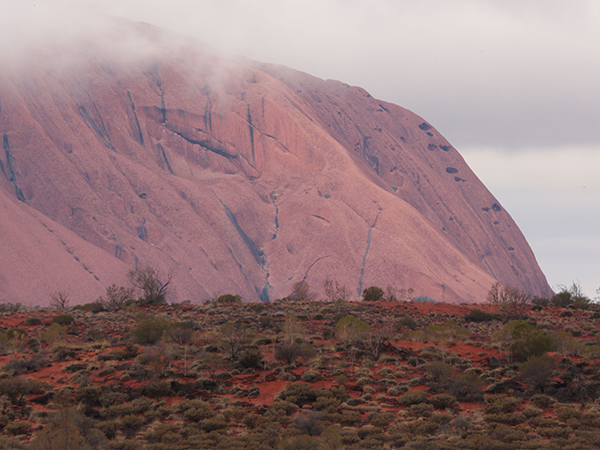
The magnificent monolith Uluṟu is even more magical when the summer rains fall. When it rains on The Rock, the locals come out to watch – consider yourself lucky if that happens when you visit. Waterfalls cascading off the sides of Uluṟu is a sight that relatively few tourists see.
There’s so much to do at Uluṟu, from guided walks to learn the stories of the Aṉangu people and the ancient landscape they live in to scenic flights for a bird’s-eye view or a leisurely walk around the base of Uluṟu. Book ahead to spend the evening wandering through the Field of Light installation by Bruce Munro.
Discover the details that make Uluṟu truly sacred. (Image: Tourism NT)
6. Drive the Red Centre Way
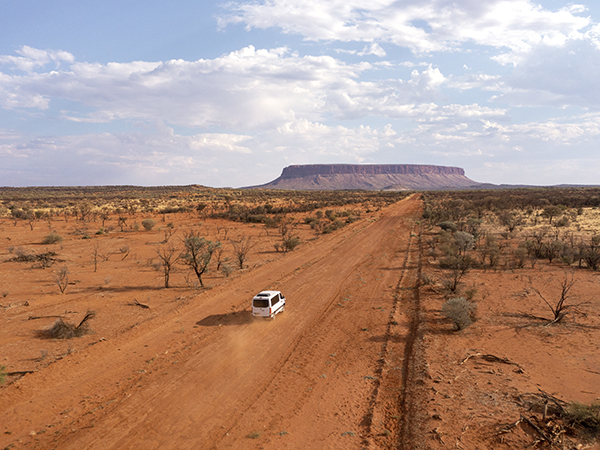
From Alice Springs, take an epic road trip along the Red Centre Way, taking in Uluru and Watarrka National Park, home to the magnificent Kings Canyon. Allow at least a week to drive through the red heart of Australia by 4WD, a little longer on the sealed road by 2WD vehicle, travelling through ochre deserts, palm-lined valleys and dramatic gorges. Stop off at waterholes for a refreshing dip along the way.
Kings Canyon offers hiking options for all levels of fitness, from the three-hour Rim Walk atop soaring sandstone walls to the gentler Kings Creek Walk. Either way, you’ll have breathtaking views.
Drive through Australia’s heart. (Image: Outback Australia Tours)
7. Take a walk at Kata Tjuṯa
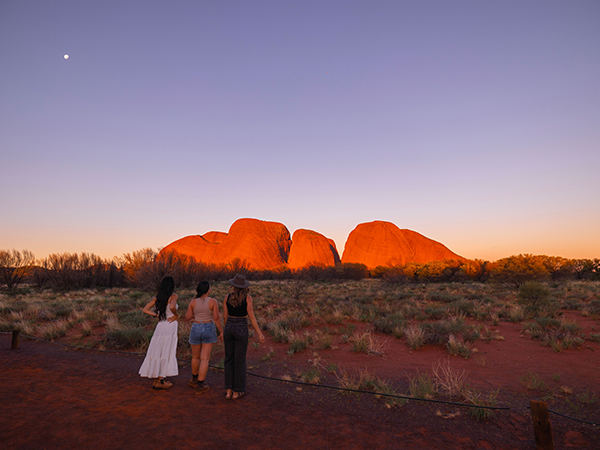
Head out early to tackle the Valley of the Winds Walk at Kata Tjuṯa. This natural wonder, also known as The Olgas, is a labyrinth of soaring ochre domes that glow golden at sunrise and sunset (the walk may be closed during the middle of the day as temperatures rise).
Walking trails range from easy to longer, more difficult tracks. At the Kata Tjuṯa dune viewing area, take in the panoramic view of the domes. The longest of the trails is the Valley of the Winds Walk, a 7.4km circuit that winds between the domes and through creek beds. It’s moderately difficult and steep in places, but offers stunning views – and occasional encounters with kangaroos.
Step into the golden light of Kata Tjuṯa. (Image: Tourism NT)
8. Explore Tjoritja/West MacDonnell Ranges
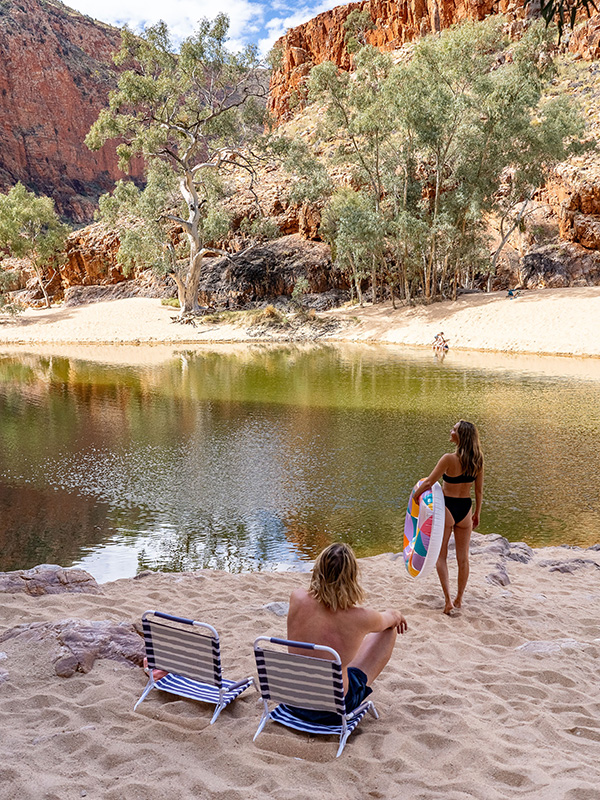
Tjoritja/West MacDonnell National Park lies 135km west of Alice Springs, with many fascinating natural features to beguile visitors. The ‘West Macs’ formations include chasms, gorges and waterholes – take your swimsuit for a dip at Ormiston Gorge waterhole, open year-round. The Ormiston Pound Walk is a three to four-hour circuit that leaves from the visitor centre and loops back along the gorge via the main waterhole. Other places of interest in the park include Simpsons Gap, Standley Chasm, Ellery Creek Big Hole and Glen Helen.
Take the plunge at Ormiston Gorge waterhole. (Image: Joshua Griffin Litchfield)