Glamping in Uluṟu’s glorious shadow at Longitude 131°

hero media
Longitude 131° may be remote, but a stay at this luxury lodge is far from roughing it.

As I approach Longitude 131° , I’m gently spritzed by a cool cloud of mist emitting from the lodge’s entrance. It’s a welcome respite from the all-consuming heat. And it sets the tone for what’s to come – an oasis in the desert that delivers otherworldly comfort in one of the world’s harshest environments. Longitude 131°, part of the Baillie Lodges portfolio, is a luxury wilderness experience like no other. Here’s the rundown.
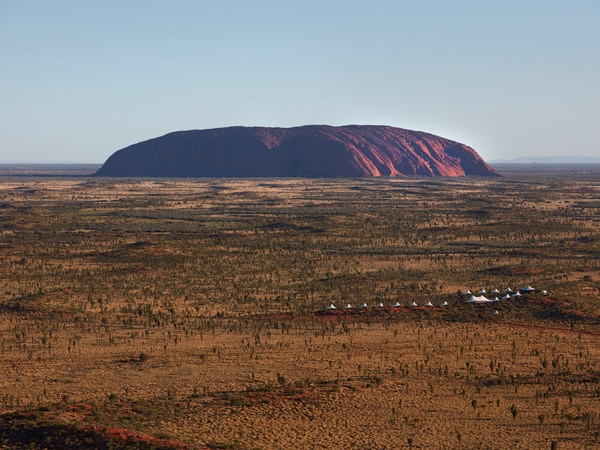
a rocky and rugged landscape in Uluru
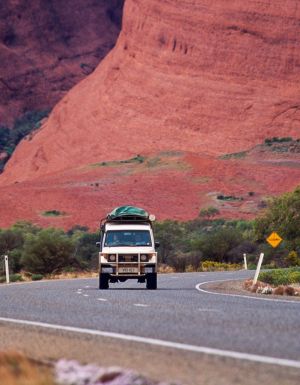
Rugged landscapes surround Longitude 131°. (Image: Tourism NT/George Apostolidis)

First impressions

I’m handed a glass of Champagne at reception and sink into a plush lounge by the window. Outside, a patchwork of red earth billows out before me, extending all the way to the hulking outline of Uluṟu. I’m in the Dune House – the beautifully appointed communal hub of the lodge where guests gather for meals or sundowners. The area is decorated with Indigenous artwork and woven sculptures from the Central Desert, which guests can purchase as a memento of their time here.

dune house at longitude 131
The Dune House is the hub of the lodge. (Image: Ryan Linnegar)

The rooms

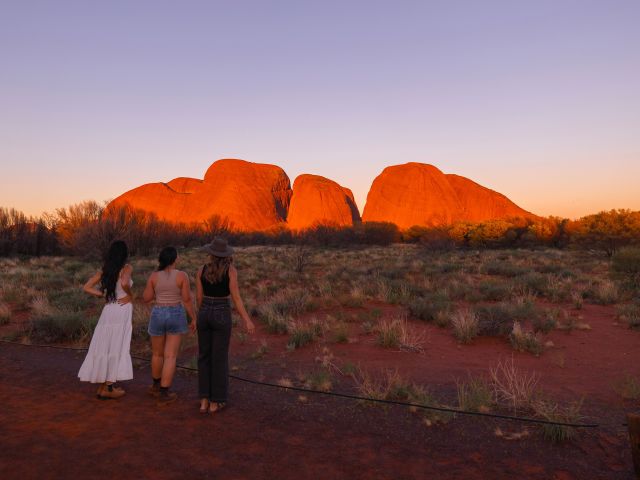
Longitude 131° comprises 15 luxury tents and the ultra-decadent Dune Pavilion, a two-bedroom villa with an expansive deck and its very own private plunge pool. The views are the undeniable headline attraction; each tent showcases a clear, magnificent view of Uluṟu that can be enjoyed from the balcony or the comfort of the plush king bed. The Dune Pavilion has views of both Uluṟu and Kata Tjuṯa – the only accommodation in Australia that takes in vistas of both World Heritage-listed wonders.
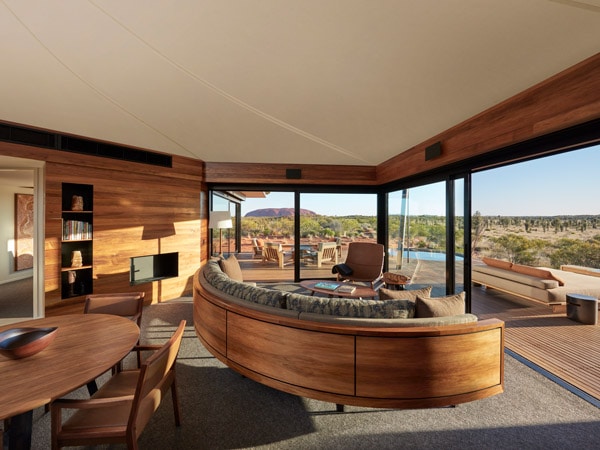
Lounge at Longitude 131 Dune Pavilion
The Dune Pavilion features a lounge area made for a king. (Image: Tourism NT/ George Apostolidis)

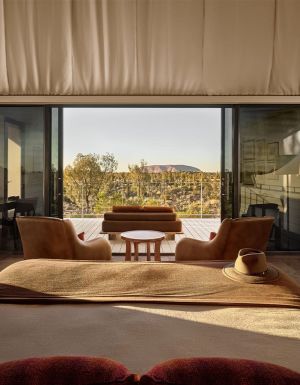
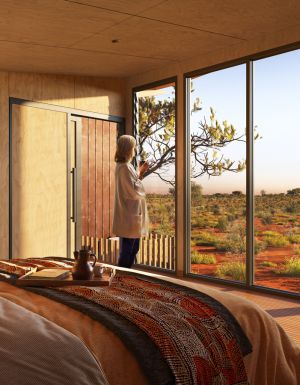
The rooms have undergone a recent refurb, leaving the space feeling refreshed and airy. The safari camp-inspired design and neutral colour palette add a feeling of lightness – a perfect contrast against the parched desert landscapes outside. The room is elegantly appointed and decorated with Indigenous art. Everything one needs for their stay has been thought of in advance: there are fly nets in the cupboard as well as a hiking backpack for guests to use.
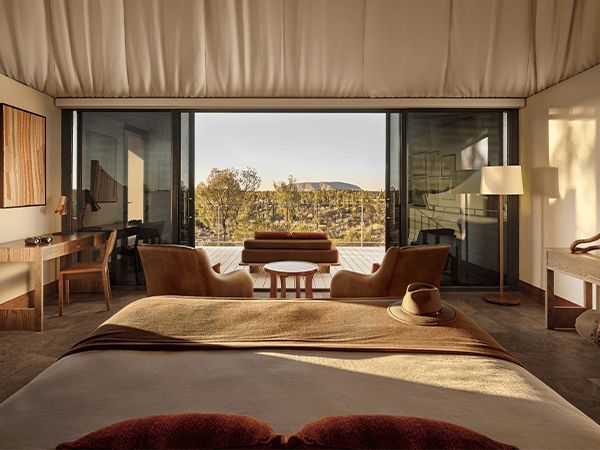
Room interior at Longitude 131
The view from one of 15 exclusive luxury tents. (Image: Ryan Linnegar)

The bar is well-stocked with goodies that are replenished daily. I find an array of Aussie snacks and beverages that make for a delicious charcuterie board to savour on the balcony. The roomy patio consists of a sprawling daybed, lounges, and a gas fireplace to keep you cosy after the sun goes down.
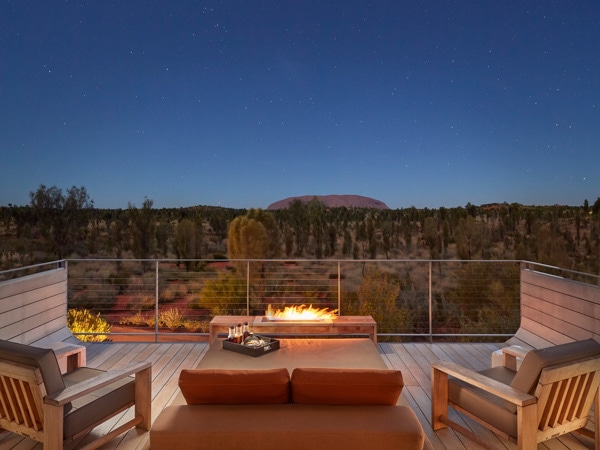
Longitude 131's collection of pavilions provide jaw-dropping views of Uluru and Kata Tjuta. (Image: Tourism NT and George Apostolidis)
Longitude 131°’s collection of pavilions provide jaw-dropping views of Uluṟu and Kata Tjuṯa. (Image: Tourism NT and George Apostolidis)

Food and drink

I didn’t think I’d find some of the best food I’ve ever eaten in one of the most remote parts of the country. But Longitude 131° calls in top-quality produce from across the nation, plating up a taste of Australia’s finest flavours for each meal.

For breakfast, guests can enjoy an a la carte menu with elevated brekkie classics like smoked salmon with potato rosti or sumptuous blueberry pancakes. However, there is a range of pastries to grab and go if you’re rushing to depart on an early morning tour.

Lunch and dinner are three-course fine-dining affairs, served with a recommended wine pairing. Native bush ingredients are often incorporated into the menu, making the dining experience a unique reflection of the place. If you’re feeling something more low key, there are plenty of casual dining options like fish and chips.

food at longitude 131
The food at Longitude 131° is world-class. (Image: Ryan Linnegar)

In the Dune House, there is an extremely well-stocked open bar that contains everything from bush-tucker-inspired green ant gin from the NT to French Champagne. Guests are welcome to make themselves a drink whenever they like. If you fancy yourself a mixologist, there are cocktail shakers and a dizzying range of liquors and garnishes ranging from candied orange peels to native pepper berries. If you’re feeling overwhelmed, the friendly staff are always willing to assist with recommendations.

Dune House Open Bar Longitude 131
Make yourself at home with a well-stocked open bar in the Dune House. (Image: Ryan Linnegar)

Menus change every day, and all food, drinks and alcoholic beverages are included in your stay.

Experiences

Longitude 131°’s Signature Experiences are included with each booking, making for a seamless experience exploring Uluṟu. One the experiences included in my two-night stay was the Mala walk along the base of Uluṟu. A knowledgeable guide explained the unique features of the landscape, the customs of the Aṉangu Traditional Owners and the important Creation stories (or Tjukurpa) tied to Uluṟu. The walk was capped off with canapes and drinks, which we sipped while basking in awe of Uluṟu in the day’s final light.
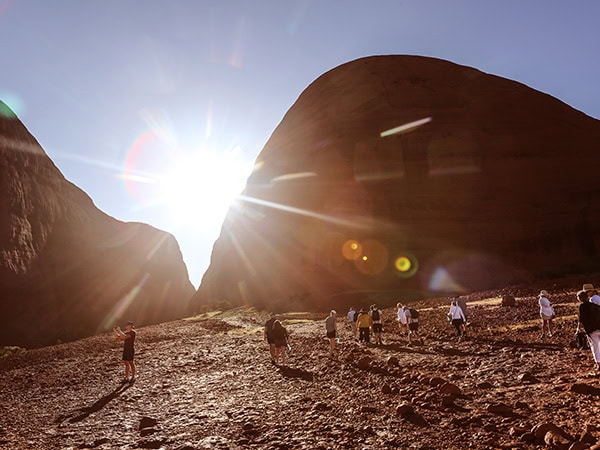
walpa gorge longitude 131 signature experience
Exploring Walpa Gore as part of Longitude 131°’s signature experiences.

However, the most memorable experience was Table 131°, al-fresco dining in a secluded space draped by a glittering blanket of stars. Before dessert, a guide talked us through the constellations, astronomy and mythology of the southern sky. I returned to my tent to find a swag set up on the balcony outside, the fireplace blazing and a tray of Baileys and snacks set out before it. I continued stargazing long into the night.
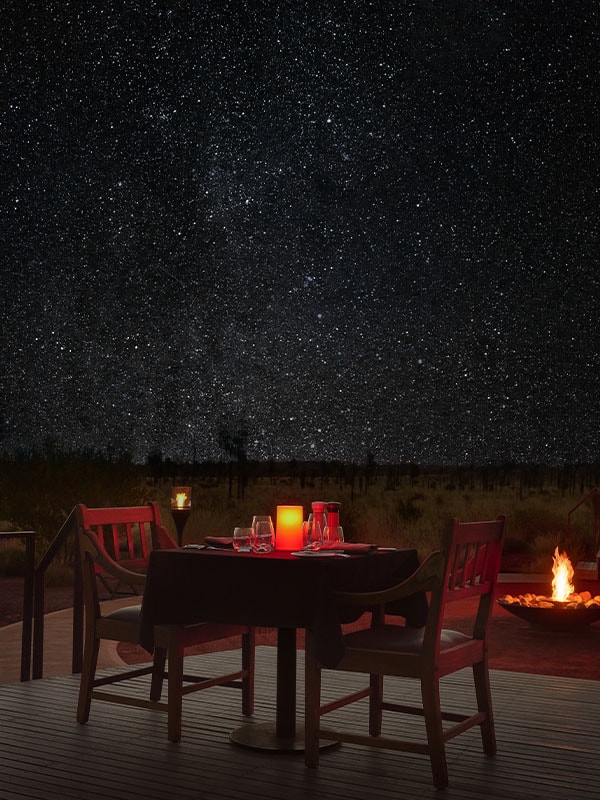
table 131 at longitude131
Enjoy a meal beneath a blanket of stars at Table 131°. (Image: Ryan Linnegar)

Other experiences included Bruce Munro’s Field of Light, a light art installation of mind-boggling scale; A walk through Kata Tjuṯa’s Walpa Gorge; And a sunset viewing of Uluṟu with drinks and canapes.

Facilities

Pool

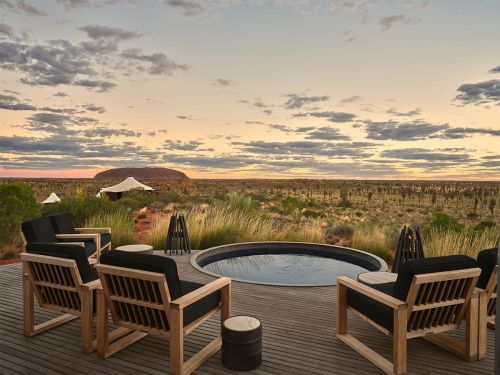
There are two pools at Longitude 131° – a larger pool perfect for swimming, and a plunge pool with incredible views of both Uluṟu and Kata Tjuṯa.
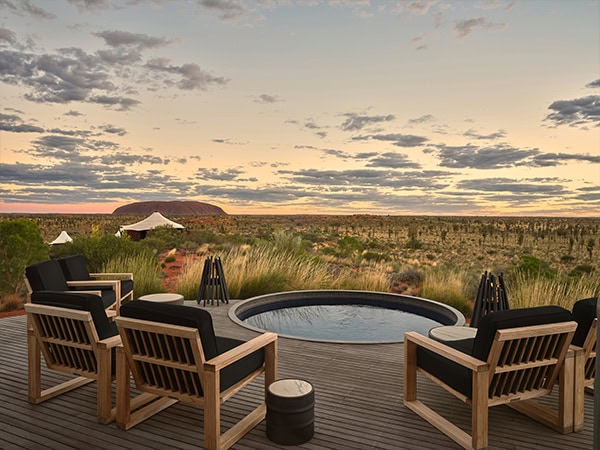
plunge pool longitude 131
The plunge pool looks out to Uluṟu. (Image: Ryan Linnegar)

There are well-stocked mini bars at both pools, meaning guests never have to reach too far to enjoy a tipple.
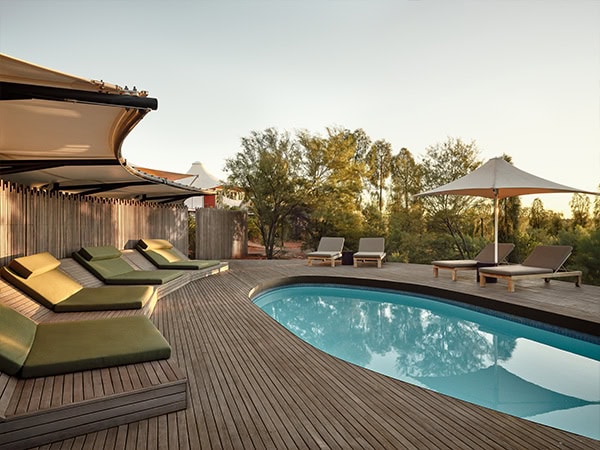
pool at longitude 131
Cool off by the pool. (Image: Ryan Linnegar)

Spa

Spa Kinara (which means ‘moon’) brings a bush medicine twist to traditional therapies. The spa is modelled on the design of the ‘wiltja’, shelters made by the Pitjantjatjara and Yankunytjatjara Traditional Owners. You’ll find everything from Kakadu plum, quandong and desert lime to Australian yellow clay and desert salts.


Sustainability

Longitude 131°  is engaged in sustainable initiatives, both culturally and environmentally. Most notably, their artists-in-residence program invites artists from remote communities to stay at the lodge and paint with a view of Uluṟu and Kata Tjuṯa.

Service

Thoughtful touches like homemade native lemongrass popsicles that greet guests upon return from excursion truly elevated the experience. I didn’t have time to sit down for the a la carte breakfast one morning, so a staff member thoughtfully packed me a small bag of pastries to take away instead. The details and the level of care for guests truly make a stay at Longitude 131° a luxury experience in every sense of the word.

Details

Getting there

Longitude 131° is a short drive from Ayers Rock Airport. You can fly direct from Sydney, Melbourne, Brisbane and Cairns.

Staying there

There is a two-night minimum stay at Longitude 131°. Prices start at $3780 per night for a Luxury Tent and $7380 per night for the Dune Pavillion. The price includes all dining, an open bar with Champagne, premium wines and spirits, an in-suite bar, signature experiences and return Ayers Rock Airport transfers.

What to do there?

Signature Experiences are included in your stay, but private expeditions can be booked to explore the protected cultural and natural landscape of Uluṟu-Kata Tjuṯa National Park.

Elizabeth Whitehead
Elizabeth Whitehead is a writer obsessed with all things culture; doesn't matter if it's pop culture or cultures of the world. She graduated with a degree in History from the University of Sydney (after dropping out from Maths). Her bylines span AFAR, Lonely Planet, ELLE, Harper's BAZAAR and Refinery 29. Her work for Australian Traveller was shortlisted for single article of the year at the Mumbrella Publishing Awards 2024. She is very lucky in thrifting, very unlucky in UNO.
See all articles
hero media

8 Red Centre locations to explore after seeing the new movie, Kangaroo

Spend a few days visiting the real-life Central Australian locations that inspired the new film everyone is talking about, and discover why Alice Springs is such an important part of Australian culture.

In the credits of the new Australian film Kangaroo , the first name under ‘cast’ should read ‘The Northern Territory ’. Not only is Alice Springs (and the surrounding landscape) integral to the movie itself, but the spiritual heart of Australia and its local Indigenous owners also inform the look and feel of every frame, explains Producer Trisha Morton-Thomas of Brindle Films, who also plays Charlie’s grandmother Gwennie.

“By setting Kangaroo in Alice Springs (Mparntwe), the film embraces how visible Aboriginal people are here, and the living Aboriginal culture that is woven through this community,” she explains.

still from kangarro film
See Kangaroo, then visit the real-life filming locations.

And while shooting in such a sacred part of the Northern Territory required extra planning, it was something the cast and crew were highly invested in.

“There are incredibly significant sacred sites and places of deep cultural stories in the area, that at times are very gender-specific, which we’ve kept out of the production,” she explains. “Even if overhead drone footage captures a sacred site that isn’t meant to be seen by other people outside of that clan, we’ve made sure to omit it from the film.”

If Kangaroo piqued your interest in a Central Australian holiday, we don’t blame you. Read on to discover eight places featured in the movie that you can visit in real life – and get planning. Don’t forget to pack sunscreen and a hat.

1. Alice Springs/ Mparntwe

artist at Many Hands Art Centre
Visit the galleries of Alice Springs, like Many Hands Art Centre. (Image: Tourism NT/ Helen Orr/ Many Hands Art Centre)

The red and dusty streets of the film’s fictional town of Silvergum were filmed on the outskirts of Alice Springs. And, while the art gallery featured in the film is fictional, Alice Springs is a hub of creativity. See the work of local artists at the Araluen Art Centre , Yubu Napa Art Gallery , Iltja Ntjarra (Many Hands) Art Centre and the famous Tjanpi Desert Weavers .

2. The Kangaroo Sanctuary & Kangaroo Rescue Centre

The Kangaroo Sanctuary Alice Springs, the inspiration for the Kangaroo move
Visit the movie’s inspiration at Kangaroo Sanctuary. (Image: Tourism NT/ Kangaroo Sanctuary)

Kangaroo was inspired by the journey of Chris ‘Brolga’ Barns, who founded the now world-renowned Kangaroo Sanctuary based in Alice Springs. For lead actor, Aussie Ryan Corr, the animals were central to the movie, alongside the landscapes.

“The animals in this story were a real calling point for me,” he explains. “What this story tries to tell us about the connection between humans and animals is beautiful.”

To gain a real insight into the fauna and flora of the Red Centre, you can visit the Kangaroo Sanctuary on a sunset tour, where you might even get the chance to hold a baby kangaroo.

3. Ormiston Gorge

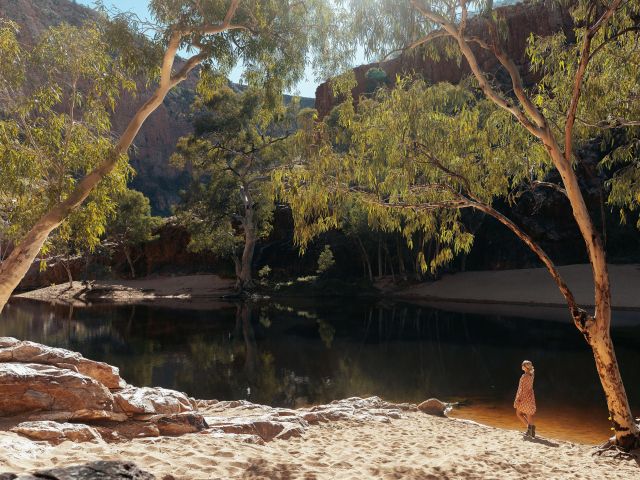
woman walking along the edge of Ormiston Gorge near alice springs
Take a dip in Ormiston Gorge. (Image: Tourism NT/ @domandjesso)

The film captures the raw beauty of the West MacDonnell Ranges, known in the Arrernte language as Tjoritja. This national park is rich in Indigenous culture and stark geological wonders.

Only a 15-minute drive from Alice Springs, Tjoritja offers visitors the chance to camp, hike and swim among ancient landscapes (most attractions are less than a three-hour drive away).

Ormiston Gorge , a cooling oasis in among the red desert sands, is one of the most popular destinations, no doubt because of the permanent swimming hole and towering red cliffs. From here, visitors can also embark on the beautiful Ormiston Pound Walk and the shorter – more accessible – Ghost Gum Walk. Bring your bathers – it’s safe for swimming.

4. Standley Chasm

woman walking through Standley Chasm near alice springs
Wander through Standley Chasm. (Image: Tourism NT)

The 1.2-kilometre walk to nearby Standley Chasm will be a highlight for any visitor as the imposing 40 metre-high chasm walls project strength and ancient wisdom.

Visit at midday to experience the path illumined by the midday sun. Not only will you fill your camera roll with vibrant red images of the gorge and its intoxicating shadows, but you can also camp nearby in a powered or unpowered site so you can watch the brilliance of the desert stars fill the night sky after dusk.

5. Simpsons Gap

three people walking on path through simpsons gap near alice springs
Walk the trails of Simpson’s Gap. (Image: Tourism NT/ Helen Orr)

Closer to Alice Springs, the photogenic Simpsons Gap is the perfect place to spot the endangered Black-footed Rock wallaby near the permanent watering hole. While swimming isn’t permitted, soaking up the sun and views certainly is.

Explore the area’s numerous walking trails, appreciate the soaring cliffs on either side of the ‘gap’ and pick out the shooting locations of Kangaroo in the area.

6. Ellery Creek Big Hole

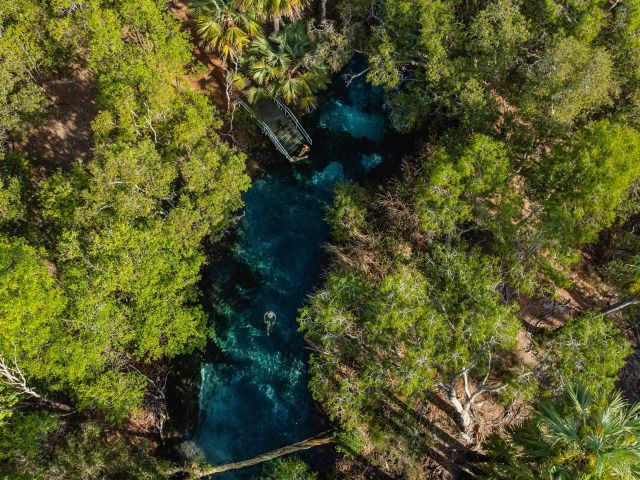
aerial of Ellery Creek Big Hole near alice springs
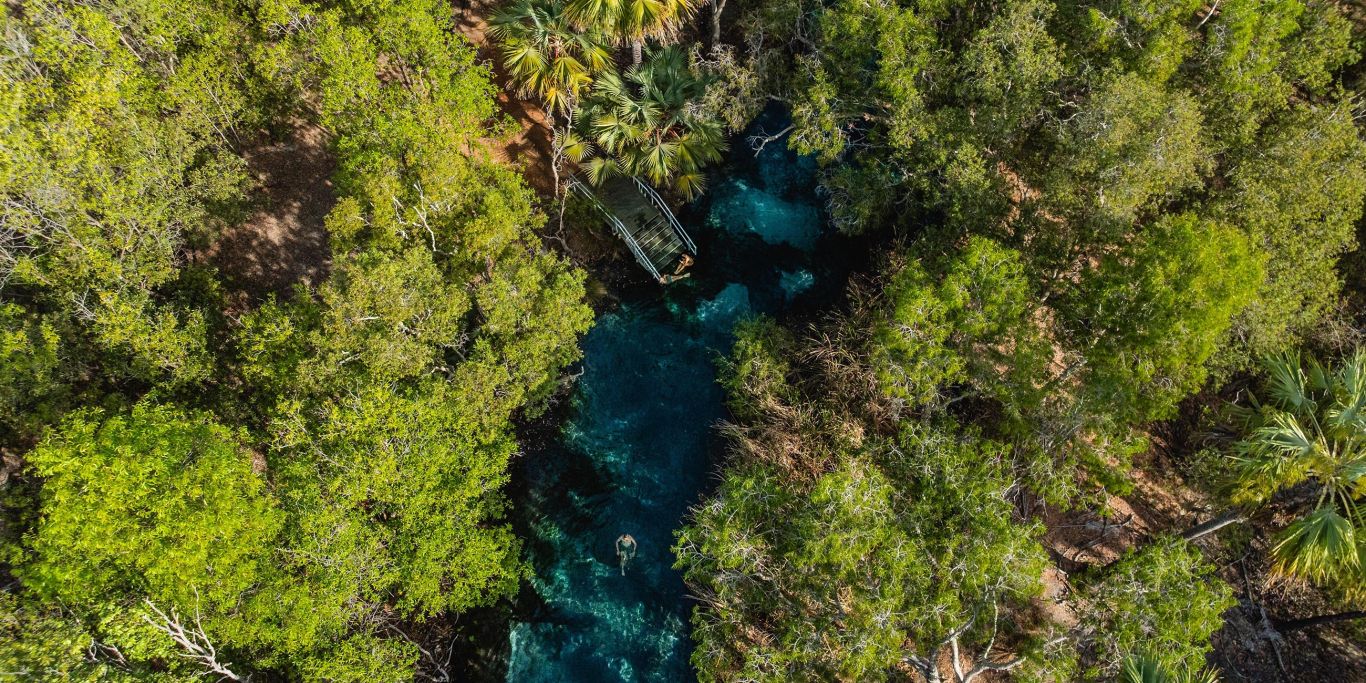
Dive into Ellery Creek Big Hole. (Image: Tourism NT/ Tourism Australia)

When it comes to classic Northern Territory landscapes, you can’t go past Ellery Creek Big Hole/ Udepata : tall gum trees sidling up to a refreshing watering hole (fed by the West MacDonnell Ranges and surrounded by rugged red cliffs.

Swim in the cooling waters, hike the cliff tops, watch for birds and even stargaze as you camp here overnight. It’s locations like this that attracted the film’s director Kate Woods to the project.

“It humbles you to be in this environment: it’s so beautiful, so old and so vast,” she explains. “I was thrilled to get a chance to … shoot such a beautiful story in the incredible landscape of the Northern Territory.”

7. Larapinta Drive

aerial of Larapinta Drive into alice springs
Drive along Larapinta Drive. (Image: Tourism NT)

There is no better way to get a feel for how the characters arrived at the fictional Central Australian town of Silvergum than to travel along the iconic state road, Larapinta Drive.

Connecting Alice Springs to the mighty King’s Canyon in the west, via the historic community of Hermannsburg, this road takes in the West MacDonnell National Park, Alice Springs Desert Park and artist Albert Namatjira’s house, among other attractions. Take your time, bring a camera and prepare for numerous stops along the way.

8. Todd River

competitors in Henley on Todd Regatta, alice springs
Join in the fun of the quirky Henley on Todd Regatta. (Image: Tourism NT/ TImparja Creative)

Meandering through Alice Springs like a lazy Western Brown snake, the Todd River is a central part of Alice Springs culture. Known as an ‘intermittent river’, the Todd can go from a dry dusty riverbed to a flowing waterscape in less than 15 minutes after heavy rainfall.

When it’s dry, the famous Henley on Todd Regatta fills the sandy riverbed with handmade ‘boats’ carried by sailors. This is the world’s only dry river boating event, and it’s referenced in the ‘Silvergum Boat Race’ in the movie. Inspired by the real-life event, the characters built quirky “Flintstones-style boats” and competed in teams.

See Kangaroo in cinemas now, and start planning your NT getaway at northernterritory.com.