Luxe to less: Uluṟu accommodation for any budget

hero media
From extreme luxury glamping to cheap-as-chips dorm rooms, here are the best places to stay near the Uluru-Kata Tjuta National Park, on any budget.

Any trip to see Uluru in the heart of the Northern Territory is going to mean a lot of time spent outside your hotel room. From rising before the crack of dawn to see the famous rising of the sun over the glowing red sandstone monolith to staying out late to dine in the desert dunes and hear Indigenous stories of the night skies, there’s a multitude of reasons that you may spend a lot of time outside while visiting the Traditional Lands of the Anangu.


the Uluru-Kata Tjuta National Park
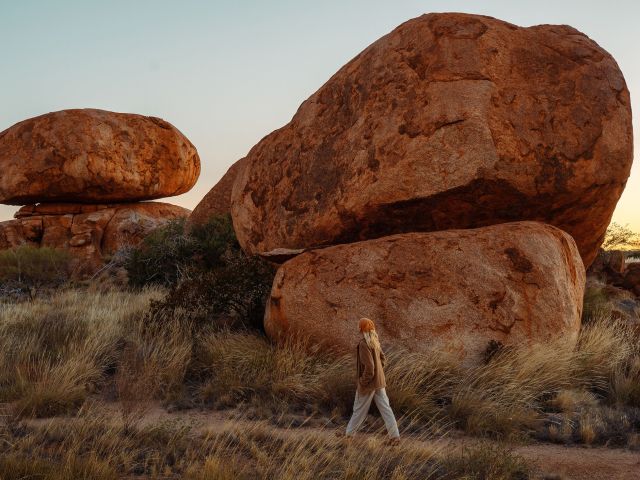
The Uluru-Kata Tjuta National Park is a once-in-a-lifetime destination. (Image: Tourism Australia)

Yet the hotel you pick can make or break your holiday. Want a cheap and cheerful campground where you can make friends, save your pennies and still wash off that red dust in the shower block? The township of Yulara, just outside Uluru-Kata Tjuta National Park has it. Want to propose on a helicopter while flying over the sands, before getting a little too loved up in a private plunge pool? This region has that too. 

We’ve lined up our favourite accommodation options at the Red Centre icon below. 

It’s worth noting that a trip to Uluru can make for a pricey holiday, particularly when it comes to booking accommodation in the high season. But we’re talking a once in a lifetime journey to the outback that’s bound to shake up your sense of perspective. So don’t skimp on the extras, if you can help it…


Longitude 131º

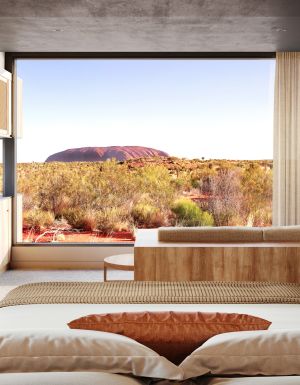
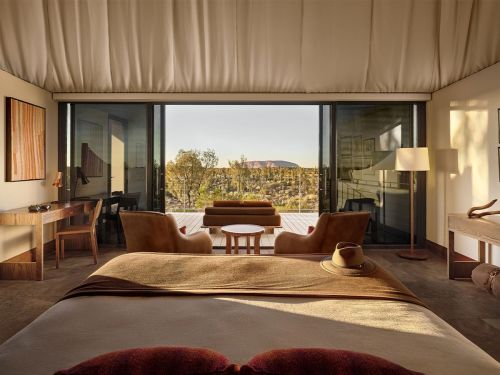
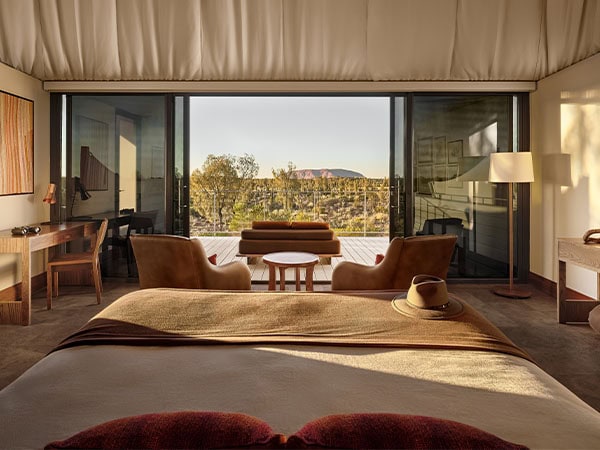
Okay, let’s start it off with the very best of the best. Longitude 131º offers the first and last word in desert luxury. Composed of sixteen pavilion tents, Uluru is the centre of attention from each. And from your private balcony, you can watch the colours shift throughout the day from the glowing reds of dawn. Of all the accommodation options in Uluru, very few rooms have a view of the Rock itself. And of all the options, the tents at Longitude 131º certainly have the best view. There are also two pools for guest to use, all-inclusive fine dining, as well as tours included in your stay.
Uluru Longitude 131
Each luxury tent has an unobstructed view of Uluru. (Image: Baillie Lodges)

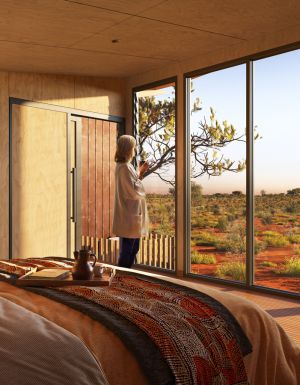
Each tent has floor-to-ceiling windows, a private terrace with a campfire and daybed, a rain shower, beautiful Indigenous art and music system, as well as those killer views. 
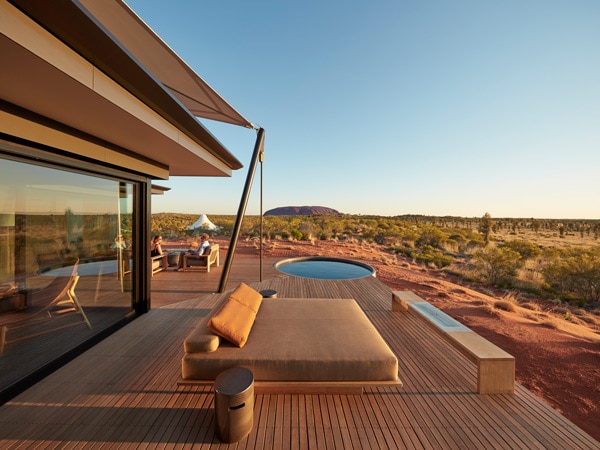
an outback lodge with a small pool and seating area featuring scenic Uluru views
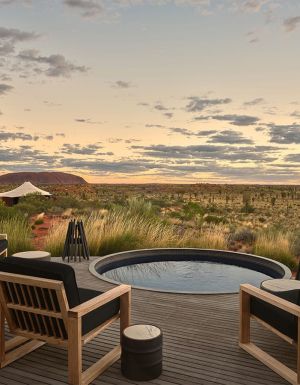
Lounge by the lodge pool to soak up stunning views of the Uluru landscape. (Image: Tourism NT/George Apostolidis)

Want to amp it up? The Dune Pavilion has its own private plunge pool, with views over both Uluru and Kata Tjuta. The Spa Kinara and exclusive experiences that include a helicopter ride over the park, or a sunrise or sunset camel ride through the dunes merely top off the whole unbelievable glamping experience. We’ve written a detailed breakdown of what it’s like to stay at Longitude 131º here.
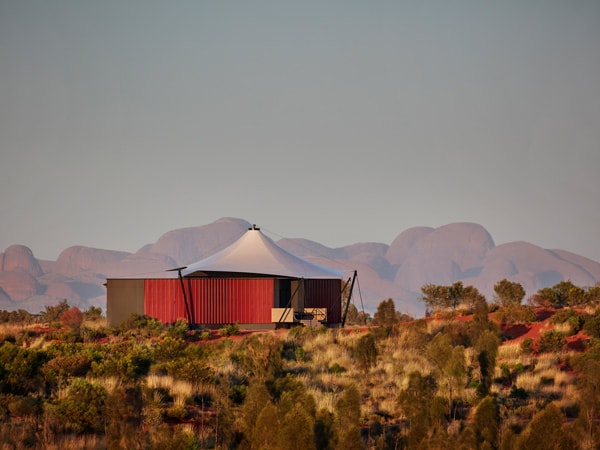
a glamping tent in the middle of the rugged landscape at Longitude 131, Uluru
Stay at Longitude 131 for a unique glamping experience. (Image: Tourism NT/George Apostolidis)


Voyages Ayers Rock Resort

Ayers Rock Resort runs most of the accommodation available near the Uluru-Kata Tjuta National Park, from camping to motels and luxury offerings. The Voyages Tourism group who run the resort put profits towards Indigenous training and employment, as well as supporting local culture, and chances are, you will be staying at one of their locations on your visit.
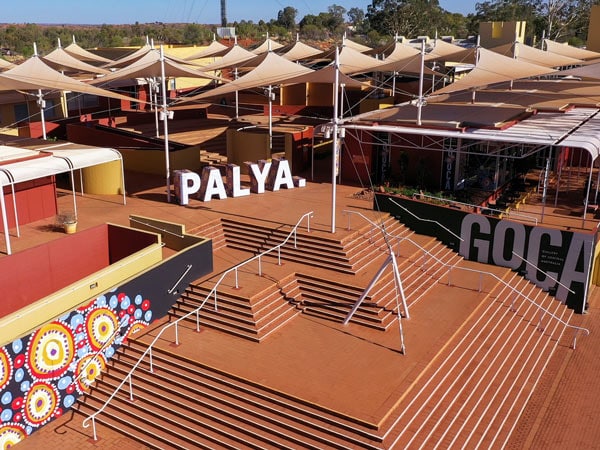
an aerial shot of the Gallery of Central Australia
The Gallery of Central Australia features the works of local Anangu artists.

Whichever resort location you pick, don’t forget to visit the Gallery of Central Australia (GoCA). It’s located next to Desert Gardens Hotel (more about that below), and you can head onto one of their free daily tours to learn Indigenous stories from the region and see the revolving exhibitions.

the paintings displayed on the wall inside the Gallery of Central Australia
Have a look inside the gallery for impressive artistic creations.

Another highlight at the resort? The Tali Wiru (meaning ‘beautiful dune’ in local Anangu) bush tucker-fine dining experience is housed on a dune for a maximum of 20 guests. Expect canapes like pressed wallaby with fermented quandong and three delectable courses, such as Paroo kangaroo tartare or Davidson plum, lemon myrtle and quandong, all paired with wine; before finishing with a talk on astrology. (We’ve lined up more of the best Uluru dining experiences here.) 

If you’re not renting a car, complimentary airport returns are included for all Resort guests, and a free shuttle bus is available if you want to hop from hotel to hotel.

Need tips, more detail or itinerary ideas tailored to you? Ask AT.

AI Prompt

Sails in the Desert

The plushest offering from the Ayers Rock Resort, the five-star Sails in the Desert is around 25 kilometres from Uluru and 50 kilometres from Kata Tjuta. Local Anangu art and culture are woven throughout the hotel aesthetic, from the carpets patterned with First Nations artist designs and Mulgara Gallery to the signature Indigenous dishes at the Ilkari restaurant.
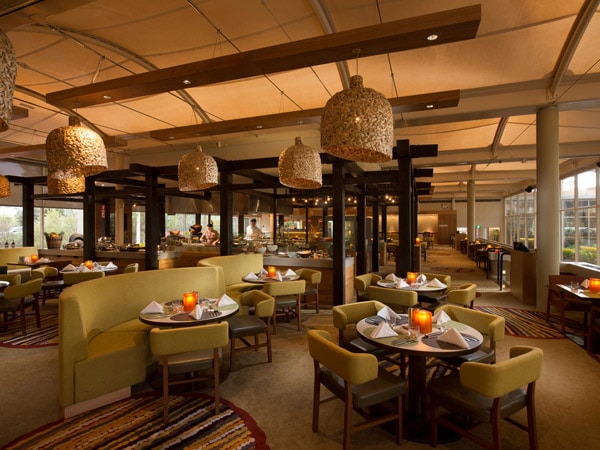
the interior of Sails Ilkari Restaurant
Fill your appetite with good food at Sails Ilkari Restaurant. (Image: Voyages Indigenous Tourism Australia/Adam Bruzzone)

Book in at the Red Ochre Spa for some major pampering after a day touring the sandstone monolith, simply relax by the gumtree-lined pool or order a pre-dinner drink at the Walpa Lobby Bar. If you can, try and book one of their rooms with a view of the rock. Trust us, it’s worth it. 
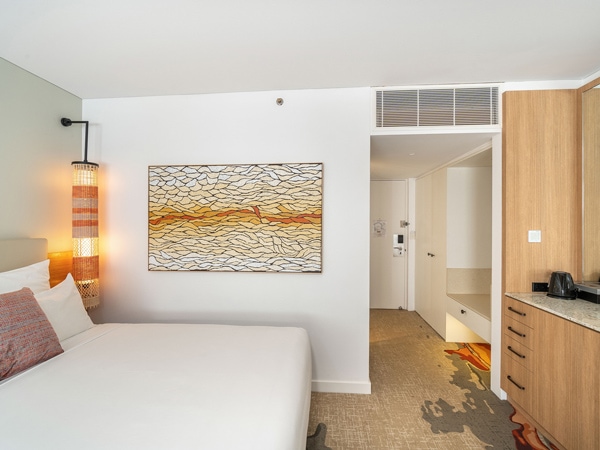
interior of the twin room at Sails Terrace
Stay cosy inside the Sail Terrace Twin room. (Image: Voyages Indigenous Tourism Australia/Lisa Hatz Photography)

Desert Gardens Hotel

In terms of the more mid-range offering, the four-and-a-half-star Desert Gardens Hotel is one of the resort’s older offerings but has been recently refurbished. Top picks for rooms include those that overlook the hotel’s stunning native garden, resplendent with local shrubs of which you can take a closer inspection on a free tour, as well as rock-view rooms.
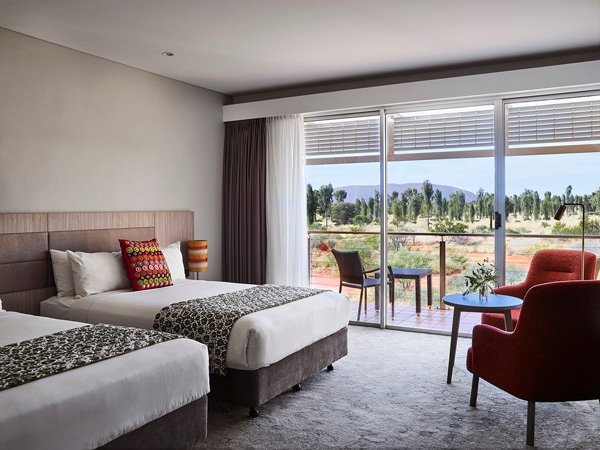
the interior of Desert Gardens Room with a balcony
Wake up to scenic views next to the balcony of your room. (Image: Voyages Indigenous Tourism Australia)

It’s only a five-minute walk to the resort’s Town Square from here. For a lunch with a touch of bush tucker, order some native peppered kangaroo kebabs at Mangata Bistro and Bar, or a signature Native Tasting Plate at Arnguli overlooking the pool.
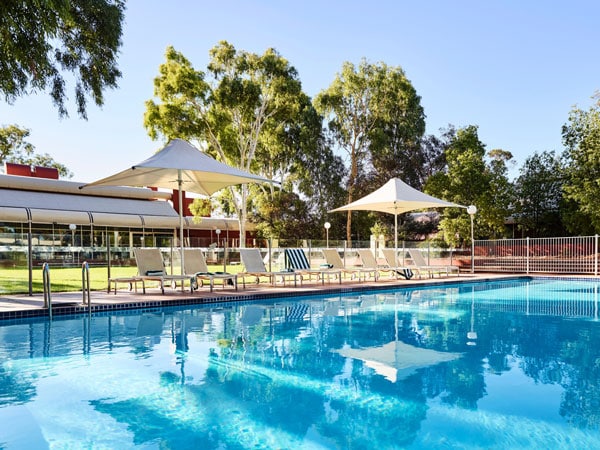
a huge outdoor pool at Desert Gardens Hotel
Head to the pool for a refreshing dip. (Image: Voyages Indigenous Tourism Australia)

Emu Walk Apartments

If you’d rather save money when it comes to catering, opt for the Emu Walk Apartments. One and two-bedroom apartments include a kitchen for preparing meals (psst: head to the nearby supermarket, first), as well as including sofa beds if you’re trying to get extra economical on the family trip.
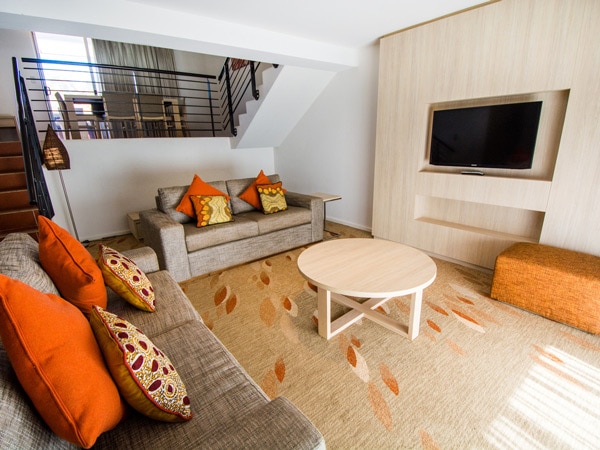
the living room inside Emu Walk Apartments
Emu Walk Apartments boast fully furnished living rooms. (Image: Voyages Indigenous Tourism Australia)

Don’t stress if you want to have a few sneaky meals out though – the Resort’s Town Square is just a few minutes walk away.
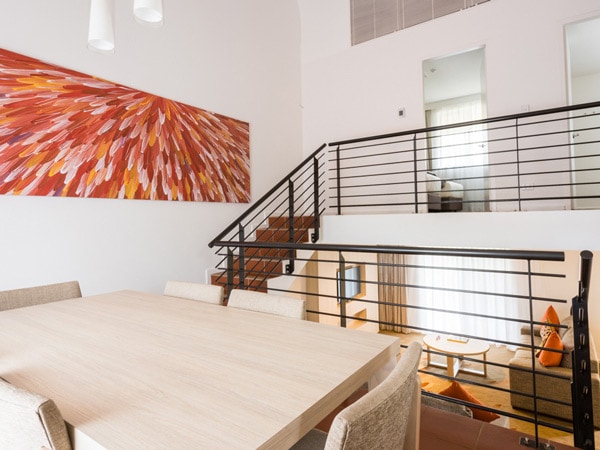
the modern interior of Emu Walk Apartments
There are plenty of seating areas to rest up. (Image: Voyages Indigenous Tourism Australia)

The Lost Camel Hotel

Quirky and brightly coloured, The Lost Camel Hotel gives a Palm Springs feel with its ochre tones and clean design lines centred around a pool.
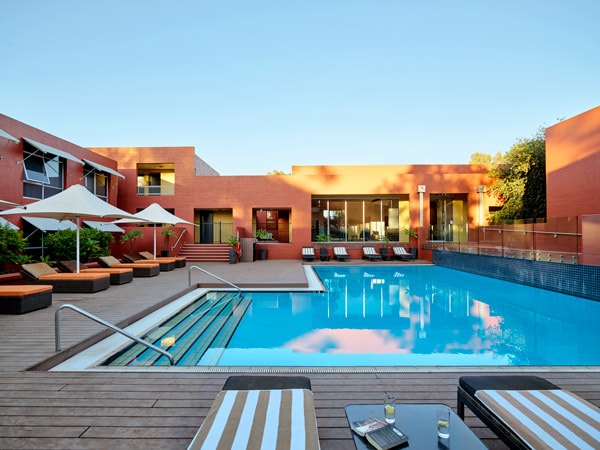
The warm desert tones give a Palm Springs feel to The Lost Camel Hotel. (Image: Voyages Indigenous Tourism Australia)

As a three-star hotel, expect lower prices (for Uluru, that is) and more basic room layouts. As with all other resort guests, your stay includes free Indigenous cultural activities, and you can make your way over to the Town Square for the supermarket and cafes. 
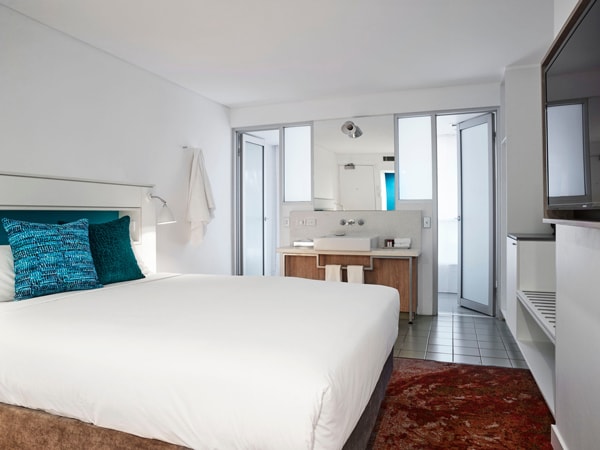
a whitewashed bedroom with a cosy bed at The Lost Camel
The bed is so comfy and perfect for a good night’s sleep. (Images: Voyages Indigenous Tourism Australia)

Outback Pioneer Hotel and Lodge

The Resort’s other three-star offering is another relatively cheap one to book. The Outback Pioneer Hotel and Lodge has a mix of dorm and budget rooms, with shared bathrooms and showers for those who opt for those without an ensuite.
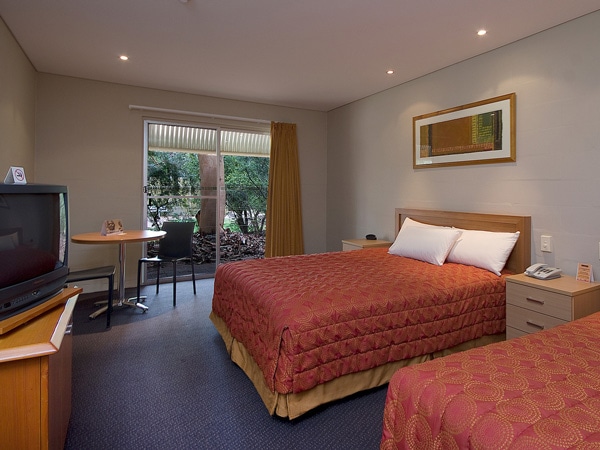
the bedroom inside the standard room at Outback Pioneer Hotel
Tuck yourself in your cosy bedroom at Outback Pioneer Hotel. (Image: Voyages Indigenous Tourism Australia)

Other communal features include a kitchen, common television room and self-service laundry. Cook up a storm at the do-it-yourself Outback BBQ. 
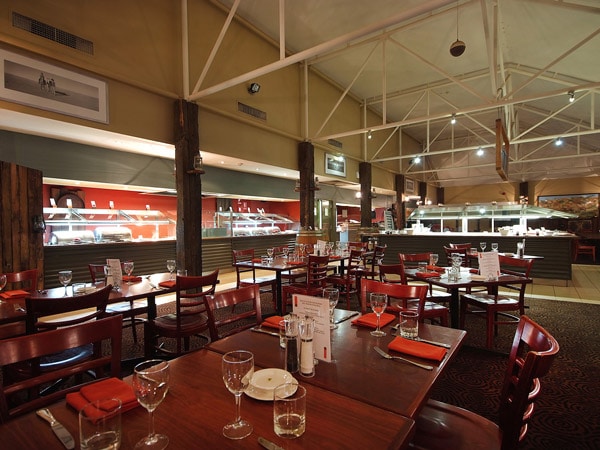
wide seating area inside the in-house restaurant of Outback Pioneer Hotel
You may also opt to have your dinner at their in-house restaurant. (Image: Voyages Indigenous Tourism Australia)

Weekly travel news, experiences
insider tips, offers, and more.

Ayers Rock Campground

Sleep under a canopy of desert stars at Ayers Rock Campground, listening to the night around you, continuing as it has for tens of thousands of years.
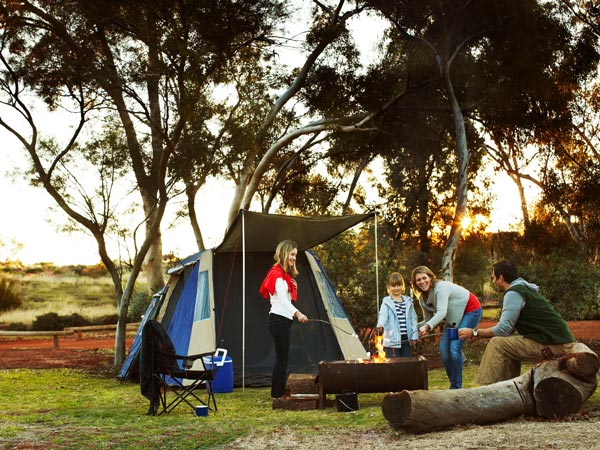
a family gathering around a bonfire setup in Voyages Ayers Rock Resort Campgrounds
Light up a bonfire to complete your camping experience. (Image: Voyages Indigenous Tourism Australia)

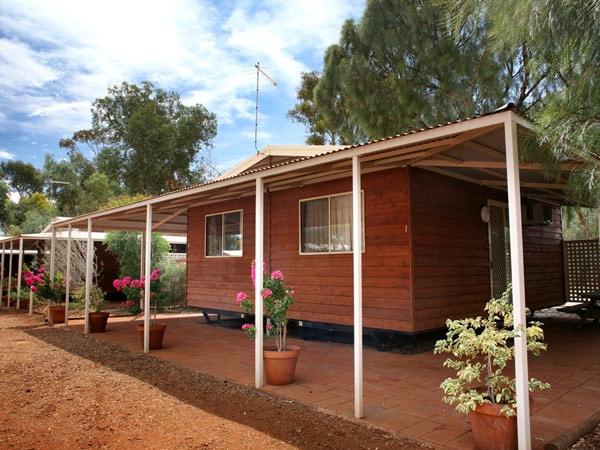
The Ayers Rock Resort’s most budget-friendly option has a range of sites to pick from, including a bunk in a dorm room, cabins, and powered and unpowered sites for tents and caravans.
a forest cabin at Voyages Ayers Rock Resort

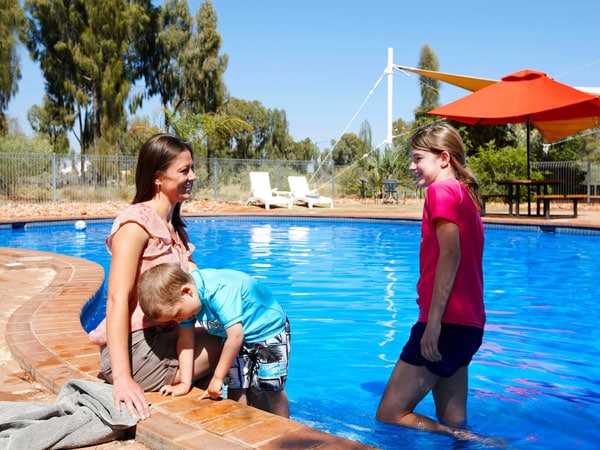
Pitch a tent or stay in a forest cabin. (Image: Voyages Indigenous Tourism Australia)Despite the more basic conditions, the campsite has a swimming pool, as well as barbecue facilities, an outdoor kitchen, self-service laundry and a playground. It’s also worth noting that you still have access to the resort’s suite of free programs. The best time to camp here is in autumn, before the nights get uncomfortably warm during the summer months or cold weather gear becomes essential in the night hours.
children playing in the pool at Voyages Ayers Rock Resort
There’s even a pool where you can soak in. (Image: Voyages Indigenous Tourism Australia)

Our full-blown Uluru camping ground can be perused here.

Curtin Springs Wayside Inn

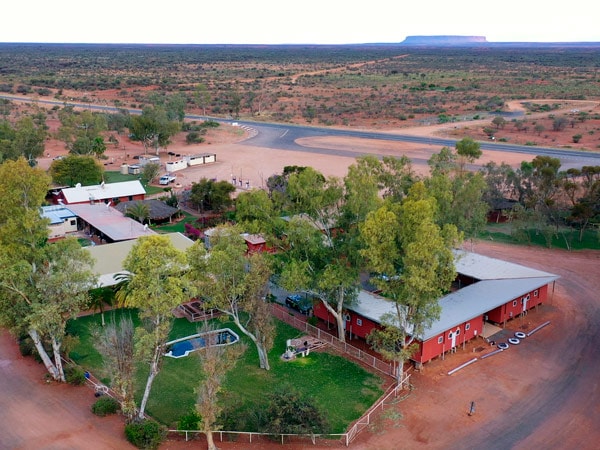
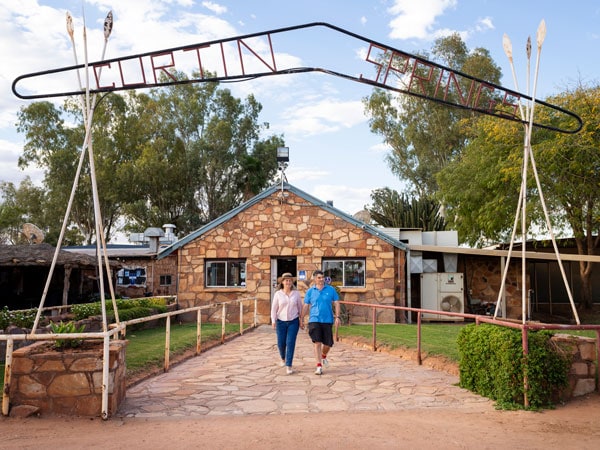
The Curtin Springs Wayside Inn is a fair bit further out from Uluru – 100 kilometres to be exact. A tie between an operating cattle station, inn, campground and desert oasis, the Curtin Springs Wayside Inn heavily leans into giving guests a local experience.
an aerial shot of the remote accommodation at Curtin Springs
Curtin Springs Wayside Inn is ideal for outback travellers. (Image: Tourism Australia/Global Headquarters)

Highlights include its homestyle meals at the historic Bough Shed (steak, anyone?), a program of private walks to learn more about the flora and fauna of the area, as well as visits to the local salt lake, and tours of Curtin Springs Paper.
a couple posing in front of the entry point at Curtin Springs Wayside Inn
Spend your laid-back weekends here. (Image: Tourism Australia/Global Headquarters)

Sleeping options include budget rooms with shared bathrooms, family rooms with wheelchair-friendly bathrooms with ramp access, powered campsites and free unpowered sites.
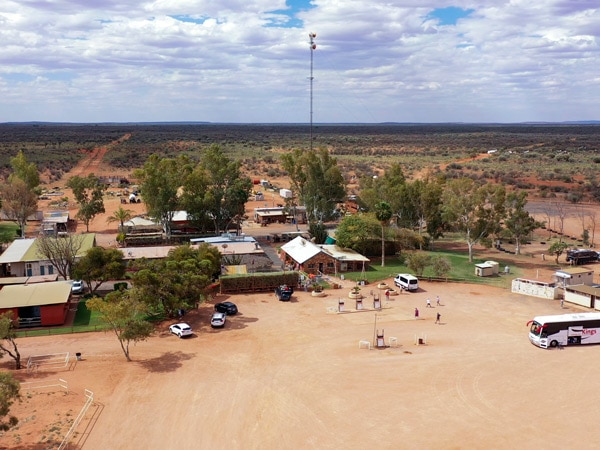
an aerial view of the remote accommodation at Curtin Springs Wayside Inn
Experience outback luxury at Curtin Springs Wayside Inn. (Image: Tourism Australia/Global Headquarters)

Make use of the barbeque area, as well as coin laundry facilities. An onsite store sells petrol, as well as food, and the inn is pet-friendly. The unpowered sites are free. There is a $4 per person per shower charge and it costs $10 to fill up your tank with water. 

Once you’ve settled in, it’ll soon be time to get going again. Pick the best of the bunch from our list of outstanding Uluru tours here. or discover more travel inspiration with our guide to Uluru.
Kate Bettes
Kate Bettes is a freelance travel writer. Whether having a picnic in Vietnamese jungle with new friends, or partying in the back of a limousine in Hollywood, Kate’s experiences have left her with the sneaking suspicion that the best travel memories happen when you least expect. It’s this feeling - and how to get it - that she loves to write about.
View profile and articles
hero media

Discovering East Arnhem: Australia’s most unique and rewarding corner

    Joanne Millares Joanne Millares

    Hard to reach and harder to forget, East Arnhem offers something rare in modern travel: the chance to slow down and experience Country on its own terms.

    The sky feels bigger in East Arnhem. It stretches wide and uninterrupted above rouged earth, stringybark woodland and beaches so empty they seem to belong to another era. The coastline curves for kilometres without a footprint and the horizon runs on forever.

    For comedian Lou Wall, the scale of the place was the first thing that hit them.

    “The sheer openness,” they say. “The sky feels infinite and the land stretches out endlessly. It’s pretty breathtaking visually.”

    But the physical landscape is only part of the story. The real reward isn’t only the scenery but the shift in perspective the journey brings. Visitors stop trying to tick off the destination and a real engagement takes over.

    “It made me never want to travel again,” Wall jokes. “In that I never wanted to leave East Arnhem.”

    Getting there

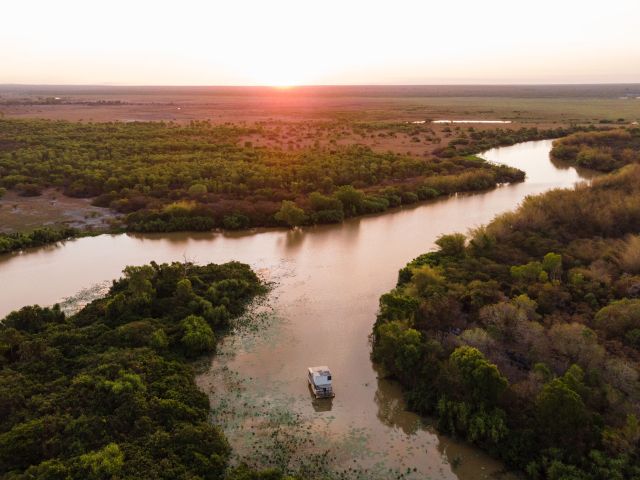
    Aerial shot of East Arnhem’s coastline as cars trace the curve of the shore.
    Sail along the remote coastline on an expedition cruise.

    Reaching East Arnhem is part of the adventure. Travellers typically fly into Gove Airport near Nhulunbuy via Darwin or Cairns, or arrive by expedition cruise along the remote coastline. Others make the journey overland along rutted dirt roads that cut through East Arnhem’s small pockets of monsoon forest.

    However you arrive, there’s a distinct feeling of crossing into somewhere different. Permits are required to visit the region, reflecting the fact that this is Yolŋu land where communities and traditional owners maintain deep cultural connections to Country.

    The extra planning becomes part of the experience. By the time visitors arrive, they understand they’re entering a place not just of respect, but also patience and curiosity.

    At one with nature

    East Arnhem’s  landscapes leave a strong imprint. For Wall, one place in particular still lingers in their memory: Ngalarrkpuy, also known as Lonely Beach, near Bawaka Homeland.

    “I genuinely felt like I was living inside an Instagram filter,” they say. “One of the most stunning feats of nature I’ve ever seen. The water was so clear I swear I could see even the fish smiling.”

    Across the region, natural experiences unfold at a slower pace. Fishing, beachcombing and island hopping reveal the rhythm of the coastline. The tides shape daily life and the vastness of the landscape makes even simple moments feel downright cinematic.

    For visitors with limited time, Wall says the Bawaka Homeland experience is unmissable.

    “I just left and I’m already planning when I can get back there.”

    The sense of remoteness is part of the appeal. In a country where many beaches are crowded and well-trodden, East Arnhem’s coastline still feels wonderfully wild.

    Immersing in local culture

    A visitor spends a meaningful moment alongside Yolŋu guides, gaining insight into their deep cultural knowledge and connection to the land.
    Experience authentic moments with the locals.

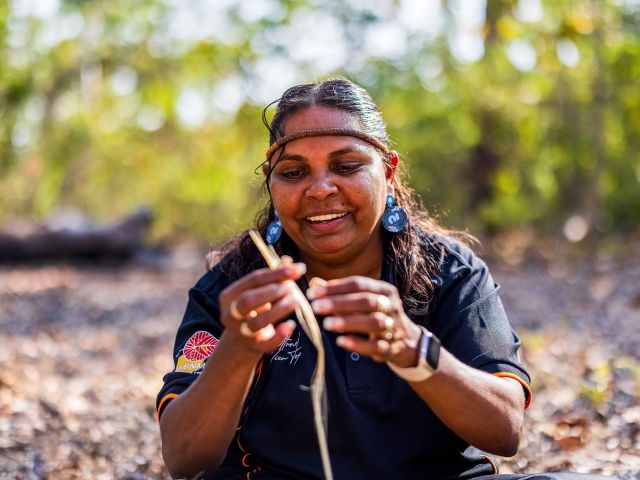
    Culture is woven through every experience in East Arnhem. Visitors have the opportunity to spend time on Country with Yolŋu guides and knowledge holders who share stories and traditions that have been passed down for generations.

    For Wall, one of the most powerful moments came during a conversation with a Yolŋu elder.

    “I got to meet a traditional elder, Mayalil, in Nhulunbuy,” they say. “Listening to her talk about her home made the land feel alive in ways I couldn’t have imagined.”

    The region is also home to internationally recognised Aboriginal art centres where artists shape works deeply connected to land and family knowledge.

    Music carries the same cultural energy. East Arnhem has produced globally recognised artists such as King Stingray and Baker Boy, blending Yolŋu language, storytelling and contemporary sound.

    Wall experienced this musical spirit first-hand.

    “A jam session around the fire was it for me,” they say. “Letting the deep joy and history of their music wash over me…  and meeting a few of the King Stingray musicians was unreal.”

    These moments of human connection often become the most memorable part of a visit.

    Spotting local wildlife

    An aerial view of the beach shows tiny figures lined up across the white sand, moving as if in a rhythmic dance.
    Step into a world where nature reigns.

    The wildlife of East Arnhem adds another layer to the experience. The region is home to an extraordinary range of animals, from waterbirds and turtles to dugongs, dolphins and the formidable saltwater crocodile.

    Wall admits they didn’t actually spot a croc during their visit.

    “Devastatingly, I didn’t see one,” they laugh. “But with all the stories from the locals I definitely gained a healthy respect for caution.”

    Some of the most memorable wildlife encounters can be surprisingly small., At Banubanu Beach Retreat on Bremer Island, Wall remembers walking along the beach one morning and watching it come alive.

    “As you walk through the sand you see hundreds of crabs scurrying into their holes as you pass by,” they say. “Such a small thing, but it was completely magical.”

    Moments like this reveal the quieter rhythms of East Arnhem, where even the smallest creatures seem to play a part in the landscape.

    Visitors who make the journey soon learn the most important travel tip of all.

    “Go in open-minded with a sense of curiosity,” Wall says. “Be prepared to ditch your plans. The land and the locals will guide you on an adventure no spreadsheets could ever compete with.”

    And most importantly, they add, don’t rush.

    “The land and people deserve your time and attention. You’ll be all the better for slowing down.”

    For more information on visiting East Arnhem, head to eastarnhem.com.au.