Ride a Camel Around Uluṟu

hero media
Forget four-wheel drives, early European explorers in Australia knew the value of camels when travelling throughout the Outback. Anne Majumdar gets the hump.

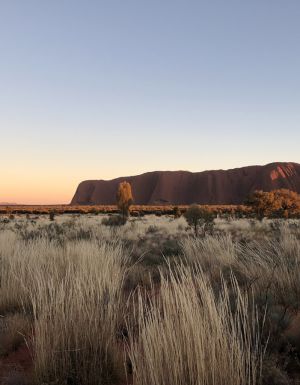
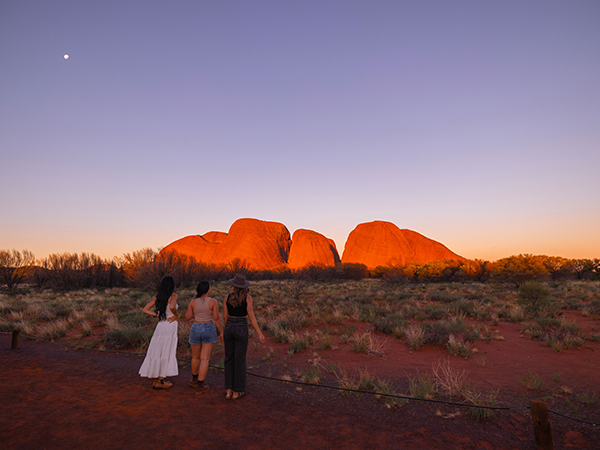
Few things get me out of bed at 4.30am, but as the sun unfurls across the purple sky to reveal the deep red of the desert dirt, I have to admit it is worth the early start.

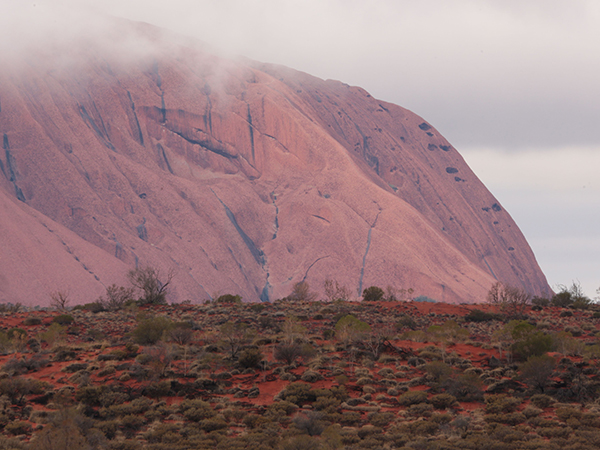
To my right towers the mighty monolith Uluru; to my left, the sci-fi bulbs of Kata Tjuta, also known as the Olgas.
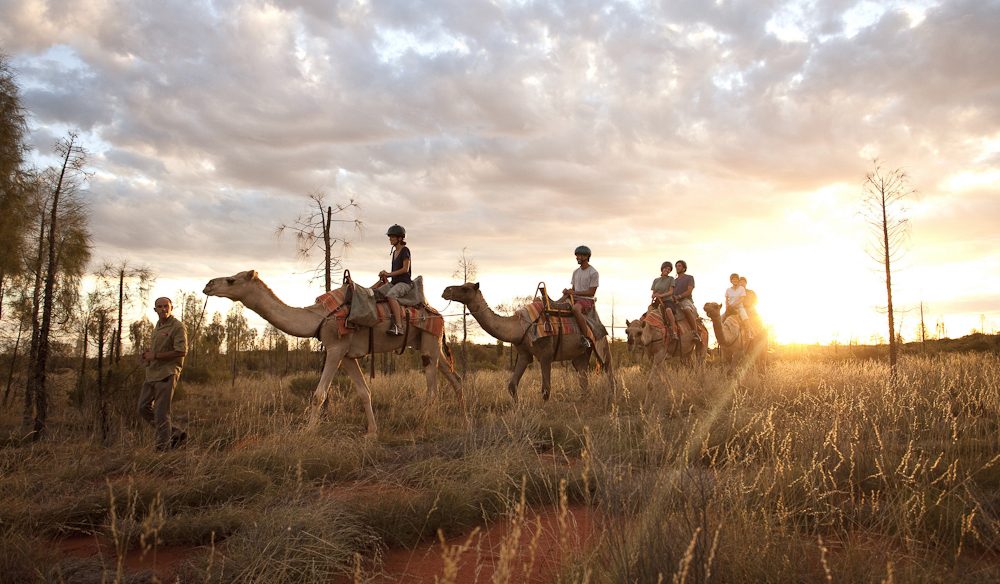
Camel trek NT; Uluru Kata Tjuta National Park;
Camel-back trekking: Uluṟu Kata Tjuta National Park.

Beneath me, my camel Rajah Red rocks me gently from side to side as he hot foots it through the scrub, swinging his long jaw sideways to catch a mouthful of greenery, which he mashes slowly between yellow, crooked teeth.

We pause on an ochre sand dune to soak in the atmosphere; it’s peaceful, relaxing and there is no other trace of human life in sight.

My ride shifts beneath me, still chewing contentedly as his wee interrupts my reverie and draws a black squiggle in the red sand.
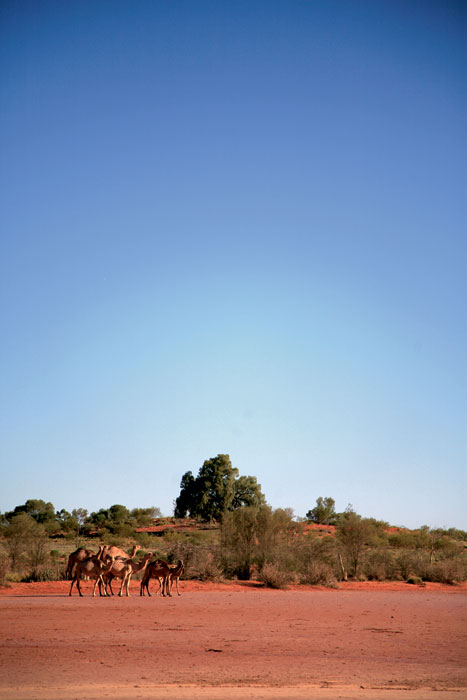
Wild camels at Uluru, Northern Territory
Wild camels roam the bush around Uluṟu, (Photo:Greg Barton)

Ahmed, the golden camel behind us, nudges my hip with his giant nostrils, his long purple tongue shooting out and scratching against my arm as he blinks from beneath layers of long black eyelashes.

“It’s like a magic carpet ride," says Mark Swindells, the director of Uluṟu Camel Tours. “The camel does all the work and you’re just sitting up there relaxing, taking in the scenery and the country."

High up above the scrub, the unhindered view makes this the perfect spot to appreciate Australia’s most famous natural landmark. Surrounded by nature, riders consider the region’s rich spiritual significance to its Anangu people, who have a strong affinity with flora and fauna.

Today, dromedary camels are considered a near native of the Australian desert, having roamed the Outback for over 170 years.

The Victorian Exploring Expedition that featured Burke and Wills was the first major importer of camels as many were brought out from the Middle East to help with the exploration of Australia from 1860.
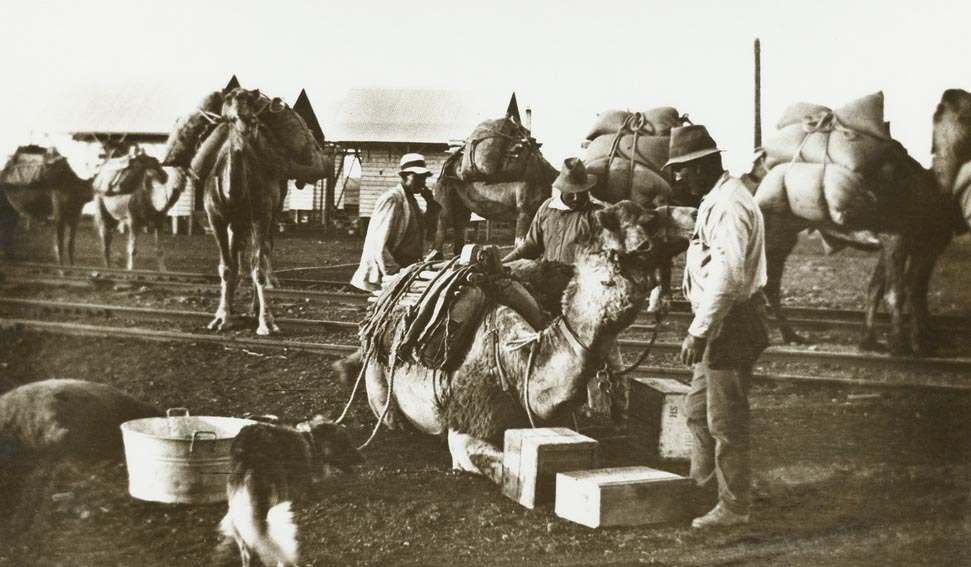
cameleers history australia outback
Cameleers in the Australian outback taking a well-deserved break (photo: State Library of South Australia).

Able to carry tremendous weight and last long periods without food or water, their contribution to the discovery of the interior was considered invaluable.

Since then camels have thrived and now there are over a million roaming wild in the arid regions of Australia, from the Simpson Desert to the Great Victorian Desert.

“The conditions are almost too good for camels," explains Swindells. “Where they come from, the conditions are a lot harsher." More rainfall, more plants to eat and more space to roam has meant optimum feeding and breeding conditions for the humped animals.

Swindells has been working with camels for 17 years, over which time his herd has grown from four to 30.
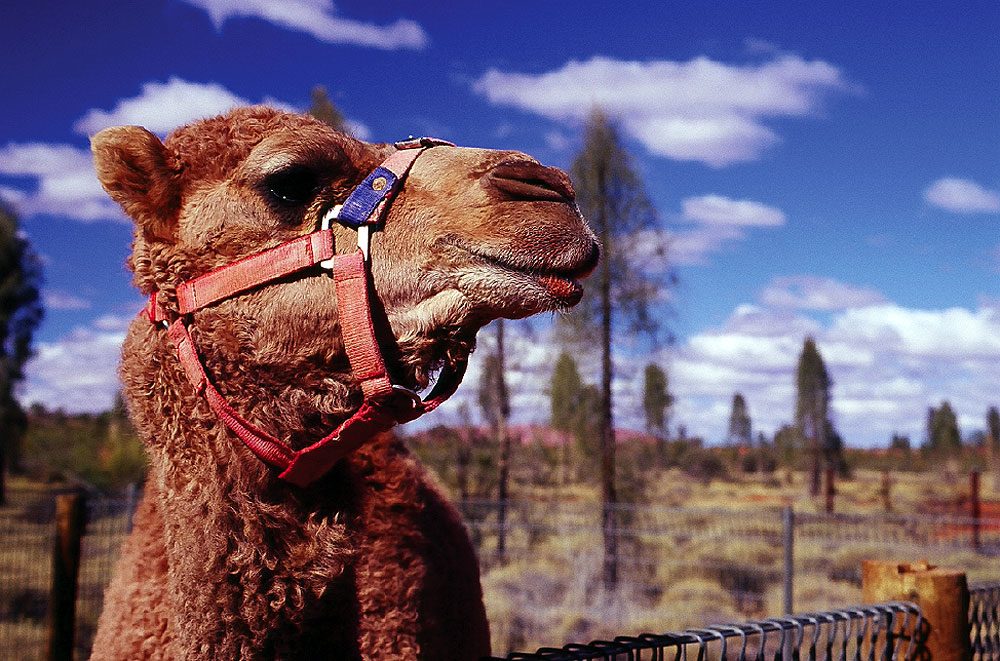
A camel named Orphan at Uluṟu (Photo: Ruth Rickard)

“They’ve got really superb personalities," he says. “People often start out a little bit apprehensive because they’ve heard all these terrible tales about camels being aggressive and bad-tempered, but after two hours they come back and they’re totally in love with the animal they’ve got."

In the future Uluṟu Camel Tours hope to offer longer treks to customers, in addition to the daily sunrise and sunset tours. Aimed at people who want to get away from civilisation, the treks will enter untouched and uninhabited parts of Australia.

“There’s no farming out there, no infrastructure," explains Swindells, “just the sand dunes, the camels and the people you’re riding with."

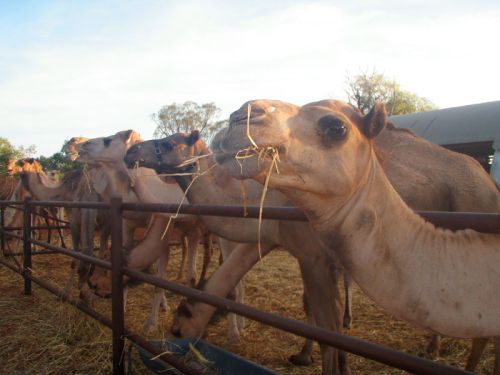
It sounds tempting, especially as Rajah Red nibbles straw from my hands once we’re back at the farm, but I can think about that later. For now, my main priority is getting back to bed.

Uluṟu Camel Details

Rates for the Sunrise Camel Experience Tour start at $132, although cheaper, shorter tours are available throughout the day.
For more information see Uluṟu Camel Tours .

hero media

8 Red Centre locations to explore after seeing the new movie, Kangaroo

Spend a few days visiting the real-life Central Australian locations that inspired the new film everyone is talking about, and discover why Alice Springs is such an important part of Australian culture.

In the credits of the new Australian film Kangaroo , the first name under ‘cast’ should read ‘The Northern Territory ’. Not only is Alice Springs (and the surrounding landscape) integral to the movie itself, but the spiritual heart of Australia and its local Indigenous owners also inform the look and feel of every frame, explains Producer Trisha Morton-Thomas of Brindle Films, who also plays Charlie’s grandmother Gwennie.

“By setting Kangaroo in Alice Springs (Mparntwe), the film embraces how visible Aboriginal people are here, and the living Aboriginal culture that is woven through this community,” she explains.

still from kangarro film
See Kangaroo, then visit the real-life filming locations.

And while shooting in such a sacred part of the Northern Territory required extra planning, it was something the cast and crew were highly invested in.

“There are incredibly significant sacred sites and places of deep cultural stories in the area, that at times are very gender-specific, which we’ve kept out of the production,” she explains. “Even if overhead drone footage captures a sacred site that isn’t meant to be seen by other people outside of that clan, we’ve made sure to omit it from the film.”

If Kangaroo piqued your interest in a Central Australian holiday, we don’t blame you. Read on to discover eight places featured in the movie that you can visit in real life – and get planning. Don’t forget to pack sunscreen and a hat.

1. Alice Springs/ Mparntwe

artist at Many Hands Art Centre
Visit the galleries of Alice Springs, like Many Hands Art Centre. (Image: Tourism NT/ Helen Orr/ Many Hands Art Centre)

The red and dusty streets of the film’s fictional town of Silvergum were filmed on the outskirts of Alice Springs. And, while the art gallery featured in the film is fictional, Alice Springs is a hub of creativity. See the work of local artists at the Araluen Art Centre , Yubu Napa Art Gallery , Iltja Ntjarra (Many Hands) Art Centre and the famous Tjanpi Desert Weavers .

2. The Kangaroo Sanctuary & Kangaroo Rescue Centre

The Kangaroo Sanctuary Alice Springs, the inspiration for the Kangaroo move
Visit the movie’s inspiration at Kangaroo Sanctuary. (Image: Tourism NT/ Kangaroo Sanctuary)

Kangaroo was inspired by the journey of Chris ‘Brolga’ Barns, who founded the now world-renowned Kangaroo Sanctuary based in Alice Springs. For lead actor, Aussie Ryan Corr, the animals were central to the movie, alongside the landscapes.

“The animals in this story were a real calling point for me,” he explains. “What this story tries to tell us about the connection between humans and animals is beautiful.”

To gain a real insight into the fauna and flora of the Red Centre, you can visit the Kangaroo Sanctuary on a sunset tour, where you might even get the chance to hold a baby kangaroo.

3. Ormiston Gorge

woman walking along the edge of Ormiston Gorge near alice springs
Take a dip in Ormiston Gorge. (Image: Tourism NT/ @domandjesso)

The film captures the raw beauty of the West MacDonnell Ranges, known in the Arrernte language as Tjoritja. This national park is rich in Indigenous culture and stark geological wonders.

Only a 15-minute drive from Alice Springs, Tjoritja offers visitors the chance to camp, hike and swim among ancient landscapes (most attractions are less than a three-hour drive away).

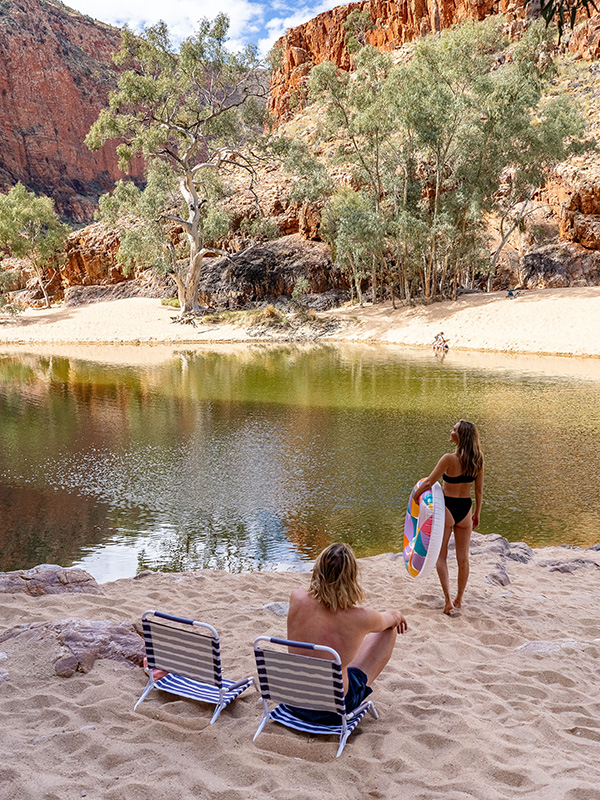
Ormiston Gorge , a cooling oasis in among the red desert sands, is one of the most popular destinations, no doubt because of the permanent swimming hole and towering red cliffs. From here, visitors can also embark on the beautiful Ormiston Pound Walk and the shorter – more accessible – Ghost Gum Walk. Bring your bathers – it’s safe for swimming.

4. Standley Chasm

woman walking through Standley Chasm near alice springs
Wander through Standley Chasm. (Image: Tourism NT)

The 1.2-kilometre walk to nearby Standley Chasm will be a highlight for any visitor as the imposing 40 metre-high chasm walls project strength and ancient wisdom.

Visit at midday to experience the path illumined by the midday sun. Not only will you fill your camera roll with vibrant red images of the gorge and its intoxicating shadows, but you can also camp nearby in a powered or unpowered site so you can watch the brilliance of the desert stars fill the night sky after dusk.

5. Simpsons Gap

three people walking on path through simpsons gap near alice springs
Walk the trails of Simpson’s Gap. (Image: Tourism NT/ Helen Orr)

Closer to Alice Springs, the photogenic Simpsons Gap is the perfect place to spot the endangered Black-footed Rock wallaby near the permanent watering hole. While swimming isn’t permitted, soaking up the sun and views certainly is.

Explore the area’s numerous walking trails, appreciate the soaring cliffs on either side of the ‘gap’ and pick out the shooting locations of Kangaroo in the area.

6. Ellery Creek Big Hole

aerial of Ellery Creek Big Hole near alice springs
Dive into Ellery Creek Big Hole. (Image: Tourism NT/ Tourism Australia)

When it comes to classic Northern Territory landscapes, you can’t go past Ellery Creek Big Hole/ Udepata : tall gum trees sidling up to a refreshing watering hole (fed by the West MacDonnell Ranges and surrounded by rugged red cliffs.

Swim in the cooling waters, hike the cliff tops, watch for birds and even stargaze as you camp here overnight. It’s locations like this that attracted the film’s director Kate Woods to the project.

“It humbles you to be in this environment: it’s so beautiful, so old and so vast,” she explains. “I was thrilled to get a chance to … shoot such a beautiful story in the incredible landscape of the Northern Territory.”

7. Larapinta Drive

aerial of Larapinta Drive into alice springs
Drive along Larapinta Drive. (Image: Tourism NT)

There is no better way to get a feel for how the characters arrived at the fictional Central Australian town of Silvergum than to travel along the iconic state road, Larapinta Drive.

Connecting Alice Springs to the mighty King’s Canyon in the west, via the historic community of Hermannsburg, this road takes in the West MacDonnell National Park, Alice Springs Desert Park and artist Albert Namatjira’s house, among other attractions. Take your time, bring a camera and prepare for numerous stops along the way.

8. Todd River

competitors in Henley on Todd Regatta, alice springs
Join in the fun of the quirky Henley on Todd Regatta. (Image: Tourism NT/ TImparja Creative)

Meandering through Alice Springs like a lazy Western Brown snake, the Todd River is a central part of Alice Springs culture. Known as an ‘intermittent river’, the Todd can go from a dry dusty riverbed to a flowing waterscape in less than 15 minutes after heavy rainfall.

When it’s dry, the famous Henley on Todd Regatta fills the sandy riverbed with handmade ‘boats’ carried by sailors. This is the world’s only dry river boating event, and it’s referenced in the ‘Silvergum Boat Race’ in the movie. Inspired by the real-life event, the characters built quirky “Flintstones-style boats” and competed in teams.

See Kangaroo in cinemas now, and start planning your NT getaway at northernterritory.com.