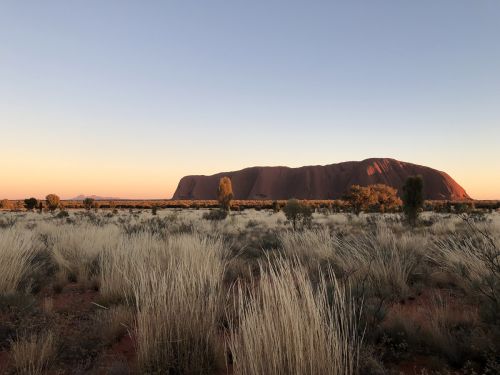
Why these Aussie couples have visited Uluṟu so much they’ve lost count

hero media
For two couples, Uluṟu has been more than a destination – it’s been a spiritual touchstone across decades of changing landscapes, culture and understanding. 

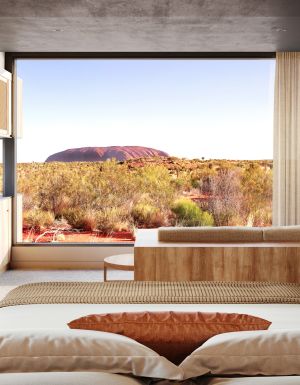
Few places on Earth possess the power to transform a visitor with a single glance. Uluṟu is one of them. Towering out of the red heart of Australia, it has drawn people from every corner of the world – and left them forever changed.

Among those who have felt its pull time and again are Brian and Lynda Ralph, and June and Geoff Tidey, two couples whose journeys to Uluṟu span decades. 

First encounters with the magic of Uluṟu 
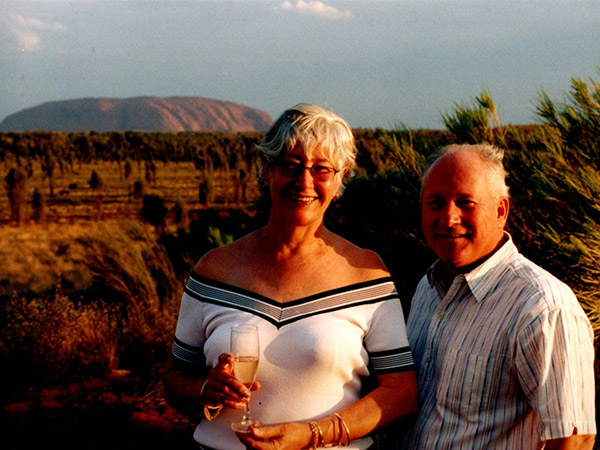
Lynda and Brian at Sounds of Silence Dinner
Lynda and Brian at the Sounds of Silence Dinner in 2004. (Image: Brian and Lynda Ralph)

When geography teachers Brian and Lynda Ralph first approached Uluṟu in the early 1970s, it was a raw, untamed experience.  

“We drove in, and it was late evening, and we thought, ‘Okay, this is huge,'" Brian recalls. But by the next morning, heavy rain had transformed the landscape.  

“We woke up, it was pouring rain, and the Rock was silver, just the way the light was in the early morning with waterfalls cascading down its sides. Unbelievable," Brian says. 

A family connection 
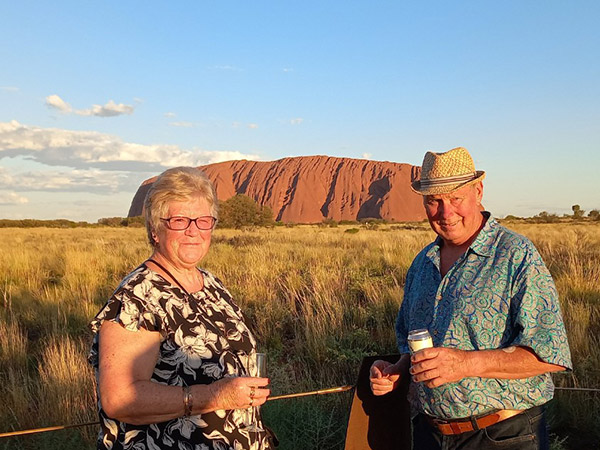
June and Geoff Tidey's Uluru journey
June and Geoff’s Uluru journey was inspired by their daughter. (Image: June and Geoff Tidey)

For June and Geoff Tidey, originally from Buckinghamshire in the UK, their journey to Uluṟu began much later, in 2008, sparked by their daughter, who has worked and lived in the region for the majority of the last 20 years. 

“We visited because of her," June says, “but we fell in love with the place ourselves." Over more than 10 visits, June and Geoff found Uluṟu to be both a family touchstone and a personal retreat. 

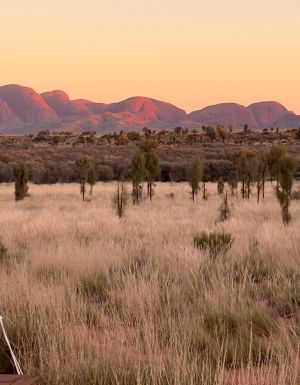
“It’s a very spiritual place, very calming," she reflects. “And it’s not what you expect. People imagine a barren desert – but it’s green, it’s full of life." 

Need tips, more detail or itinerary ideas tailored to you? Ask AT.

AI Prompt

Watching change unfold 
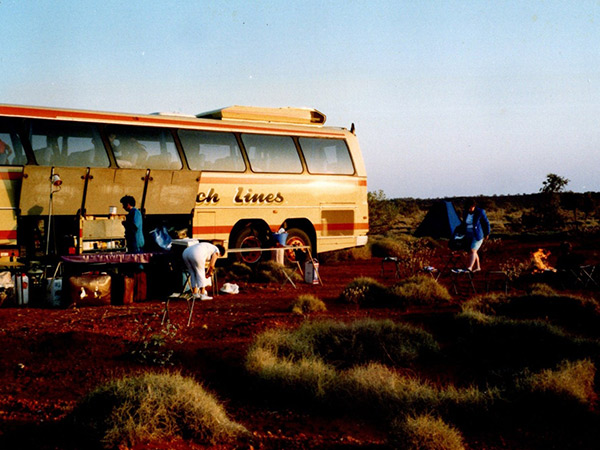
campsite in 1991
Camping in 1991. (Image: Brian and Lynda Ralph)

Both couples have witnessed – and welcomed – the sweeping changes that have transformed how visitors engage with Uluṟu. For Brian and Lynda, the evolution has been profound over their seven or eight visits (they can’t quite remember how many times they’ve been). 

“In the 70s, people would just hop out of the bus and, often without a second thought, they’d climb the Rock," Brian says. 

“But now, there’s a deep respect. And the Aṉangu culture has been openly recognised and embraced, and visitors are far more conscious of the cultural importance of the site." 

“We didn’t know enough," Brian admits. “But there wasn’t much information available then. Looking back, I just regret we didn’t understand the cultural significance." 
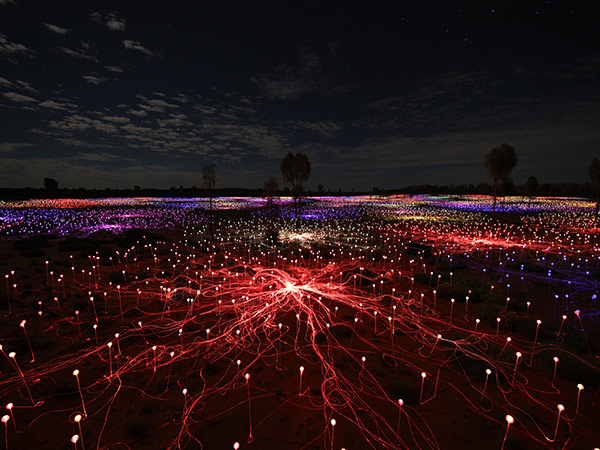
Uluṟu Field of Light
The mesmerising Uluṟu Field of Light installation by Bruce Munro. (Image: Voyages Indigenous Tourism Australia)

Brian points to the Uluṟu-Kata Tjuṯa’s Traditional Owners, the respectful interpretive signs, and the re-routing of roads to protect sacred sites. “It’s heartwarming," he says. “You feel like you’re being invited to experience something truly special, but with the understanding that you are a guest." 

Brian and Lynda also point out the difference in accommodation options over the years. 

“[In the early days] we were in two-man tents on red dirt and that was it, there was nothing else," Brian says. 

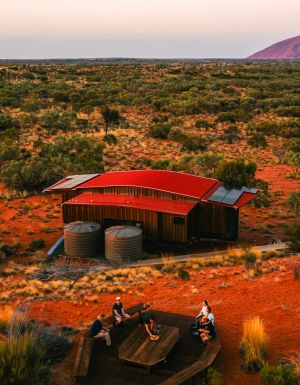
“Now, with Ayers Rock Resort, for people considering going there, there’s a really wide range of accommodation and pricing. There are a variety of options. We usually stay at the Outback Hotel." 

June and Geoff have visited Uluṟu more than 10 times, but the exact number is difficult to recall. They, too, have a favourite accommodation – Emu Walk Apartments – and have discovered a favourite room as well.

“We always stay in the same room – 209," June laughs. “The room is a one-bedroom apartment, it’s so good, so centrally located, we just loved it, so we’ve asked for it ever since!" 

Memories made across generations 
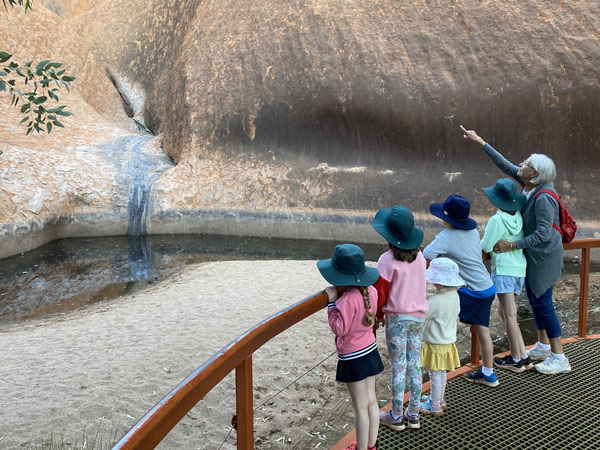
Brian and Lynda Ralph grandkids at Mutitjulu Waterhole
The Ralphs visited with their grandchildren in 2022. (Image: Brian and Lynda Ralph)

For the Ralphs, Uluṟu has become a part of their family’s story. They’ve returned with their children, and later their grandchildren, weaving memories of sunrise walks, Indigenous tours and quiet moments of awe into the fabric of their lives. 

“Every time we visit, we discover something new," Lynda says. “Taking our grandchildren to see the Aboriginal rock art and watch their faces light up – it’s unforgettable." 

“As teachers, we started teaching very differently as we became more and more aware of the cultural importance [of Uluṟu] to the local people and being sensitive to that," Brian tells Australian Traveller. 

The Tideys, too, have found fresh experiences on each return trip. From laidback stays at their beloved Emu Walk Apartments to memorable moments with their daughter’s family, their connection has deepened beyond sightseeing. 

“It’s not just about seeing Uluṟu anymore," June says. “It’s about feeling it. Listening, learning, respecting." 

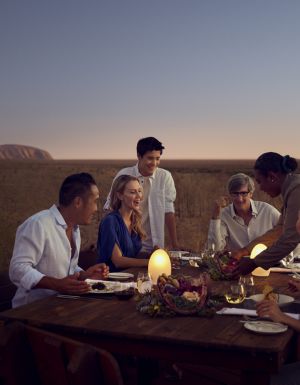
“For the next trip, we want to do the Wintjiri Wiṟu dinner and drone show. That’s the only one we haven’t done." 

Weekly travel news, experiences
insider tips, offers, and more.

Why Uluṟu still calls them back
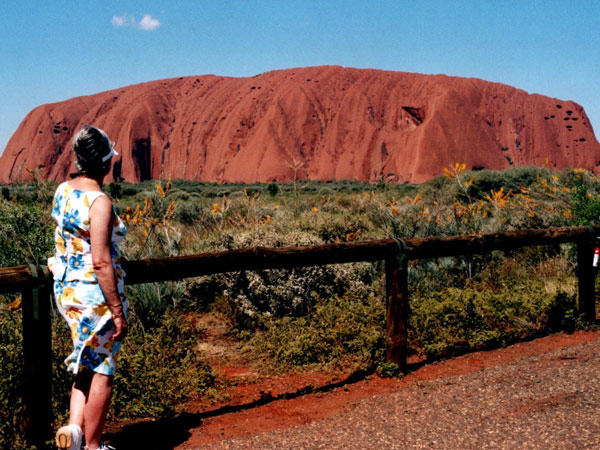
Woman reflects on the significance of Uluru in 2004
“Seek to understand, not just to see." – Brian Ralph (Image: Brian and Lynda Ralph)

If they could go back to their first visits, Brian and Lynda know exactly what advice they’d give their younger selves. “Learn more," Brian says simply. “Seek to understand, not just to see." 

June, meanwhile, would advise newcomers to slow down. “Spend at least five days if you can. Have fun and join all the experiences that you can." 

Despite the years, both couples feel the magnetic pull of Uluṟu as strongly as ever. “It’s become a very special place to us," Brian says. “It always feels like coming home." 

As for future visits? “Absolutely," Lynda says. “We’ll go back again and again." 

Because some places don’t just mark the map. They mark the soul. 

Emily Murphy
Emily Murphy is Australian Traveller's Email & Social Editor, and in her time at the company she has been instrumental in shaping its social media and email presence, and crafting compelling narratives that inspire others to explore Australia's vast landscapes. Her previous role was a journalist at Prime Creative Media and before that she was freelancing in publishing, content creation and digital marketing. When she's not creating scroll-stopping travel content, Em is a devoted 'bun mum' and enjoys spending her spare time by the sea, reading, binge-watching a good TV show and exploring Sydney's vibrant dining scene. Next on her Aussie travel wish list? Tasmania and The Kimberley.
View profile and articles
hero media

8 experiences to restart and inspire your senses for 2026

    Katie Dundas Katie Dundas
    Be invigorated by the sights, sounds and landscapes of the Northern Territory.

    If your 2026 travel goals focus on visiting inspiring and meaningful destinations, look no further than the Northern Territory. Rich in Indigenous culture, national parks and unique local cuisine, a journey deep into the Red Centre and Top End will awaken all your senses and leave you with lifelong memories. But you don’t need to do it on your own, as AAT Kings’ Small Group tours offer expertly led itineraries. They’re designed to take the guesswork out of travel planning and help you access remote regions in comfort while connecting with fellow guests, allowing you to delve deeper into destinations with insights from knowledgeable Travel Directors and local Indigenous guides.

    As Small Group tours with AAT Kings have an average of just 16 guests, there’s ample opportunity to ask questions and make meaningful connections on every visit. Here are just a few of the experiences on offer, with adventures designed to invigorate every sense.

    1. Under a Desert Moon dinner

    Under a Desert Moon dinner in northern territory
    Watch the stars come out over five courses.

    Over five courses, dine under the stars during an unforgettable Outback dining experience. As day fades to night, lit only by the moon and the crackling fire, this outdoor dinner features locally sourced seasonal produce, matched with Australian wines.

    It’s an intimate experience, showcasing the quiet grandeur of the Outback after nightfall. As you dine, feel connected to the land and its unique flavours, introduced by your impeccable waitstaff.

    Part of the Northern Territory Dreaming tour, the Under a Desert Moon dinner is the ideal way to connect with your small group of fellow travellers after an invigorating day in the Red Centre.

    2. Karrke Aboriginal Cultural Experience

    Karrke Aboriginal Cultural Experience
    Learn stories of the Red Centre at Karrke. (Image: Tourism & Events NT/ 75vibes)

    The best way to learn the stories of the Red Centre is by connecting with the land’s Traditional Owners. At the Karrke Aboriginal Cultural Experience, visited on AAT Kings Northern Territory Dreaming and Outback Contrasts tours, you’ll meet with members of the local Wanmarra community in Kings Canyon.

    On this immersive AAT Kings MAKE TRAVEL MATTER® Experience you’ll walk on Country to learn firsthand about bush tucker, Indigenous medicine, wooden artefacts and the art of dot painting. Passionate guides will share stories that have been passed down for generations.

    3. Kungkas Can Cook

    Kungkas Can Cook set up at Simpson's Gap
    Taste local bush delicacies. (Image: Tourism & Events NT/ Mel Brautigam)

    The powerful senses of smell and taste are awakened on this exclusive experience led by Indigenous chef Rayleen Brown. Included in the Northern Territory Dreaming and Outback Contrasts tours, this is a unique opportunity to savour local bush delicacies and learn about Indigenous culture through the lens of food.

    Brown, a recipe author and guest judge for MasterChef Australia, works solely with native ingredients directly harvested by women from the Alice Springs community. It’s a 100 per cent Indigenous owned and run business.

    4. Karlu Karlu (Devils Marbles)

    woman walking by Karlu Karlu (Devils Marbles)
    See striking Karlu Karlu. (Image: Tourism & Events NT/ Dom And Jesso)

    Appearing out of nowhere, the huge granite boulders of Karlu Karlu seem to precariously balance on the barren Outback landscape. You’ll come across these geological formations as you cruise the Stuart Highway on the Northern Territory Explorer tour.

    Your AAT Kings Travel Director will share expert insight on the history and culture of Karlu Karlu, recognised as a sacred site of the Warumungu people. As you walk in awe amongst these stunning formations, formed many millennia ago, you’ll hear some of the stories behind why this place is so important to Indigenous storytelling and culture.

    5. Pudakul

    Pudakul Aboriginal Cultural Tours
    Experience this family-owned Indigenous experience. (Images: Tourism & Events NT/ Helen Orr)

    Make authentic cultural connections when you visit Pudakul, a family-owned Indigenous experience on the Adelaide River Flood Plains. On your Small Group Northern Territory Explorer tour your senses will be inspired by the sounds of First Nations music, the taste of local bush tucker and the beauty of art.

    This AAT Kings MAKE TRAVEL MATTER® Experience is designed to take you deeper into the destination, helping guests learn from the people of the Limilngan-Wulna Land.

    6. Corroboree Billabong Wetland Cruise

    Corroboree Billabong Wetland Cruise
    Spot the wildlife of the billabong. (Image: Tourism & Events NT)

    Observing the unique wildlife of the Northern Territory – from formidable crocs to hearing gentle melodies from the many endemic bird species – is always one of the most memorable parts of your Northern Territory Dreaming tour.

    Travel in the comfort of your premium coach, taking in the stunning landscapes, before arriving at Corroboree Billabong. This special place is part of the Mary River Wetlands and is home to the world’s largest concentration of saltwater crocodiles. Your comfortable boat is designed to maximise wildlife viewing, giving you a front row seat to this spectacular ecosystem.

    7. Aboriginal Bush Traders

    artist at Aboriginal Bush Traders in darwin
    Visit for the art, stay for a bite. (Image: Tourism & Events NT/ Shaana McNaught)

    A visit to Aboriginal Bush Traders is the ideal introduction to the vibrant city of Darwin. This non-profit gallery, cafe and retail space supports Indigenous employment and is the perfect place to find a curated selection of ethical Indigenous gifts, including artwork and organic skincare.

    Your Northern Territory Top End National Parks and Northern Territory Dreaming tours include an exclusive native flavour tasting, offering cultural insight before travelling deeper into the Top End.

    8. Leliyn (Edith Falls)

    woman swimming in Leliyn (Edith Falls)
    Cool off at Leliyn (Edith Falls). (Image: Tourism & Events NT/ As We Wander)

    There’s something about a mighty waterfall that invigorates the soul like nothing else, with the picturesque Leliyn (Edith Falls) the perfect place to refresh on a hot day.

    On your Northern Territory Top End National Parks and Northern Territory Dreaming visit to Nitmiluk National Park, known for its epic sandstone gorges, you’ll pay a visit to the oasis that is Leliyn. It’s the ideal place for a swim, but it’s also home to ancient Indigenous rock art. And as your Travel Director will explain, it’s an impressive place of cultural significance, too.

    Make 2026 the year to discover the flavours, culture and beauty of the Northern Territory at aatkings.com.